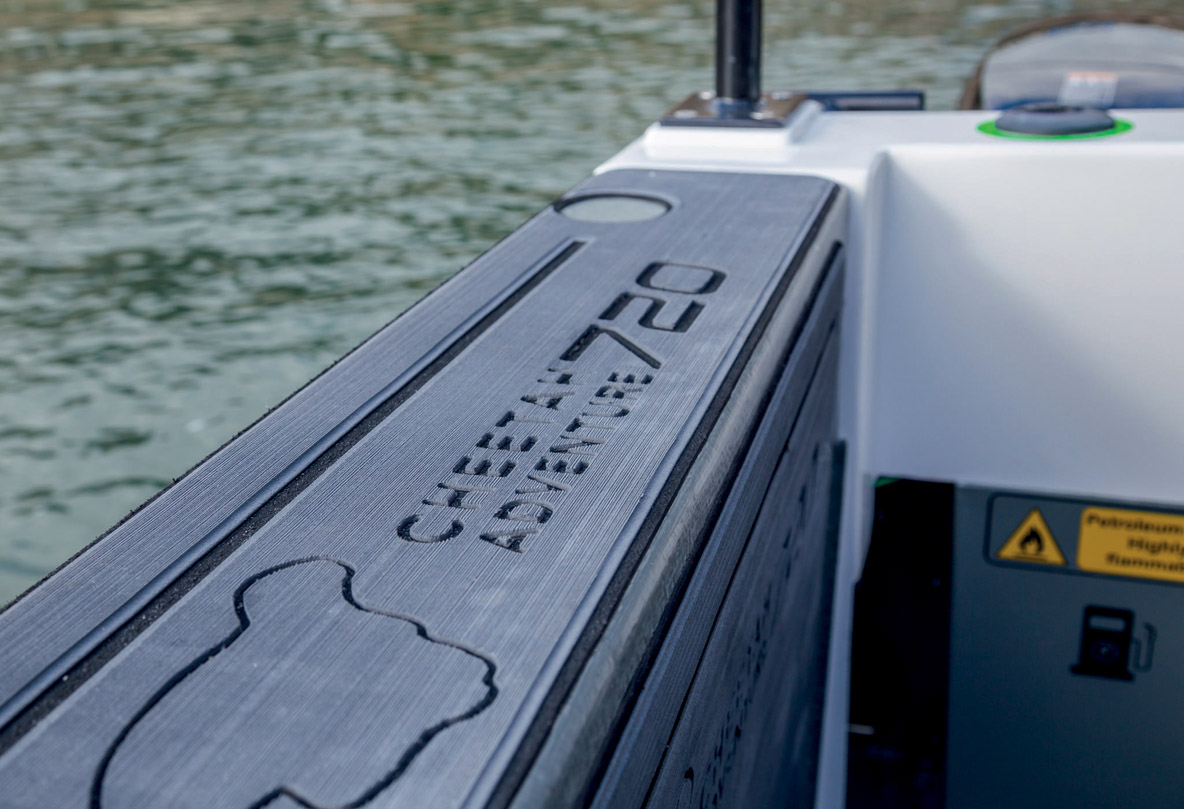
The genesis of this small powercat is an interesting one, as it’s an evolution of a utility model towards leisure boating. Robustness, hardiness, and practicality are still very much in evidence aboard this model from the Adventure range, but specific layouts allow boaters to take full advantage of it... We got the chance to discover this concept in more detail at the last La Rochelle Boat Show, where the Cheetah Adventure 720 was presented.
Infos pratiques
- Le chantier : Cheetah 690/720 Adventure
- La fiche technique
-
 Découvrez notre vidéo exclusive
- Financez votre Cheetah 720 Adventure
- Assuez votre Cheetah 720 Adventure
- Articles autour du Cheetah 720 Adventure
Conditions: calm sea, 12 knots of NW’ly wind
Internal bulkheads every 24 inches
The Cheetah brand of powercats is known above all in the UK: for 30 years, the manufacturer has built over 350 units there. Initially, the idea was to have machines that could be launched from a beach on the Isle of Wight. The spot doesn’t have all-weather shelter and it is precisely because rollers often gatecrash the party that the Cheetahs imposed and perpetuated real sailors’ DNA from the start. Today, these power catamarans are comprised of a relatively consistent range (understand that the models have a fairly long lifespan) from 20 to 36 feet (6 to 11 m). In terms of construction, Cheetah Marine Catamarans favors the application of contact resin. The underwater hulls are monolithic to facilitate any possible repairs. The hull topsides adopt a PVC sandwich construction. The particularity of the Cheetah powercat hulls is that they feature an internal bulkhead every 24 inches (60 cm). And that makes these catamarans almost unsinkable.
An all-purpose cockpit
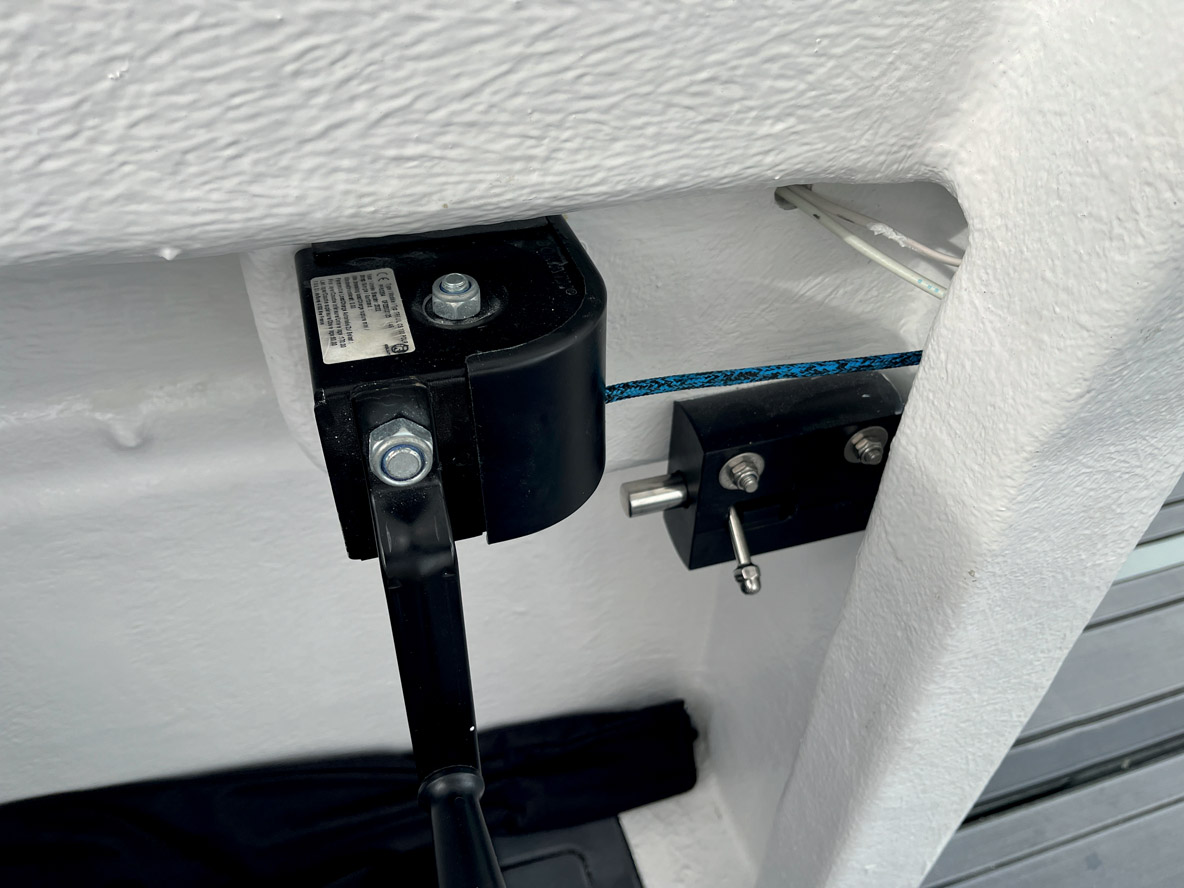
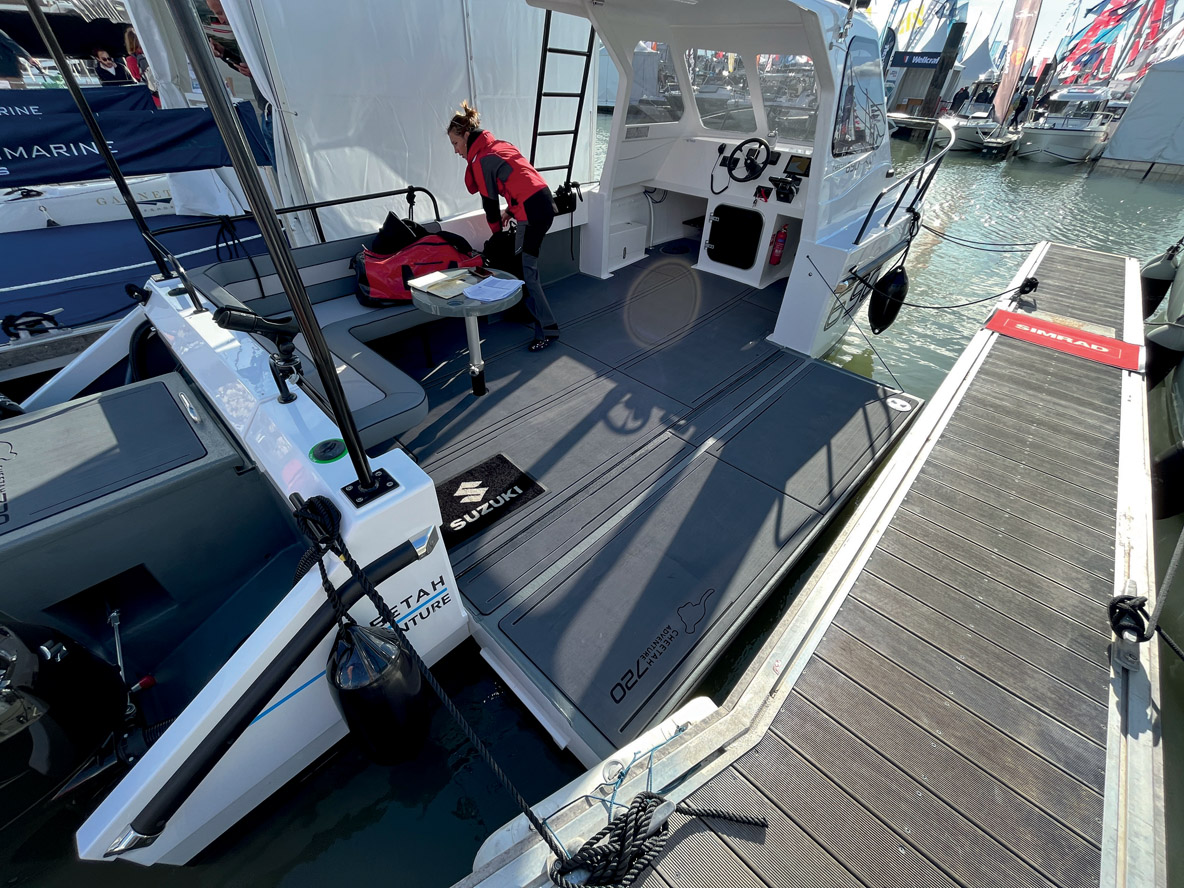
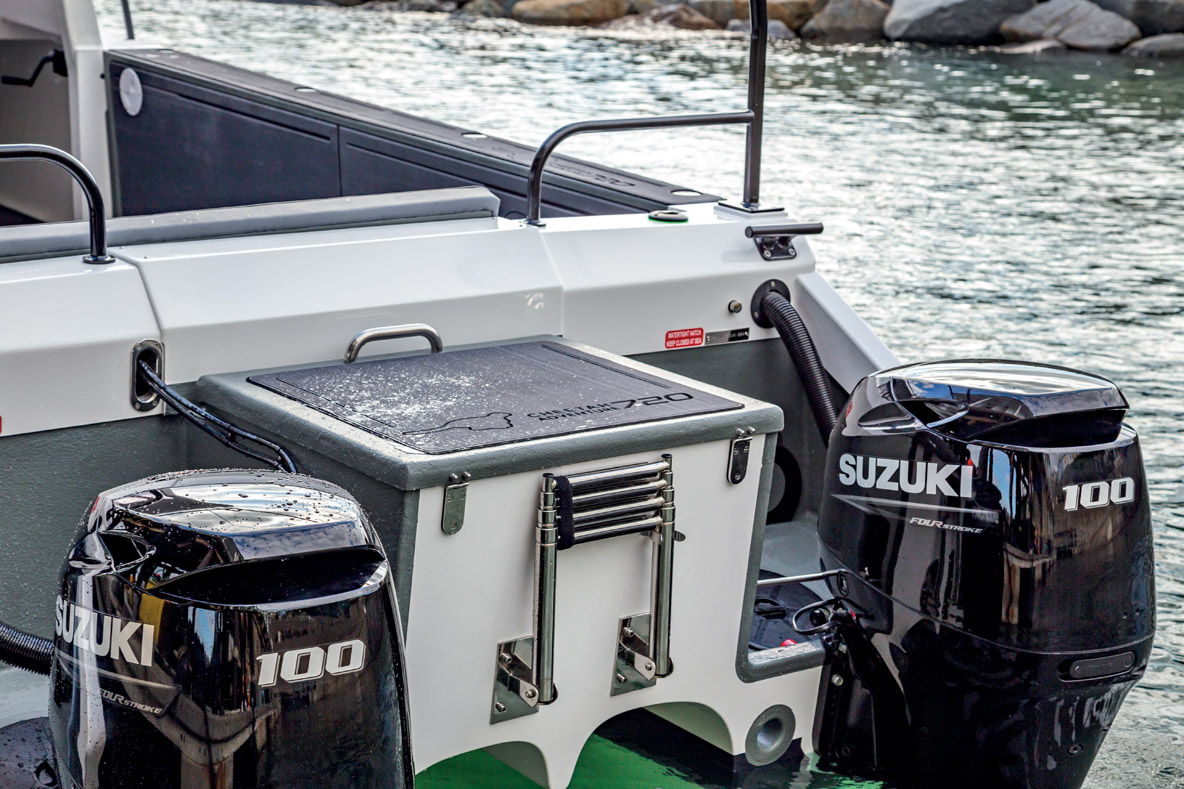
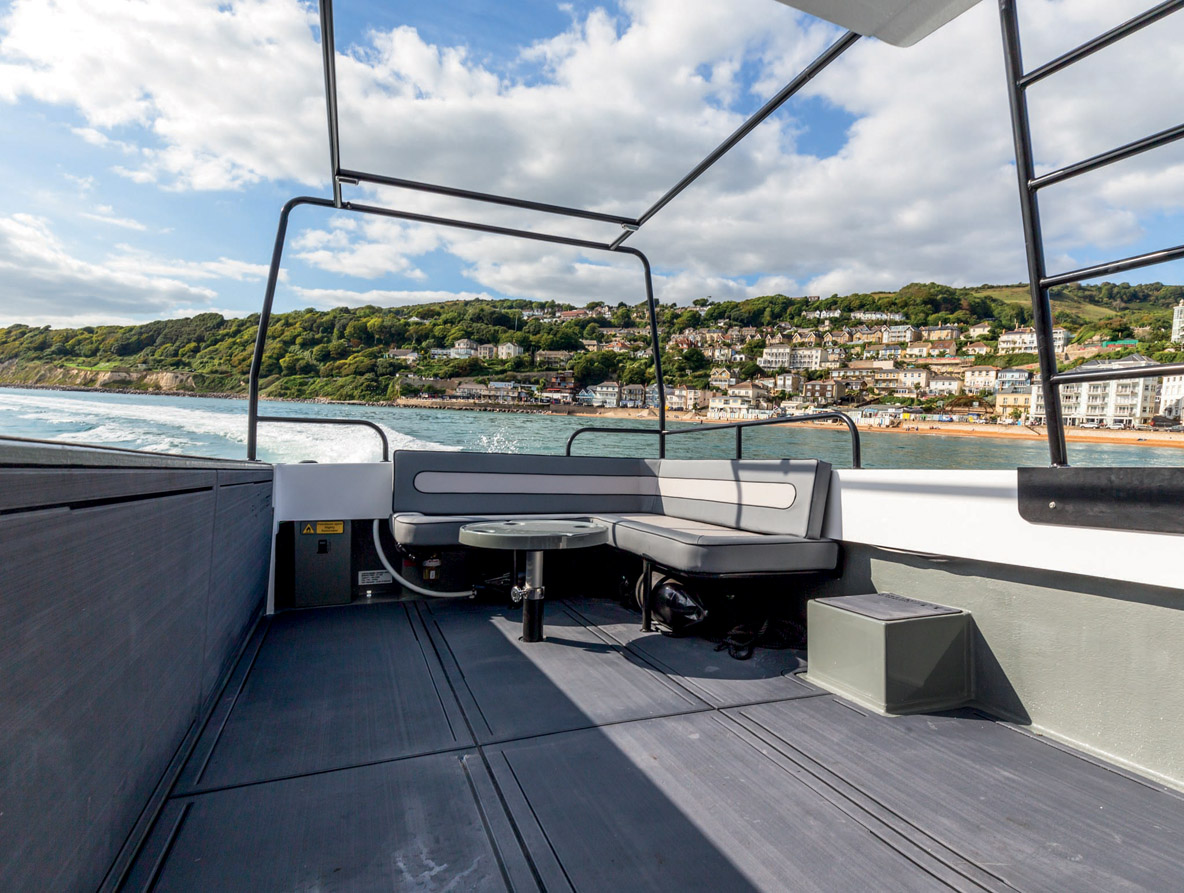
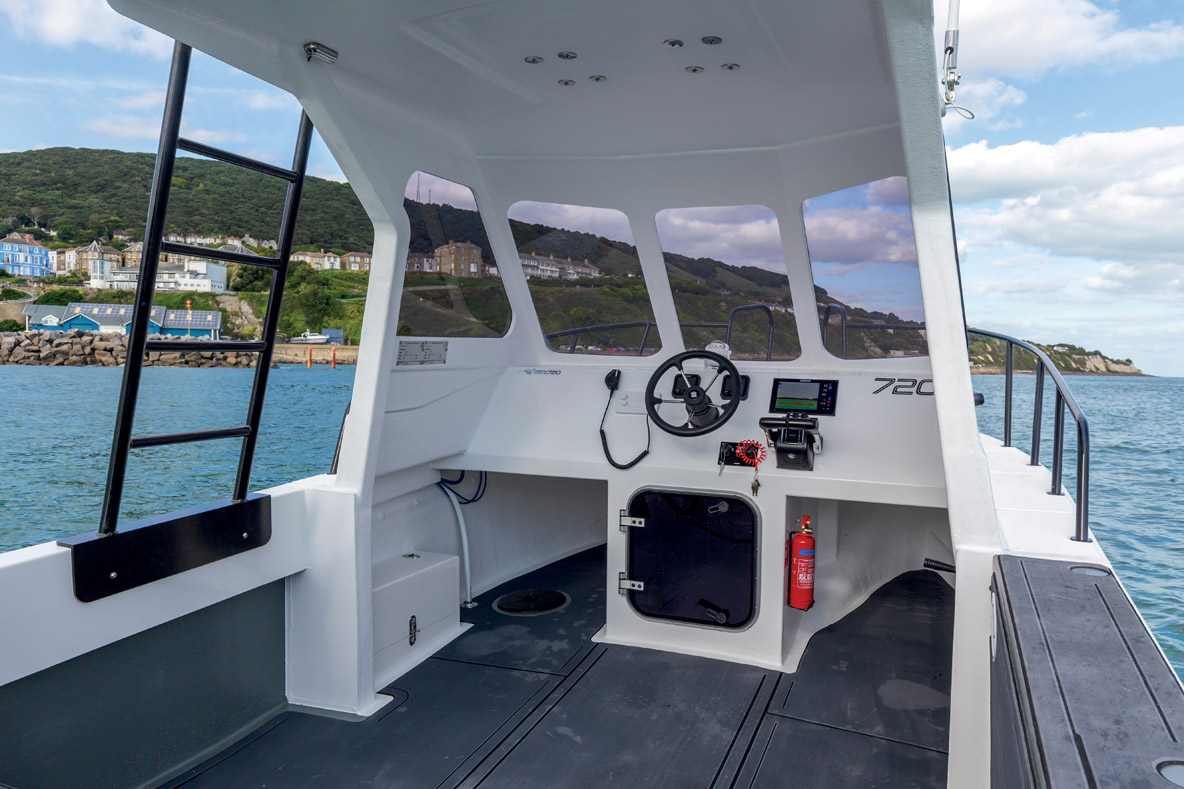
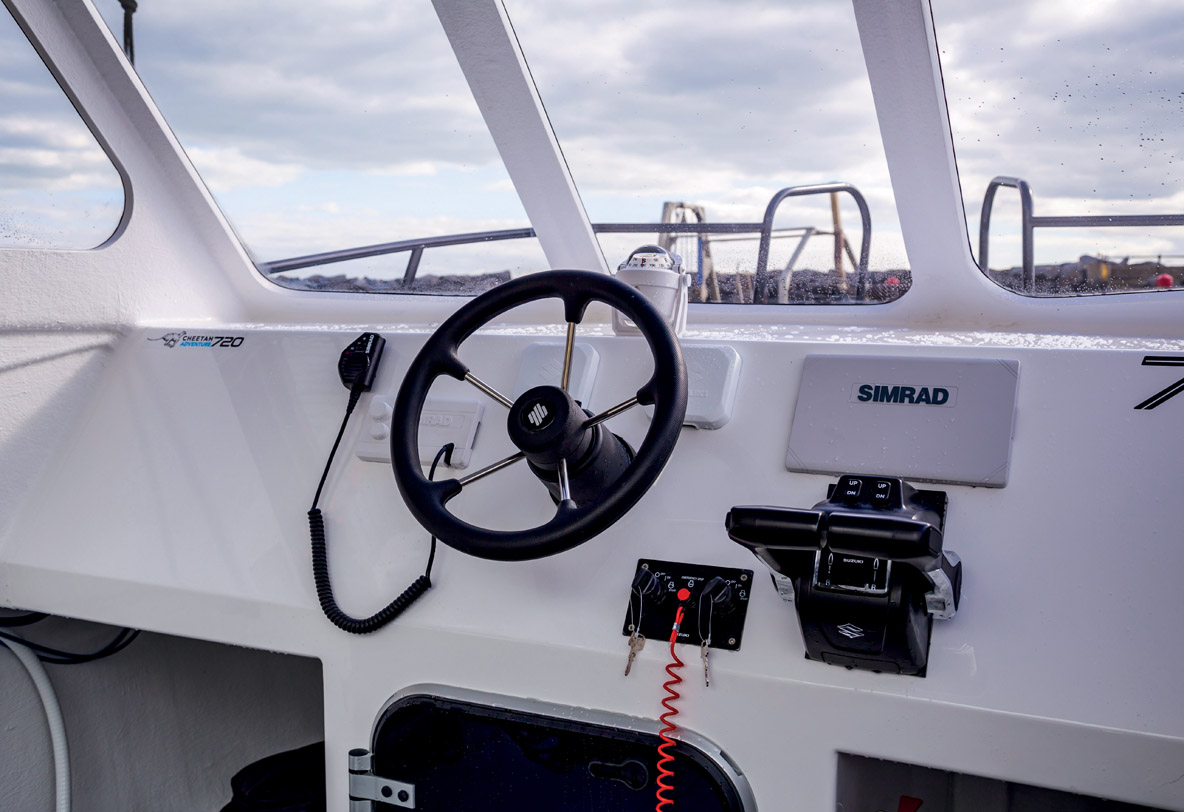
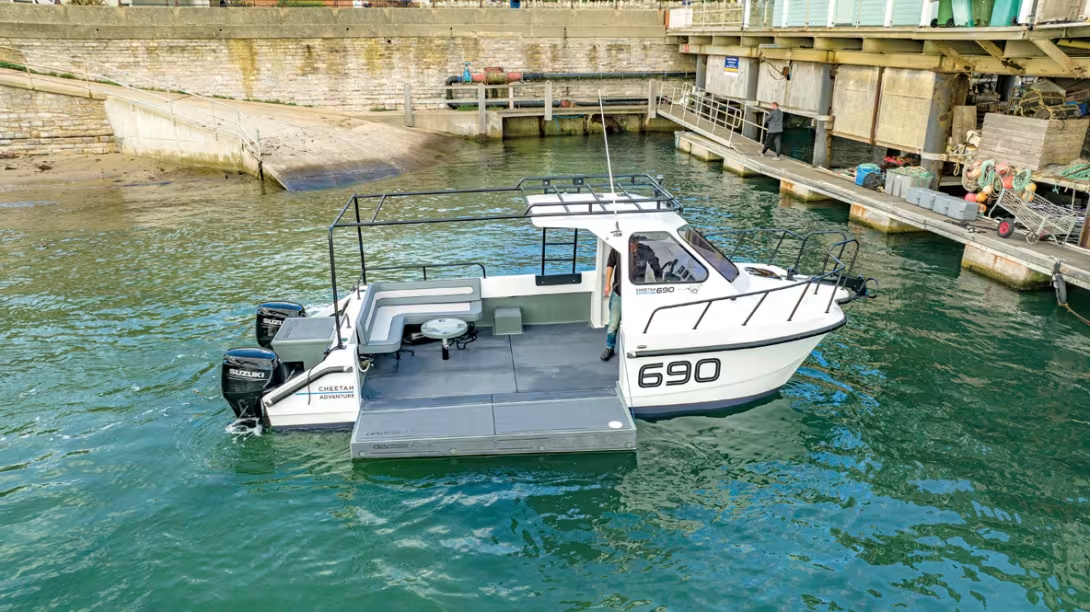
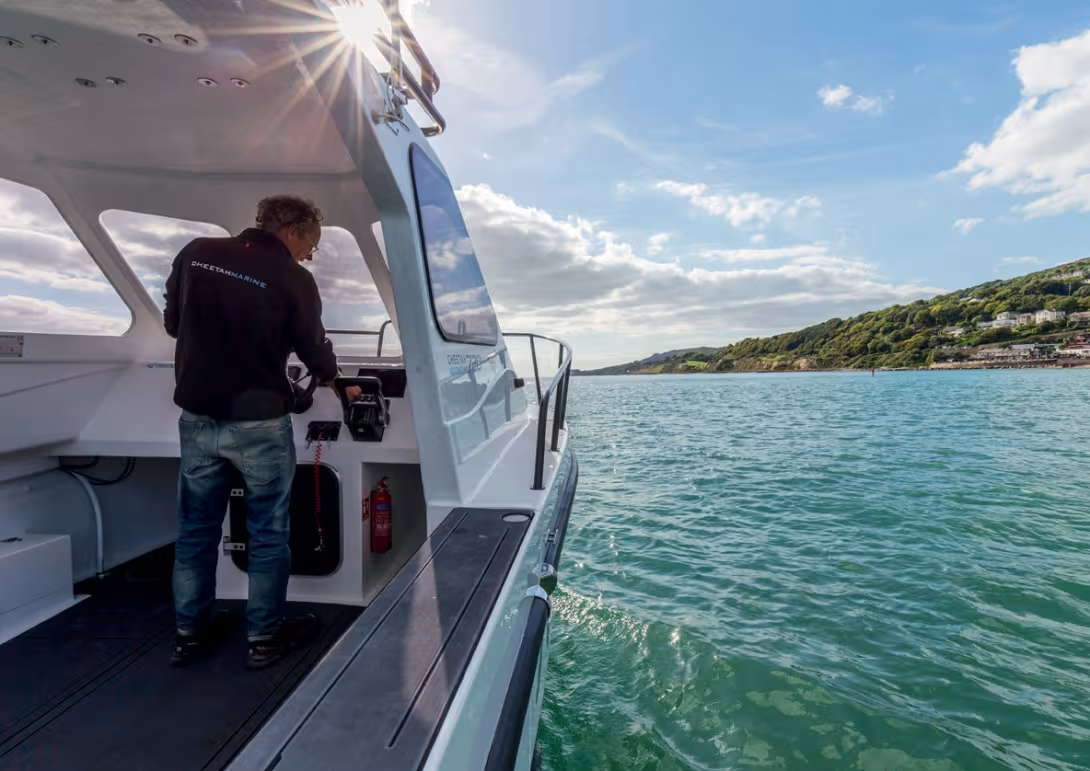
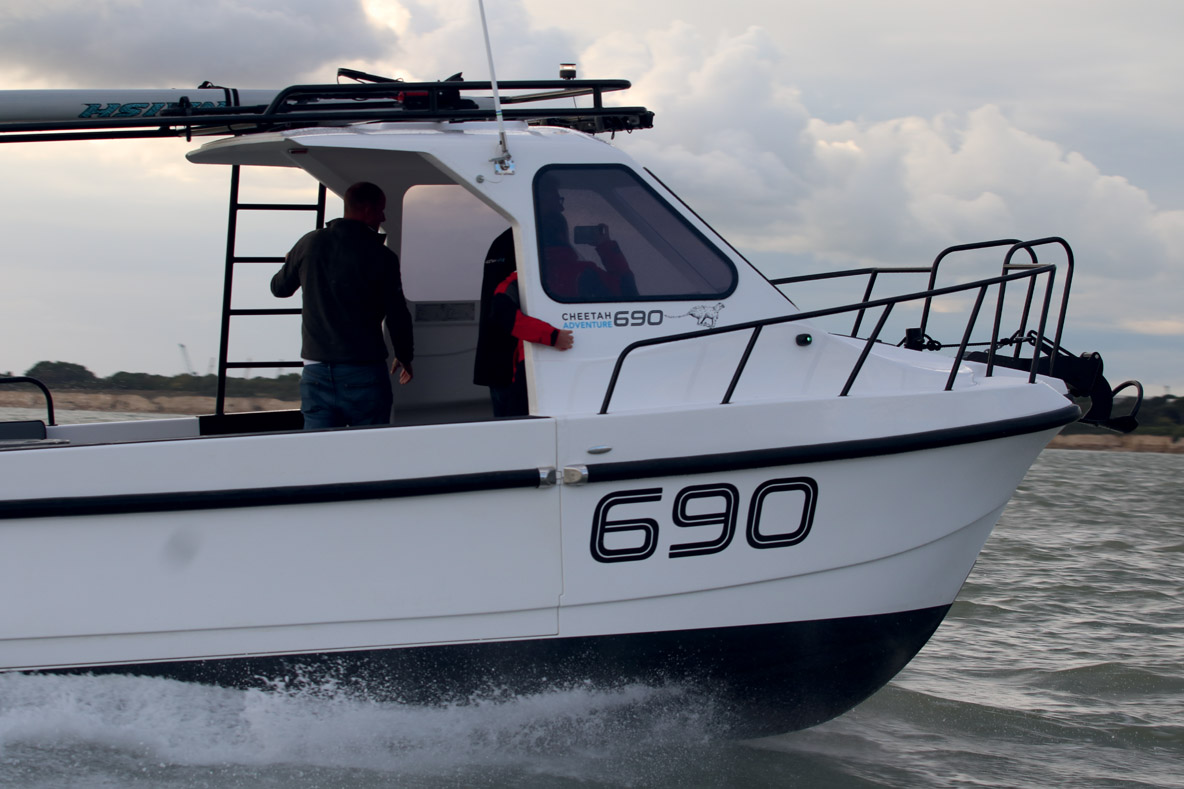
The Cheetah Adventure 720 is a “walk-around” boat with a semi-open wheelhouse set very far forward, leaving a very large cockpit, 7’3” (2.2 m) wide. The fitted-out section is limited to a 4’7” (140 cm) L-shaped bench seat on the port side and a small round table with a diameter of 22½” (57 cm). You’ve got a number of lockers, the most spectacular of which is located outside the cockpit, between the two engines. This XXL storage space also serves as a mini aft platform - a bathing ladder is to be found here. Other storage is concentrated under the console, with a recess on each side and a storage box with a panel in the middle. The entire cockpit sole is covered with a thick, particularly soft, barefoot covering. However, its dark gray color could prove incompatible with the tropical sun and even the Mediterranean summer. The 30” (74 cm) high bulwark is particularly protective and reassuring if you’ve got young children are on board. As a result, access to the foredeck is not so obvious. The manufacturer has thought to provide a box that acts as a step where needed - very practical! Higher up on the deck, on either side of the wheelhouse, the side-decks are narrow (7” / 17 cm minimum), but circulation remains safe thanks to a robust and enveloping pulpit frame and good handholds provided by the aluminum “roof rack” structure. Finally, let’s have a look at the “Adventure” features! The metal structure with its side ladder (to port) allows you to quickly install a sun canopy, but also to attach surfboards, paddleboards or even bikes. The other innovation is the opening bulwark on the starboard side operated by a winch handle system. It takes only a few seconds to open the cockpit completely onto the sea - or the dock. This configuration is reminiscent of pontoon boat standards, but with very different seakeeping qualities, as we were to find out. Note that the builder is open to customizing each hull. You could therefore consider a large sun-lounging area, additional bench seats, an outdoor galley, heads compartment, etc.
This boat’s not frightened by the waves…
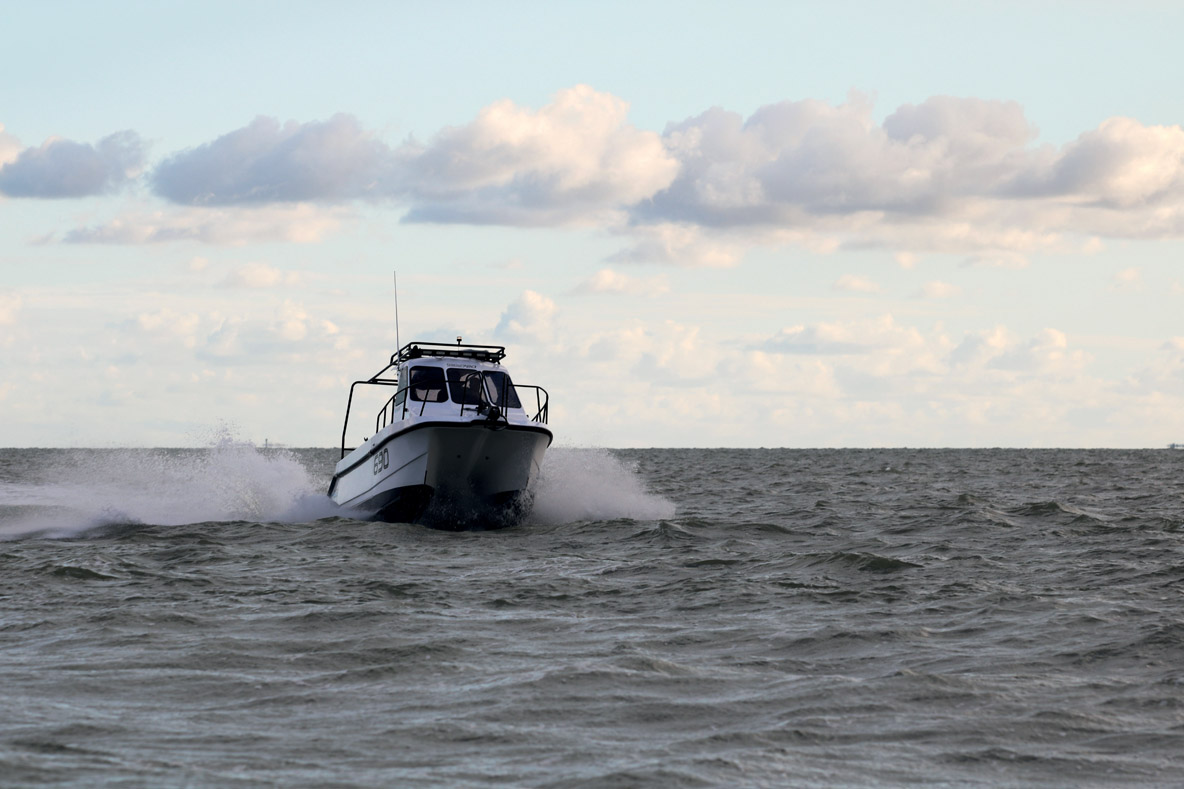
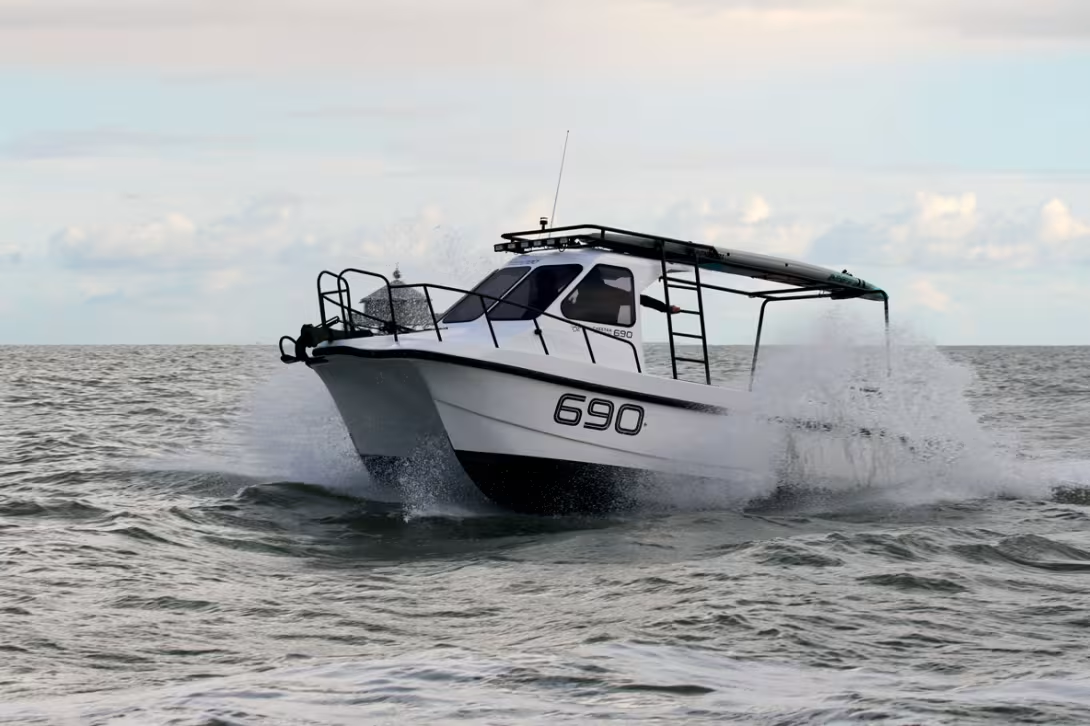
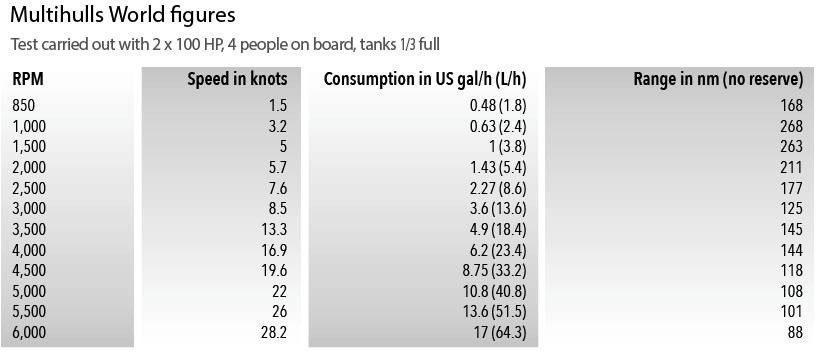
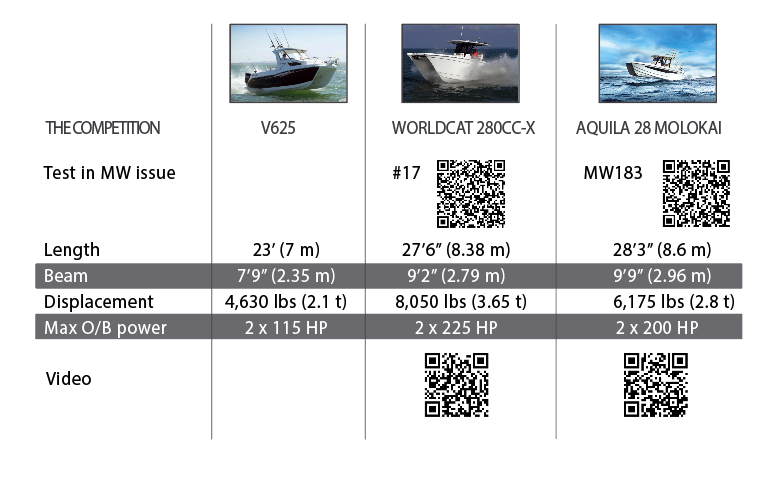
We can’t stress this often enough: twin engines set wide apart make for easy maneuvering. By putting the throttles in opposite directions, the Cheetah pivots on the spot and getting out of the maze of pontoons at the boat show is actually good fun. In the harbor channel, we were greeted by a moderate sea breeze kicking up a small chop. Speed was understandably limited to 5 knots until we cleared the last pair of green and red buoys, and then our test really began! In the absence of a trendy hull design, the Cheetah 720 is relying on the wisdom of its builder in terms of seakeeping performance. And there’s no doubting the experience of the team that designs these powercats for the most demanding uses. No muffled comfort, but supple and quickly damped movements. When faced with a sea, a certain amount of spray (due to the lack of deflectors and/or sufficiently effective chines) invited itself on board. We were perfectly protected in the open wheelhouse - less so aft in the cockpit. The water-repellent glazing allows us to do without windshield wipers. Our test boat has the most powerful engine option with 2 x 100 HP, though the builder also offers either twin 80 HP or 90 HP. The range is therefore relatively tight on a scale that has nothing to do with the powers typically found in the US. In fact, the performances are rather prudent. The maximum speed with the twin 80 HP setup is about 20 knots, or 24 with 2 x 90 HP, while we reached 28.2 knots with our 2 x 100 HP. As for acceleration, it took us 7.81 seconds to reach 20 knots (planing at 11 knots at 2,800 rpm). Compare these figures with those of the Aquila 28 Molokai - 0 to 20 knots in 3.8 s and 40.8 knots of max speed - and the WorldCat 280CC-X - 0 to 20 knots in 5 s and 43 knots of max speed. Note that when we tested those two powercats, they were equipped with twin 200 HP motors - and have slightly longer hulls. Logically, the Cheetah’s fuel consumption is reasonable, as it manages to burn 1.4 liters (just over a third of a US gallon) of fuel per mile at almost 17 knots. On the other hand, the two 26-gallon tanks supplied (2 x 100 l) don’t allow for much in the way of long-haul work, with a range of less than 200 miles if you’re doing more than 6 knots.
The rigidity of the platform is clearly evident: the deck shows no flexing. Turning is easy and you remain on the level, though the hydraulic steering isn’t a model of smoothness, but it does have the advantage of being very direct. With a beam sea, we found the same stability as when we were stationary. With its two well-protected hulls (38½”/98 cm of freeboard at the bow, 35½”/90 cm at the stern) and its very low center of gravity, the Cheetah 720 hardly rolls at all. While our rather easy conditions on the day didn’t lend themselves to pushing the Adventure to its limits, the history of this hull, which has been used by ship’s pilots, customs officers, and the police, among others, for almost 10 years, pleads for absolute confidence. Above all, this powercat is most definitely a seaworthy craft!
Conclusion
The leisure version of this working power catamaran is very convincing. The large all-purpose cockpit with its opening bulwark and roof rack makes it perfect for numerous day-sailing programs (surfing, expeditions, diving) with the guarantee of a powercat with a proven hull. We would just like to be able to go even further without taking on too many jerricans - the installation of bigger tanks should be possible.
690 or 720 ?
Rustic but endearing and timeless design
Customizable cockpit
A bit wet in a head sea
Technical Specifications
Length: 22’8” or 23’7” (6.9 or 7.2 m)
Beam: 8’4½” (2.55 m)
Draft: 12” (30 cm)
Engines: 2 x 80/90/100 HP outboards
Max speed with 2 x 100 HP: 28.2 knots
Fuel: 2 x 26 US gal (2 x 100 l)
Price with 2 x 80 HP: € 129,167 ex-tax