After a six-year gap, Lagoon re-launched themselves onto the powercat market in 2015 with this 40 MY whose platform was directly derived from the Lagoon 39 sailing catamaran. The builder opted for low-power engines in order to favor low consumption and greater range. A choice that wasn’t convincing on a commercial level. So, is the trawler atmosphere old-fashioned? Nothing could be less certain...
Infos pratiques
- Le chantier : Lagoon 40 Motor Yacht
- La fiche technique
-
 Découvrez notre vidéo exclusive
- Financez votre Lagoon 40 MY
- Assuez votre Lagoon 40 MY
- Articles autour du Lagoon 40 MY
Almost six years ago, when the Lagoon 40 MY was launched, we were delighted by the simplicity of use and the sobriety of this model. For us, this new model looked sure to have a great future... but no! The Lagoon 40 MY, of which only about thirty examples were sold, is one of the worst commercial failures from the world leader in cruising catamarans. It disappeared from the catalog two years after it was first introduced. Why did it disappear? Most certainly because buyers were not satisfied with a powercat unable to exceed 11 knots. Indeed, a glance at the market shows that all the success stories in the world of power multihulls are reserved for highly motorized models such as the Leopard 43 PC or the Aquila 44. And yet, the desire to save energy, pollute less and even slow down the pace are more current than ever... Was the Lagoon 40 MY 10 years ahead of the game?
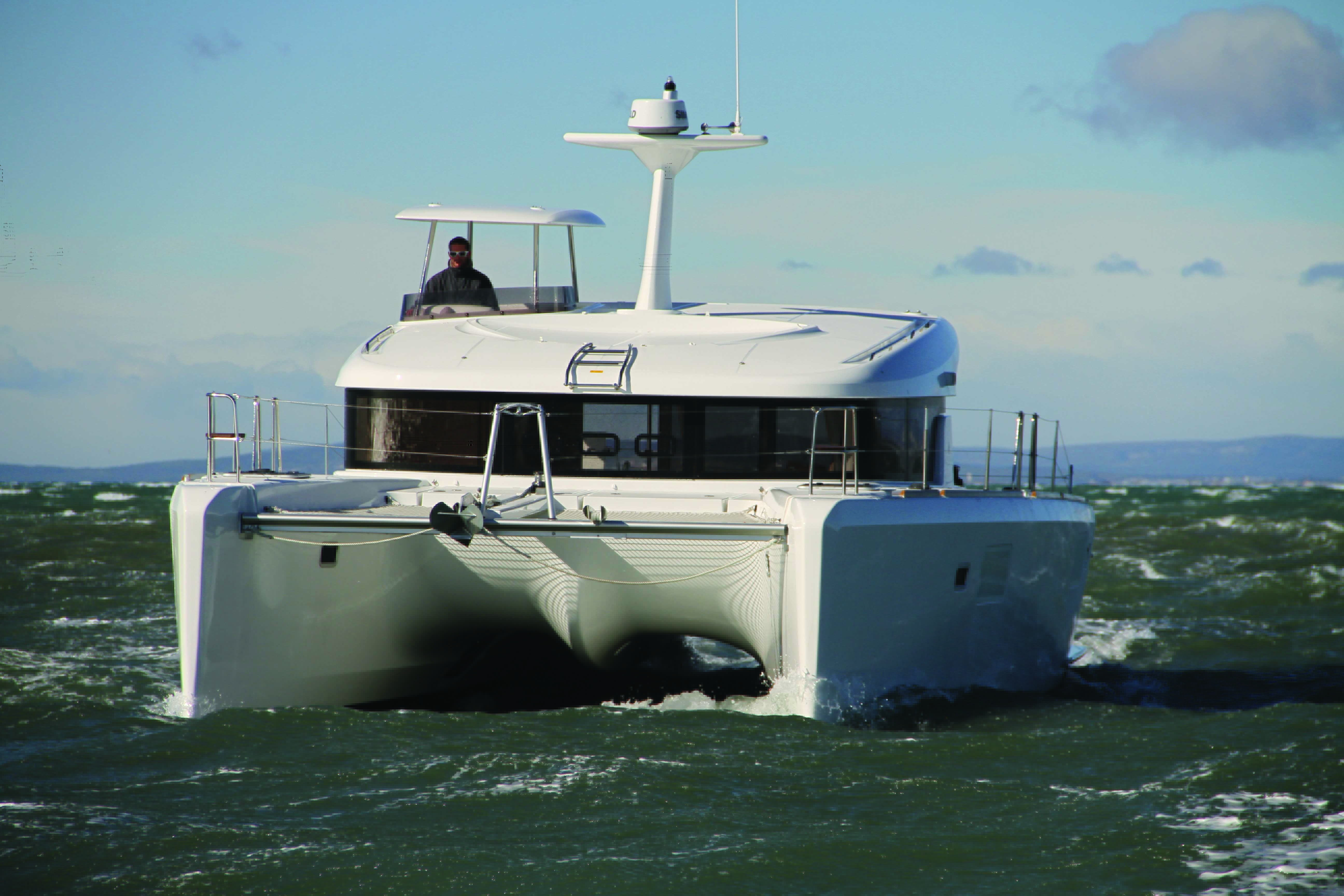
The power of the engines is limited to 2 x 75 hp - the largest sail-drives that exist.
The Lagoon 39 as a base
In 2015, Lagoon was far from new to powercats: the shipyard had produced a hundred Lagoon Power 43 (now the 44) between 2001 and 2006. For their Lagoon 40 MY, the shipyard opted for the transformation of an existing sailing catamaran, the Lagoon 39. The hulls - or more precisely the aft third - were modified in order to offer more lift. The aim of this to fight against the effect of the bows pitching up, the greater weight of the engines, and sometimes to fit an almost horizontal propshaft, not that that’s relevant in this case. The hulls are narrower than those generally designed for engine use. This results in a very low resistance to forward motion at low to medium speeds, but also makes it impossible to get the hull to plane. As a result, the engines on offer are less powerful - it’s as well to play the fuel economy card and assume low speeds. Or a Trawler program - except that the old-fashioned connotation of this term has led to its being left behind, and replaced by the more seductive Motor Yacht...
The mast becomes an elegant little spar…
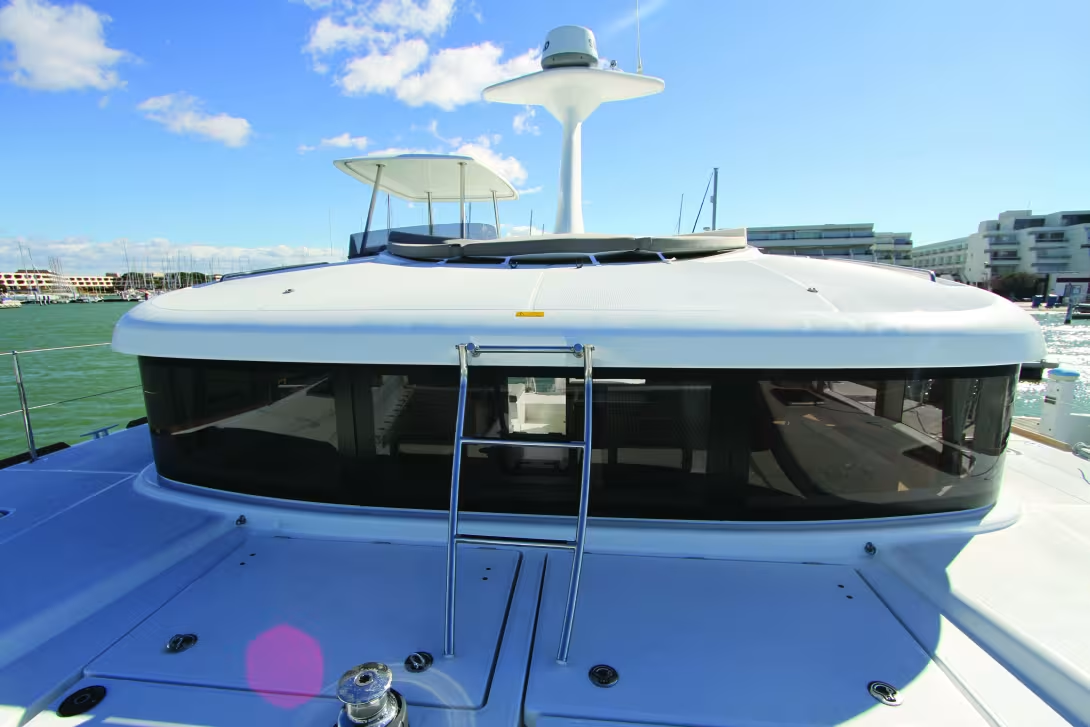
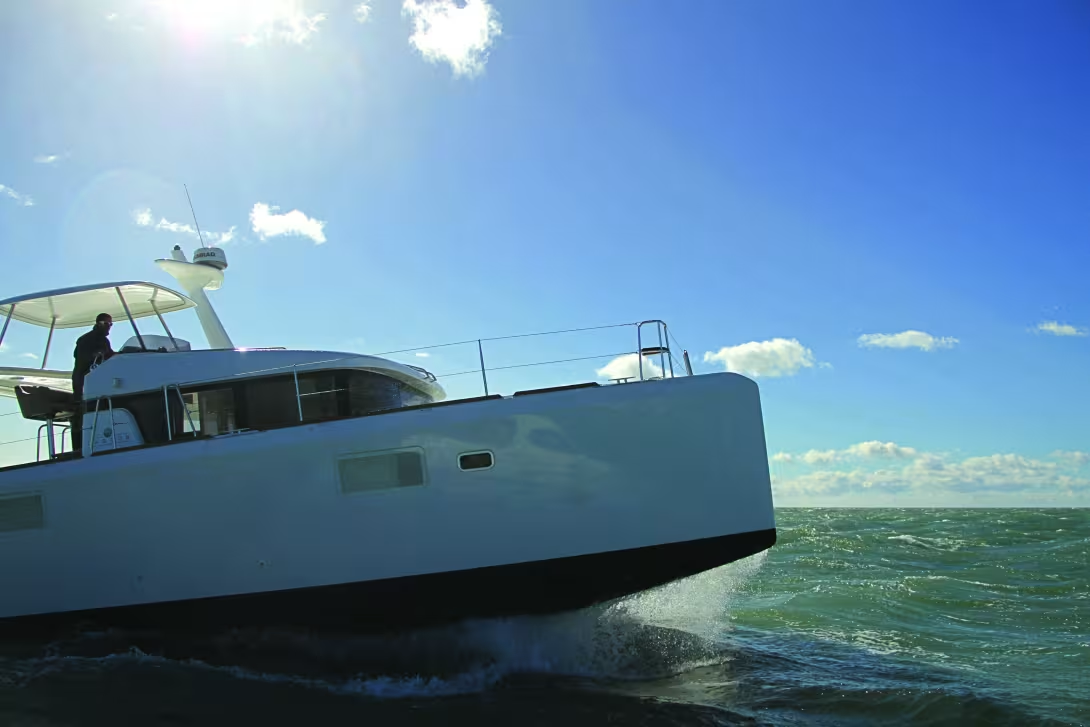
Seen from the dock, the 40 MY is rather elegant with her straight bows and diamond angle above. The black band that extends the lateral hatches visually manages to separate the coachroof from the hulls, making the high freeboard less apparent. A “levitating” effect, as it was explained by Lagoon in 2015... On the coachroof, the mast and rigging have of course disappeared... The whole being replaced by an elegant little spar, inherited from the early Lagoon Power boats, and on which are mounted the radome, the antennas, the lights and the foghorn.
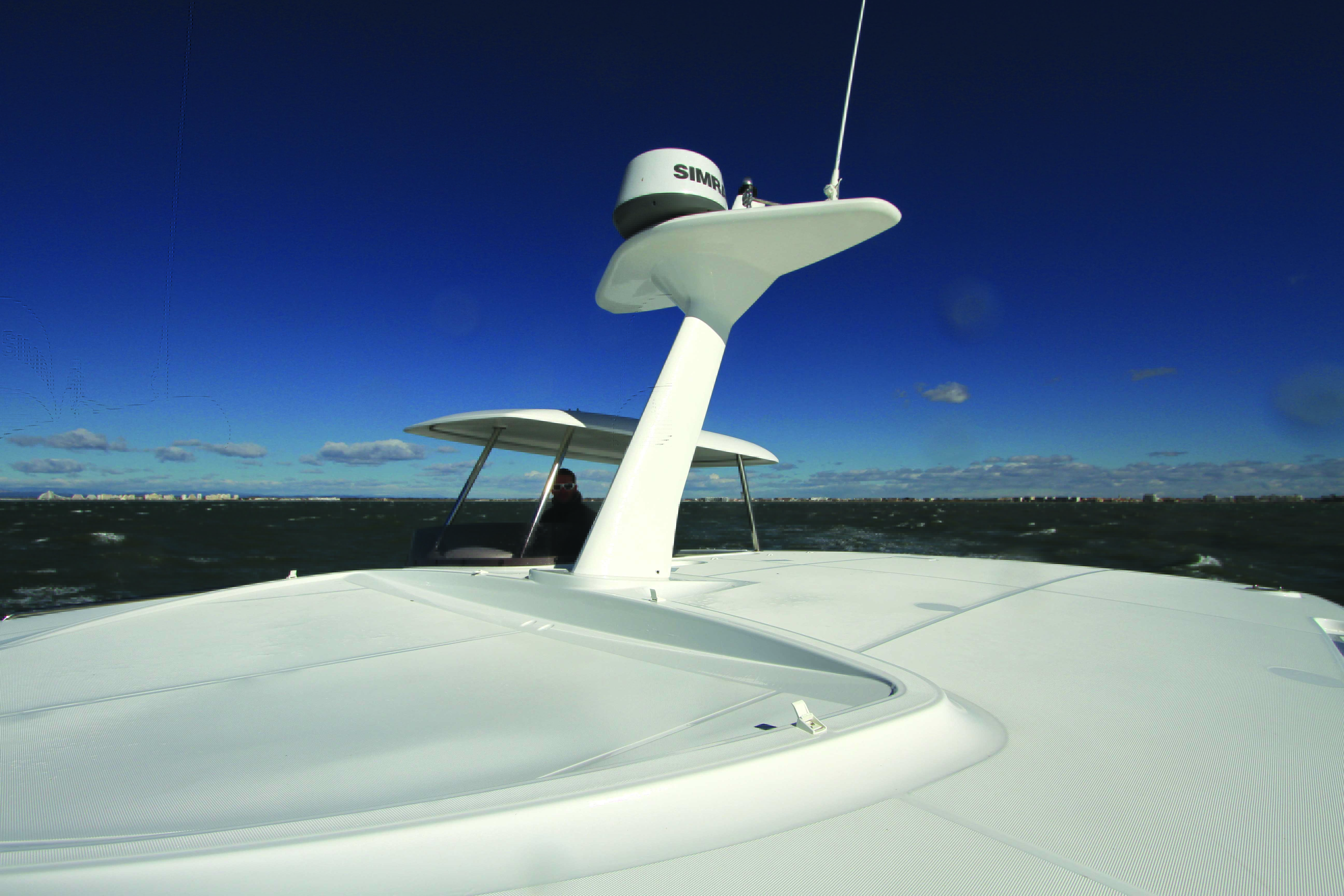
Pas de flybridge : juste un poste de barre surélevé et moyennement protégé ; on accède sur le rouf grâce à une échelle basculante.
Comfortable even in a big sea
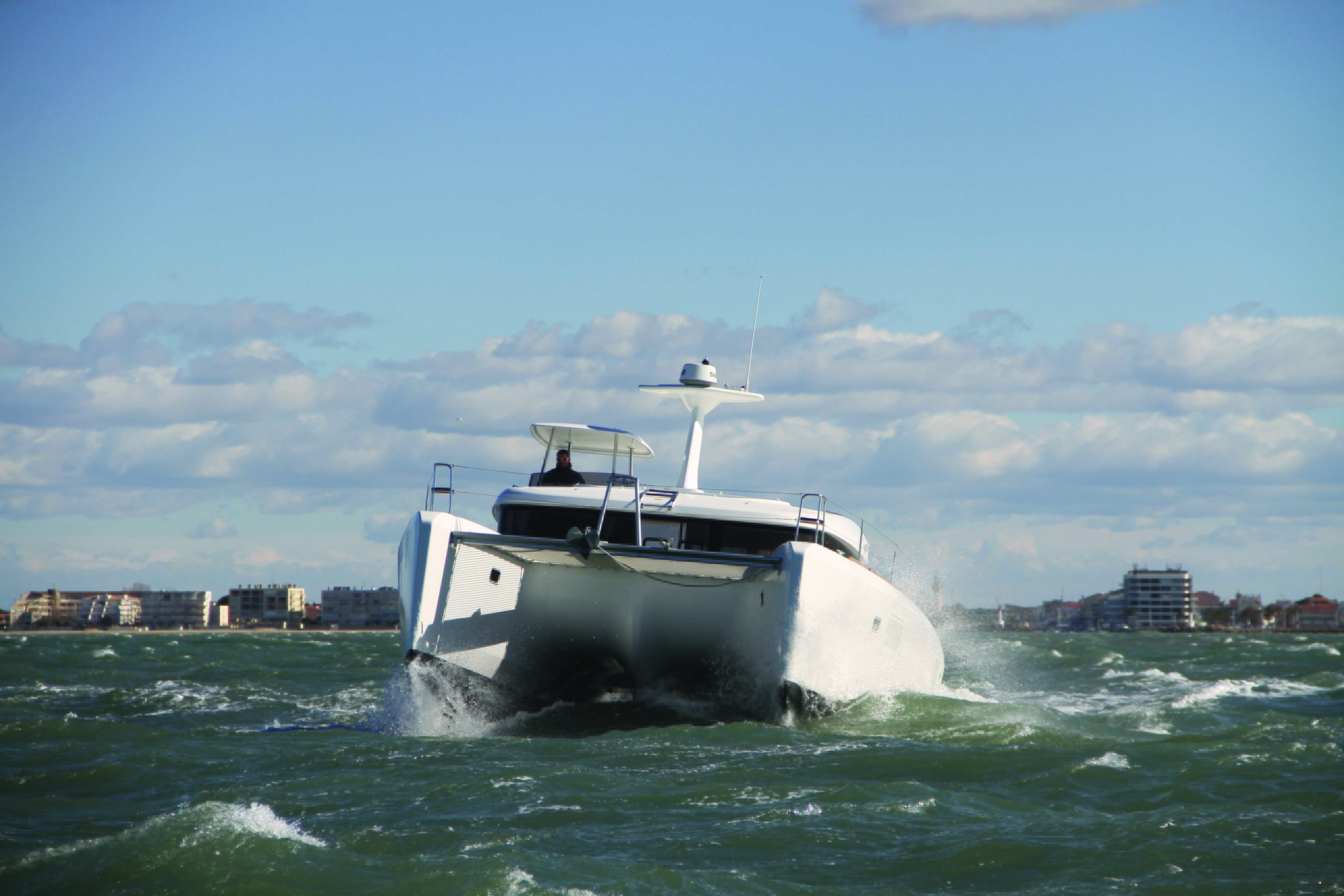
In the bay of Aigues Mortes, in the South of France, 30 knots of tramontane wind and very short chop gave a chilly greeting for our very first test back in April 2015. Thanks to the two engines, we noted the ease of maneuvering and the possibility of pivoting on the spot by reversing the controls, with the helm locked. Another advantage of the catamaran configuration is that, for a windage identical to that of a powerboat of the same length, we benefit from a much more efficient anti-leeway plan. The two narrow hulls associated with the keels have no tendency to crab sideways. The bow thruster is almost rendered useless…
 |
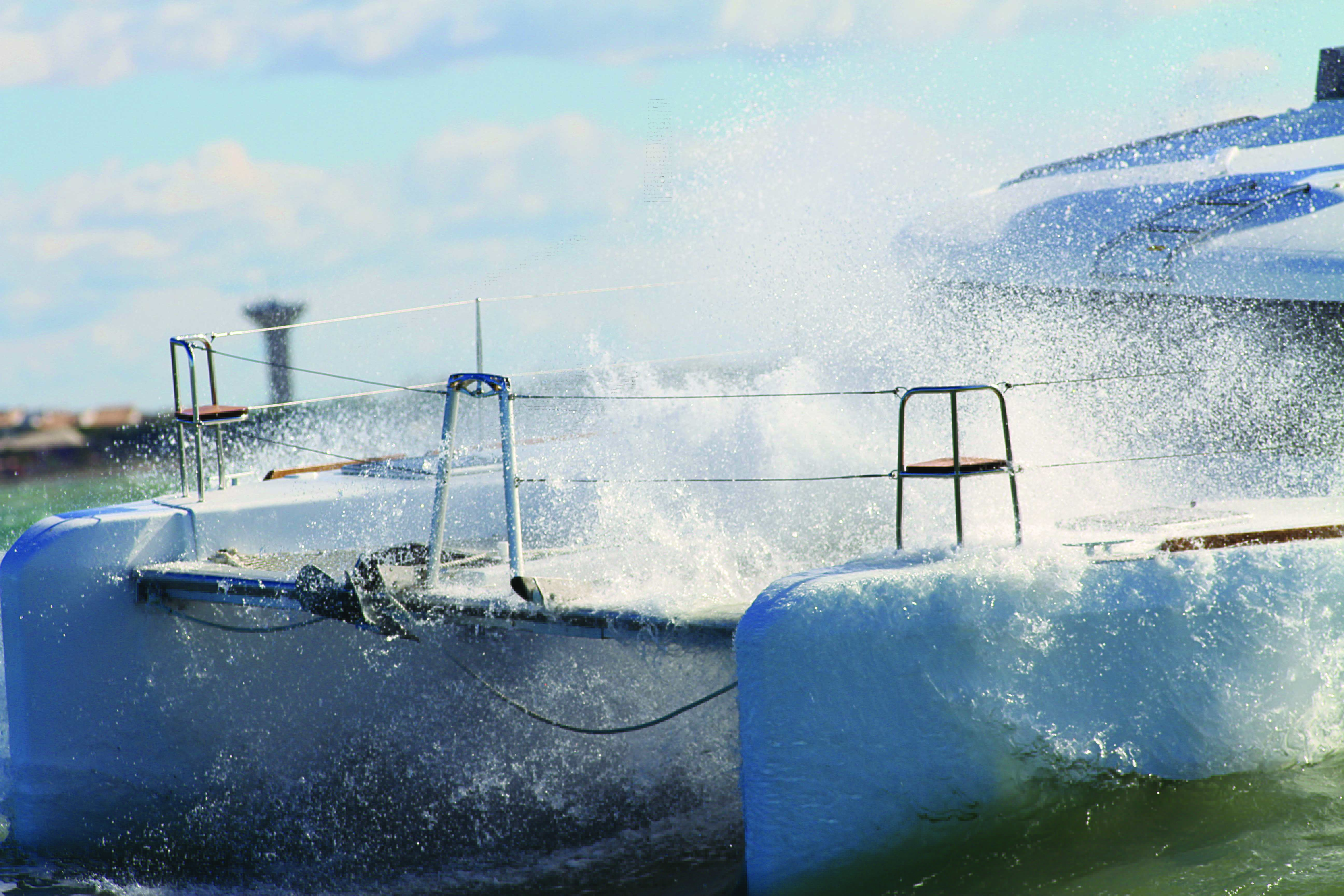 |
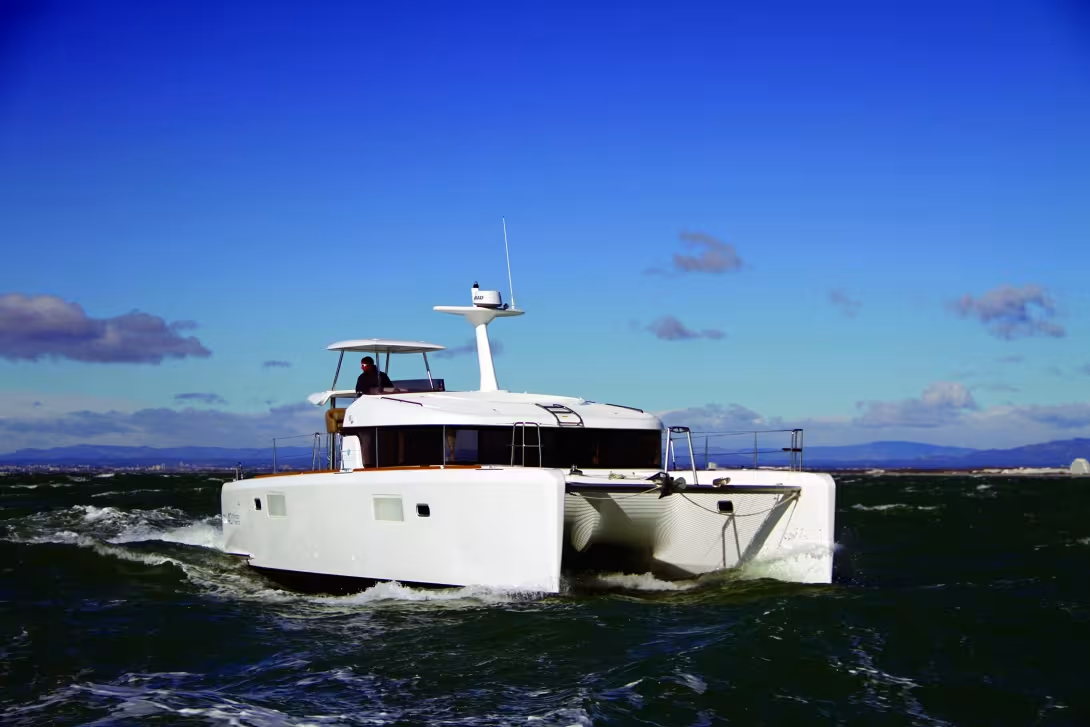
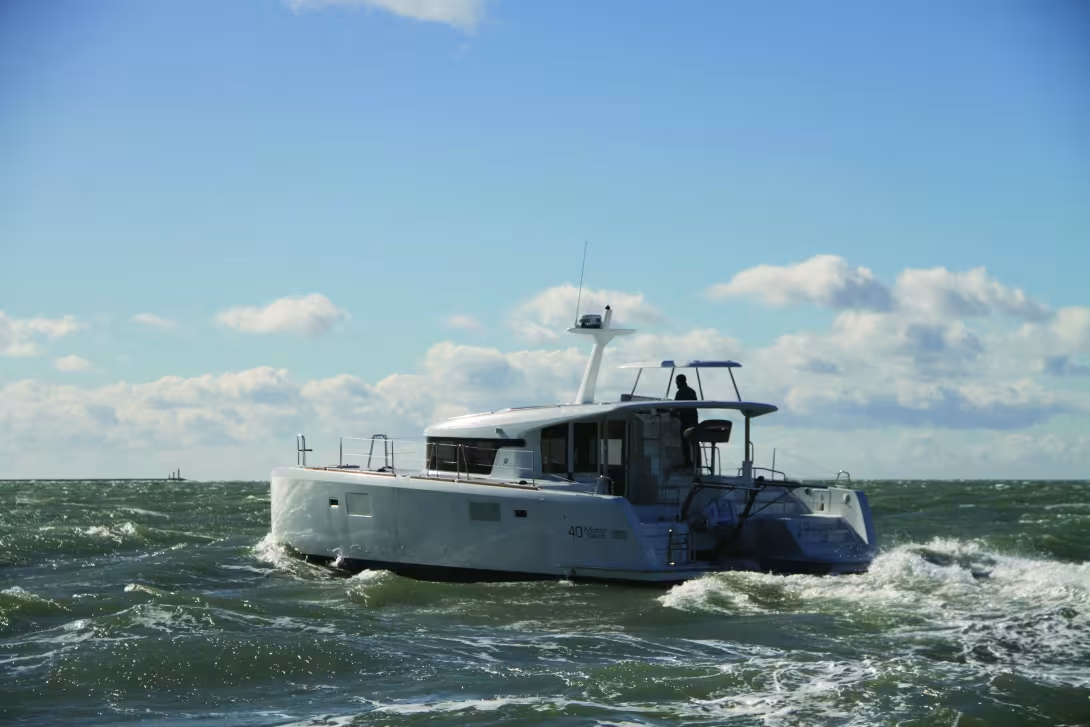
With 30 knots of wind set in, and a very short chop, the Lagoon 40 MY made a convincing demonstration of her seakeeping qualities during a first outing in April 2015.
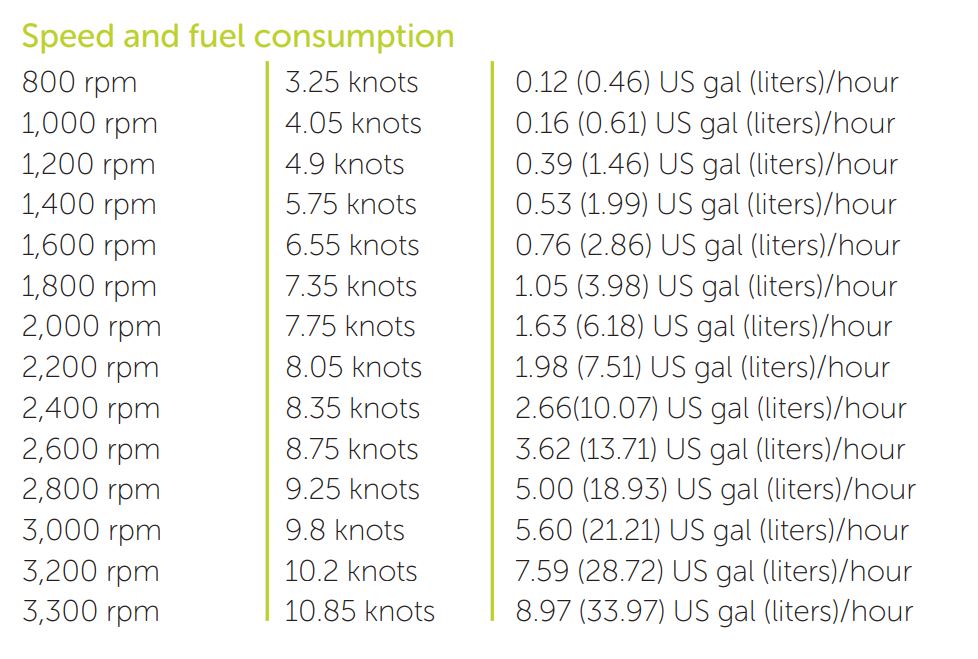
If the power is limited to two 75 hp engines - which is much lower than the competition - it is due not only to the choice of non-planing hulls as explained earlier, but also because 75 hp is the largest engine size that can be coupled to a sail-drive. Facing very short waves, the 40 MY pitches but doesn’t slam at all. No creaking or unwanted vibrations: the structure (monolithic for the lower hulls, balsa sandwich for the topsides, monolithic counter-mold and foam sandwich and finally laminated or glued plywood bulkheads) is stiff and strong. By coming off the wind a little, the passage of the hulls through the water is even smoother and the roll is quite contained. So, the first observation is that the boat is very comfortable in this choppy sea. An obvious plus for family crews. No question of getting dizzy with speed. The right speed is 8 knots, or 2,150 rpm. Consumption is based on just under a quart (one liter) per mile, or a range of 600 miles. She’s not greedy this Lagoon! At full throttle, the tacho shows 3,300 rpm. At most, you top out at 11 knots, and the consumption is multiplied by three. Not good... On the other hand, helped by the waves, the 40 MY willingly goes surfing.
Trampolines forward of the coachroof
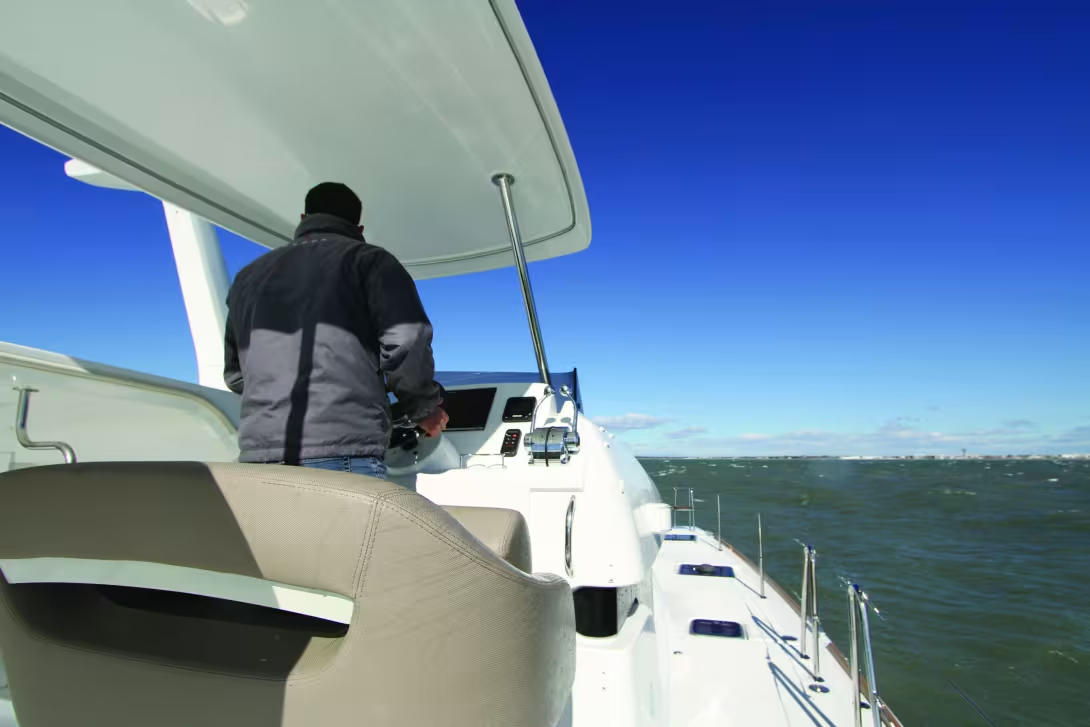
The deck layout offers a large cockpit perfectly protected by a rigid bimini. The shipyard arranged U-shaped seating around a large table on the port side, a lounger opposite, and a walkway at the stern. The two sugarscoops allow easy access to the dock, to the tender and of course for swimming. As an option, Lagoon offered protective covers and even a full cockpit enclosure. The helm station gives a good view from the starboard side from where it is easy to handle the boat and maintain your course. The small windshield tries to protect the pilot from the sea spray but was insufficient for our harsh conditions. We appreciated the wide side-decks (not at all like those on most monohull powerboats) and the trampolines forward of the coachroof and the sunbathing area above.
A nacelle well-protected from the sun
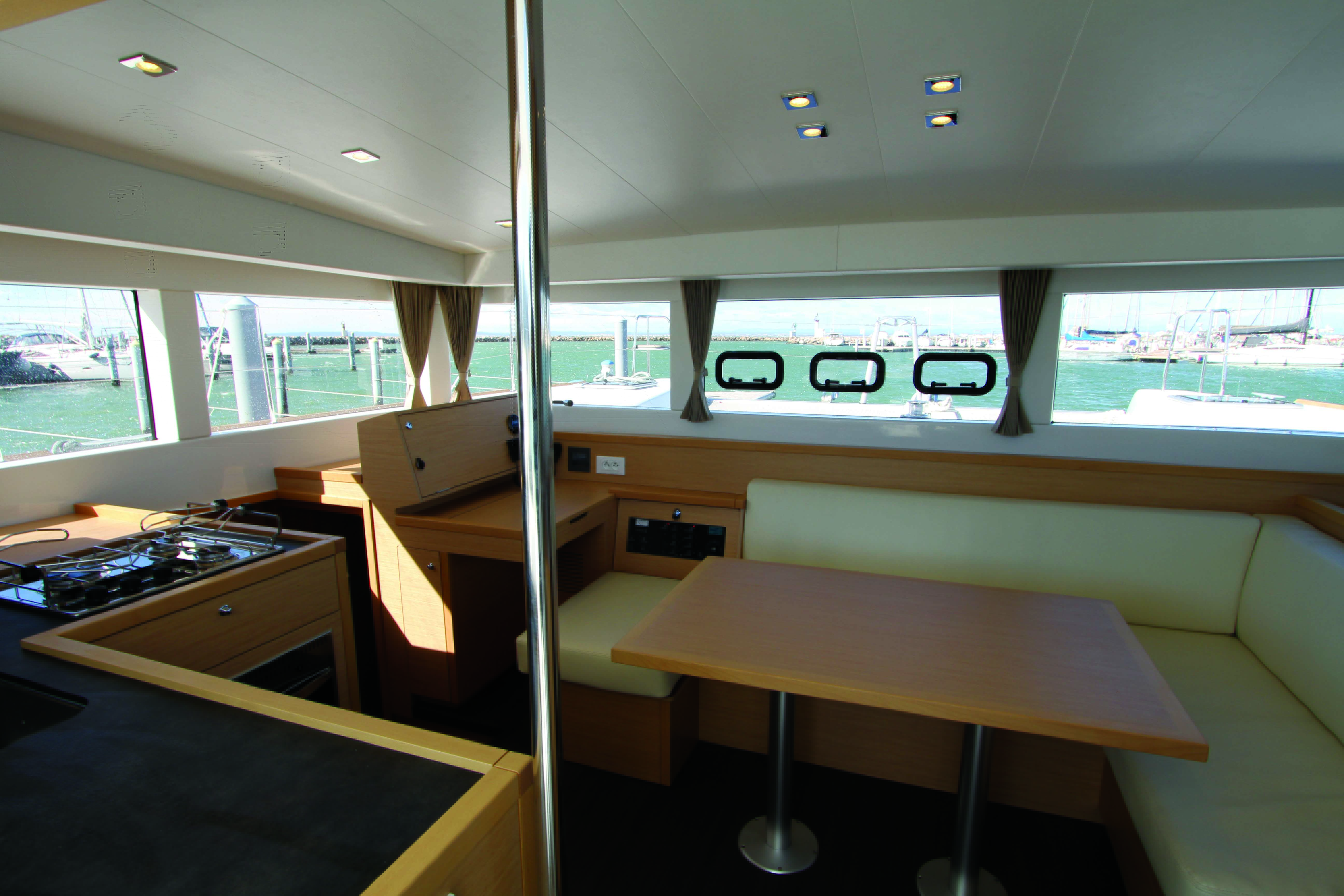
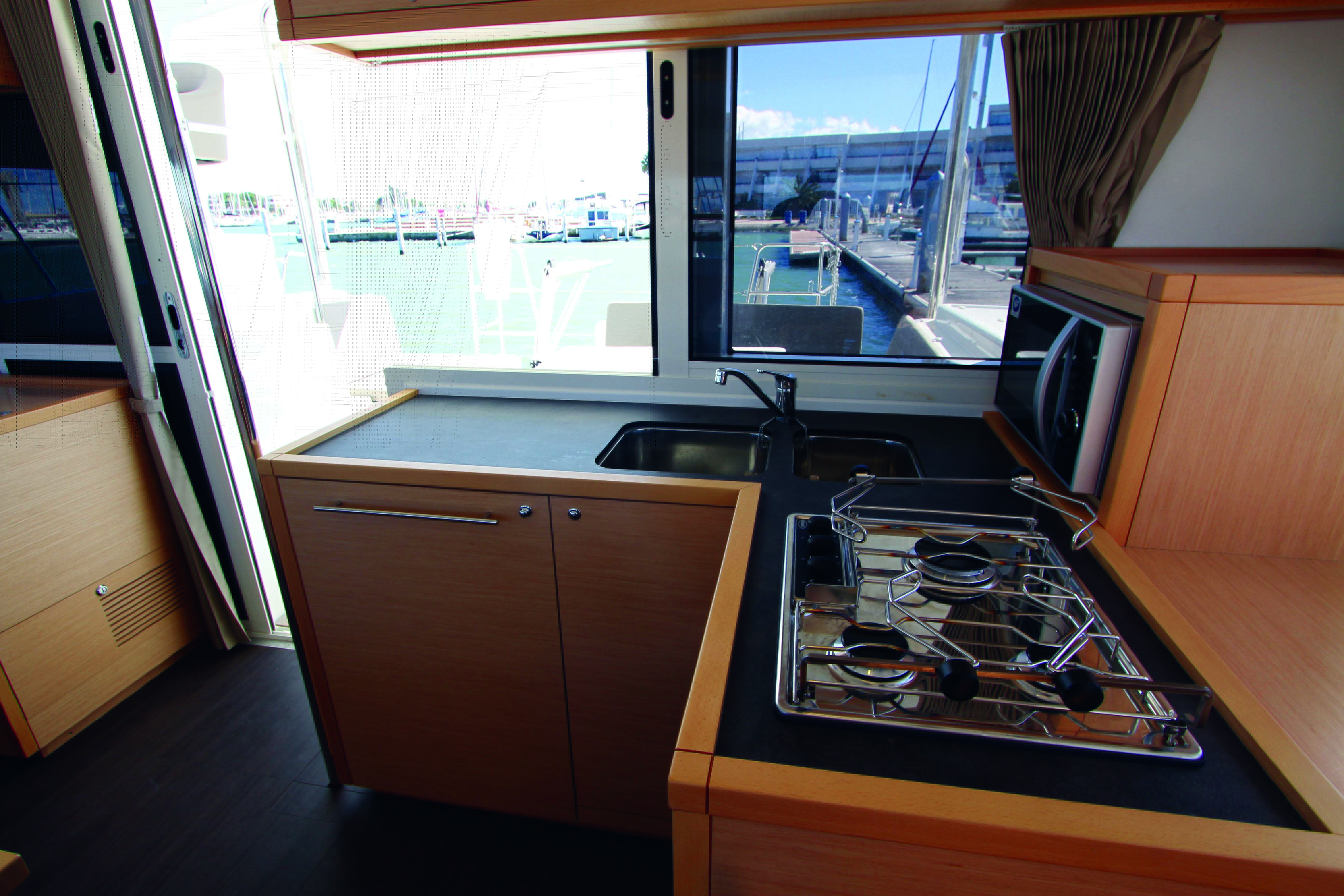
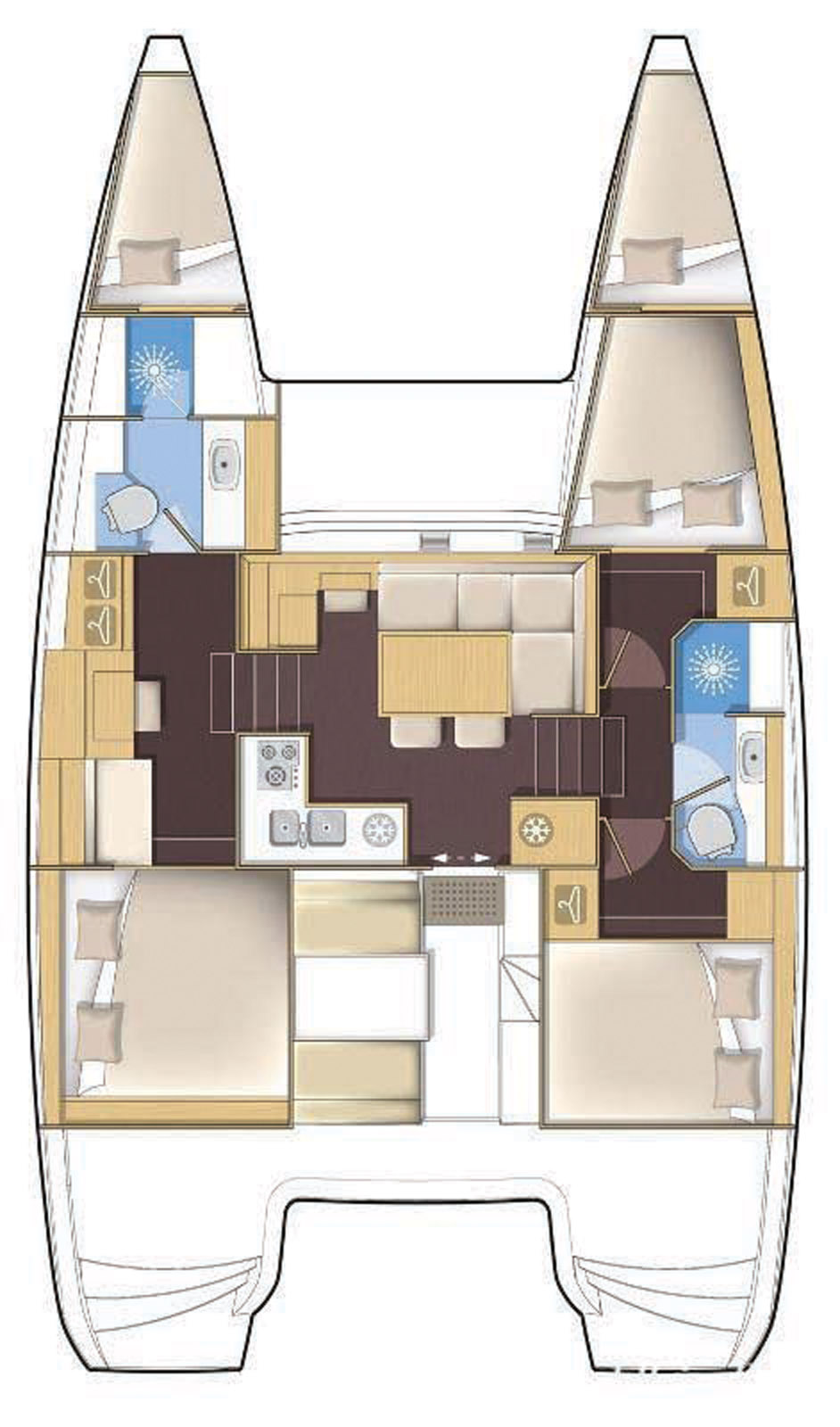
Inside, the saloon offers exceptional volume with a beautiful panoramic view. The vertical hatches and glazing are the best answer to the greenhouse effect. The vertical rays of the sun, the hottest, don’t hit them. The headroom reaches 6’6” (two meters). Compared to the Lagoon 39 - the sailing version – the only difference is that the mast support strut has disappeared. The rest of the accommodation is identical, with a saloon for six people, an L-shaped chart table installed athwartships, a large galley that opens directly onto the cockpit and storage space everywhere. As for the hulls, two versions were proposed by the shipyard: Owner with a private hull for the happy skipper, who will discover a king size bed - yes, yes, 6 1/2 feet by 6 1/2 (two meters by two)! - and a desk. In the other hull, two cabins and a bathroom. The four-cabin version is equipped with four bathrooms
 |
 |
Conclusion
Comfortable in all sea conditions, easy to handle and maintain, the Lagoon 40 MY is well suited for blue water use or family coastal cruising. Scandinavian countries, a Mediterranean circuit... there is no shortage of playgrounds. Admittedly, her top speed is limited, but the option to cruise at 6 knots with a consumption of 1 pint (0.5 liter) per mile deserves some thought!
The Pluses
+ Low fuel consumption
+ Easy to handle
+ Exceptional comfort for a 40-footer
The Minuses
- Limited top speed
- Helm station protection could be better
- Few examples available on the second-hand market
Points to check
Such a recent multihull - six seasons at the most - is bound to be in very good general condition unless it’s been treated very carelessly or has suffered some peril of the sea. The structure is generally robust, the fittings simple and resistant to intensive use. It’s really just the motors and their peripherals that deserve a thorough inspection: number of engine hours, of course, but also routine maintenance. In case of doubt, an oil analysis wouldn’t be a bad idea.
TECHNICAL SPECIFICATIONS
Builder: Lagoon Catamarans
Naval Architects : VPLP
Interior design: Nauta Design
Overall length: 39’4” (11.99 m)
Hull length: 38’6” (11.74 m)
Beam: 22’3” (6.79 m)
Draft: 3’ (0.91 m)
Displacement: 25,735 lbs (11,673 kg)
Construction: GRP
Cabins: 3 or 4
Berths: 6 or 8
Fuel capacity: 2 x 80 US gal (2 x 300 l)
Fresh water capacity: 80 US gal (300 l)
Engines: 2 x 75 hp diesel
CE Category: A: 10, B: 12, C: 16, D: 30
Production: 30 units built from 2015 to 2017
Second-hand price: starting from € 250,000 ex-tax