Following on from their remarkable success in the cruising trimaran market, NEEL are now taking on the power sector – and still on three hulls. NEEL becomes LEEN, and a new brand is born! And with it, two models built for blue water, the 56 and the 72. We had the chance to go out on the newly-launched boat #1.
Infos pratiques
- Le chantier : Leen 56
- La fiche technique
-
 Découvrez notre vidéo exclusive
- Financez votre LEEN 56
- Assuez votre LEEN 56
- Articles autour du LEEN 56
Place: La Rochelle, France
Conditions: Sea state slight, 10 knots of easterly wind
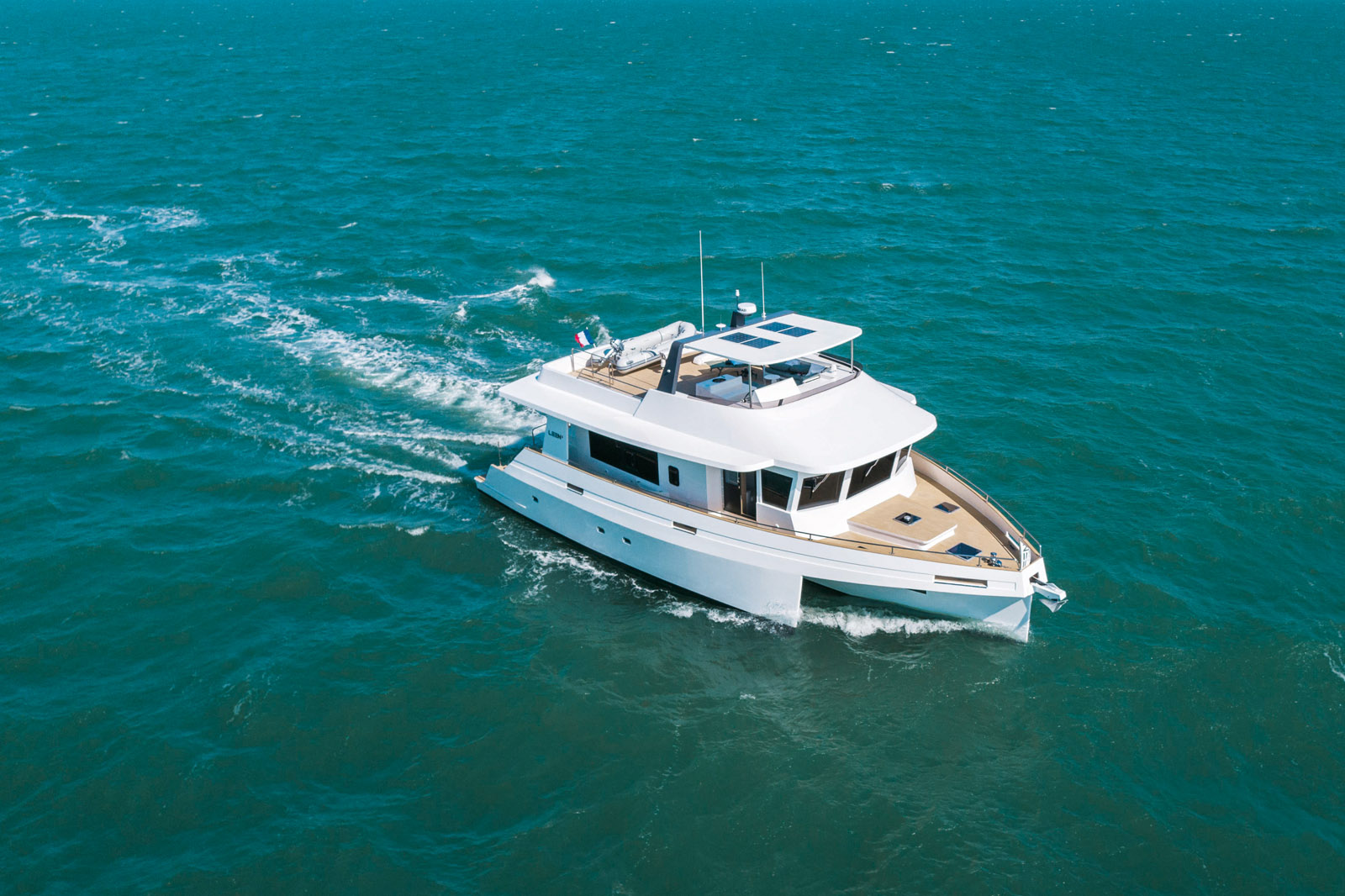
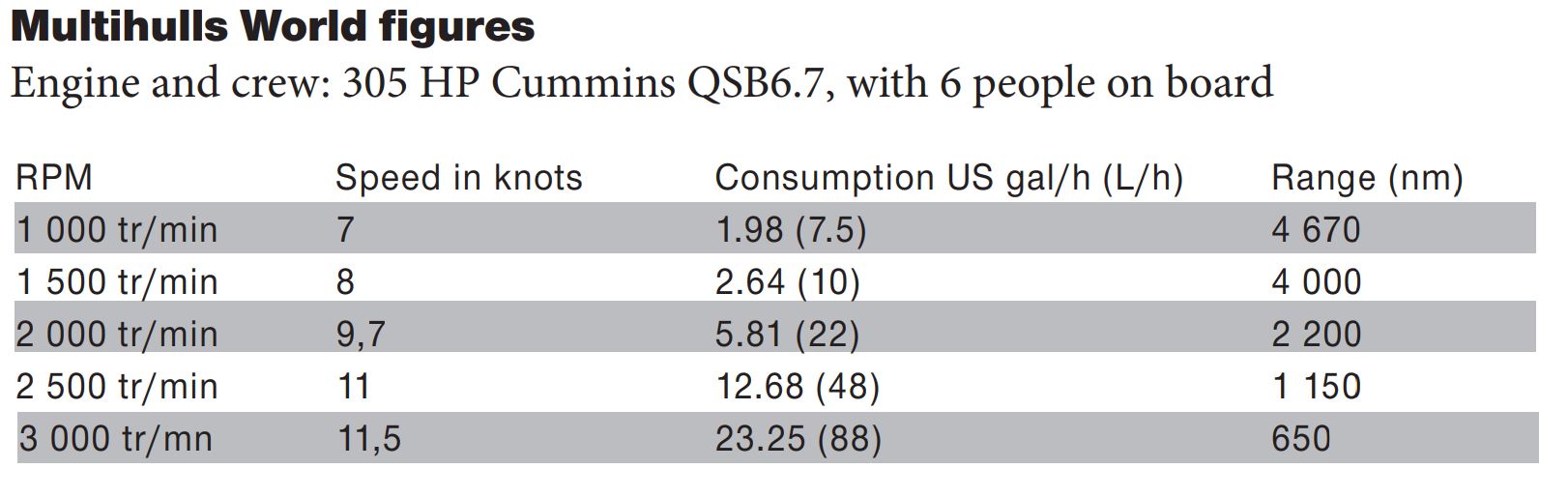
With fuel consumption just half a gallon (2 liters) per nautical mile at 9 knots and with 1,350 US gallons (5,000 liters) of fuel, the LEEN 56 can claim a record range.
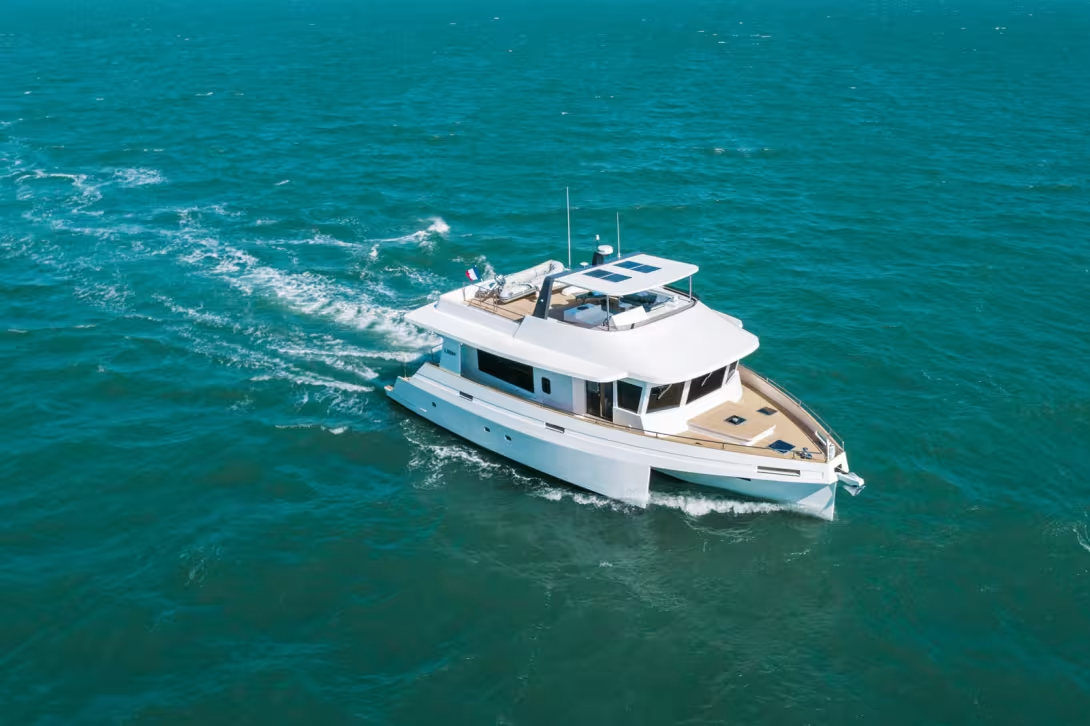
The fine-entry bows guarantee good passage through the water
Before discovering the LEEN 56, you need to put aside everything you think you already know, or have learned, seen, experienced and debated about multihulls - and even everything about blue water boats. Without this reset, you’ll be plunged into an abyss of confusion - over the design, of course, but also into making meaningless comparisons with other boats... The very concept of the LEEN 56 may even escape you. In short, this motor trimaran – a powertri, we might dare to call it - is certainly something new; a third way in the true sense. Let’s start by taking a look at the genesis of this project. Following the success of their sailing trimarans, NEEL became interested in the power sector - on three hulls, of course. But where most design teams would have been satisfied with a power version more or less in line with the existing sailboat, NEEL - henceforth LEEN for the powertris - started from scratch with this LEEN 56, a boat designed for blue water cruising. Bernard Nivelt, there from the outset, adopted the project (despite them being somewhat obsolete for the past fifteen years) as a trawler yacht. With this in mind, the 56 focuses on low fuel consumption and ocean-going range. Where all its twin-hulled competitors have bowed to the diktat of performance - or rather speed, since all models, except for some electric powercats, are capable of exceeding 20 knots - the LEEN 56 was designed to operate between 8 and 10 knots, with a maximum of 11.5, though this burns four times more fuel than at 9.7 knots!
The LEEN 56 has many of the distinctive features of professional vessels - this trimaran will lend itself perfectly to an expedition program.
Inspired by working boats
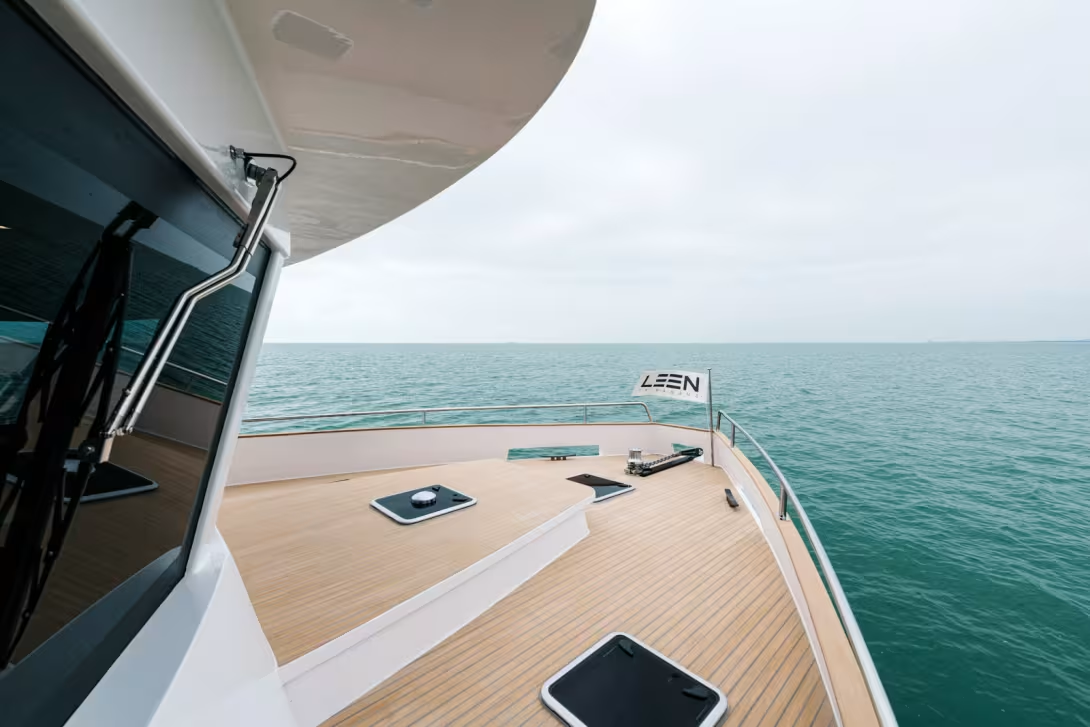
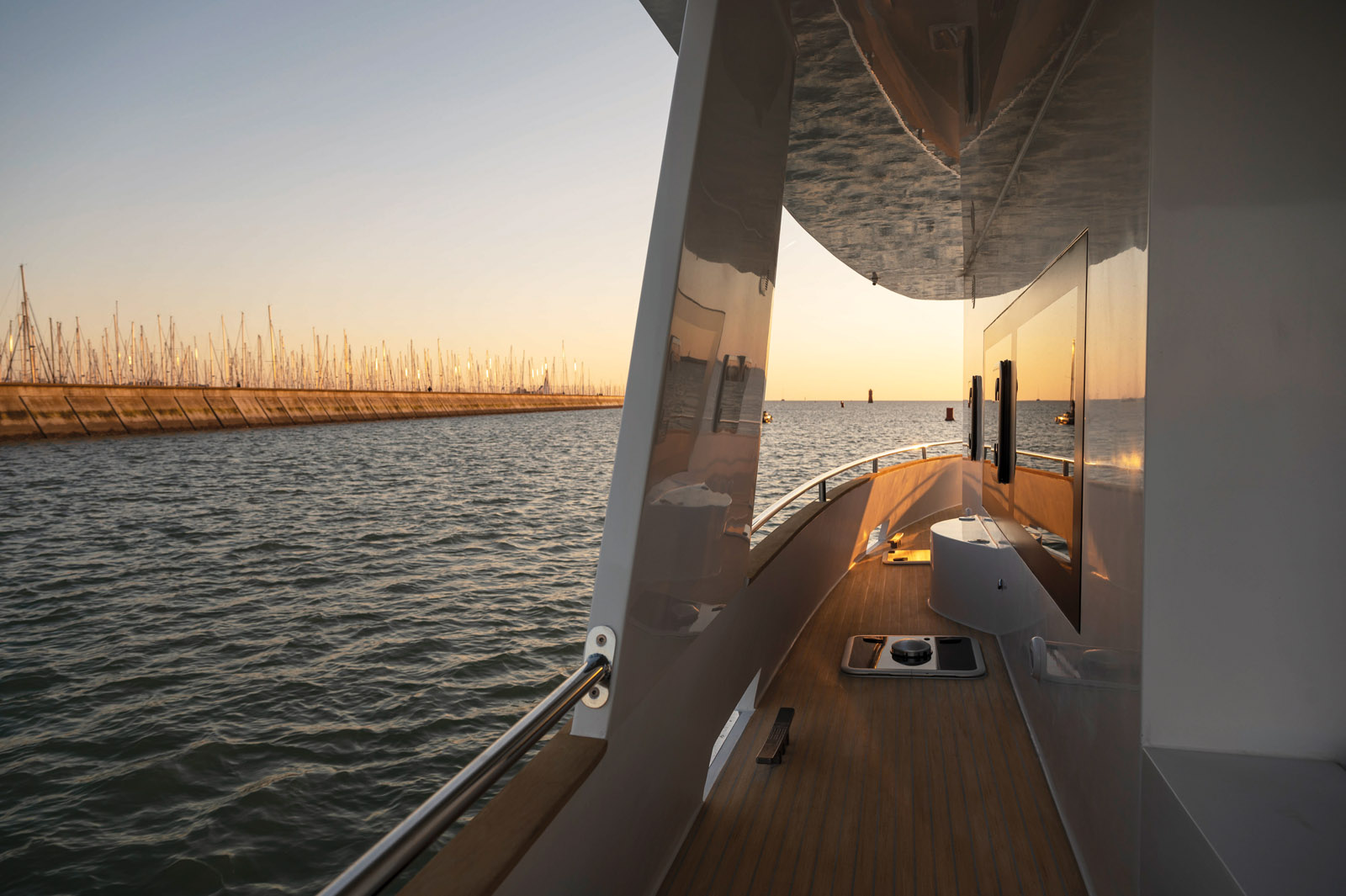
In order to meet the specifications of a trawler trimaran, the LEEN 56 has drawn on some of the features of professional boats. Visually, the reversed front window, the side-decks that have become covered passageways and of course the wheelhouse and its access door to the deck are the main ingredients for the recipe. From a technical point of view, the builder’s aim was to favor reliable assemblies and products. These choices are accompanied by a completely new design. Forward, the floats are much shorter when compared to the central hull, but all three carry on all the way aft, allowing the full maximum beam. The very slender stems are overhung by imposing superstructures - reminiscent of professional working craft.
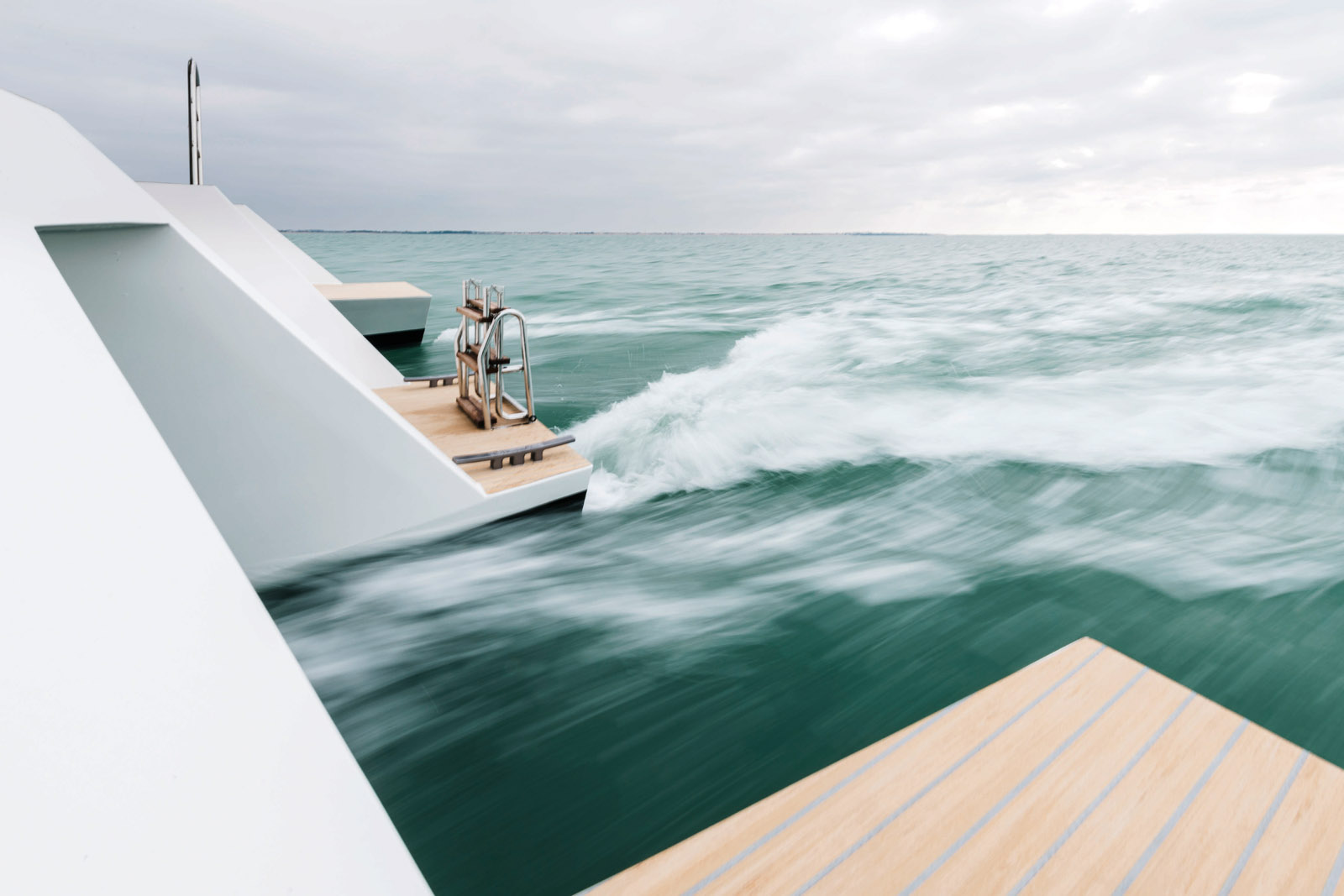
The manufacturer intends a maximum speed limited to 11.5 knots.
Helm station and passageway
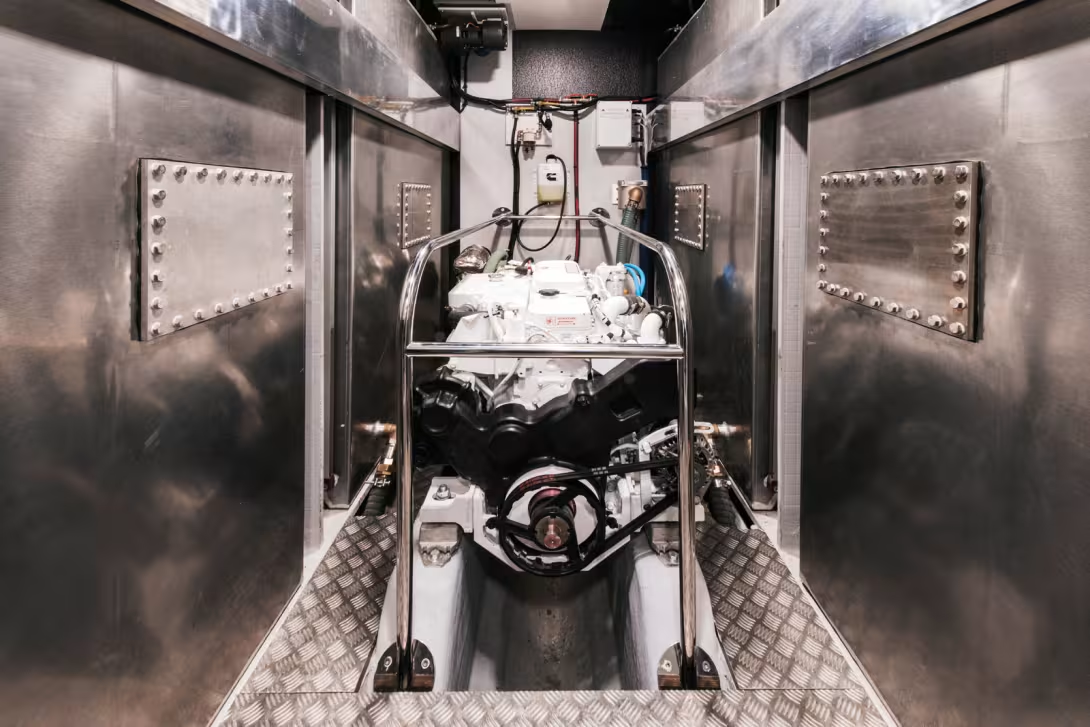
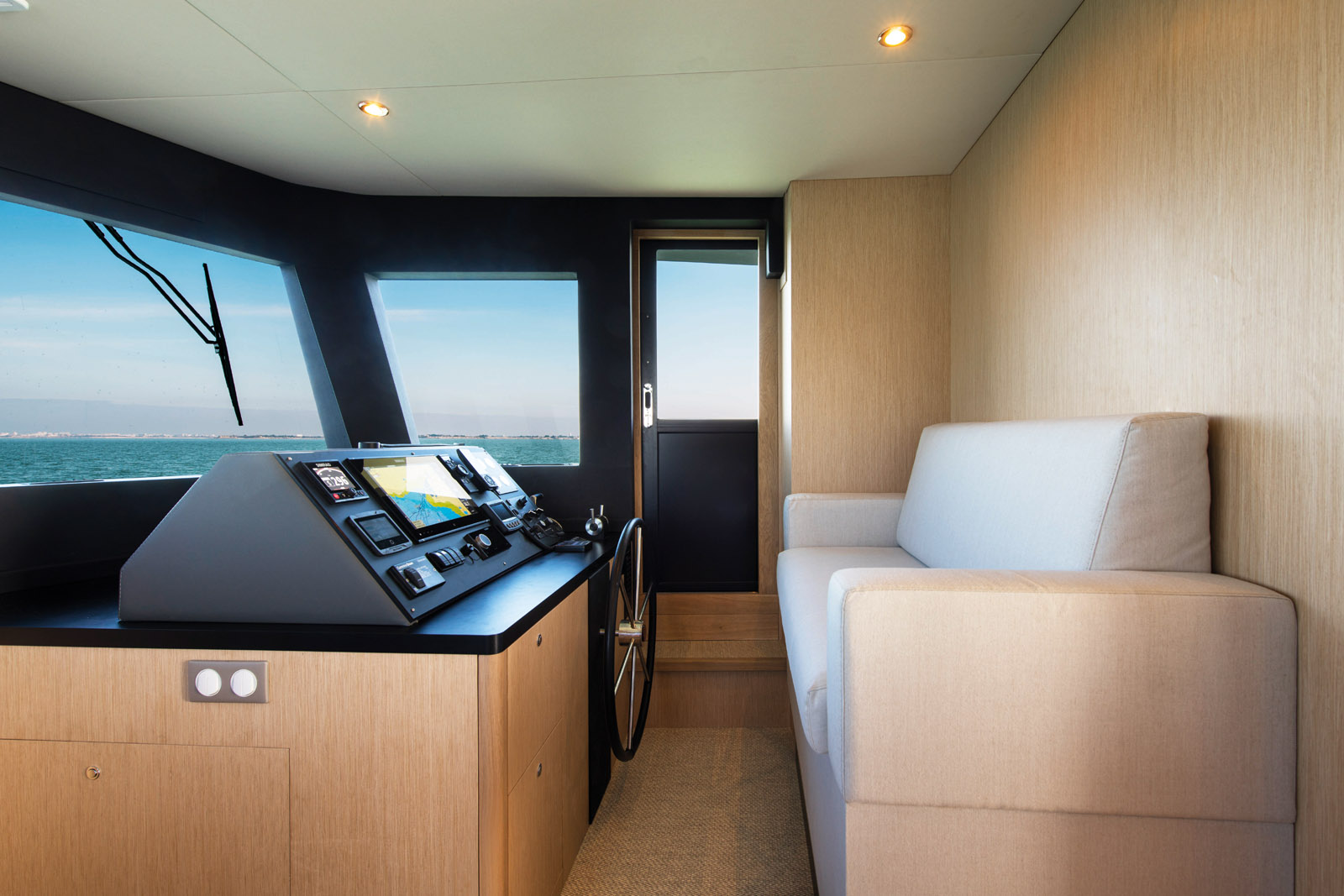
Eric Bruneel is at the helm. In front of him, an imposing dashboard. To his right, direct access to the side-deck via a sliding door. A central staircase leads to the forecabin, but moving aft, having passed a heads compartment, I find myself in the most incredible engine room. XXLsized batteries first, then an imposing 305 HP Cummins QSB6.7 motor: another professional choice. The soundproofing has been particularly carefully installed: 2” (50 mm) of heavy insulation and an anti-vibration paint. Beneath our feet, four separate tanks - totaling 1,320 US gallons (5,000 liters) - to prevent any fuel contamination. Port maneuvering is facilitated by the two 15 kW electric motors placed in the floats - a bow thruster is quite unnecessary. The large power bank (22 kWh in 48 V lithium-ion Mastervolt batteries and a 24 V buffer bank) as part of the “Hybrid Pack” allows you to motor for an hour at 4 to 5 knots without using the main engine. Beyond that, the generator would take over to maintain this reduced speed. Not that there would be much point, given the generator consumes 1.3 US gal (5 l)/h - the main engine will do as well if not better at such low speeds. The general principle is rather for “clean” boating in areas where it is required (or desirable), and thereafter to run the Cummins between 1,800 and 2,000 rpm. The ideal boatspeed is 9 knots, with a consumption of 4.75 US gal (18 liters)/hour, or half a gallon (2 liters) per nautical mile. A quick calculation of the range with the 1,320-gallon/5,000-liter tanks: 2,500 nm! By easing off the throttle a little to 7/8 knots, you can exceed 4,000 nm. Compared to powercats of the same size, the consumption of the LEEN 56 is twice as low. By cutting out one engine, a twin-hulled machine could nevertheless be back in the game.... On the other hand, as we mentioned previously, most of these powercats are doing 24 knots, with the throttles hard down. Nothing like that with the LEEN 56: 11½ knots is its maximum speed. A modest figure that translates into a consumption of 23 US gal (88 l)/h, compared to 5.8 US gal (22 l) at 9.7 knots...
 |
 |
The side-decks are particularly well protected: they are covered, and the guardrails are nice and high.
The inverted windshield ensures good visibility even in the worst weather conditions. The sliding door allows direct access to the deck.
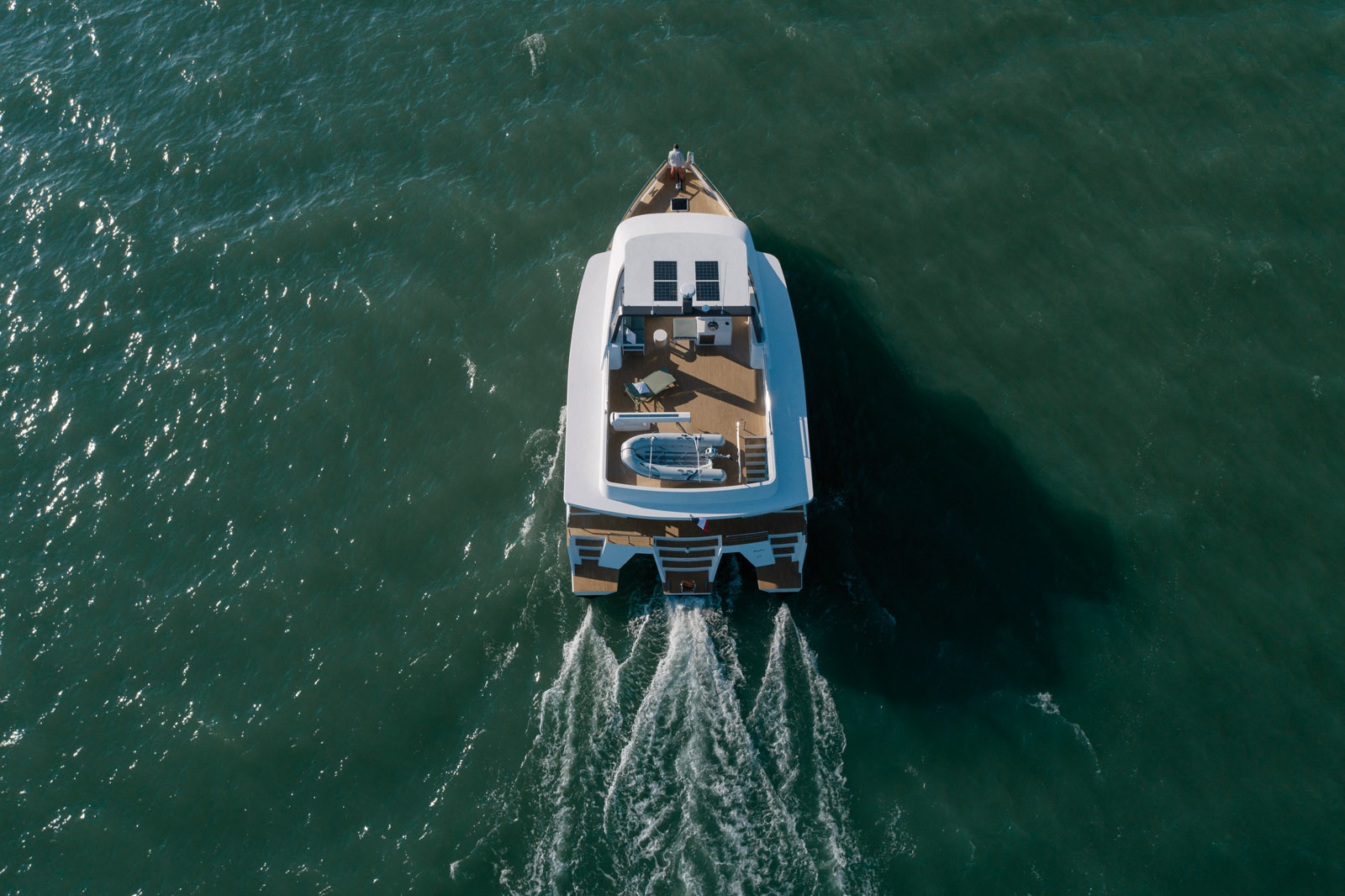
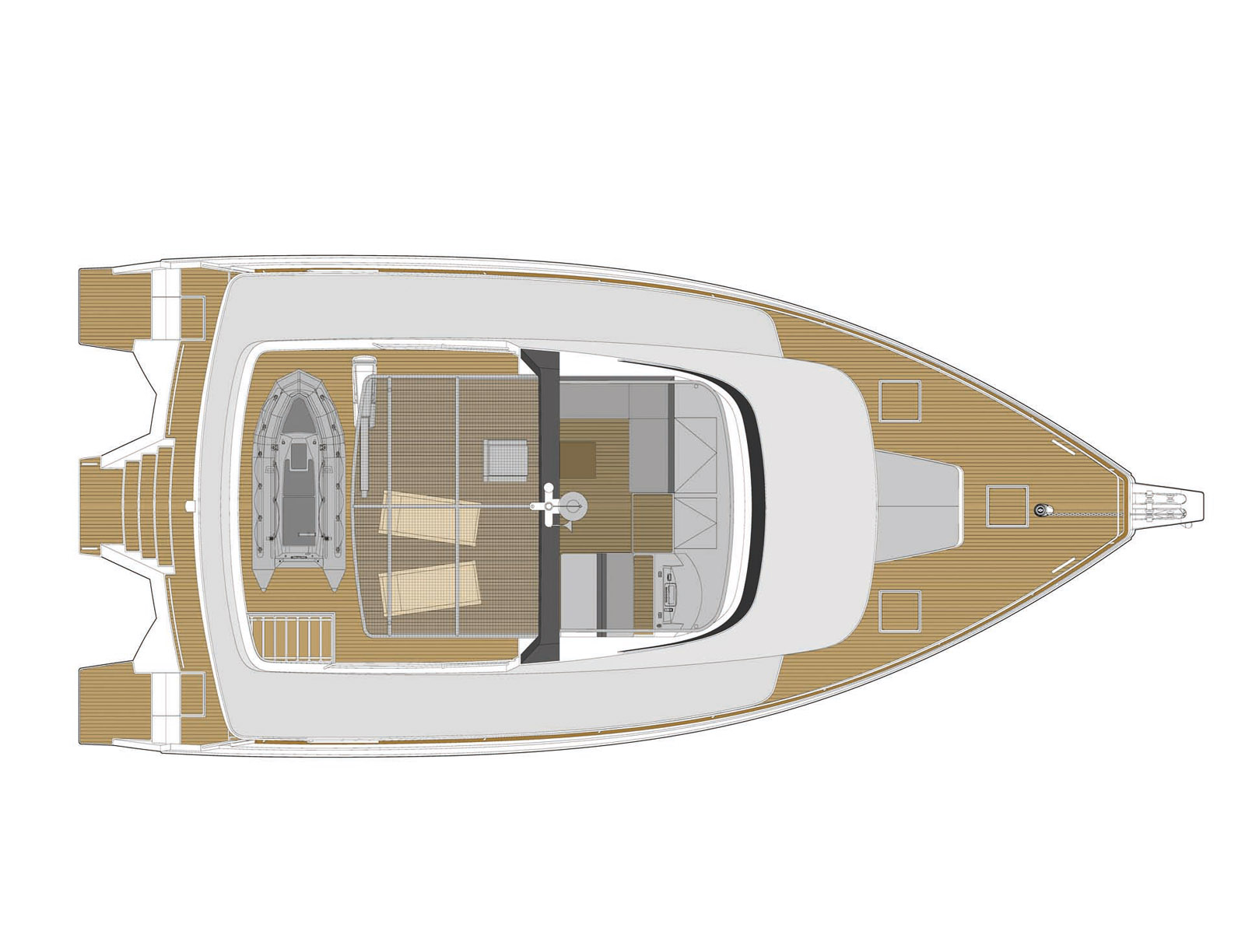
More than 320 square feet (30 m²) of flybridge
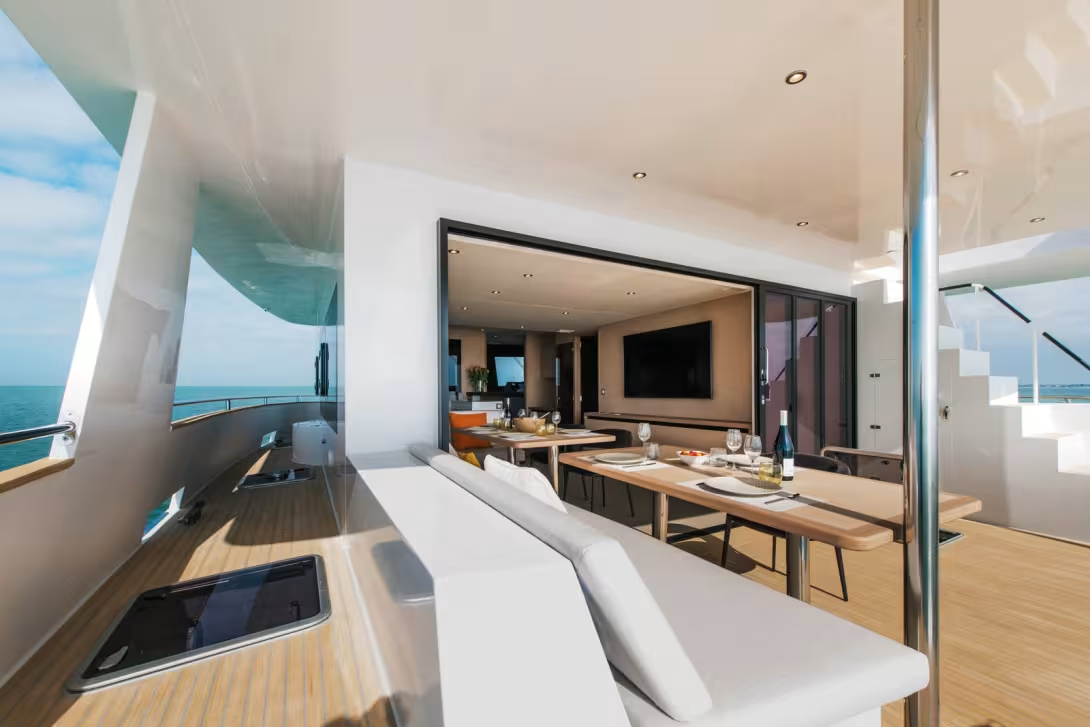
The deck plan of the LEEN 56 is great – it’s particularly safe thanks to its covered and well-protected side-decks. These are two steps higher than the cockpit. While the large foredeck is completely clear, the aft cockpit is perfectly protected - it features the standard NEEL architecture, i.e. the outside table (35” x 63” / 89 cm x 161 cm), offset to port, coincides perfectly with the inside one, creating a single dining area once the bay windows are open (8’10” x 6’7” / 2.70 m x 2 m) - this is the NEEL ‘cockloon’ concept, a contraction of cockpit and saloon. When it’s time for a swim or to step ashore onto the dock or hop in the tender, you can count on three sugarscoops, no less. To starboard, a staircase leads to the flybridge. The ten steps are a bit steep, but once up there, you discover a helm station, a galley, a crane and the tender. The raised structure on the forward half and the windshield provide good protection, especially given that there’s a large hard top covering this part of the flybridge.
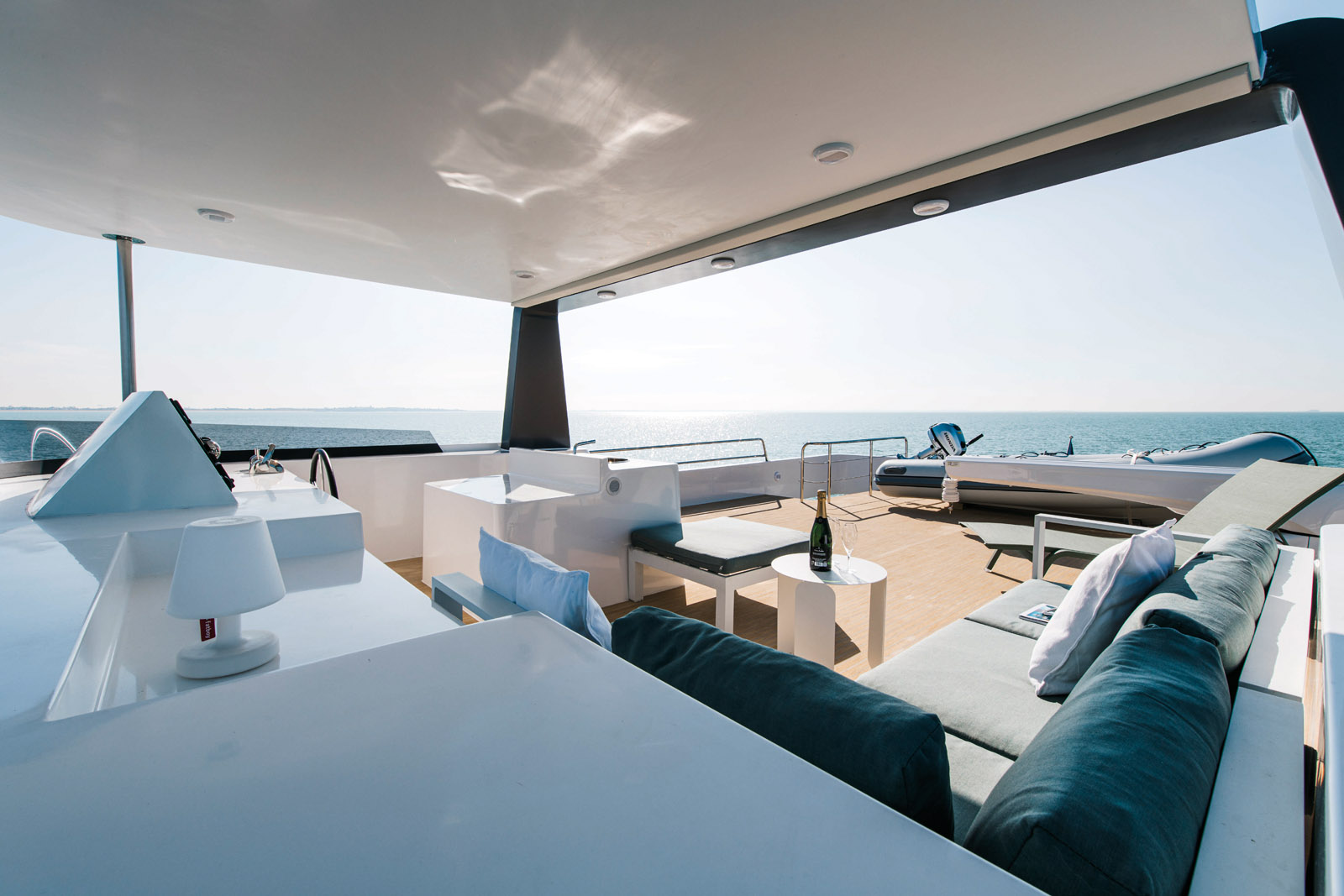
320 square feet (30 m²) of deck space is available on this huge upper deck equipped with a cockpit, galley and even a crane for the tender.
Owner’s cabin on the main deck
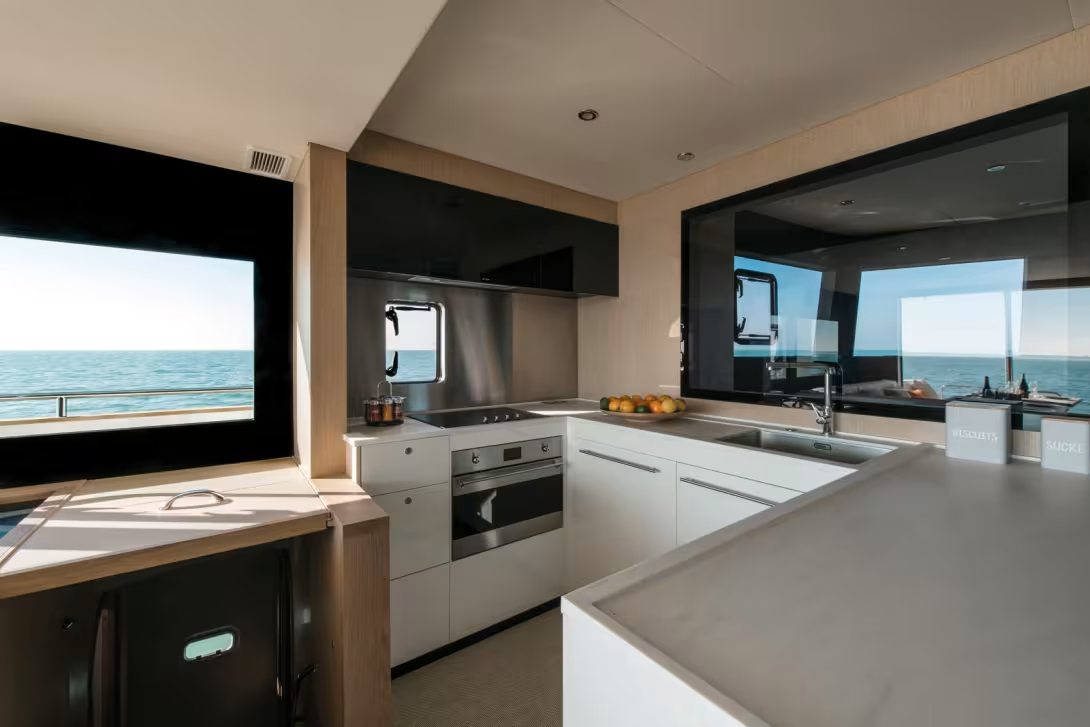
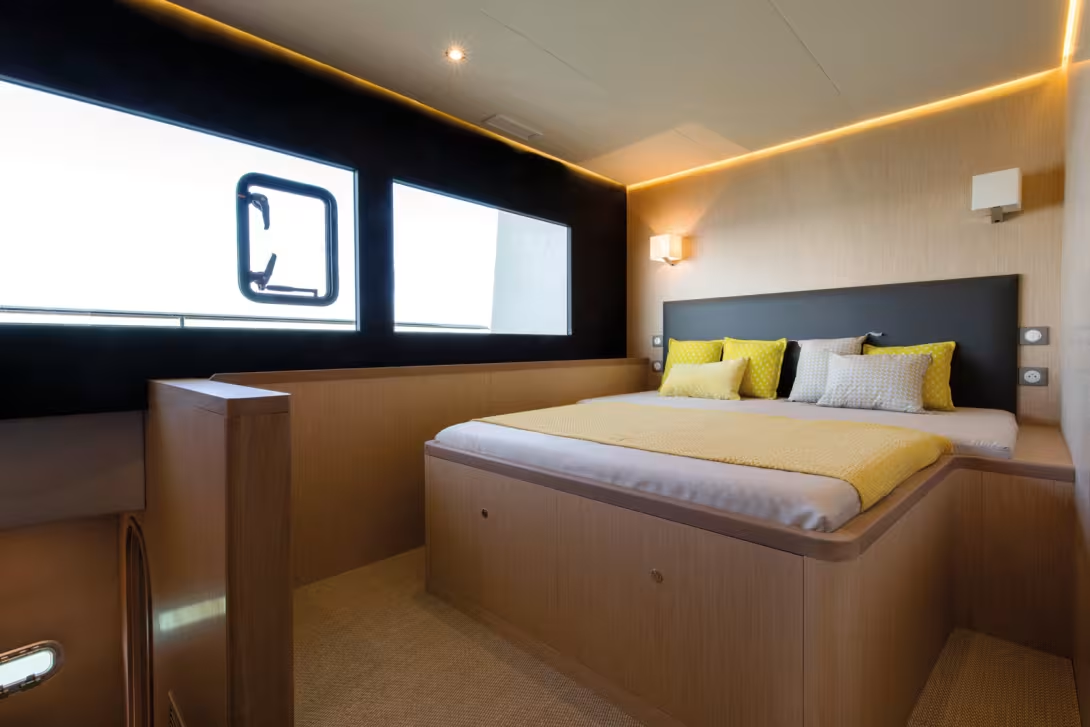
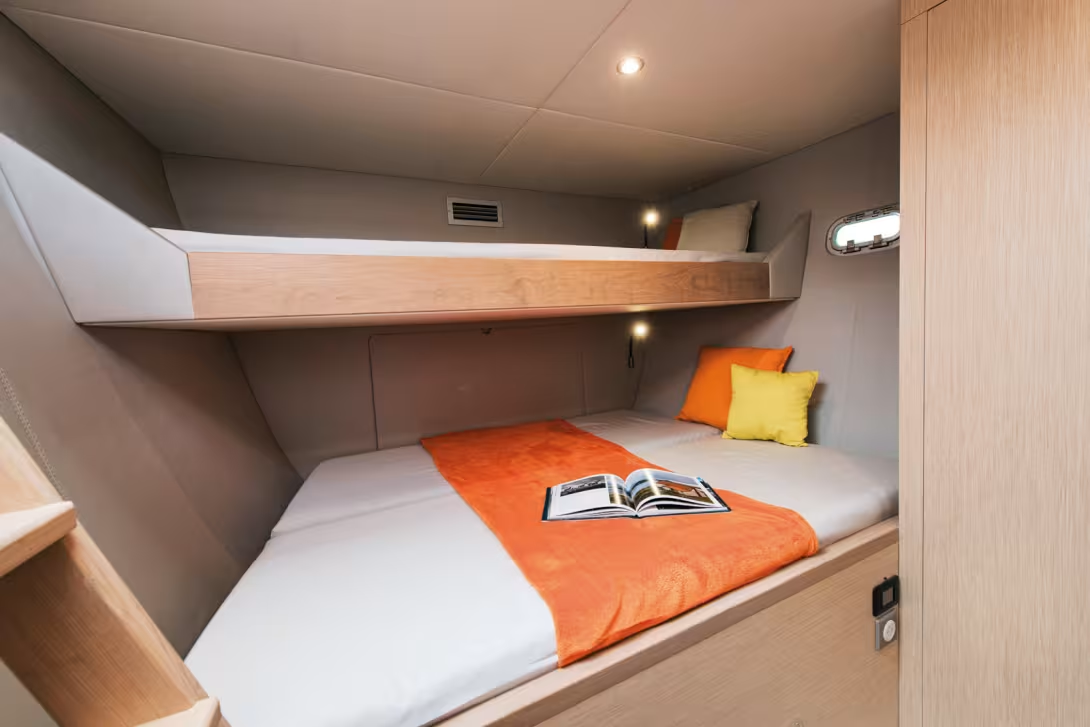
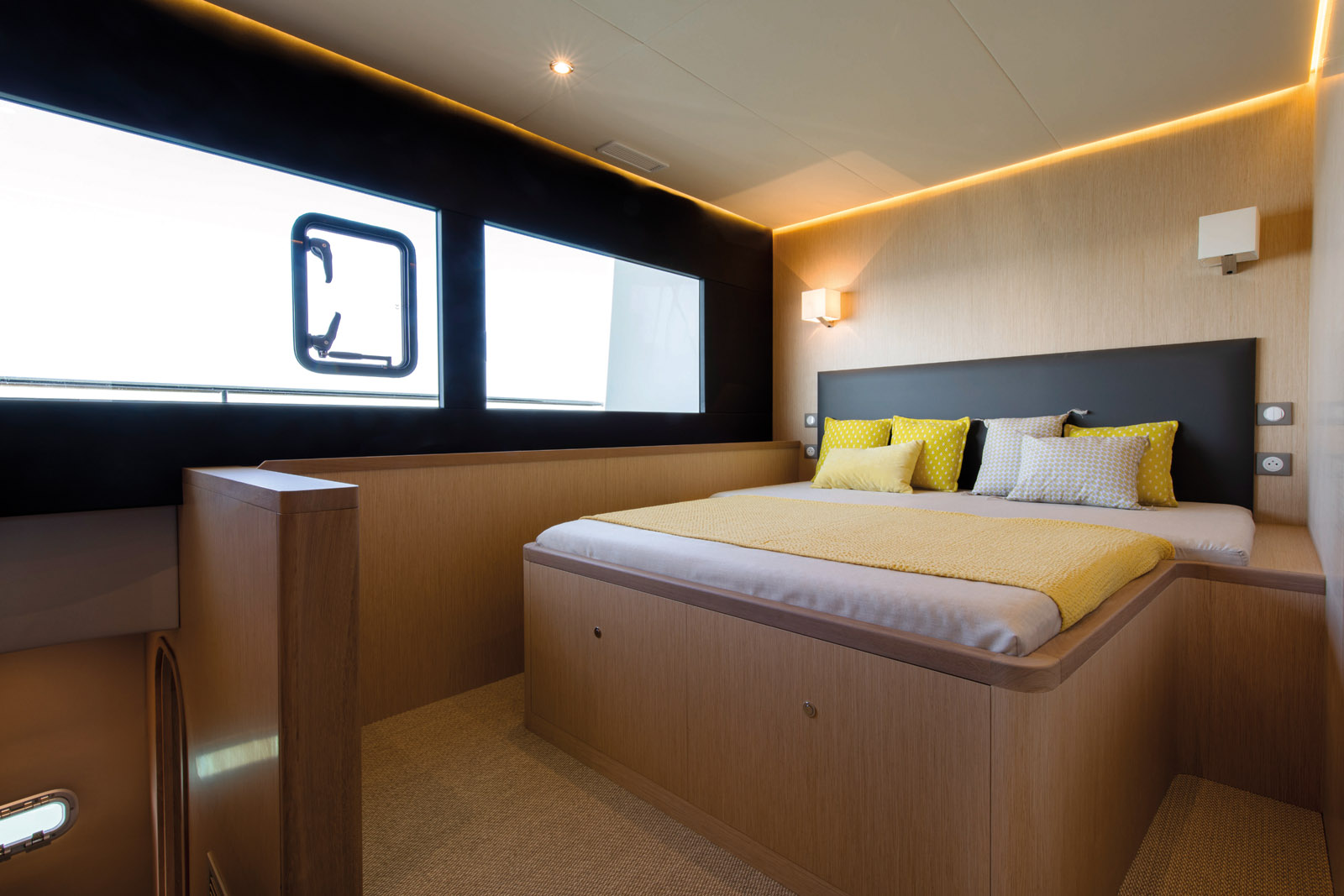
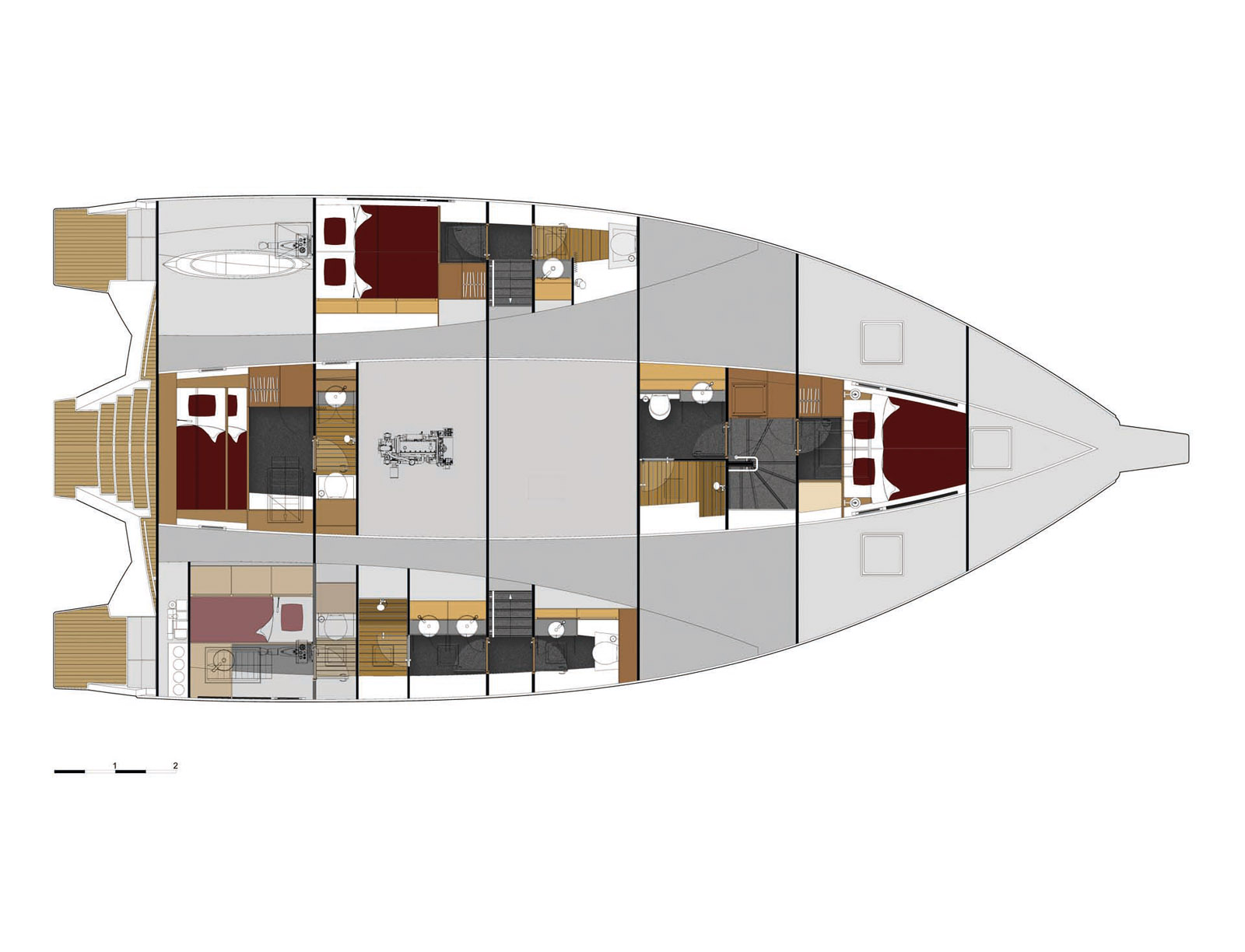
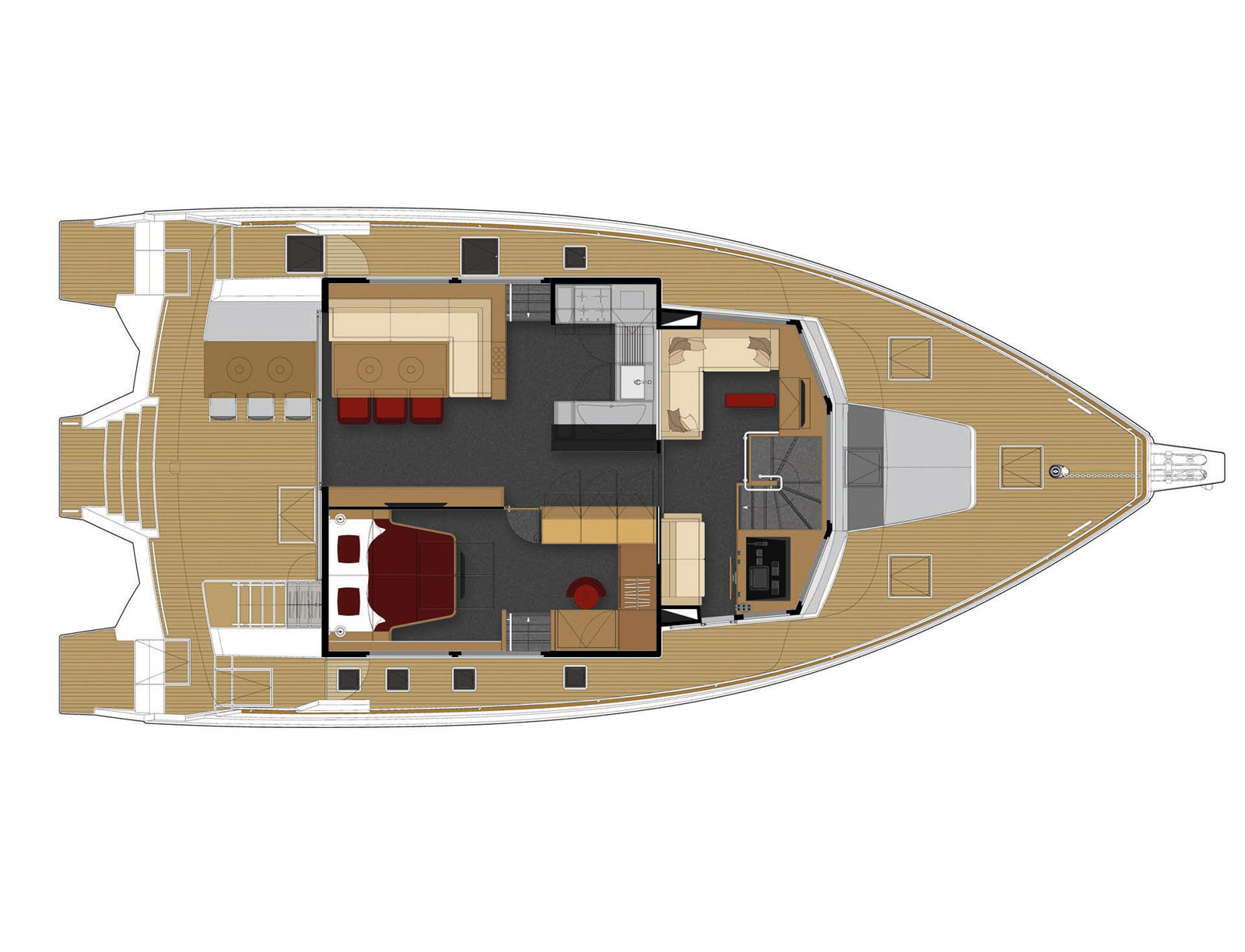
In the nacelle, the generous headroom varies between 6’10” (2.08 m) and 7’4” (2.24 m). The saloon table has exactly the same dimensions as its twin on the outside. The galley is arranged in a U-shape. Compared to NEEL’s sailboat range, they wanted to go further in terms of the finishes: on board the 56, there is more solid wood, an aluminum splashback for the galley, Securit glass for the wheelhouse... The latter is raised by two steps. The helm station also features a watchkeeping area - with an unobstructed, forward-facing view of course. The headroom here is 6’9” (2.07 m). Like the NEELs, the owner’s cabin is on the same level, and in it, a bed measuring 5’11” (1.80 m) wide at the head and 4’3” (1.30 m) at the feet. The headroom is 6’10” (2.09 m). The heads compartment and an office space are located in the starboard float. A guest cabin is located in the port float, and at 5’6” (1.70 m) below the level of the nacelle, the steps are particularly steep here. The headroom is almost 6’6” (two meters) and the bed 5 feet (1.50 m) wide. The openings are limited to two small lateral portlights. Forward in the central hull, a third double cabin is available. The builder also offers single or bunk beds at the after end of the central hull and in the starboard float. Access to these cabins is through deck hatches.
 |
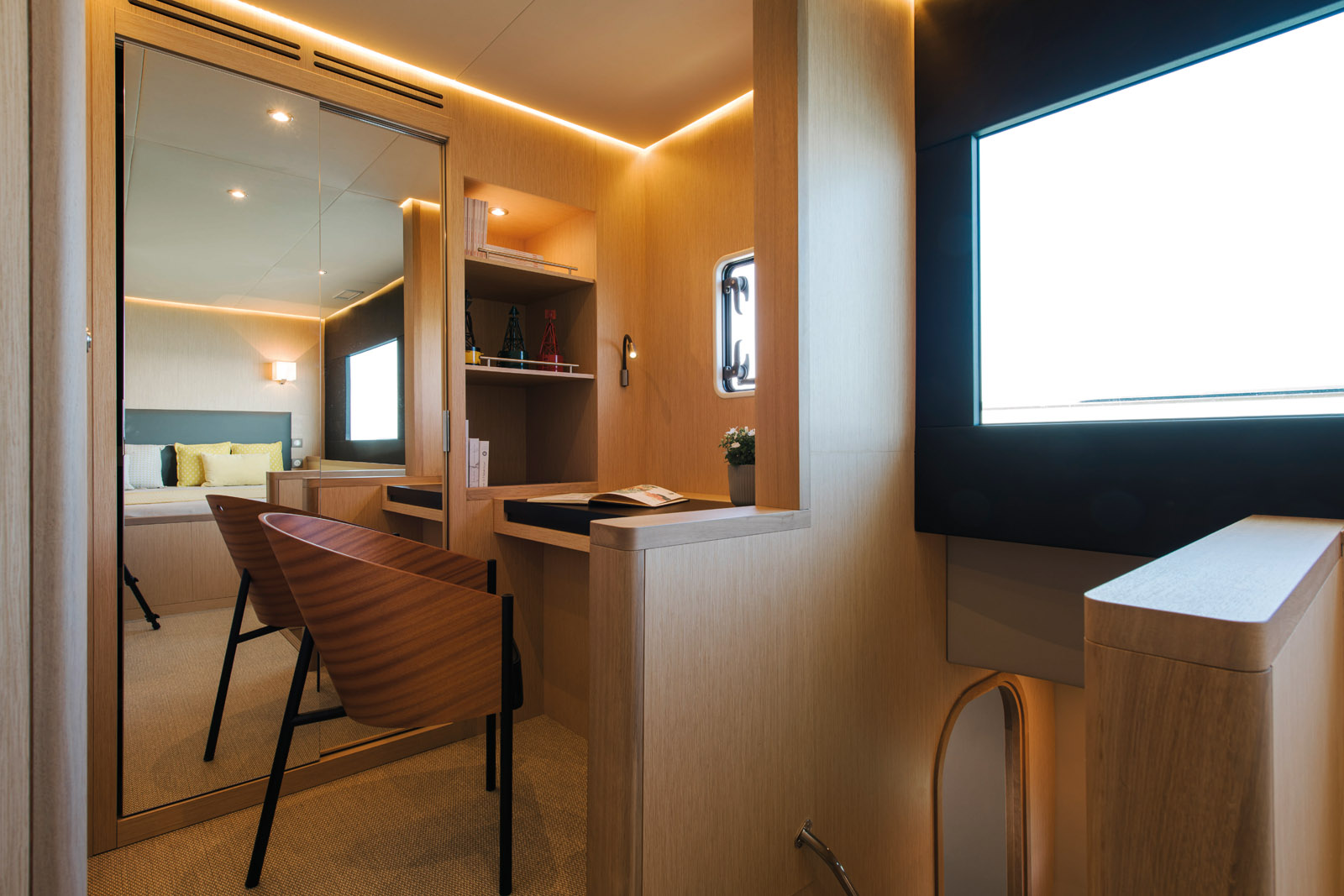 |
The owner’s cabin is on the same level as the saloon. The volume is huge, with beautiful sea views. A large office is available, and the heads compartment is located in the float.
Conclusion
The LEEN range already features two models - the first 72-footer has been ordered. These motor trimarans bring the trawler concept up to date, i.e. to be able to sail far, comfortably, though not necessarily fast... At a time when there is ever increasing awareness of the need to protect the environment, there is no doubt that very low fuel consumption is a strong argument in this boat’s favor. The LEEN 56 is an ideal platform for a lengthy family cruise; but it is equally suitable for an expedition, especially since the manufacturer offers a custom finish and equipment. Production is planned for 5 or 6 units a year - a clear sign of the brand’s ambition.
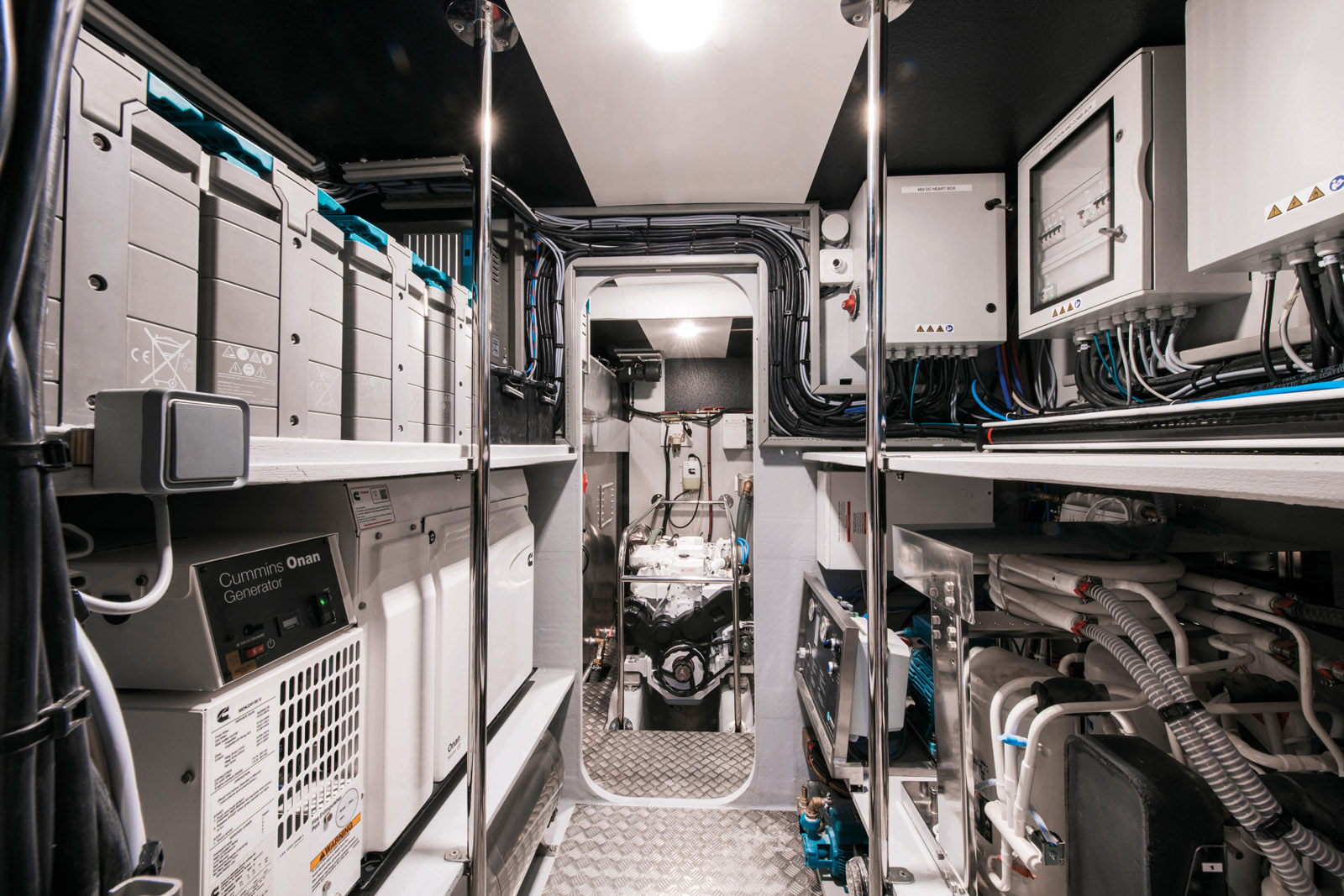
The heart of this ship is the impressive engine room, where the imposing Cummins and the battery banks are located.
Discover our exclusive Leen 56 video
The Pluses
Efficient hybrid powertrain
Trans-ocean range
Layout organized much like a professional vessel
The Minuses
Stairs sometimes a bit steep
Deck hatches in the side-decks are not flush
Hatches in the hulls are too small
 |
 |
|
TECHNICAL SPECIFICATIONS
Builder: LEEN Trimarans
Architects: Nivelt and Frutschi
Material: composite sandwich with Kevlar® reinforcements
Construction method: infusion
Length overall: 56 ft (17.10 m)
Maximum beam: 27.07 ft (8.25 m)
Draft: 3.87 ft (1.30 m)
Light displacement: 48,500 lbs (22 t)
Laden displacement: 70,550 lbs (32 t)
Engine: 305 HP Cummins QSB6.7
Electric motors (option): 2 x 15 kW
Fuel tanks: 1,320 US gal (5,000 l)
Water tanks: 218 US gal (825 l)
CE ICNN certification
Price ex-tax: € 1,199,800
Main options ex-tax:
Hybrid pack (electric motors, 17.5 kW generator, lithium batteries, etc.): € 89,200
Electronics/sound/video pack: € 39,300
Reversible air conditioning: € 49,900
4G/Wi-Fi router and antenna: € 4,400
Complete outdoor galley: € 5,800
Flybridge bimini and composite arch: € 23,400
Synthetic teak throughout (deck, cockpit, fly, interior...): € 77,570
Hydraulic platform: € 29,800
4 x solar panels total 448 Wp: € 7,060
Hydraulic crane on the flybridge: € 37,500
RIB + 20 HP outboard: € 14,300
Electric capstan winch aft: € 2,800
Underwater LED lighting in central hull: € 3,520