Combining luxury with long-range capabilities gives this MC82p several desirable qualities for cruising remote coastlines. Welcome to the exclusive world of blue water yachting...
Infos pratiques
- Le chantier : MC82p
- La fiche technique
-
 Découvrez notre vidéo exclusive
- Financez votre McConaghy MC82p
- Assuez votre McConaghy MC82p
- Articles autour du McConaghy MC82p
Test conditions: calm to slight sea
Australian yard McConaghy has a proven track record in building efficient vessels, often of the sailing variety, where good hull performance is essential. Since some new investors came aboard, McConaghy’s China yard is nowadays much bigger and highly technologically advanced – as builds for the America’s Cup and other major events have proven. So, this level of technologically easily translates into the carbon composite build of the MC range. These combine E-glass/epoxy/foam sandwich with carbon fiber structural elements for rigidity.
The shipyard has also successfully embarked on the design of fuel-efficient hulls, as this 82-footer demonstrated to me. Part of the MC catamaran range designed by Englishman Jason Kerr, these semi-custom hulls come in both power and sail varieties, measuring 55 to 115 feet in length. All are flybridge versions, so offer three levels of living space. The MC82p is no exception and that’s clearly evident looking at the exterior and its bold superstructure.
Modular Cockpit Opening onto the Saloon
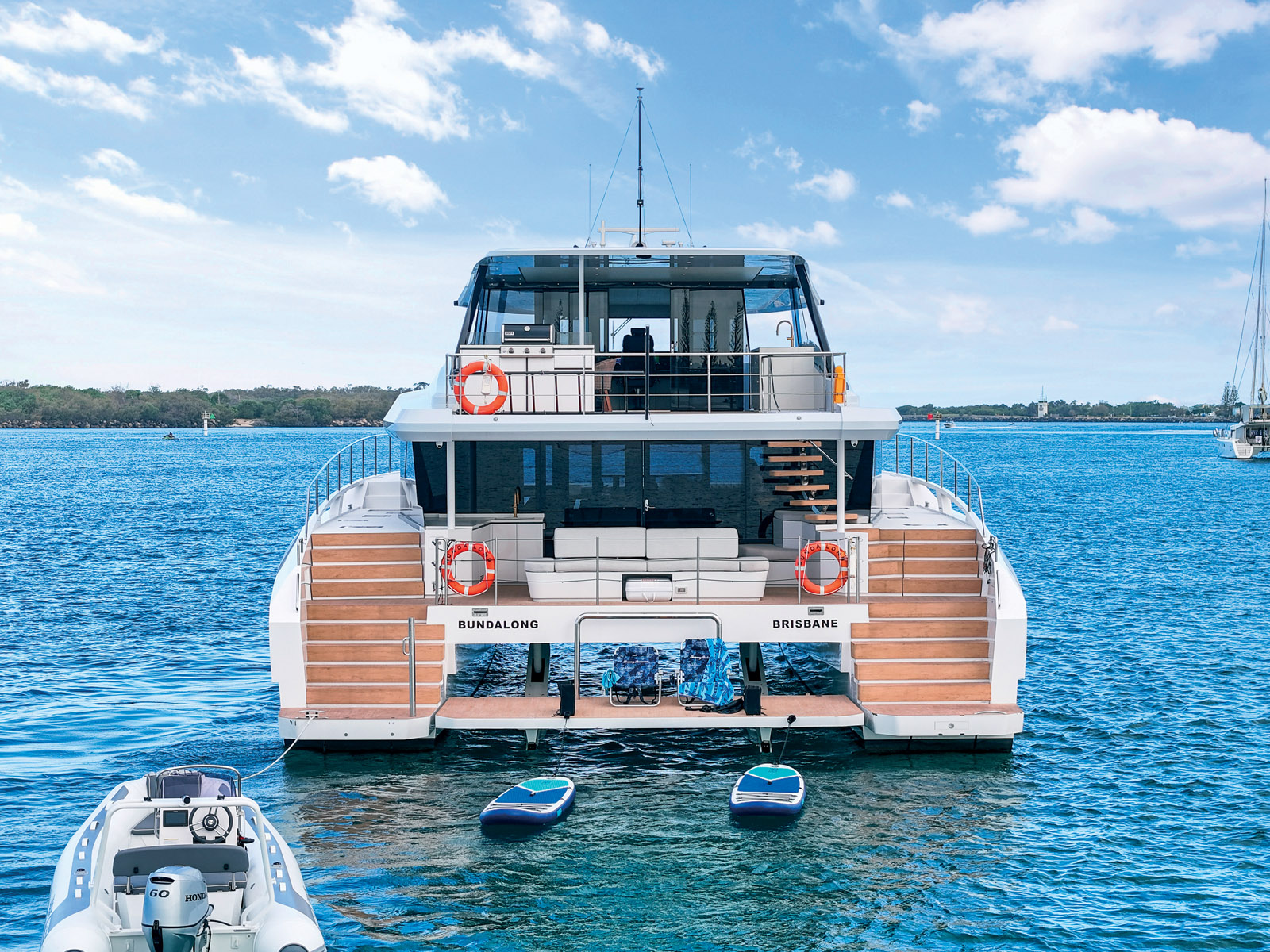
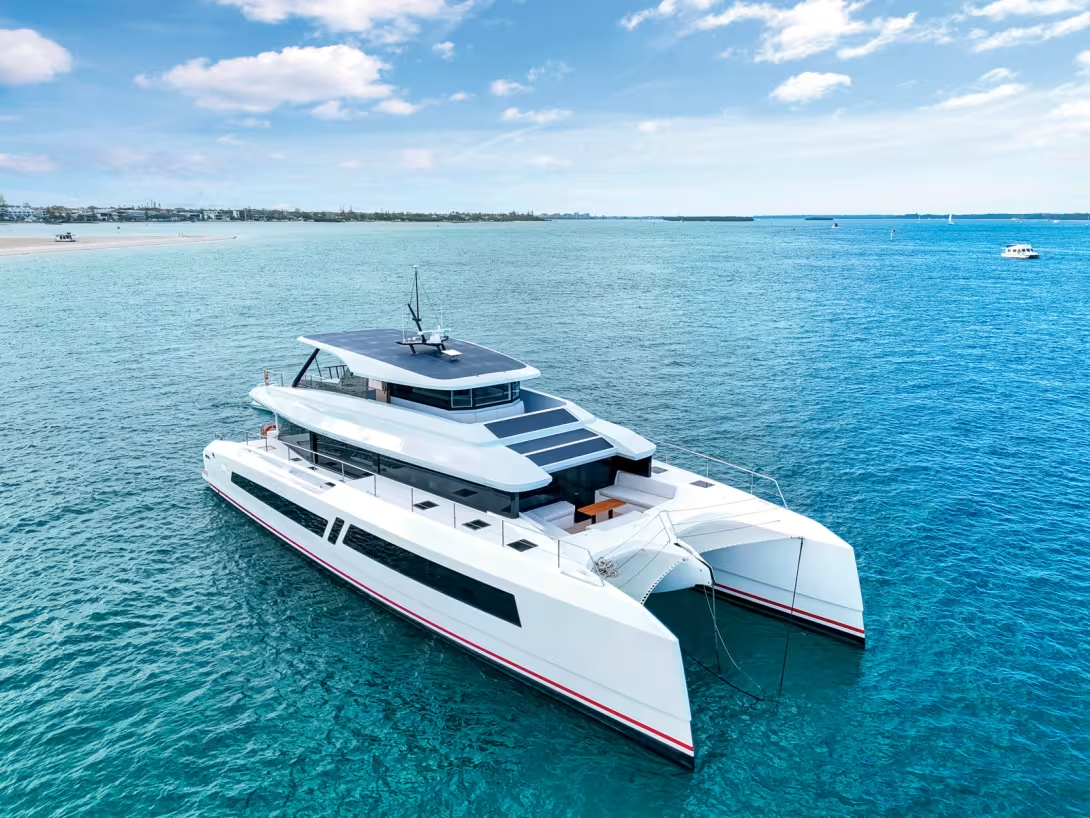
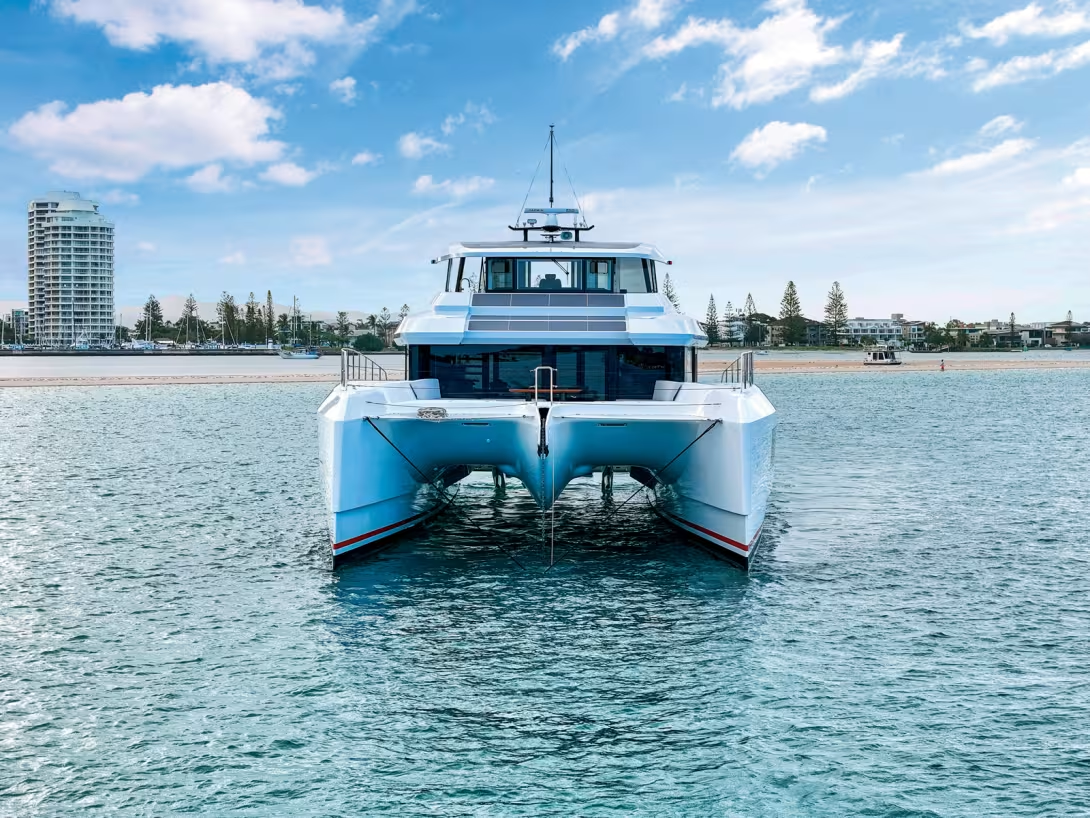
Berthed at the Sanctuary Cove Boat Show in Queensland, the tall, white topsides with reverse sheer and plumb bows, ensured the MC82p stood out. Elongated portlights cleverly disguised the tall hulls that reduced abruptly at a chine low-down to give a sleek water entry. Stern cockpits are the most significant parts of catamarans, and the MC82p is no exception to this, along with a large swim platform to enable boarding and capable of holding a 16-foot, 1,500 kg (3,300 lbs) rigid inflatable on chocks. Stepping up to the cockpit reveals a shaded open-plan area that uses the full 33-foot (10 meter) beam of the MC82p, with transom bench-sunbed and dining table, so plenty of room for large numbers of party guests to dance on the Flexiteek floor. With wetbar to port and more bench seating on starboard this area seamlessly blends into the saloon on the same level.
Saloon and Foredeck
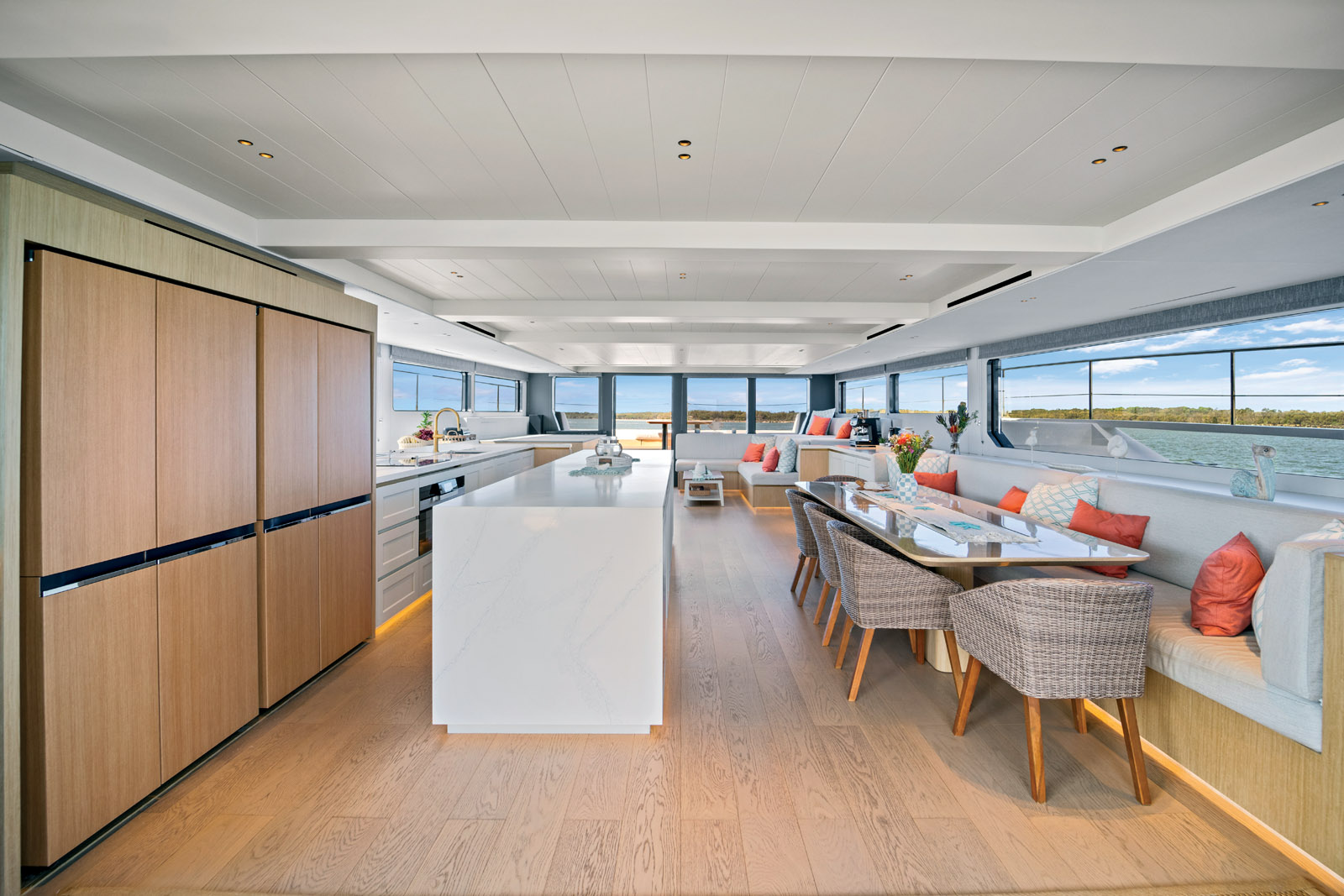
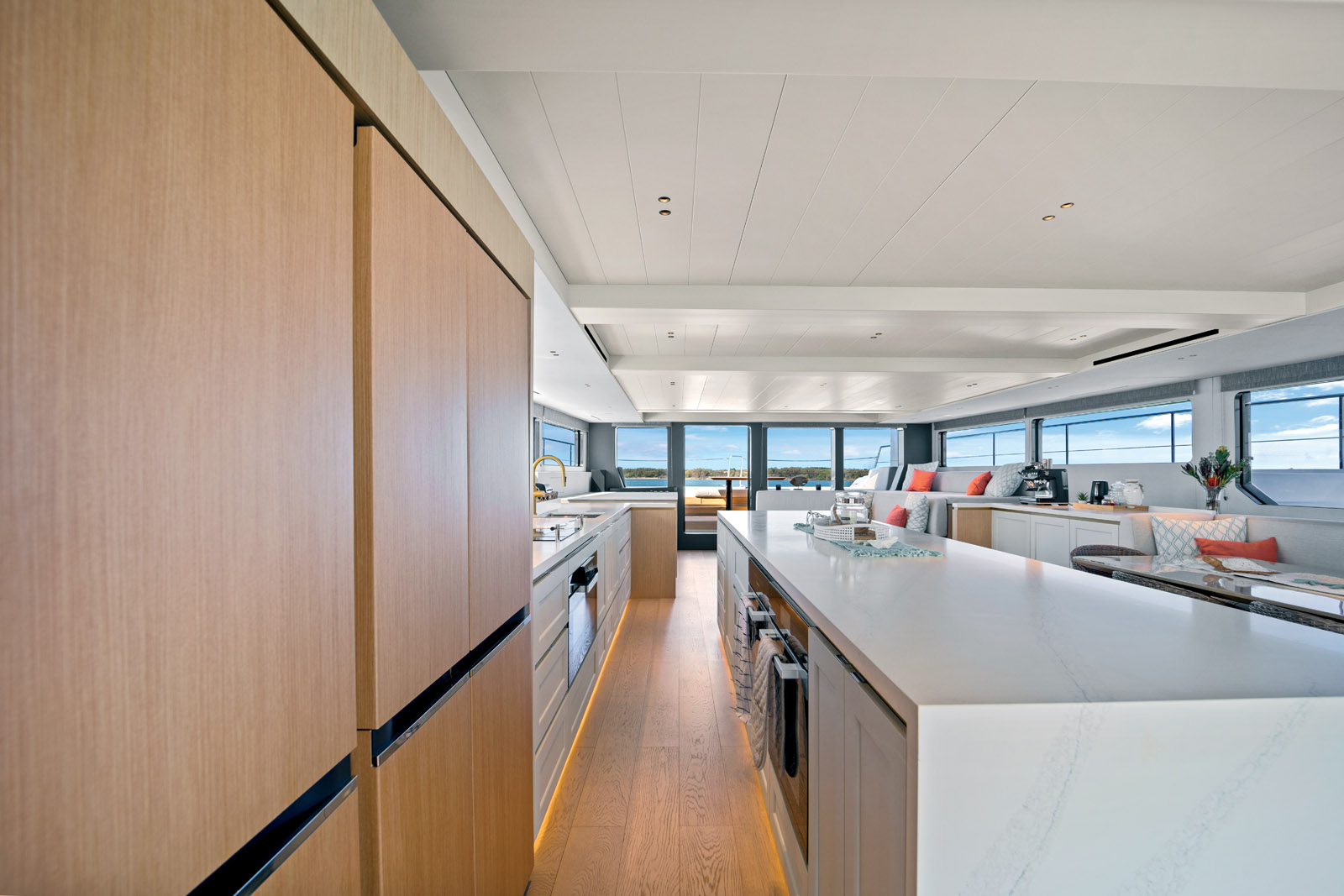
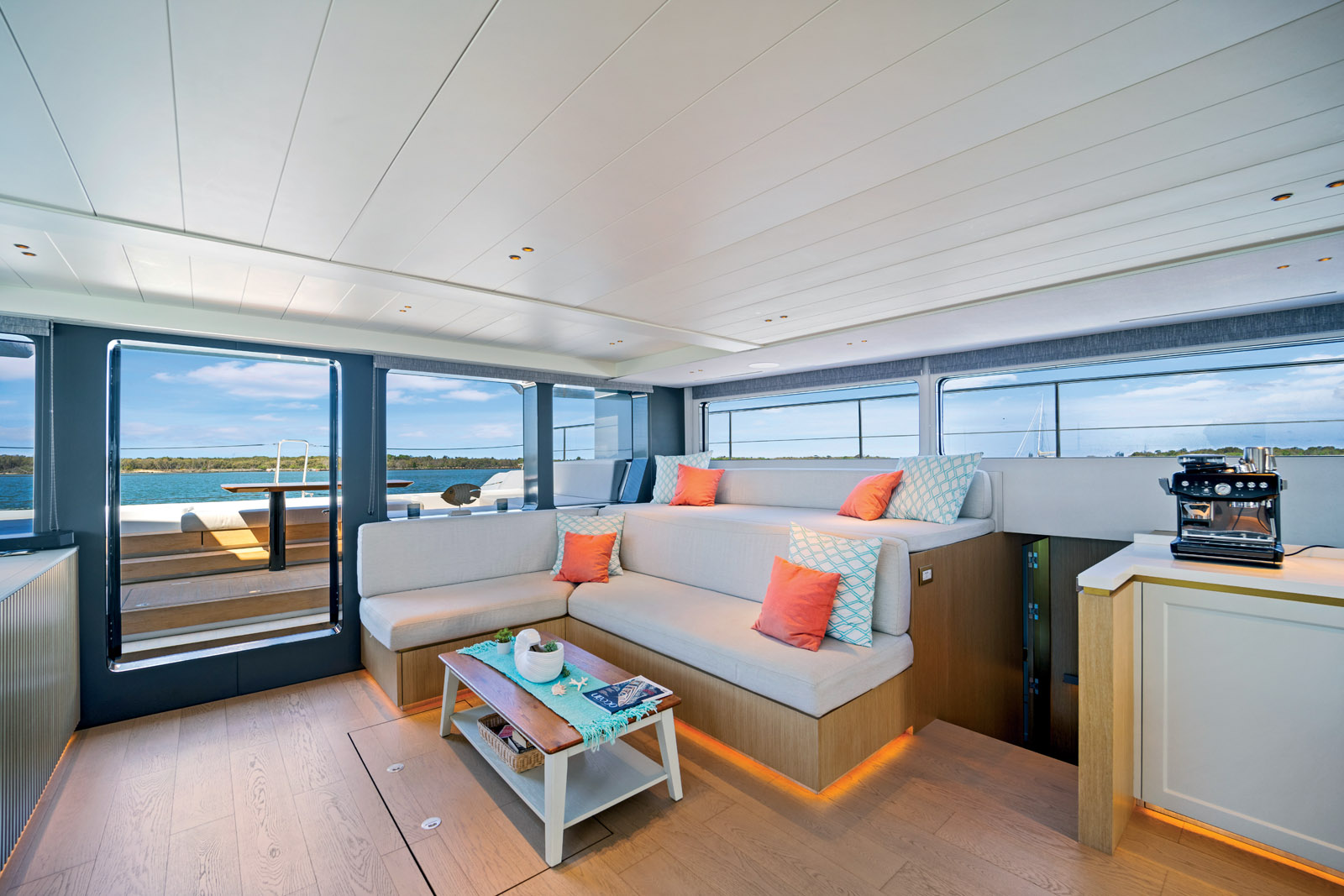
From the cockpit, large sliding doors give access to the saloon. It is truly voluminous, as only an 82-foot catamaran can afford, enhanced with vertical bulkheads all-round to create an airy space. The galley runs most of the port side and is superbly equipped with mostly Miele whitegoods and Vitrifrigo refrigeration. This includes a twin door freezer, twin door fridge and four-hob induction cooktop with two ovens, microwave, dishwasher plus another drawer fridge. Embedded in the Corian countertop are double bowl stainless steel sinks, with cupboard space underneath and alongside, including a sliding electrically operated pantry. Opposite the L-shape lounge, extensive storage is along the bulkhead, including a sunken television. To starboard, opposite the galley is the dinette, which can seat ten.
The loft-like layout perhaps suits marina life better than offshore living, but this is, of course, where most boats – certainly superyachts - spend their time. The Australian owners have avoided overly adorning the saloon, and indeed throughout the entire vessel, but this lack of bling certainly gets my vote. Stylish pale hardwood veneers blend nicely with a high-gloss finish throughout.
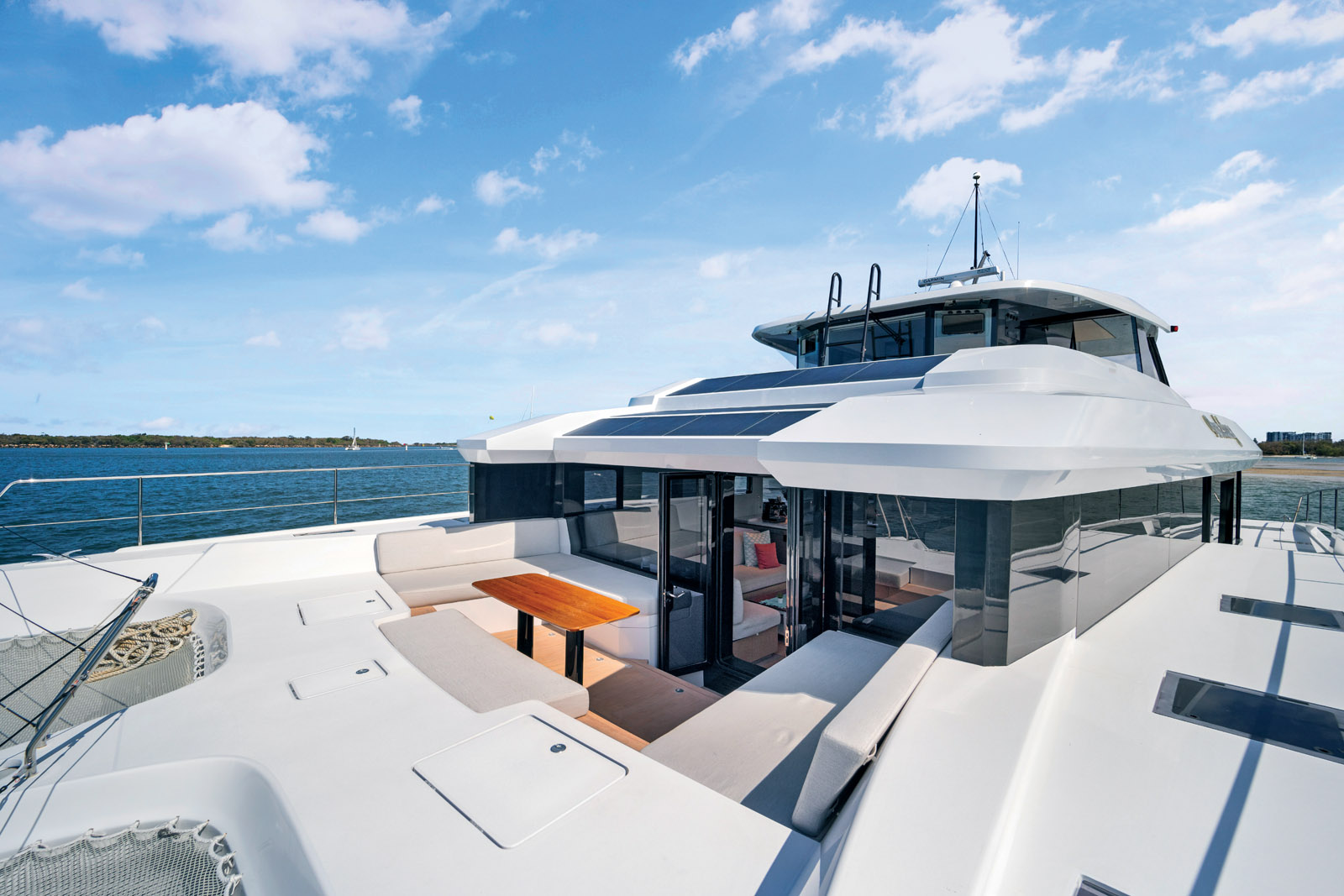
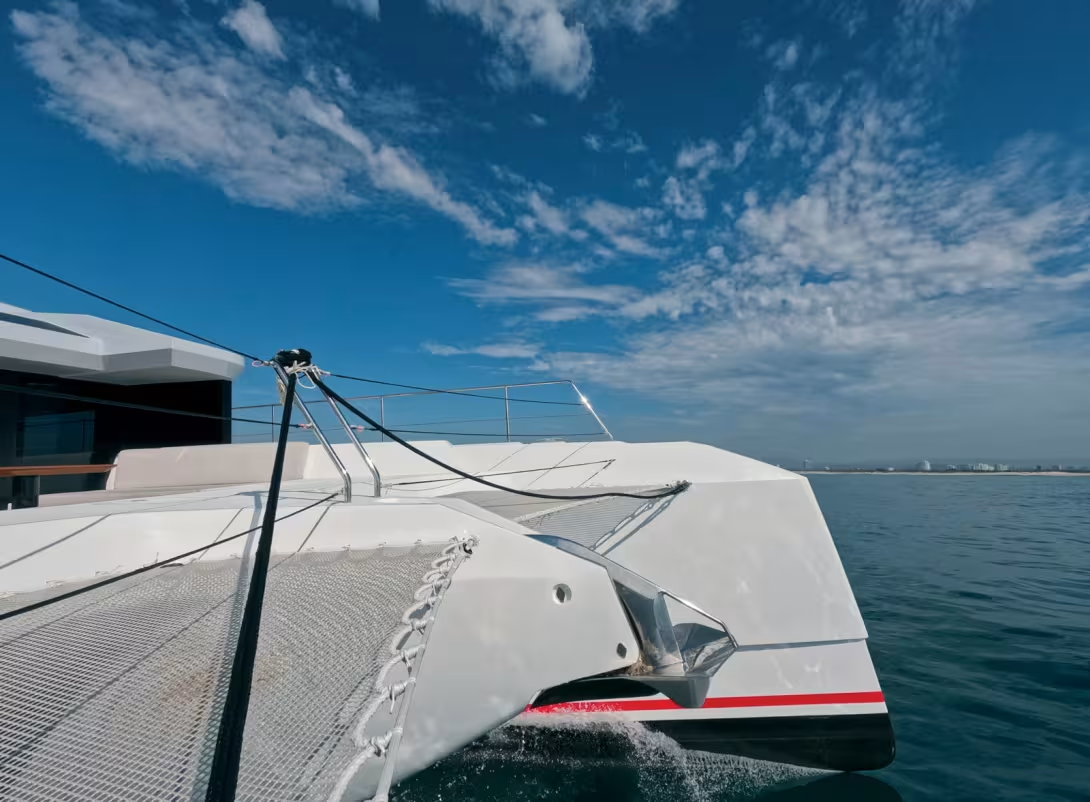
Both cockpits are seamless extensions of the saloon, with the bow one sunken, so suitable to safely enjoy even when underway. Accessed via a sturdy bulkhead door and surrounded by bench seating and with easy access to the rode, the foredeck is both a comfortable and functional space, especially if you add the optional sun awning. A deep gutter runs to the large Ultra anchor with locker space each side, windlass in the middle and trampoline netting at the final bow section, which reduces windage. Large cleating all round, including midships, ensure berthing will be secure as well. Moving aft via the side decks I found easy to do, thanks to the high stanchion line, flush hatches and the saloon bulkhead. The latter could benefit from some handrails, though.
A Vast Flybridge and a Helm Station Worthy of a Boeing
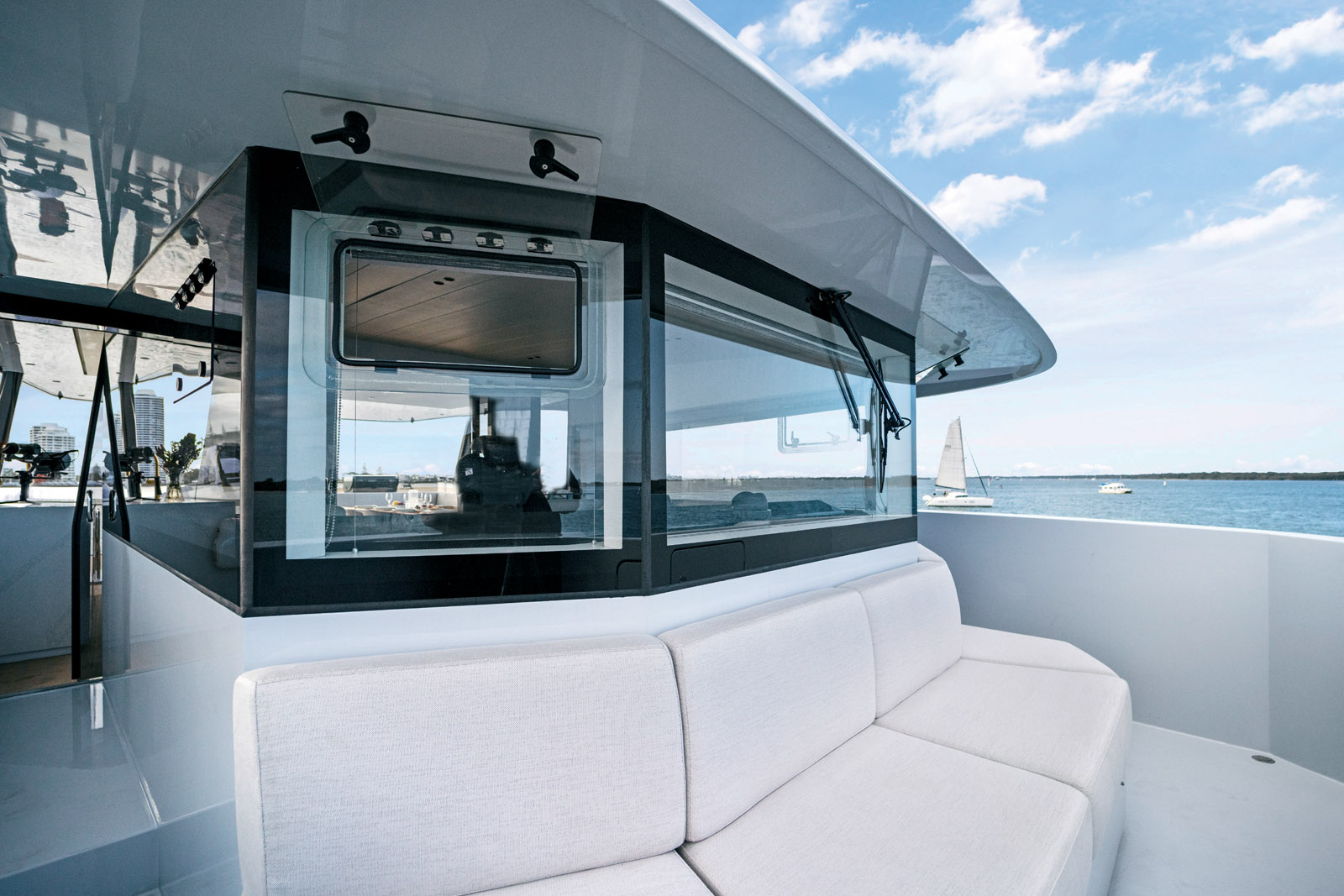
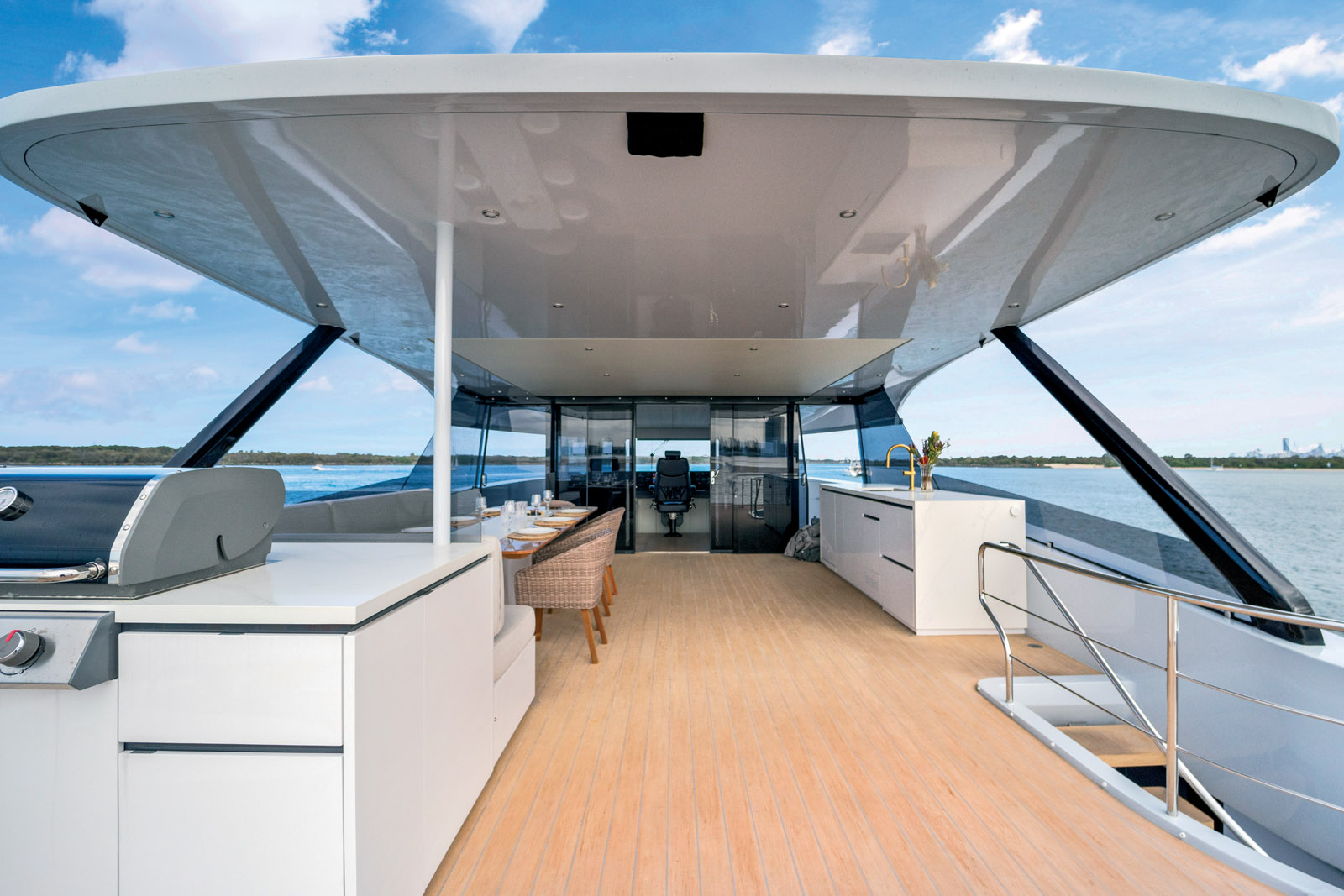
Accessed via a wide and protected staircase on starboard, the flybridge has a superyacht feel and indeed an actual layout to match, given the beam and length of this area. It comprises an extensive wetbar, with barbecue, twin stainless-steel sinks, drawer fridge and ice maker. There’s a spacious dining area under the GRP hardtop with seating for eight and free-standing lounge furniture. For blue water voyaging, a davit can be fitted at the stern to hoist the dinghy, as there is plenty space here.
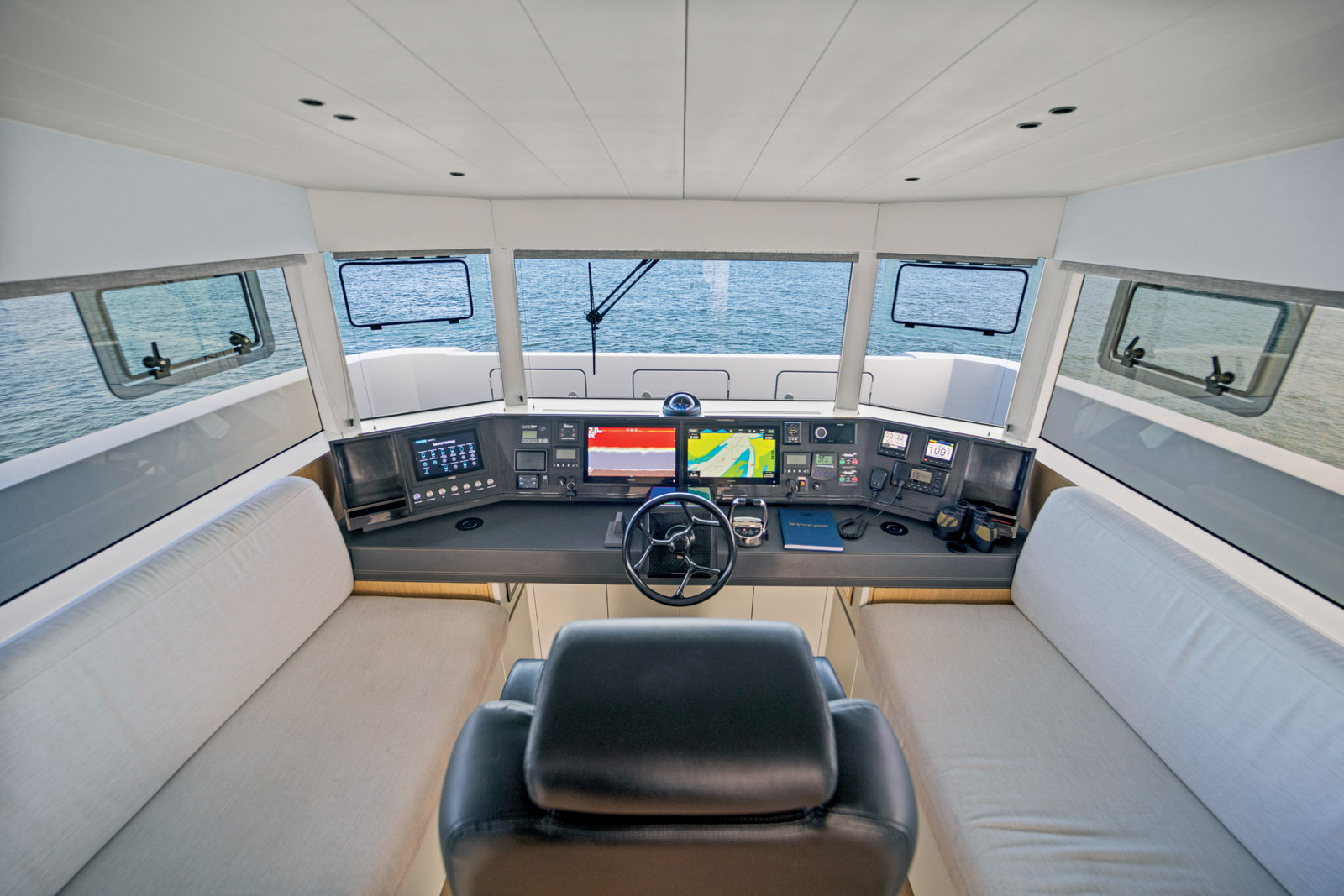
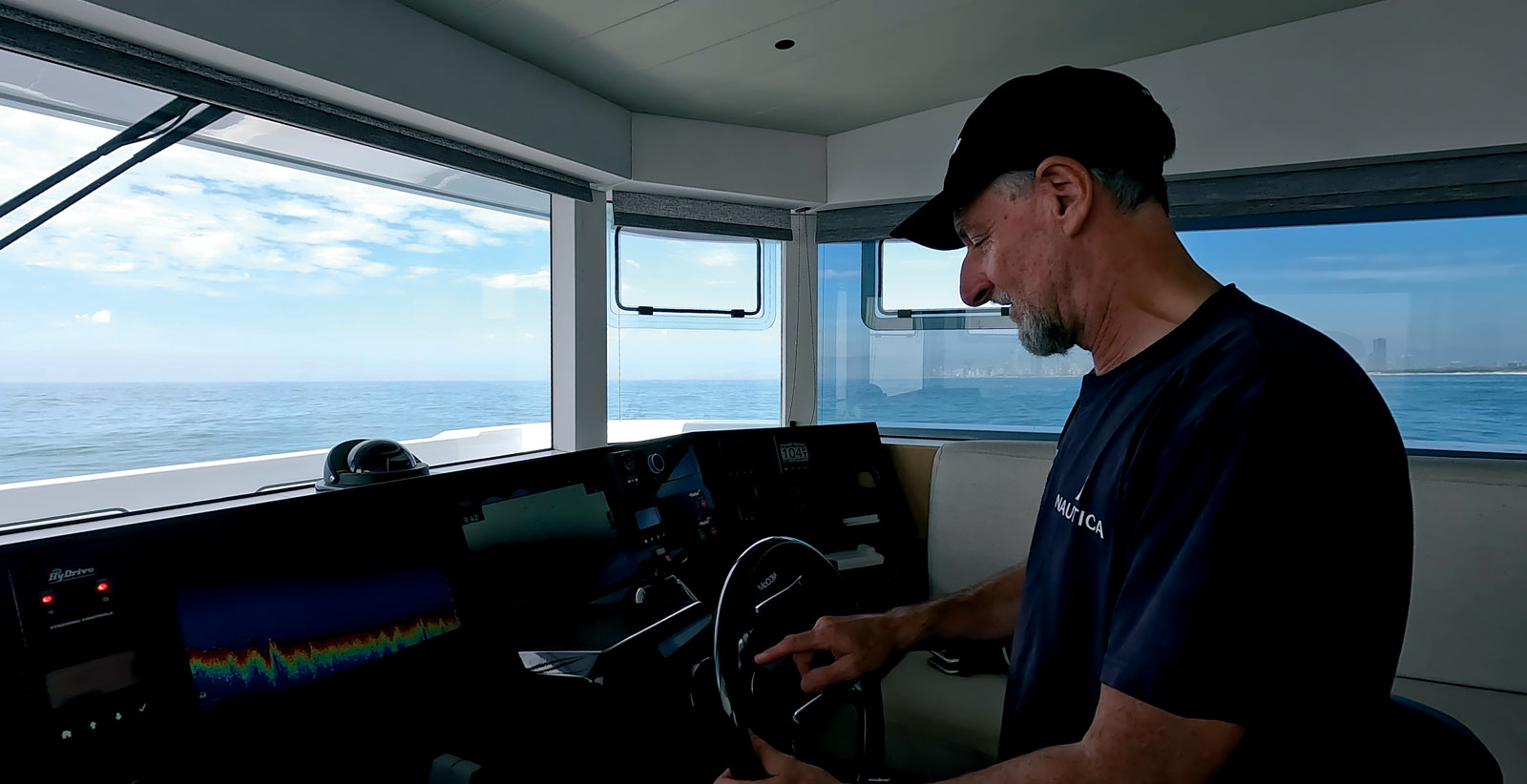
The forward section is dedicated to piloting and offers a clear view when docking, while the raised helm station is almost worthy of a Boeing. Given the windage and size of this vessel, controls are extensive to maneuver the shaft-driven hull. Twin throttles for the 300HP John Deeres are beside the helm. In addition, there’s twin bow thrusters - retractable, hydraulic models from Side Power - plus a Glendinning wired remote controller handset for docking. The console is dominated by a stylish flourish – an America’s Cup style carbon steering wheel opposite the bucket helm seat. Navigation is via twin 16-inch Garmin displays for charts and to display real-time imagery from the large (4ft open array radar). In addition, there are camera displays from several Raymarine units, including in the engine room. The other key screen is the digital bus display by Czone that manages all in-house systems.
Up to 12 Berths plus Crew Quarters
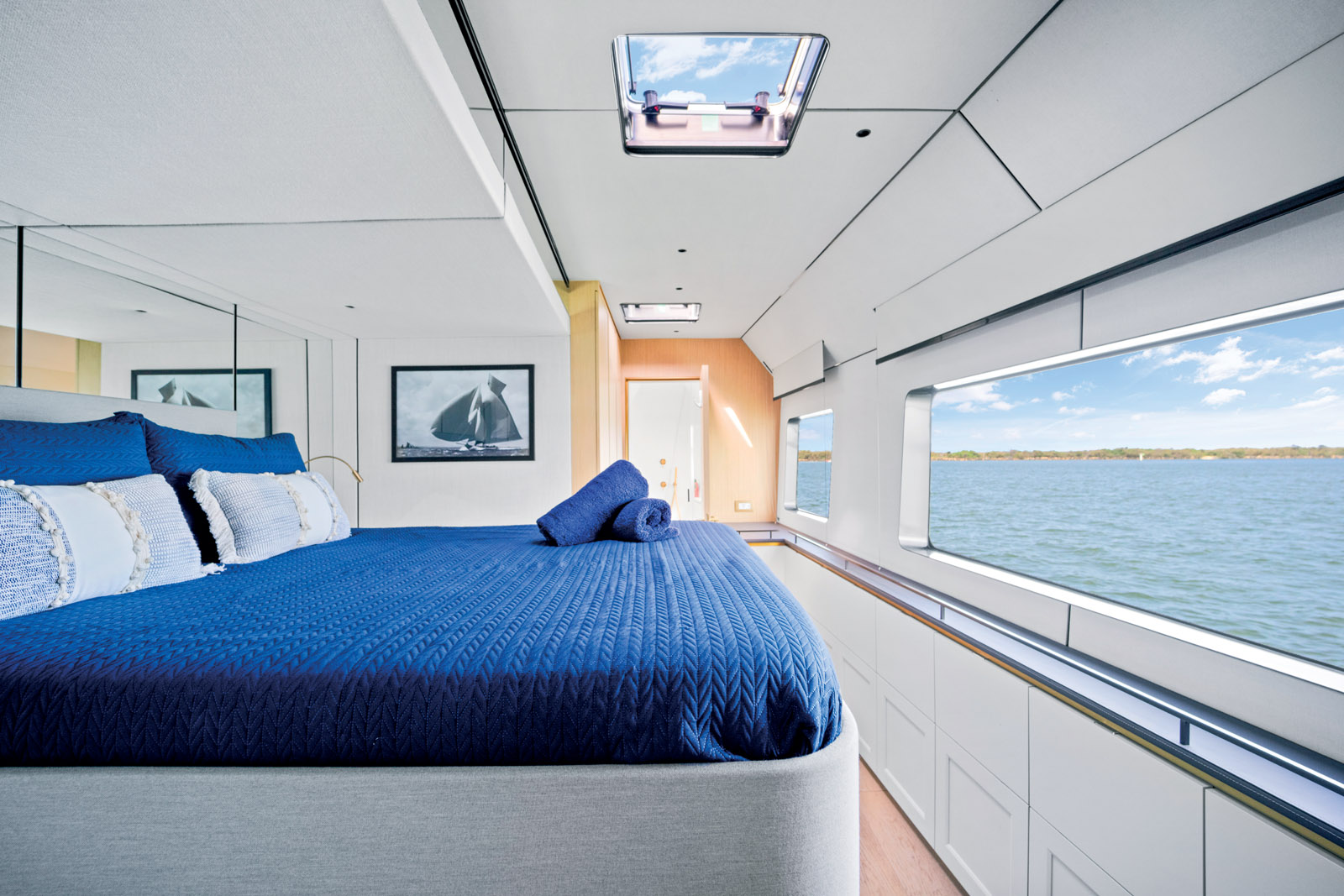
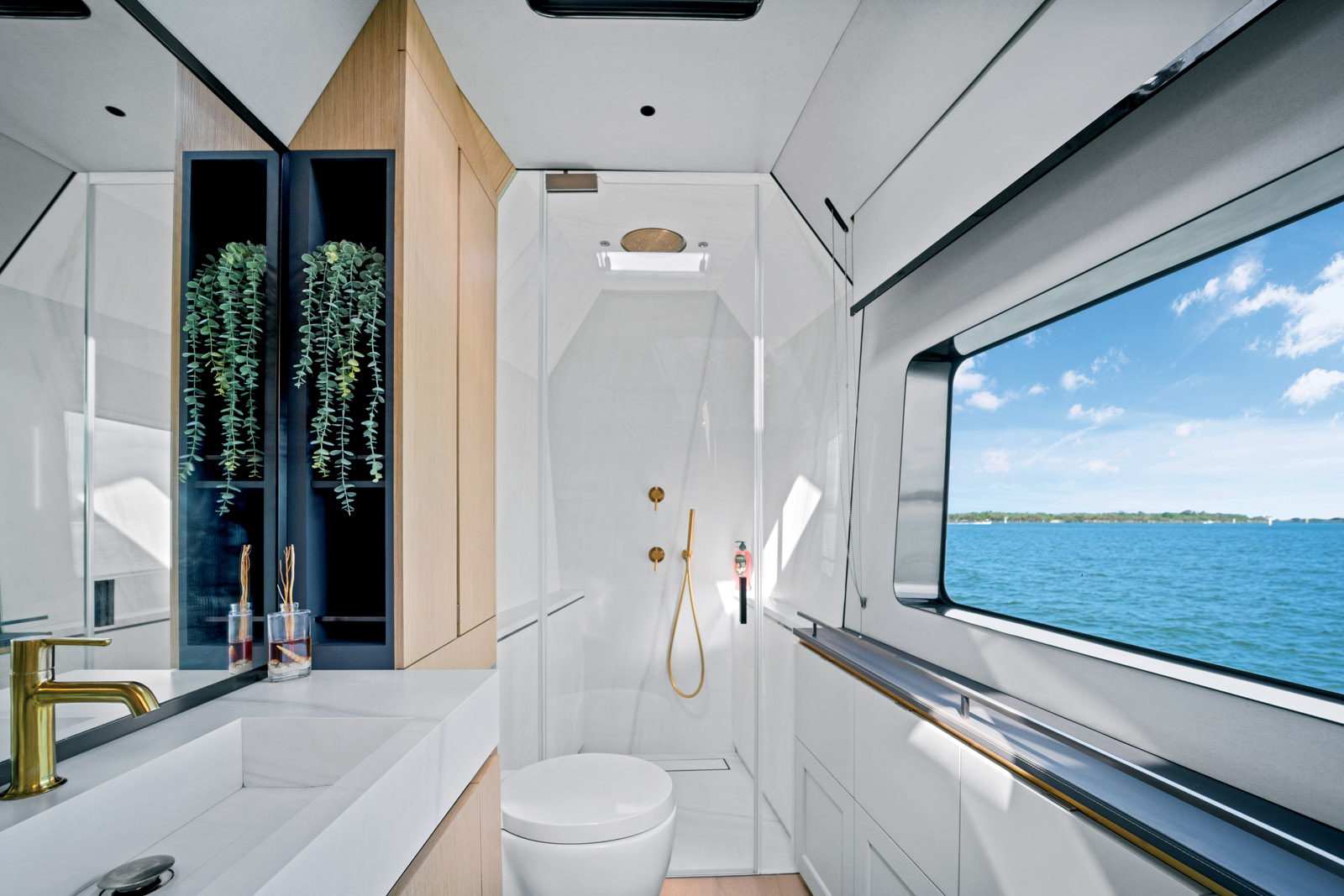
With 82 feet to play with aboard the McConaghy, sleeping space is understandably abundant within the two beamy hulls, allowing for four double guest cabins plus an additional two in the stern for the skipper and crew. The two bow cabins are symmetrical, with longitudinal bathroom forward and island bed in the back. Naturally lit by the rectangular portlights and vented by opening skylights, the queen-sized beds have pleasant surrounds. Practical touches included fiddles along bulkheads to add storage and blinds for all windows and hatches. Bathrooms are also practical with easily wiped-down surfaces, large square sinks and natural ventilation, with gold taps the only indulgence into opulence. The midships cabins share the same stairways on each side with the forward ones and are also nearly symmetrical in layout, but with smaller floor area and similar spacious beds. Using a separate entrance the crew cabins aft ensure privacy for the guests and are well fitted-out with bathroom/showers and spacious utility room. On the starboard side is a double bed with crawl-in access and two bunks on port.
Hull, Propulsion and Systems
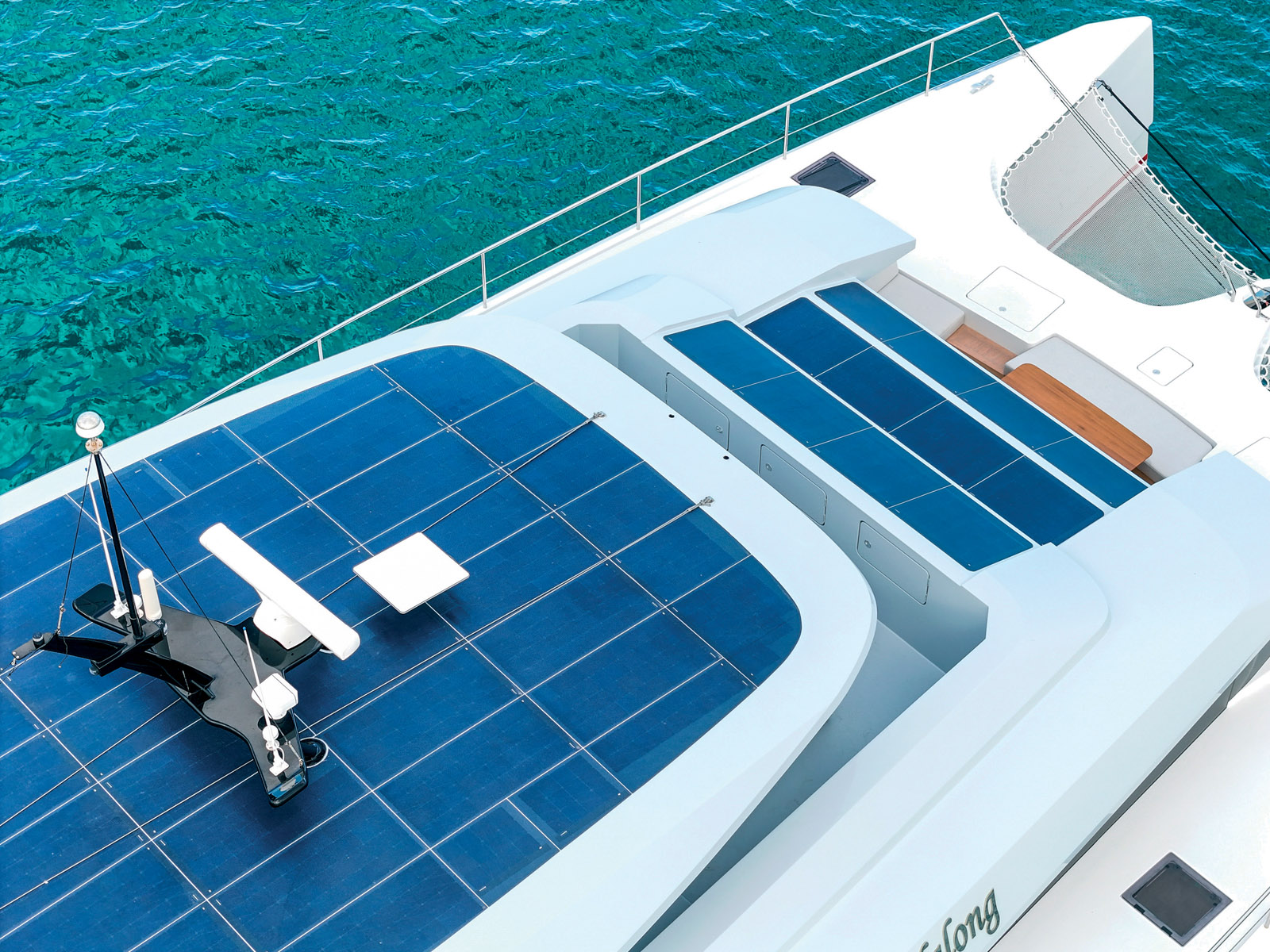
For constructing the MC82p, the yard focused on hull characteristics that include a chine near the waterline that allows much greater volume above – that means good load-carrying and accommodation – while the fine entry minimizes drag. Bridgedeck clearance looked ample, and the nacelle features a pronounced and deep Vee to aid wave penetration and add internal storage. Other major underwater features are the shaft driven propellers in front of the twin rudders. Shaft drives allow the two 300 HP M3 John Deere engines to be pushed further forward which aids trim and reduces stern drag. Each propeller is equipped with rope cutters. The engines are naturally aspirated and chosen for their low revving and long-range characteristics. Tankage includes a fuel polishing system and an oil transfer system to facilitate servicing. Access is via large hatches in the aft cockpit, easily allowing for inspecting the engine rooms, showing all service points accessible and the quadrants, along with shelves for ancillary equipment, such as the 27 kW Onan generator, watermaker and aircon units. Stored power is all lithium-ion with 12x180 amp-hour batteries. The vast roof areas on both flybridge and saloon house a whooping 7.2 kW of solar panels to feed these batteries, with a twin Victron 48 V/ 10,000 W inverter chargers – which means most parts of this vessel will run without generators.
Ocean-going Range
I could clearly see the benefits of the MC82p when I got behind the wheel to get the feel, as it easily slid through the water at very low revs (about 900 RPM) while doing nearly 9 knots. Although its modest (in reference to the scale of the vessel) 300 HP motors give a maximum hull speed of 15 knots, the MC82p was specifically designed for cruising ocean passages at almost 10 knots, with ranges of around 3,500 nautical miles possible, dependent on sea state. On the Gold Coast, the sea state looked fairly bumpy on the day of our test, with a six-foot swell running as we crashed through the waves at the Seaway entrance. On the helm, I felt no wave slap – that deep Vee cutting swells nicely – before we motored clear to calmer water. Here, I accelerated, smoothly reaching 15 knots. With whales in the area and a good lookout required, I enjoyed the clear views from the helm station which gave me the confidence to push the MC82p into a series of turns that went without dramas, before I surfed the swells heading for the golden beaches of Surfers Paradise. Conclusive tests, as the catamaran never faltered.
Under these conditions, the hulls proved to be highly effective. Designed to be operated in mostly displacement mode yet with double digit top speeds, the MC82p’s relatively modest weight of 55 tons is intended to give it the efficiency for longer-range cruising.
Conclusion
True to the shipyard’s reputation, the MC82p is a well-designed and well-built powercat with a modern and attractive look. In addition, it offers exceptional living space and refined comfort. Combine this with the reliability of John Deere motors, and it’s easy to see that this multiyacht is designed above all for long-distance cruising in a luxurious atmosphere with a full range of equipment. Basically, all you have to do is choose your destination and weigh anchor. The MC82p will do the rest.
Economical performance
Liveability
Windage is an issue on the angular design
Technical Specifications
Architect: Ker Yacht Design/ M2Atelier for interior design
Length: 78’5” (23.9 m)
Beam: 33’6” (10.22 m)
Draft: 3’11” (1.2 m)
Displacement: 55 t
Powertrain: 2 x 300 HP John Deere
Fuel: 2,110 US gal (8,000 l)
Water: 395 US gal (1,500 l)
Price: from US$ 6,990,000