A few creative minds with great seafaring experience have been looking for alternatives to the “inflatable dinghy/outboard motor” combo that has become the norm. We had the chance to try out the prototype of the MiniCat Light Electric developed by Maxence Valdelièvre (formerly of Tenderlift) and Enzo Erouard, a trainee engineer at V Yacht.
Infos pratiques
- Le chantier : MiniCat Light Electric
- La fiche technique
- Découvrez notre vidéo exclusive
- Financez votre Minicat Light Electric
- Assuez votre Minicat Light Electric
- Articles autour du Minicat Light Electric
Since the famous “Bardiaux” tenders in folding canvas, designed by the ineffable Marcel Bardiaux in the 1950s, a lot of water has passed under our bridgedecks. Inflatable boats have conquered the market - Alain Bombard and the manufacturer Zodiac had something to do with it. As for outboard motors, the renowned British Seagull was retired to the boat jumbles, being quickly replaced by a constellation of American 2-stroke engines, themselves driven off the scene by Japanese 4-stroke engines. The price of such a set-up has continued to rise, fueling a profitable combined market, but a distressing one for the countless skippers who have had to buy one. These boats provide obvious services despite a certain greed for power, high cost and relative fragility. The comfort of our multihulls and the high price of a marina slip motivate us to favor anchoring out - and therefore to use our tender even more. But most catamarans and trimarans are equipped with suitable davits - so a rigid dinghy isn’t out of the question... As for adopting more than one hull, well for us it’s kind of obvious, isn’t it?
Design and manufacture of an innovative catamaran tender
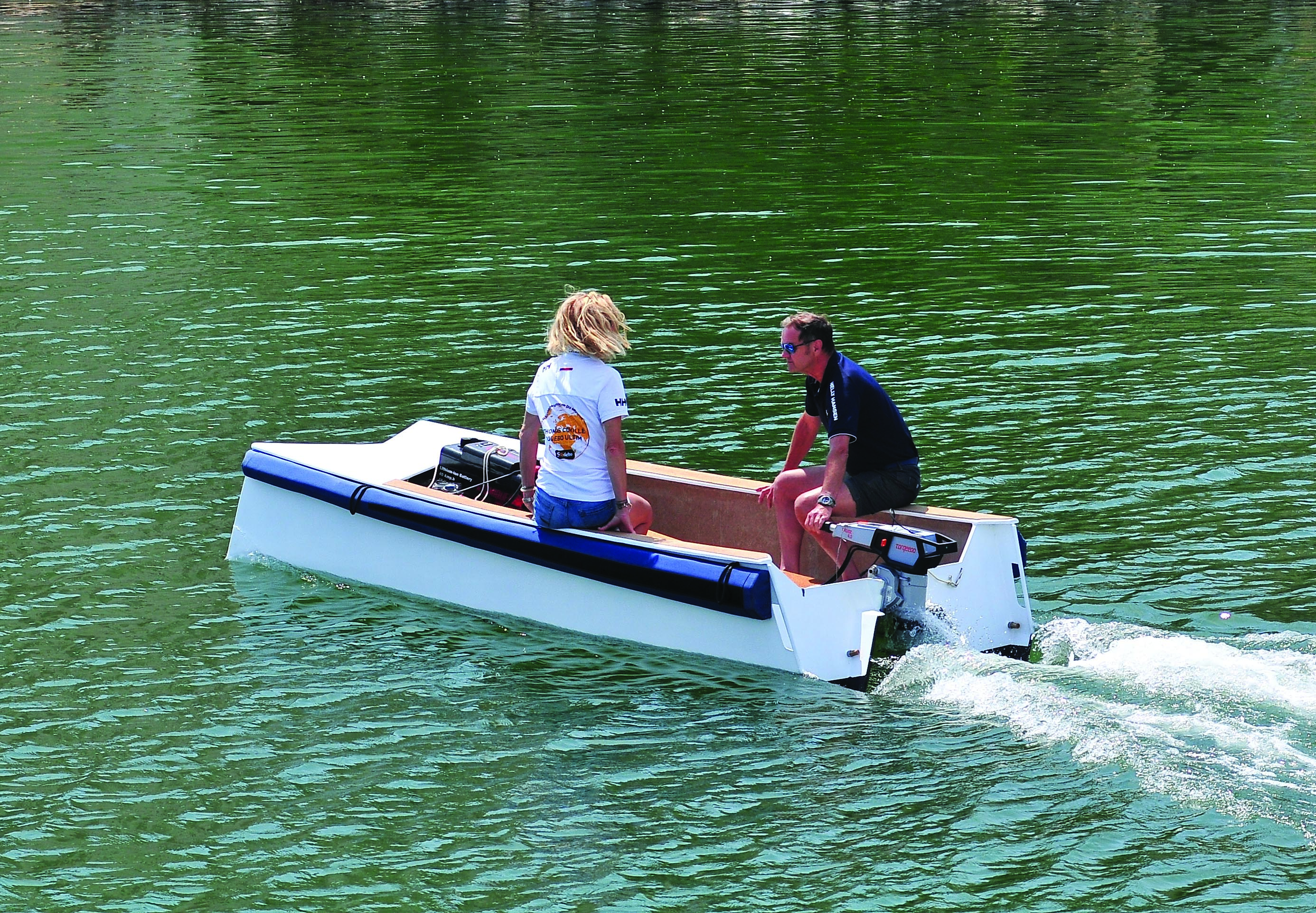
Maxence Valdelièvre is a naval architect, so designing a catamaran-type tender wasn’t going to be an insurmountable challenge for him. The many years spent designing, building and manufacturing Tenderlift gangways have familiarized him with kinematics far more complex than the design of a tender less than 12 feet (4 meters) long. Maxence’s specifications were to obtain a solid, hardwearing, reliable and easily repairable craft - the life of a blue water cruising dinghy is not a like on a boating lake! The manufacturing method chosen was a polyester/cork/glass sandwich. The simple shapes don’t require any complex tooling. The designers of this tender are familiar with the notions of water resistance, and so they’ve been able to optimize the fineness of the bows and the height of the tunnel in order to be able to accommodate at least 4 people in this boat. The lateral tubes serve as permanent fenders. Bow protectors will be installed at a later date on the models sold.
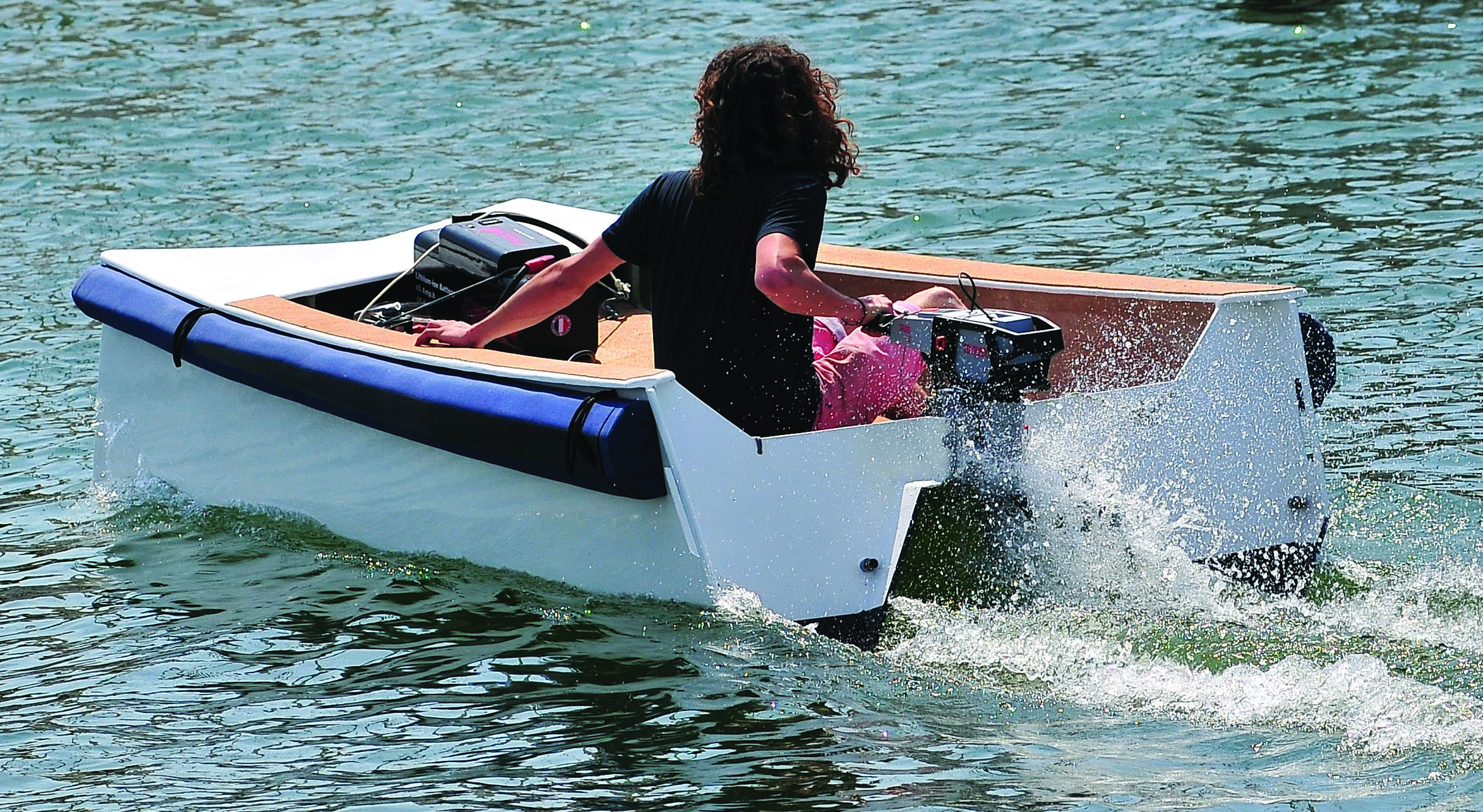
The MiniCat Light Electric, even without its foil, will reach 12 knots. Once the dinghy is hauled up, the 48V lithium battery can be recharged on board.
A super fun machine
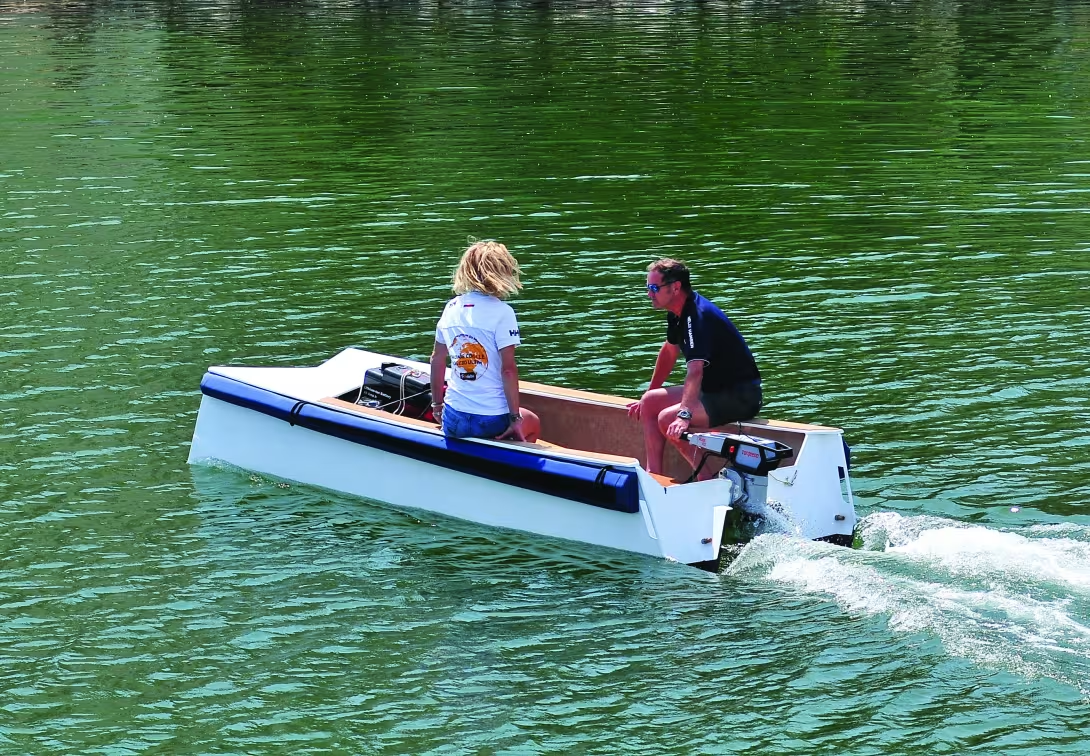
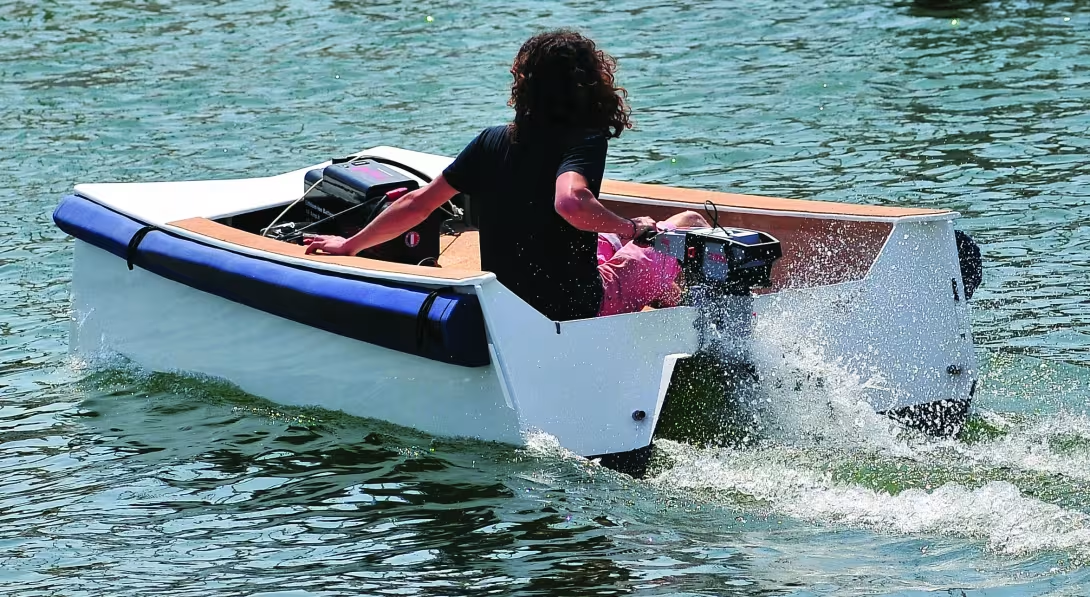
We tested the prototype before finalization, but the result on the water is so convincing that we wanted to share it with you now. Aesthetically, the boat is pleasing with its inverted bows and taut lines. The gunwales are comfortable and allow (if you have a tiller extension) to center the weight well, if there are two of you. There is plenty of room for bags or other equipment. The simple finish, the ergonomics, the cork non-slip surface and the white polyurethane paint give this machine a friendly, adventurous, yet humble look. Originally designed for electric motorization, our prototype machine was equipped with a 4 kW Torqueedo long shaft outboard and a 48V lithium battery allowing 30 minutes of use at full speed. The first sensations were seductive. The lightness, the attitude on the water and the glide of this small catamaran are astonishing. Penalized by a not-yet-optimized engine setup, having a tendency to cavitate, we were nevertheless thrilled by the way it moved across the water and the immediate speed of the craft: 10/12 knots constitute a silent and efficient cruising speed with two people on board. Since our test, a central foil has been fitted: the boat is now striking a balance that gives it the performance of a small sportsboat
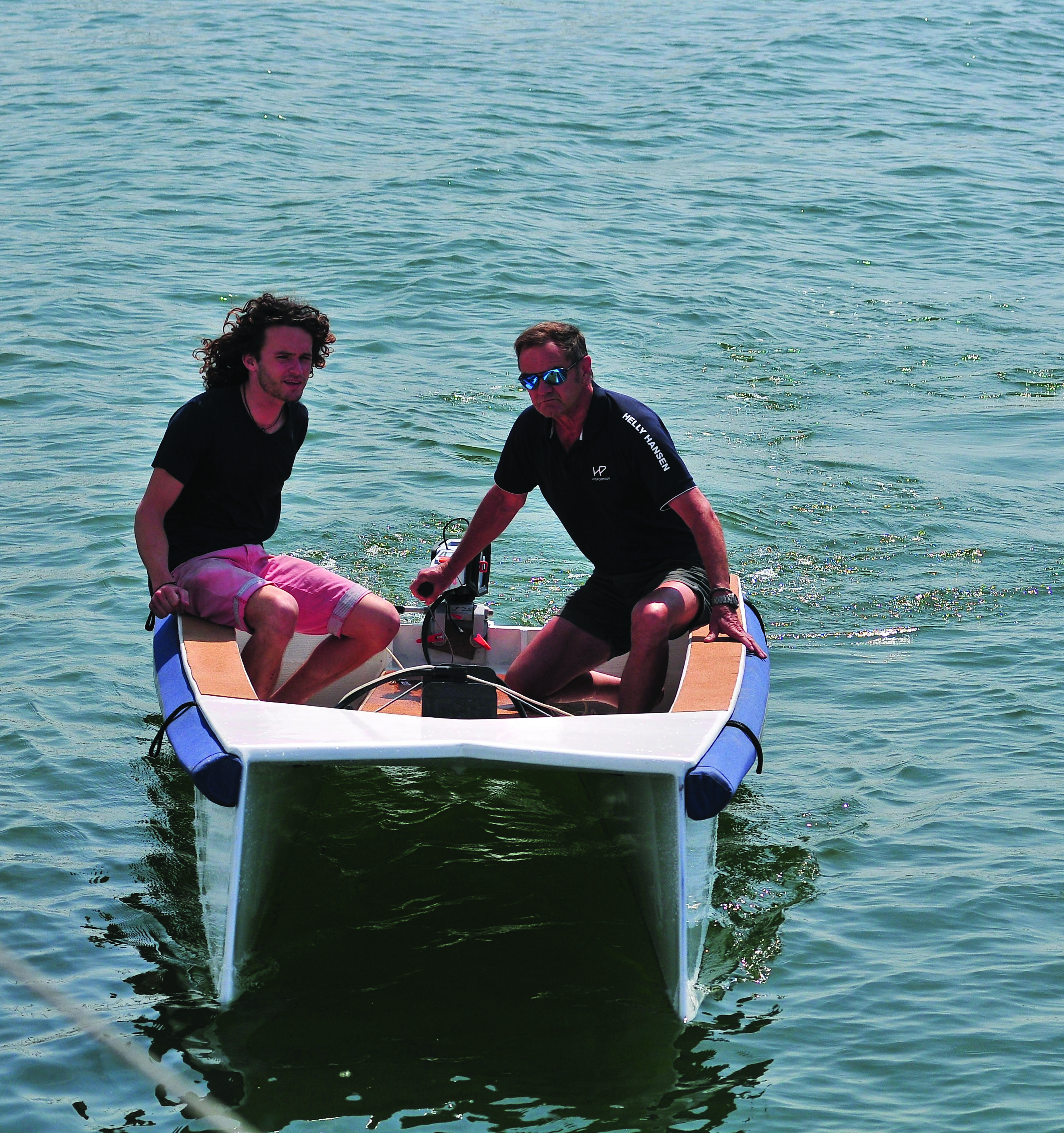
Fine-entry bows reduce drag.
Conclusion
Hardy, repairable anywhere, well designed and conceived: the MiniCat tender offers real potential. Equipped with an electric outboard, rechargeable on board, range can be ensured without the need to go looking for fuel. Going along at displacement speed and the fun of gliding across the water contribute to the enjoyment.
Technical specifications
Builder: V Yacht
Designers: Maxence Valdelièvre and Enzo Erouard
Construction: Polyester/cork/glass sandwich
Length: 12’6” (3.80 m)
Beam: 5’7” (1.70 m)
Unladen weight: 155 lbs (70 kg)
Engine: 4 kW long-shaft Torqueedo
Price: under evaluation
Dominique Montesinos' dinghy
After we’d tested Maxence and Enzo’s boat, we heard from Dominique Montesinos, a former workshop manager at JTA (Jeanneau Techniques Avancées) and who also worked at CNB. The skipper and his wife Malou have just completed a circumnavigation of the world on Catafjord, a 65-foot (20-meter) sailing catamaran, before setting off again on a powercat they modified themselves. Dominique has just launched a superb 10-foot (3-meter) catamaran dinghy in wood/epoxy, whose plans he distributes in a perfectly produced brochure - available to order for the price of € 19.90. The design and the philosophy of the craft are very close to those of Maxence’s boat. Dominique has however opted for a less powerful engine and an auxiliary sail.
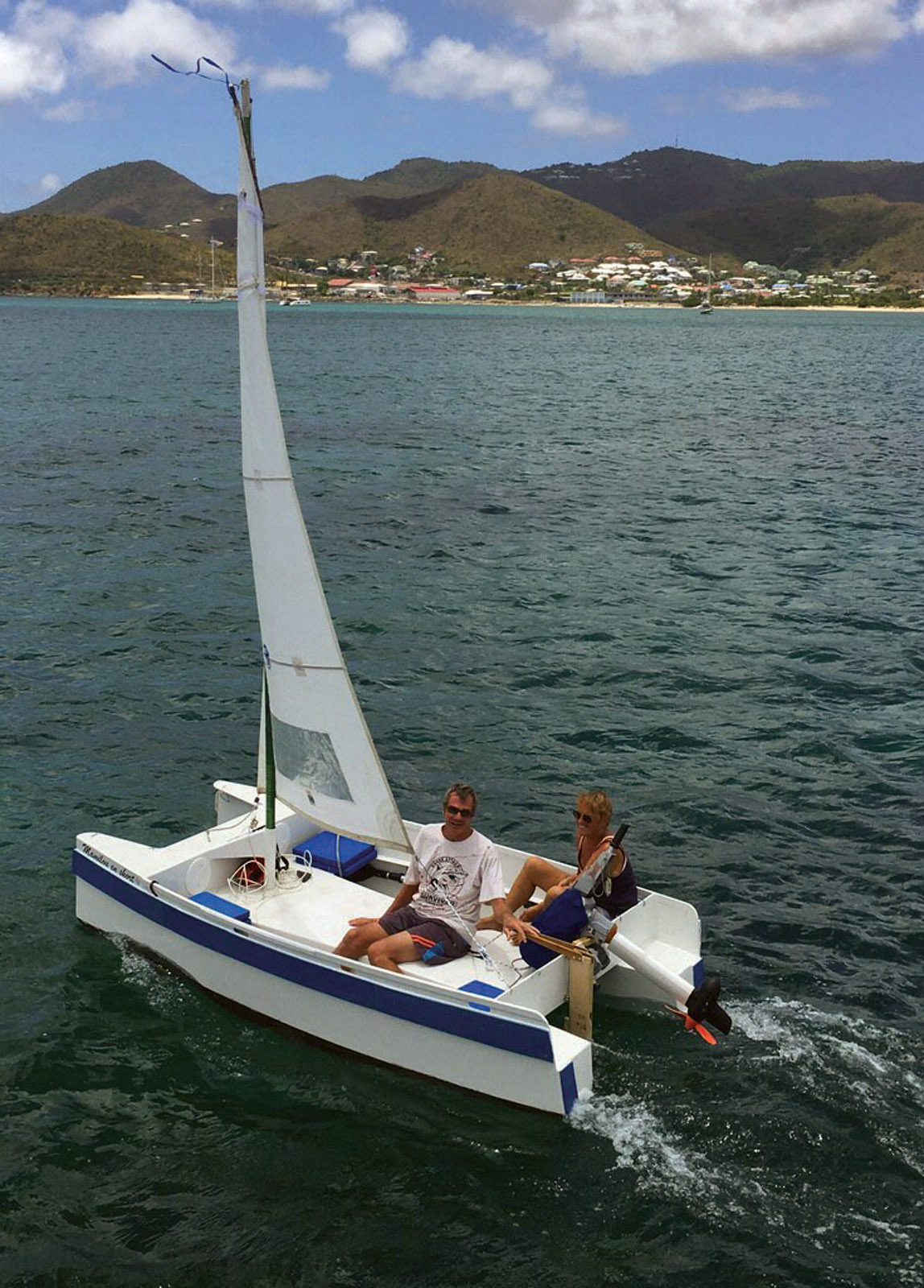
The design and the philosophy of the craft are very close to those of Maxence’s boat. Dominique has however opted for a less powerful engine and an auxiliary sail.