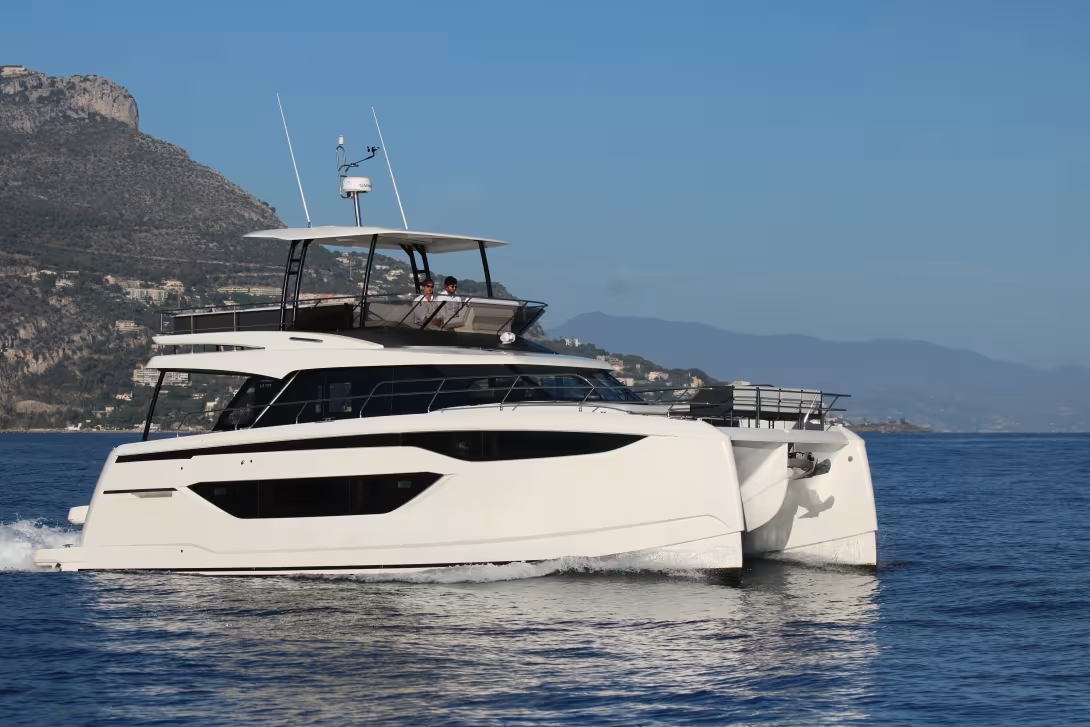
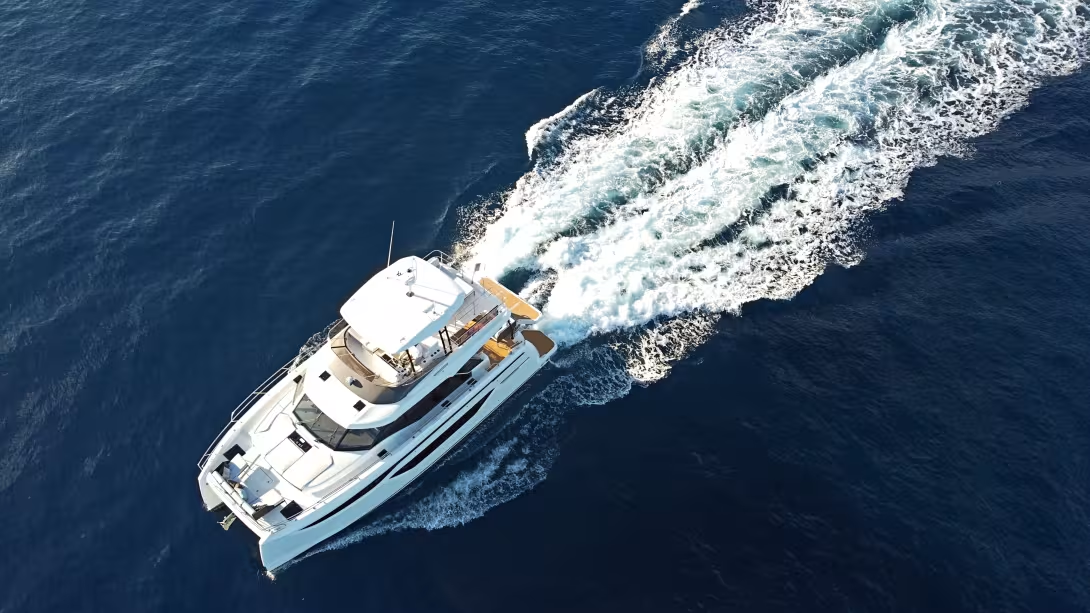
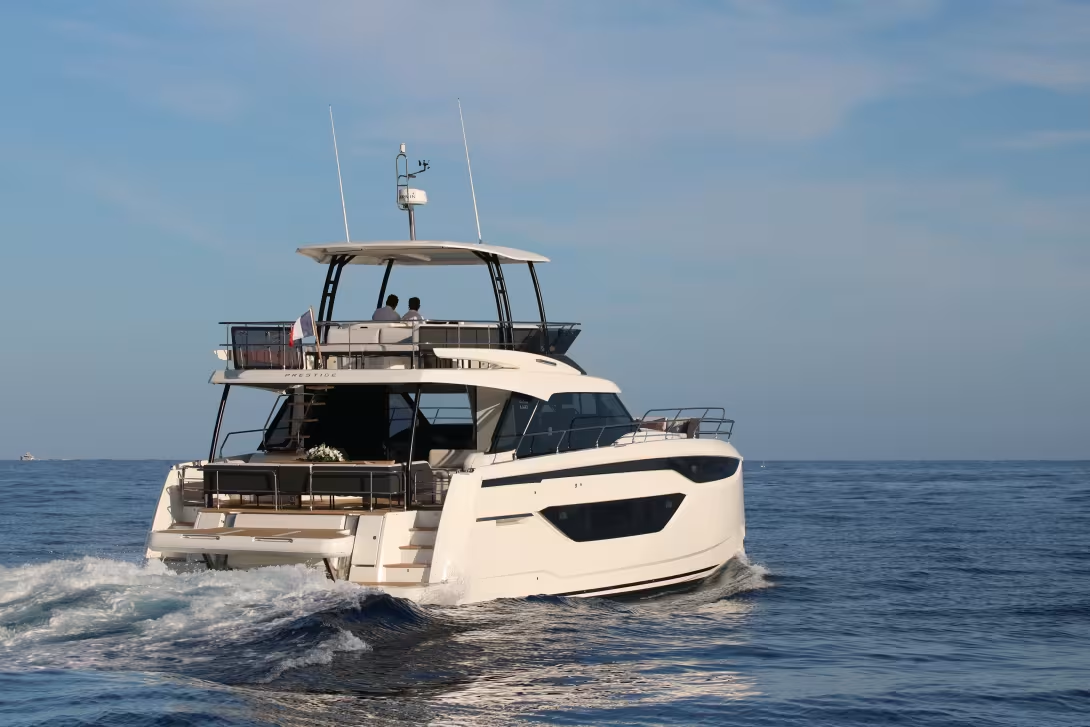
Announced at the very beginning of 2022 and discreetly launched in the spring, the first powercat to be built by Prestige Yachts was to wait until the Cannes Yachting Festival to (finally) make its first appearance. This catamaran, designed by one of the most important specialists in motorboating, was eagerly awaited! We got the opportunity of an exclusive test aboard the Prestige M48 during a delivery trip along the French Riviera.
Infos pratiques
- Le chantier : Prestige M48
- La fiche technique
-
 Découvrez notre vidéo exclusive
- Financez votre Prestige M48
- Assuez votre Prestige M48
- Articles autour du Prestige M48
Conditions: calm to slight sea state; remains of a residual swell from the southwest, 3 to 7 knots of westerly wind
A Prestige above all
The marketing approach has been carefully thought out: based on the principle that the brand’s customers were always asking for greater comfort and ease of use, and that this demand had reached its maximum in terms of feasibility with the latest range, the X-Line, Erwin Bamps (Prestige Yachts brand director) and his team decided, in agreement with the Bénéteau Group, to launch themselves into the powercat market. However, there was no question of “losing” the brand’s loyal customers: the idea was to offer them a Prestige, but a Prestige with two hulls. This multihull approach could have been taken on by Lagoon, another brand within the group, but the M48 project was carried out independently. Andrea Garroni, designer for all the Prestige models, was logically called upon for the M48. In terms of the Prestige lineage, the result is very convincing. All we need do is take a look at this model in more detail…
Cabins beneath the nacelle floor!
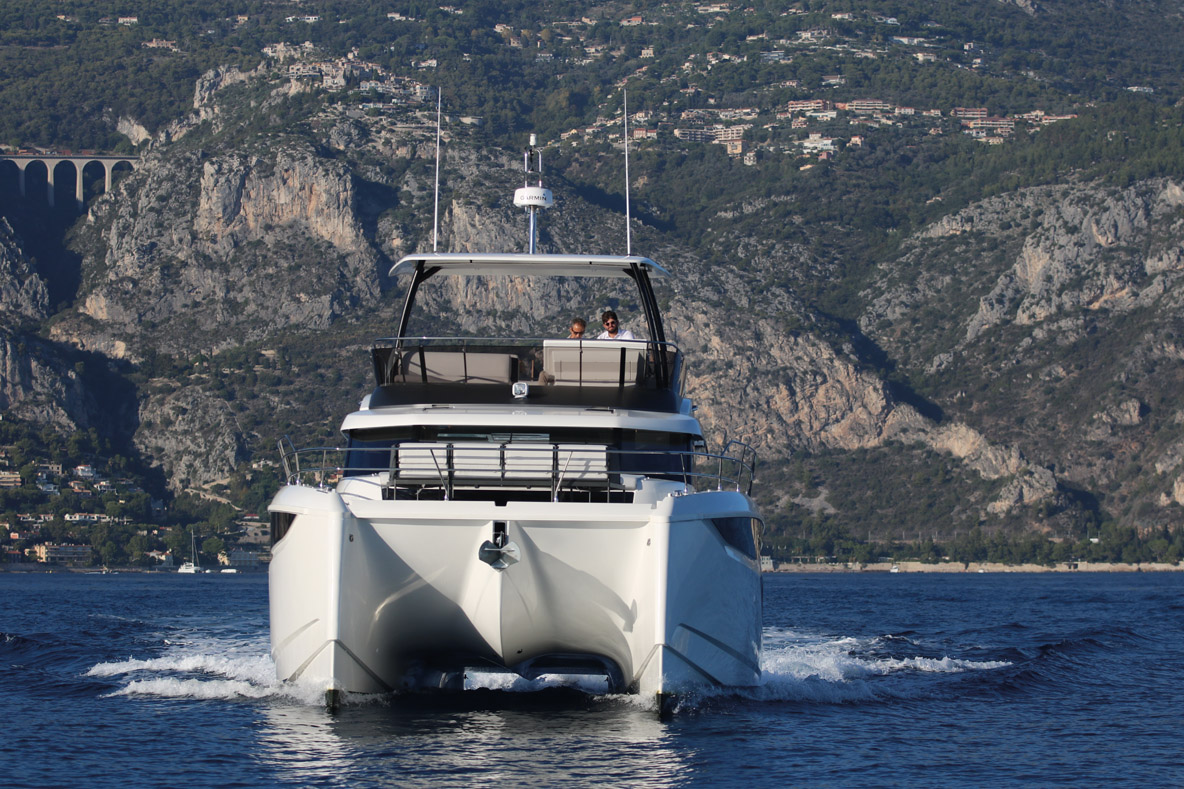
Broadly speaking, the Prestige M48 is significantly narrower than her competitors: barely 20 feet (6 meters) compared to 21’6” (6.56 m) for the Aquila 44 (which is almost three feet shorter), 21’8” (6.60 m) for the MY5, 24’1” (7.34 m) for the Leopard 46PC, and 24’7” (7.50 m) for the Aventura 14. A choice that is accompanied by another bold move: housing the cabins between the floor of the nacelle and the underside of the hull! As we shall see later, this audacious architectural choice is bound to pay off at some point... but these huge cabins undoubtedly provide a wow effect that will clearly be beneficial as the first model in a new range.
Very high standard of finish
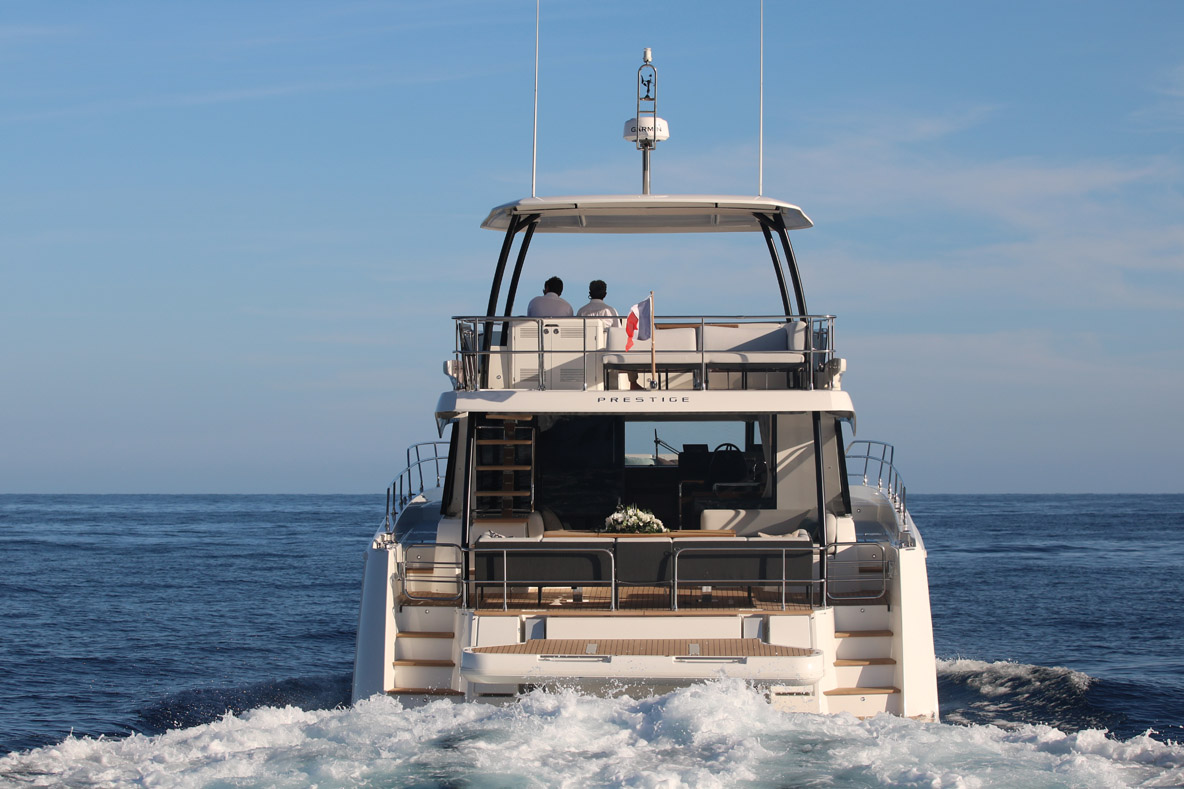
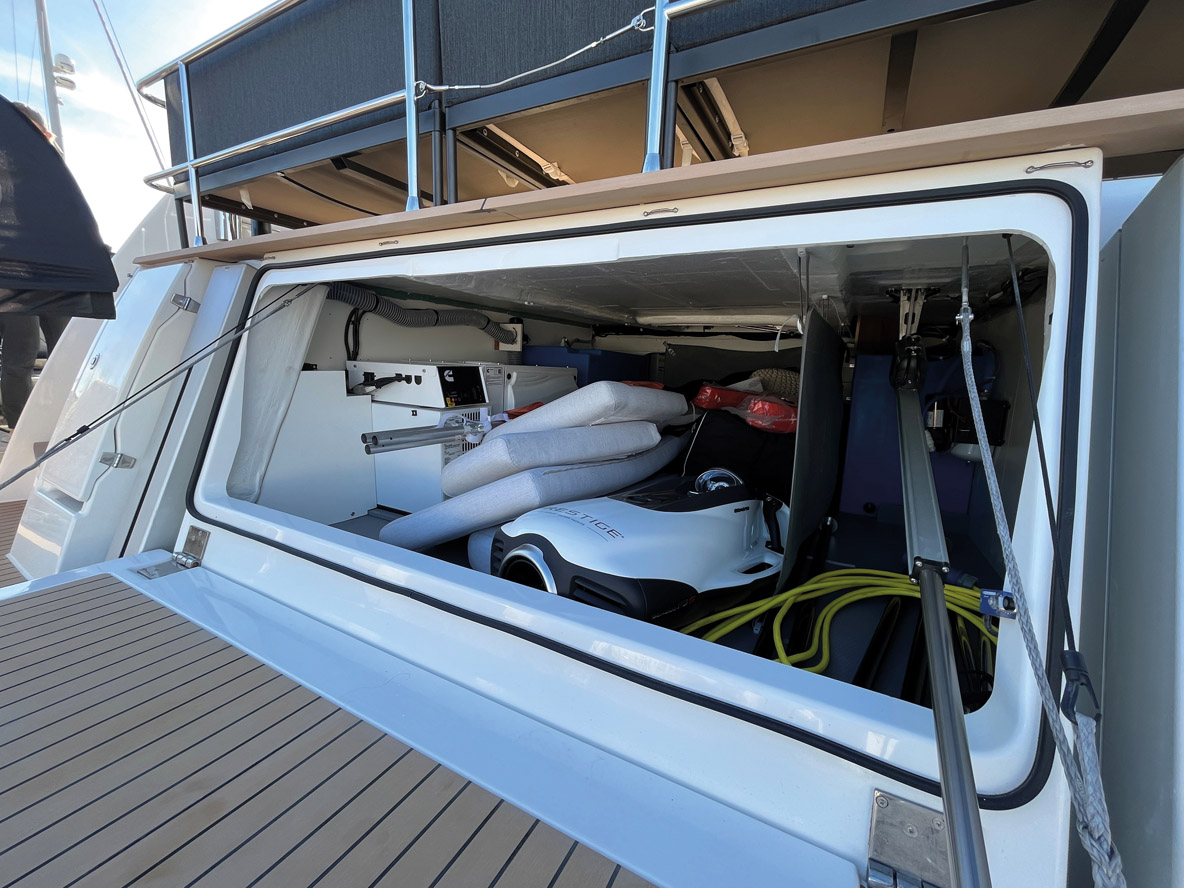
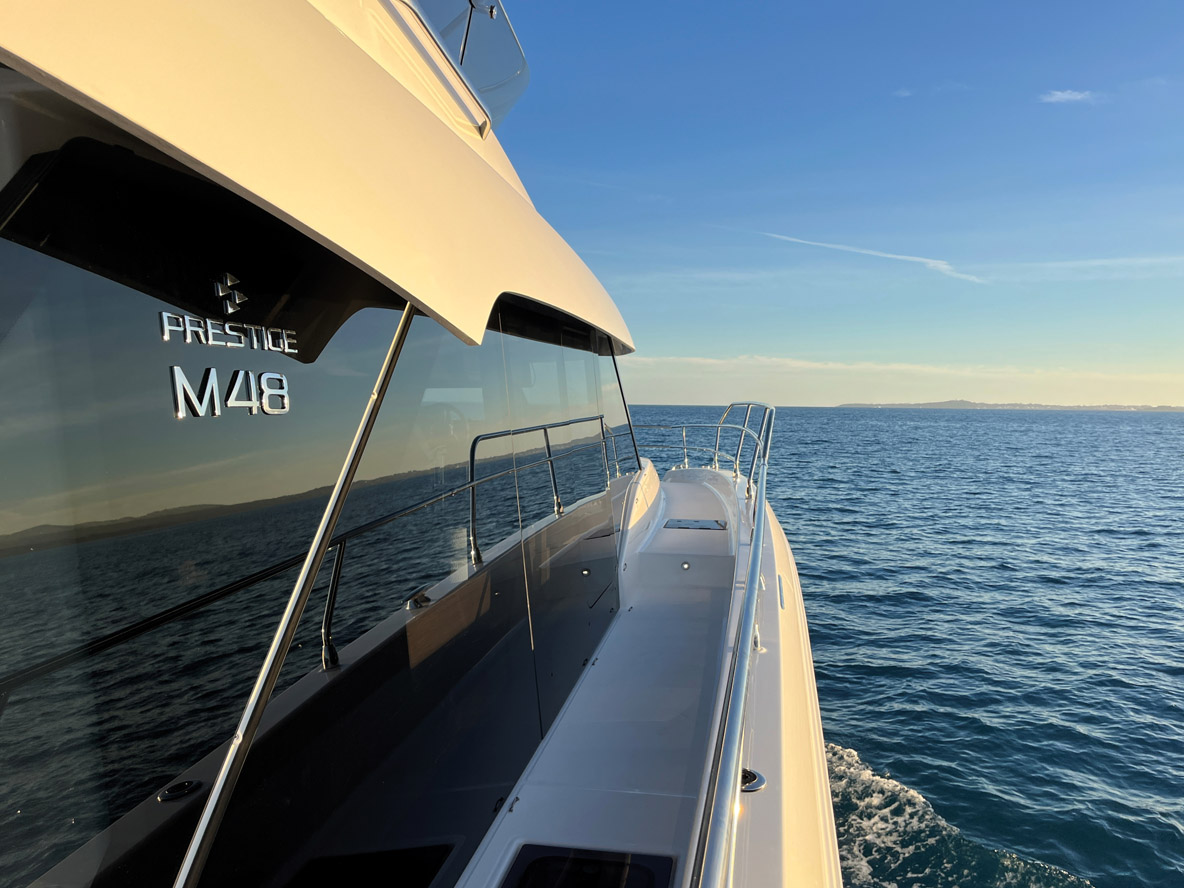
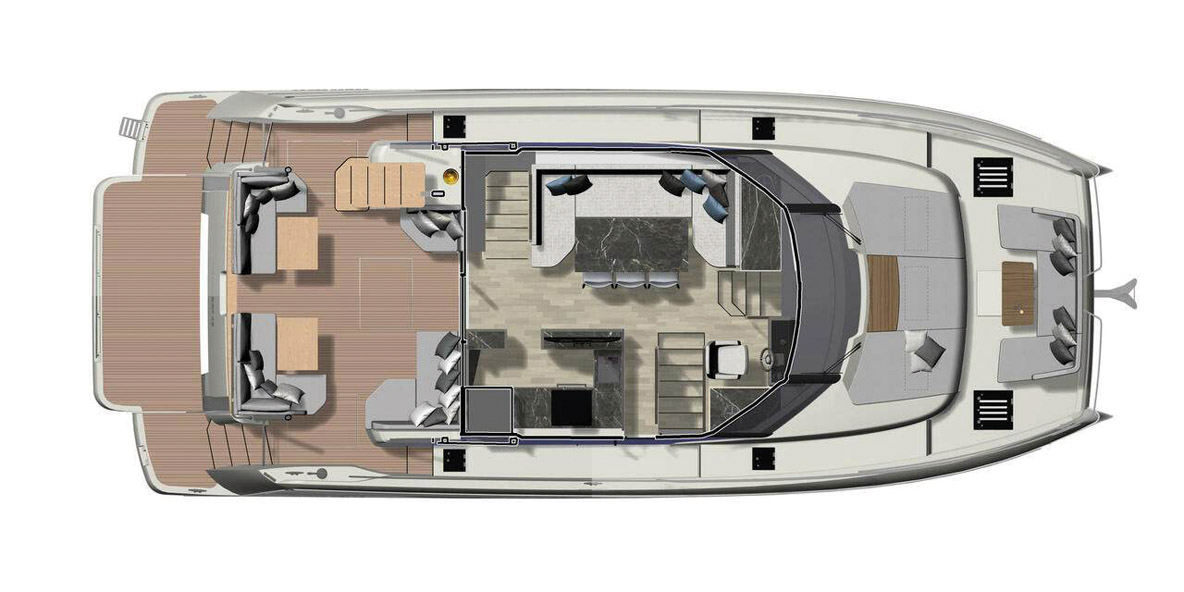
Given the amount of freeboard, access to the boat is via one of the sugarscoops or via the large hydraulic platform. Within the transom is a big locker, as imposing as it is unusual. The guardrail swivels up out of the way - simply lift it up to release it – and then by making a quarter turn, the whole area is made safe when under way. From the moment you step aboard the M48, you’re surprised by the standard of finish. The materials, to begin with, are all of high quality. The assemblies are irreproachable and everywhere the kinetics of the mobile elements are well thought out. You immediately get a sense of how much work the manufacturer has done when it comes to designing layouts. Producing more than 300 top-of-the-range 40 to 70 footers a year is certainly a contributing factor. Staying on deck before discovering the interior, the side-decks, despite the relative narrowness of the powercat, are still more than 16” (40 cm) wide. Stepping forward is not awkward. A bulwark whose height varies between 6 and 10 in (15 and 25 cm) ensures good protection when moving around, especially since the guardrails are strong and there are handholds to be found everywhere. To starboard, an accommodation door provides direct access to the interior.
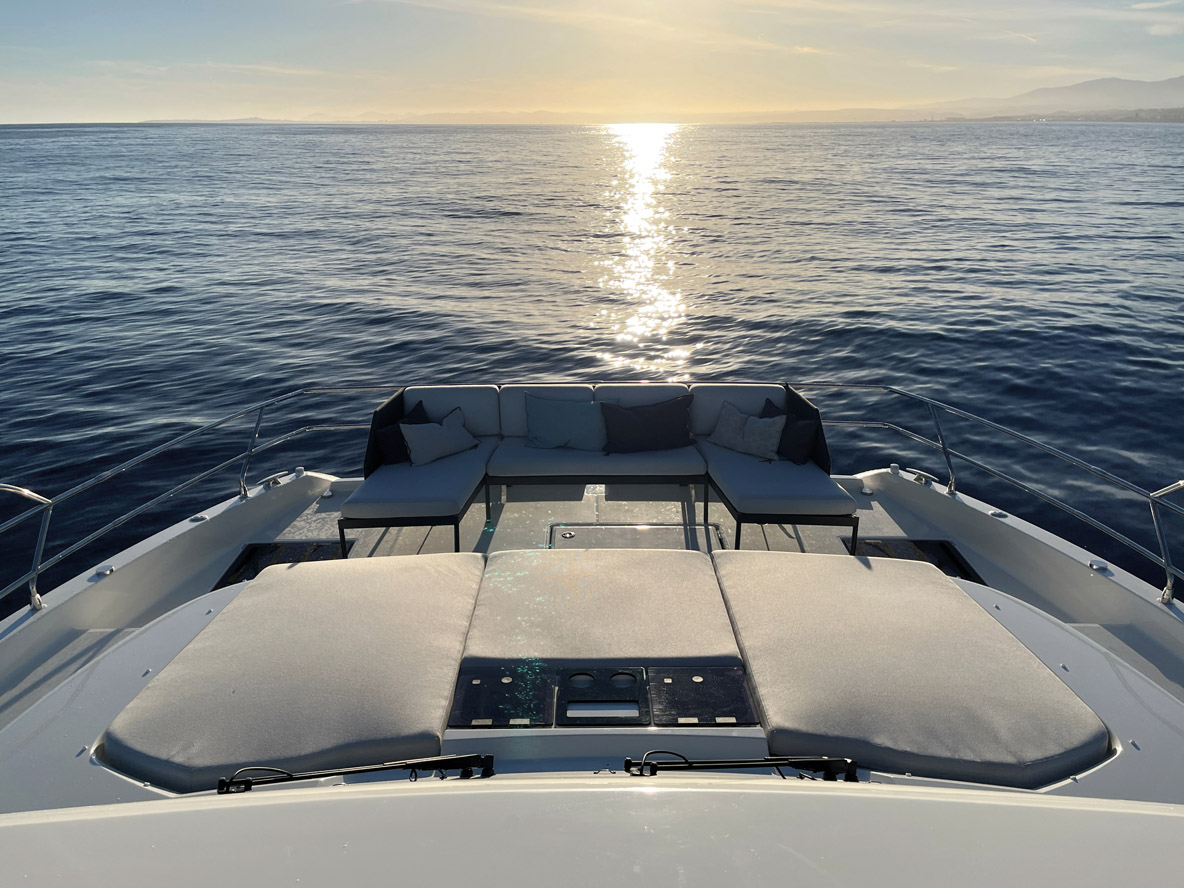
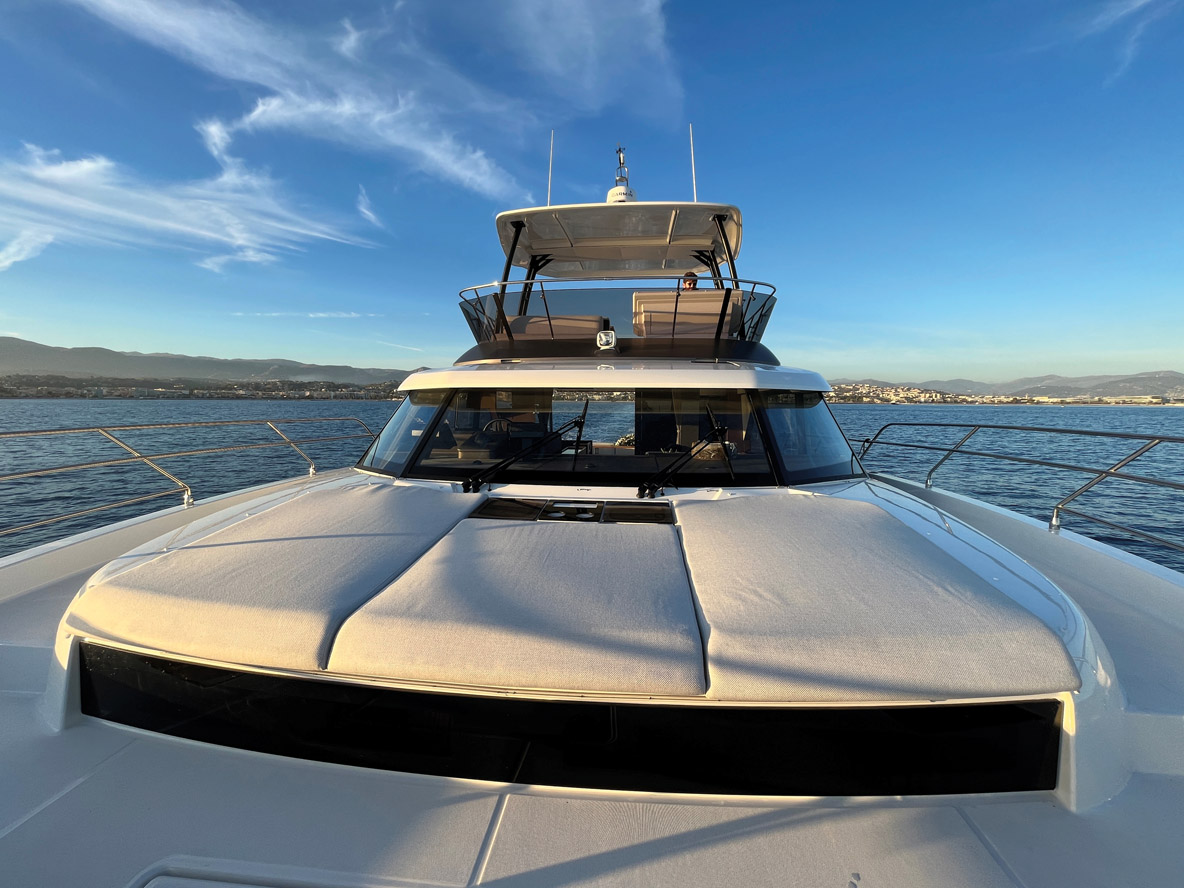
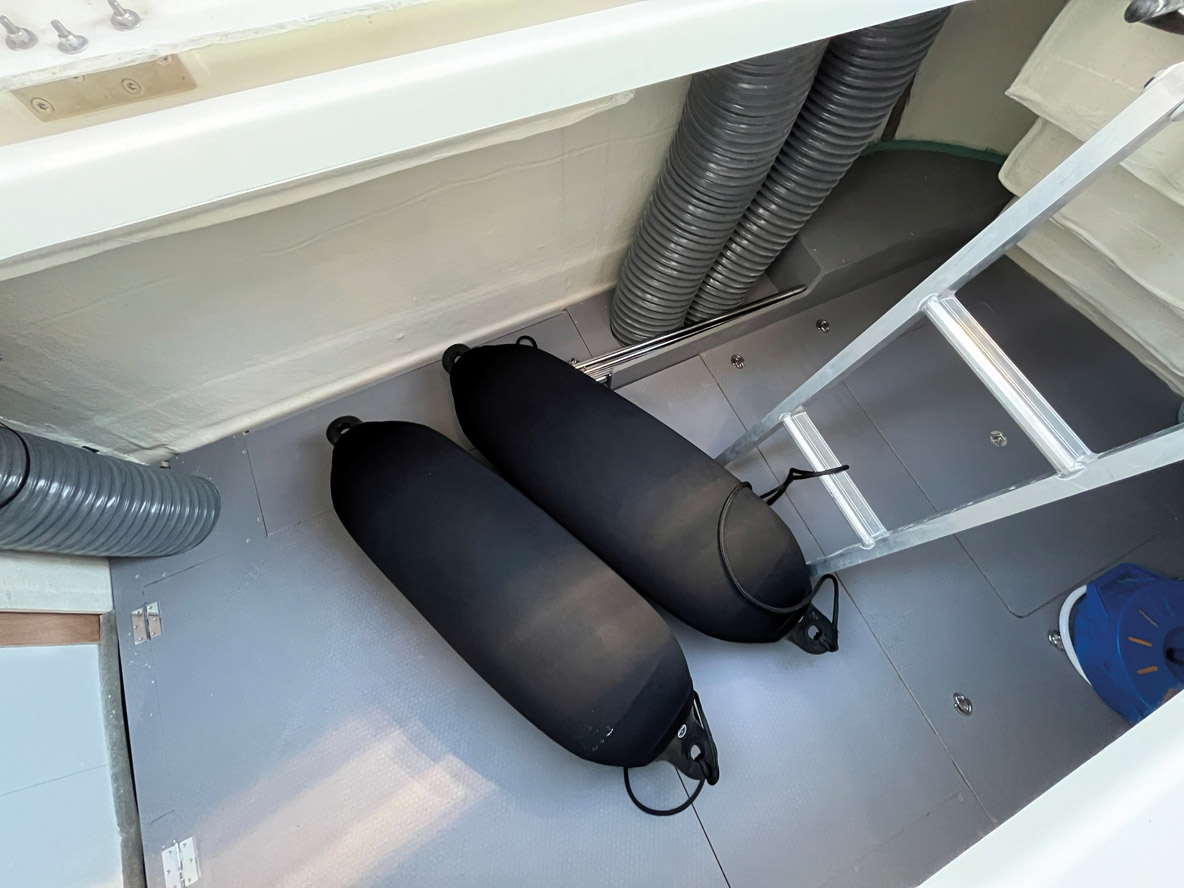
The opening is small 3’6” by 21” (106 x 54 cm), forcing you to bend double to get through, but it has the merit of being there. The foredeck is dedicated to relaxation, with a large sunbathing area and a sofa, permanently installed at the very front. The seat is obviously particularly exposed when under way and generates a significant amount of windage, making it an option that we don’t consider indispensable. The forward deck also features plenty of storage space, as everywhere on board - and two accesses at the very front of each hull.
A skipper’s cabin and a bathroom can be fitted out in these spaces.
As for the cockpit, it has seats right up against the nacelle and a large table set back: modular, its size can total 77 x 28” (1.95 x 0.71 m).
A particularly convivial flybridge
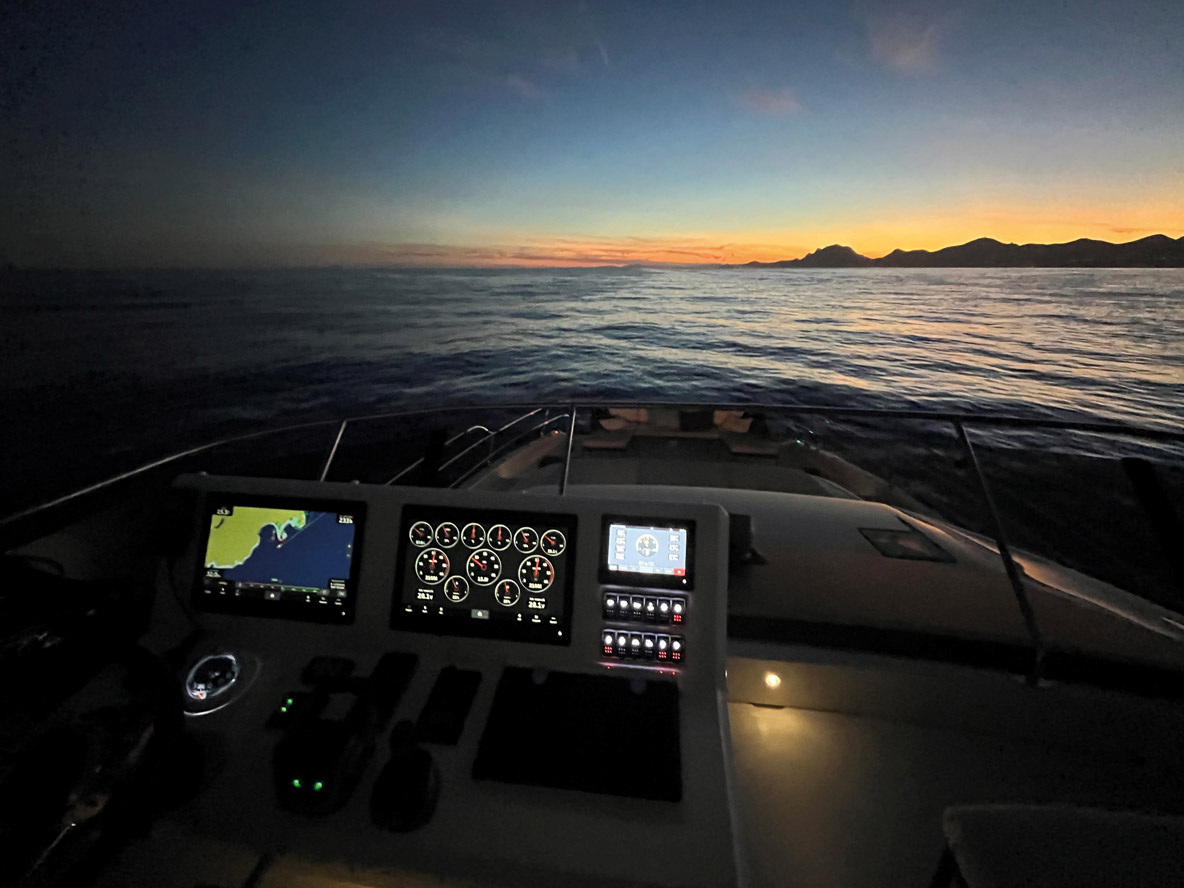
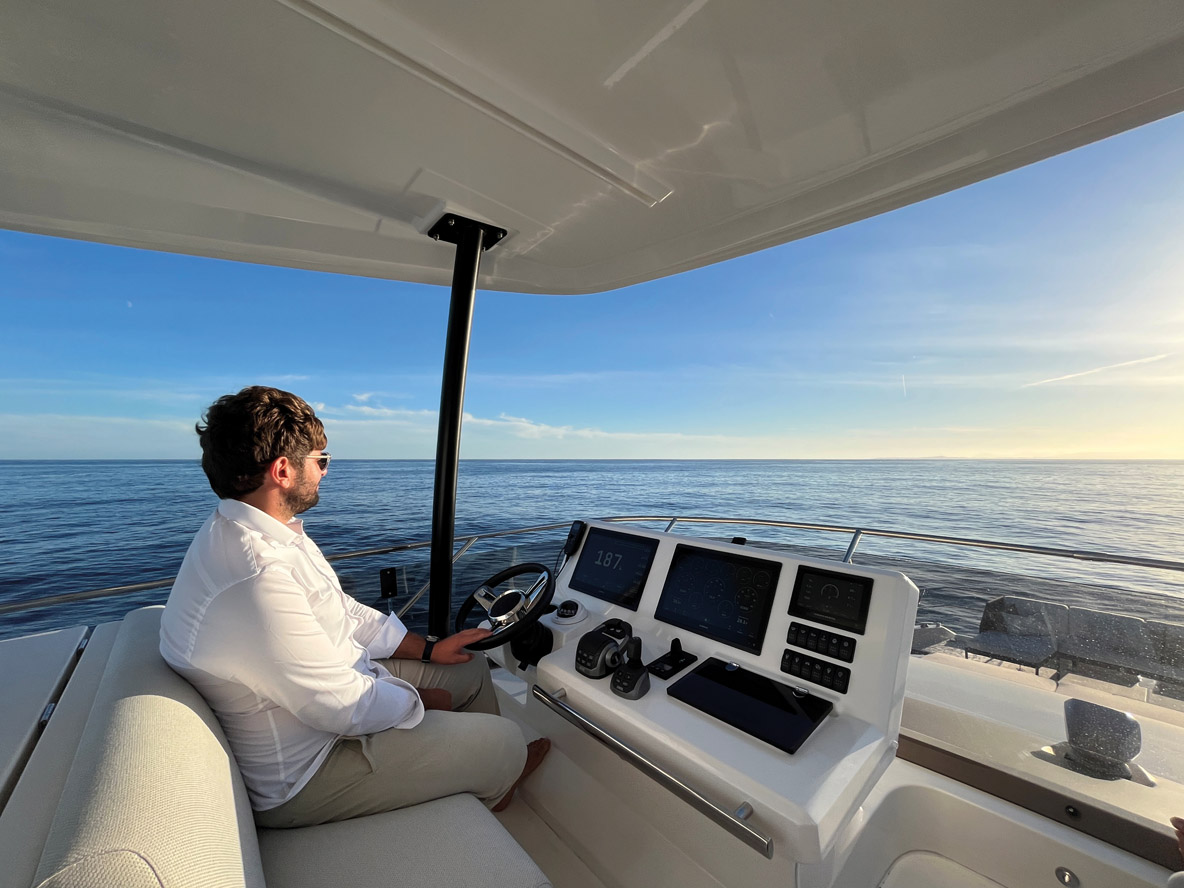
Steps from the port side of the cockpit lead to the flybridge, and in the event of bad weather at anchor or while under way, a large, hinged panel can close off the access, allowing the cockpit to remain dry. Up on the flybridge, you enjoy a breathtaking view as well as a perfectly laid out helm station. The instruments are as clear as they are complete and there are two forward-facing bench seats each for two people, including the helmsman. The reverse sloping windshield is large enough to provide good protection if you are stretched out. The entire aft part of the flybridge is dedicated to relaxation, and includes a galley unit, table measuring 35 by 62 in (90 x 160 cm) that can seat 8 people, and even a huge sunlounger. Like the main deck, the entire upper deck is protected by a robust stainless-steel rail. There is only one detail to be resolved: the T-top uprights, although of imposing section, are not rigid enough to hold the top firmly in place, causing it to sometimes generate a bit of noise. The yard is currently working on resolving this issue.
Interior helm
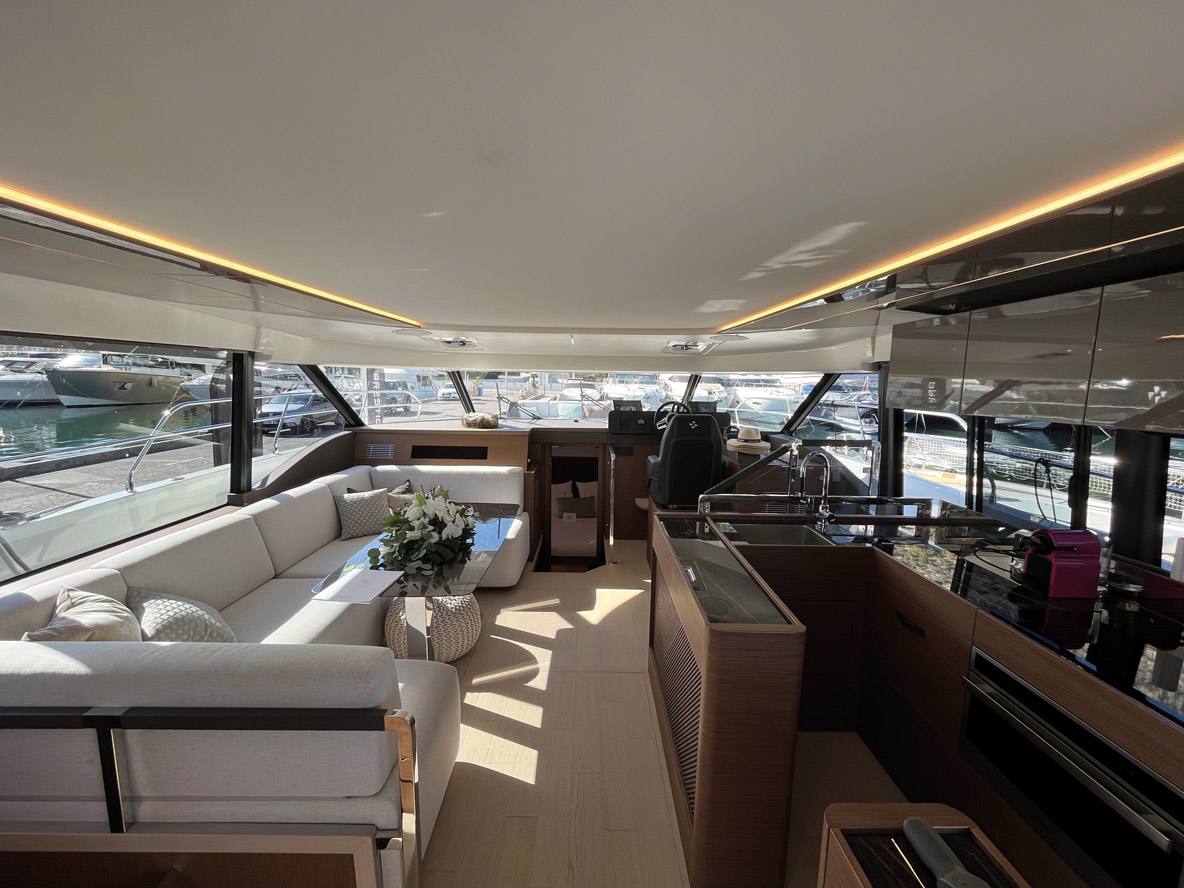
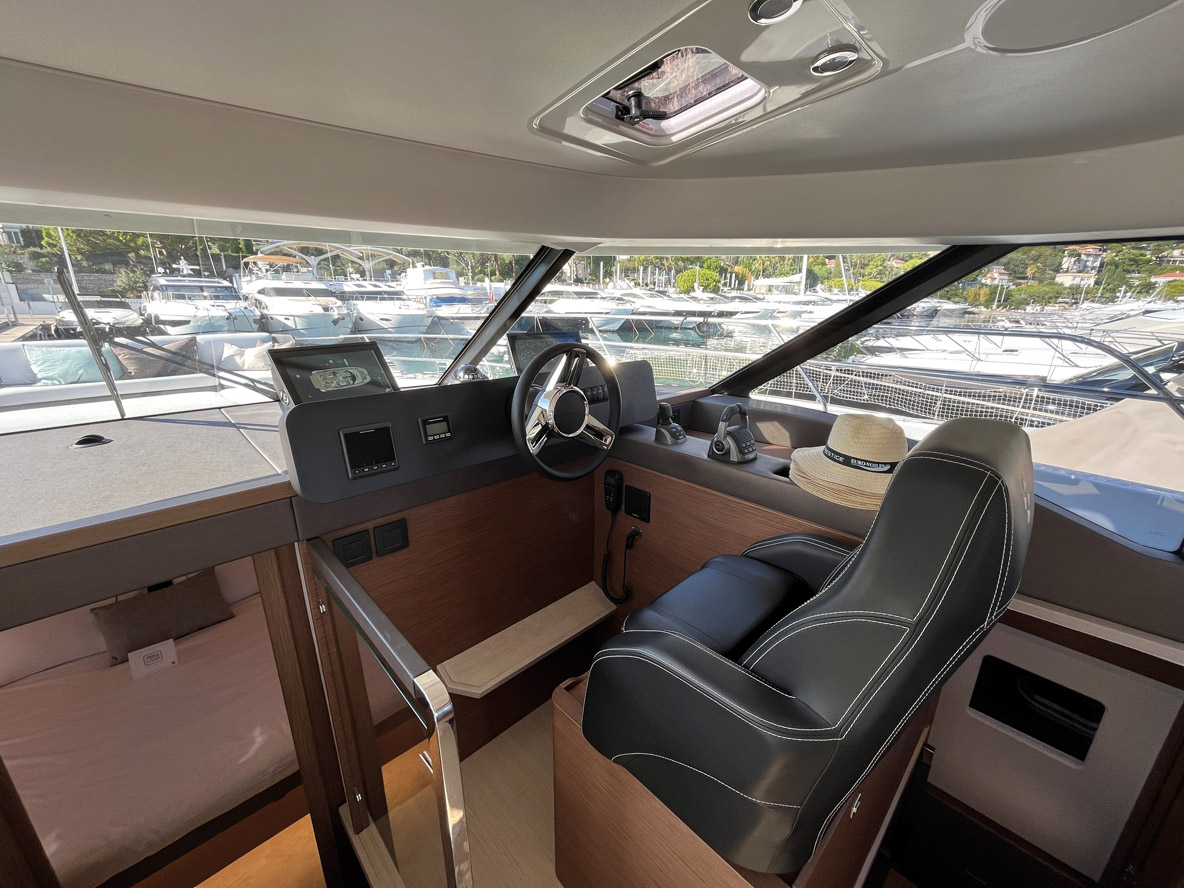
The transition from cockpit to nacelle is perfectly managed by flush-decked access and an opening of 6’4” (1.93 m) high by 30” (0.76) wide. A sliding panel provides an additional 31” (78 cm). To starboard, the saloon can accommodate six people around its U-shaped bench seat and table measuring 59” x 27” (150 x 0.68 cm). Opposite, the U-shaped galley is completely out of the way. Headroom throughout the nacelle is close to 6½ feet (2 meters). Natural light is abundant and the view of the sea unobstructed - whether standing or sitting.
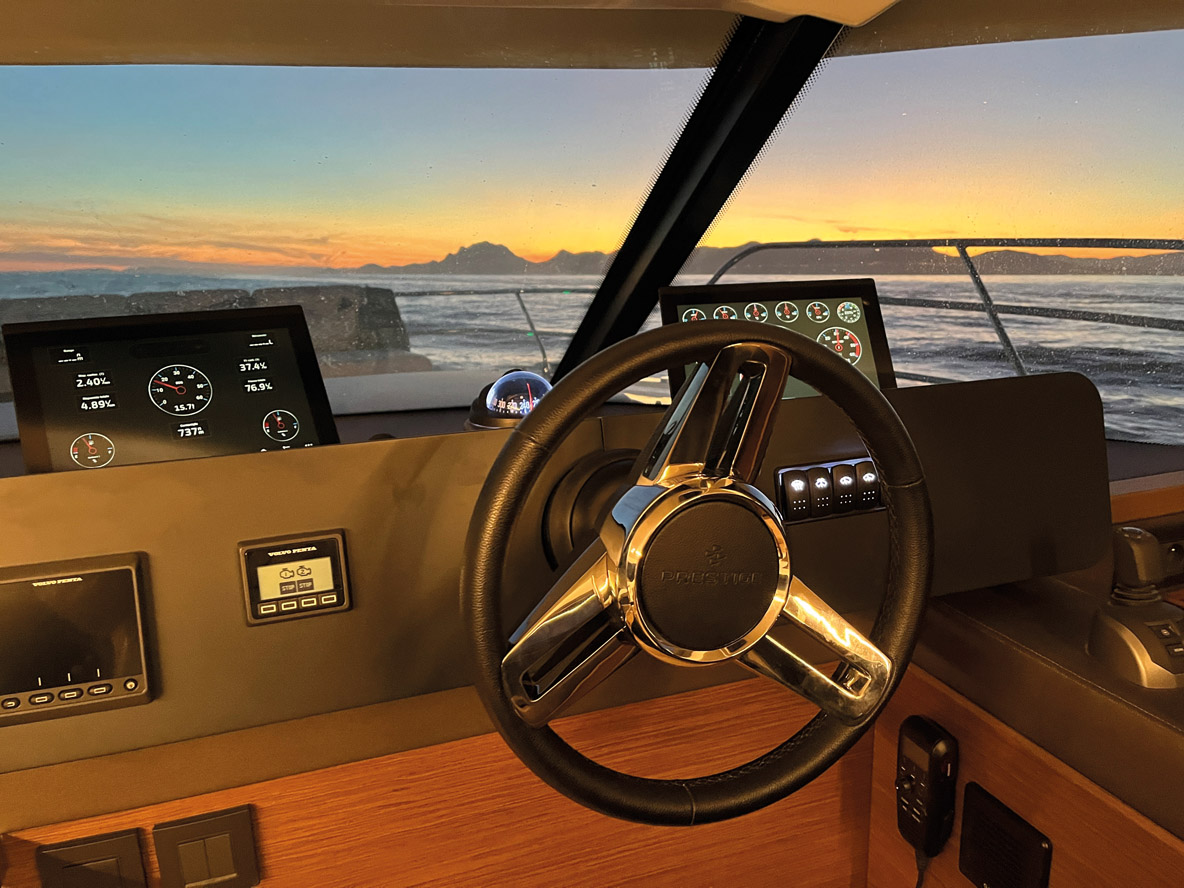
Despite its modest width, this living area has been dealt with very well, both in terms of ergonomics and quality. As on the outside, the luxury offered by the Prestige M48 is clear to see. The interior helm position features a comfortable seat (just a little far from the dashboard, but that’s an easy detail to adjust) and all the controls needed to maneuver the M48 safely.
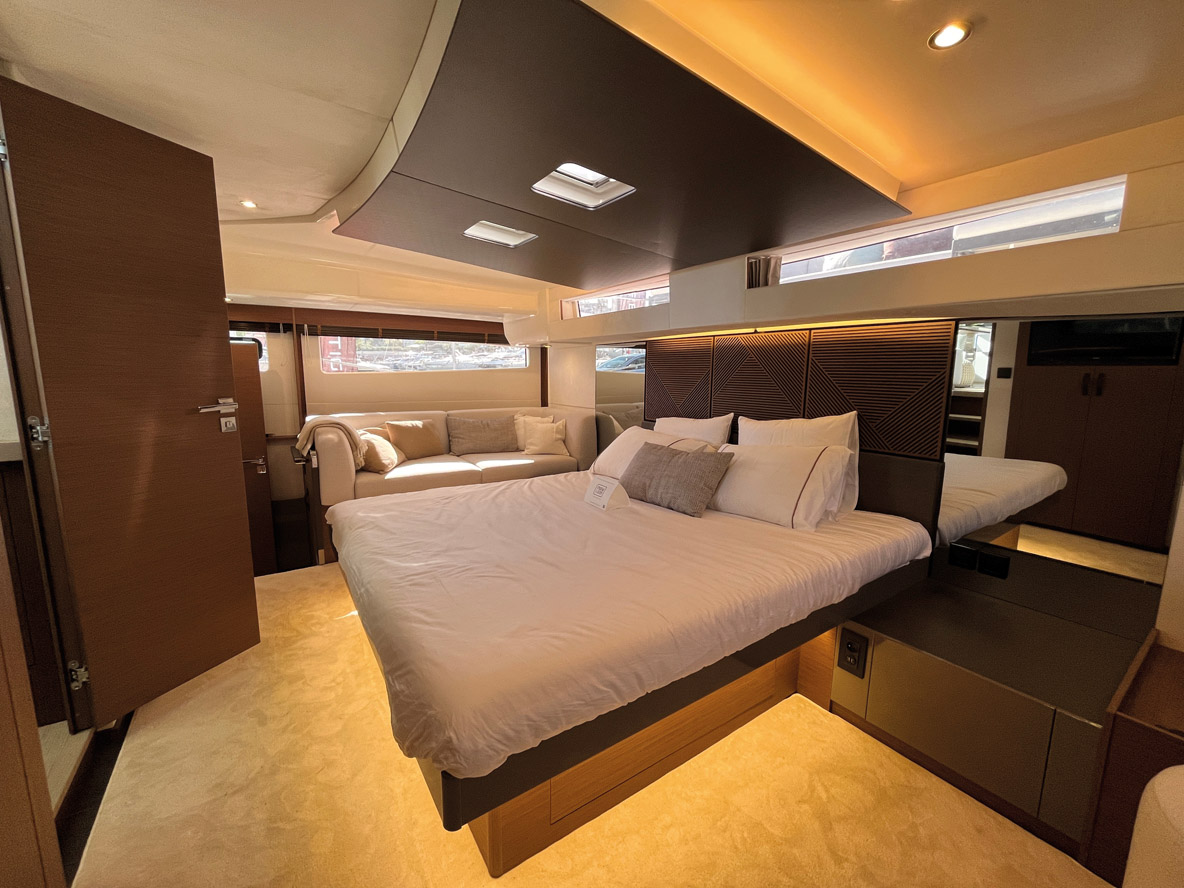
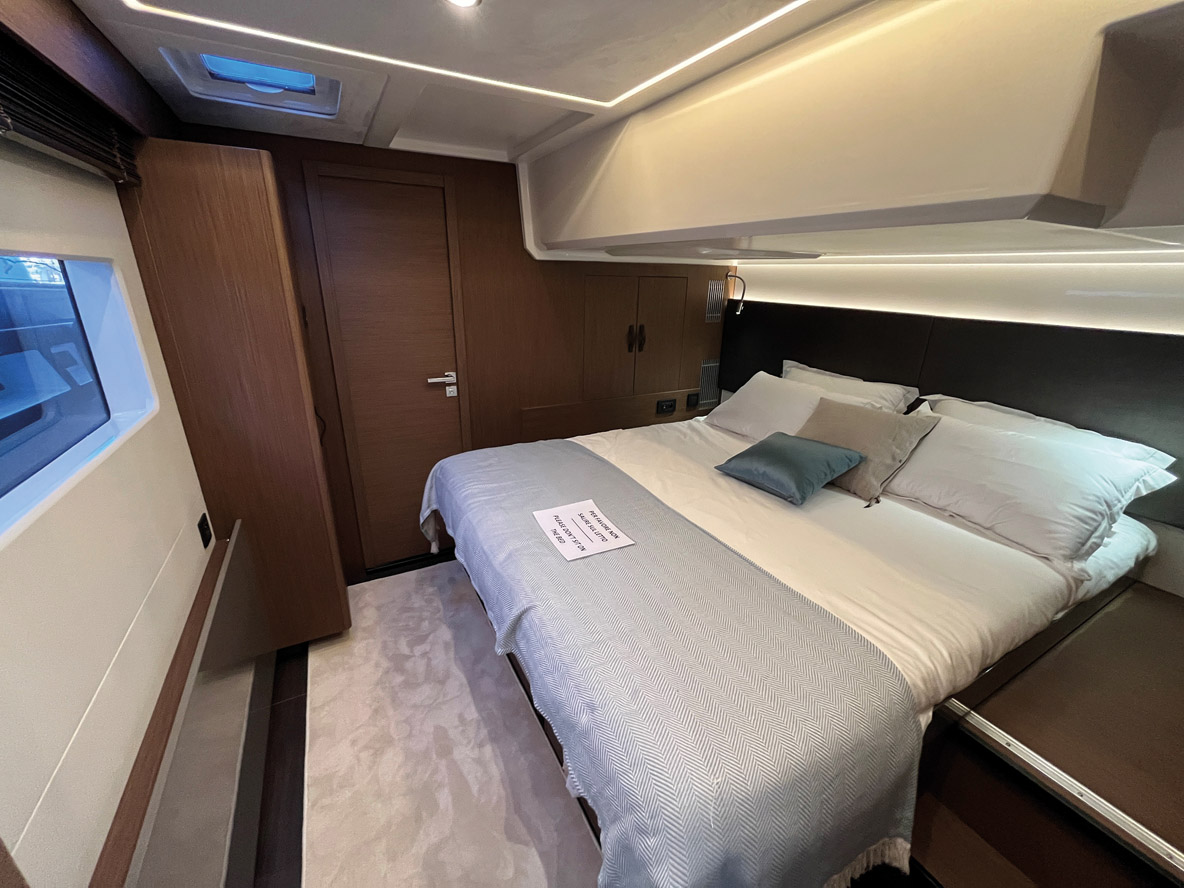
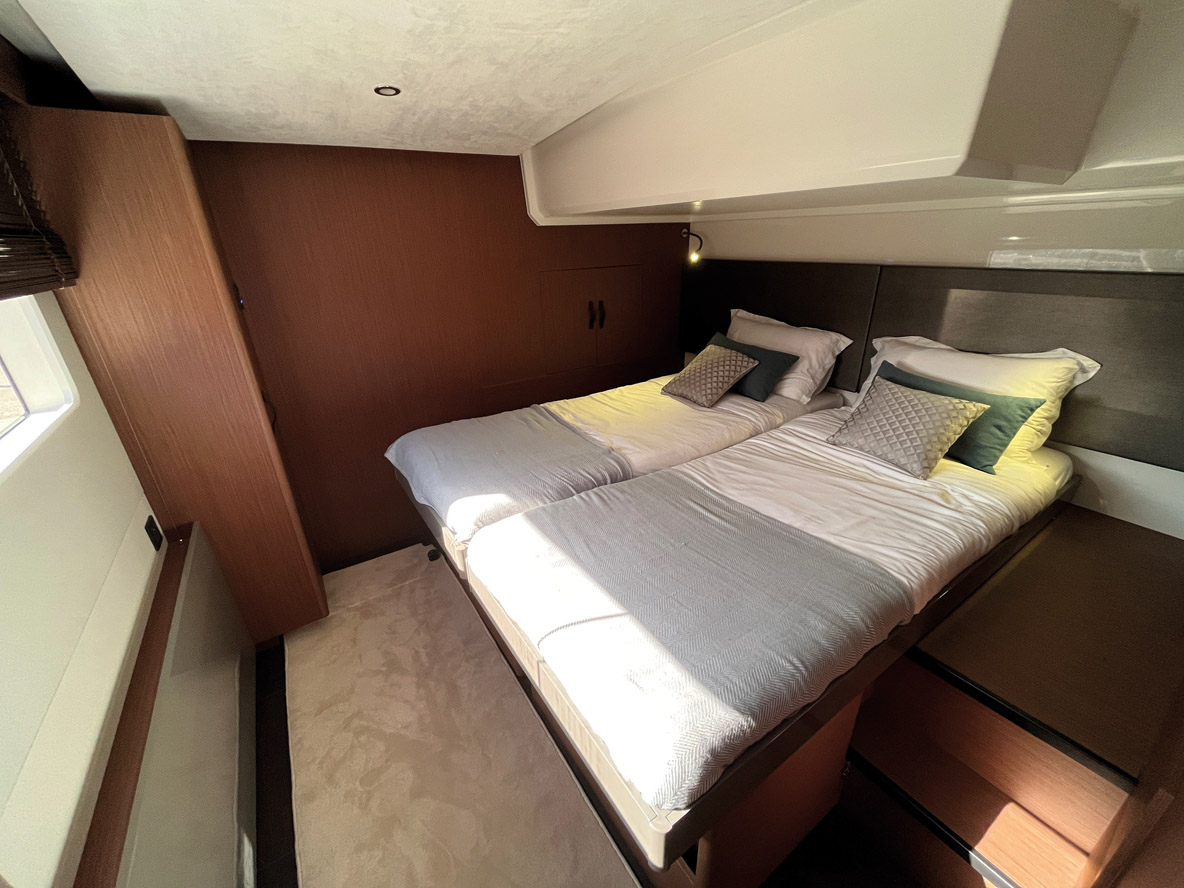
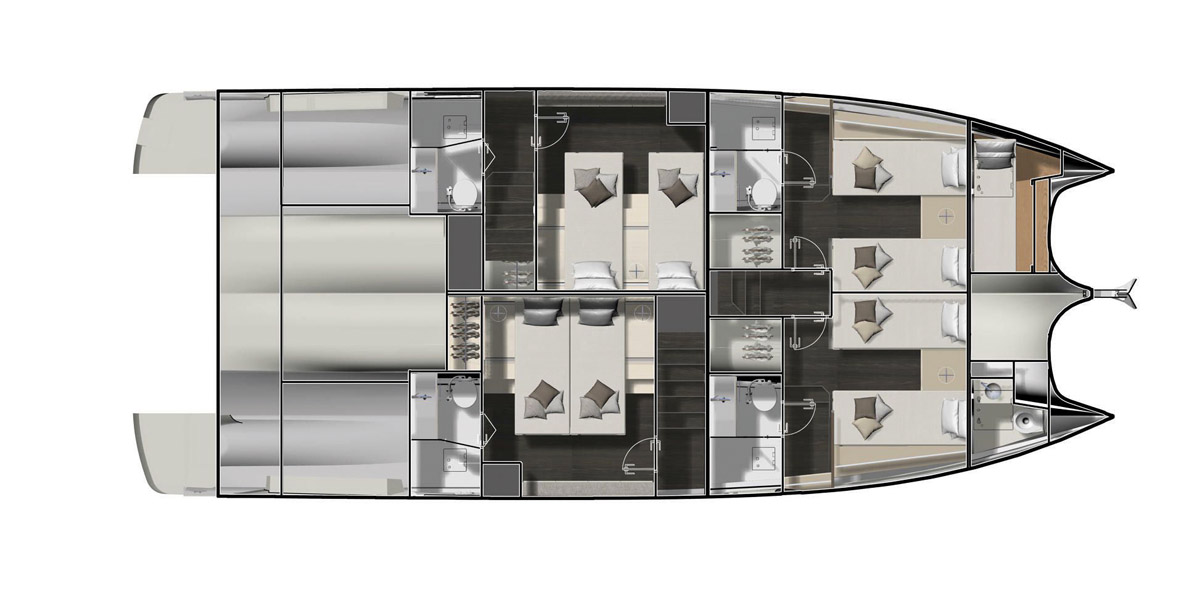
The forward cabin, dedicated to the owner, is also an illustration of the manufacturer’s know-how. You only have to go down three and a half steps to access a huge volume that extends across the entire available width, with headroom of 6’4” (1.95 m). The king-size bed is placed in the center, and to port, you can relax on a 64” (1.62 m) sofa. Opposite, a large desk measuring 6’9” x 20” (2.05 m x 0.50 m is to be found), and there are four opening hatches. From the nacelle, seven steps down, you have access on each side to the cabins in the hulls. On the port side, two single beds can be converted into one double. In the other hull, there is a large double bed of 79” x 69” (1.75 x 2 m). Each cabin has its own complete heads compartment and of course a beautiful view over the water. The “rooms” are worthy of those you’d find in a hotel, nothing really to complain about, except for one small point: natural ventilation has been somewhat overlooked here, especially to starboard, where there is only one hatch opening.
A 500-mile range at 9 knots
The controls are immediately understandable, whether on the flybridge or inside. Our test model was equipped with all possible maneuvering aids (that’s the monohull heritage coming through!), but the two powerful Volvo D4 engines make it possible to maneuver with ease. All you have to do is juggle the “forward/neutral/reverse” positions of the two levers, which have just the right amount of sensitivity to position yourself to the nearest inch. Sure, the high freeboard and the shoal draft giving limited grip in the water can, in certain conditions of strong crosswinds, motivate the use of the bow thruster or even the famous Ship Control, which allows you to shift sideways.
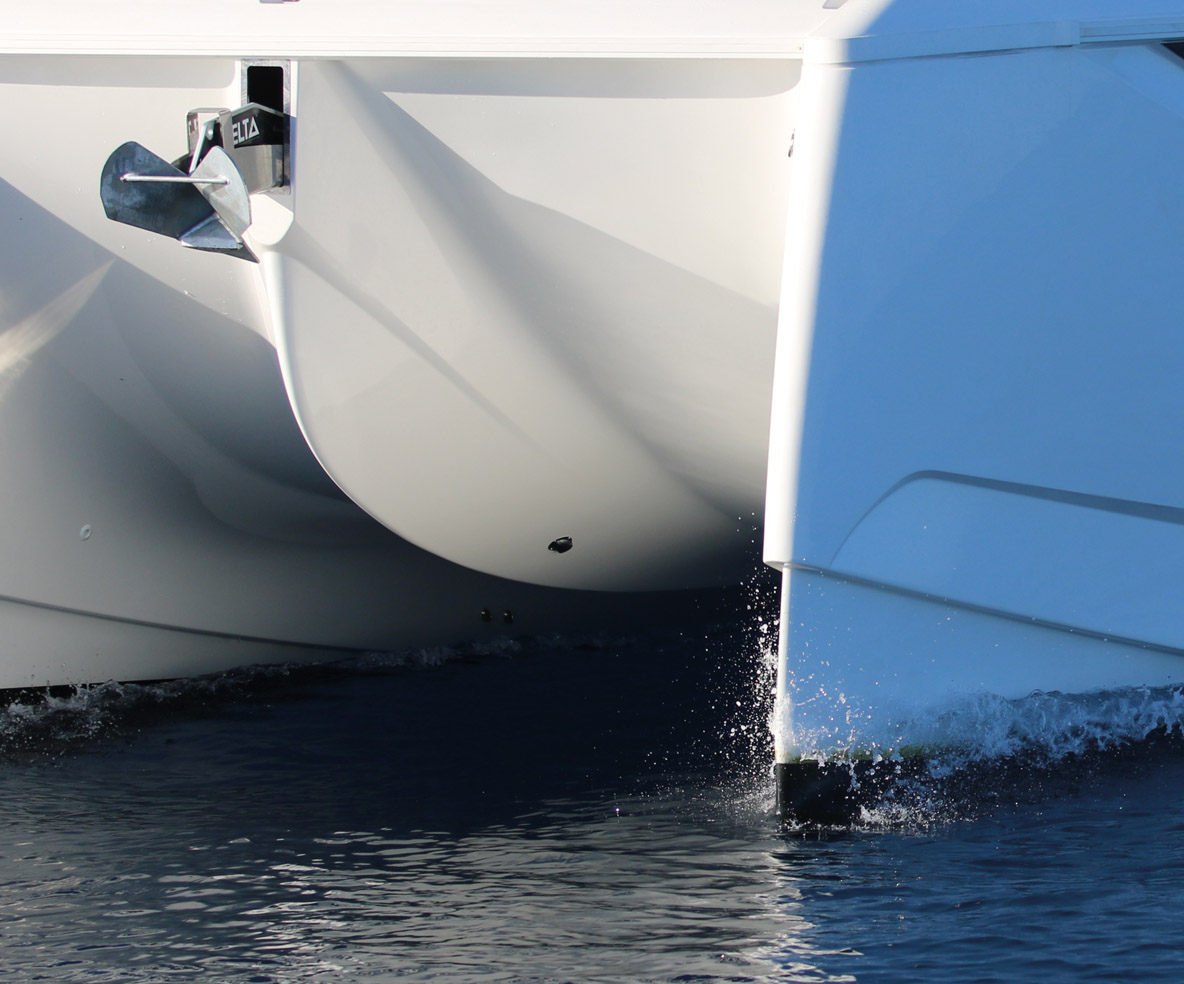
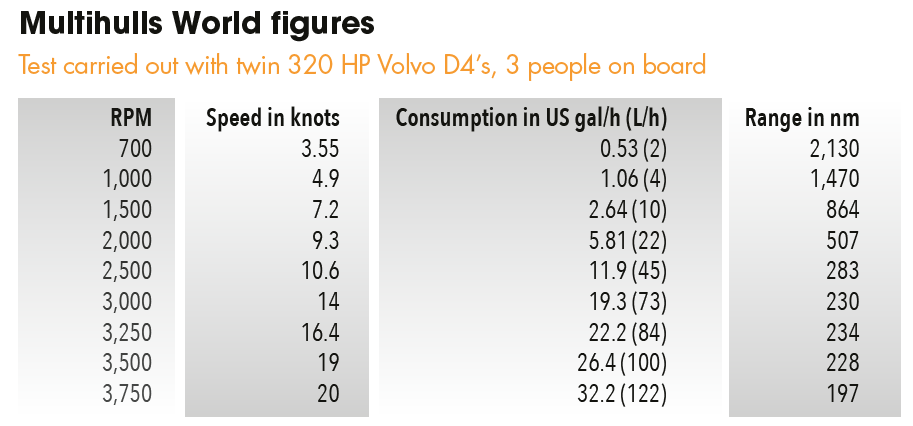
Once clear of the 1,000-foot (300-meter) zone from the shore, the throttles were gradually pressed down. The Prestige doesn’t pitch up much and remains surprisingly quiet. A glance in the engine compartments is enough to explain this, with a very high level of soundproofing: there are no visible motors! You have to open a second set of panels to access them. Very little noise, but less accessible maintenance and monitoring. We are joining a very “automotive industry” trend where, in principle, it is the mechanic who gets his hands dirty, not the owner... While the M48 displays a measured fuel consumption up to 9 knots - we estimate 2 liters (0.53 Us gallons) per mile - the engines become, without surprise, much thirstier when we exceed 10 knots. The manufacturer recommends 3,250 rpm for fast cruising speed, or 16.40 knots of boatspeed. It’s true that between 14 and 19 knots, the range remains almost identical. This means that this Prestige has been optimized for these speeds. On the other hand, the range is limited to a little more than 200 miles (with a safety margin of 10%), which seems to us to be a little short. A fuel capacity that would increase from 1,200 liters (315 US gal) to 1,850 (490 US gal) like the Leopard 46PC or even 2,000 (530 US gal) as on the MY6 would be good news. On the water, the M48 remains scalable in semi-planing mode. At full throttle, it reaches just under 20 knots. The chines that run around the sharp bows effectively avoid spray effects. Coming now to the famous tunnel between the hulls (which is necessarily relatively low given the interior accommodation): it is defended in its central part by a V-shaped gull wing but has long flat areas on each side. Faced with a certain type of swell, it isn’t surprising that the underside of the nacelle can slam. Most of the bumps are relatively smooth - probably thanks to the central V - but some waves can cause some good flat spots. It’s not very pleasant, but the structure is certainly designed to withstand the worst treatment: inside, nothing moves. It’s clear that the Prestige M48 prioritizes comfort at anchor rather than when under way. This is a powercat for pleasure, designed to correspond to average daily times such a vessel is under way, i.e. an hour and a half, and not a trawler designed for ocean passage- making. We dropped Andréa Cragnotti, European sales manager, off at the port of Saint-Laurent du Var so that he could make his flight from nearby Nice airport. The particularly mild temperature of this early autumn just dictated that, at sunset, we put jackets on to stay up on the flybridge. The outlying rocks of the Lerins Islands and farther off, Cap Dramont disappeared progressively, replaced by the lights of the coastal towns. The green and red lights marking the entrance to Port-Fréjus are quite shy, but they indicate the chicane to be followed to enter the port. I took the controls to put us stern to the dock, never needing to fall back on the Ship Control assistance! It’s so easy this catamaran!
Conclusion
Prestige Yachts is a new brand in the multihull community... and it is not here just to make their presence felt, since a new larger model (that is likely to be the M68) is slated to be launched next year. Ultimately, according to Erwin Bamps’ forecasts, this M range should account for 40% of total sales. A figure that seems realistic, given that of the twenty or so orders that were signed at Cannes, a little over half were for M48s! The positioning of this new model, which is closer to a villa on the water than an ocean-going trawler, may shock the purists, but it certainly meets a real market demand.
Exceptional cabin comfort
Effective soundproofing
Fuel capacity is a bit light
Insufficient starboard cabin ventilation
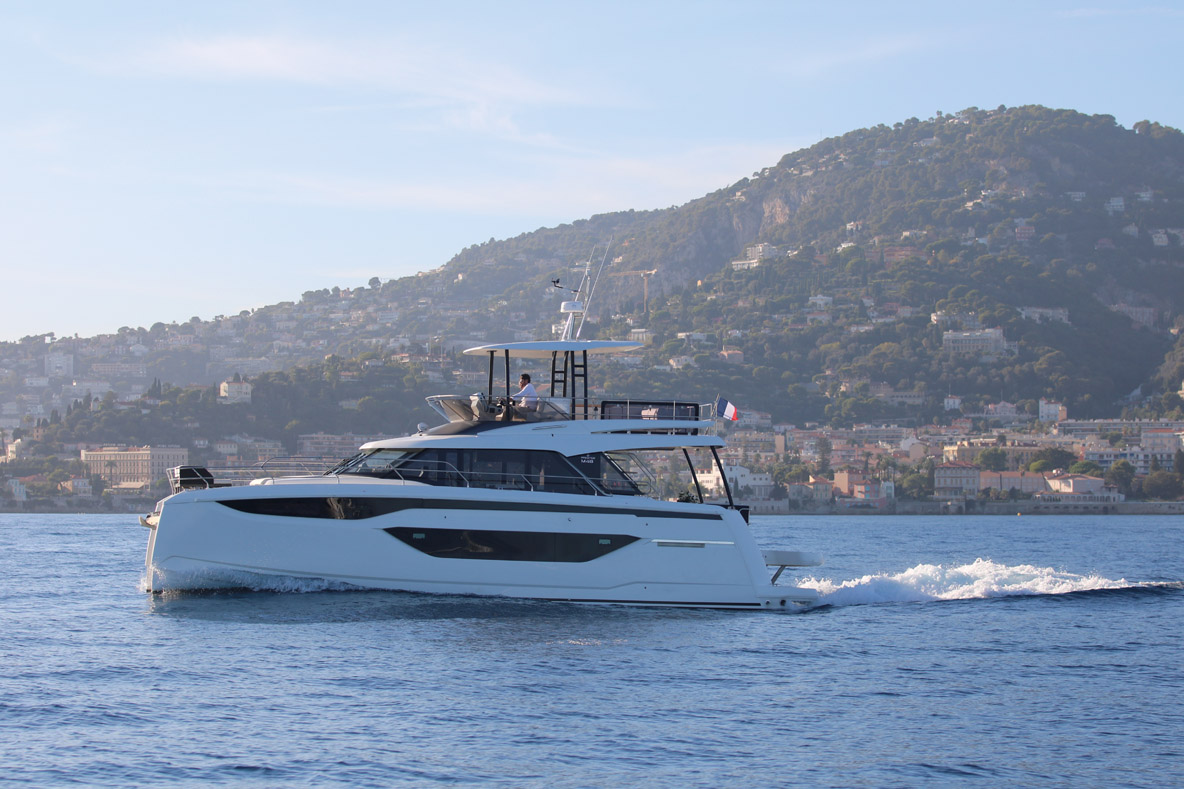
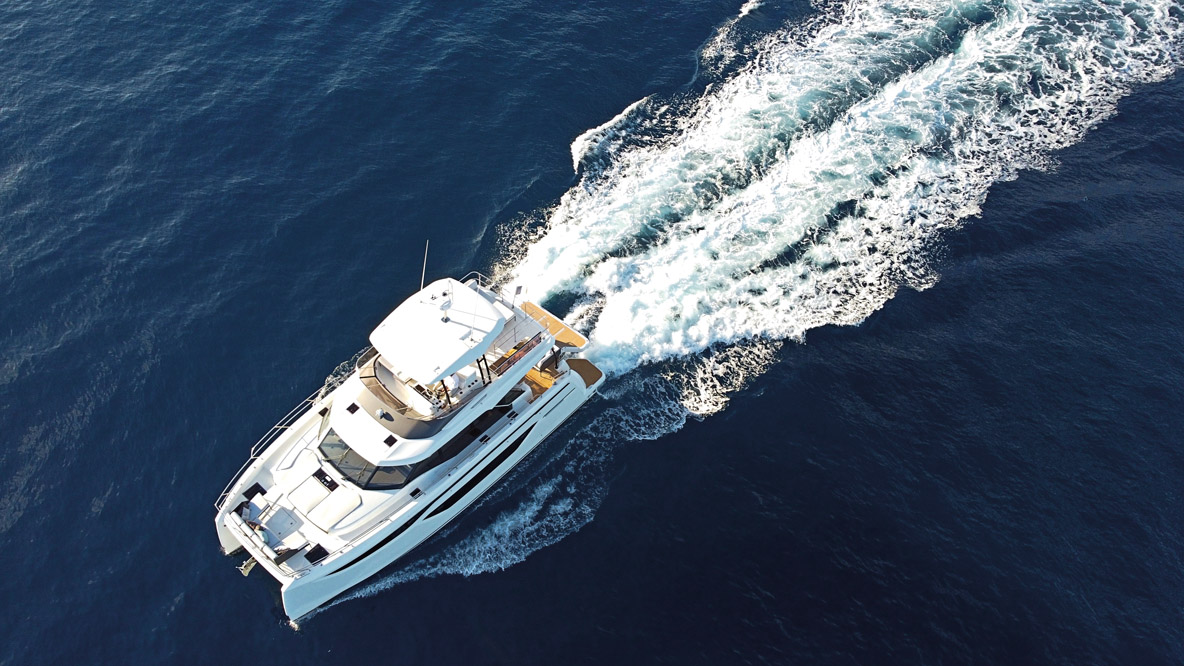
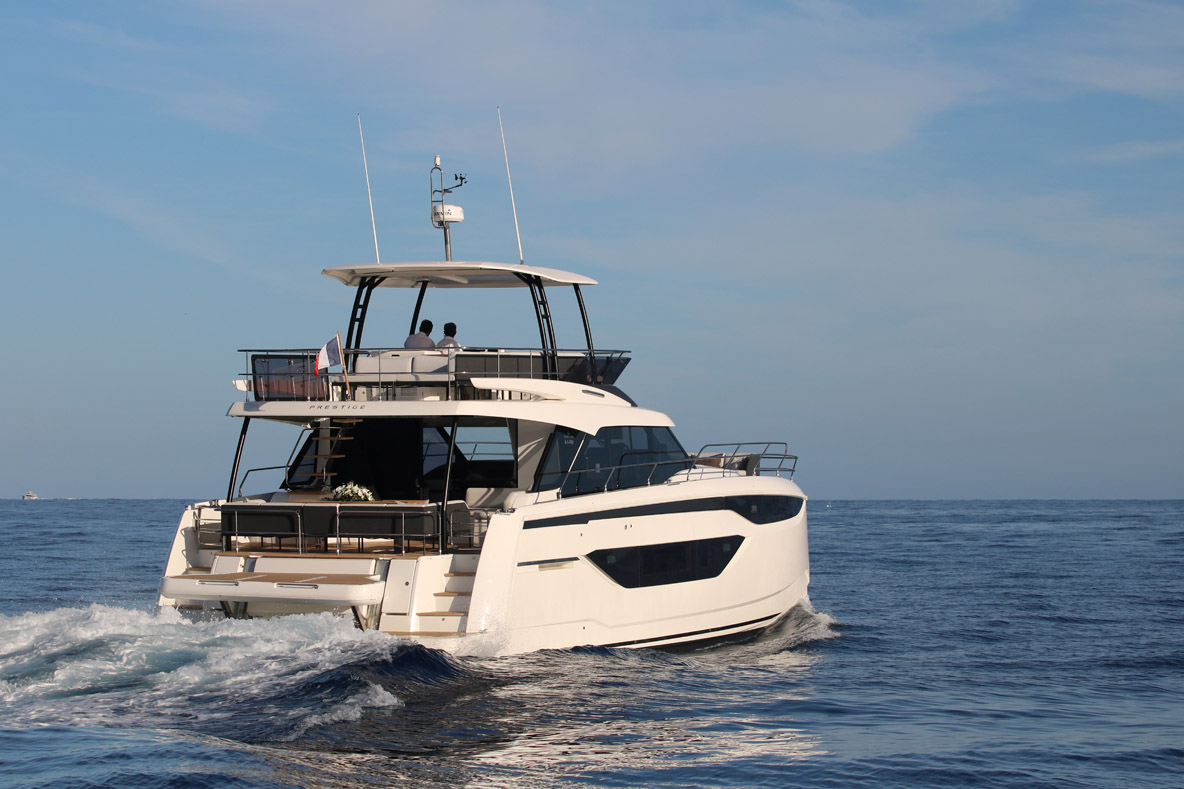
highlights. Few powercats under 50 feet offer this level of comfort and ease.
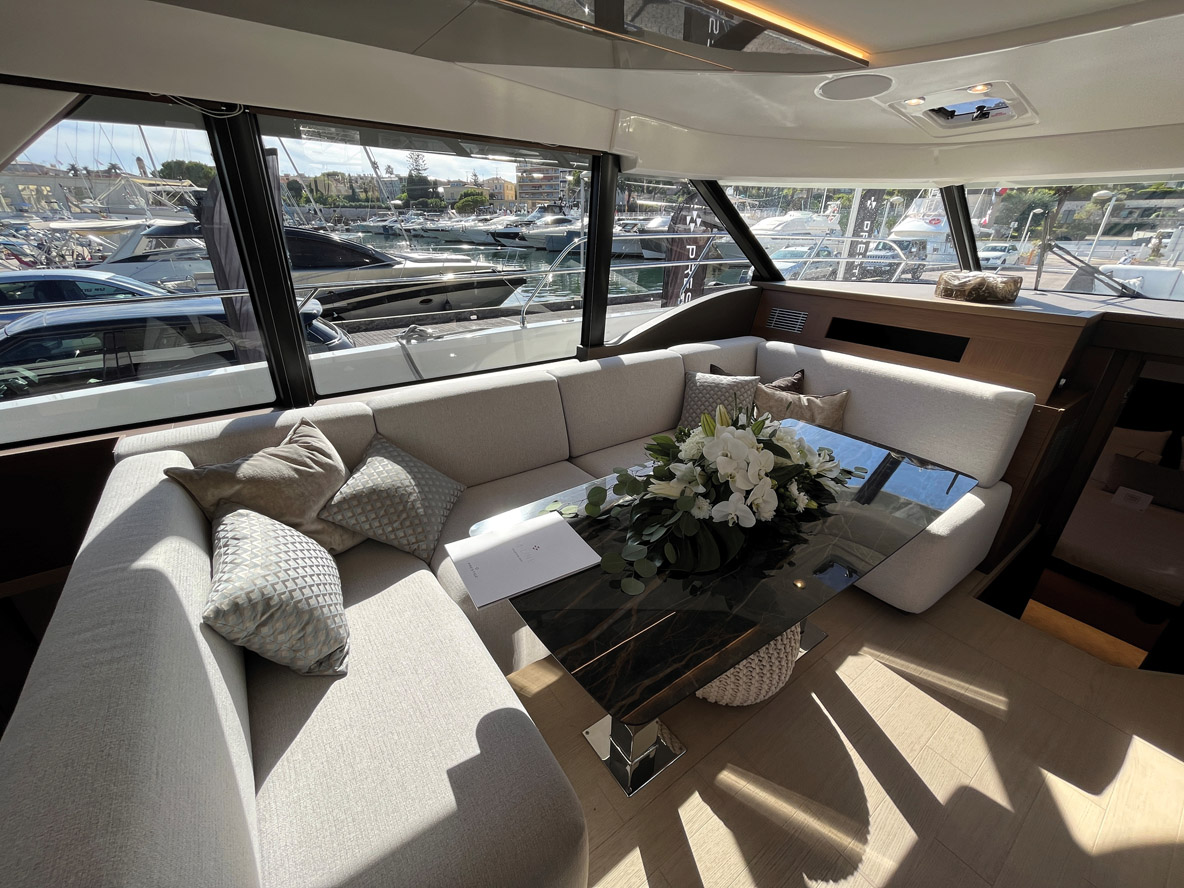
around a marble-look table.
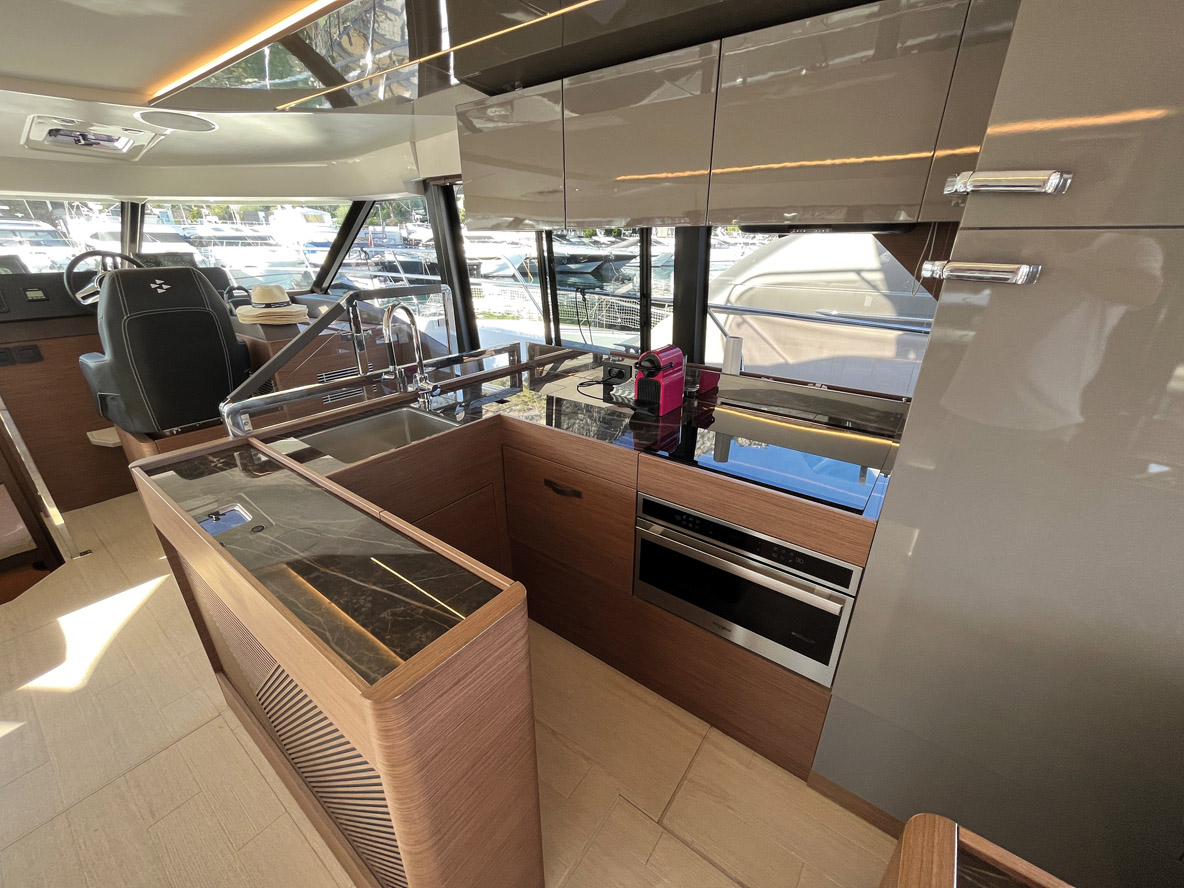
central passageway, and it enjoys ample
working surfaces.
TECHNICAL SPECIFICATIONS
Architect: Philippe Briand/Valentina Militerno De Romedis
Design: Garroni Design
Overall length: 48’6” (14.79 m)
Hull length: 47’2” (14.37 m)
Beam: 19’8” (6.00 m)
Draft: 3’7” (1.08 m)
Air draft: 15’9”/25’ (4.80/7.62 m)
Light displacement: 38,550 lbs (17.48 t)
Cruising speed: 9/18 knots
Max speed: 20 knots
Fuel: 2 x 158 US gal (2 x 600 l)
Engines: 2 x 320 HP
CE category: B12/C14/D16
Price: € 1,039,500 ex-tax
Price of the powercat we tested: € 1,421,627 ex-tax with Excellence finish, Art de Vivre pack, Electronics pack, Audio pack, mooring kit, anchor kit, hull and flybridge wrap, foredeck shade cover, aft cockpit enclosure, hard top, Foredeck sofa, Exterior curtains, Fresh water dock intake, smartphone charger, Ship Control, Pop-Up exterior lights, deck spotlight, underwater spotlight, microwave oven/grill, ice maker, induction hob, tropical air-conditioning, black countertop, carpeting, docking kit, TV pre-installation in forward cabin, Fusion player and hp, Led TV, wood venetian blinds, synthetic teak, bleached brushed oak flooring.