One of the goals of this amazing catamaran is to go faster than most other powercats, regardless of sea conditions. But performance isn’t the only thing this boat has to offer, as the Voodoo XF75 has many surprises in store...
Infos pratiques
- Le chantier : Voodoo XF75
- La fiche technique
-
 Découvrez notre vidéo exclusive
- Financez votre Voodoo XF75
- Assuez votre Voodoo XF75
- Articles autour du Voodoo XF75
Test conditions: strong wind, sustained sea with 6-foot waves
Voodoo yachts have been building innovative vessels for 38-years in New Zealand, carving a premium niche market for their power catamarans. As a platform, catamarans have several attractive characteristics for this type of performance vessel, such as minimum drag, stability and load carrying ability. And when these are combined with a lean composite build and innovative foils, the result is astounding. As I found out when taking the helm (or rather the controls) and going offshore on the Voodoo XF75.
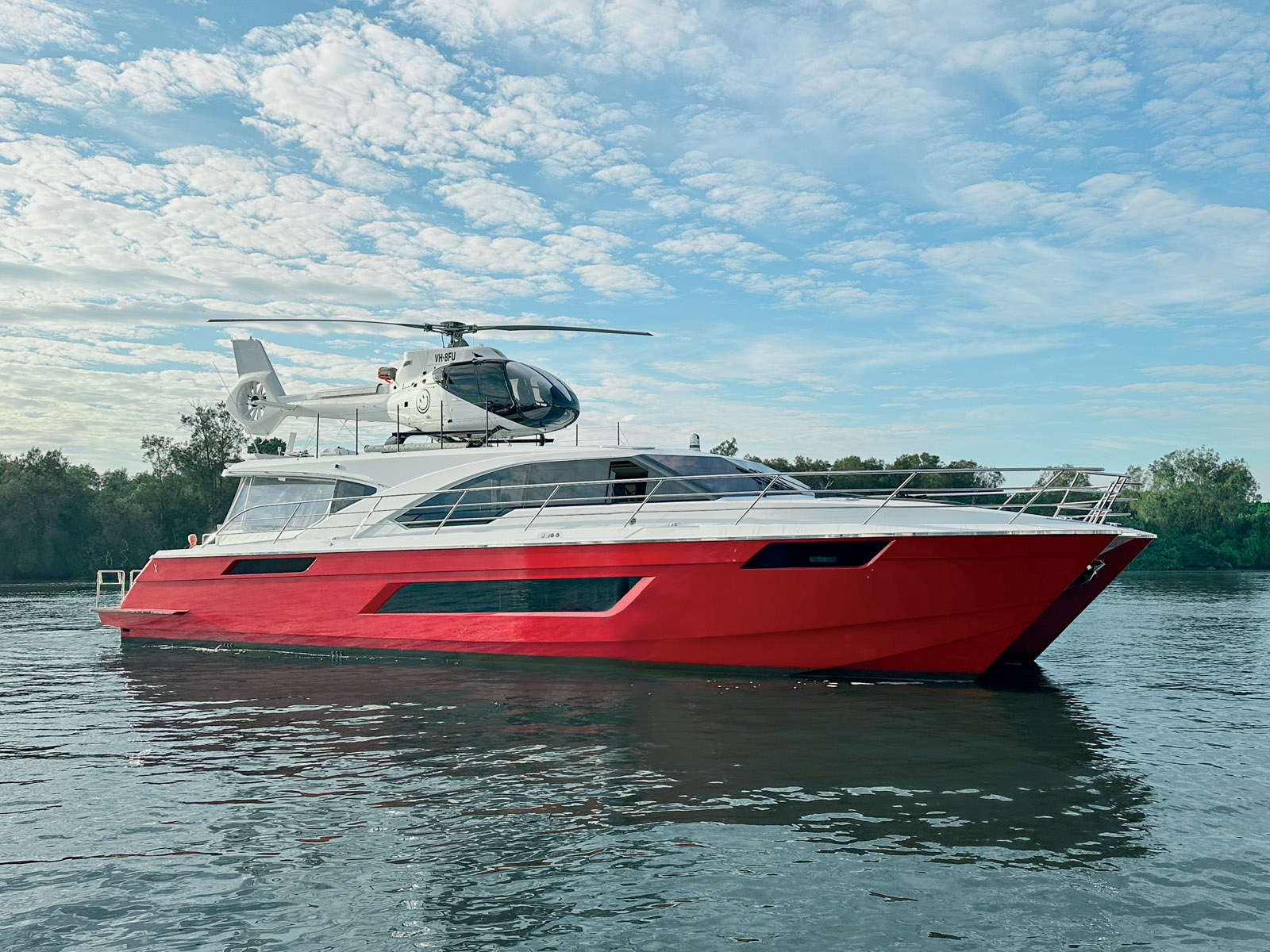
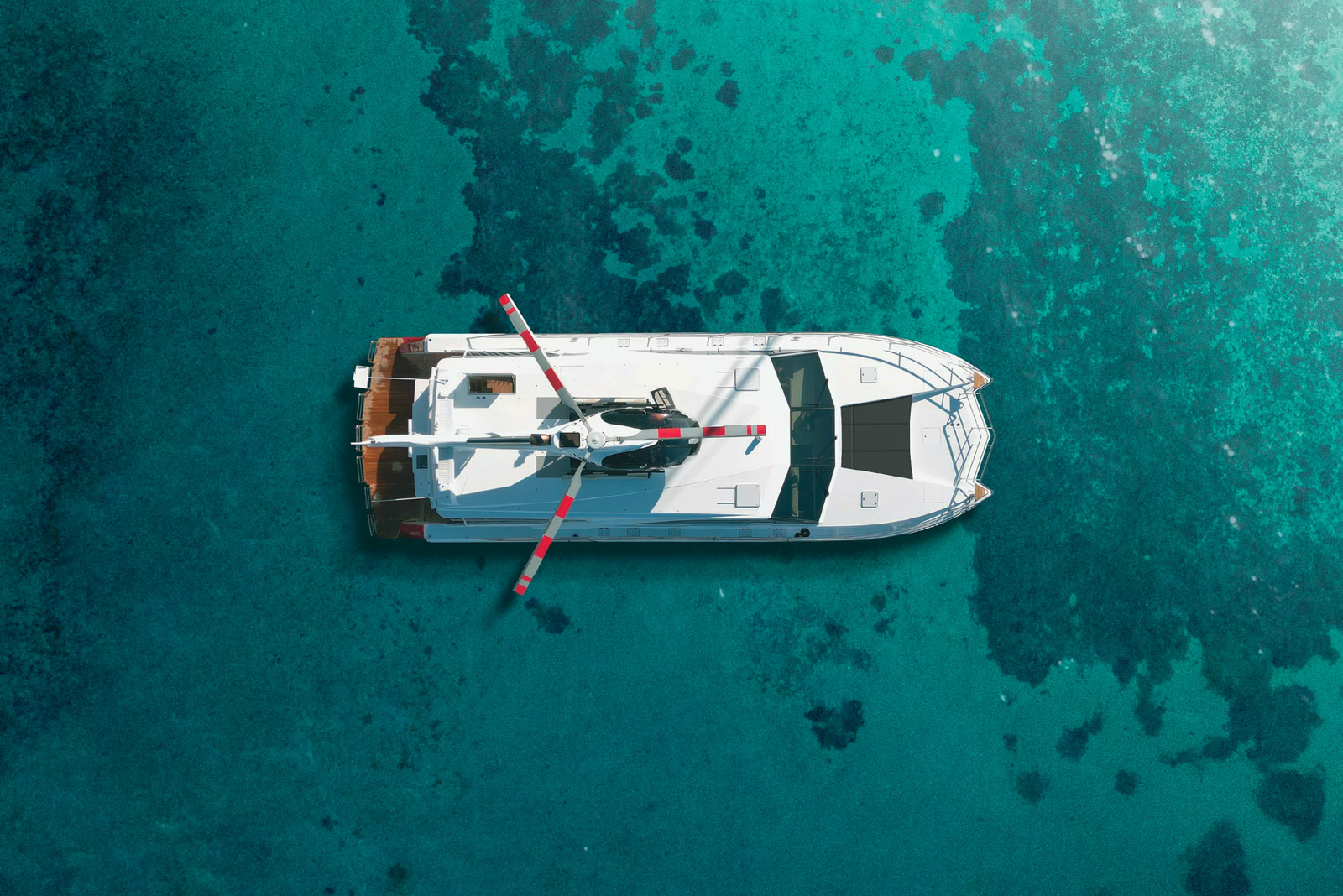
Before that, trying to find it at the Sanctuary Cove Boat Show took only a few seconds because of the large helicopter on its sleek coachroof. While clambering around it, company co-founder Mitch Pachoud explained: “The roof is engineered, reinforced with additional carbon fiber structure to take this seven-seater Airbus H130.” The chopper uses the XF75 as mothership, so only aboard when stationary and for refueling - via a custom bowser system and 800 US gal (3,000 l) Jet A-1 tank. The Australian owner, an experienced boater who came from a large flybridge monohull, wanted a vessel that could quickly reach the more remote regions of northern Australia and then explore it by air and sea.
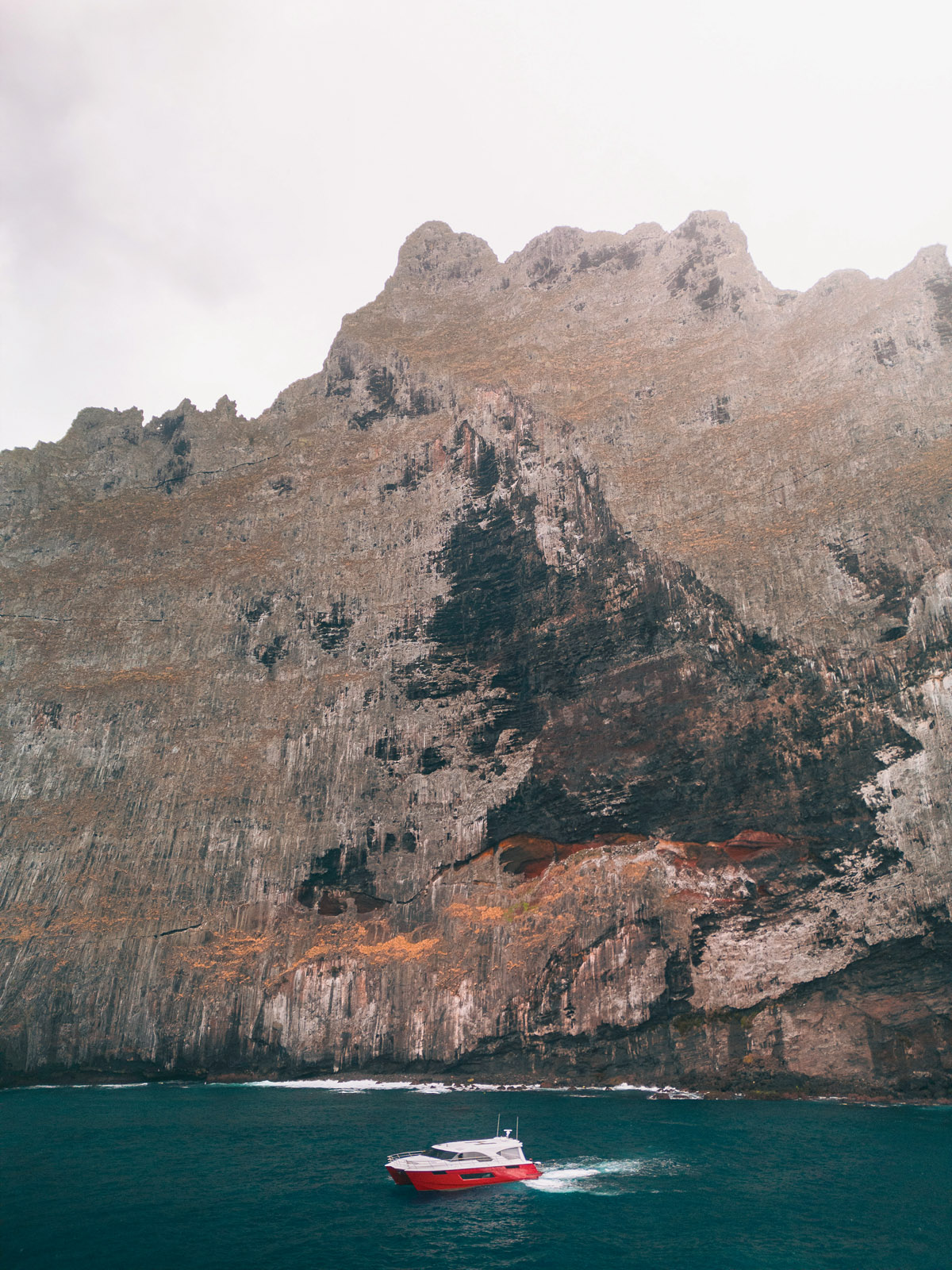
As the first 75 footer in the foiler range, the XF75 is a significant boat for the family-owned company with father, Dave, along with his wife and daughter, all contributing alongside son Mitch. “It’s the long-range, at high speed that sets these boats apart,” explains Dave as we wander around this first hull of the foiling 75 with jet propulsion – a pretty unique combination on the market.
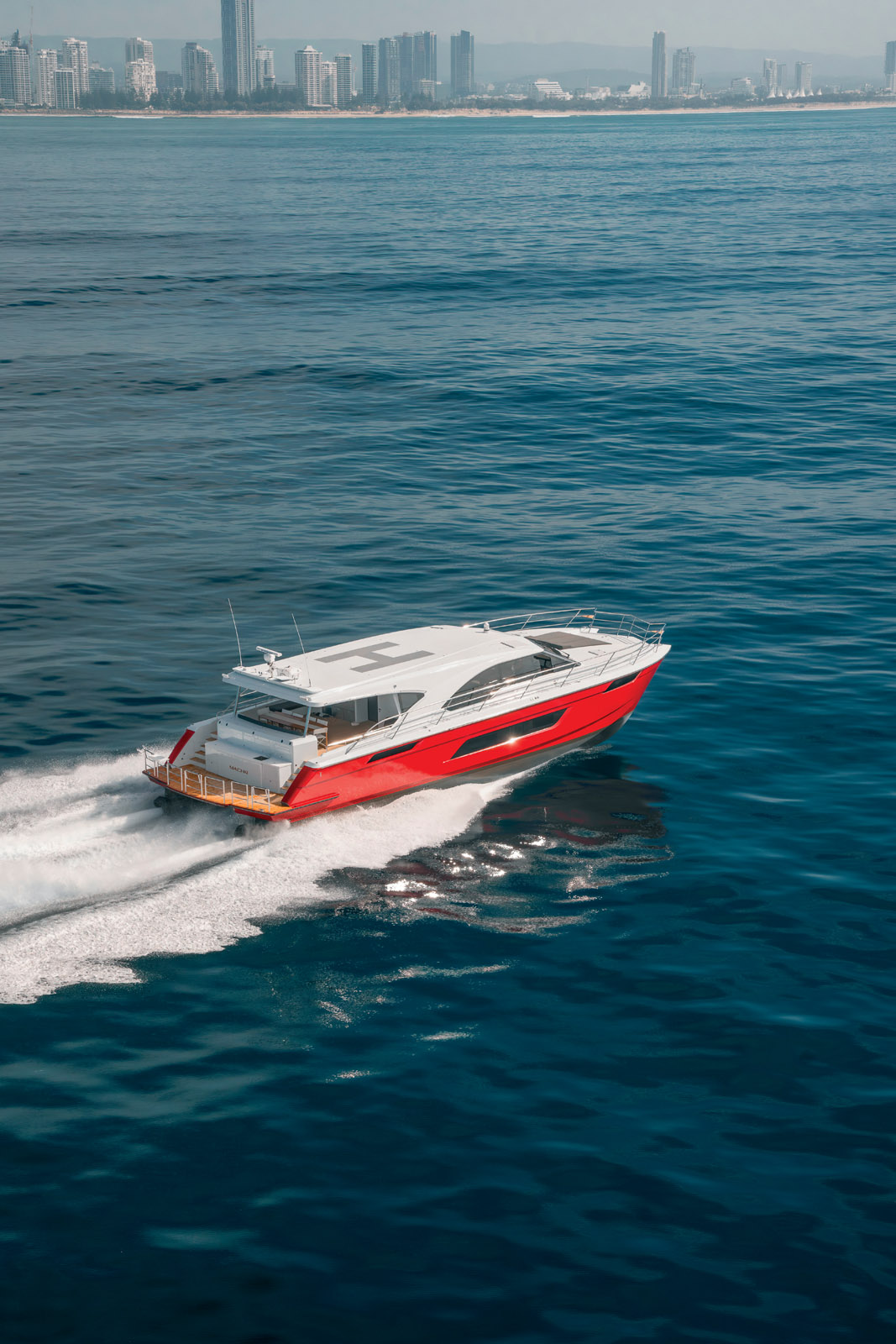
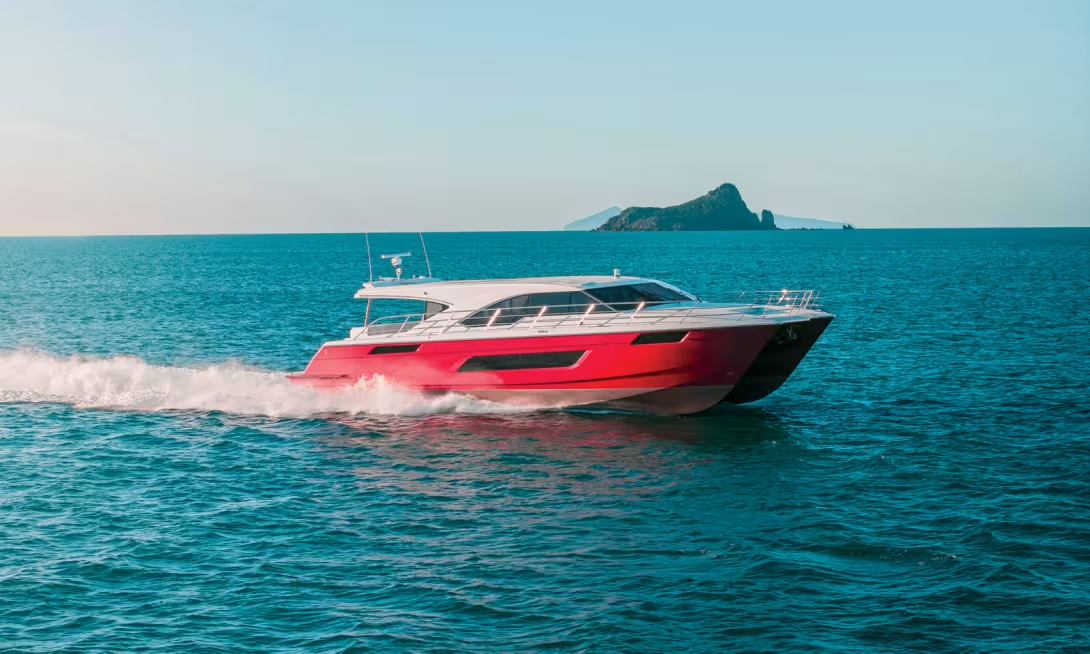
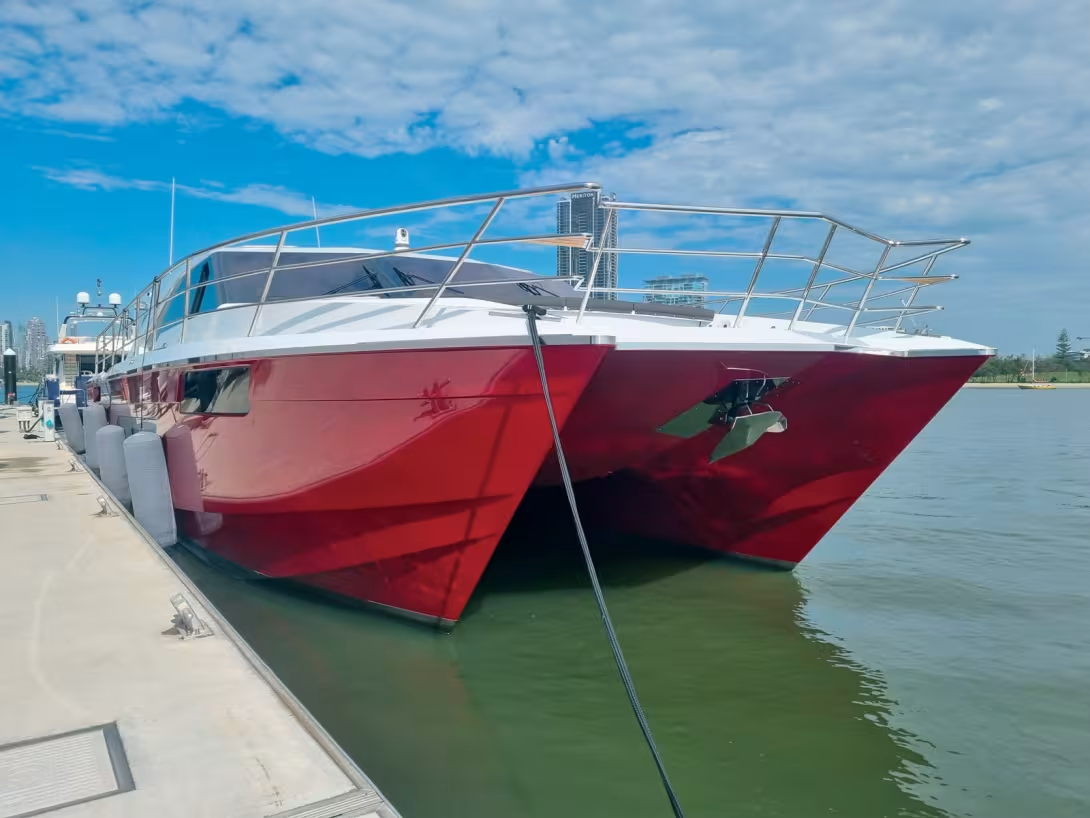
From a purely aesthetic point of view, the Voodoo has a sporty and low side-profile which changes dramatically in frontal view, revealing a wide nacelle between the hulls and tall bridgedeck clearance. These attributes maximize the XF75’s ability to handle both inshore and offshore conditions, at an average speed of an impressive 35 knots. “This allows these boats to exploit short weather windows and do fast ocean passages, like New Zealand to Australia, that we’ve just done with this boat in only one and a half days,” said Dave.
Vast Decks
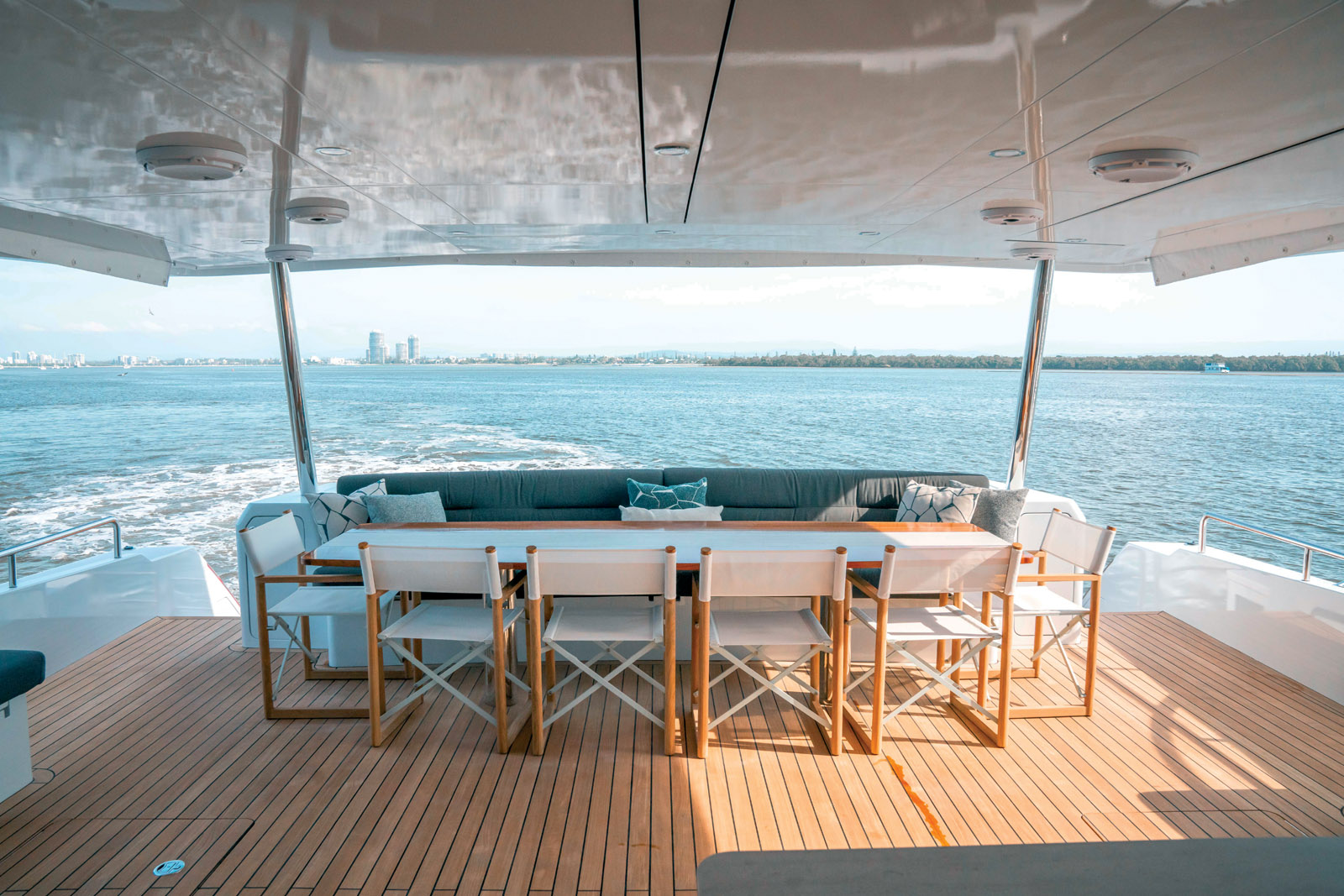
Deck space is a major catamaran feature, and the XF maximizes this with its 25-foot beam, creating a spacious aft deck for relaxation. Fully covered by the saloon overhang, the transom seat with dining table can seat ten, along with more benches adjoining the saloon. Teak underfoot gives that natural feel, including on the two engine hatches. Below the transom, the wide hydraulic swim platform also works as a slipway for the dinghy garage, with rigid inflatable on a track. On top is an extensive wetbar, so an ideal beach-club spot.
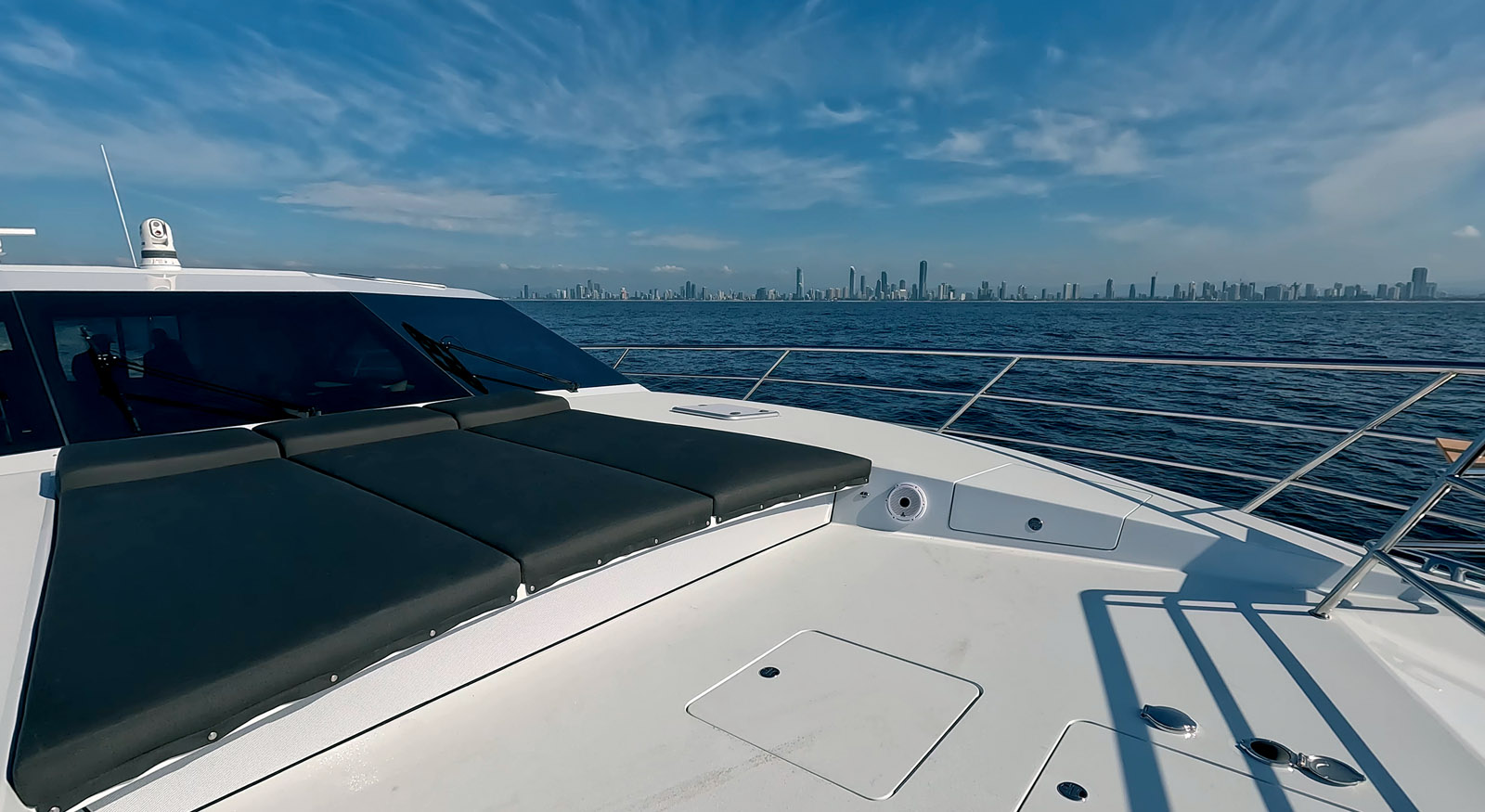
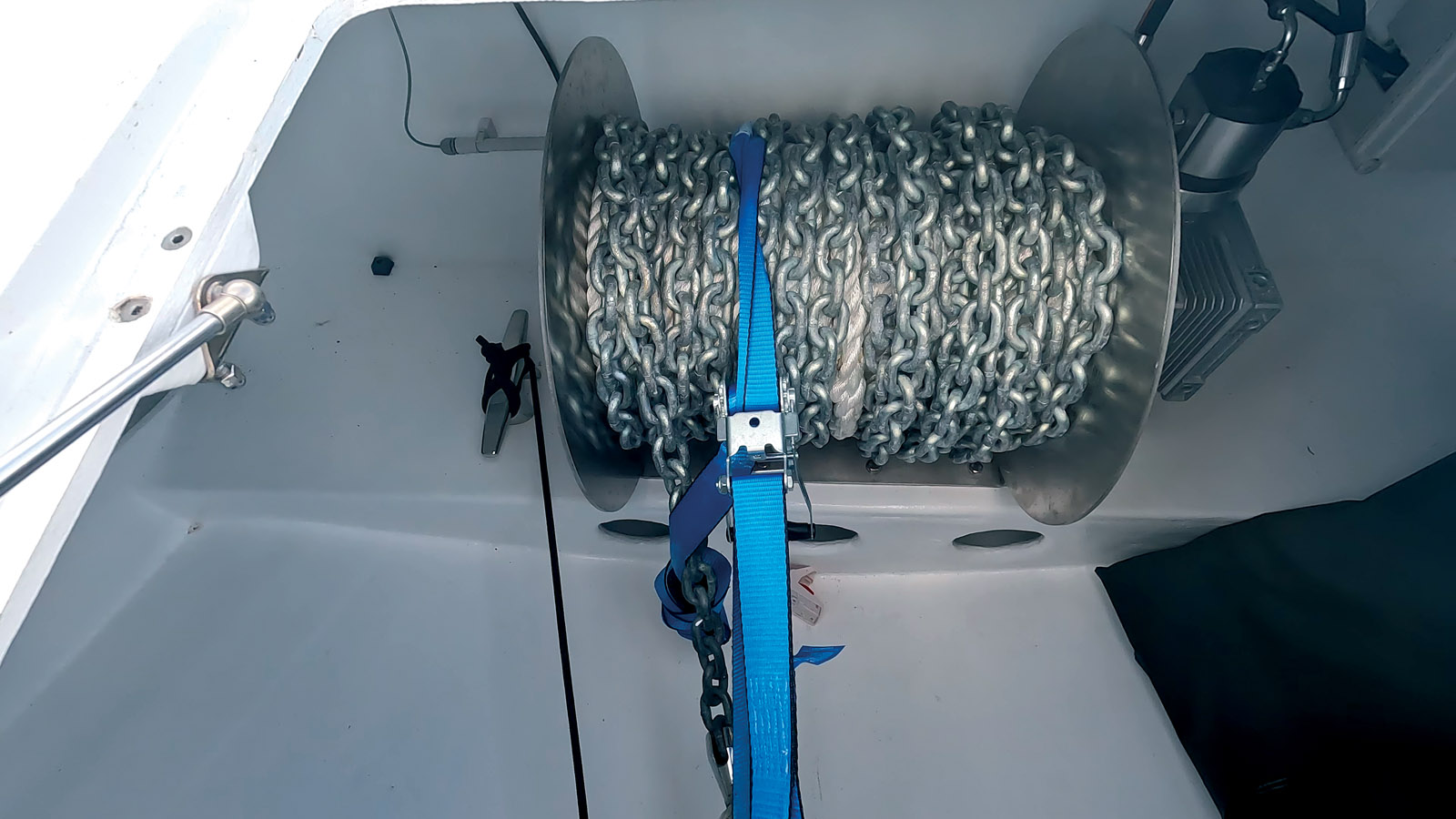
Elsewhere on deck, my walk to the bows was done easily, thanks to sturdy handrails on the cabin and guardrails along the narrow side-decks, before reaching the wide bows. Here, triple sunbeds set low reflect the ethos of the XF75, while anchoring practicalities are well taken care of via a large drum windlass - a system favored by discerning cruising sailors. The rode goes under the main beam to the 80kg SHHP anchor, ensuring the weight is kept low without sacrificing safety. There are also several storage lockers up front.
Convivial Main Deck and High-Tech Helm Station
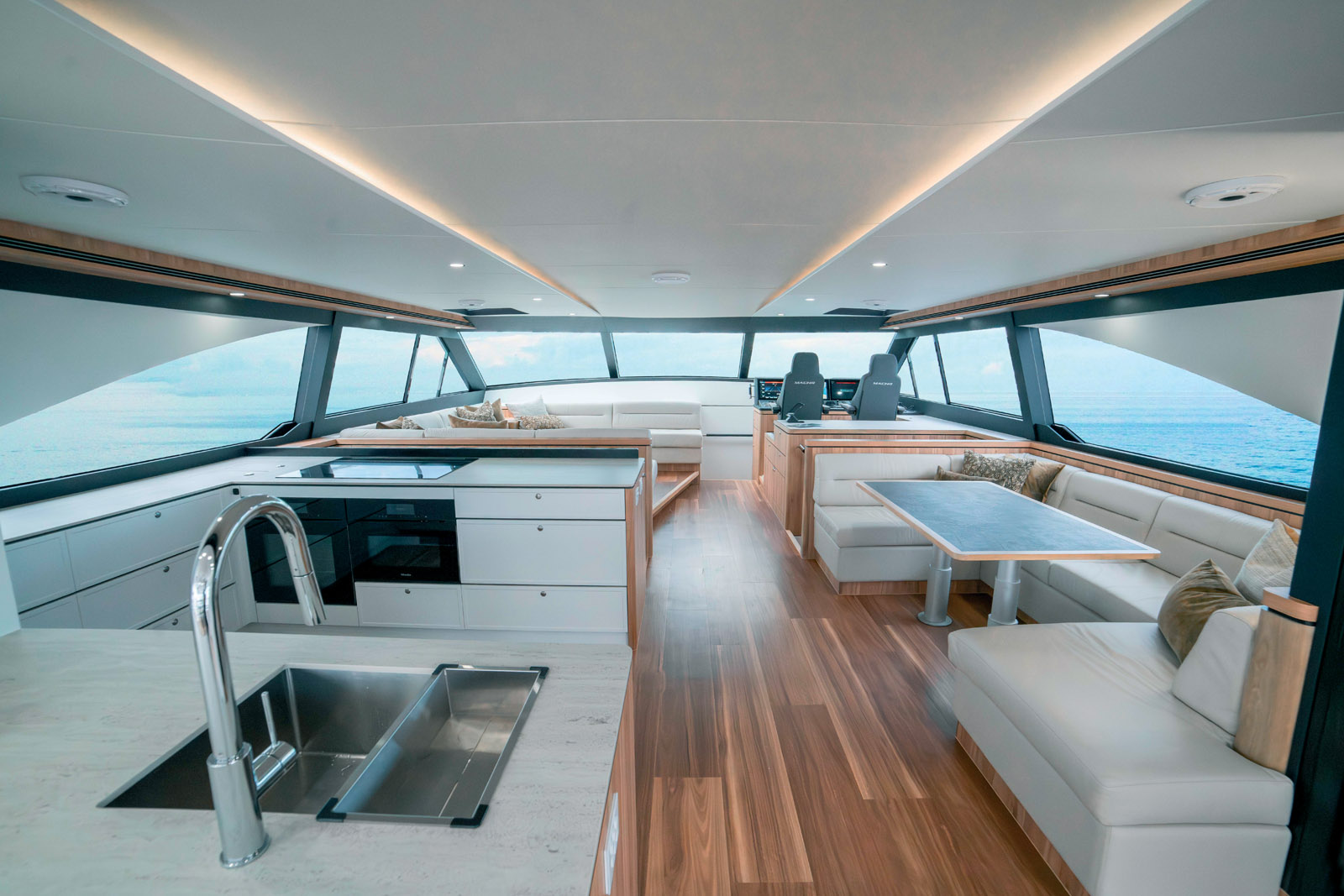
Returning to the aft cockpit, which is the same level as the saloon with no threshold, so stepping inside is seamless. The style is contemporary, with satin wood veneers contrasting with the cream headboards and lacquered cabinetry.
Here, the galley is at the back, to connect with the cockpit, with dinette opposite on starboard while the lounge is forward. The galley bristles with equipment for long-range cruising: refrigeration drawers both on the cockpit side and inside the U-shaped galley itself where there’s a household sized tall fridge. Cooking is done on an induction hob with oven beneath, plus microwave. Other good accoutrements include the dishwasher, a deep sink with mixer tap and generous storage. An elegant tall wine cooler with inner chamber holding wine glasses is a lovely final flourish.
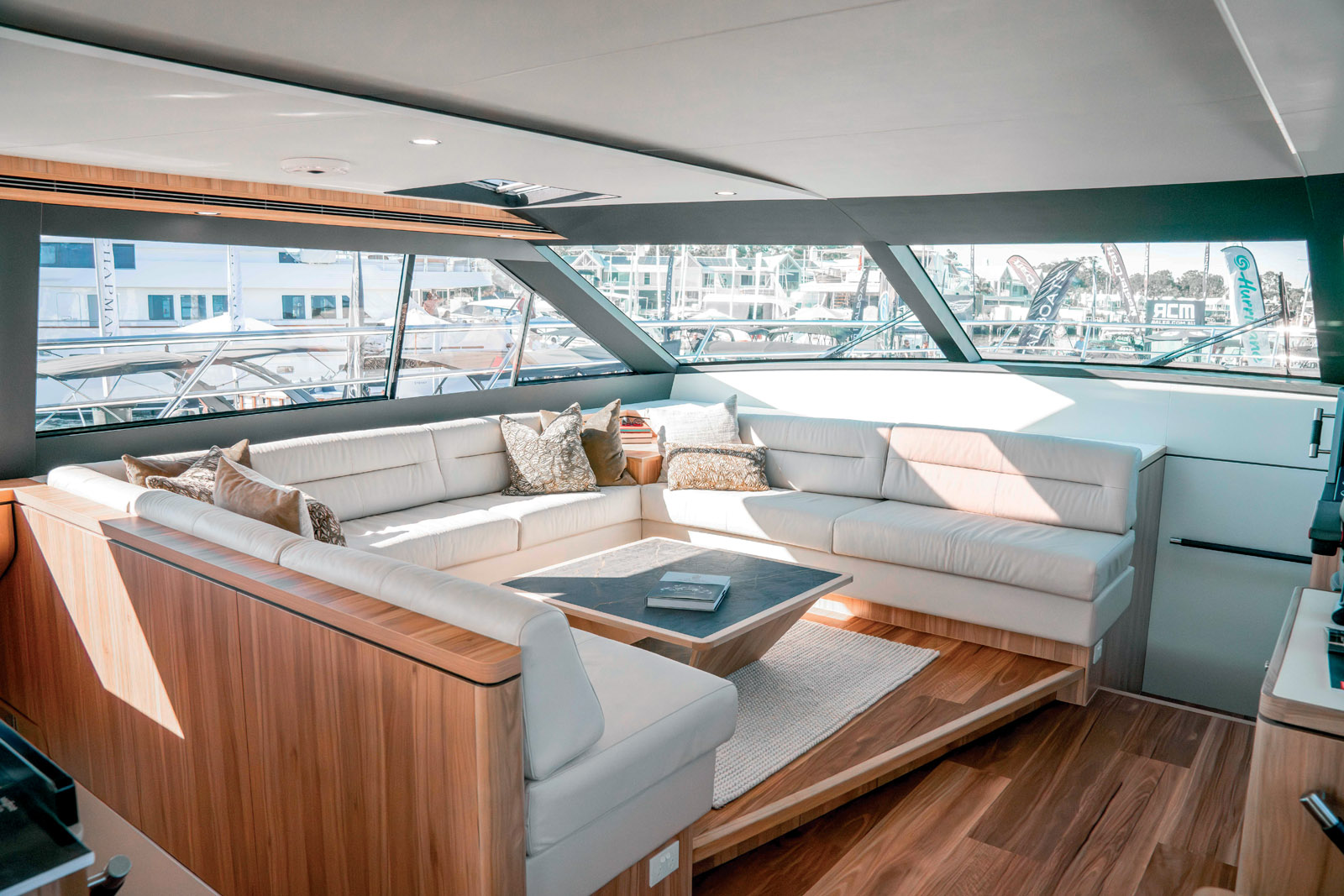
The lounge is elevated by a step to ensure clear views from the surrounding windows, that use near-vertical bulkheads to maximize internal space on the XF75. The U-shaped lounge shows the quality artisan work of the Voodoo yard with its smart coffee table that incorporates discreet storage; while the leather cushioning felt sumptuous to my derriere; and given the speeds this boat can do, that is a very good idea.
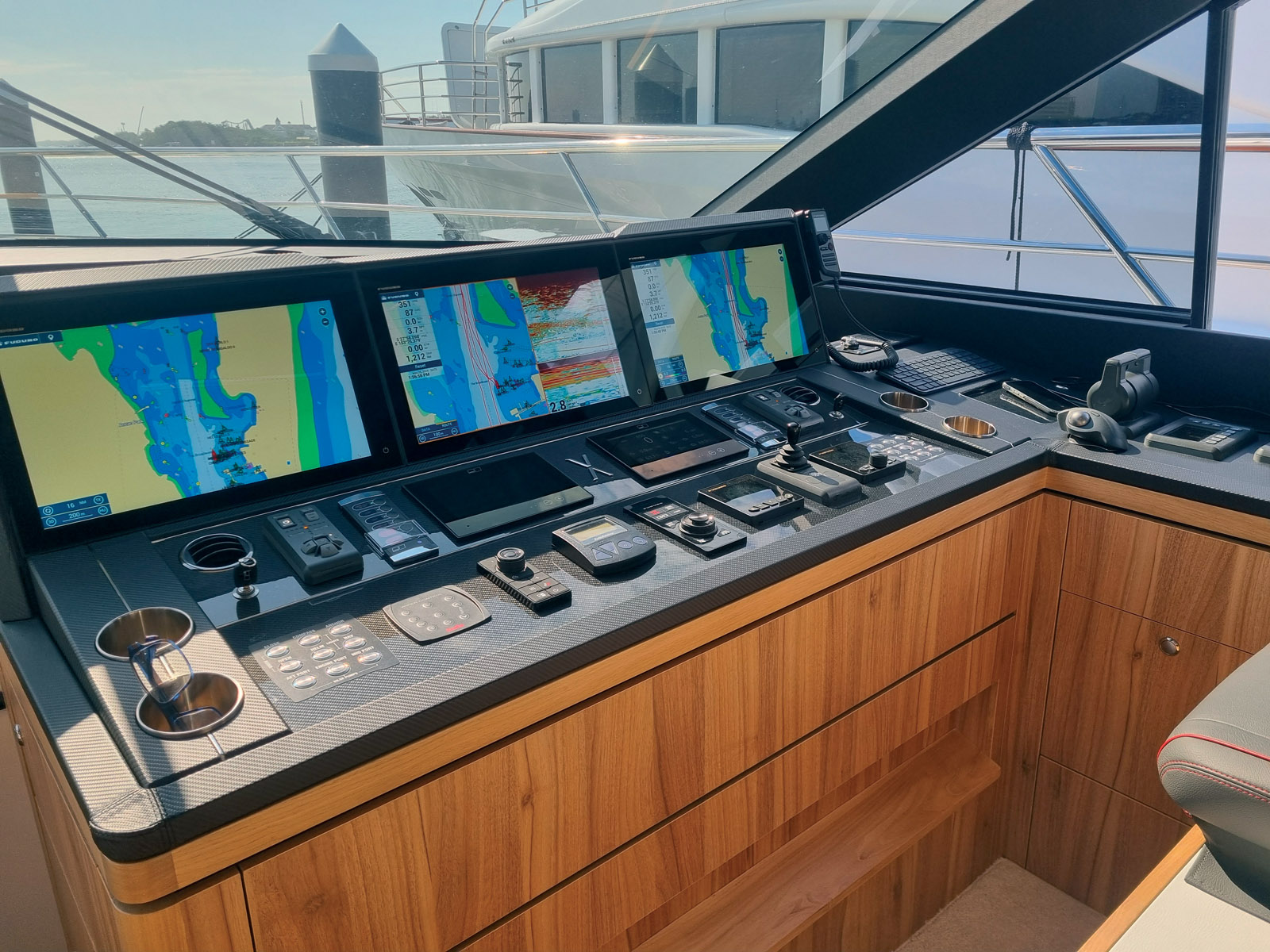
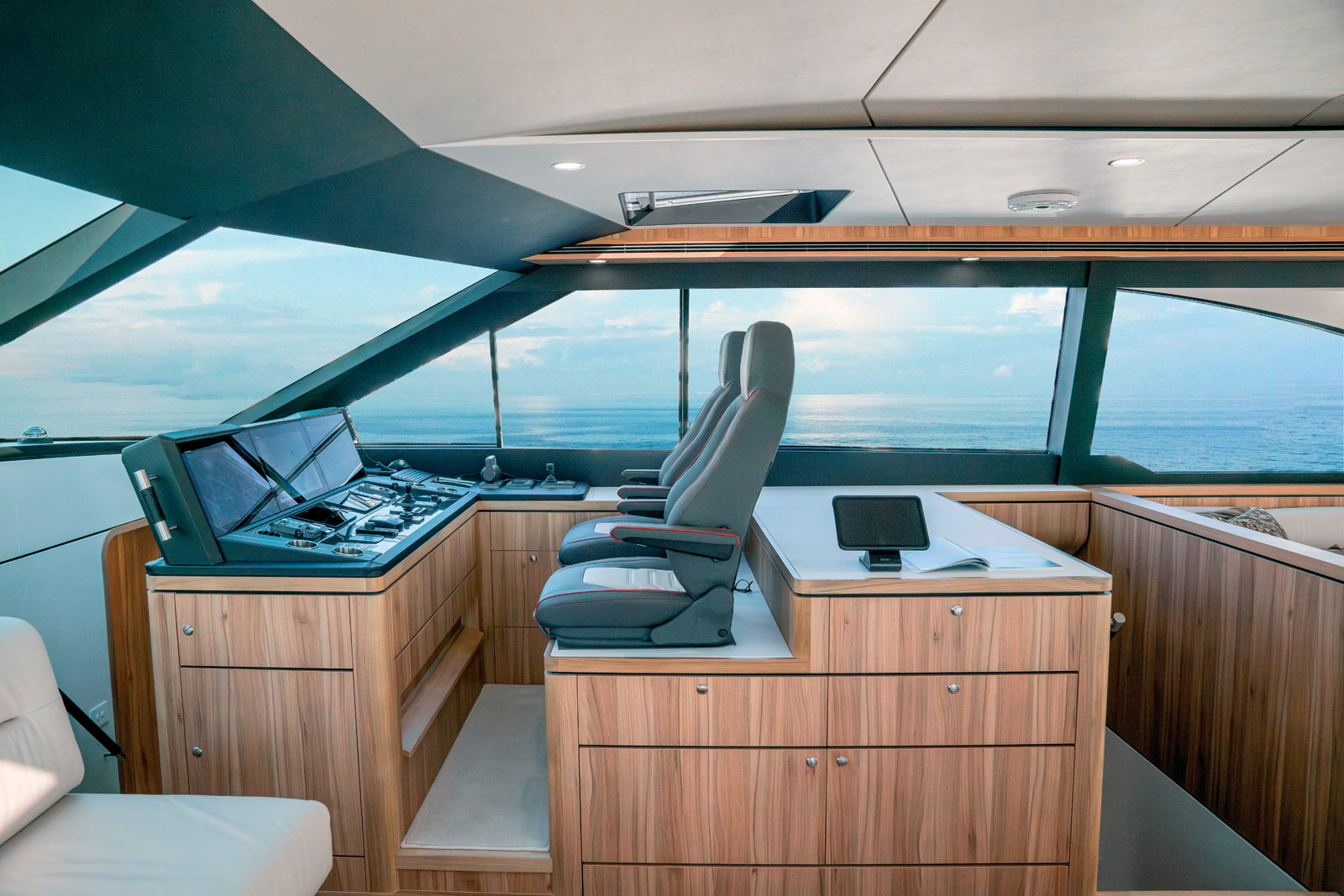
Across from the lounge is the helm station, with its most noticeable feature, the lack of a steering wheel. Instead, there is small joystick which articulates the jet drives to steer the XF75. Along with this, there’s another joystick outboard for slow maneuvering (and to control the optional fore and aft thrusters if fitted but not needed with the jets precision controls), along with the twin throttles for the twin MTU engines. The console is dominated by three Furuno navigation screens which are easily viewed from the two bucket seats that have a footplate integrated into the console base. Other essential smarts include the Furuno autopilot and MTU engine screen; with house systems managed by the Czone digital bus system. Electrical opening windows on each side are ideal for the skipper communicating with deck crew or fresh air and also complete a very practical helm station.
Four Comfortable Cabins
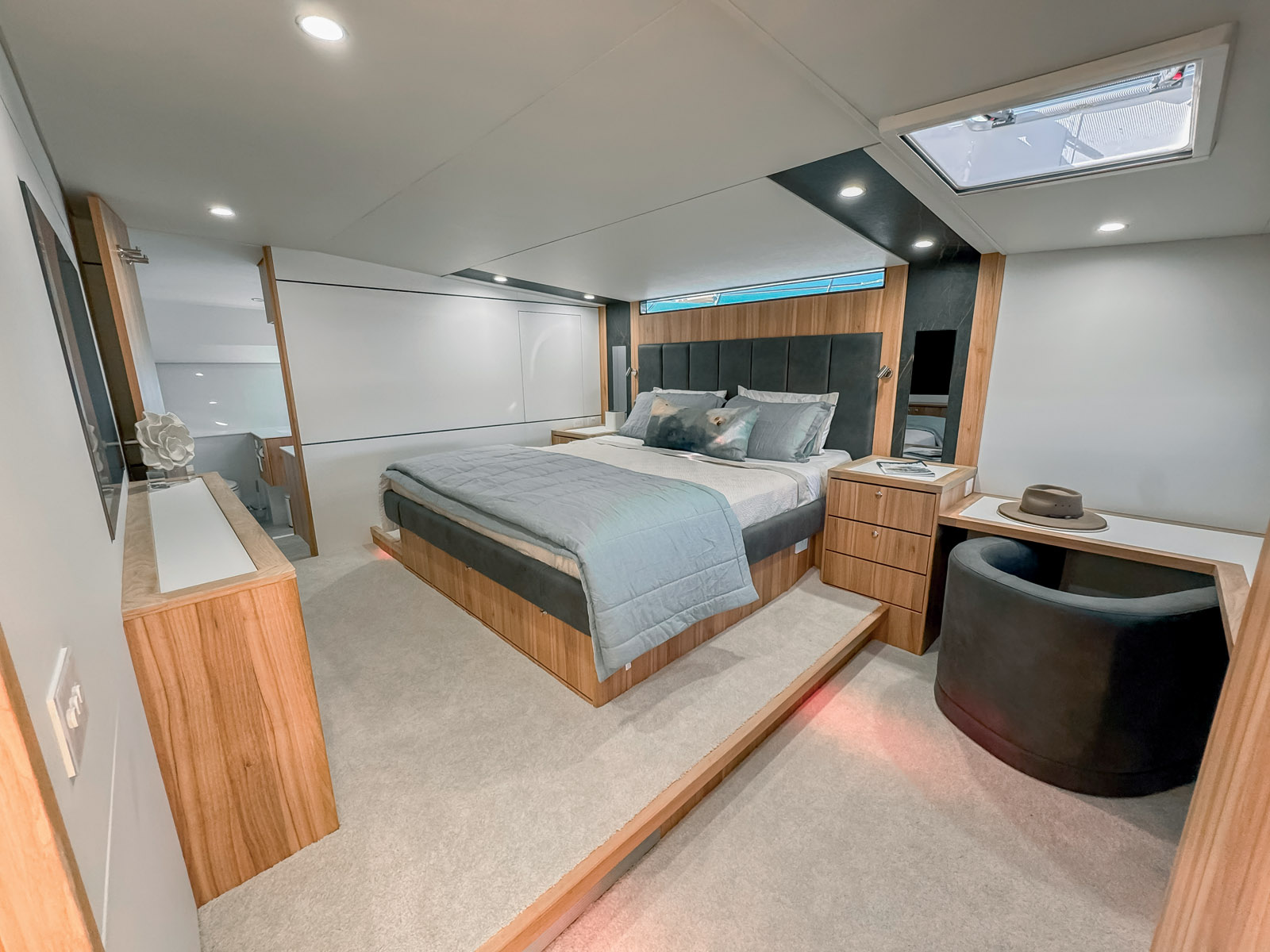
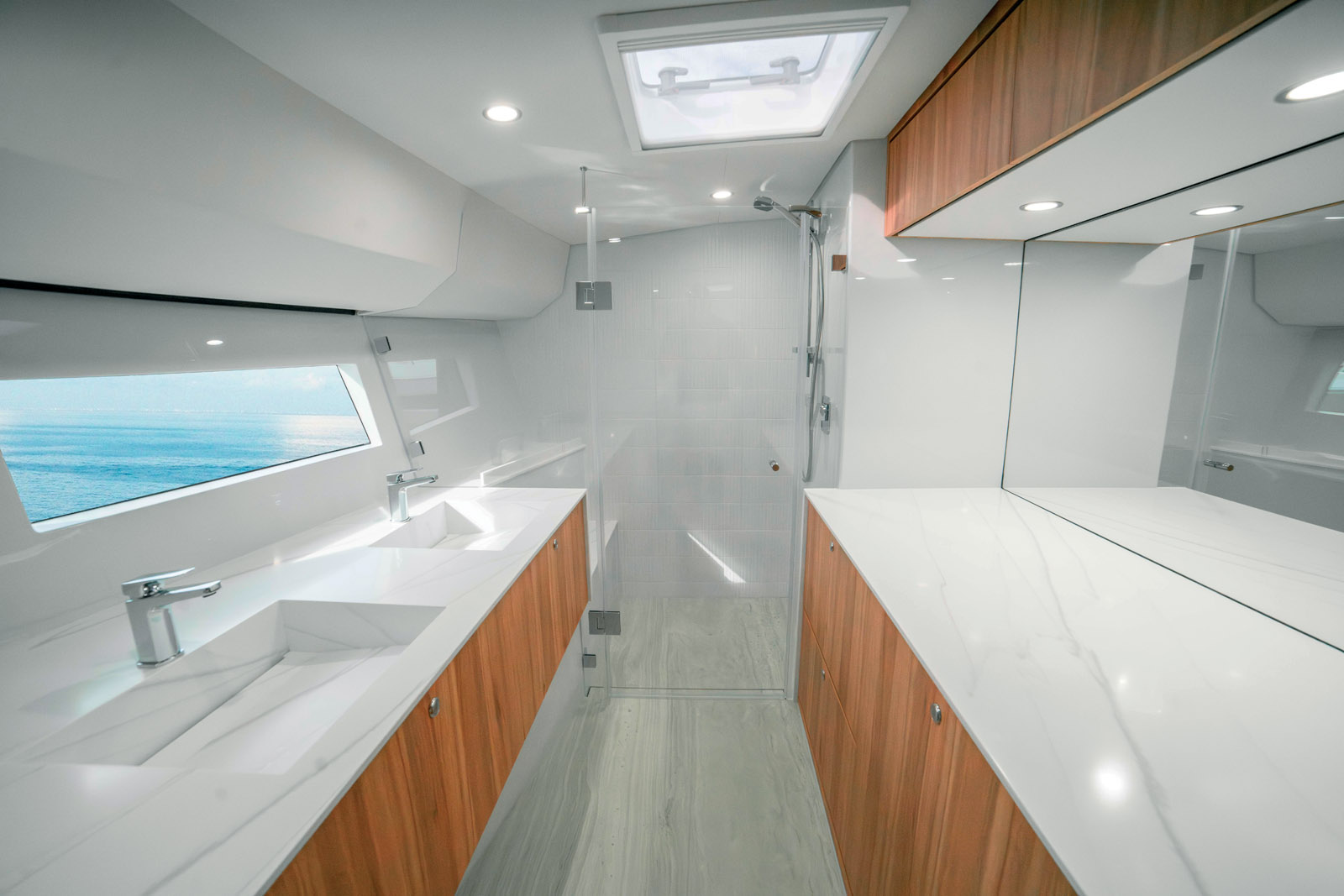
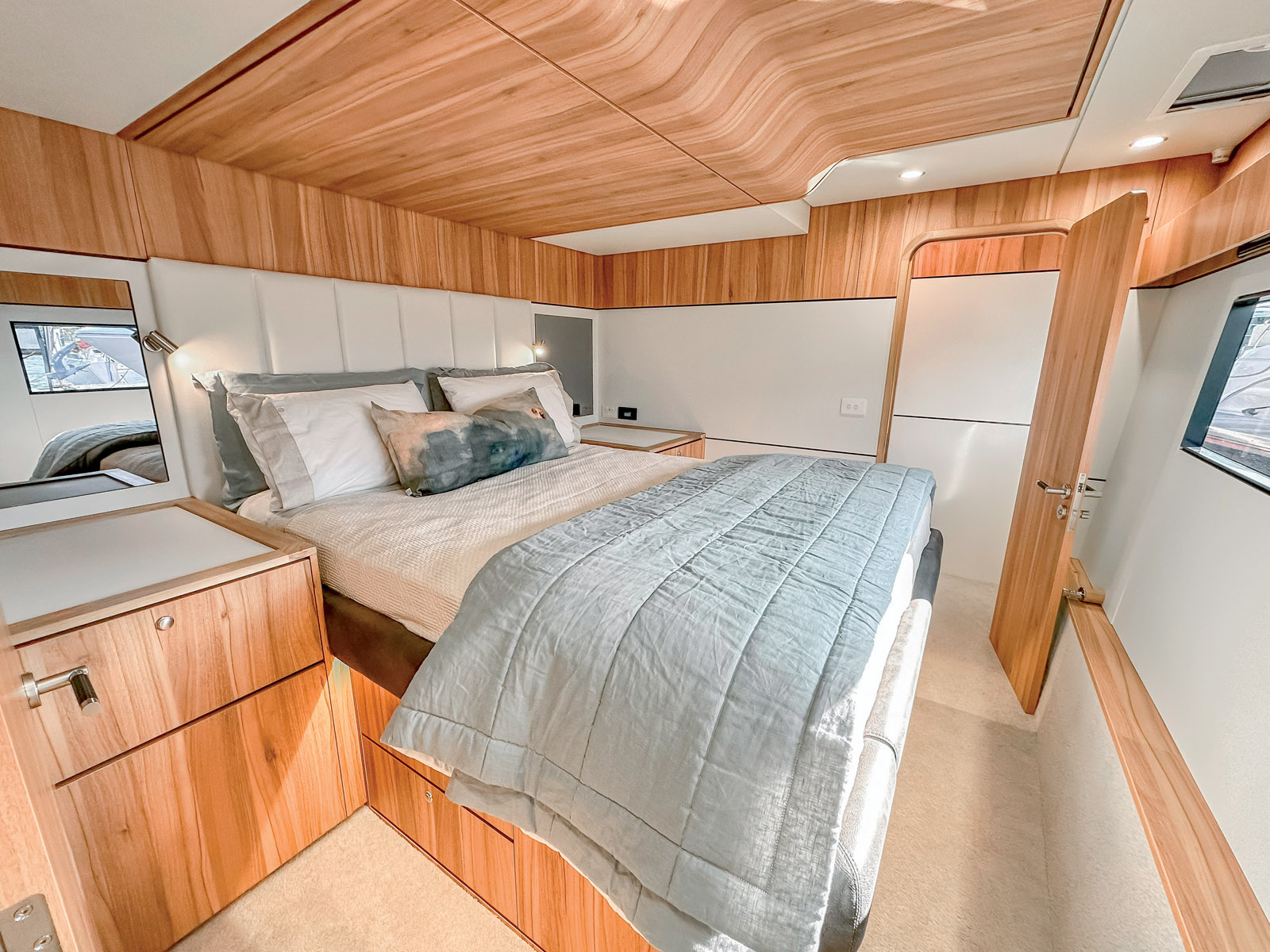
At 75 feet in length, it will come as no surprise that the Voodoo has plenty of accommodation capacity. The layout has three double cabins, plus a fourth with bunks. The owner’s uses the full beam under the foredeck; and is private, well away from the other berths. Entered via a few steps ahead of the console, it reveals a vast space, with a king-sized bed in the middle and a spacious bathroom on port. Generous bench space on starboard includes a comfy armchair and is naturally lit by the large skylight, with a narrow forward-facing window to give the skipper peace-of-mind when off-watch. The aft bulkhead holds the obligatory television. Moving down the steps into the bathroom is a pleasant experience because this is a spacious area, allowing for twin sinks and a big shower cubicle at the far end. Stylish, yet easily wiped down, which I like, but some might find all the white rather glary, but not a problem for the extensive customization abilities of the Voodoo yard, should you ask. Accommodation elsewhere is well-appointed, with the starboard guest cabin having its own private stairwell and roomy berth with queen-sized bed, along with sizeable bathroom. Over on port the other double also has a queen bed and smaller bathroom. Its corridor is shared with the bunk room aft which also has a utility room at the back. In addition, there is a day-head on the aft deck. Storage is major feature here and throughout the XF75, with multiple drawers (including under the bed) and taller cabinetry.
Hydrofoils, Jet Propulsion and Systems for Long-distance Cruising
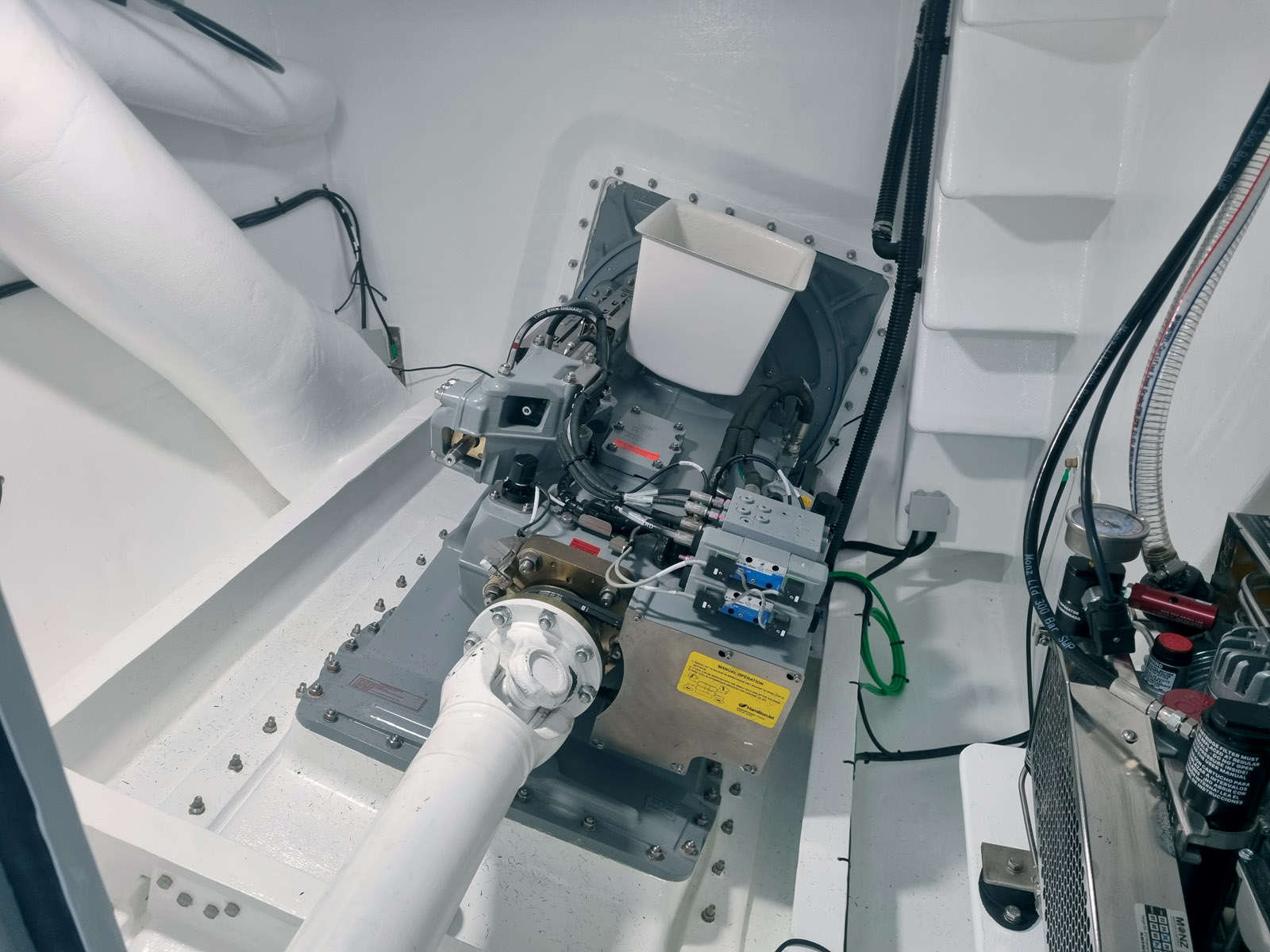
Performance is the market differentiator of this boat, facilitated by Voodoo’s Xpedition Wing hydrofoil system and hull design – developed in-house over 15 years of R&D and testing. This wing, an integral part of the mostly-carbon build elevates the hulls, minimizing drag and creating a fine entry into the water. This was something I studied by climbing to the bows while at cruising speed (35 knots) to peer under the topside - the ride is smooth enough to allow this - which showed very little wash. The result is extreme efficiency, which gives both very low fuel consumption and environmental impact. Propulsion and controlling trim is done via the Hamilton jet drives which are also the only steerage, with no rudders required. This design means the XF75 has a very shallow draft, ideal for those forays into coral regions which this boat is destined for. These New Zealand built drives have been fitted to many vessels worldwide and connect to various engine builders; MTU, in this case. Top speed and relative simplicity are two attractions with this propulsion.
The yard also offers shaft drive propellers in tunnels. Engine access is from the aft deck where there’s three compartments – one for the MTU, an aft one where the jet drive goes through the transom, and an equipment room/workshop forward. Tankage is ahead of the engines, which is ideal. Other key systems for this expedition boat include a water maker (58 US gal (220 l) per hour capacity), twin generators and ducted air conditioning.
Six-foot Waves Coming Out of the Gold Coast Seaway
To put this catamaran to the test, we didn’t make things easy for ourselves: The Gold Coast Seaway entrance can be one of the most demanding sandbar entrances on Australia’s east coast, and the recent Cyclone Alfred had banked up new shallows. Two-meter / six-foot swells broke across most of this waterway. This was the scene that confronted the XF75 as the roar of swells mixed with that of the MTUs pushing the hull to rise to meet the oncoming waves. I advised the two guests who were in the lounge to brace themselves. Grasping the helm seat, while skipper Dave Pachoud nudged the steering joystick, we became airborne, the 75 foot hull surging high over the back of the breaking six-foot/two-meter swell. Then only a mild thud as we landed; without any shuddering, vibrating or squeals from the internal fixtures. Impressive. But that was only the start of the fun, as we turned towards the skyscrapers of the Surfers Paradise for a run right into the southerly swell, reaching a staggering 45 knots with only the occasional spray across the helm windows. Nudging the joystick brought us into a fairly flat turn that was nevertheless tight. The XF75’s performance meant that we could choose to surf the waves or stay ahead of them, and this was done without any twitchiness that could be expected in a boat without rudders. Of course, the wide nacelle and hulls gave the XF75 inherent stability at speed. Which goes to prove that the XF75 can make your journeys as thrilling as the remote destinations it can reach without putting you in danger or making your cruising uncomfortable.
Conclusion
Totally unique, the Voodoo XF75 is a technological marvel. But more importantly, it is a concept that really works, allowing you to get where you want to go quickly without sacrificing comfort or even certain practical aspects, since once you reach your destination, this multiyacht has a tender and even a helicopter.
Technical Specifications
Architect: Voodoo Yachts
Design: Voodoo Yachts
Length overall: 74’10” (22.8 m)
Beam: 24’11” (7.6 m)
Draft: 3’ (0.9 m)
Displacement: 50 t
Engines: 2 x MTU 10V2000 M96L
1,600 HP
Transmission: 2 x HamiltonJet HTX series
Fuel (diesel): 3,960 US gal (15,000 l)
Fuel (Jet A-1): 793 US gal (3,000 l)
Water: 475 US gal (1,800 l)
Price: on request
www.voodooyachts.com