Presented to the public at last year’s Cannes Yachting Festival, the YOT 36 is the first model from the new powercat brand launched by the Catana Group. To tackle this new market - and therefore a new audience - there’s no better way than setting up... a new team and a new factory!
Infos pratiques
- Le chantier : YOT 36
- La fiche technique
-
 Découvrez notre vidéo exclusive
- Financez votre YOT 36
- Assuez votre YOT 36
- Articles autour du YOT 36
Weather conditions: 15 to 20 knots, moderate sea
Until now, the Catana Group’s powercat experience had been limited to the Bali 4.3 MY (a variation of the sailboat version) and the testing of a Bali Catspace MY, which was never actually launched and brought to market. Not really convinced by the potential of its motor catamarans, which were ultimately very similar to their sailing sister-ships, the manufacturer preferred to start from scratch and target a “motorboat audience” rather than a “sailing-weary” one. In strategic terms, it’s not a matter of refocusing a project, but of resetting it... And so the YOT brand was born. The name is obviously reminiscent of the word “yacht”, but it’s also “toy” in reverse. In short, a YOT is either a mini yacht or a (large) nautical toy, depending on your point of view... Either way, we’re definitely in territory far removed from the Catana and Bali ranges, and as a result, the Catana Group has set up a new production facility in Portugal and a complete team dedicated to development, marketing and, of course, sales. YOT’s targets are highly ambitious, with the aim of eventually producing 400 units a year - for the record, production of the Bali and Catana ranges totaled 300 catamarans in the 2022/2023 financial year. As for the range itself, the YOT 36 will shortly be joined by a YOT 41 (presentation announced for this year’s Cannes Yachting Festival) and at the end of the year by a YOT 46. All these models will initially be powered by outboards, with inboard engines to be offered during 2025.
Priority to deck layout
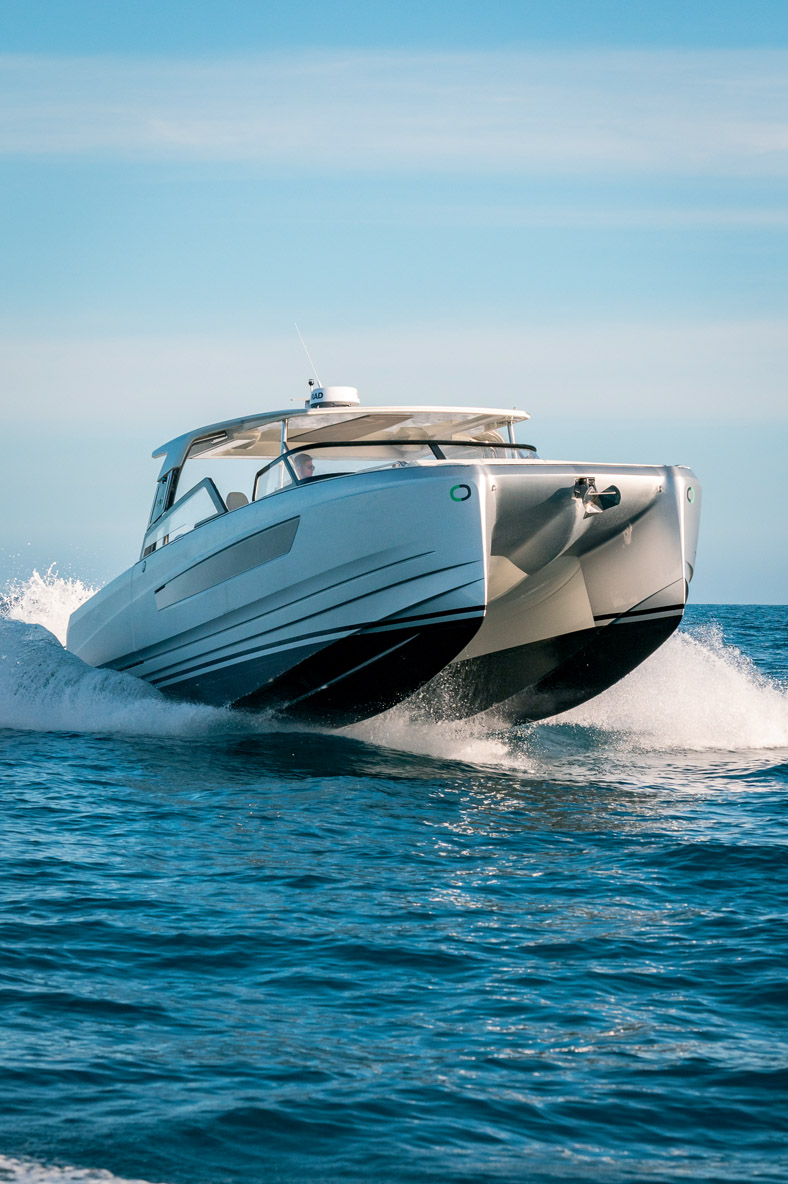
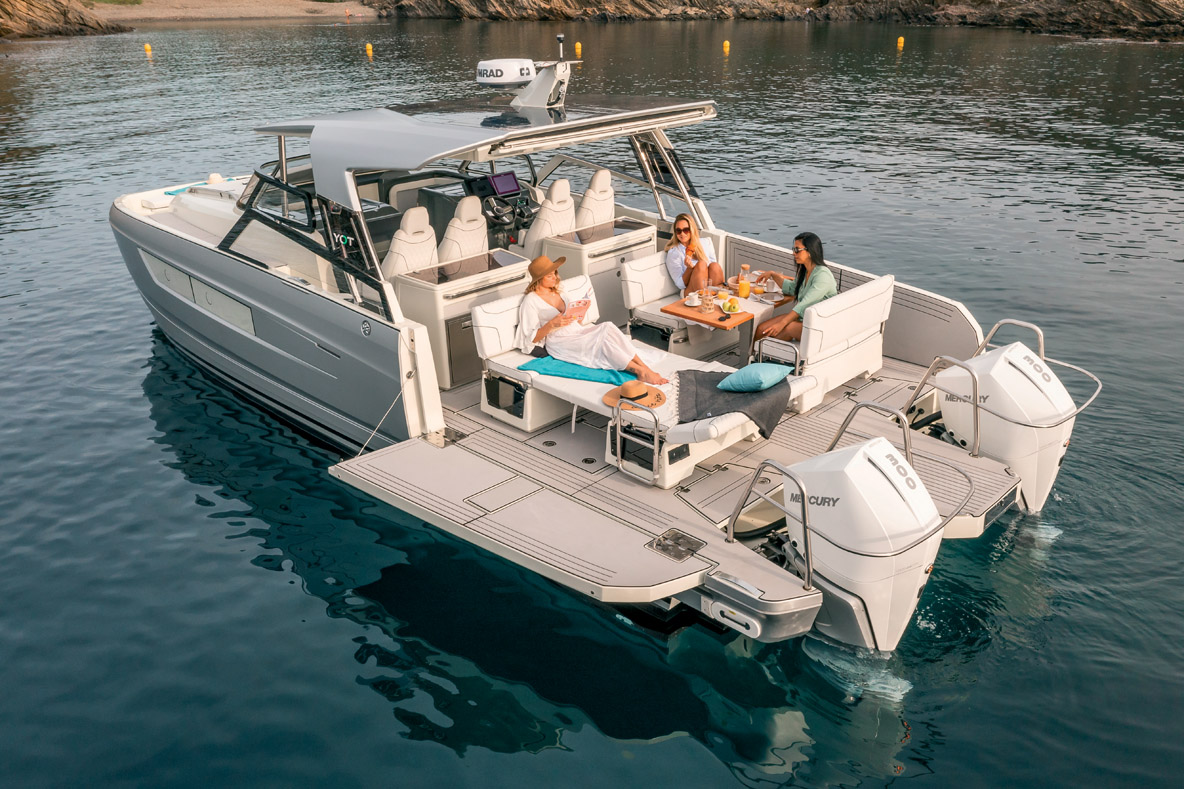
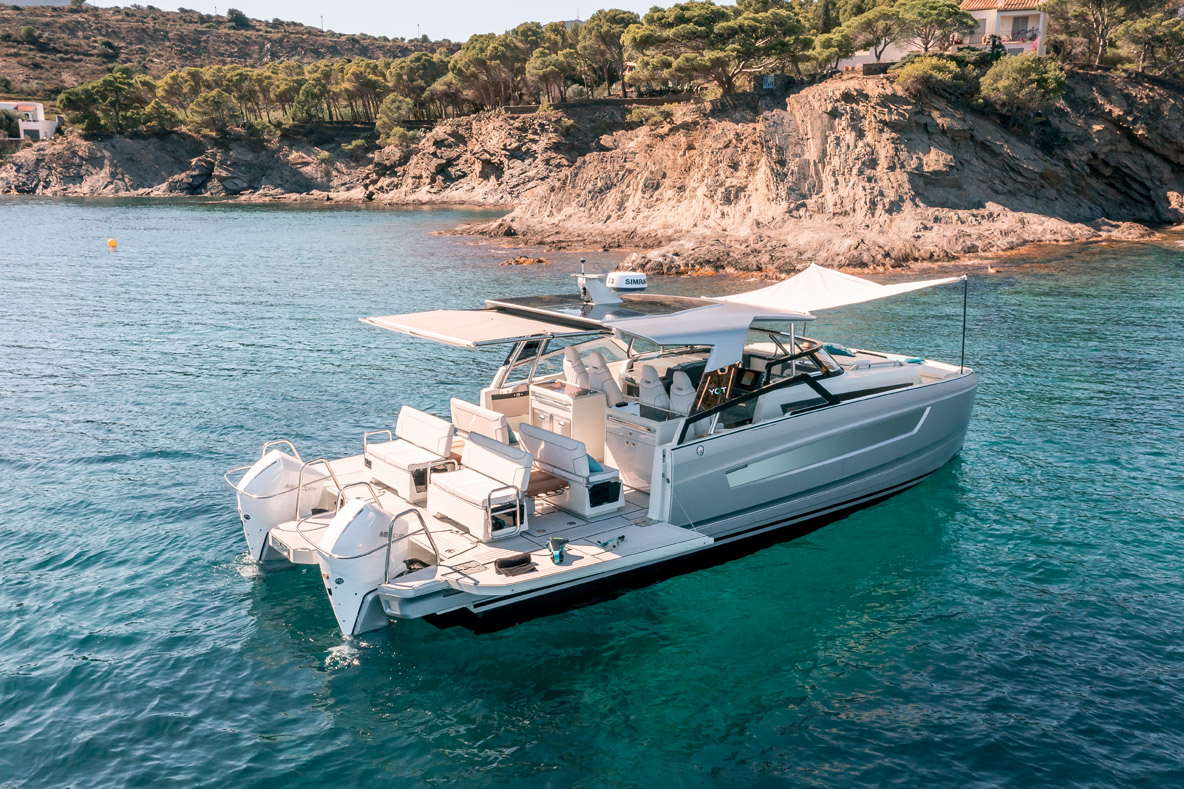
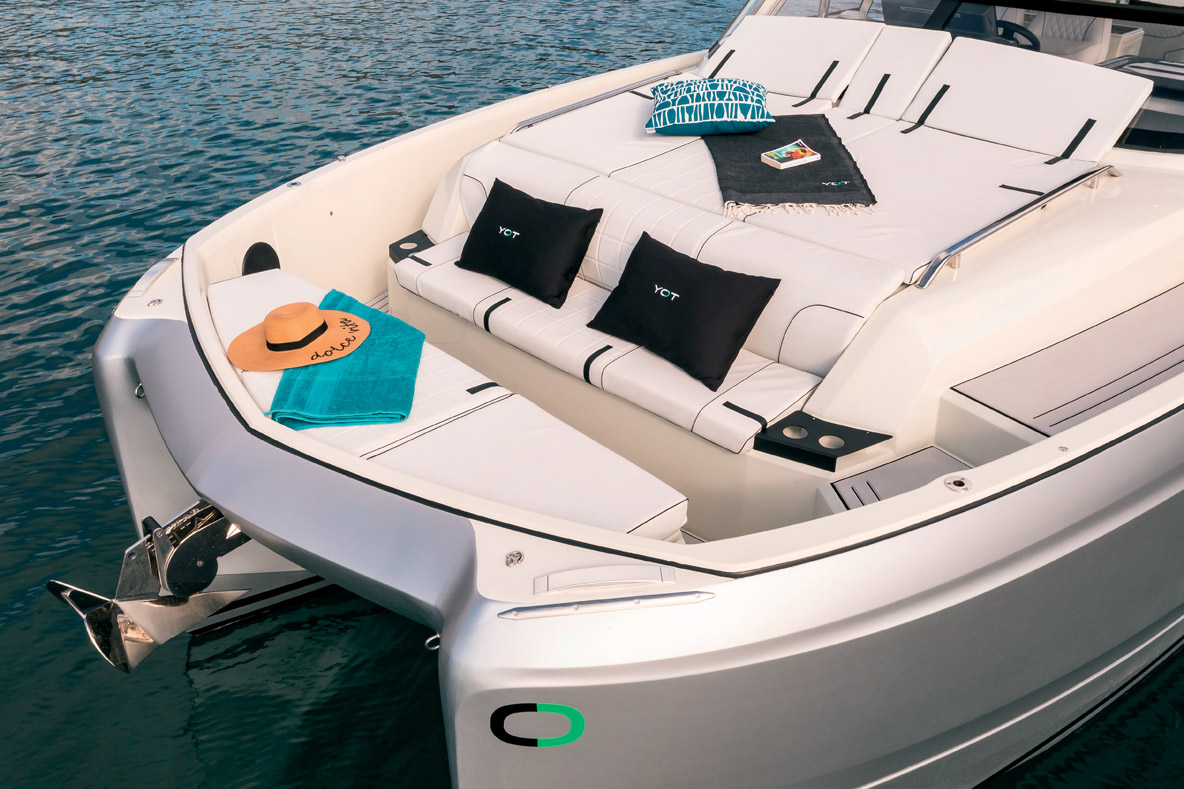
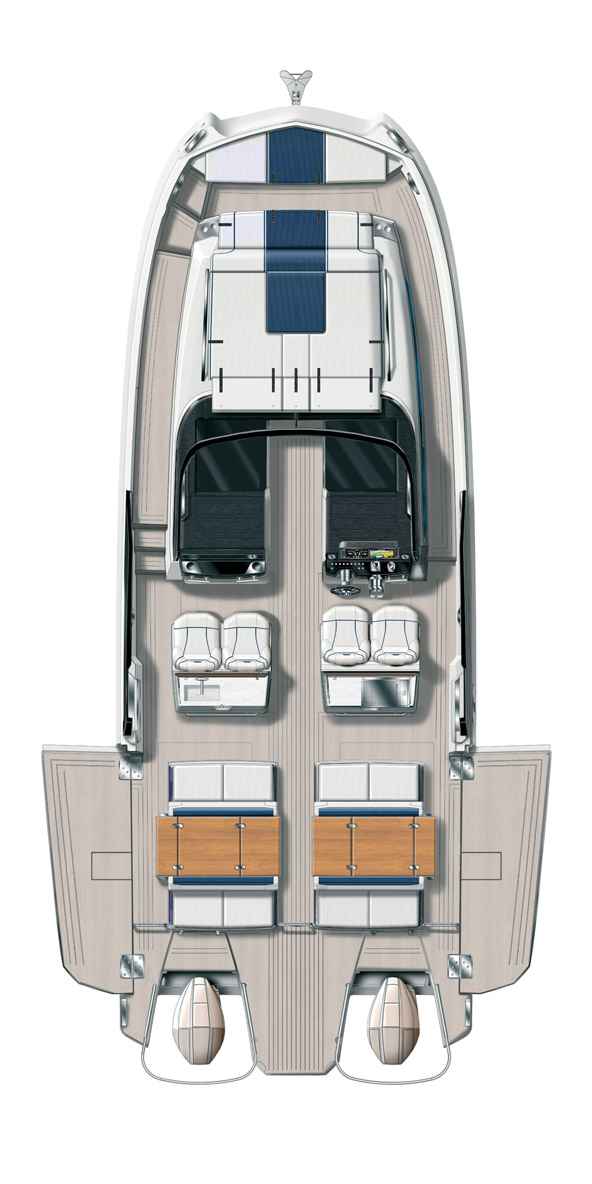
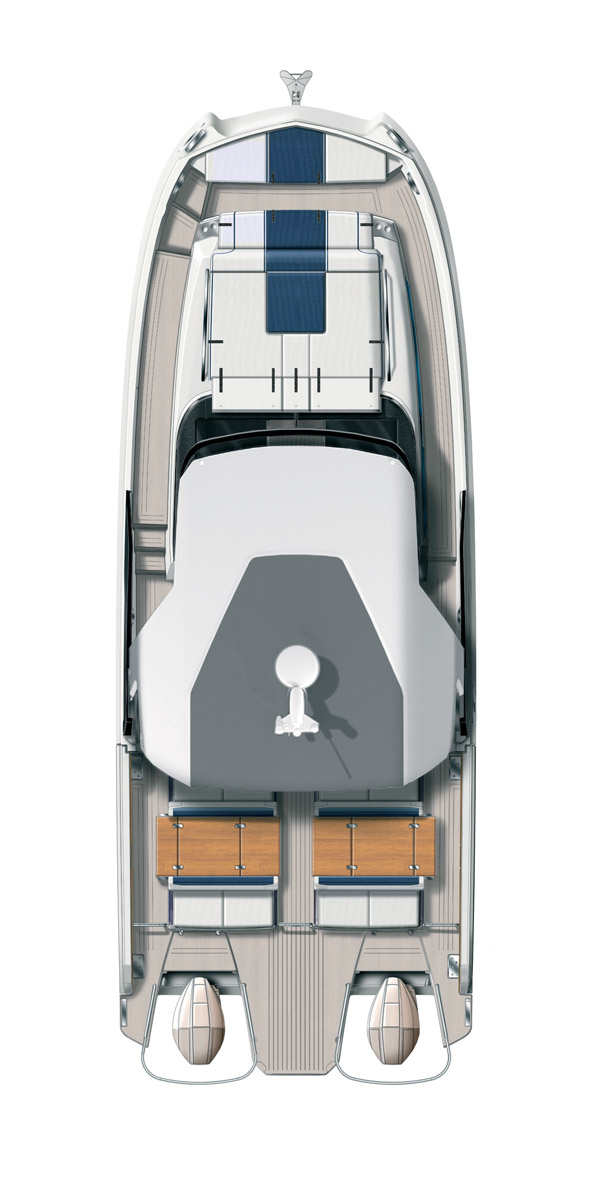
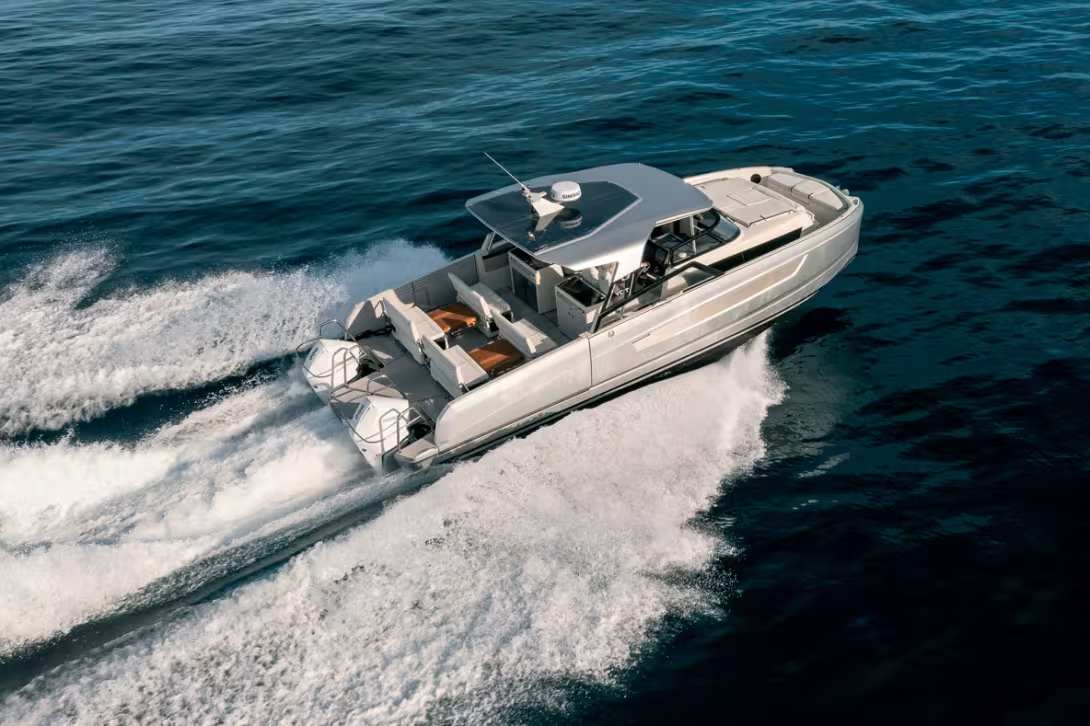
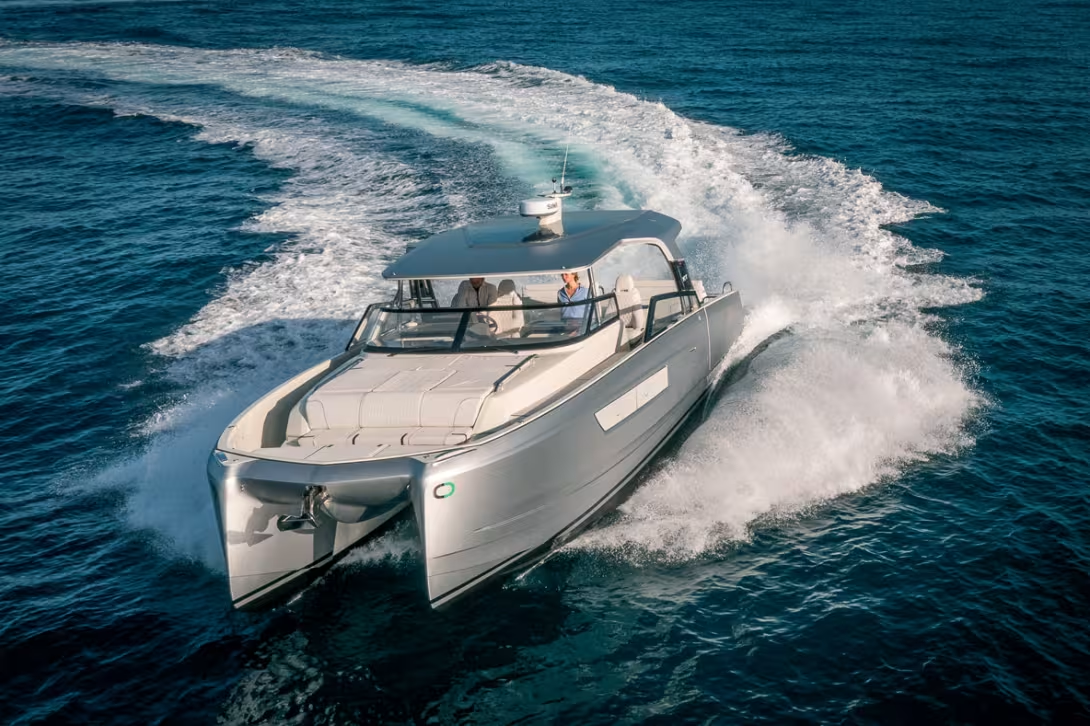
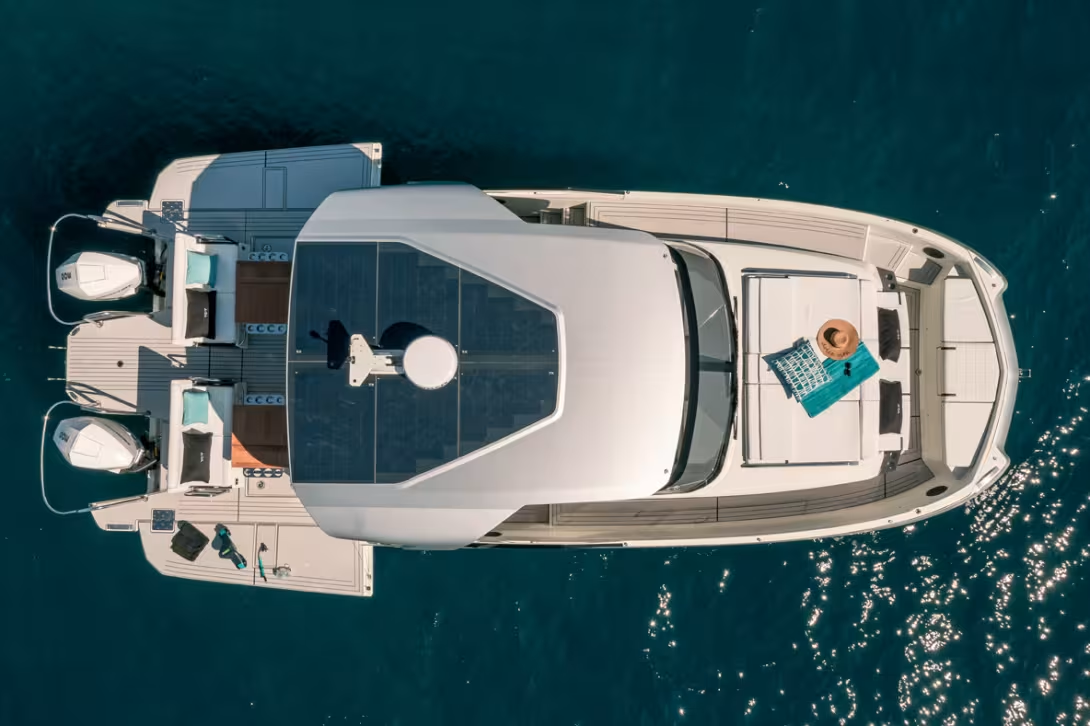
The YOT 36 has been defined as a direct competitor to the large single-hull day-cruisers. In fact, it is very similar in size, with a beam of just over 13 feet (4 meters). The idea, of course, is to not increase the price of a marina slip. Then there are the key arguments: stability at anchor, more seaworthy behavior under way, maximum deck area and low fuel consumption. The manufacturer commissioned the highly experienced firm J&J Design to draw a modern, racy powercat. The construction is meticulous and robust: many structural reinforcements are even made in carbon. Conceived as a comfortable day-cruiser, the YOT 36 clearly puts the emphasis on its deck layout. This is articulated around a central passageway, with a pair of wrap-around bow seats on either side (one of which is the helm seat), a galley unit and modular seating (tables or sun loungers). So you can arrange your deck saloon to your heart’s content... but there are so many possibilities that you may be a little baffled by this press-button waltz - the controls are electric, after all. However, the two tables can be joined together to create a veritable banquet for 10 or even 12 people! The T-Top incorporates a fabric bimini to protect the aft cockpit, which extends into a vast aft platform. On either side, the bulwarks fold down to form a huge terrace when at anchor. This increases the boat’s overall width to getting on for 18 feet (5.4 m). You head toward the foredeck via the side-decks... which are not identical! The starboard side-deck has been made deeper to ensure safer passage, while the deck level remains higher on the port side. The foredeck, in addition to numerous storage lockers, features a large bench seat and a sun lounger.
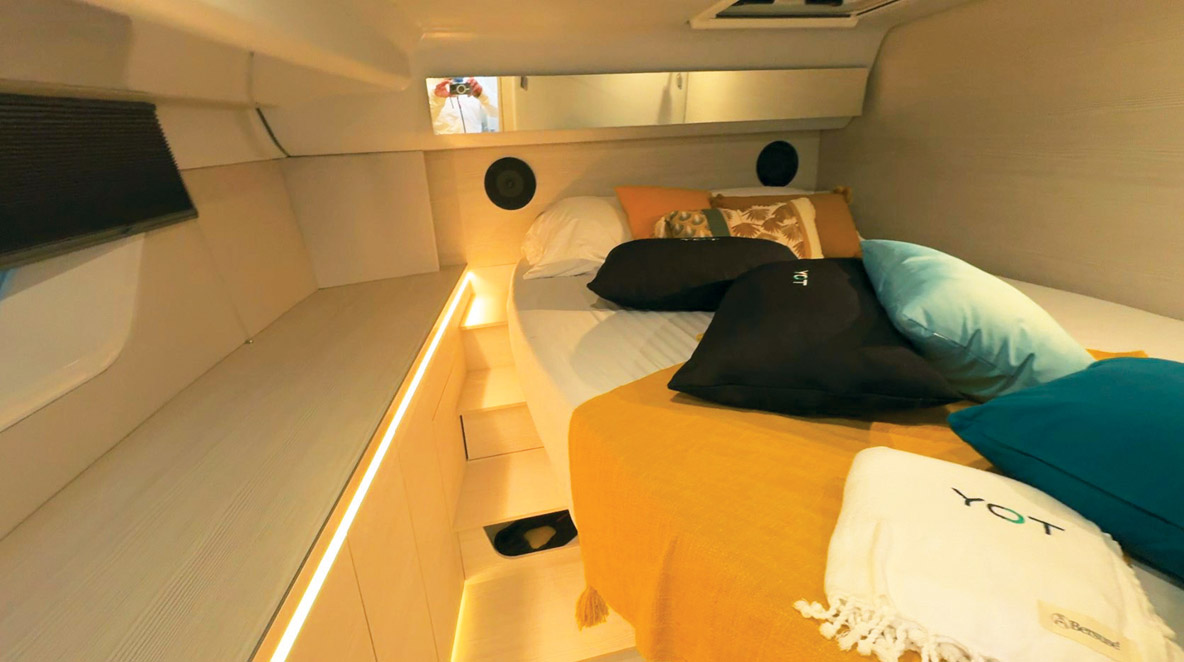
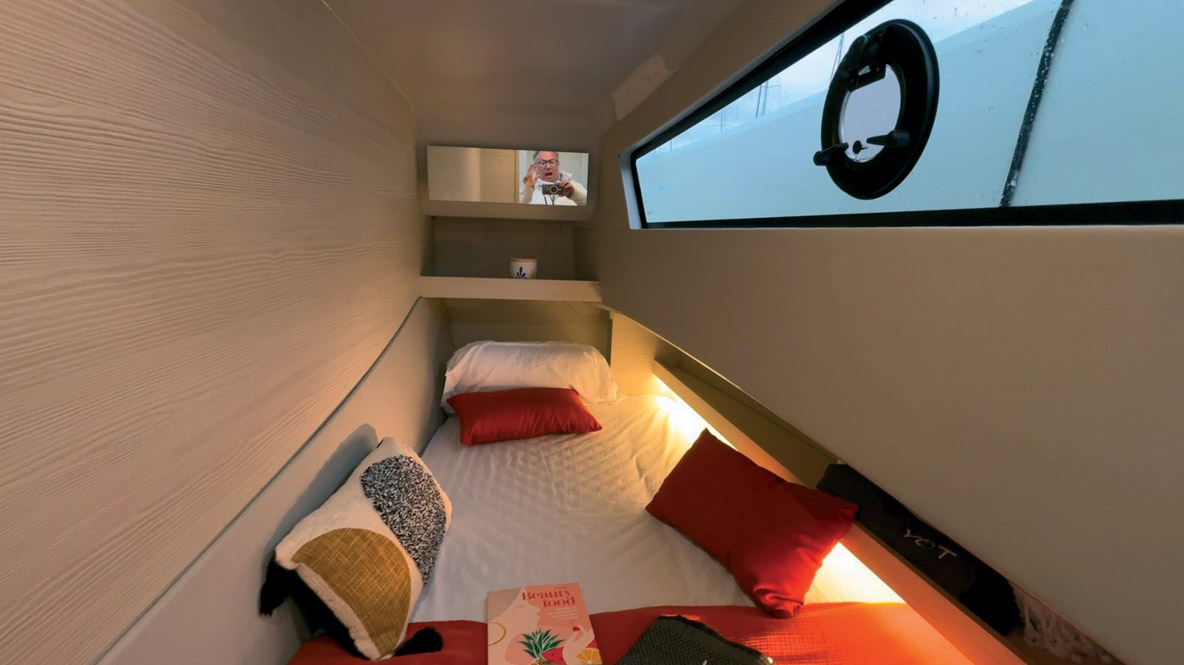
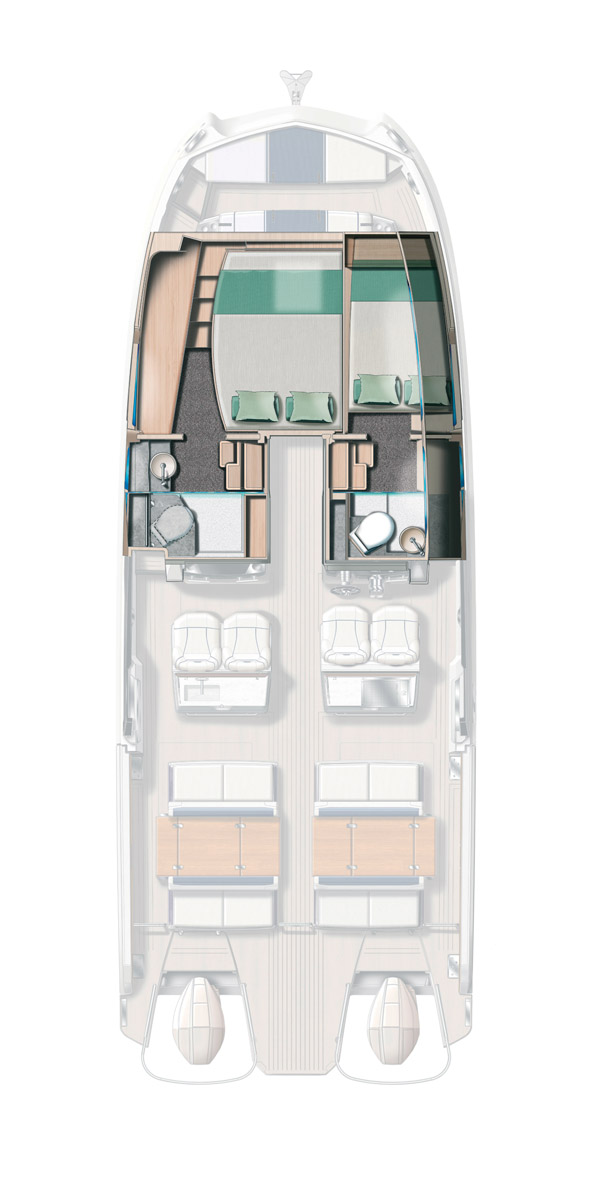
The interior is limited to two cabins: a standard-size double to port and a smaller single to starboard. Each is equipped with a bathroom and benefits from a meticulous finish and excellent lighting.
Winter conditions to create a good test of sea performance
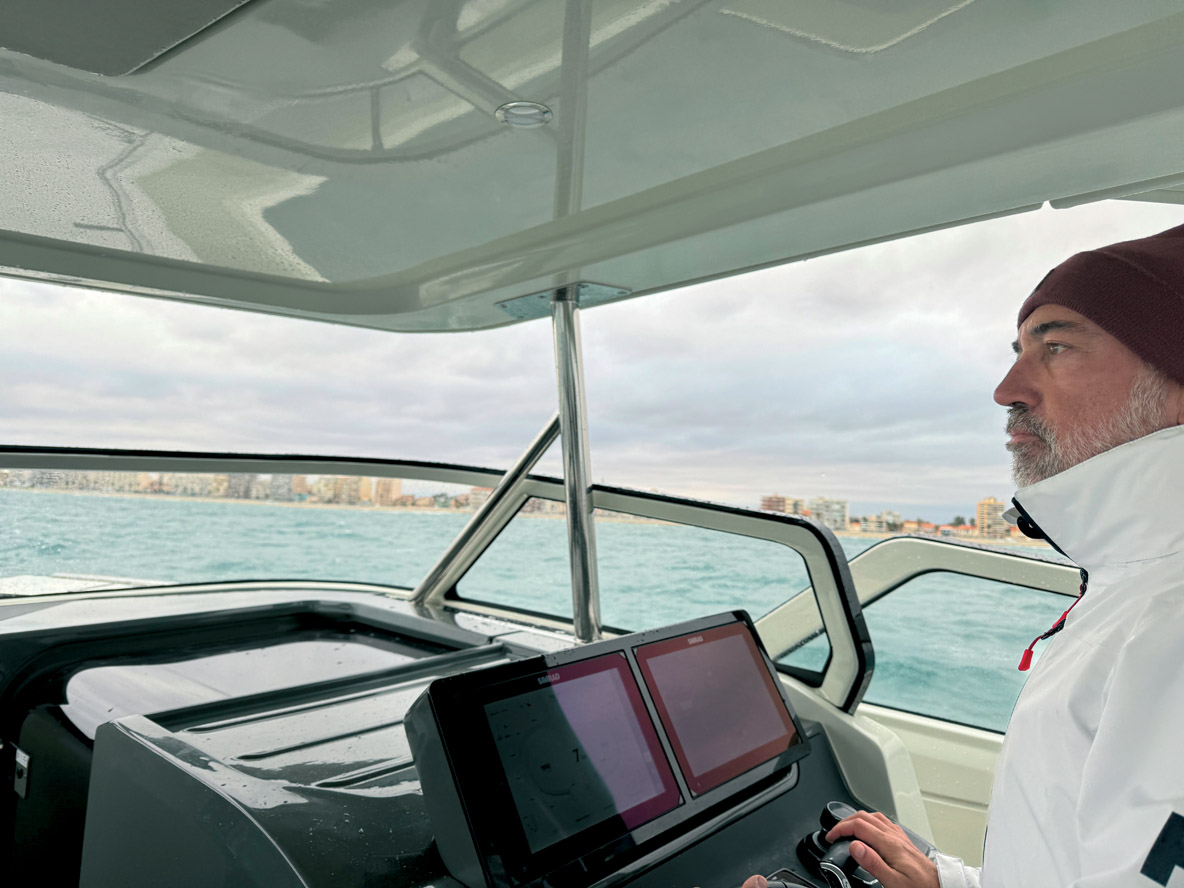
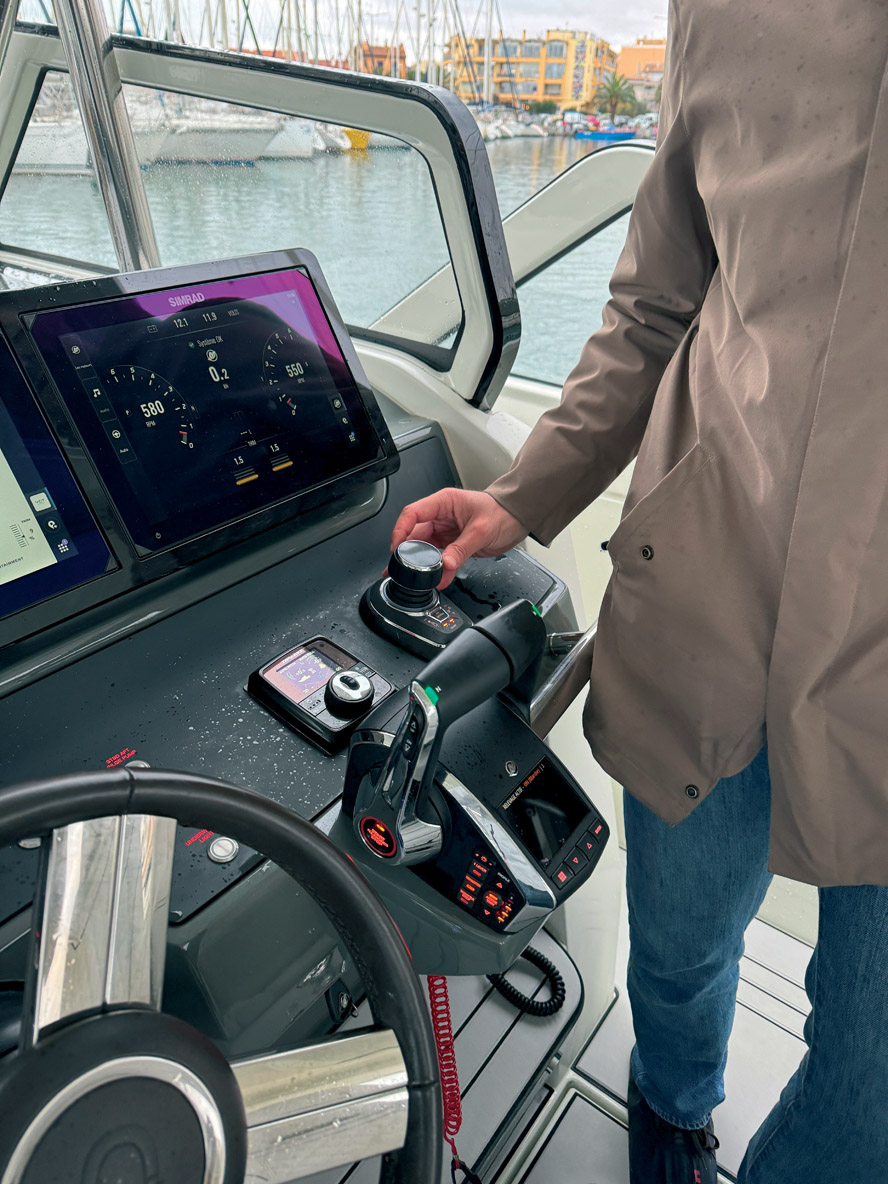
The beautiful late-summer sunshine that prevailed in Cannes when we discovered the YOT 36 and its silver hulls was long gone when I arrived at Canet-en-Roussillon in December. Unsurprisingly, the weather was much colder, though the sun was shining, but above the clouds, and a sea breeze was blowing... as a result, the sea was fairly choppy - but not so rough as to keep us stormbound in harbor. Django Fontaine, YOT’s sales manager, took the helm. A joystick makes maneuvering easy. As soon as we cleared the port, we were greeted by a very short chop – typical of the Mediterranean, in fact. It made an ideal opportunity to test this catamaran, with its relatively narrow hulls and carefully streamlined tunnel. The passage through the waves was very smooth and cushioned. The hulls hardly ever slammed, and very little spray gets on deck. The helmsman is comfortably seated at the helm station to starboard, with a clear view of the water. The hi-tech console is clearly inspired by the automotive market. Steering connected to both engines is direct and precise. Tight turns are not like those of a monohull with a pronounced counter-heel: this remains moderate and sufficient to ensure that the helmsman is not taken by surprise by a centrifugal effect. Having said that, this type of catamaran hull is not at all designed for making tight turns like a water-ski boat, but rather for a fast crossing to an anchorage or for coastal cruising. At 20 knots and above, the tunnel between the hulls begins to act as a shock-absorbing air cushion. Comfort on board is truly surprising. Despite the power of the optional 300 hp V8 motors, the YOT 36 barely exceeds 30 knots. Personally, I consider this top speed to be more than sufficient, but some powerboat enthusiasts may be left wanting more. As far as fuel consumption is concerned, Mercury models are relatively thirsty - already over one US gallon (4 liters) per mile at 8.5 knots. But in the end, they’re quite accommodating at high speeds, never exceeding 1.6 US gallons (6 liters) per mile. The fact remains that the range is that of a day cruiser: it’s possible to do a 100-mile trip (Balearic Islands from the Spanish mainland or the Bahamas from Florida), but not much more. It is to be hoped that an inboard version of the YOT 36 will bring more in terms of fuel consumption, enabling it to expand its range and become a cabin cruiser capable of serious coastal cruising.
Conclusion
The market for 36- to 38-foot daycruiser powercats is going from strength to strength: in the wake of the Four Winns TH36 and the YOT should come the Makai 37 and the Aventura 38 SC, closely followed by the Xquisite 40 Powercat. In other words, a new category has emerged between power catamarans designed for fishing and the more upmarket cruising boats. The YOT 36 boasts a number of solid advantages over its equally recent rivals, starting with a design that leaves no one indifferent, excellent seakeeping and, last but not least, a well-placed price tag - even if the model we tested does cost € 600,000 before tax with all the options. But if you like it, and you can afford it, why not treat yourself?
Excellent seakeeping
XXL deck layout
Relatively high outboard consumption
Almost confusing modularity
Technical specifications
Architect: J&J Design
Material: Polyester composite with carbon reinforcements
Overall length: 35’10” (10.92 m)
Beam: 13’1”/17’9” (3.99/5.4 m)
Draft: 3’1” (0.93 m)
Displacement: 15,875 lbs (7.2 t)
Outboard engines: 2 x 225/300 HP
Cruising speed: 18 to 25 knots
Max speed: 31.2 knots
Fuel: 2 x 150 US gal (2 x 575 l)
Water: 2 x 40 US gal (2 x 150 l)
Cabins: 2
Sleeping accommodation: 3
CE Certification: B10
Price with 2 x 225 HP: € 383,000 ex-tax
Main options in € ex-tax:
300 HP engines instead of 225: 51,800
Zipwake automatic trim tabs: 4,600
Navigation pack: 27,500
Premium JL Audio System: 8,100
Luxury interior pack: 6,000
Curtains/blinds: 1,200
Electric aft bimini: 11,700
Cockpit galley: 2,100
Refrigerator: 2,600
Fabric cockpit enclosure: 7,500
Water heater: 1,400
Solar panels (716 Wp): 13,750
Underwater spots: 4,320