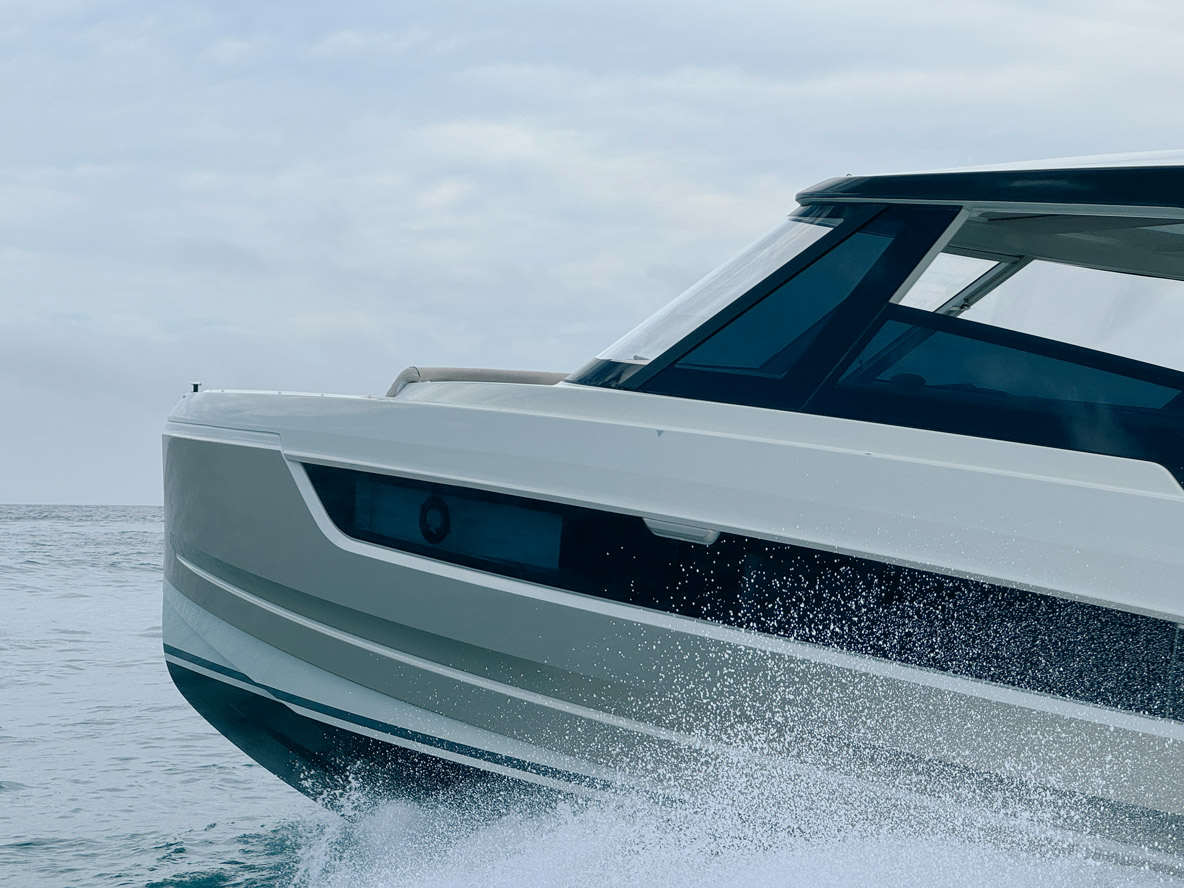
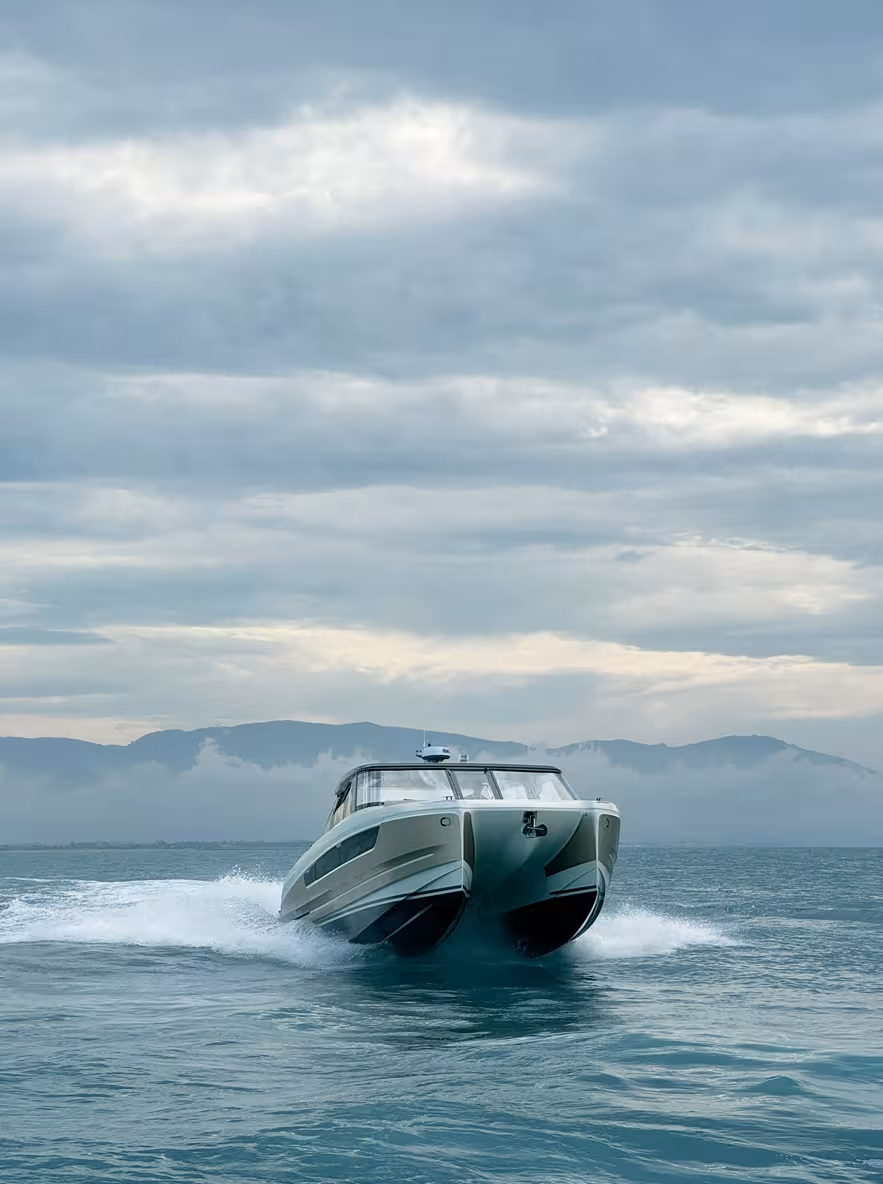
After the Yot 36 presented at the 2023 Cannes Yachting Festival, it’s now the turn of the 41 to enter the decidedly turbulent market for weekender powercats. Elegant, seaworthy and modular, this new model is sure to attract boaters from all horizons.

Infos pratiques
- Le chantier : YOT 41
- La fiche technique
-
 Découvrez notre vidéo exclusive
- Financez votre Yot 41
- Assuez votre Yot 41
- Articles autour du Yot 41
Conditions: Sea state slight to moderate, 10 to 20 knots of southerly wind
What a success! In the market for powerboats designed for daytrips or weekend outings, the catamaran formula is clearly gaining ground, forever putting single-hulled craft out of favor... As a result, many “historic” manufacturers of monohull motorboats are entering the world - totally new to them - of the powercat. For potential customers, this is a highly beneficial approach, rich in innovation and new ideas. As far as Yot is concerned, things are a little more complicated, the Catana Group having already launched a powercat, the Bali 4.3 MY, based on the sailboat equivalent version. Then, the manufacturer launched the same type of project with the Bali Catspace MY before turning back. In their opinion, the market wanted 100% motor projects. Finally, a new brand - Yot - was launched in this spirit. It has its own production site in Portugal, and this is soon to be 100% operational. The Yot 41 is the second model to be offered. Logically, it takes up the main lines of its smaller sistership, but of course with greater comfort and a new central circulation layout. Forthcoming models are announced as a 50, for cruising, and a 46 - an XXL weekender...
Modular Cockpit and Central Passageway
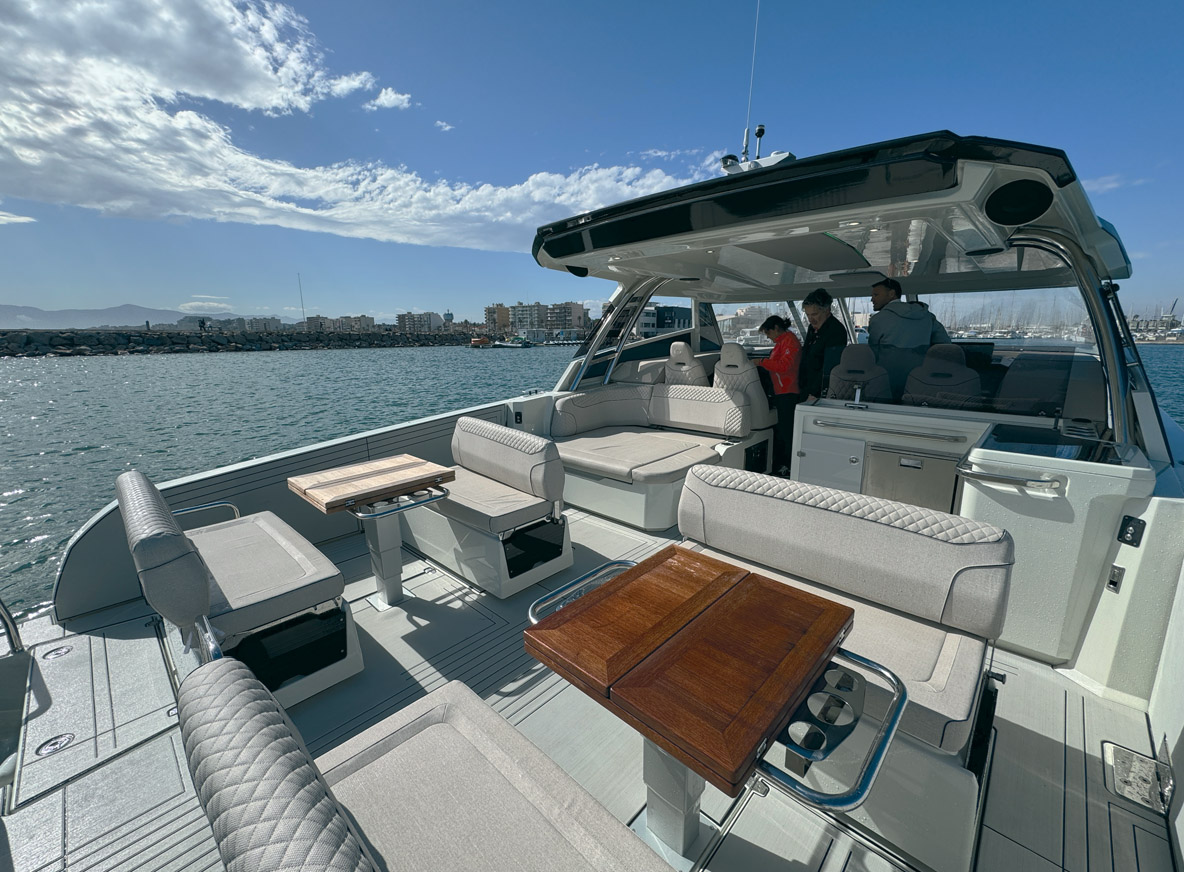
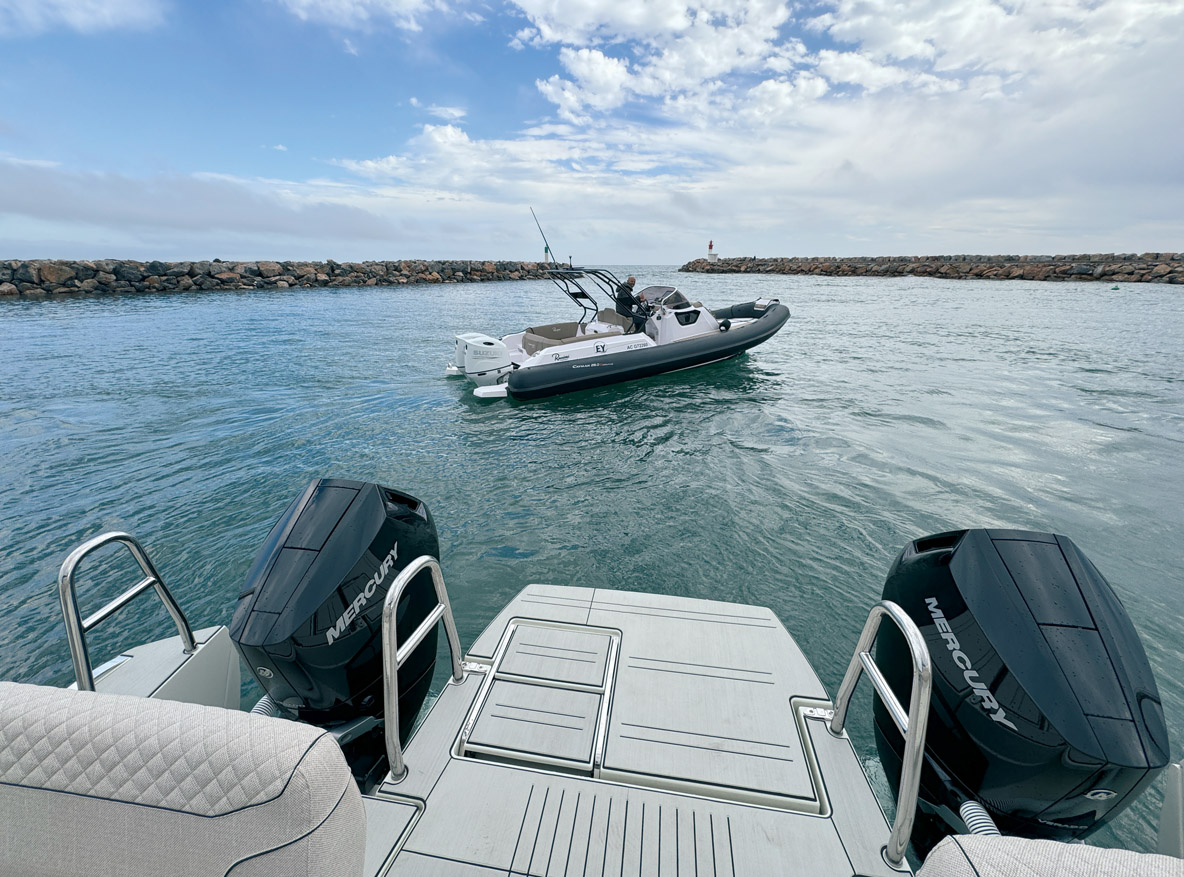
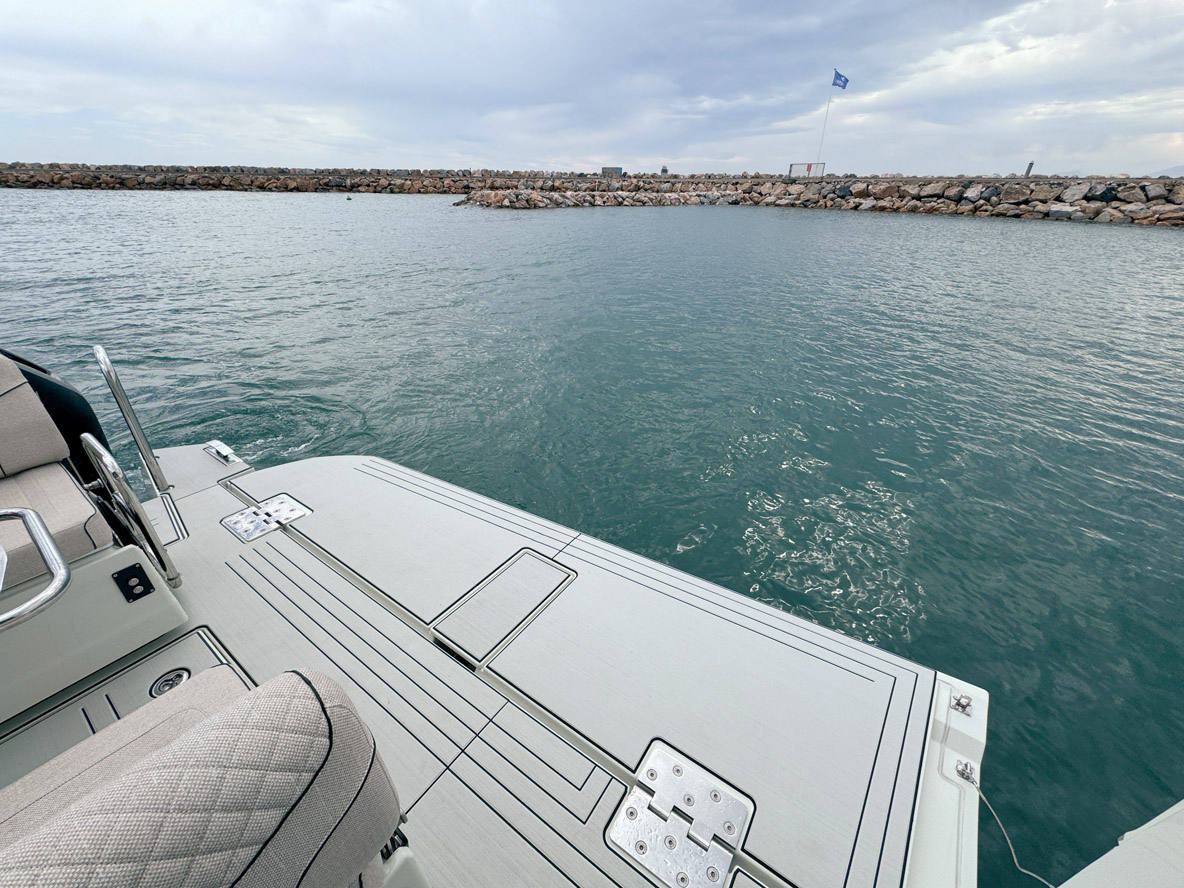
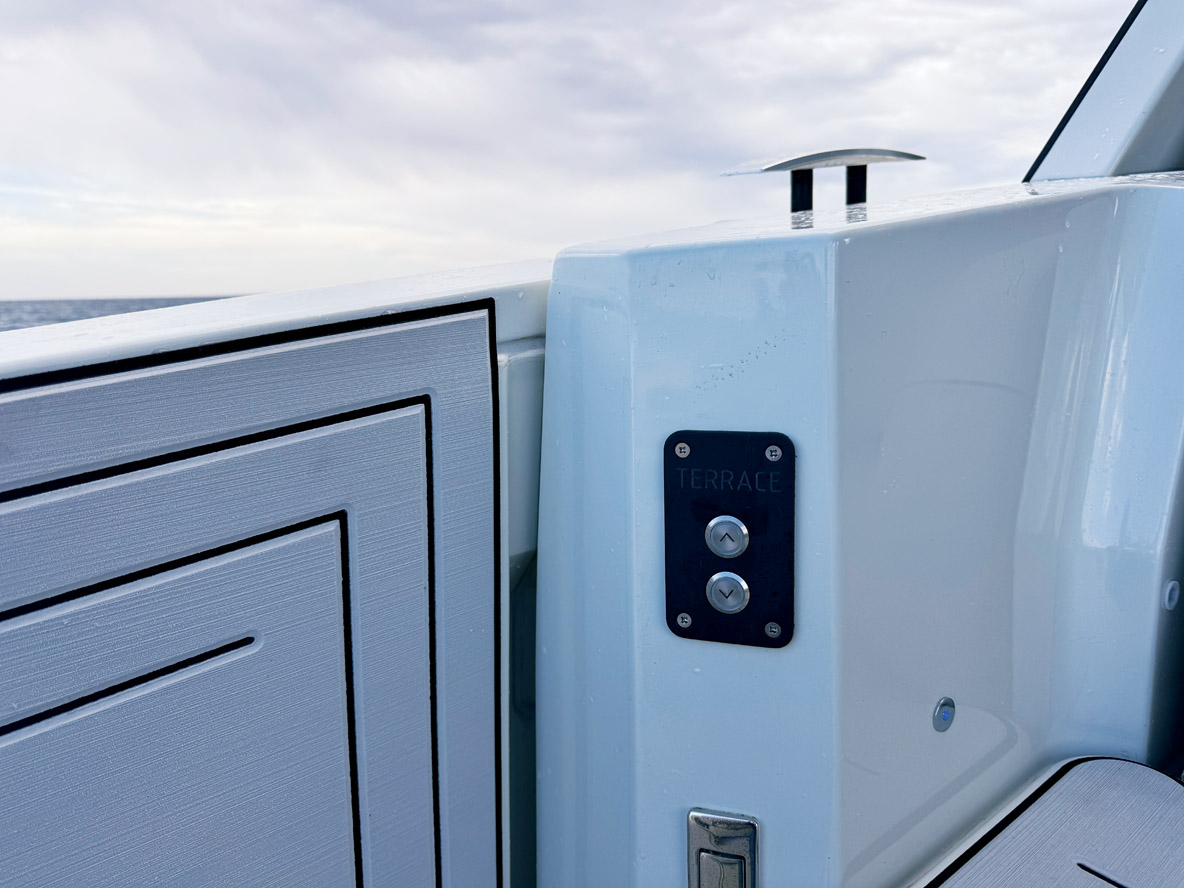
We headed for Canet-en- Roussillon on France’s Mediterranean coast at the beginning of October. The weather forecast was for decent conditions, but we had to be quick before the sea and swell picked up, as a southerly gale was forecast. Django Fontaine, the brand’s sales manager, welcomed me aboard. I immediately noticed a clear gain in terms of ease of movement compared to the 36. The extra deck space is a major factor, but it’s above all the central passageway that considerably eases the issue of getting around on board. While the yard has retained the cockpit’s modularity, with the two outside dinette-areas that transform into sun-loungers (there are 5 on board in total!), the “MacGyver effect”, a little too pronounced for my taste on board the Yot 36, is cleverly blurred here. The Yot 41 also features a vast aft platform (now movable, supporting 440 lbs/200 kg) between the two outboard motors and, above all, the two fold-out bulwarks. All three of these moving sections are electrically operated. When the two bulwark panels are opened at anchor, the perception of the cockpit is radically transformed - the relaxation area reaches 270 square feet (25 m²) with a width increased to precisely 19’1” (5.82 m). Once the bulwarks are down, the view is unobstructed - it’s a real invitation to dive in, especially as each “terrace” can support 650 lbs (300 kg). The builder has taken care to provide a maximum of storage space under the seats and floors on the starboard side - the multicolored LED strips at the corners of the seats and deck, which light up to the rhythm of the music, do not make this powercat just a fun unit for a few hours on the water: the Yot 41 is intended to be a real weekender, if not more! On the port side, the locker may be dedicated to lithium batteries or a generator.
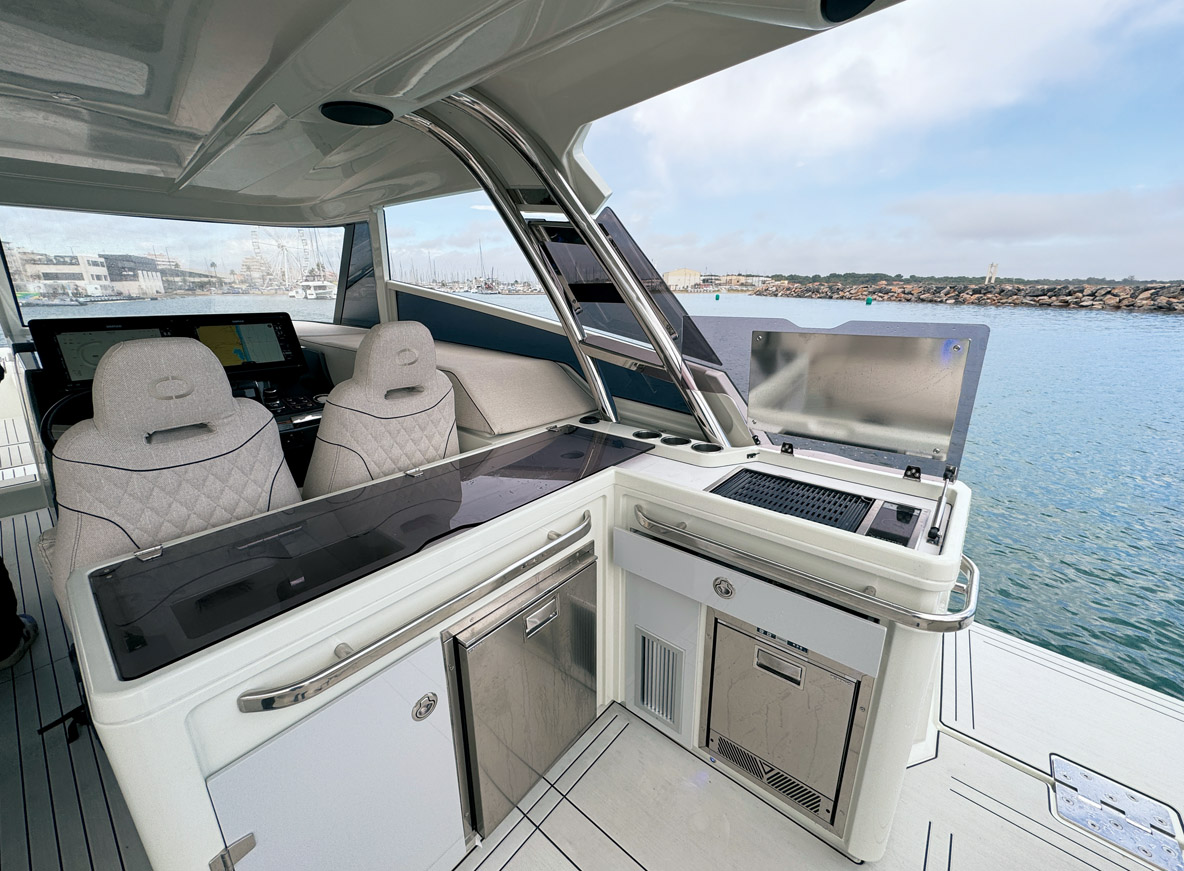
A little further forward, you reach the shelter of the coachroof - 100% open to the cockpit - to discover a convertible bench seat to port and a galley to starboard, whose L-shaped cabinet integrates a sink, a grill, a 3.18 cubic foot (90 liter) refrigerator, storage and a garbage can. As an option, a second, smaller 1.8 cu ft (51 l) fridge or an icemaker can be ordered. A refrigeration unit can be integrated on the port side.
The coachroof can be fitted with 900 Wp of solar panels.
An Open Nacelle and Two Identical Cabins
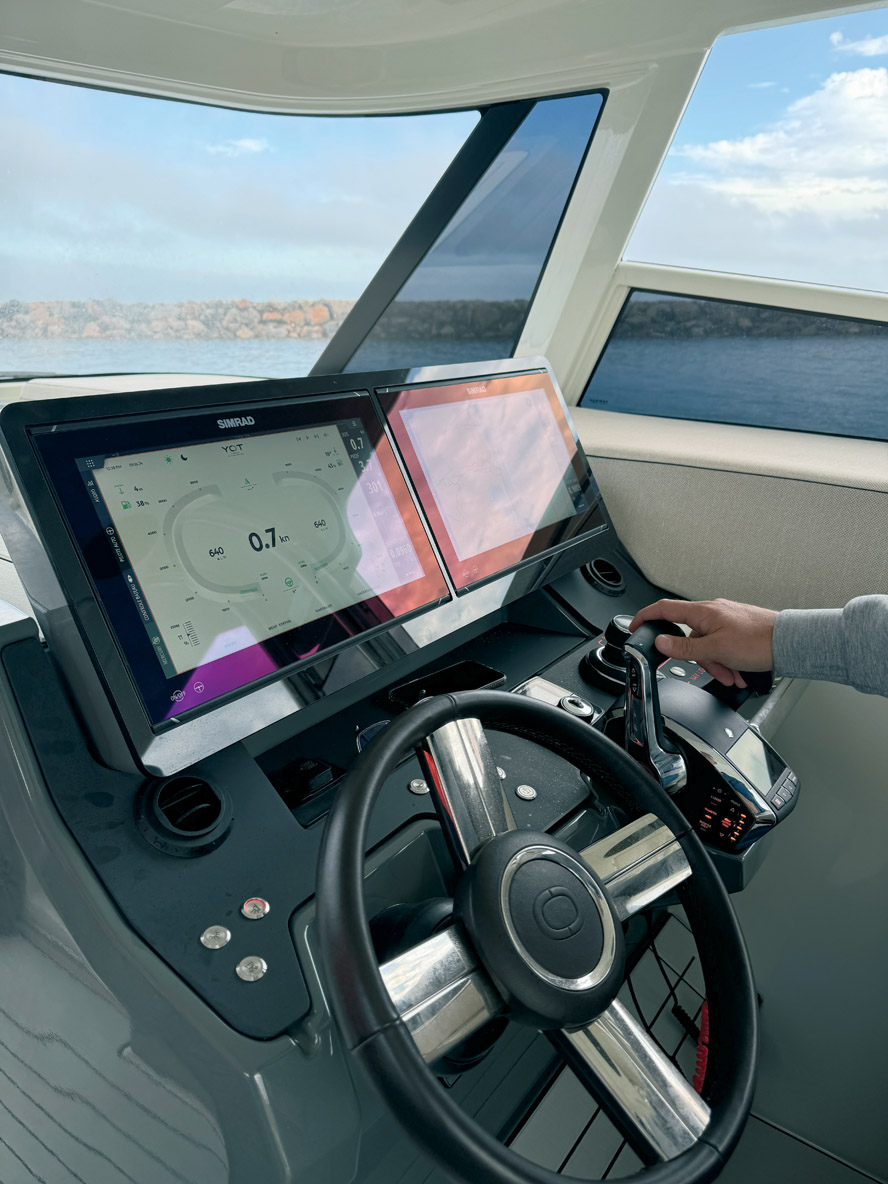
Facing the windshield, you’ll find the four seats already seen on the 36, but this time, thanks to the full-width nacelle, you’ll also have a beautiful lounger on each side. The very modern helm station features a pair of 16” screens - the instrumentation is particularly clear, with backlit buttons. The manufacturer offers a joystick control to facilitate docking maneuvers and has developed a specific Yot interface in partnership with Mercury, Brunswick, Navico, Simrad and Mastervolt.
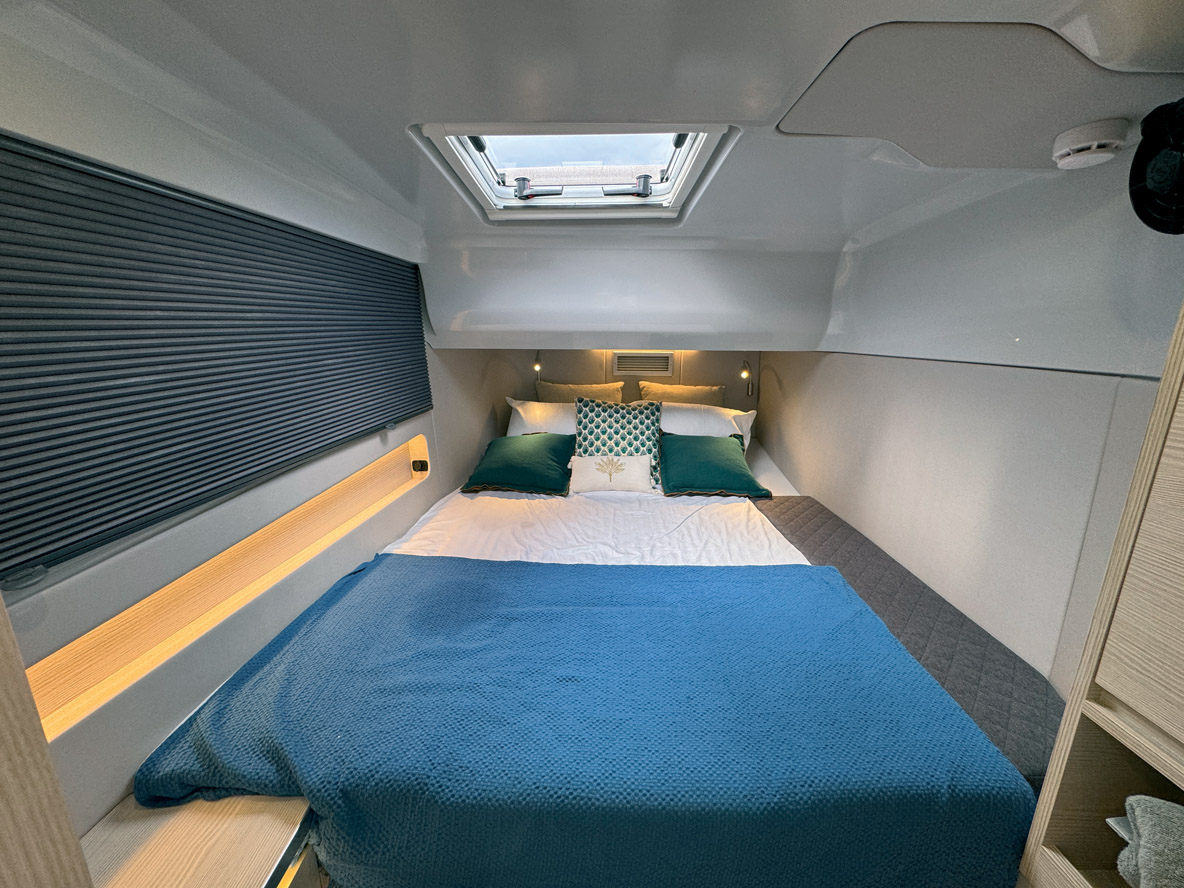
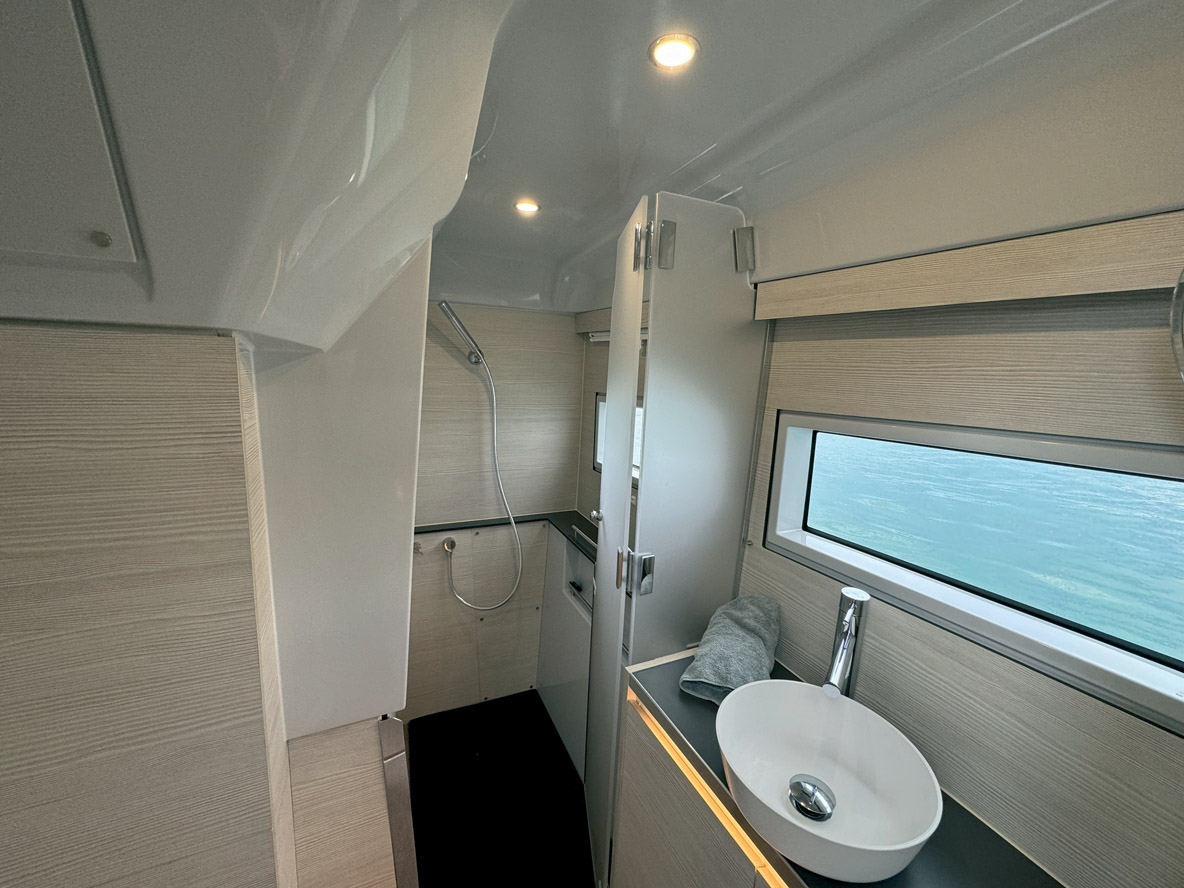
A little further forward, you reach the hull accesses. The companionways are a little steep, with staggered steps. Unlike the Yot 36, which favors one of the two cabins - the port one benefits from a raised gangway - the 41 has sufficient volume, thanks to its extra 20 inches (50 cm) of beam, to give equal space to the two berths. Each bed measures 78” long by 62” wide (2 m x 1.58m). The decision was obviously made in favor of maximum surface area rather than ease of access - there is no “island bed” cut-out. In each cabin, two large vertical cupboards and a vast volume under the bed are dedicated to personal belongings. The bathrooms are spacious, with a respectable headroom of 6’4” (1.95 m). Cabin air conditioning is available as an option.
The lower part of the forward door consists of a small Plexiglas panel and a larger one which, when closed, integrates with the windshield. Its use is easy in port but can become a little more difficult when underway.
Bowrider Foredeck
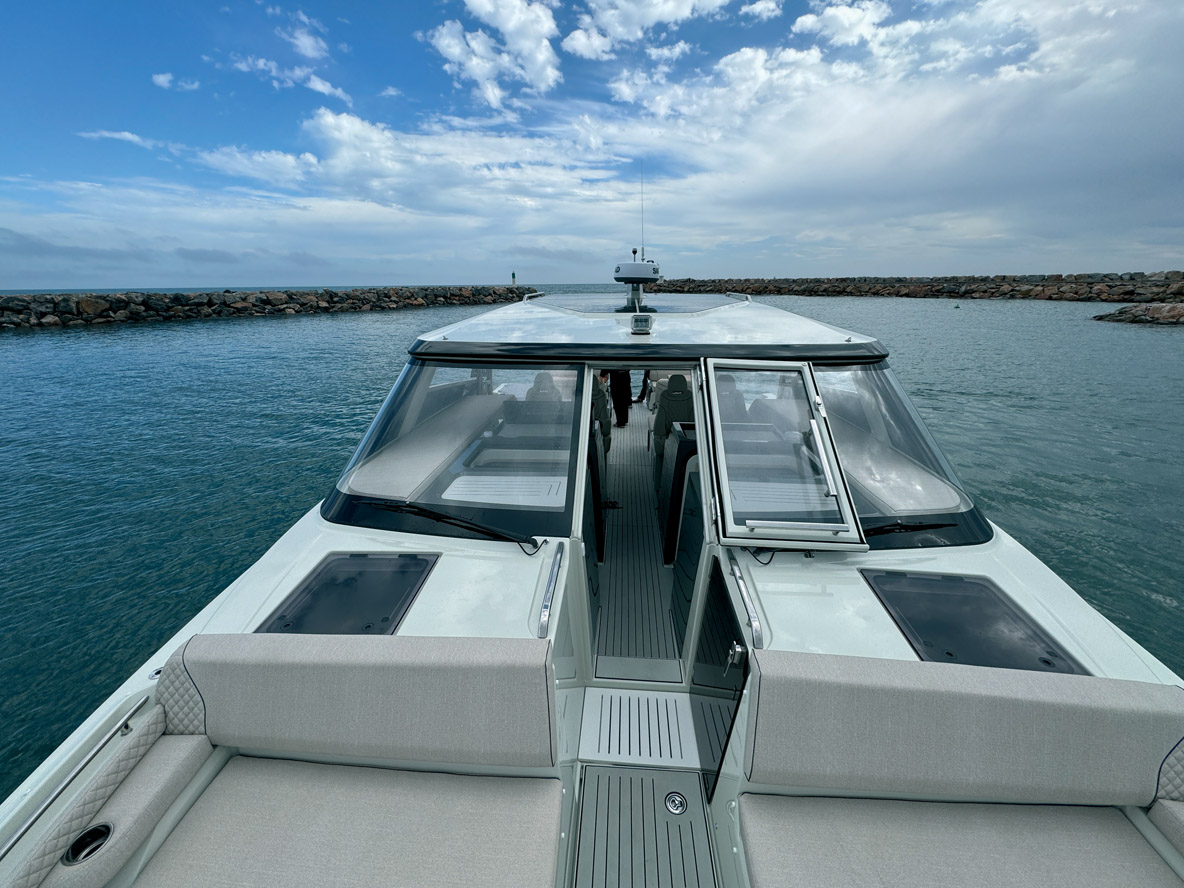
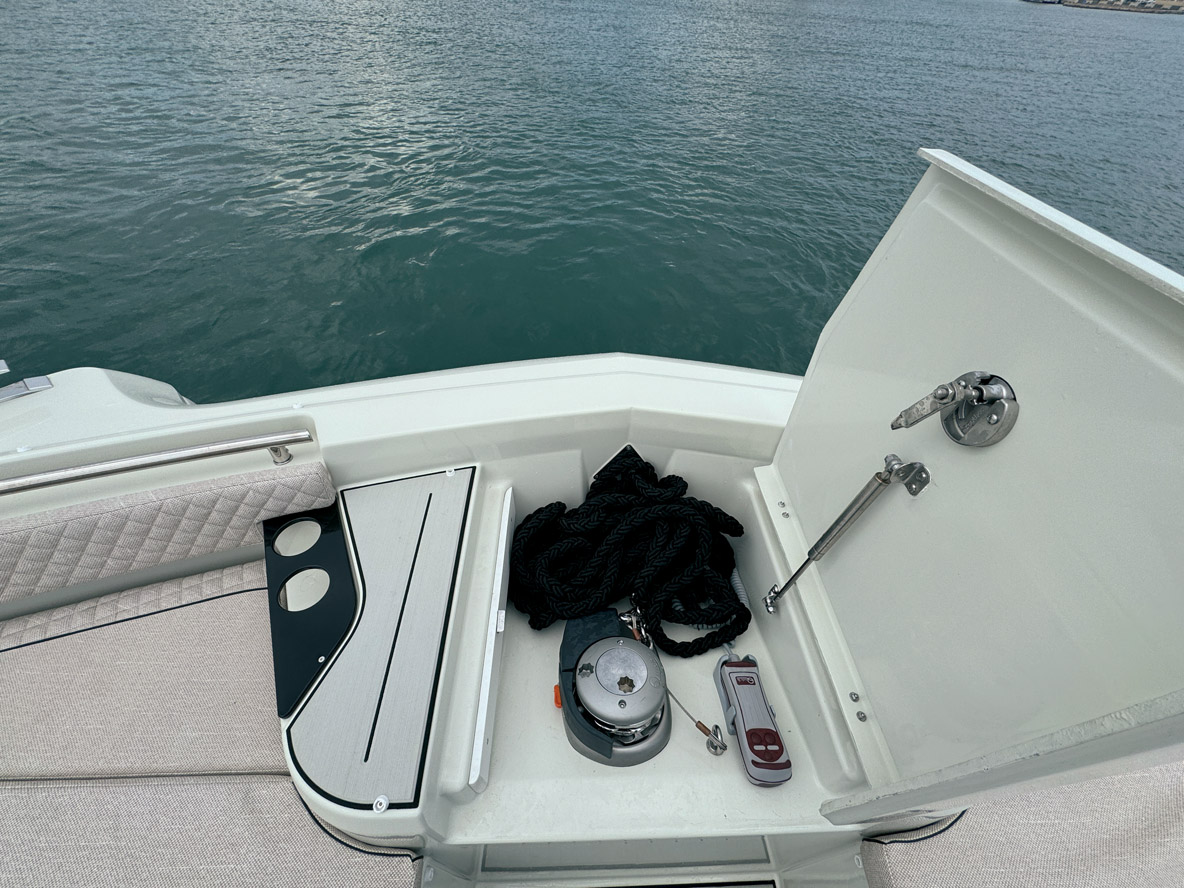
Heading through the nacelle, the perfectly straight circulation leads you to the foredeck. Under your feet, a cockpit drain that instantly evacuates any water you’ve shipped straight to the tunnel between the hulls - much safer than the small scuppers found on many daycruiser monohulls with a bowrider foredeck. This is the type of layout we’re taking advantage of here. In other words, there are still no traditional side-decks, only sunbathing areas accessible through the central cut-out. A light bulwark provides some protection, however. A stainless-steel handrail surrounds the entire space, with cup holders and storage compartments. In the bows, deep lockers are available, while above the tunnel, the opposite is true: a very long but shallow locker. In the center, at the bow, a locker that integrates the windlass and, just below, the chain locker. The builder has provided foredeck protection, as well as a system of canvas enclosures for the nacelle. An air cooling/heating system is available as an option.
Tunnel Effect: That wonderful air cushion!
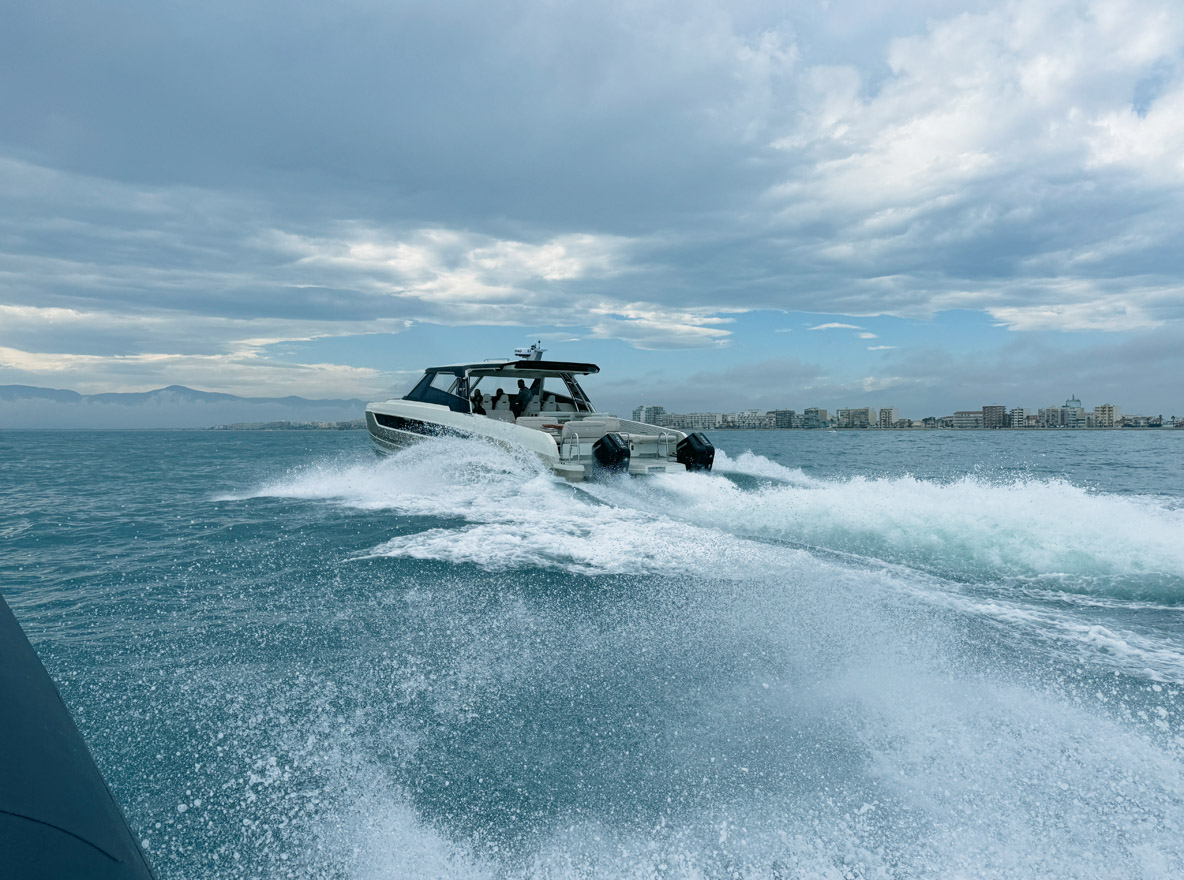
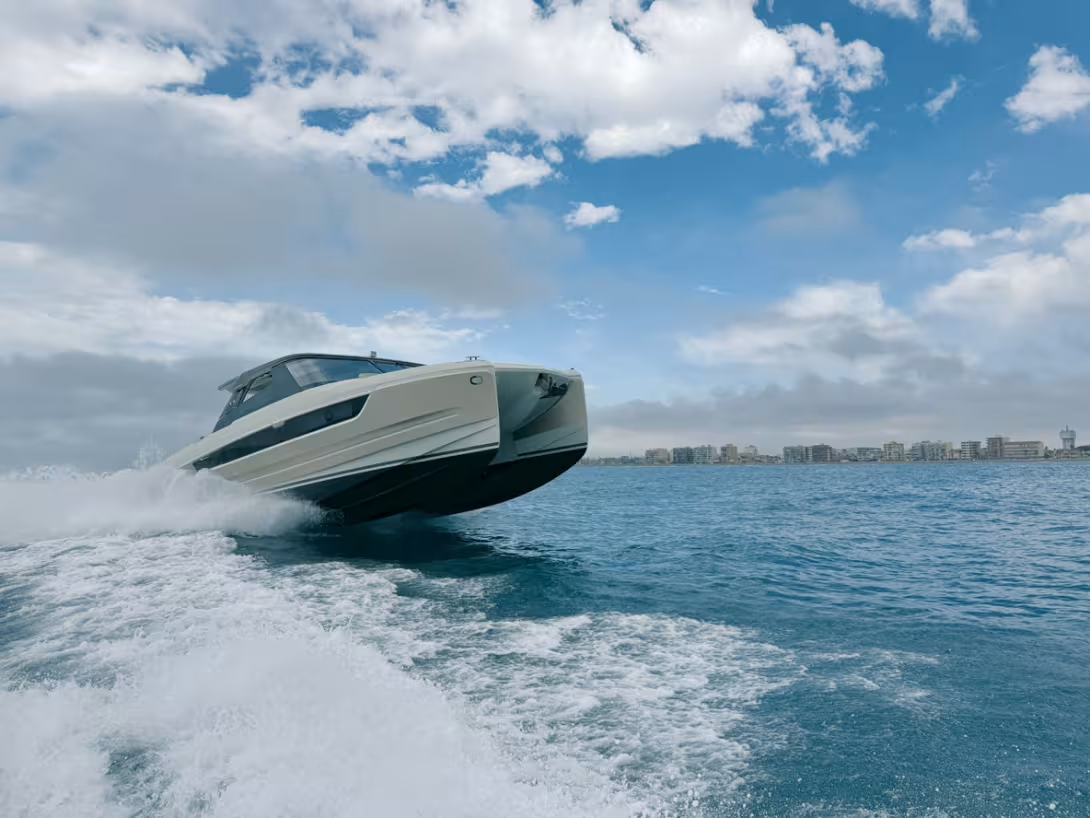
Port maneuvers become a simple formality with the joystick steering system: once out of Canet marina, the wind hadn’t yet picked up too much, but a swell was starting to roll in. Right from the start, the catamaran’s hull was easy to handle in the waves. What’s more, as soon as the Yot 41 settled onto the plane, at around 18 knots, the relatively narrow tunnel between the hulls acted as a shock-absorbing air cushion. If you’re above the anchor locker, you can even feel the air being pushed forward, and you can regularly observe the spray being curiously flattened in front of the bows.
The Yot 36 weighs in at 17,200 lbs (7.8 t) and can be powered by a pair of 300 HP outboards. Its bigger sistership, the 41, goes up to 26,450 lbs (12 t) and twin 400 HP motors, giving a very slightly higher power-to-weight ratio to the 36 and thus the smaller model gains the edge in terms of velocity and acceleration, though not necessarily in terms of top speed: in our test of the Yot 36 last year, we recorded 31 knots, while the 41 climbed to 36 knots.
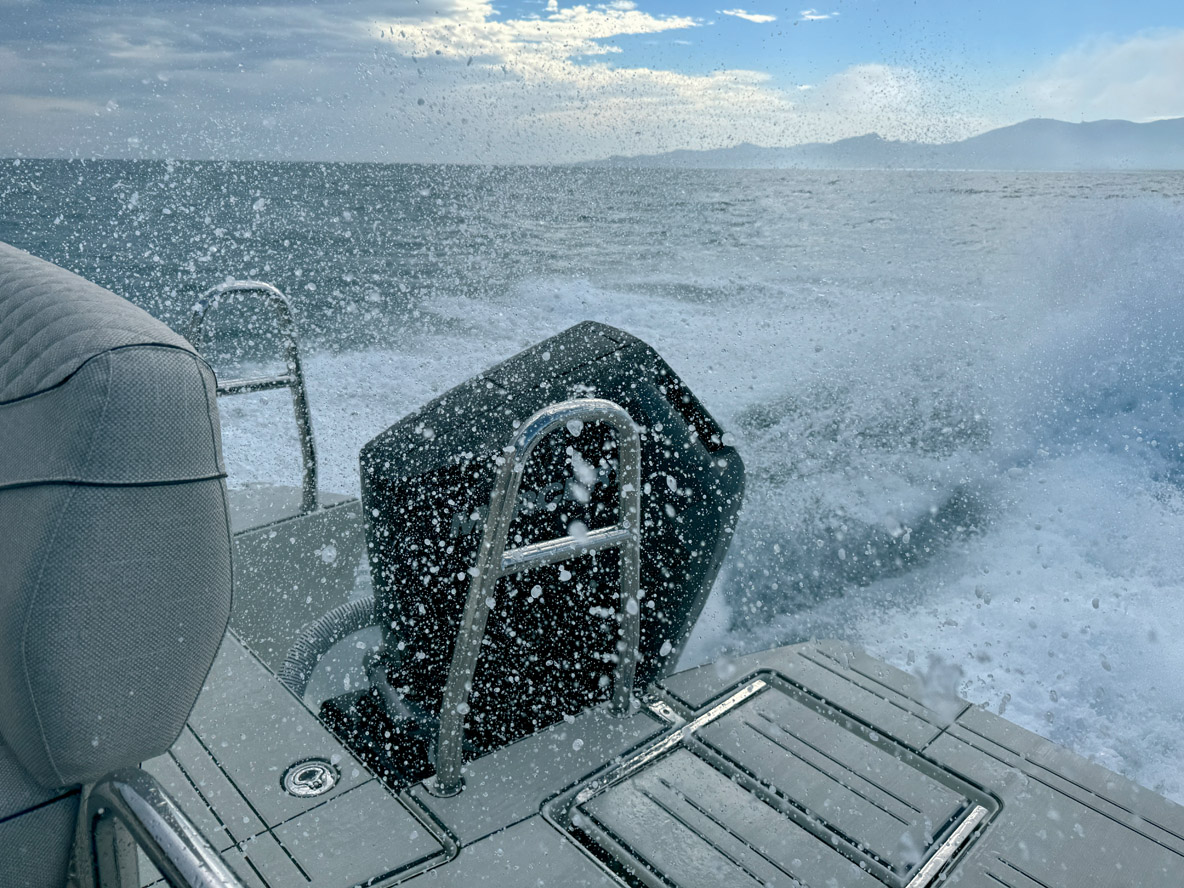
The hull’s numerous ribs already guarantee good structural rigidity, which is also “armored” by its meticulous construction. In fact, even heading into the waves at 30 knots, nothing flinched on board. The helmsman is perfectly wedged in his seat, and can operate standing up or sitting down, as he wishes, especially as the steering wheel is adjustable. The only drawback to the general layout is that the crew member on the helm’s starboard side is a little restricted when under way. At the after end of the cockpit, you’ll notice the occasional bit of spray coming over at high speed.
From the helm, the turns follow each other perfectly, with just a slight and reassuring counter-heel: the Yot 41 is always safe and reassuring.
Conclusion
Elegant, seaworthy and convivial, the Yot 41 lives up to its promise: this powercat will prove the perfect platform for a day or even a weekend out at the islands. The modularity of the cockpit elements (fold-down bulwarks, aft platform and bench seats that can be converted into sunbathing areas) perfectly complements the intimate foredeck and open, comfortable accommodation.
Last but not least, we’d like to highlight the online configurator, which lets you customize your Yot to your heart’s content, with the help of beautifully rendered, animated 3D images. There’s plenty of scope for indulgence, since this powercat can feature almost € 285,000 (ex-tax) in cumulative options...
Sexy design
Online configurator
No island beds
Forward door tricky to handle in bigger seas
Technical Specifications
Architects: J&J Design
Overall length: 41’3” (12.57 m)
Hull length: 38’11” (11.86 m)
Waterline length: 47’11” (14.6 m)
Beam: 14’9” (4.49 m)
Draft: 3’8” (1.13 m)
Displacement: 26,450 lbs (12 t)
Powertrain: 2 x 300/400 HP outboards
Fuel: 2 x225 US gal (2 x 850 l)
Water: 105 US gal (400 l)
Price: from €€475,000 ex-tax
Main options in € ex-tax:
2 x Mercury V10 400 HP outboards: 49,900
4 x 6 kWh lithium batteries: 47,500
Electronic navigation package: 29,500
Bathing platform: 23,500
Deck covering: 17,900
900 Wp Solar panels: 17,500
Cabin air conditioning: 14,500
Aft bimini: 13,400
JL Audio Premium system: 8,800
Complete set of protective covers: 7,900
Canvas cockpit enclosure: 7,500
Exterior mood lighting: 6,900
Carbon folding gangway: 4,950
Luxury Spradling upholstery: 4,500
Underwater lights: 4,320
Galley worktop: 3,900
Foredeck shade on poles: 3,600
Porthole blinds in cabins: 3,200
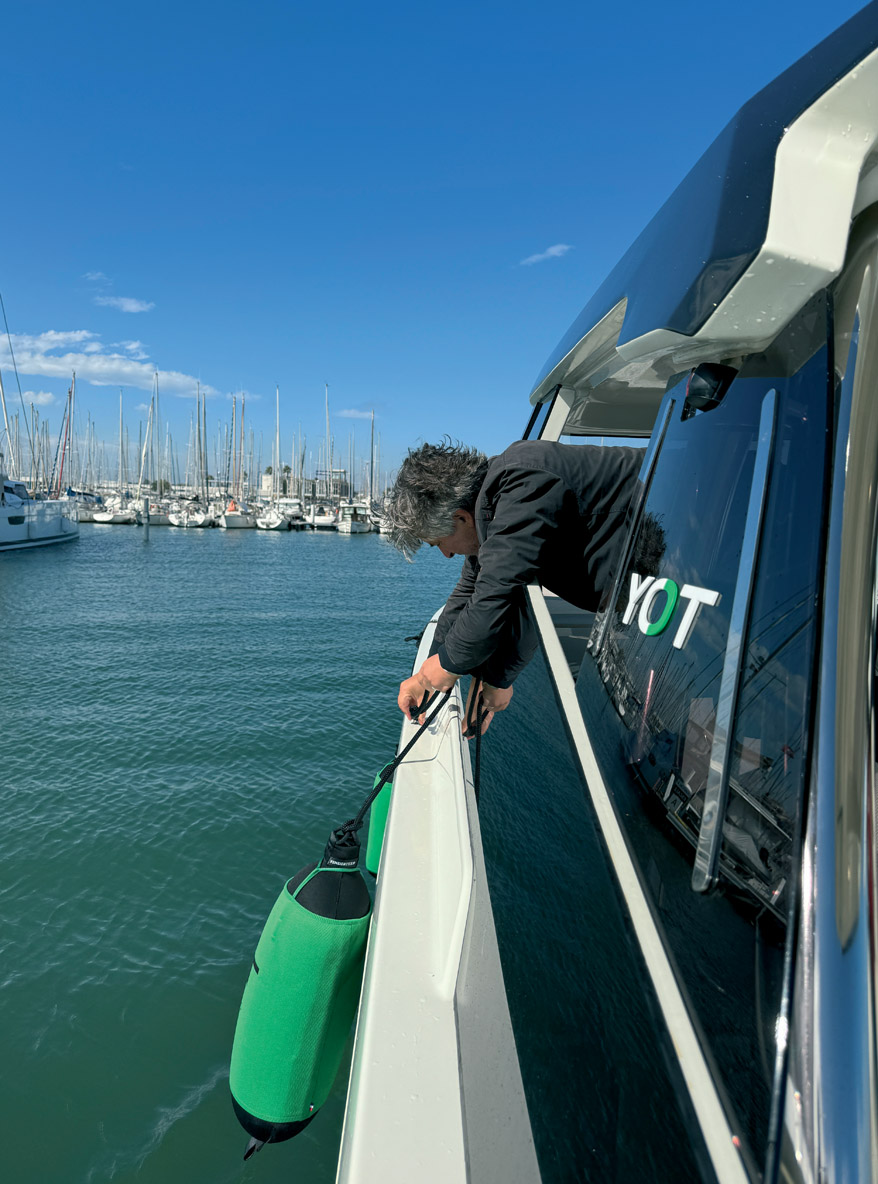
YOT customized fenders: 2,800
51 l (1.8 cu ft) drawer refrigerator: 2,600
220 V grill: 2,400
Lateral swim ladder on starboard bulwark: 1,980
4 vertical engine protection arches: 1,650
Water heater: 1,500
LED deck spotlight: 1,300
12 V air compressor: 650
2 towing cleats for water toys: 350