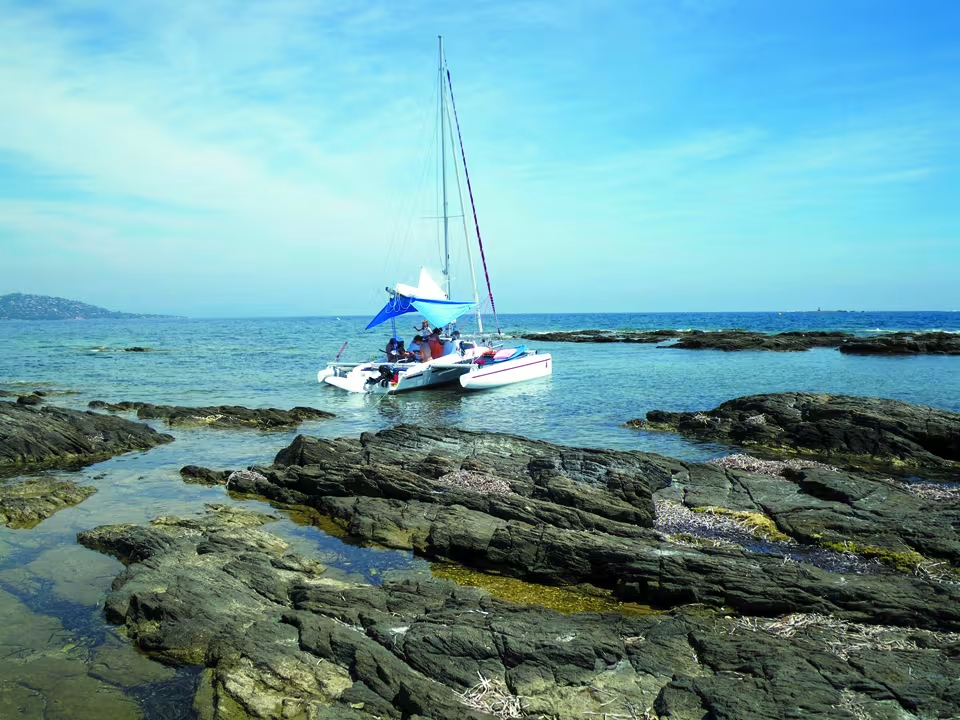
Launched in 2009, this model was the largest in the range. Her program? Coastal sailing and day trips with the family. With this in mind, the manufacturer focused on ease of handling and comfort of the central hull.
Infos pratiques
- Le chantier : Astus 22
- La fiche technique
- Découvrez notre vidéo exclusive
- Financez votre Astus 22
- Assuez votre Astus 22
- Articles autour du Astus 22
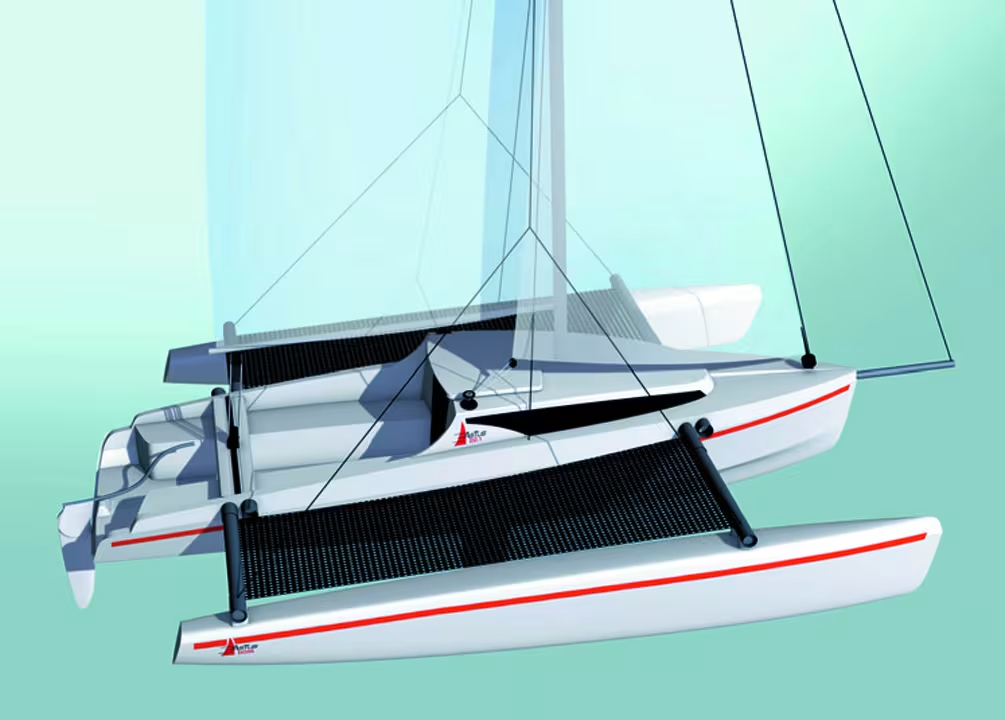
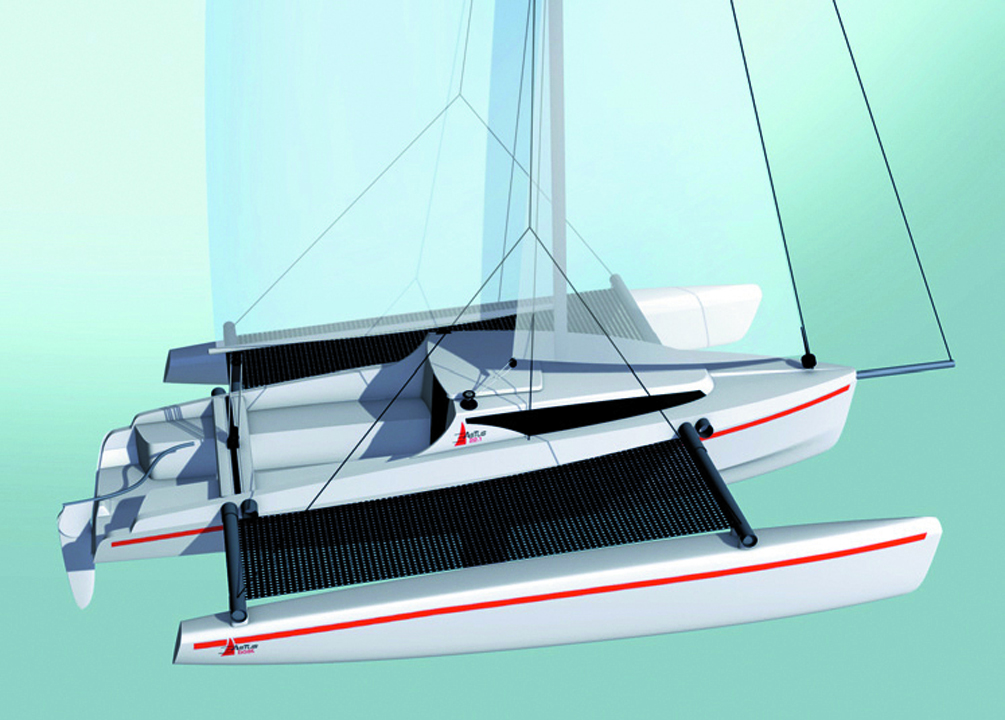
In production for just over 10 years, this model will soon be disappearing from the Astus Boats catalogue: the design of the 22 - named the 22.1 when launched - betrays its age a little. Up against its little brothers designed by VPLP (Van Peteghem and Lauriot-Prévost are undoubtedly the most famous naval architects in the world of racing multihulls) it even took a bit of a hit. But it was just the appearance: no inverted bows and a somewhat clumsy coachroof: the floats are still voluminous (900 liters/32 cubic feet) and the central hull keeps a moderate waterline beam - a pronounced tulip-shape allows more volume at the top. As for everything else, all the normal Astus features are to be found. Starting with the folding system…
Easy folding
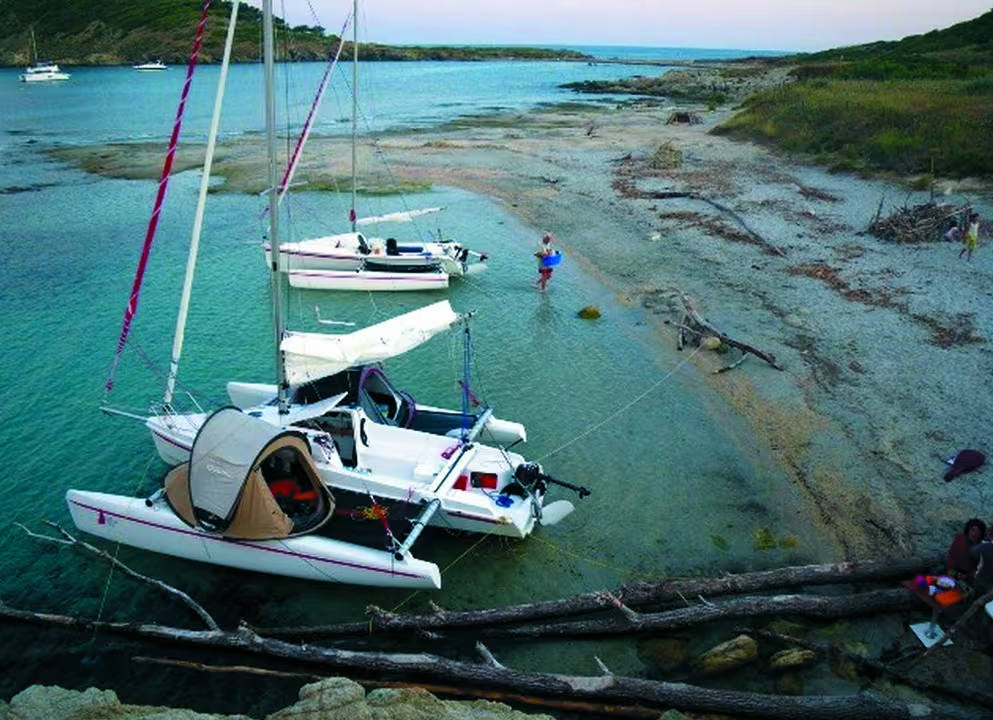
A very simple system: the link arms are inserted into the central hull to limit the width to 2.53 m / 8’ 4”. To achieve this feat, the aluminum tubes are cleverly offset: each one slides into a larger diameter tube. A pin system and a lateral guying system secure the assembly when under way. When folded, the Astus 22 remains maneuverable by engine, and the rigging also holds firm. The operation is carried out by two people; it requires only a few minutes (3 for each float), and the time to stretch out the trampolines. Of course, the tubes don’t have the elegance of composite arms, but they offer an efficient, reliable and economical alternative. It is possible, thanks to a cantilever attached to the mainsheet, to step the mast on your own. In two hours, two people can get the Astus 22 ready on its road trailer. This isn’t much for a week's sailing - but a bit too long just for a day trip.
A cockpit for four
A tight deck layout: this is often the criticism of smaller trimarans. The Astus 22 does quite well in this respect, since its 3-meter (10-foot) long cockpit easily accommodates four to five people. The only downside is that the helmsman is somewhat isolated aft of the beam and his view of the sailplan and the water is hampered by the coachroof, which is both high and wide. However, with a long tiller extension, you are able to sit well outboard. The sidedecks are narrow, but the 4 m² (43 sq ft) trampolines are perfectly usable: no problem to reach the foredeck. Overall, the Astus 22 platform totals 12.5 m² (135 sq ft). As for stowage, you’ve got an anchor locker and external lockers.
Lively under sail
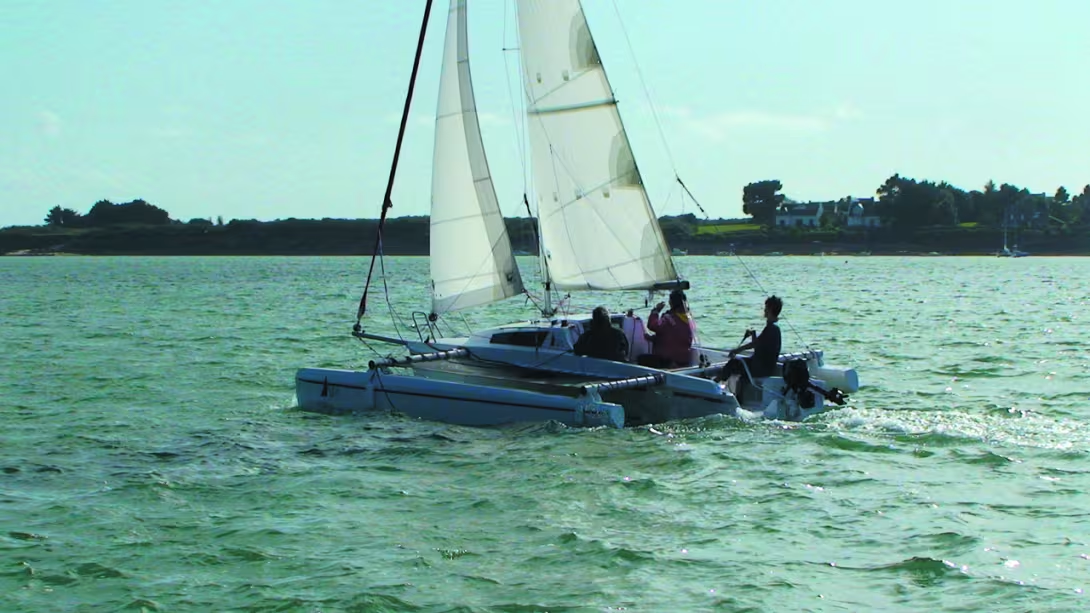
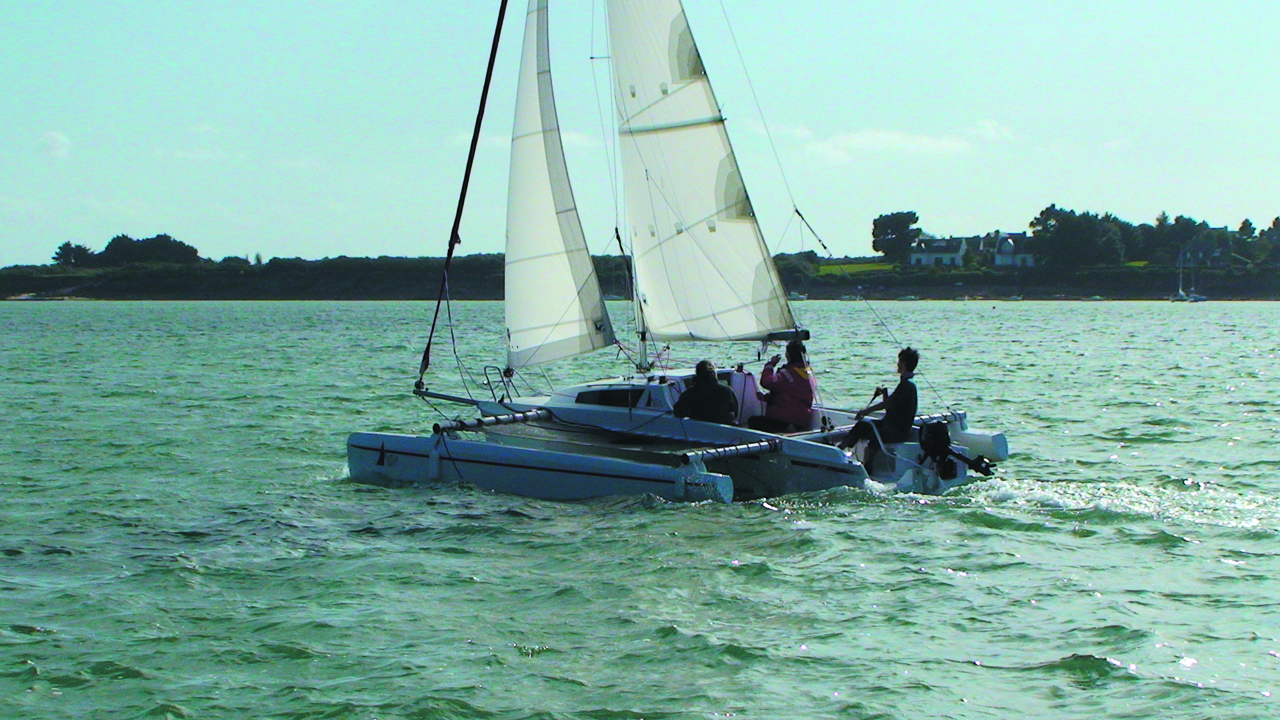
Light and rather well-canvassed, the Astus 22 has no difficulty in getting going in light airs - especially with the gennaker. Upwind, the two small daggerboards don’t provide extraordinary performance; raising the windward one can be beneficial as soon as your speed exceeds 6 knots. The maximum power of the engine has been set at 9 HP but a 2 or 3 HP outboard is more than enough for maneuvering in port or for days without wind. In a breeze, the 22 displays very healthy behavior: it’s capable of beautiful acceleration and even peaks at nearly 20 knots. The appendages, all pivoting, make it easy to beach.
Compact interior layout
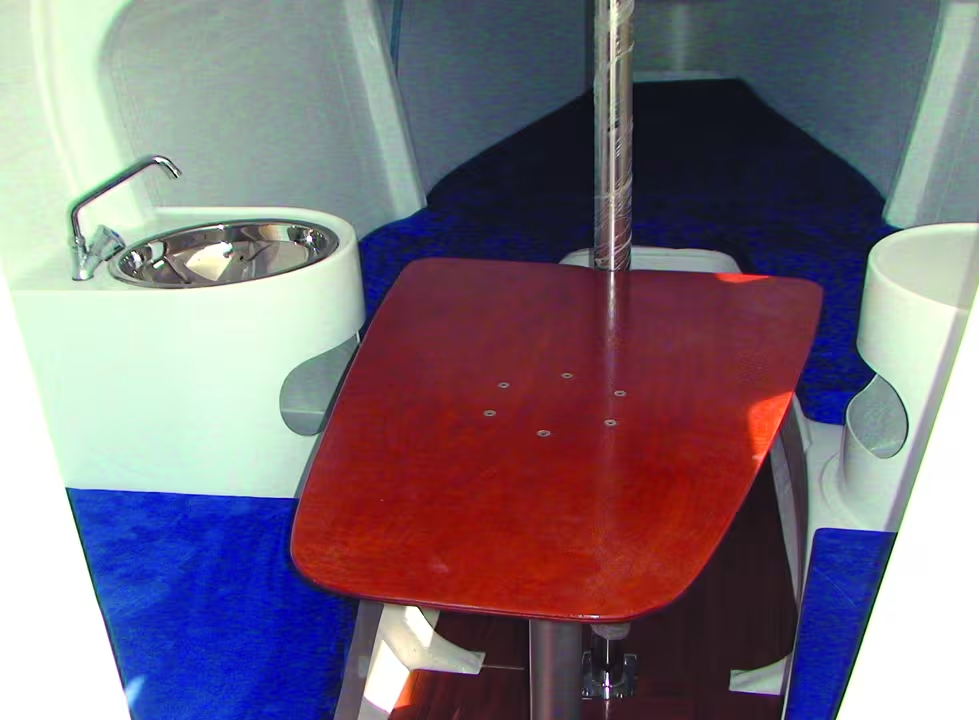
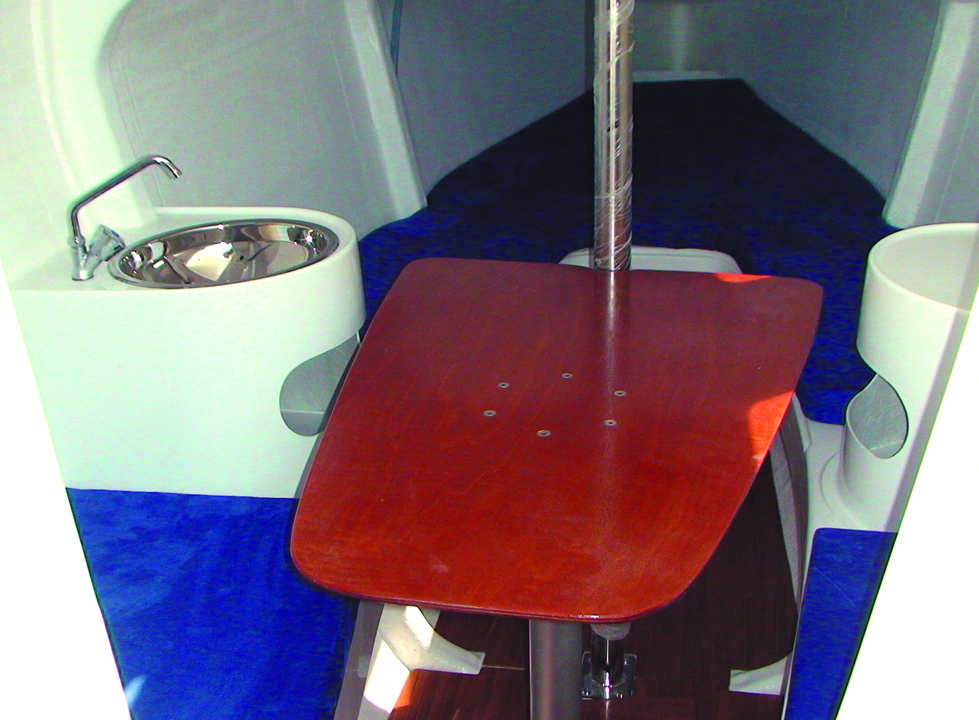
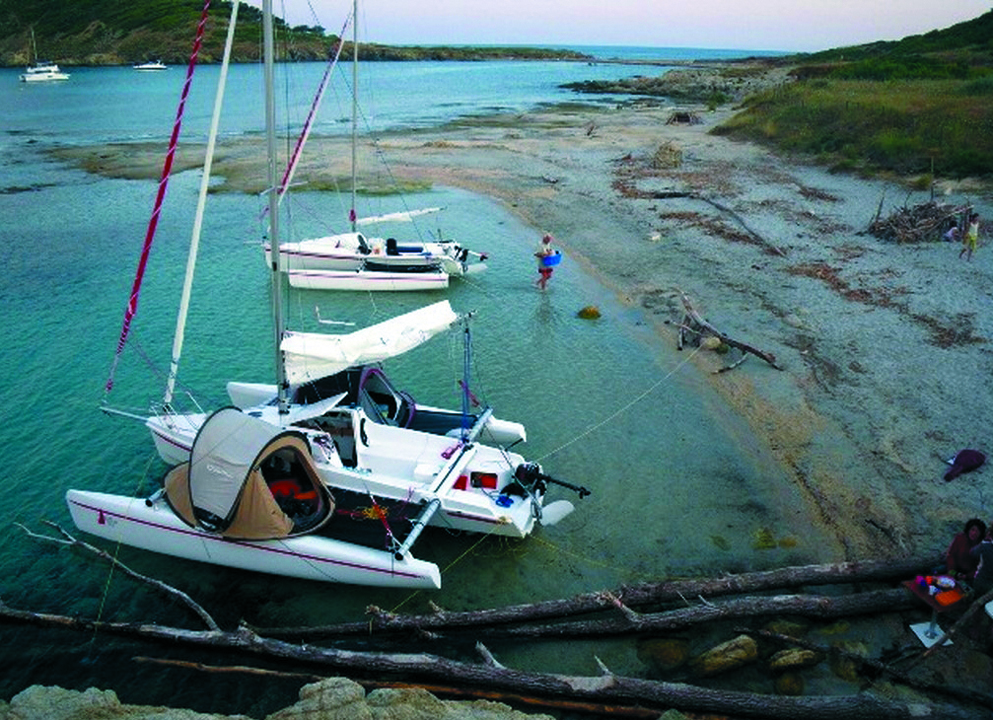
The saloon comprises two lateral bench seats; four people can sit, though the tallest of crew might have their head against the corner of the coachroof. The headroom is certainly reduced, but the companionway cover on struts, helps circulation towards the cockpit. Two side storage units can be equipped with a mini-galley. There is also large storage space beneath the cockpit. An opening panel provides welcome ventilation. At night, the forepeak turns into a double berth. But the maximum width at the head is limited to 1.20 m (4’). One possible solution for greater comfort: dome tents on trampolines!
Conclusion
The Astus 22 is undoubtedly one of the best comfort/price compromises on the second-hand market. She doesn’t have the look of a state-of-the-art racer, but the solutions proposed are relevant and reliable. Her ease of use makes it easy to winter at home. And with a trailer, you can discover some beautiful new cruising grounds!
Points to check:
The telescopic arm structure and system have proven their robustness; everything, even more than 10 years after purchase, has no play and remains functional. The same goes for the rather robust and well held rig. It is therefore rather "minor issues" that need to be checked, such as the lifting lines for the daggerboards, any possible play in the rudder blade, the condition of the sails, and of course the wheel-bearings and the braking system of the trailer - if the seller is offering that as well.
Pluses
Very easy to fold, step the mast and transport on the road
Efficient even in light winds
Attractive price
Minuses
The aft beam separates the cockpit in half
The coachroof obstructs the helmsman's field of vision
Narrow double berth
Technical specifications:
Builder: Astus Boats
Naval architect: Stephan Vallet
Material: infused polyester
Overall length: 7.95 m (26’1”)
Hull length: 6.65 m (21’10”)
Beam: 2.53/4.60 m (8’4”/15’1”)
Displacement: 665 kg (1,470 lbs)
Draft: 0.32/1.30 m (12”/4’3”)
Mast height: 9.60 m (31’6”)
Mainsail: 19 m² (205 sq ft)
Genoa jib: 9 m² (97 sq ft)
Gennaker: 25 m² (270 sq ft)
Cabins: 1
Max engine power: 9 HP
CE category: C5/D7
Production: 37 units built since 2009
Second-hand price: from € 20,000 ex-tax