
With 300 units built over more than 20 years, the F-31 is undoubtedly one of the most remarkable 30-foot (9 m) trimarans on the market. For a long time seen as overpriced, this foldable and transportable little rocket is now much more accessible.


Infos pratiques
- Le chantier : Corsair F 31
- La fiche technique
- Découvrez notre vidéo exclusive
- Financez votre Corsair F-31
- Assuez votre Corsair F-31
- Articles autour du Corsair F-31
This is a trimaran that hasn’t aged: her design is still in tune with the times, with an elegant coachroof and fine, racy hulls. This model is an adaptation of the F-9, intended for amateur construction. “Home-building” small trimarans has always been very popular in Australia – and it still is today. Like many models that have enjoyed a long career, the F-31 is available in a variety of versions. The best known are the C for Cruising, and the R for Racing. Between the two, a difference in sail area provides extra horsepower in light airs. When Ian Farrier and Corsair went their separate ways, this model continued her career under the name of the Corsair 31. The C model became the CR and the R version adopted the name RS. A carbon rig was offered, then later there was a one-design series (1D or One Design). Corsair also developed a central cockpit with an aft cabin: the CC model.
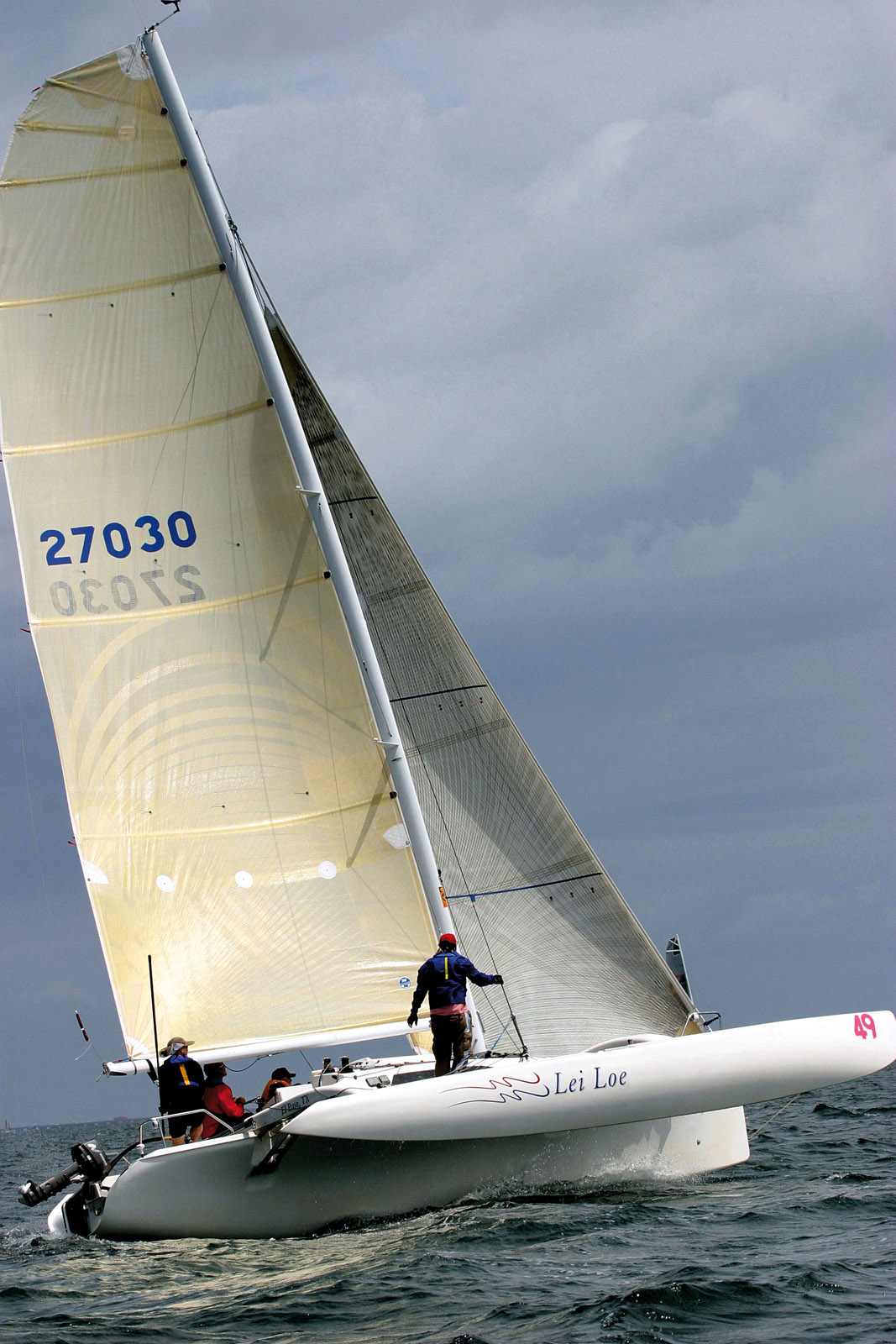
Sailed well, the F-31 will always be a formidable opponent in a race.
For speed enthusiasts
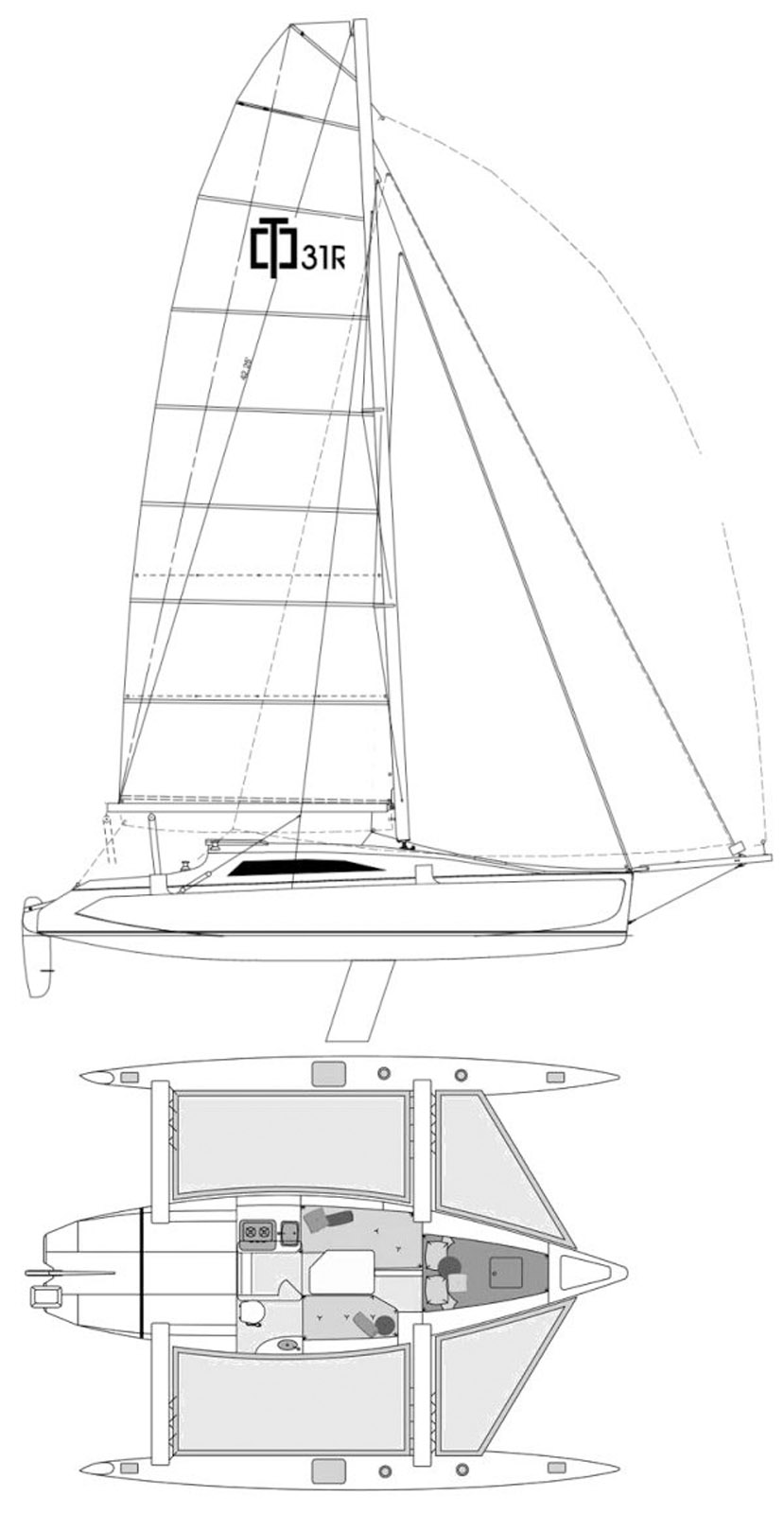
As soon as the sails are hoisted and trimmed, it’ll only take you a moment to figure out the character of the F-31: this is indeed an excellent boat, above all built for performance. For the appendages, there is a deep daggerboard for upwind sailing and a long (liftable) rudder with a high aspect ratio for optimum course-keeping. Anyone familiar with the F-27 will feel at home, except that the 31 obviously offers an even greater potential, with average speeds often between 12 and 16 knots. The most sportily sailed units can even exceed 25 knots. The appeal of the 31 is down to this ability to go fast. An extended mast and a square-topped mainsail would allow you to sail even quicker... but an ordinary sail configuration already has extraordinary possibilities.
The limited size of this trimaran would generally lend it to coastal use but many crews have ventured into ocean crossings.The only limiting factor being the load capacity, which is very limited here.
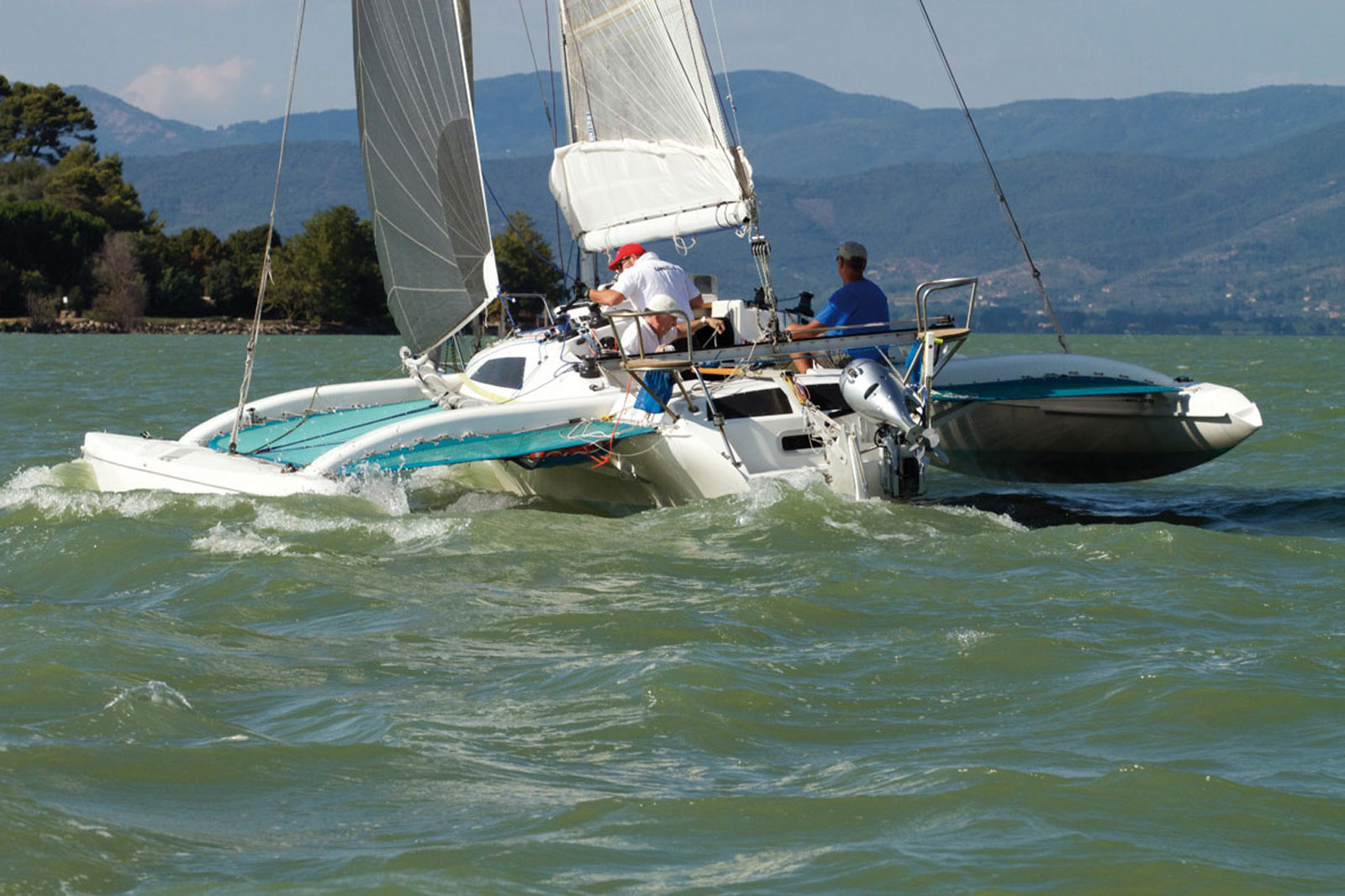
The CC version is recognizable by the hatches of the aft cabin.
Access via the trampolines
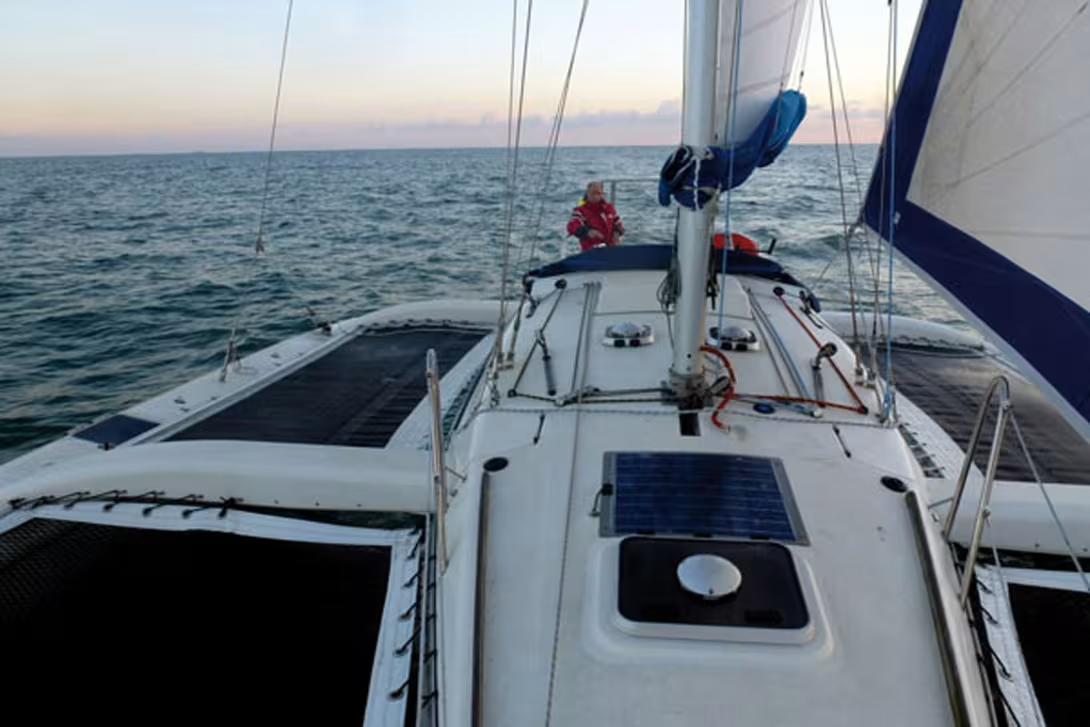
Narrow at the waterline, the central hull of the F-31 is also narrow at deck level, which doesn’t bode well for comfort... the cockpit is therefore all length. The helmsman has a long tiller extension so he can position himself out on the windward float. But he’s hampered by the imposing mainsheet traveler. They’re not so easy to maneuver single-handed without the assistance of a good autopilot. The CC version, meanwhile, has the traveler above the tiller. At the stern, this obviously only allows for “minimum” access to the water or the tender. The raised coachroof doesn’t leave any sidedeck space: you either climb over the superstructure or use the trampolines. Once you’re used to the famous nets, the F-31 becomes much more enjoyable - provided the conditions and/or weather remain mild. The famous folding system developed by Ian Farrier makes it possible to reduce the beam from 22’5” (6.84 m) to 8’2” (2.50 m), making the F-31 road-transportable. Note that when hauled out, you’re recommended to have the trimaran craned and stored “unfolded” to maintain decent access to the underwater hulls.
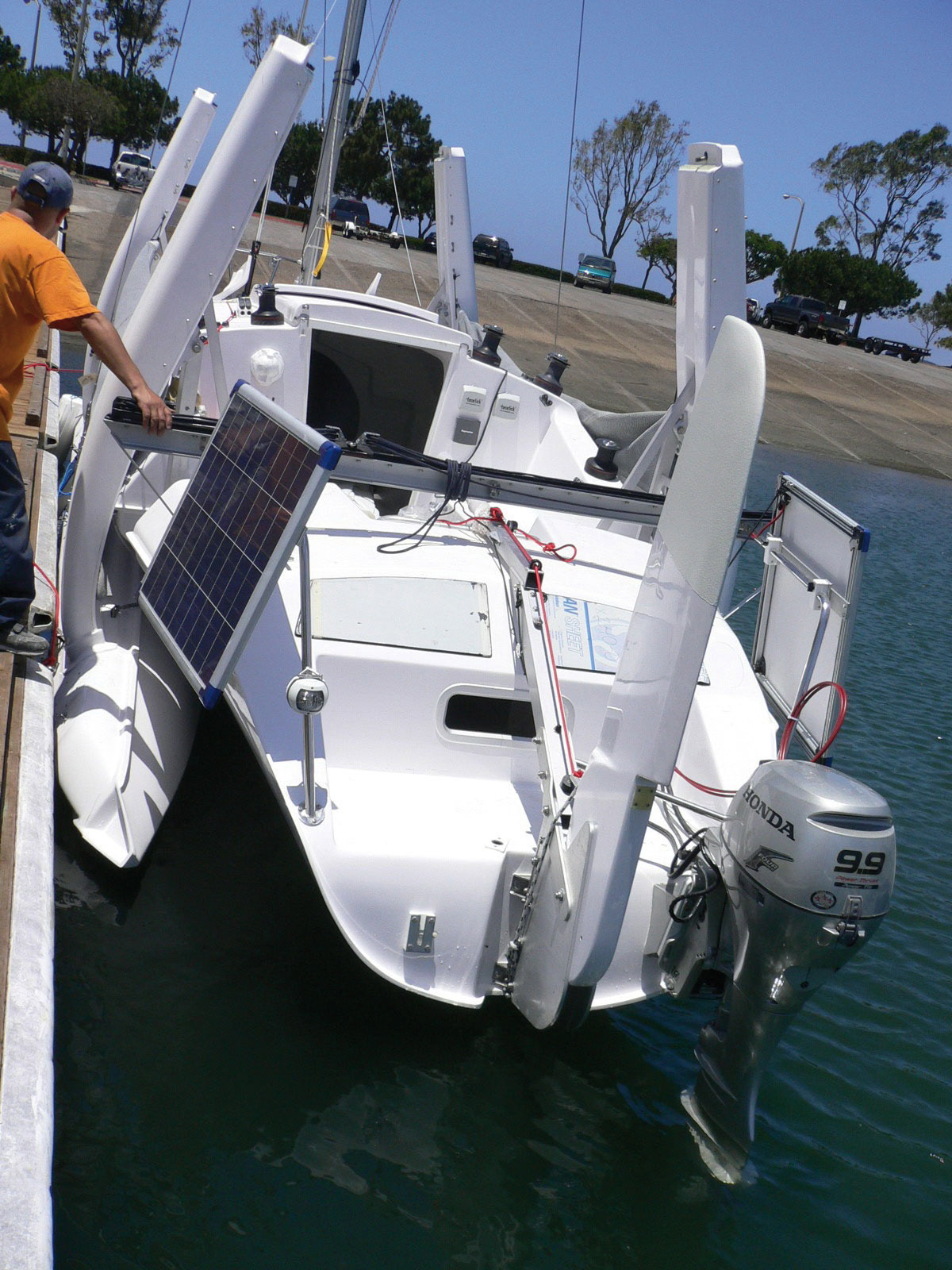
From a beam of 22’5” (6.84 m) to 8’2” (2.50 m) in only a few minutes: practical, eh?
Limited volume
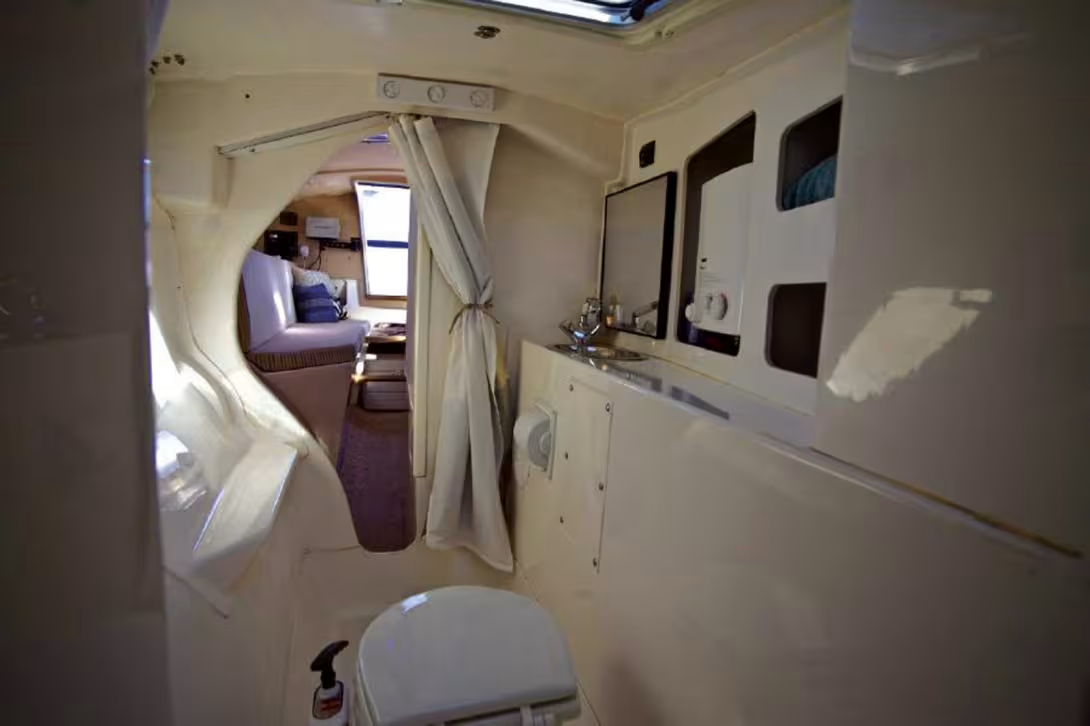
Though there were some variations to the layout over the years (heads in the bow, next to the daggerboard well, or near the companionway) one constant remains: on board the 31, the volume is limited, as is the width of the berths! The CC version still brings a bit of extra comfort - and above all a bit more privacy. For the rest, the saloon is fitted with a removable table to clear the way and the manhole to access the forepeak requires a certain amount of flexibility: the finish here is rustic, contrasting with the quality of the gelcoat on the outside.
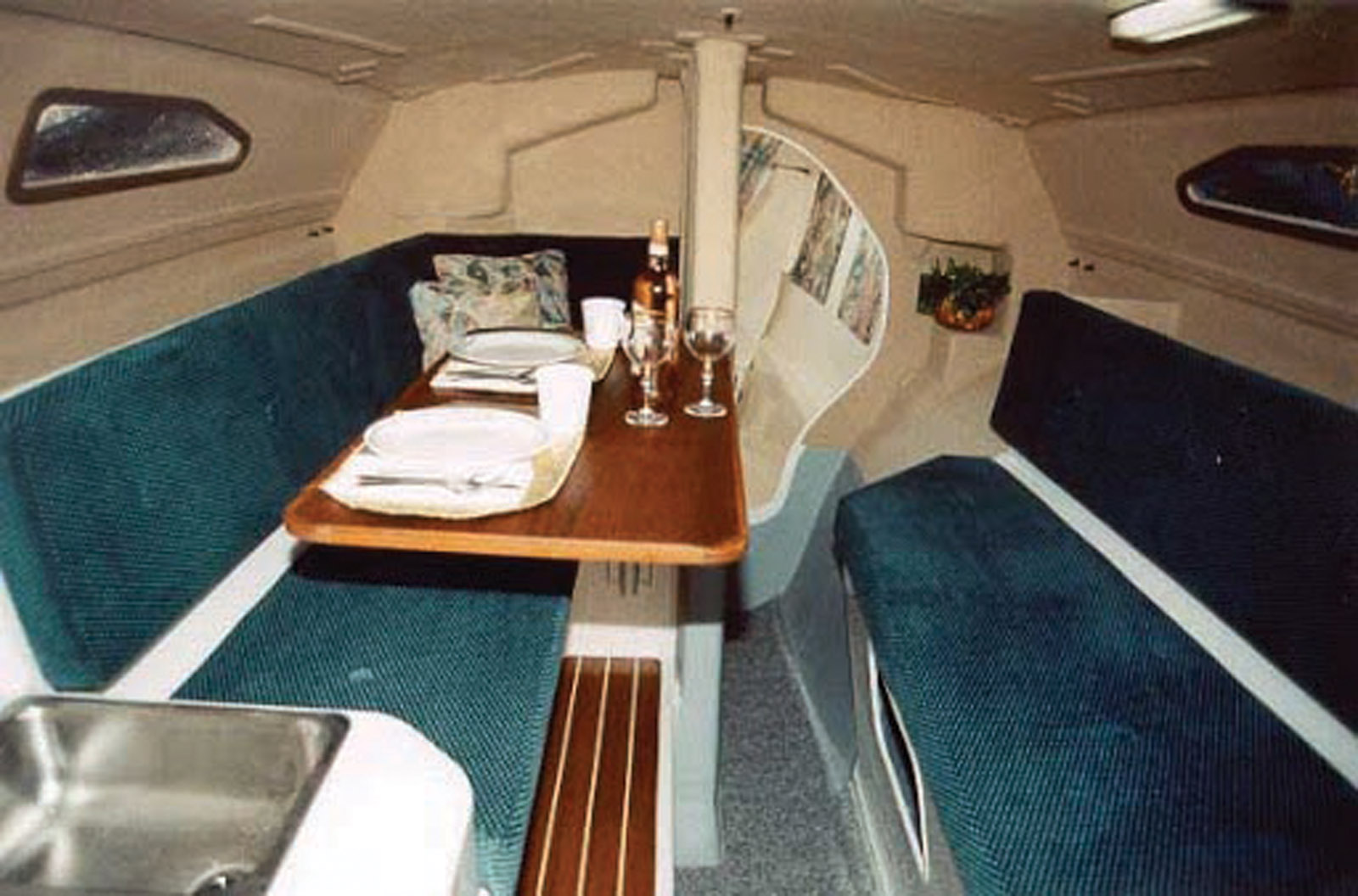
The interior layout is basic but still compatible with cruising.
Conclusion
Fast, elegant, but rustic. That’s how I’d sum up in a few words the personality of this F-31. An endearing trimaran, perfectly at ease whether racing or coastal cruising. All at an affordable price. So how can you resist?
TECHNICAL SPECIFICATIONS
Builder: Corsair Marine
Architect: Ian Farrier
Hull length: 30’10” (9.40 m)
Waterline length: 27’ (8.23 m)
Beam: 22’5” / 8’2” (6.84/2.50 m)
Draft: 16” / 5’6” (0.4/1.68 m)
Displacement: 3,750 lbs (1,700 kg)
Upwind sail area: 643 sq ft (59.70 m²)
Genoa: 215 sq ft (20 m²)
Mainsail: 427 sq ft (39.7 m²)
Gennaker: 990 sq ft (92 m²)
Engine: 10 to 20 hp outboard or a diesel engine
Construction: PVC/glass/vinylester sandwich with carbon reinforcements
Number of units built: Approximately 310 from 1992 to 2013
Price: From $ 70,000 ex-tax
The Pluses
+ Exceptional performance
+ Beam limited to 8’2” (2.50 m) when folded
+ Aft cabin version
The Minuses
- Limited comfort
- Narrow cockpit cut in half by the traveler
- Low load capacity
POINTS TO CHECK
Corsair construction is recognized as one of the best on the market. The brand’s afficionados are also attached to the remarkable work of the late naval architect, Ian Farrier. As a result, many of them recommend the model-years where Ian was at the helm of his yard. i.e. pre-2000. In practice, all owners are generally very satisfied with the reliability of both the F31 and the Corsair 31. The ingenious folding system has proven to be robust: at most, the odd tube or pin will need to be changed. Ultimately, it’s the usual “consumables” that you’ll need to look at: sails, engine, rigging... and not a lot more than that really!
