
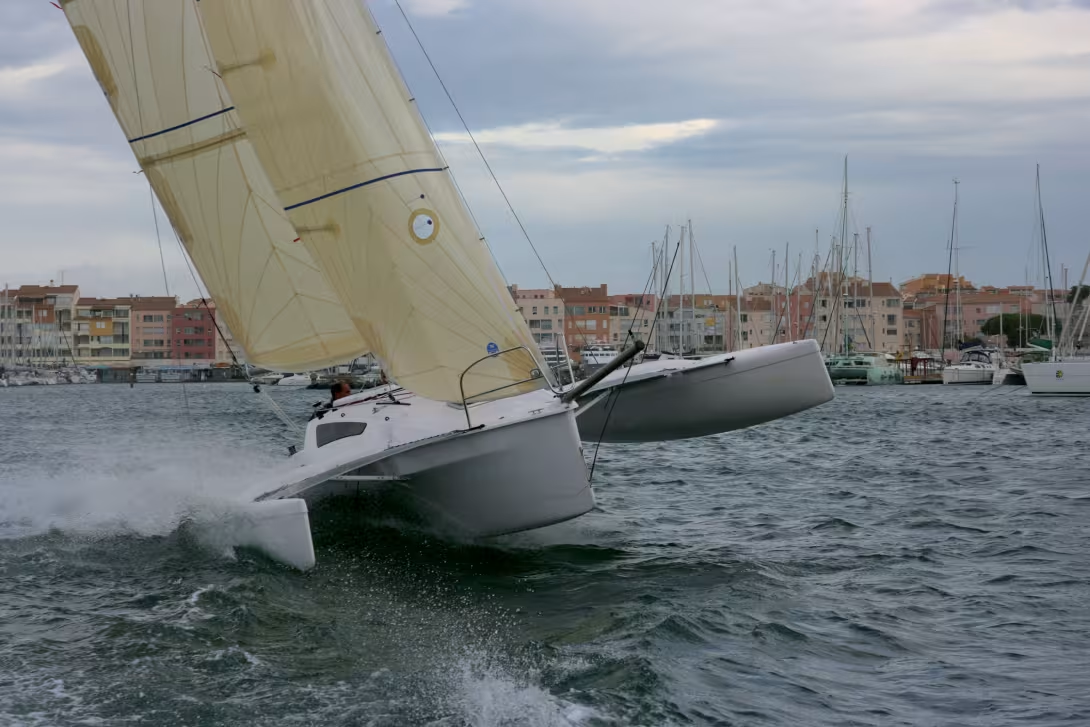
Successfully evolved from the Corsair 24, the Dash 750 is an incredibly attractive little trimaran which still cuts it. On the water, the log screams with top speeds of 20 knots, all without heel, obviously, and without stress… An amazing machine!
Infos pratiques
- Le chantier : Corsair Dash 750
- La fiche technique
- Découvrez notre vidéo exclusive
- Financez votre Dash 750
- Assuez votre Dash 750
- Articles autour du Dash 750
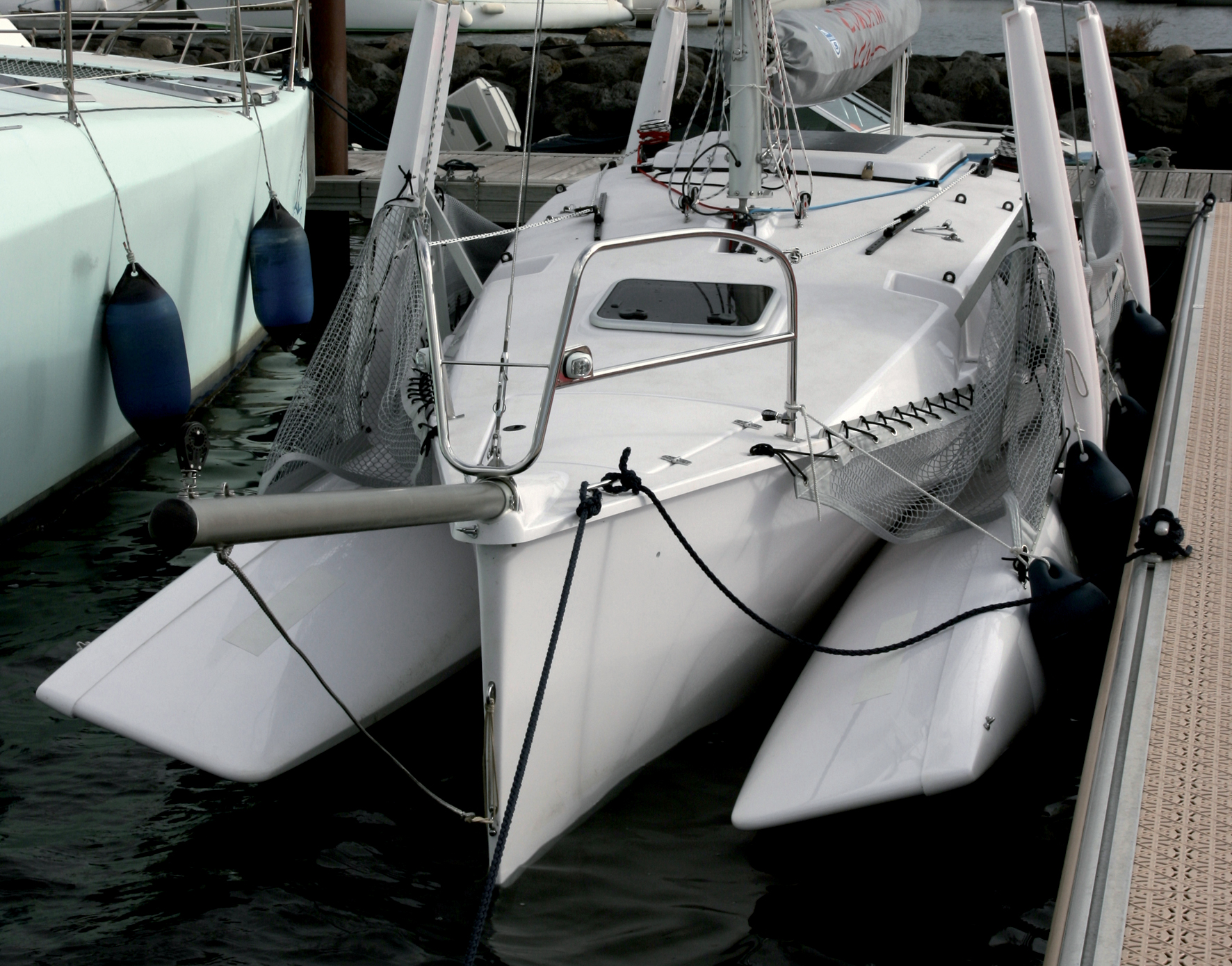
Since the launch of the Corsair 24 in 1992, the yard has built no less than 700 trimarans of this size. Here’s the quick version of the backstory: The Corsair 24 MKII was launched in 1998, followed by the Sprint - a more streamlined version, but featuring more basic accommodation - in 2006. The more modern Dash 750 that we are interested in, was first seen in 2009. This was followed by the Sprint MKI in 2011, before a new Dash deck layout (the MKII in 2013). This model was replaced in 2017 by the Dash 760 - it is easily recognized by the inverted bows of the floats. A higher performance version, the 760R, was launched in 2018. The common feature of all these models is a system of folding the floats that allows you to slip into a standard berth and transport the boat by road without the constraint of a long and tedious disassembly.
A well-built and functional trimaran
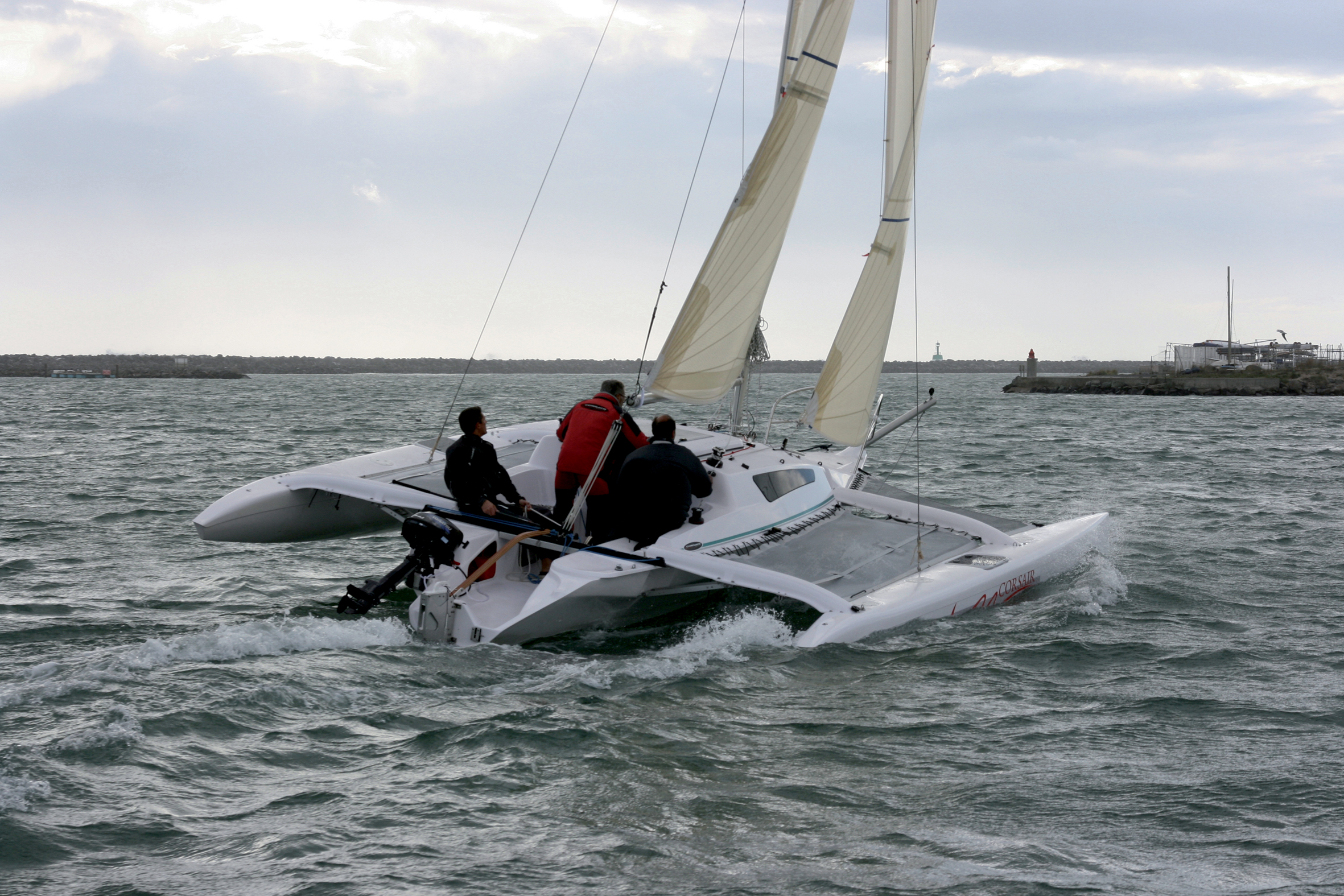
The hull and deck are made of fiberglass with a PVC core: certainly the best compromise in terms of strength, lightness and ease of repair. The folding system, used since the very first models the yard produced, is perfectly operational and optimized. As for the appendages, the design team opted for a daggerboard in the central hull. Again, this is the simplest formula for obtaining the best performance when beating – optimum elongation and no drag in the well. As for the rig, the yard went for a rotating aluminum mast to improve the efficiency of the mainsail. It requires no crew-input as the mast moves by itself. As a result, the halyards remain on the profile, as with a traditional rig. Fiber shrouds were used to save weight, with the original wire forestay being switched to fiber as well later on. Sail-handling maneuvers combine a subtle blend of modern and traditional: the self-orienting mast is paired with a roller boom, which is very practical when getting the rig down, though reefs still have to be taken in the traditional manner after having rolled the boom. Deck hardware is all-Harken.

Well-designed, but a rather exposed deck layout
The width of the cockpit is modest, but the narrow coamings allow for fairly wide seats. This cockpit is equipped with four large stowage slots which are always accessible. A locker is fitted in each float. Under sail, the helmsman holds the tiller extension and is sat right in front of the big traveler. Beware of the relatively low boom. The coachroof is wide, and the cockpit quite deep. It doesn’t feel particularly exposed, even in a good breeze, and any seas coming over the top end up more often than not over the leeward float. That is, until a poorly negotiated wave offers the crew a copious seawater bath... To reach the foredeck, which is surrounded by an imposing pulpit, there are two options: climb across the coachroof, or use the trampolines. At the bow, there is an anchor well, but no bow-roller. A lightweight aluminum anchor and leaded rode is the preferred choice for avoiding damage to the polyester deck. For mooring, there are two well-placed cleats forward, two padeyes aft, and two other attachment points possible on each float. For swimming and access to the beach, there is a small bathing ladder attached to the narrow transom.
Exhilarating at the helm
With its non-overlapping jib with sheeting points set well aft and deep daggerboard, the 750 has all the assets needed to ensure an excellent course upwind. The helm is soft, precise and effective: no risk of missing a tack and the boat pivots perfectly around its deep daggerboard. The readings during our test: we tacked through 90°, and were making 8 knots on the GPS in a Force 2-3. Over 20 knots, if the water is flat, you can gain one or two knots more. With sheets eased, watch out for the turbo effect! Leaning just nicely on the leeward float, the Dash accelerated to well over 10 knots - with peaks of 20 being achievable. The strongest gusts result in a slight heel before pitching back. A very healthy type of behavior. Intentionally over-canvassed during our test, we never feared finding ourselves on the coachroof. The square-topped mainsail very effectively discharges the extra power. Against the chop at full speed, the Dash barely pitches and pulverizes any big seas. Given its light weight, a 5 to 6 hp (or electric) outboard is more than enough. The engine controls are easily accessible to the helmsman. Playing with the engine’s tiller and the rudder, you can place the boat anywhere you want. The key is to be aware of the size: at 5.60 m in the beam, it's not to be taken lightly!
Chines and opening coachroof!
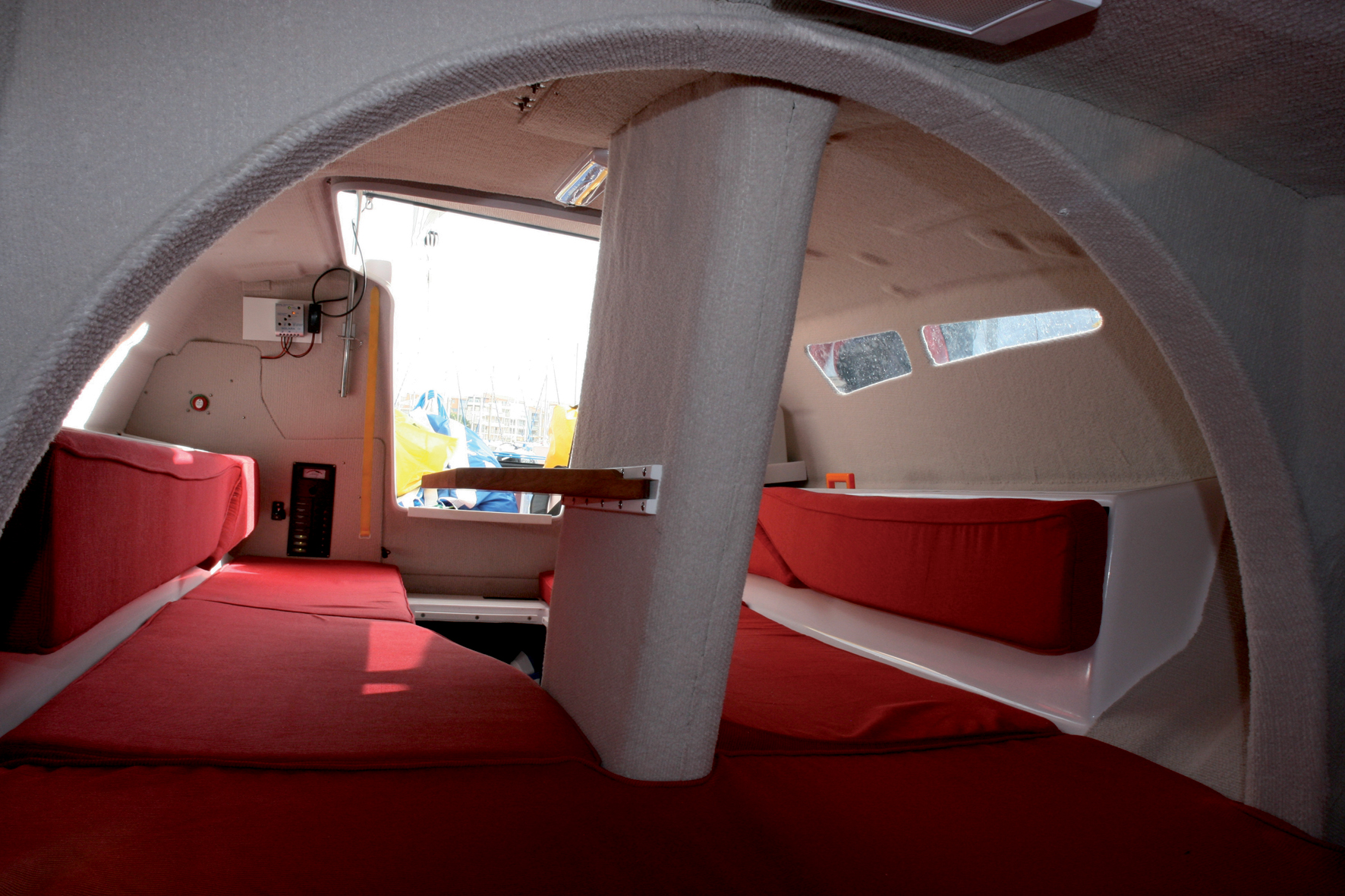
Access to the interior is easy thanks to the very wide companionway and the single step. The impression of volume is rather good thanks to the chines of the central hull, marked at the level of the bunks. The finish is clean and neat, with upholstery in red, blue or green and gray or beige carpeting. The saloon is all length, but ultimately is very functional with a table measuring 80 cm by 42 which can be inserted on the daggerboard well. This also doubles as the chart table. The yard has designed an ingenious lifting roof with the sliding hood being raised on two hinged rails. The headroom then increases from 1.52 to 1.92 m. This is the big plus of this model... The MKII version adopts a deckhouse which slopes evenly towards the bow, allowing more volume forward. As for storage, there are two lockers beneath the benches and storage shelves along the sides. Come bedtime, you can take advantage of the two benches in the saloon and a double berth nestled in the bow. The width is reduced to 1.20 m at the head, but it is still 2.30 m in length. To use this bunk, you need to extend the bowsprit. As for the galley, it slides under the cockpit, to port. It includes a stove, a sink and a 20 liter flexible water tank.
Conclusion
This little speed machine isn’t inaccessible in terms of use: the Dash 750 can indeed accommodate a family for a few days’ cruising ... but also racing. However, performance addicts will no doubt be tempted by the Sprint version, which sacrifices the accommodation to reduce the displacement even further.
POINTS TO CHECK
In normal use, the Dash 750 will prove to be a very reliable trimaran - and they are still very recent. Possible problems can occur due to shocks or handling errors, especially when the boat is in the folded position. Jay Nolan, Sales and Marketing Director Europe of Corsair Marine, recommends first of all checking that there is no play in the folding system and that it is properly functioning. In detail, inspect the mechanism - rings, struts, joints. Other points to check: the shrouds if they are in fiber, the condition of the daggerboard and its well, and finally the condition of the carpets inside - they can be prone to mold in very damp environments. All other materials used are of good quality, and the structure is sturdy. A guarantee for long-term enjoyment of this beautiful three-legged machine.
The plusses
Performance and fun at the helm
Proven folding system
Very successful design
The minuses
Floats and beams exposed when folded
Price remains high, especially in Europe
Daggerboard exposed in the event of a grounding
TECHNICAL SPECIFICATIONS
Builder: Corsair Marine
Naval architect: Corsair Marine
Construction: Glass/PVC sandwich
Hull length: 7.40 m - 24’3”
Waterline length: 7.35 m - 24’ 1”
Beam: 2.5/5.6 m - 8’ 2”/18’ 4”
Draft: 0.3/1.65 m - 12”/5’ 4”
Displacement: 850 kg - 1,874 lbs
Upwind sail area: 39.8 m² - 428 sq.ft
Mainsail: 24.4 m² - 263 sq.ft
Genoa: 15.4 m² - 166 sq.ft
Spi: 58.3 m² - 628 sq.ft
Motor: 6 hp outboard
CE Category: C
Production: around 200 examples from 2009 to 2017
Second-hand price: from € 24,000 ex-tax