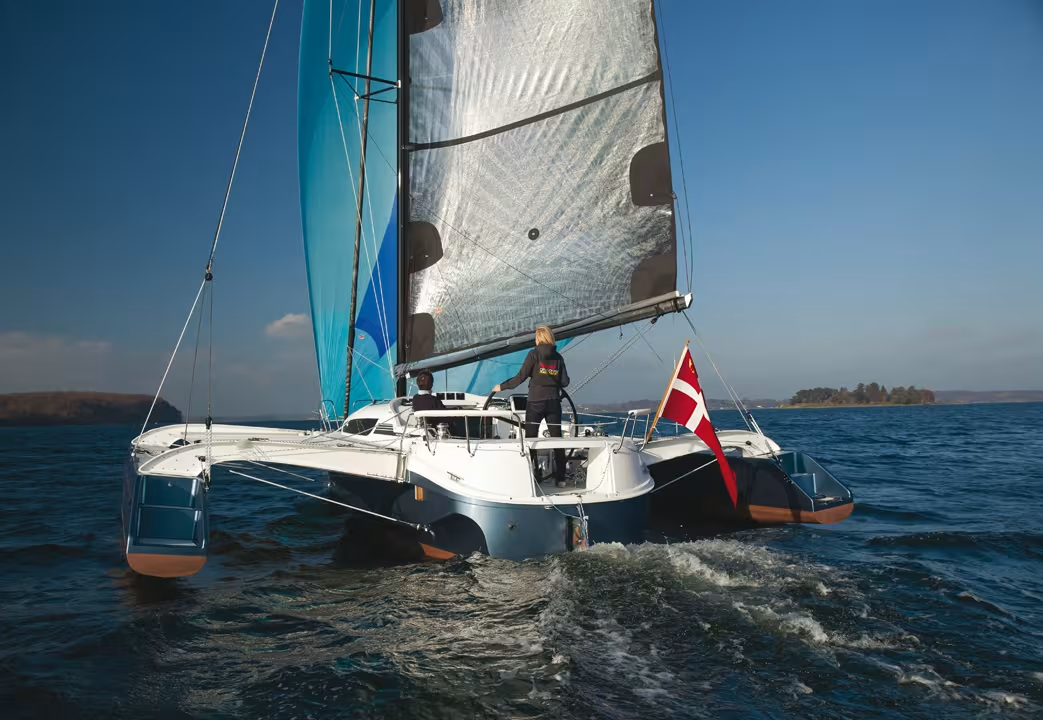
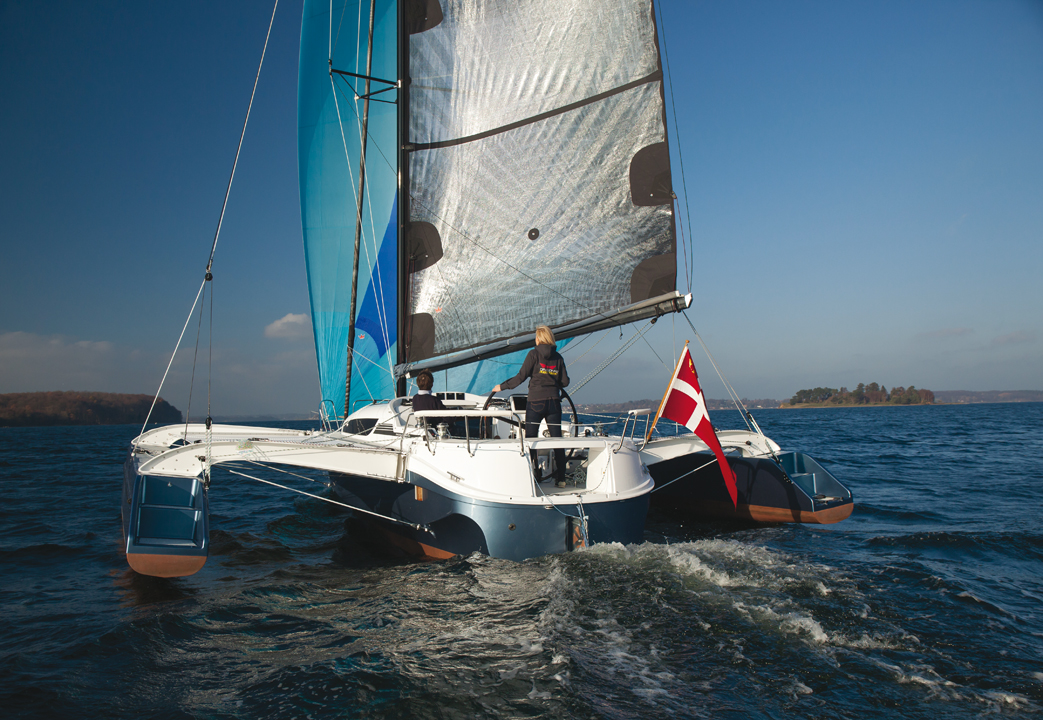
The first-generation Dragonfly 32 (which we tested in Multihulls World #126) is a well-bred trimaran: 54 units have been sold and have undoubtedly made a mark on the history of the yard. The Evolution is replacing the Supreme version with 20% larger floats and a more powerful rig.
Infos pratiques
- Le chantier : Dragonfly 32 Evolution
- La fiche technique
-
 Découvrez notre vidéo exclusive
- Financez votre Dragonfly 32 Evolution
- Assuez votre Dragonfly 32 Evolution
- Articles autour du Dragonfly 32 Evolution
Traditional construction
All Dragonflys are made of foam/glass/polyester sandwich. The materials and processes used are medium-tech for this type of multihull. Checkered foam is not the lightest structural core - it absorbs excess resin in the grooves between the small gaps in the Airex pattern - but it allows some flexibility for shaping. The various large sections, such as decks and hulls are glued together on wide covering lips after the structural bulkheads and some of the internal fittings have been installed. The arms, subjected to high stresses - torsion and compression -, are made of vinylester resin with superior mechanical characteristics. All parts are manufactured manually in female molds by contact lamination, without infusion. This production organization is made possible by the architecture of independent workshops at the Skaerbek plant, which sequence a careful and rigorous manufacturing process despite the choice of a rather conservative technical process.
The horizontal folding swing wing
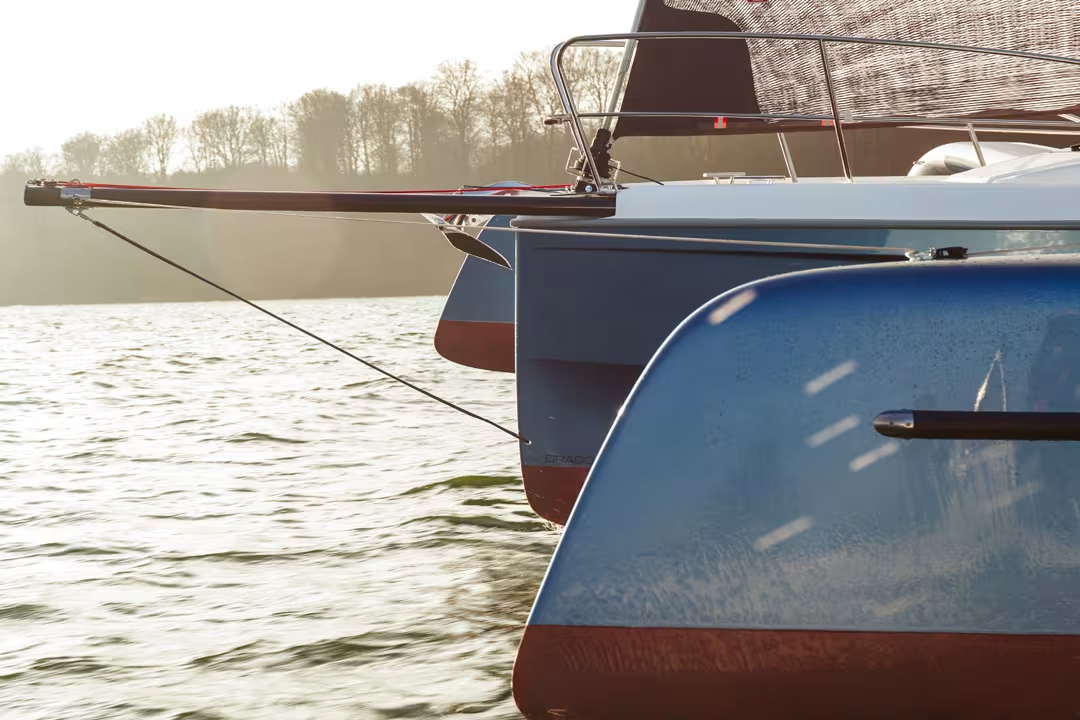
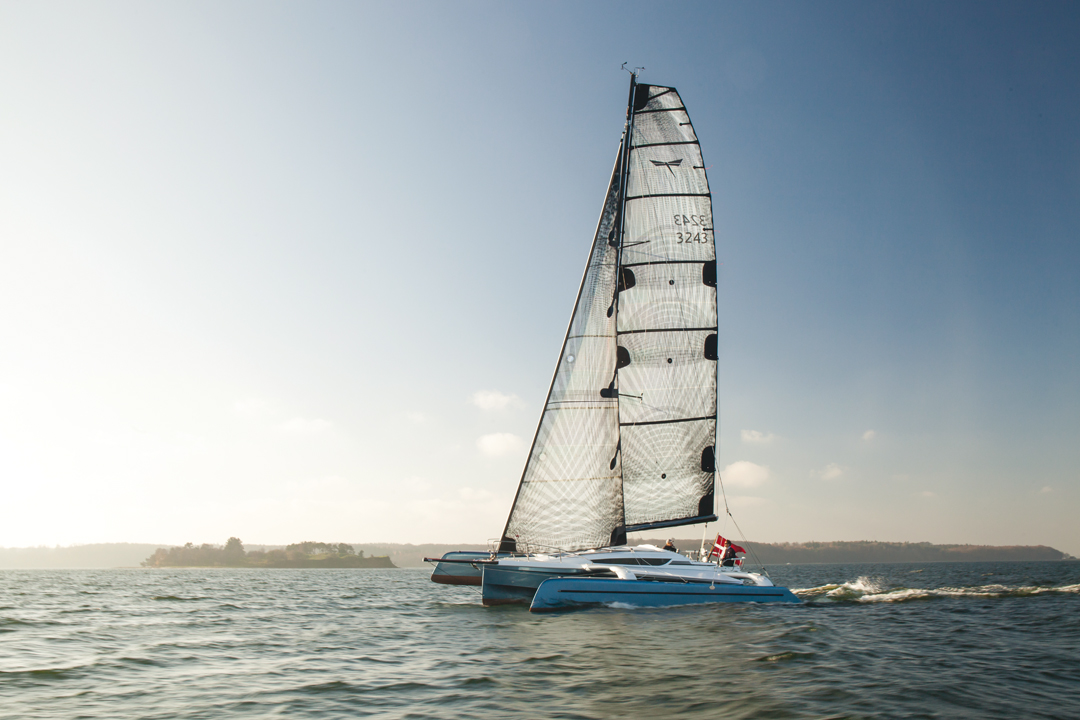
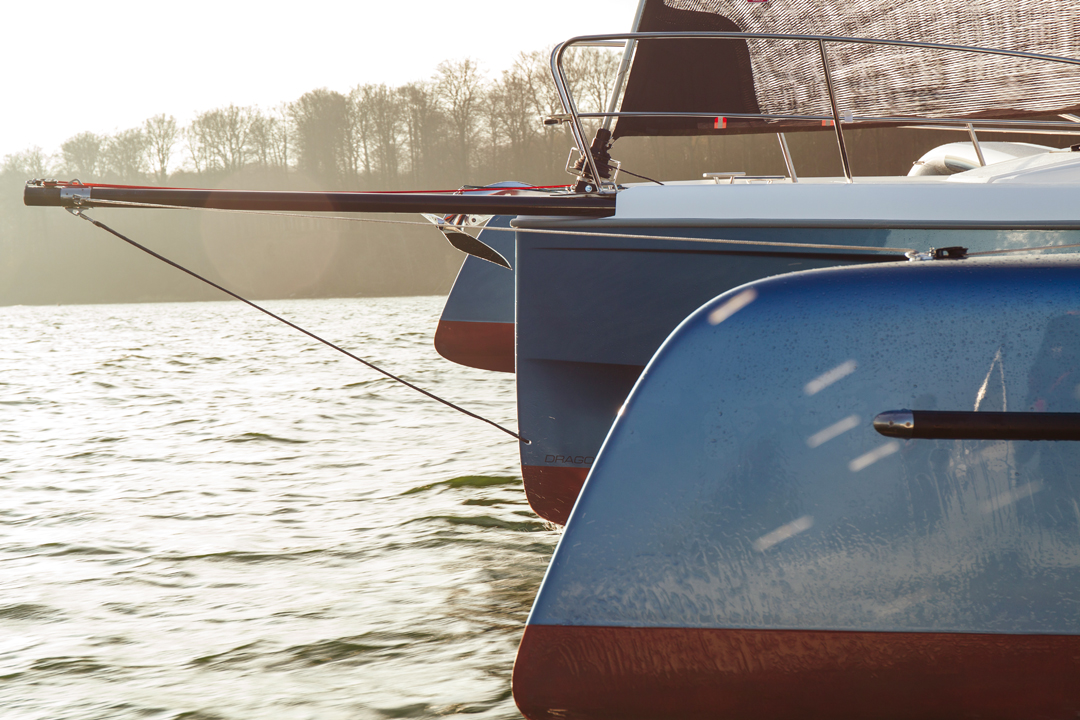
The folding mode of the Dragonfly 32, like all the other models in the range, is entrusted to horizontal kinematics, unlike the Corsairs, which have adopted Ian Farrier's vertical axis system. These precision mechanics, which also tighten the trampolines, via a complex pulley system, offer the advantage of very practical and fast unfolding and folding. On the other hand, this system requires rigorous maintenance for optimum operation, with wear-parts (stays/cables, pins, trampolines, etc.) designed to be changed at precise intervals given by the manufacturer. On the 32, the assistance of an electric winch makes the maneuvers easier and faster. Once you get into the habit, folding takes less than a minute. In the Evolution version, the floats are 50 cm (18”) longer and have 20% more volume, especially aft, but with their pivot points located further forward, the Evo version is shorter in overall length when folded. Marinas will therefore take into account the 11.89 x 3.85 m (39’ x 12’8”) when it comes to charging you. This will certainly cost you much less than the 9.90 x 8.25 m (32’6” x 27’1”) in unfolded mode…
Elegant woodwork becomes more contemporary
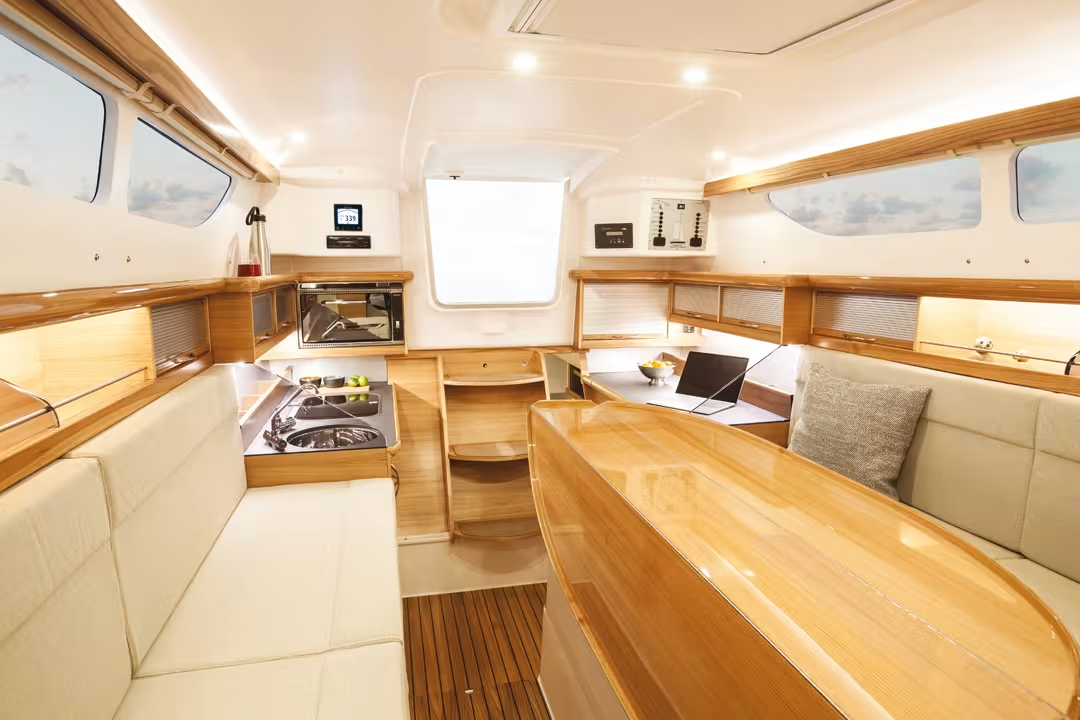
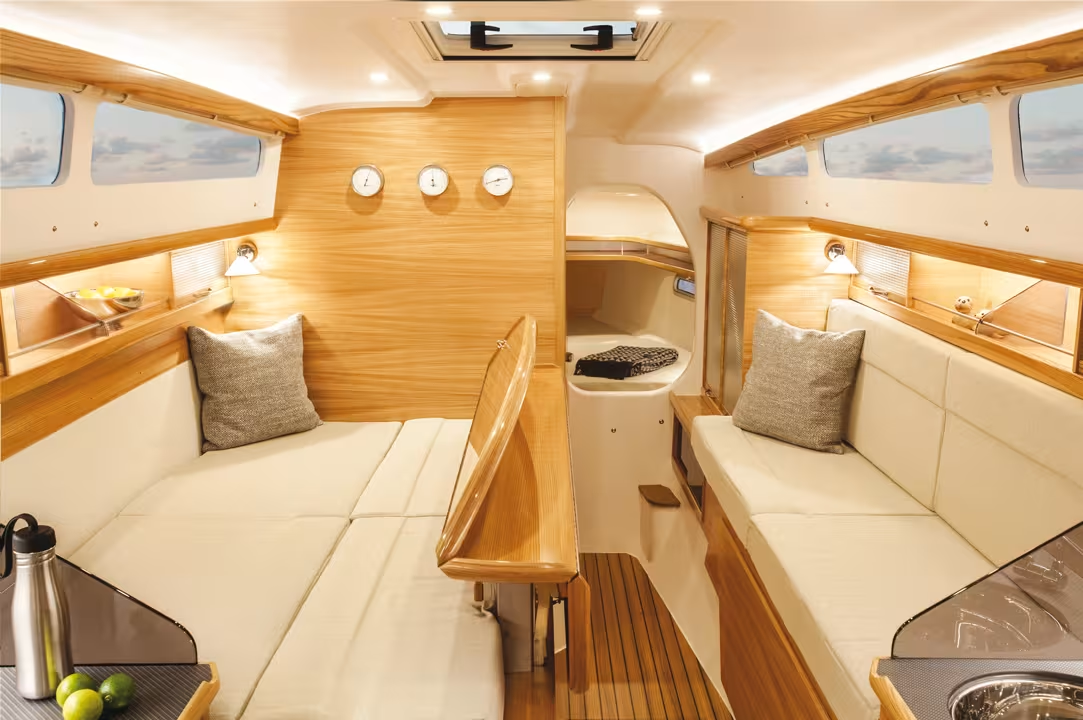
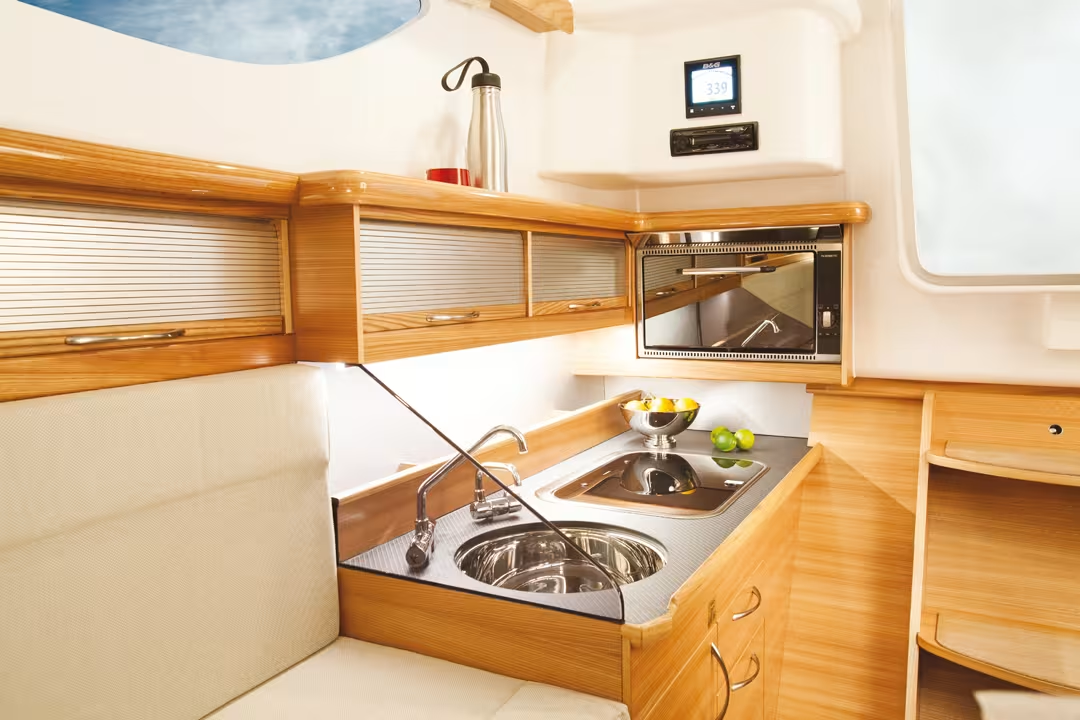
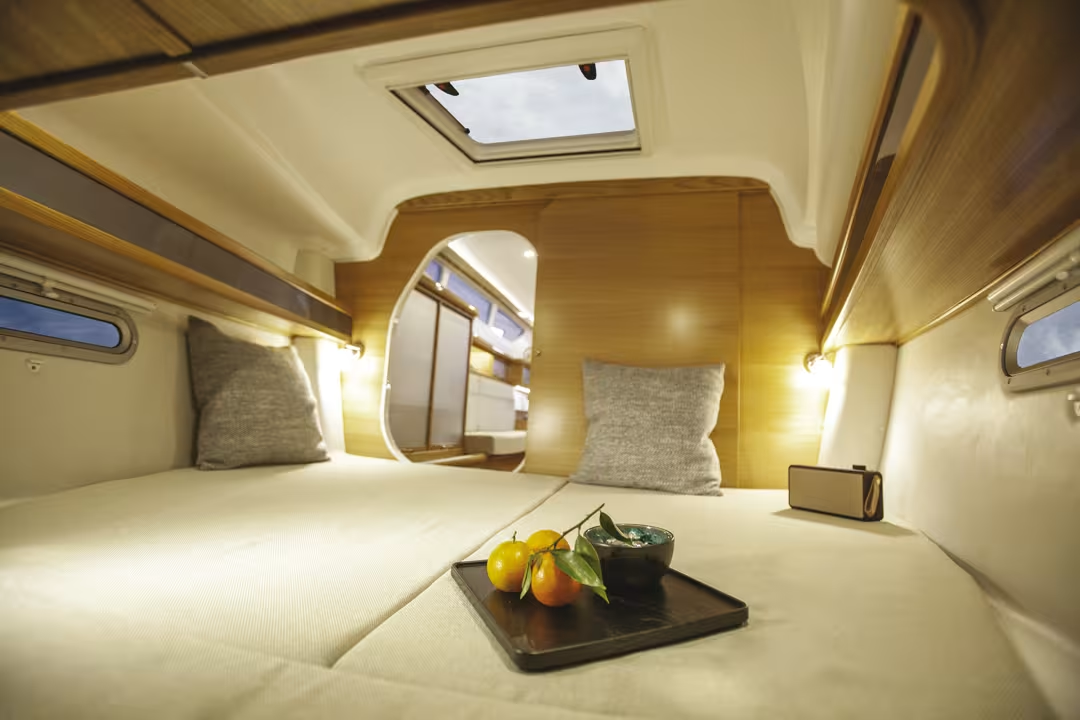
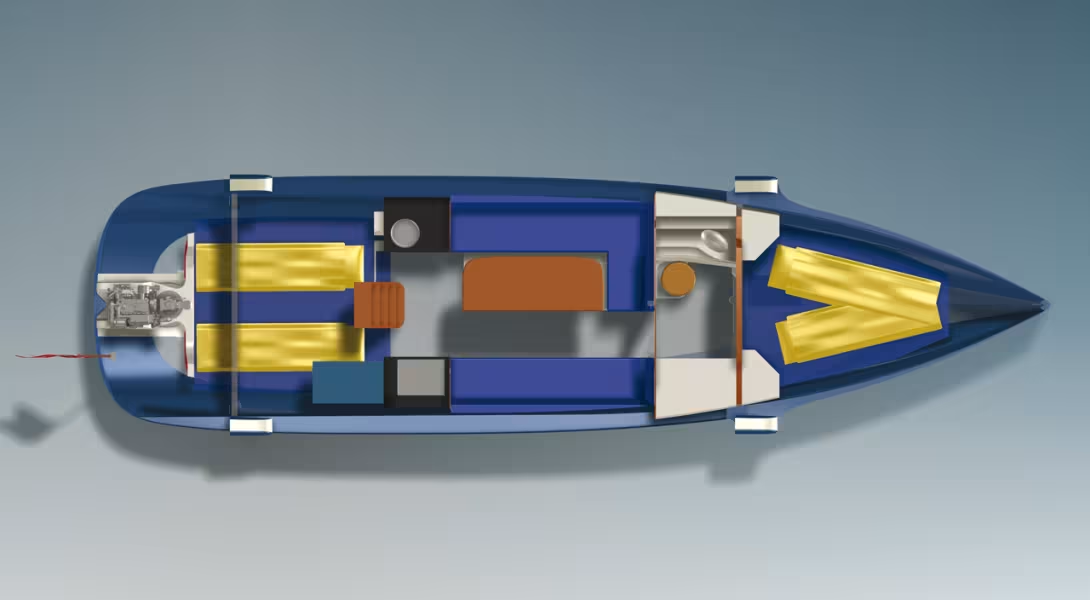
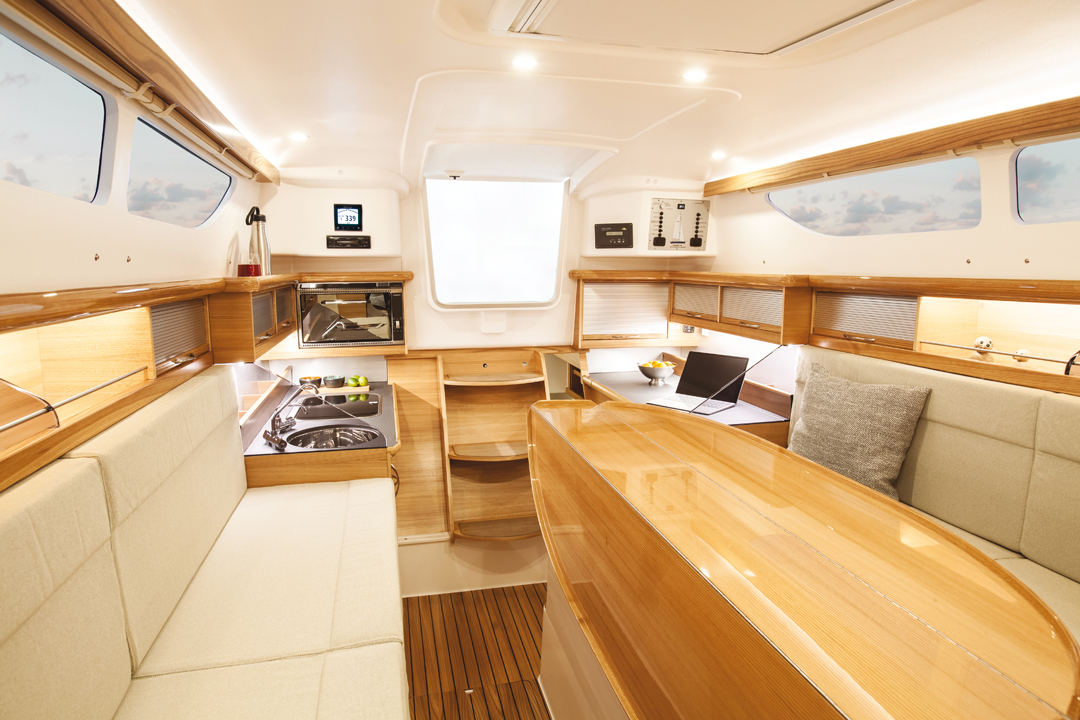
The Dragonfly's almost luxurious interior design is an element of their identity inseparable from their reputation, to the point that it is difficult for the yard to deviate from the chic "blond teak" code to develop the style. The arrival of the 32 Evo offered an ideal opportunity for a change of atmosphere; the varnished elm version is more contemporary and just as well-finished. The volumes in this under-10m (33’) size are very convincing with nearly 2 m (6’6”) headroom under the canopy. The double bed, aft, at 2 m by 1.65 m (6’6”x5’5”), is welcoming despite lower headroom. The sliding companionway stairs are as clever as they are solid. The galley (to starboard, at the foot of the companionway) is well-organized with oven and refrigerator, hob and sink. The chart table is functional, with many peripheral storage spaces. The central saloon, with two large benches facing each other around a generous table with flap, is user-friendly. There’s a lot of light and the impression of confinement has no right to be mentioned on board this boat. Forward, the bathroom with shower and toilet is complete, the double forecabin is comfortable and private. It’s also possible to accommodate a crew member on the port side of the saloon, which can be folded out. The plus of 32: its complete cockpit enclosure kit, which totally transforms the perception of this trimaran in severe weather or just rainy weather by offering a very attractive outdoor lounge.
An impeccable technical setup
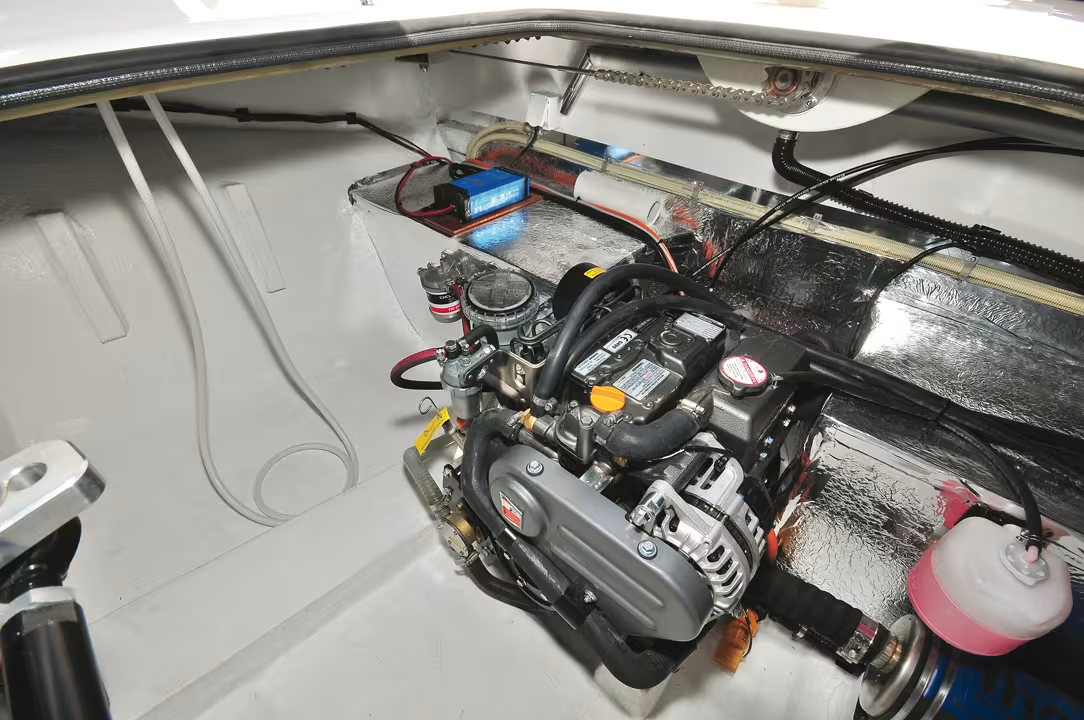
The battery bank is judiciously housed (and secured in protected battery boxes) under the floor of the saloon in a suitable housing, and the connections are serious. The engine compartment - the DF32 is equipped with a diesel inboard engine - is perfectly organized; the 21hp Yanmar on our test boat is advanced as far as possible against the watertight bulkhead. There is room for maintenance and the wheel steering cable transmissions are as usual carefully installed and adjusted. They are secured on a beautifully crafted welded aluminum section and the autopilot is fixed on the rudder arm. A beautiful installation!
And we’re off!
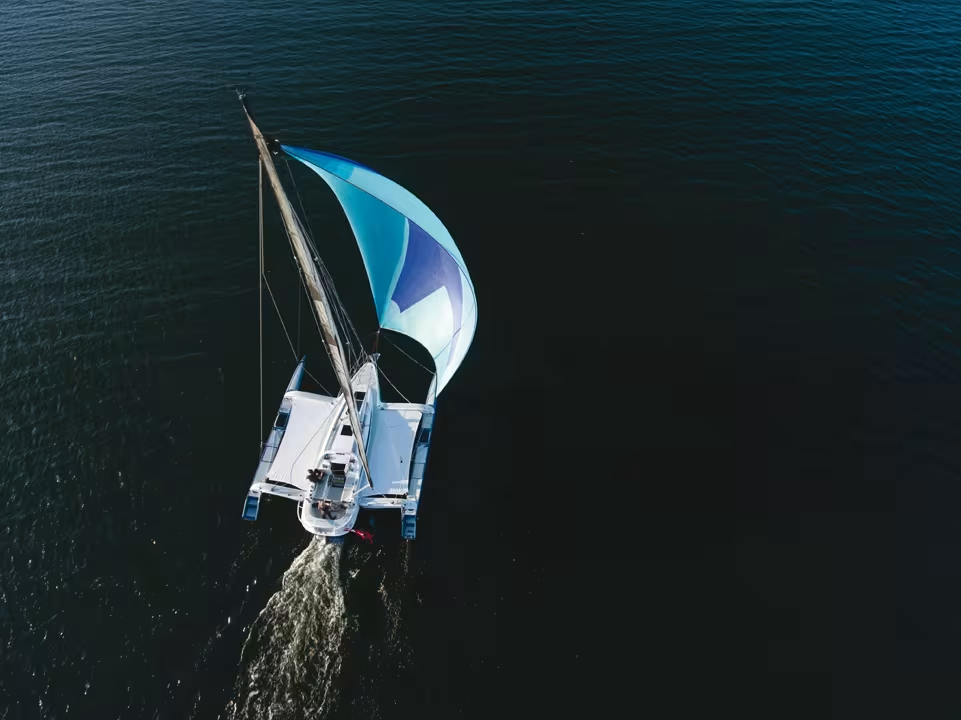
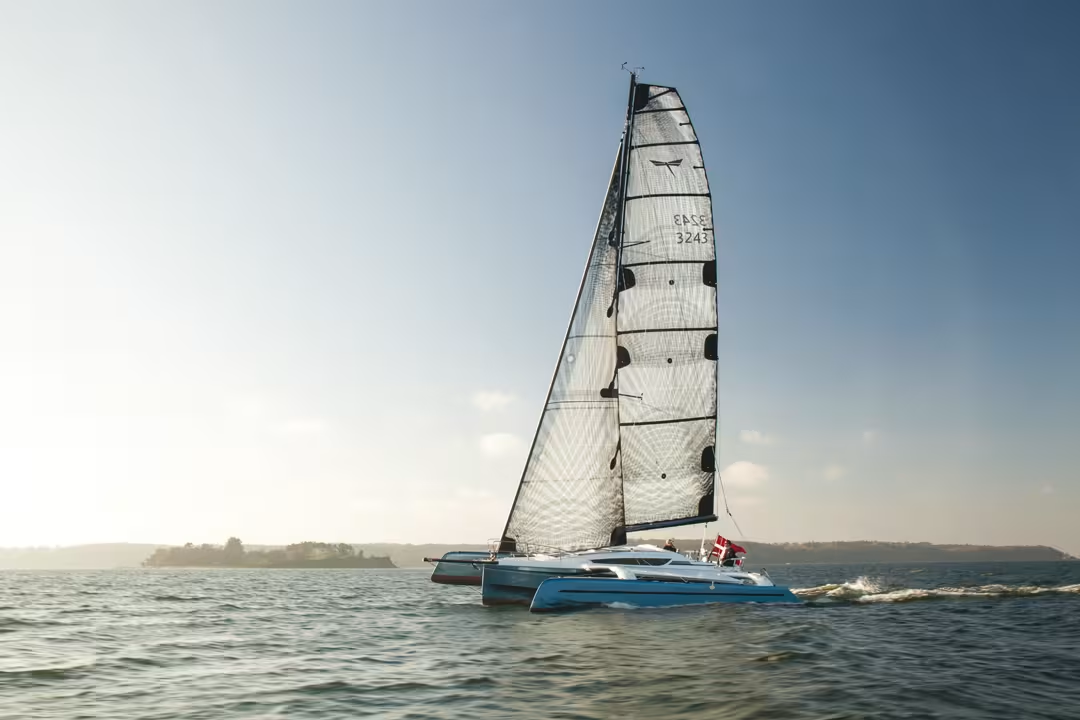
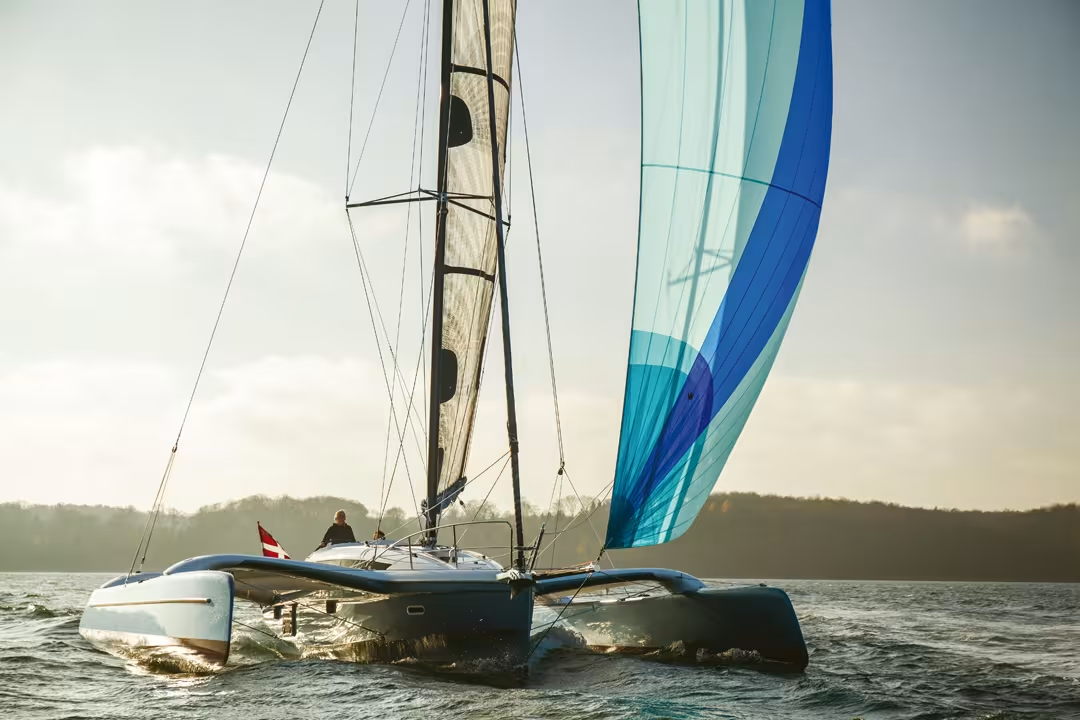
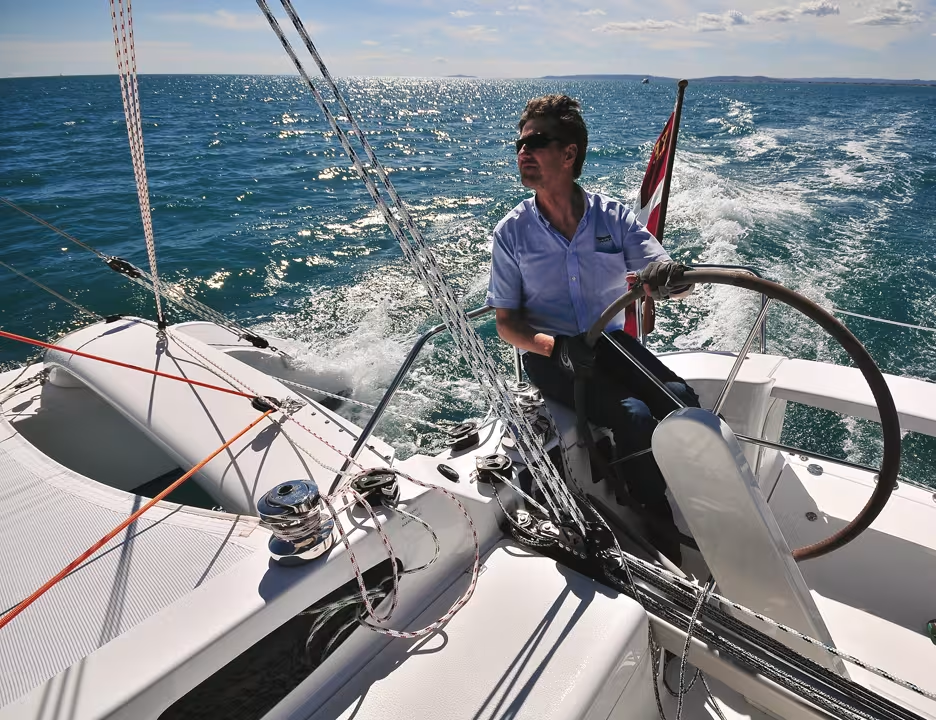
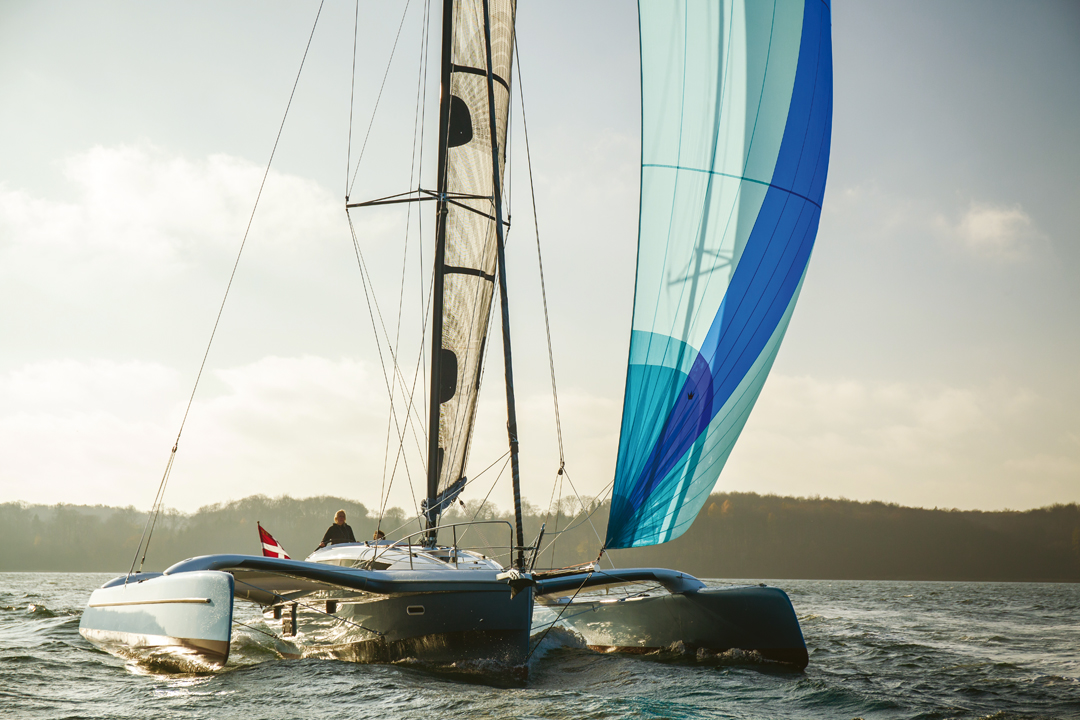
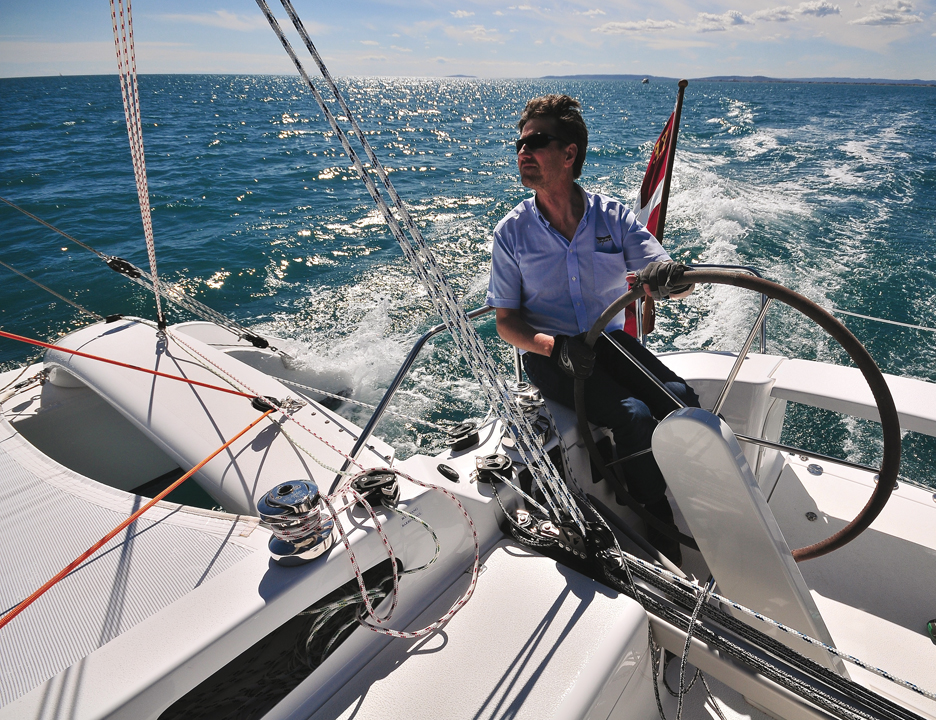
As soon as we leave the marina built especially for the International Multihull Show, we unfold our starboard float in a few seconds - the trimaran was moored in proa-mode during the show. The architect of the 32 Evolution, Jens Quorning, adjusts the runners for the medium-high winds that await us outside. At the helm, I am delighted to be back on a platform that I enjoyed in the Baltic in 2012. The engine purrs without vibration or chassis noise; this small diesel with its reassuring power perfectly handles in-port maneuvers (with the precious help of the bow thruster) which are of short duration with this machine. A sunny Tramontane (12-20 knots out of the NW in the western basin of the French Mediterranean) is blowing across the large bay of Aigues Mortes, our test track for the day. Jens has prepared the code 0, by Elvström Denmark. Under full main, we start out on a starboard tack towards Sète, to our SW. The boat is already making progress, and hoisting the code sail - taking care to bear away generously before heading up again - gives us the power we expect and the white cavalcade begins. The pivoting Jefa helm is a real pleasure – I’m not sure it’s indispensable, that’s a matter of personal taste and budget compared to the excellent tiller. I'm already on my little cloud, skimming along with the wind at between 12 and 18 knots. Only the luff of the code 0 indicates the limit not to be exceeded coming higher upwind, but the maximum power is there. Bearing away in some of the stronger gusts allows you to enjoy the precision of the helm and the feeling of safety offered by the large floats. Beamier, more powerful but also having more canvas, the 32 Evo is not necessarily faster than the previous version in these conditions, but she certainly has a more trendy look, the stretched underwater hulls of the floats, the wave-piercing bows and the increased reserve buoyancy this brings, constitute a real plus for sailing in cross-seas or driving "on the edge". The deck layout has been perfectly thought-out, ultimately a sublime feeling at the helm: anyone who has never steered this type of trimaran in a breeze does not have a complete nautical resume. Decidedly, life begins at 20 Knots! We sailed most of the afternoon, interrupted only by a momentary break of a few minutes. I suspect Eole ordered this for us, so we could better enjoy the restart phase during which we went from 0 to 15 knots in a just few minutes. The joy of surfing on an almost flat sea under the caress of a steady breeze is untranslatable, the spray that rises from the inverted bow is in harmony with my personal pleasure; I would gladly swap weeks of ordinary cruising for a few hours of fun like this. The chassis of the 32 Evo is perfectly adjusted, no binding noise, no parasitic squeaking or noticeable twisting. After several hours of watersport, we found ourselves well downwind of the bay and came back close-hauled in three tacks. At this rate, the new geometry shows a clear superiority. The trimaran seems very comfortable under full mainsail and solent in an apparent wind that sometimes exceeded 30 knots. The angle to the wind is indecent and there are very few sailboats that can play this game…
Conclusion
The Dragonfly 32 Evo offers at an equivalent price, a third of the living space of an honest 40-foot catamaran. But what are we looking for when we make this choice? The foldability may be a criterion imposed by the commercial logic of marinas, but there is another explanation: under her pretty exterior, this sports convertible is hiding a real character and gives nothing but pleasure: enjoy!
Technical specifications
Architects: Jens Quorning and Steen Olsen
Builder: Dragonfly Denmark
Length: 9.90m / 32’6” (9.50m / 31’2” for the Touring version)
Folded length: 11.89m / 39’ (11.99m / 39’4” Touring)
Beam: 8.25m / 27’1” (8m / 26’3” Touring)
Draft: 0.55 / 1.90m (22” / 6’3”)
Weight: 3,450kg / 7,605lbs (3,400kg / 7,500lbs Touring)
Mast height: 16.70m / 54’9” (14.70m / 48’3” Touring)
Mainsail area: 58m2/624sq ft (48m2/516sq ft Touring)
Genoa area: 29m2/312sq ft (26m2/279sq ft Touring)
Code 0 : 66.5m2/715sq ft (57m2/613sq ft Touring)
Asymmetrical spinnaker: 110m2/1,184 sq ft (95m2/1,022sq ft Touring)
Bowsprit: 2m / 6’6” (1.80m / 5’11” Touring)
Powertrain: Yanmar or Volvo 21hp (sail drive transmission)
Price ex-tax: € 285,000 (€ 252,000 Touring)
Principal options in € ex-tax:
- Eberspacher heating: 3,120
- Bow thruster: 6,675
- Refrigerator: 1,045
- Blackout blinds: 1,465
- Roof top with forward opening: 2,225
- Aft and central bimini with full cockpit closure: 8,827
- Jefa wheel steering on tilting column: 4,825
- Andersen 46 electric winch: 3,120
- Carbon bootstrap: 3,145
- Asymmetric spinnaker + ATN sock: 4,550
- Code 0 + furler: 8,990
- Mainsail and genoa covers: 1,495
- Solar panels 2x50W: 2,495
- Raymarine Evolution autopilot for wheel steering: 5,245
- Tiller pilot: 2,725
- Epoxy protection on the 3 hulls: 3,645
- Painting 3 hulls: 6,285
PLUSES
- Brand image
- Performance
- Pleasure of use
MINUSES
- Maintenance of a sophisticated folding mechanism
- Additional weight of the horizontal folding system
- Absence of vinylester composite and infusion