Danish builder Quorning Boats was already producing the Dragonfly 12 M, a large confidential 40-foot model. After 16 units had been completed, production of this luxurious trimaran was interrupted for a complete redesign of the range. The DF40 is now becoming the flagship of the Skaerbek shipyard: its definition is very different to that of the 12 M, as is its ambition to sell in the same numbers (4 to 5 units per year). The silhouette and interior design are more modern, the performance has been increased and the sail handling ergonomics totally revised. We were able to try one out a few months after its only presentation so far, at the 2020 boot Düsseldorf.
Infos pratiques
- Le chantier : Dragonfly 40
- La fiche technique
- Découvrez notre vidéo exclusive
- Financez votre Dragonfly 40
- Assuez votre Dragonfly 40
- Articles autour du Dragonfly 40
Test location: Skaerbek, Denmark
Conditions: 10 to 14 knots of wind, slight sea
The DF40 is a very versatile trimaran: thanks to its folding arms, it can slip into a monohull dockspace, being just 13’1” (4m) in beam. For coastal cruising, it benefits from its centerboard configuration. For racing, the Ultimate version comes into its own. But despite all this, the 40 differs from the other models in the range by having a much greater focus on being a “blue water cruiser”. The same goes for its almost luxurious character.
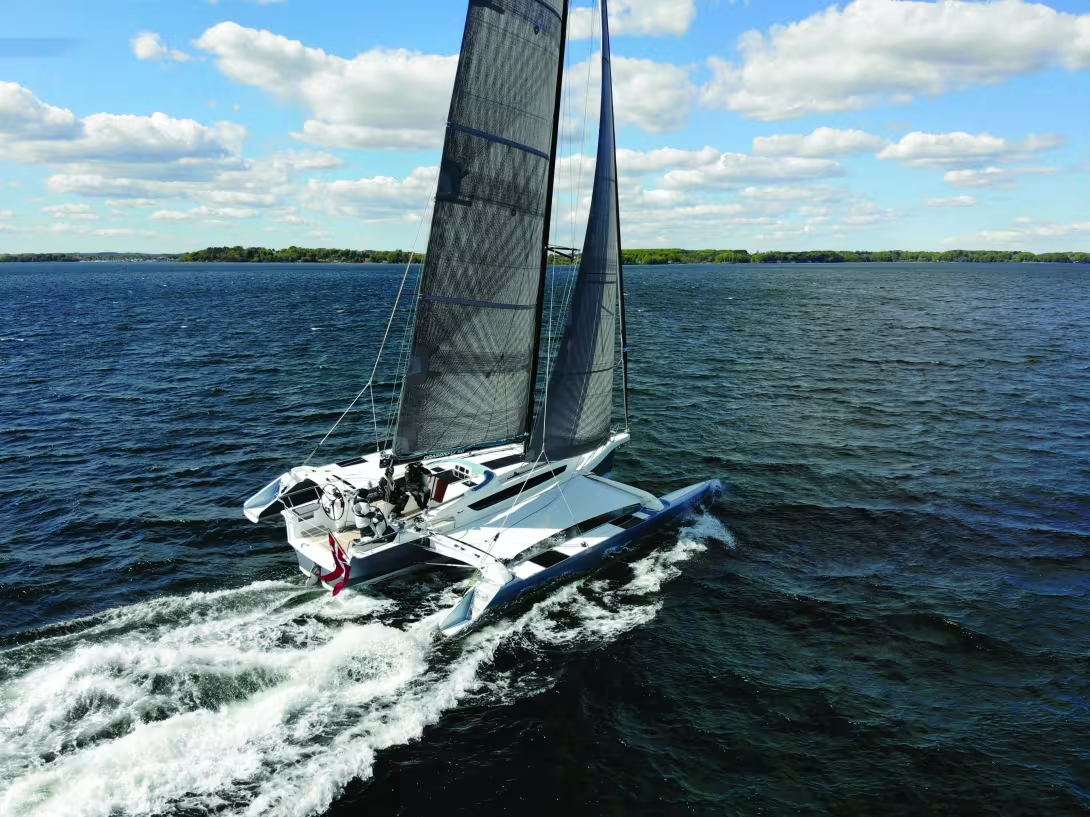
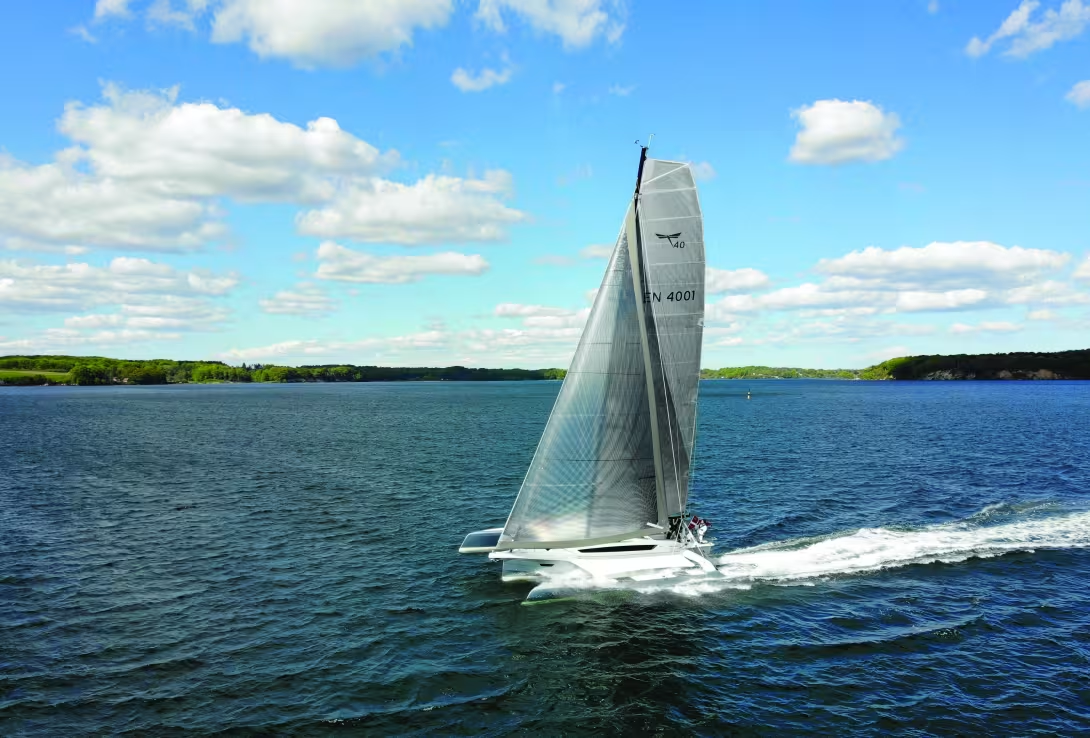
This high-performance trimaran adopts modern floats with inverted and voluminous bows. The crossbeams are well clear of the water, giving the DF40 remarkable elegance and a nimble passage through rough water. Particular attention has been paid to the styling of the coachroof and the side windows. The sleek rig -Touring or Ultimate with its additional 6’7” (2 m) mast - highlights the sporty character of this trimaran and reflects its performance ambitions.
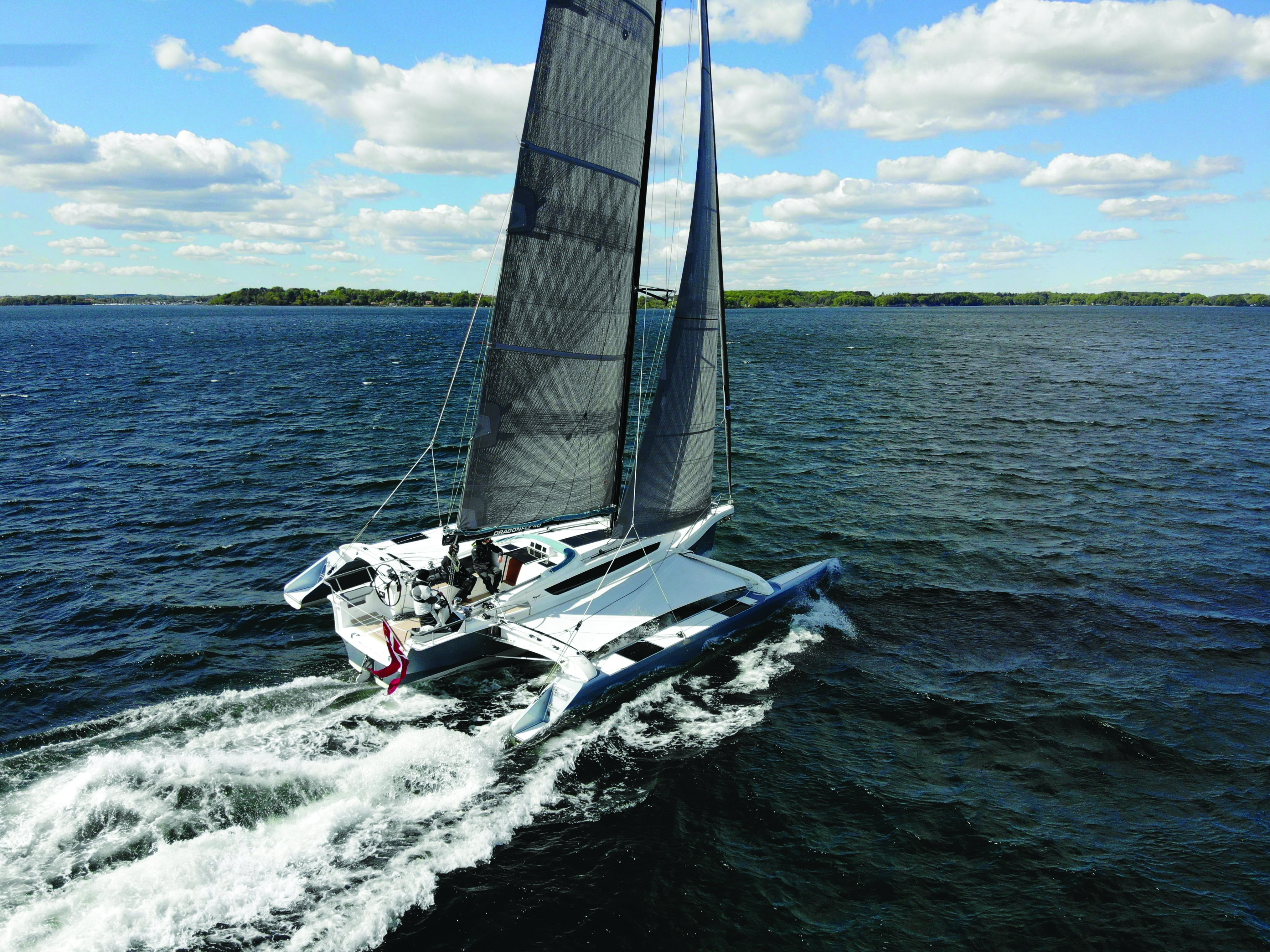
The Dragonfly 40 produces averages above 10 knots from medium airs upwards.
Architecture and construction
While testing the Ultimate prototype, we were lucky enough to discover the second example being assembled. This gave us a good understanding of the sophisticated design of this multihull with the help of the enlightened comments from the big boss Jens Quorning. To keep it simple, the 40 consists of three hulls in a Divinycell/multiaxial glass/ polyester sandwich. The lamination process is carefully carried out on contact. The four monolithic half-arms show impressive sampling: they’re made by infusion using vinylester resin with high mechanical qualities and are post cured at 140°F (60°C). The Swing-Wing system is based on articulated links secured to mechanically welded aviation-grade stainless steel plates. They are the cornerstone of the good structural strength of this multihull and the folding system in the horizontal axis. We were able to observe these famous plates before the arms were mounted: impressive technical parts! The two main bulkheads (fore and aft) are the backbone of the central hull and all its architecture. We were also able to take a look at them before decking to understand their complexity and the rigor of their design and manufacture. They are structural rings whose generous sampling and infusion fabrication on marble are designed to withstand both the severe compression of the arms and the tensile forces generated by the “Water Stay” cables. While the pull-out stress is fairly easy to calculate and control on composite parts, compression is more delicate. A selected oak beam is therefore embedded in the upper part of the bulkhead to take up these forces without mechanical fatigue throughout the life of the trimaran.
A mechanically welded stainless-steel strap (another magnificent part) crosses the two bulkheads at the bottom to guarantee perfect continuity of stress absorption. The Skaerbek shipyard is at the center of a network of high-quality, high-tech companies: they now entrust the manufacture of the central hull and the floats of the 40 to rigorously selected subcontractors while ensuring uncompromising quality control. The mechanically welded parts are made in Sweden (the country of special steels) and the composite in a specialized plant in southern Denmark. The carbon masts are still assembled in the “rigging shop”, which has produced all the carbon rigs for the fleet from portions of tubes manufactured in filament winding. This strategy allows the yard’s team of highly skilled operators to concentrate on the meticulous assembly of the trimaran, the careful installation of equipment and the manufacture of superb fittings in an exemplary wood shop.
Feeling of safety
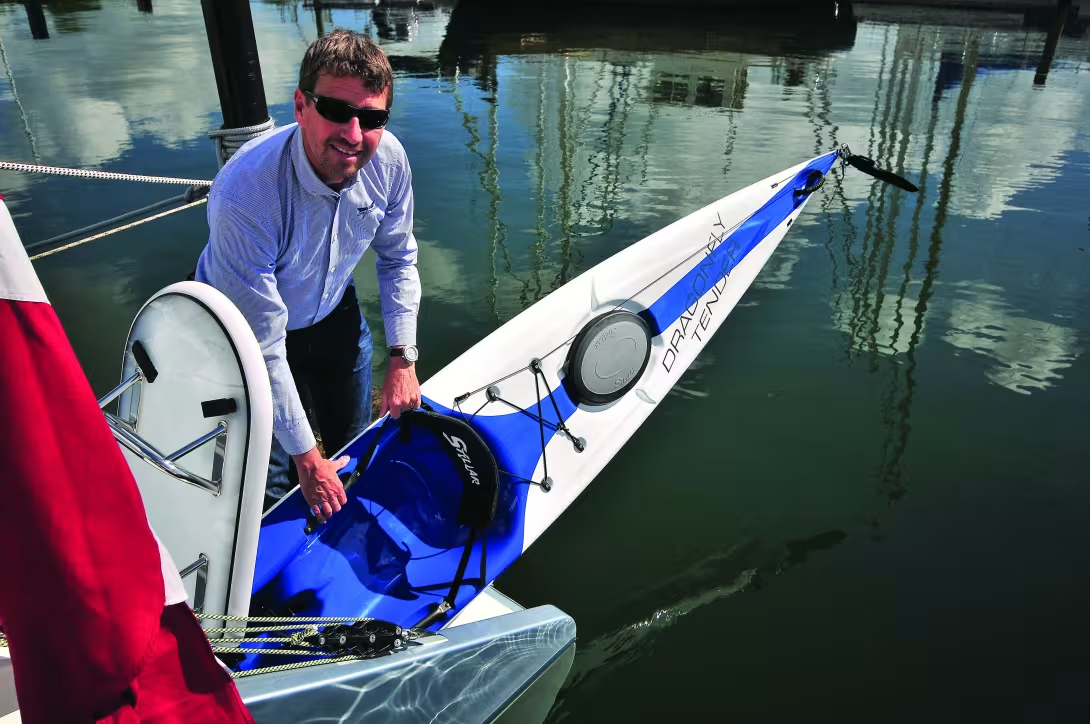
Trimarans generally enjoy a reputation for questionable ergonomics. This is often justified and is something inherited from racing. Yet when you go aboard the 40 from the dock, via the cathead bowsprit, it is rather the feeling of safety that dominates. The tubular guardrails seem to envelop you, preventing you from falling overboard. The side decks around the coachroof are perfectly accessible and safe. The flush deck, the absence of any lines - these are hidden beneath covered reservations - and the flush-level trampoline connections contribute greatly to the fluidity and comfort of moving around. The forward part of the decks of the floats is roundly tapered so as to quickly clear any water if the float has buried into a wave. On the other hand, between the two arms, the design is perfectly flat. Two generous flush panels give access to the large volume lockers. These could easily accommodate bicycles, fenders, fishing equipment and dive gear. A canoe can even be swallowed up by the aft compartment. Access to the cockpit is also very neat and smooth: the new deck plan returns all sail handling maneuvers to the stern, freeing up this space completely. A large folding table is at the center of the cockpit for leisure activities, and provides a perfect dining area. The area is even all-weather if you have the articulated vbimini: this would transform the space into an outdoor saloon (either partly open or totally enclosed).
The Swing Wing system is based on articulated links secured to mechanically welded stainless steel plates of the type found in aviation.
They are the cornerstone of the Dragonfly 40’s high structural strength and the horizontal-axis folding system.
A warm interior
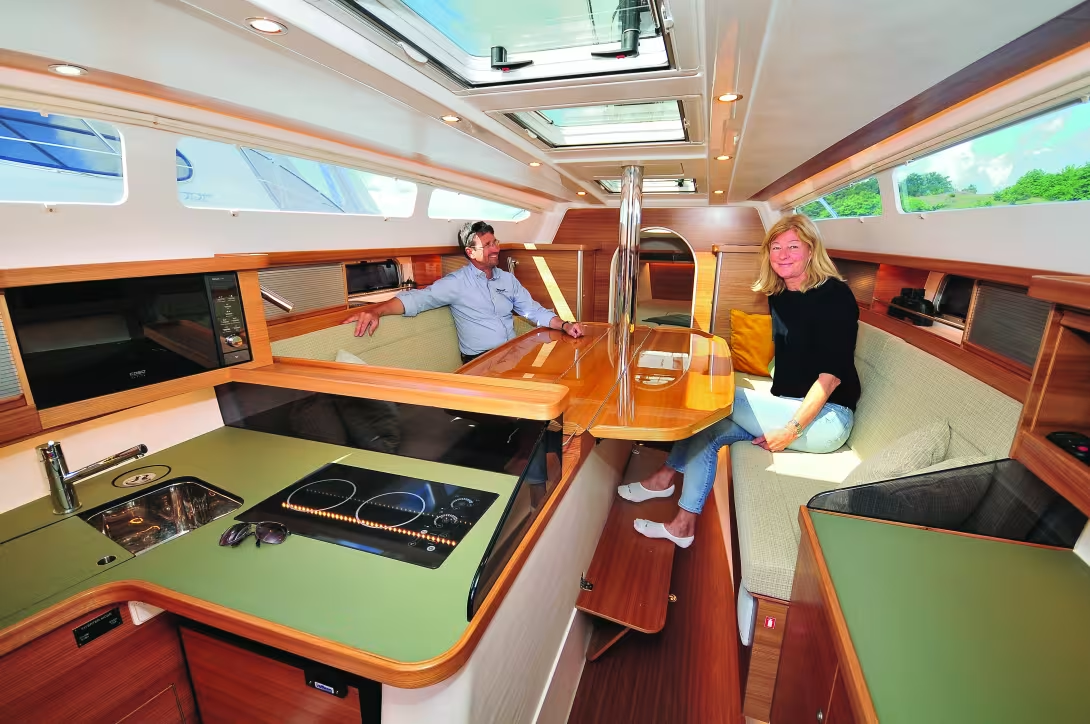
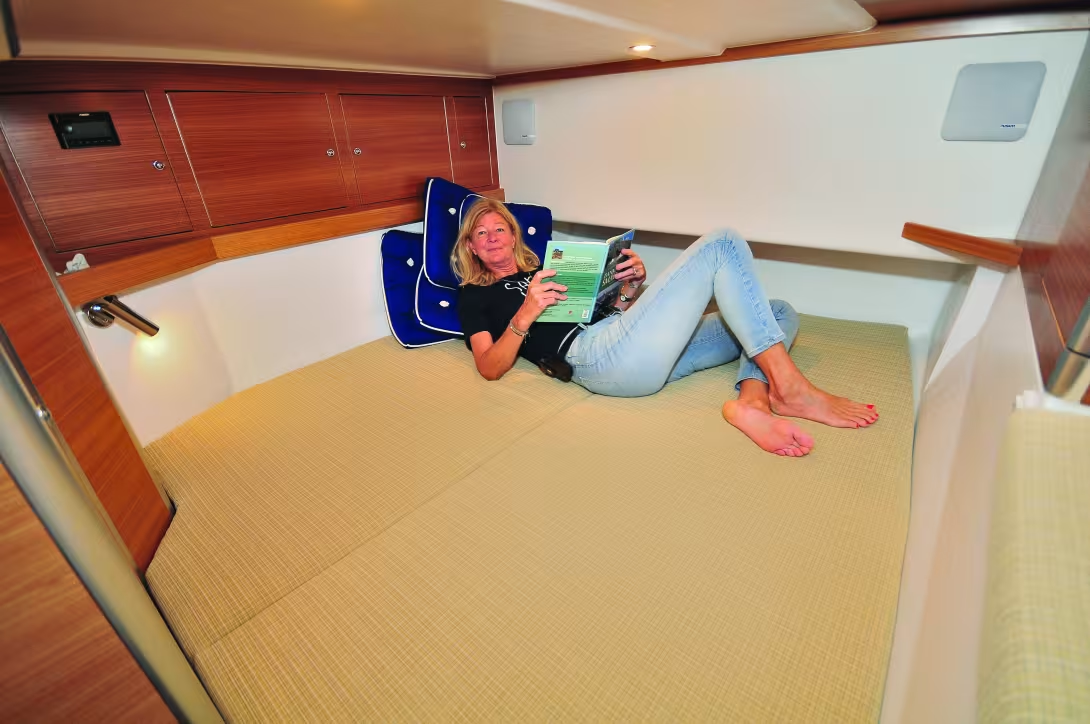
The mastery of forms and materials by the Skaerbek cabinetmakers is, as ever, translated in this magnificent interior. The American elm has advantageously replaced teak - its grain is brighter. The warmer material lends itself perfectly to the design of the Danish 40-footer. The L-shaped galley is well-equipped and practical, with a clever waste bin - direct disposal of organic waste into the sea. The desk/chart table facing it is home to the electrical control panel at the top and a large galley storage space below. The single heads/ shower compartment is perfectly designed: comfort, space, storage and privacy are guaranteed. The central table over the centerboard well easily seats six people. Light and ventilation are one of the strong points of this trimaran. The large flush deck hatches are all fitted (optionally) with blackout blinds and sliding mosquito nets. The companionway accommodates the hatch in a dedicated housing when sailing in good weather, as well as a sliding carbon mosquito mesh frame. This allows the interior to be closed off while maintaining perfect ventilation (ideal for rivers or for the Baltic in summer). The aft cabin spreads out under the cockpit. Its tatami configuration (7’3”-4’11” x 6’7” / 220- 150 x 200 cm) means you can find a comfortable position whatever the sea state, especially given that the very low center of gravity limits the amount you feel the multihull’s movements. Headroom of 6’3” (1.90 m) inside the doorway allows you to get dressed easily (clearance is 4’3”/130 cm directly under the cockpit). This chalet-cabin is unique in its cozy atmosphere. The double cabin at the bow is also perfectly independent and benefits from the same quality of light and ventilation.
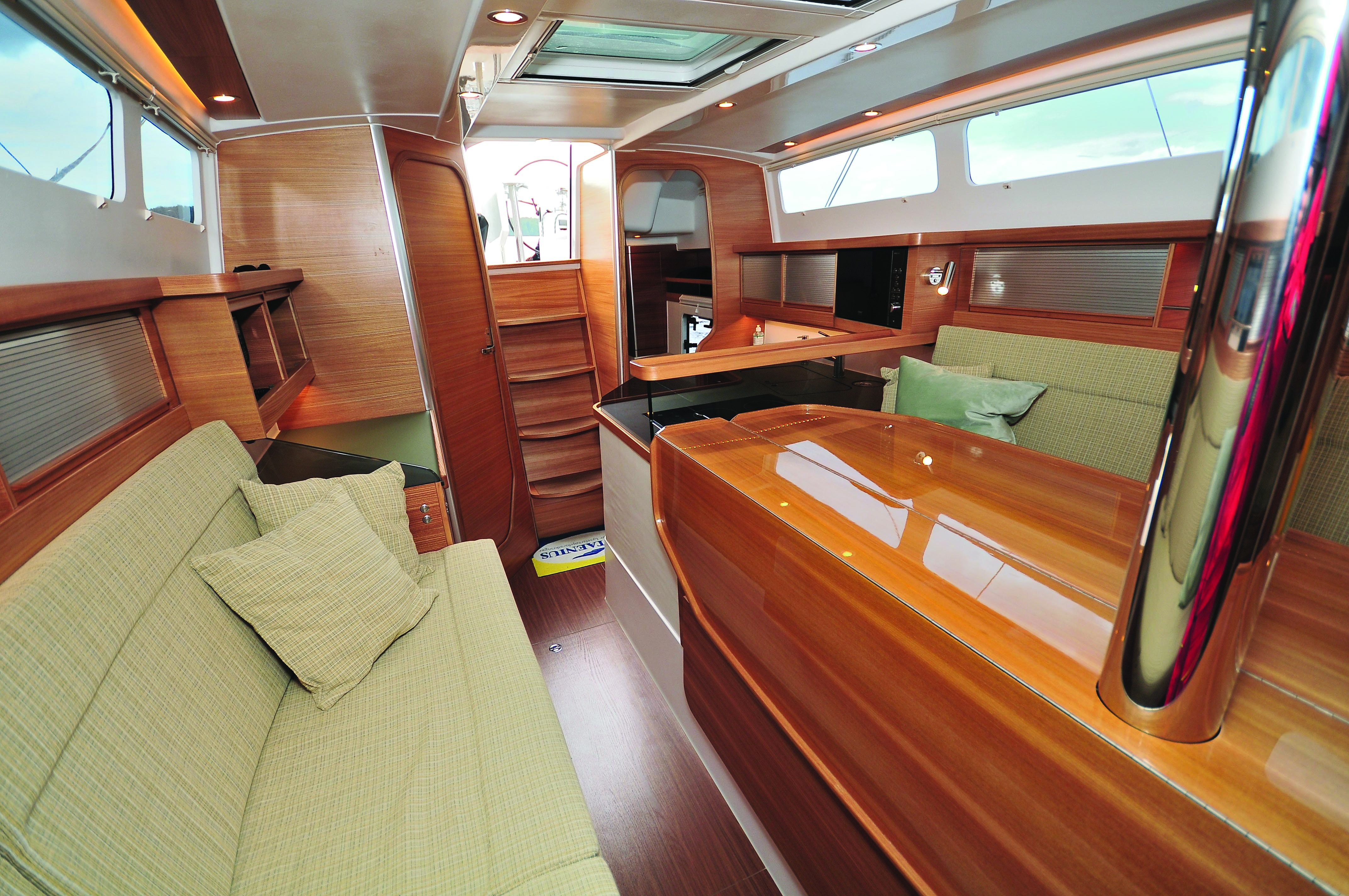
The yard has paid careful attention to the interior of the central hull.
In addition to the saloon, the L-shaped galley, the chart table and the heads, there are two beautiful double berths.
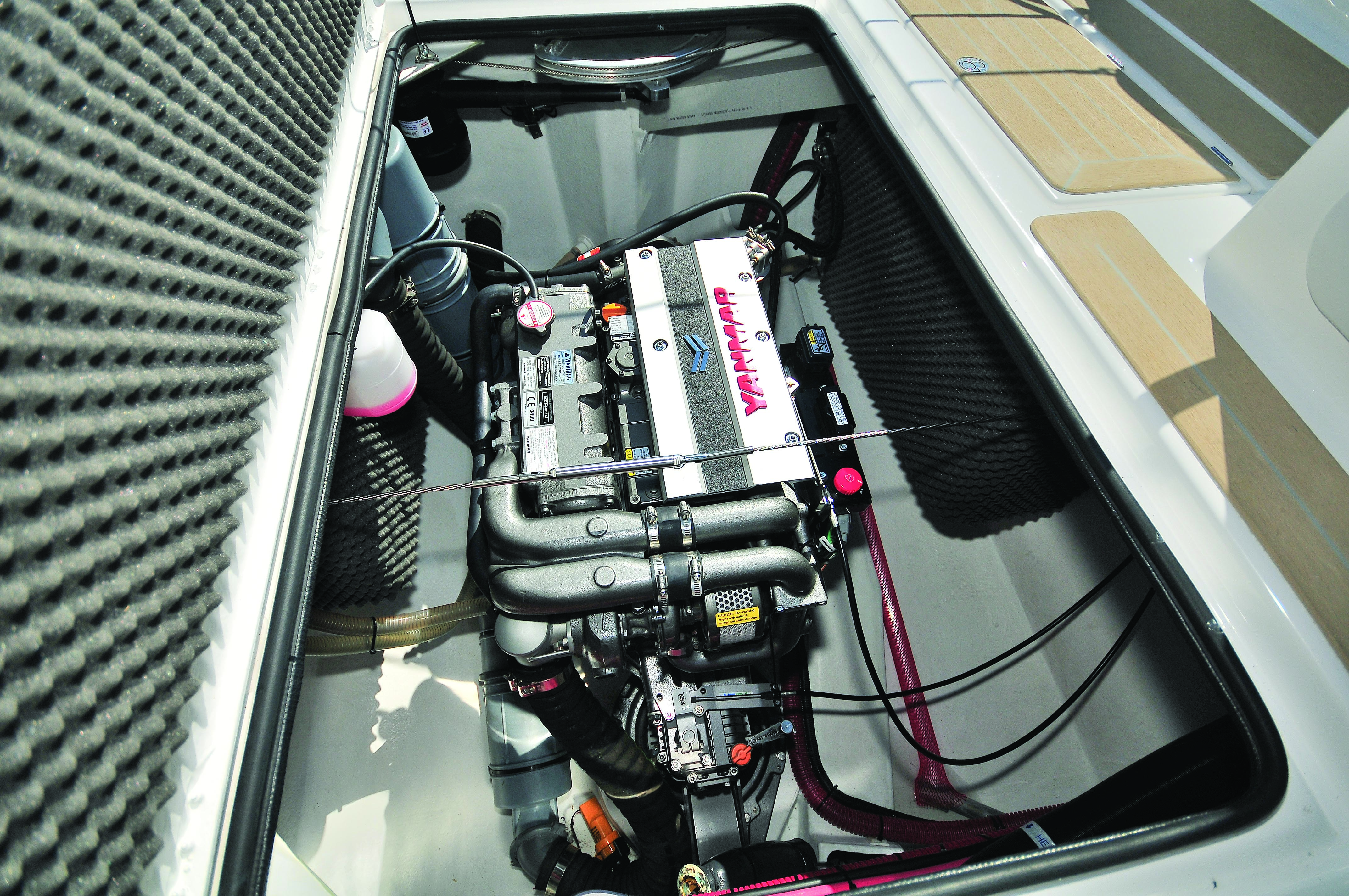
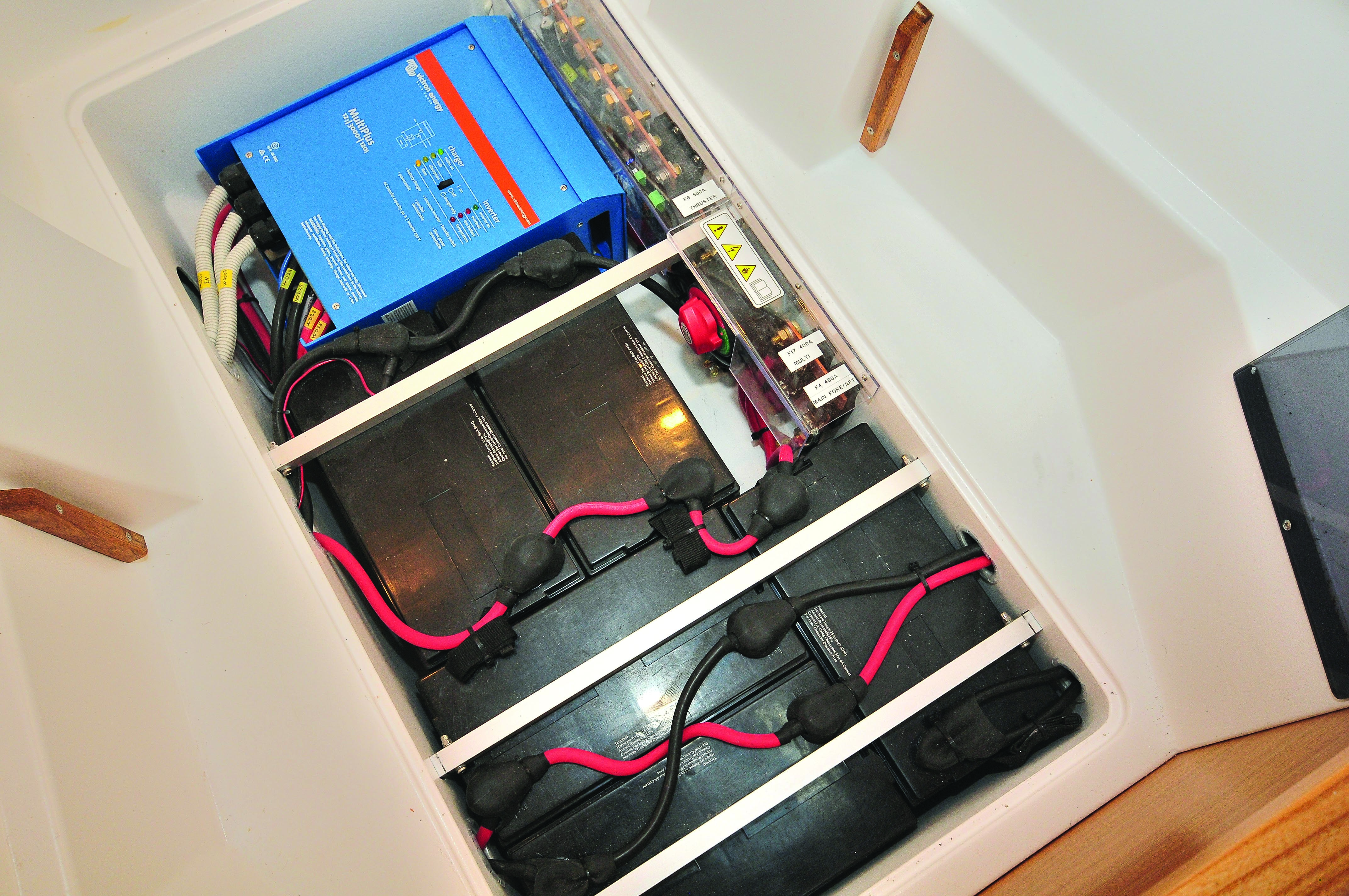
Compact mechanical installation
The 40 hp Yanmar is a sober, clean and discreet engine. It is a perfect choice for this trimaran, propelled at more than 9 knots top speed (fitted with a Gori folding three-blade propeller) and 8 knots at cruising speed. The saildrive transmission limits clutter and doesn’t prevent the boat from being able to take the ground. The engine compartment is generous in size - it houses the autopilot connected directly to the quadrant. Access to the cable-steering transmission is perfect.
 |
 |
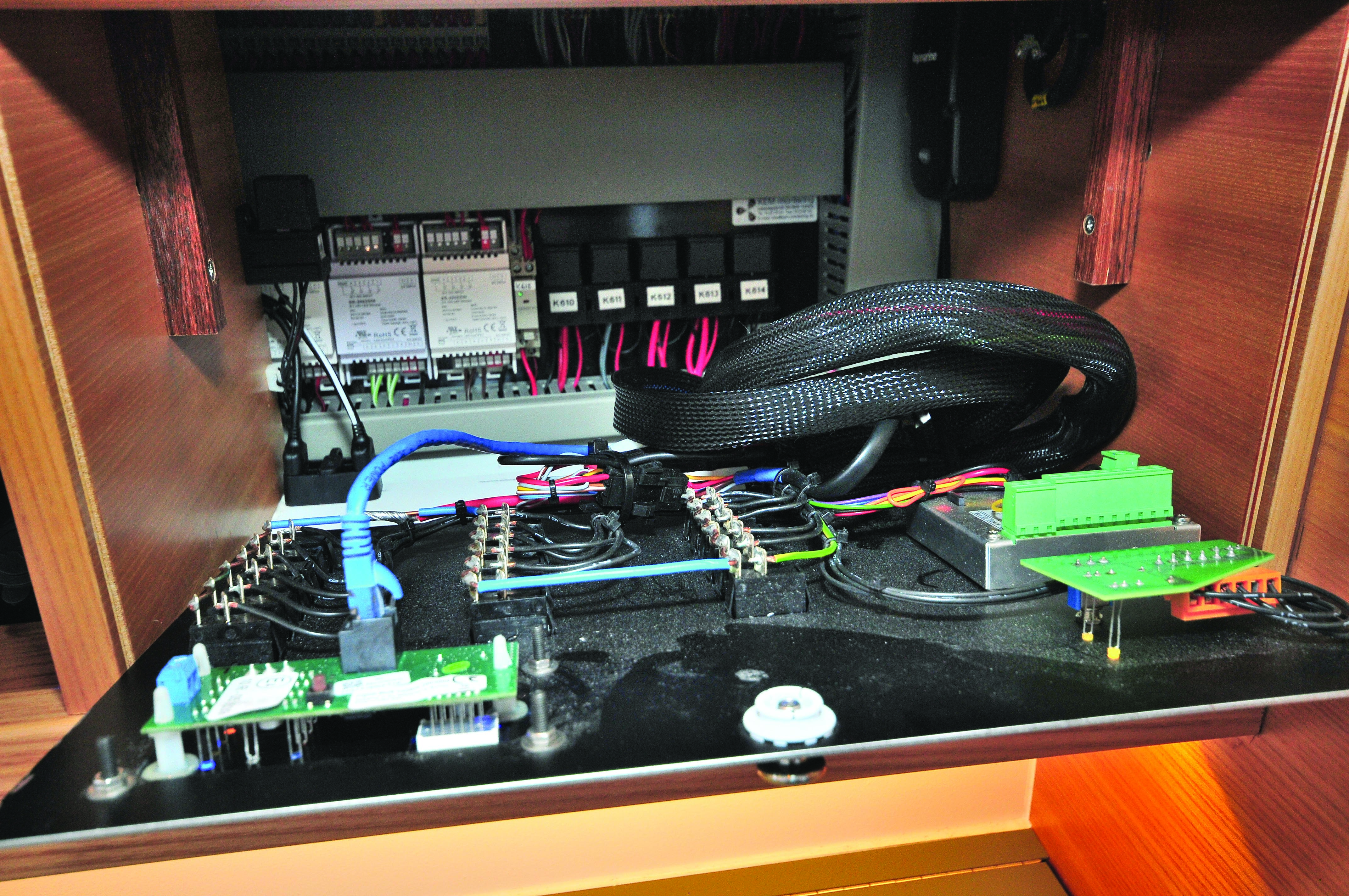 |
All technical elements are installed with the greatest care - and with the optimum weight centering in mind.
Exceptional sensations at the helm
Maneuvering this multihull out of a tight marina slip poses no difficulty with the powerful engine and the bow thruster. One particular design feat is that the floats spontaneously complete half of the opening thanks to a reserve of buoyancy accumulated during folding. Another pleasant surprise: the complex kinematics of the trampolines require little effort: each float is set up in just 45 seconds using the excellent Andersen 52 electric winches (the three 100A AGM batteries can be replaced by two lithium units to give a weight saving of over 110 lbs / 50 kg). Hoisting the mainsail presents no other difficulty than keeping an eye on the progress of its 807 sq ft (75 m²): the Ronstan bearing cars and batten boxes work wonders. The engine is soon switched off: under mainsail alone, the DF40 is already going along nicely.
We benefit from medium conditions (10- 14 knots) and perfect weather for the handling of this sporty machine. Our speed is always close to the true windspeed. The magnificent rig offers the expected power: Elvström sails transform the ripples on the water into immediate propulsion energy. But it is above all the magnificent control of this power that my attention is focused on: after about ten gybes, twenty or so tacks, and taking in reefs and shaking them out again, the conviction of being at the heart of a super-coherent machine is the dominant feeling. A solo sailor or a short-handed crew will make the most of this superb multihull (the Facnor electric genoa furling system is hidden below deck). The helm position is at the same time precise, ergonomic, close to all sailing maneuvers, and comfortable: one of the best we’ve ever tested! When racing, the crew don’t hinder the helmsman, who has a perfect view of the maneuvers and the water. The cruising family skipper will remain serene when the time comes to hand over the helm to the crew member coming on watch. It will still be possible to enjoy all this boat as to offer when short-handed for long afternoon surfing sessions. The touch on the water of this powerful 6-ton trimaran is splendid: you’ll maintain all her vitality by opting for the watermaker, a light battery pack and by limiting the amount of kit loaded on board. The directional effect of the lifting rudders (Quorning are masters in the design of mobile appendages - articulated rudders and pivoting centerboard) is irreproachable. The helm is always light and precise: friends who are still keen on monohulls, try this trimaran! Upwind becomes a sought-after point of sail, downwind sailing under spinnaker is an exercise in sheer bliss, reaching is magical... anyway, this Dragonfly has no “hole” in any point of sail. We weren’t going to be lucky enough to encounter breezy conditions in which the 40 releases her speed potential (the record is currently 20.6 knots!), but the conditions experienced with 8-9 knots upwind and 13 knots downwind have confirmed the intelligence, rigor and performance of this magnificent multihull.
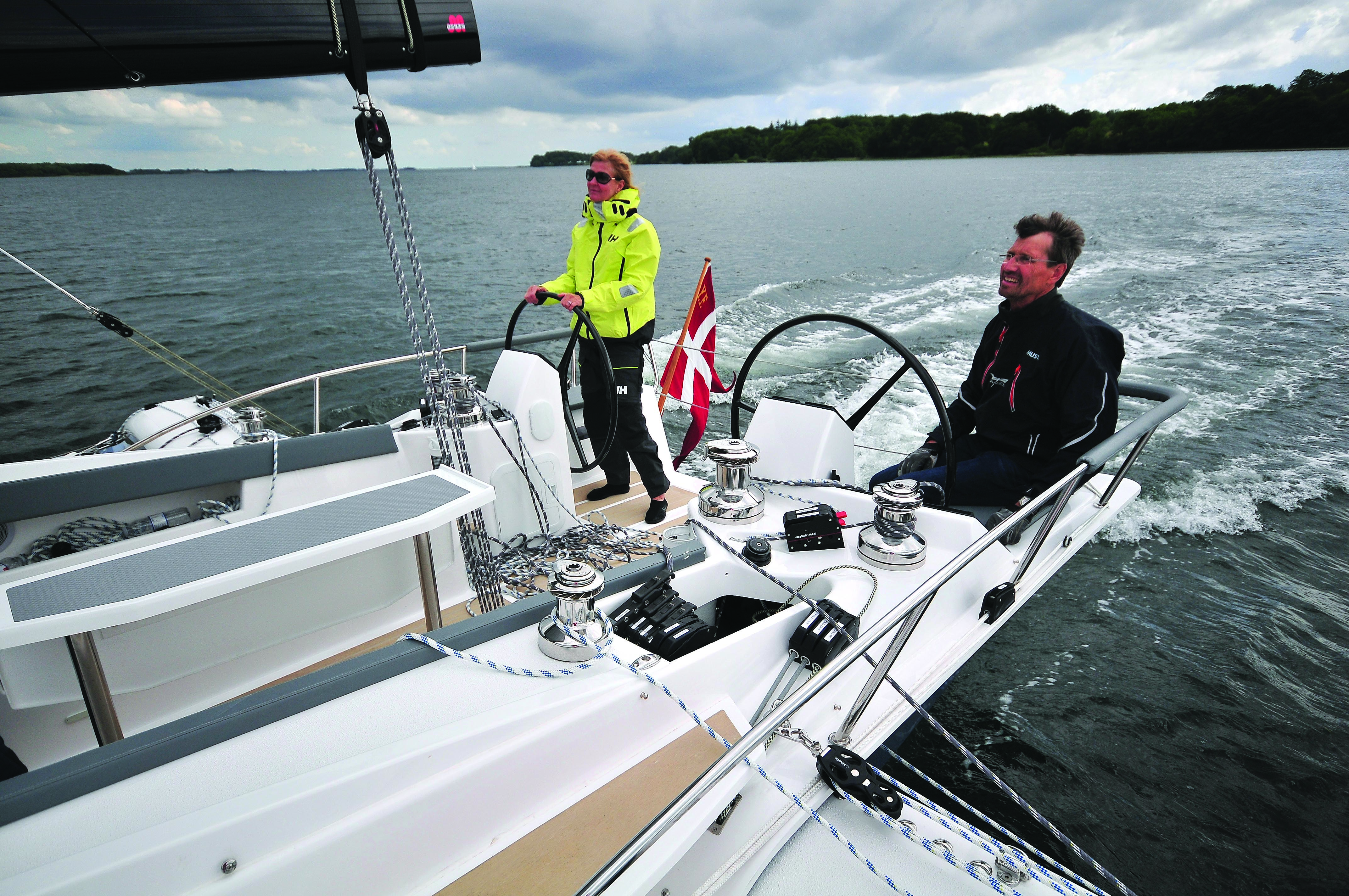
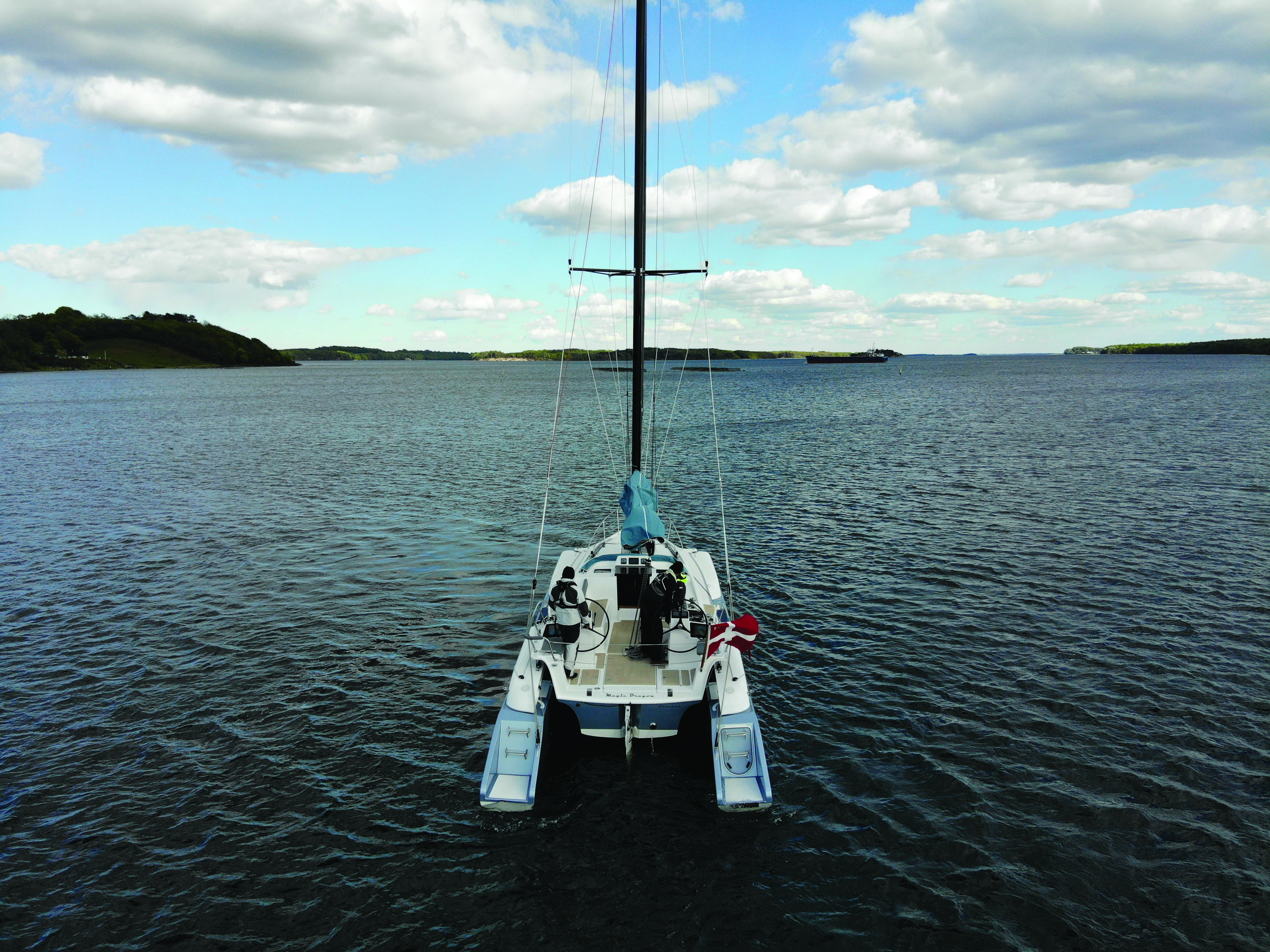
The twin-wheel helm station is a feat of ergonomics.
Steering and sail trimming is safe, fun and easy.
Conclusion
Subject to having the required budget, the Dragonfly 40 will offer its happy owners and users a magnificent experience. Rigorous maintenance is essential to take advantage of all the qualities of this trimaran (impeccable hulls and appendages, maintenance of the deck plan and folding kinematics, respect for weight), but apart from these recommendations for use, don’t hesitate! The DF40 remains a multihull with moderate accommodation capacity, but for long-distance cruising four-up or as a six-person weekend cruiser, it will open the door to a great release and a rare happiness on the water. Manufacturing quality, assembly precision, exemplary ergonomics and exceptional performance form the DNA of this trimaran. Without forgetting the comfort, the folding arms and the absence of draft. Enjoy!
The Pluses
+ Attractive silhouette and design
+ Balance of sport/comfort
+ Build quality and handling ergonomics
The Minuses
- High Budget
- Maintenance requirements of a technical machine
- Hull bottoms not monolithic
TECHNICAL SPECIFICATIONS
Builder: Quorning Boats
Architects: Jens Quorning and Steen Olsen
LOA central hull: 40’8” (12.40 m)
LWL central hull: 38’ (11.60 m)
Folded length: 46’6” (14.17 m)
Bowsprit: 2’6” (0.75 m)
Sailing beam: 27’7” (8.40 m)
Folded beam: 13’1” (4.00 m)
Draft: 2’4”/7’3” (0.70/2.20 m)
Air draft: 55’9” or 62’4” (17 or 19 m)
Light displacement: 12,790 lbs (5,800 kg)
Payload: 3,970 lbs (1,800 kg)
Mainsail: 700 or 805 sq ft (65 m² or 75 m²)
Genoa: 355 or 410 sq ft (33 m² or 38 m²)
Code 0: 700 or 860 sq ft (65 m² or 80 m²)
Asymmetrical spinnaker: 1,185 or 1,505 sq ft (110 m² or 140 m²)
Engine: 40 hp Yanmar
Fuel tank: 40 US gal (150 l)
Water tank: 58 US gal (220 l)
Holding tank: 20 US gal (75 l)
Provisional CE Certification: A6/B8
Standard price Touring version: € 559,000 ex-tax
Standard price Ultimate version: € 585,000 ex-tax
Principal options in € ex-tax:
Forced air heating: 4,100 €
Blackout blinds/mosquito net (each): 610 €
Carbon frame fly screen companionway:1,188 €
Roof hood: 590 €
Forward bimini: 5,035 €
Aft bimini: 3,875 €
Twin carbon steering wheels: 4,420 €
Retractable bow thruster: 7,055 €
Electric genoa furler or self-tacking jib furler: 6,890 €
Epoxy protection: 4,400 €
Launching in Skaerbek: 3,300 €