
Following a career spanning two decades and with 400 units built, the Dragonfly 800 - DF800 for the connoisseurs - is certainly one of the most remarkable successes in the category of small transportable trimarans. Nearly 40 years after it was launched, this model remains a very attractive proposition!

Infos pratiques
- Le chantier : Dragonfly 800
- La fiche technique
- Découvrez notre vidéo exclusive
- Financez votre Dragonfly 800
- Assuez votre Dragonfly 800
- Articles autour du Dragonfly 800
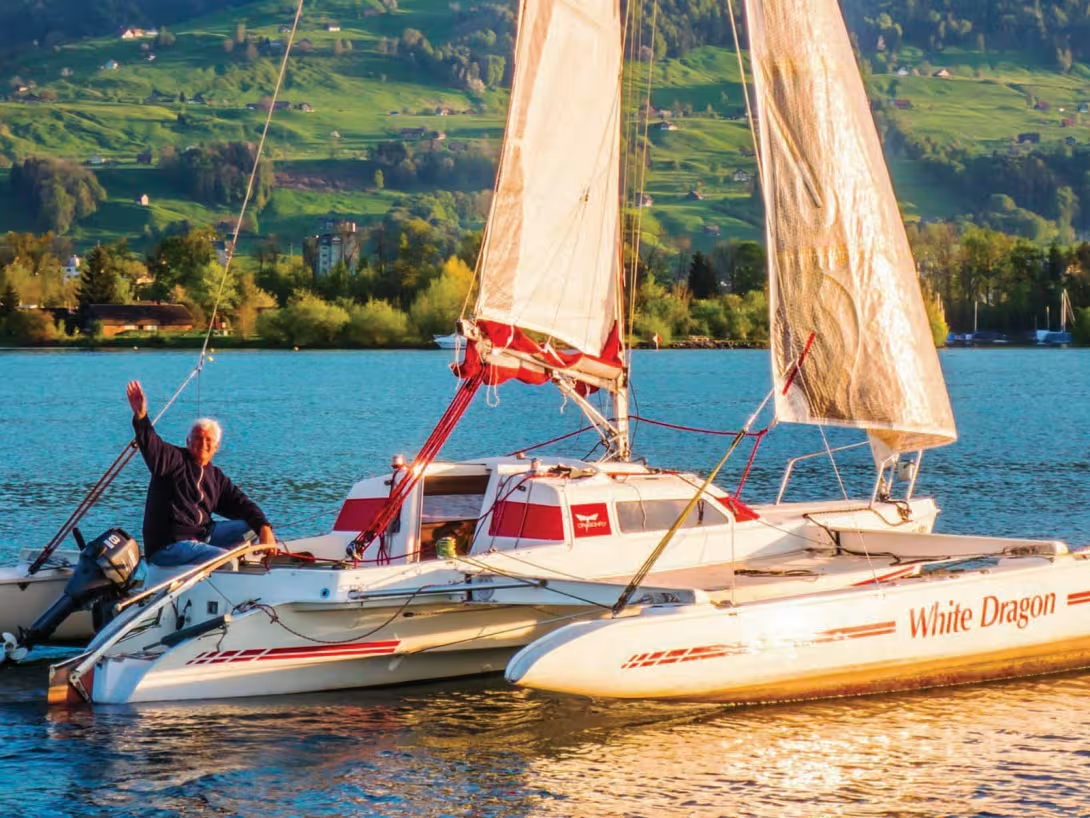
With its coachroof that covers the full width of its central hull, the Dragonfly 800 sticks to a recipe from many famous monohulls, including the Corsair or the Catalina 22. The only difference is that while the overall living space offered corresponds to that of a monohull of 6 or 7 feet shorter, the trampolines offer much easier circulation on deck - not to mention space for lazing around! The general design of the DF800 is very eighties-style, which is to be expected, given that it was launched back in 1984. The deck is perfectly horizontal, with a colored band around the windows and the coachroof, maintaining the look of many monohulls of the period, and the transoms are inverted and rounded. Below the waterline, the hulls are narrow, and the appendages can be raised up. The Dragonfly 800 continued its long and brilliant career under various versions: the MK1 then MK2 came with fixed linking arms, though these are still removable for transport and storage. In 1989, the Danish shipyard Quorning Boats launched the Swing Wing. This latter version, built in 143 examples, adopts the famous folding arms that are so practical for limiting your beam in port.
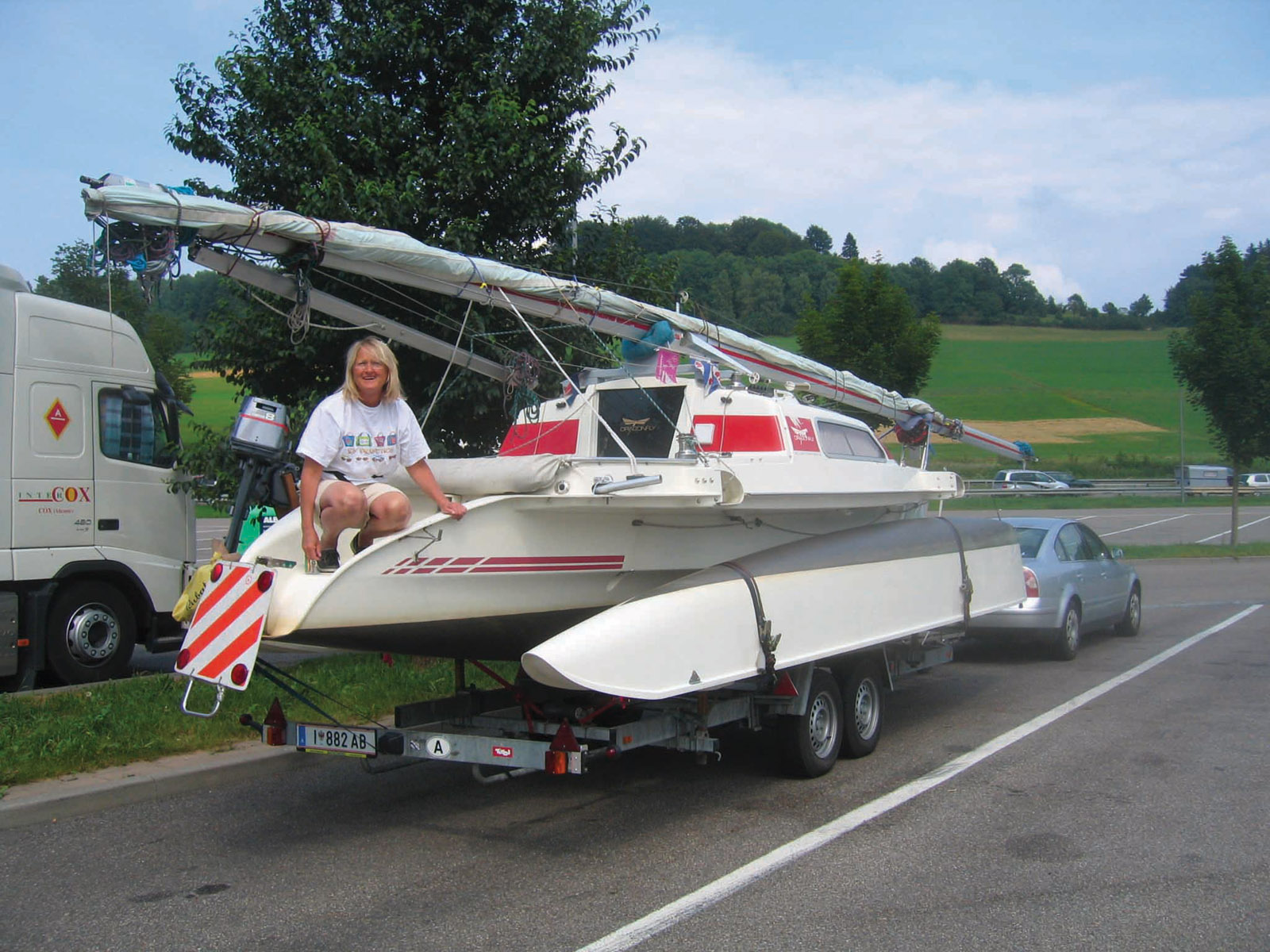
Earlier models were dismantlable, but not yet foldable.
Speed potential
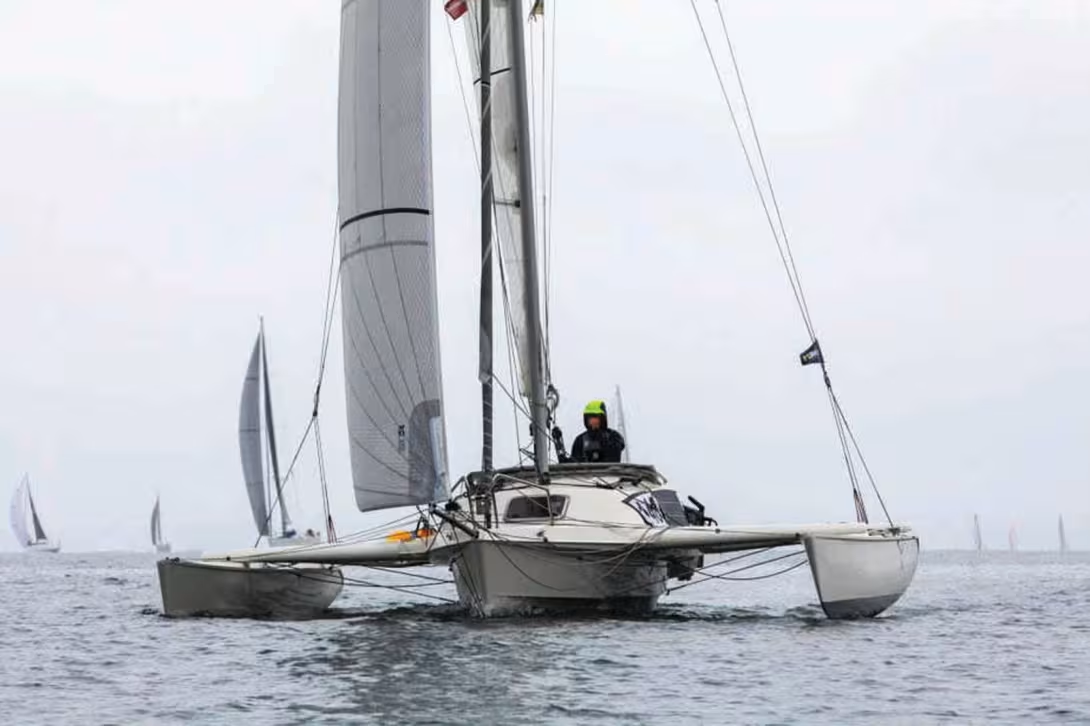
Well born, the DF800 benefited from the advice of Paul Elvström himself during its development. When launched, this small trimaran saw some exceptional results on the racecourse: in 1985, an 800 even managed to win - in its class - the Round Britain Race. And in 2021, the little trimaran is still making a name for itself, with a father and son crew managing to win in real time in the most recent edition of the Round Denmark Race, a 650-mile event that was particularly difficult this year due to the lack of wind. Despite a fairly heavy displacement and moderately volumed floats, the DF800 reveals impressive speed capability and a seaworthy enough character to venture offshore. The Racing rig, with a mast one meter (3 feet) taller and 20% more upwind sail area, is obviously much livelier than the more placid Cruising configuration. The only constraint is that you’ve got to limit the payload at all costs, something obviously not that easy when you’re coastal cruising.
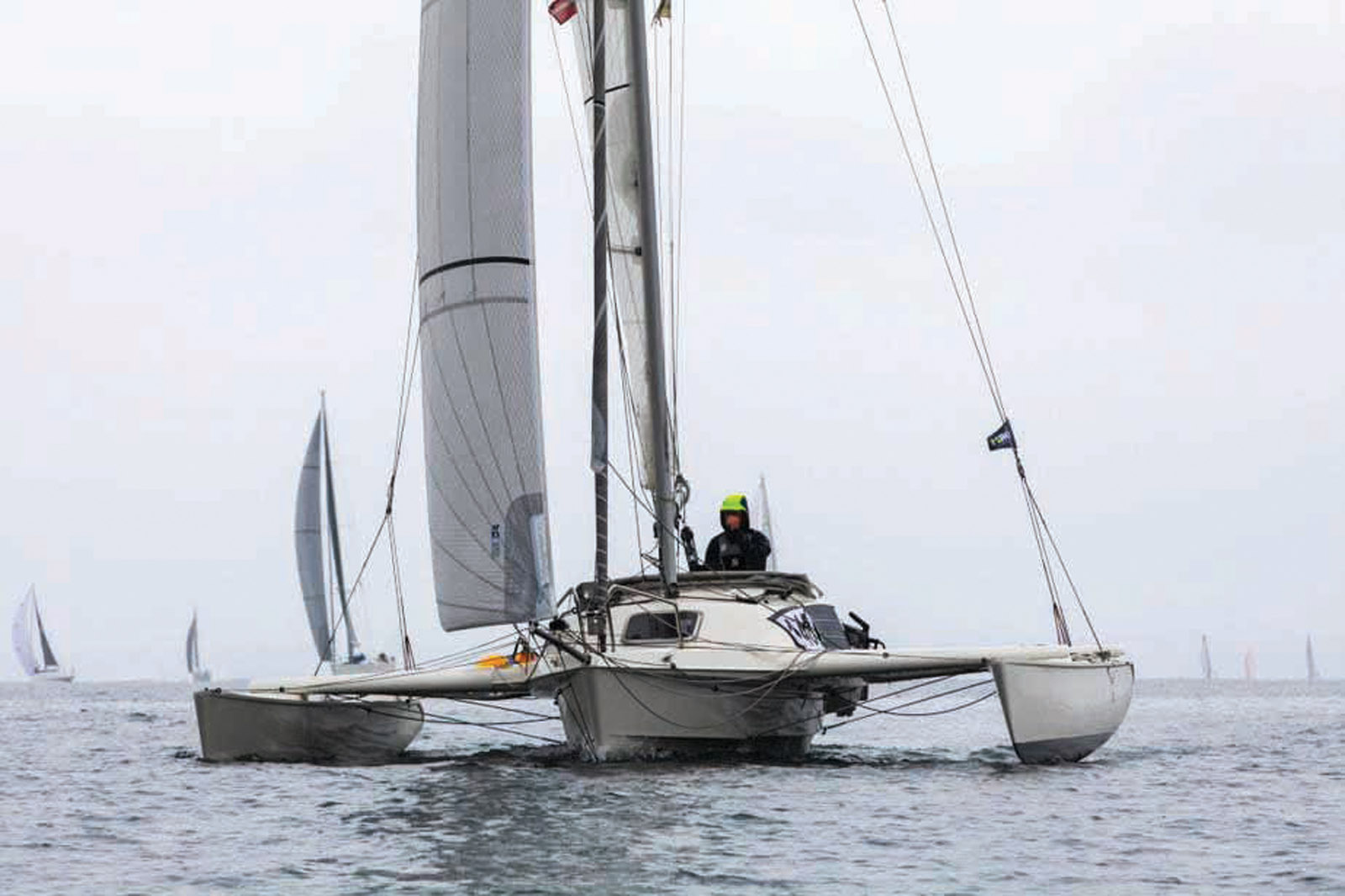
Well-sailed and equipped with a decent sail wardrobe, the DF800 can do outstandingly well on the racecourse.
Spartan comfort
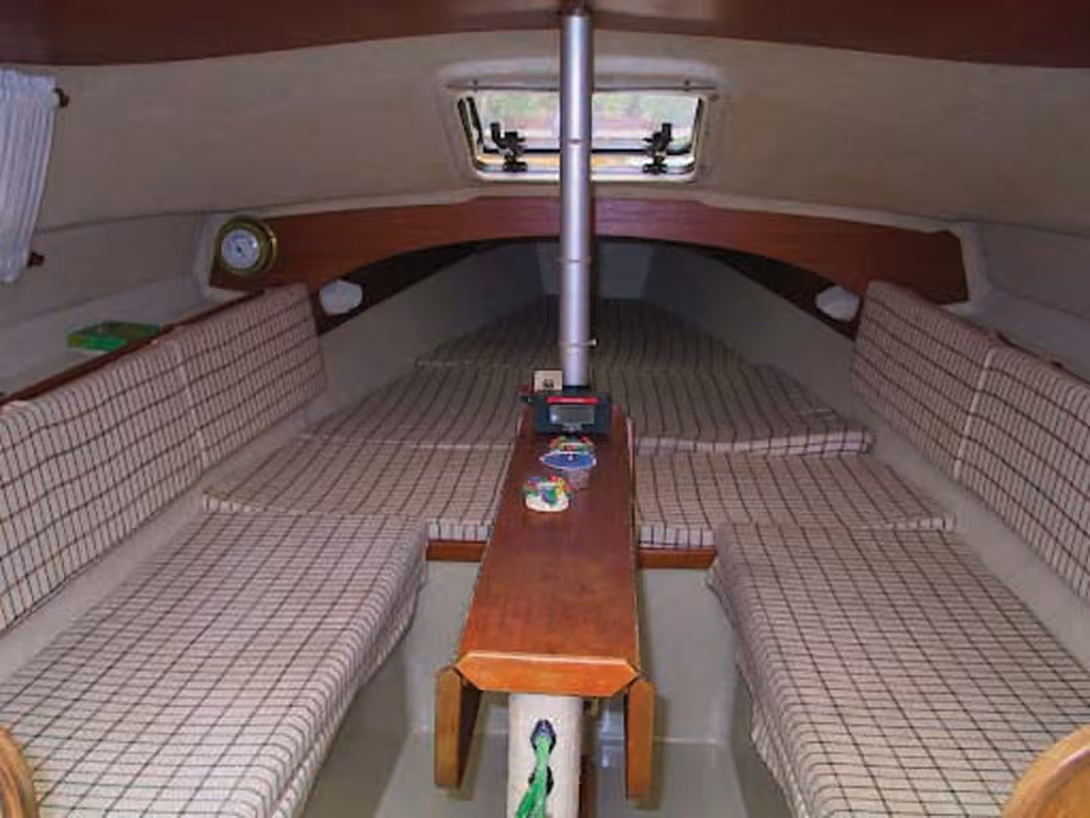
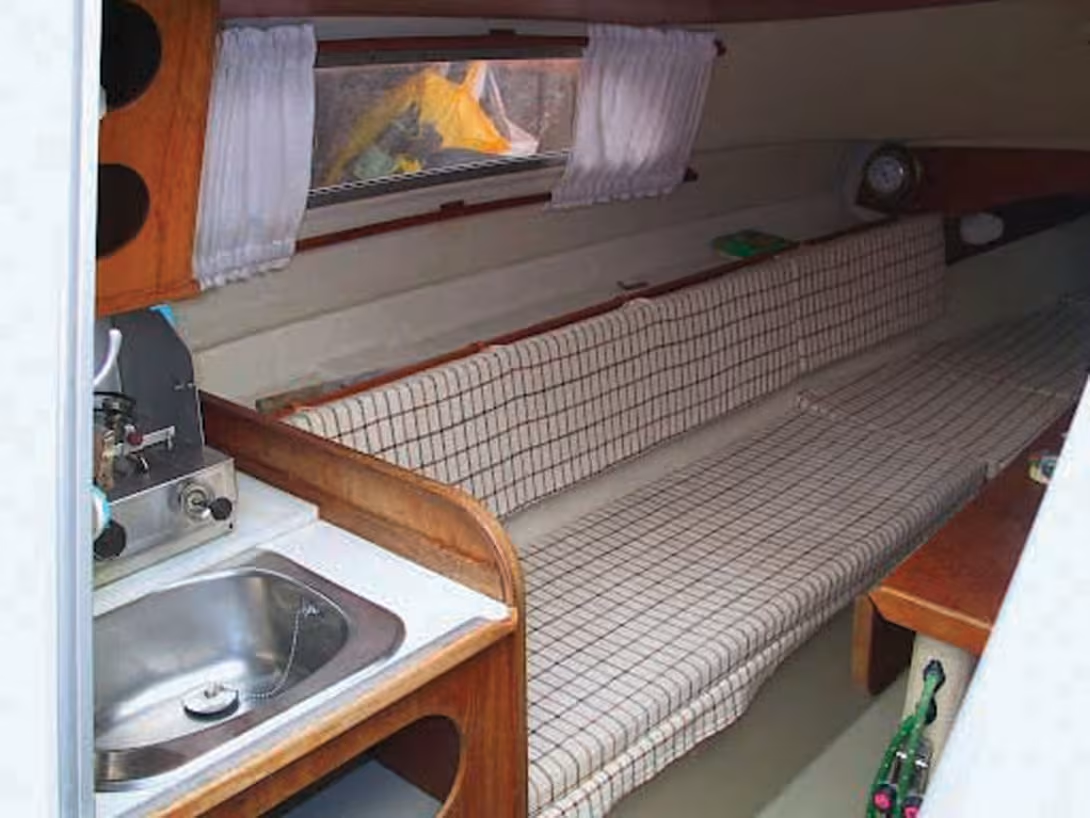
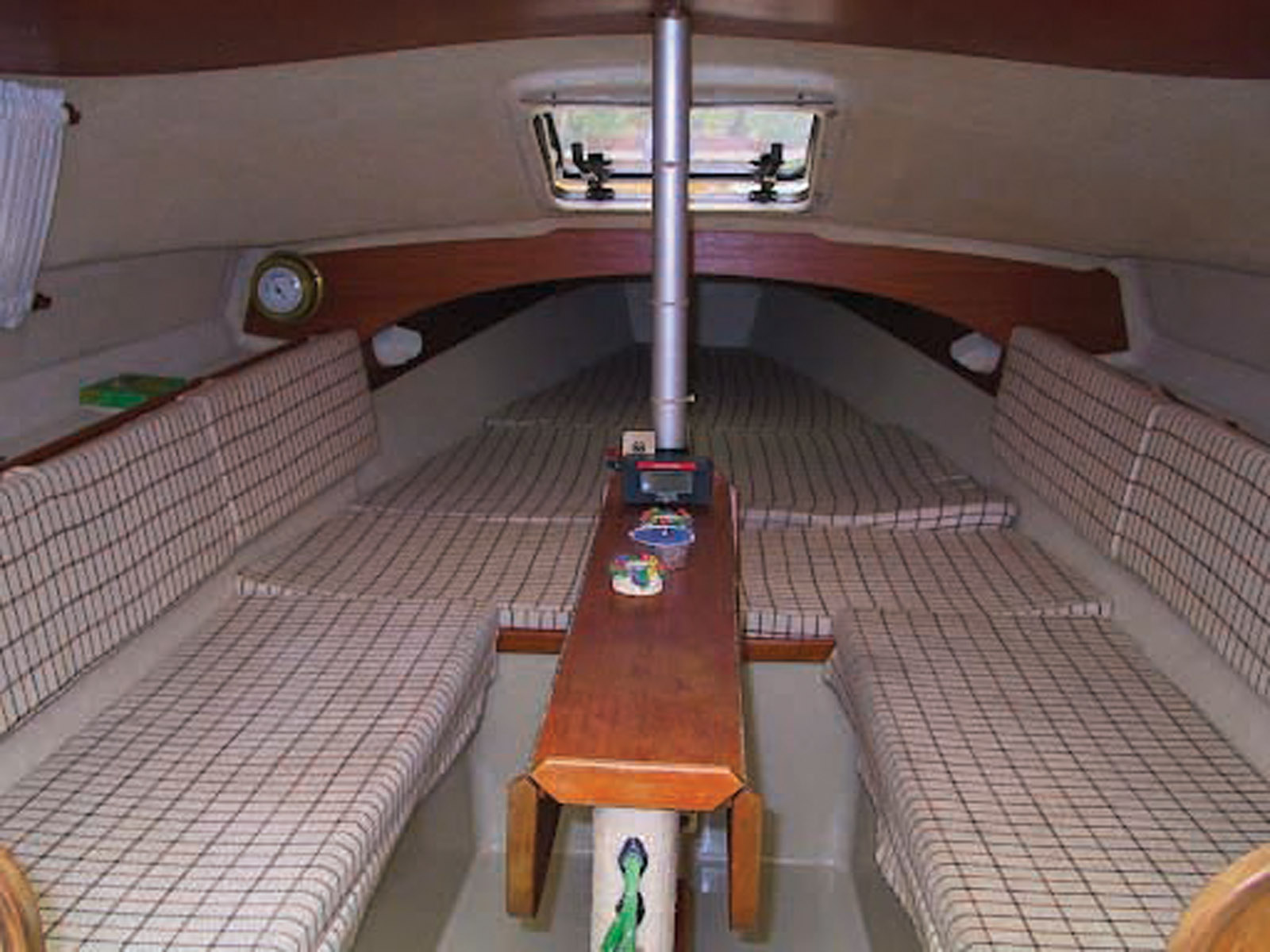
The central hull, widened above the waterline thanks to a marked chine, manages to house a cockpit that is almost open to the side trampolines. The beam is good, but the imposing mainsheet traveler isolates the helmsman at the back. As for the long open sugarscoop, this pushes the outboard and autopilot aft... And for the cabin, well this is unsurprisingly somewhat spartan. Inside, the layout is limited to four berths, a galley unit and some storage space. The saloon table can be lowered, and topped with a removable mattress, creating an XXLsized sleeping area. Headroom is obviously not huge. You could envisage cruising with two people, or maybe a couple with two young children, with a level of comfort that understandably resembles nautical camping.
 |
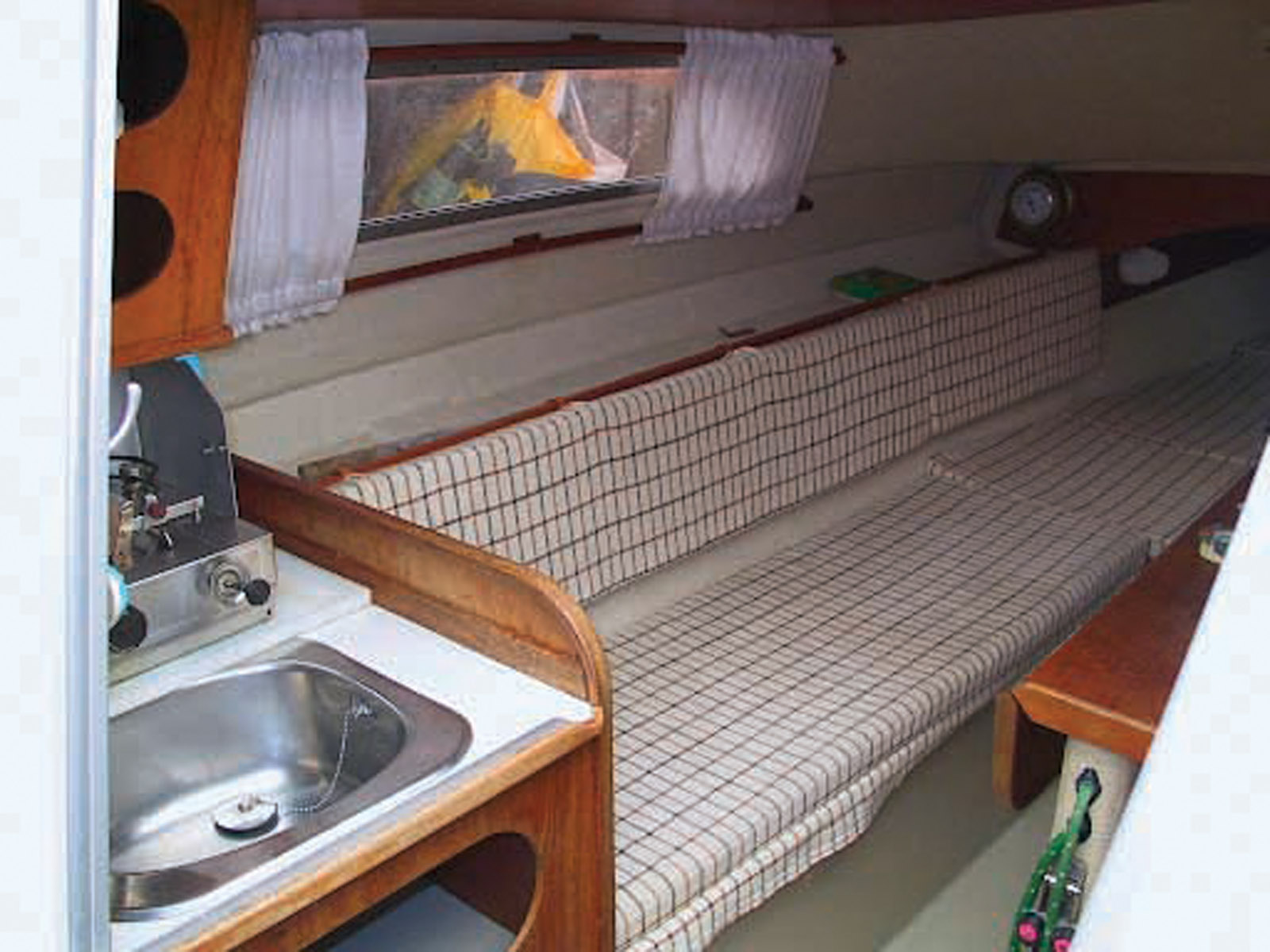 |
The interiors are very simple but well finished.
Conclusion
The Dragonfly 800 is an excellent choice for anyone looking to go coastal cruising in summer, and/or do some racing. This small, robust trimaran is accessible to more limited budgets, making it an ideal first multihull! It is a model often seen in northern and central European waters, a little less so elsewhere. Occasionally they can be picked up in Florida - fans based in the United States take note.
Points to check
We can’t ignore the fact that the earliest models are now over 35 years old with the most recent vintages being from the 2000s. DF800s that were built in the 1980s will likely require a major refit - running and standing rigging, engine, deck hardware, interior finishes, upholstery, electrics, and so on, while a model launched in 2005 will probably be ready to sail and be in excellent condition. The asking price must of course take into account the age of the model but also any recent equipment that may have been installed. The good news is that whichever version you choose - fixed or folding arms - the Dragonfly structure warrants little criticism.
The Pluses:
+ Convincing performance
+ Attractive price
+ Build quality
The Minuses:
- Dated cockpit ergonomics
- Limited interior volume
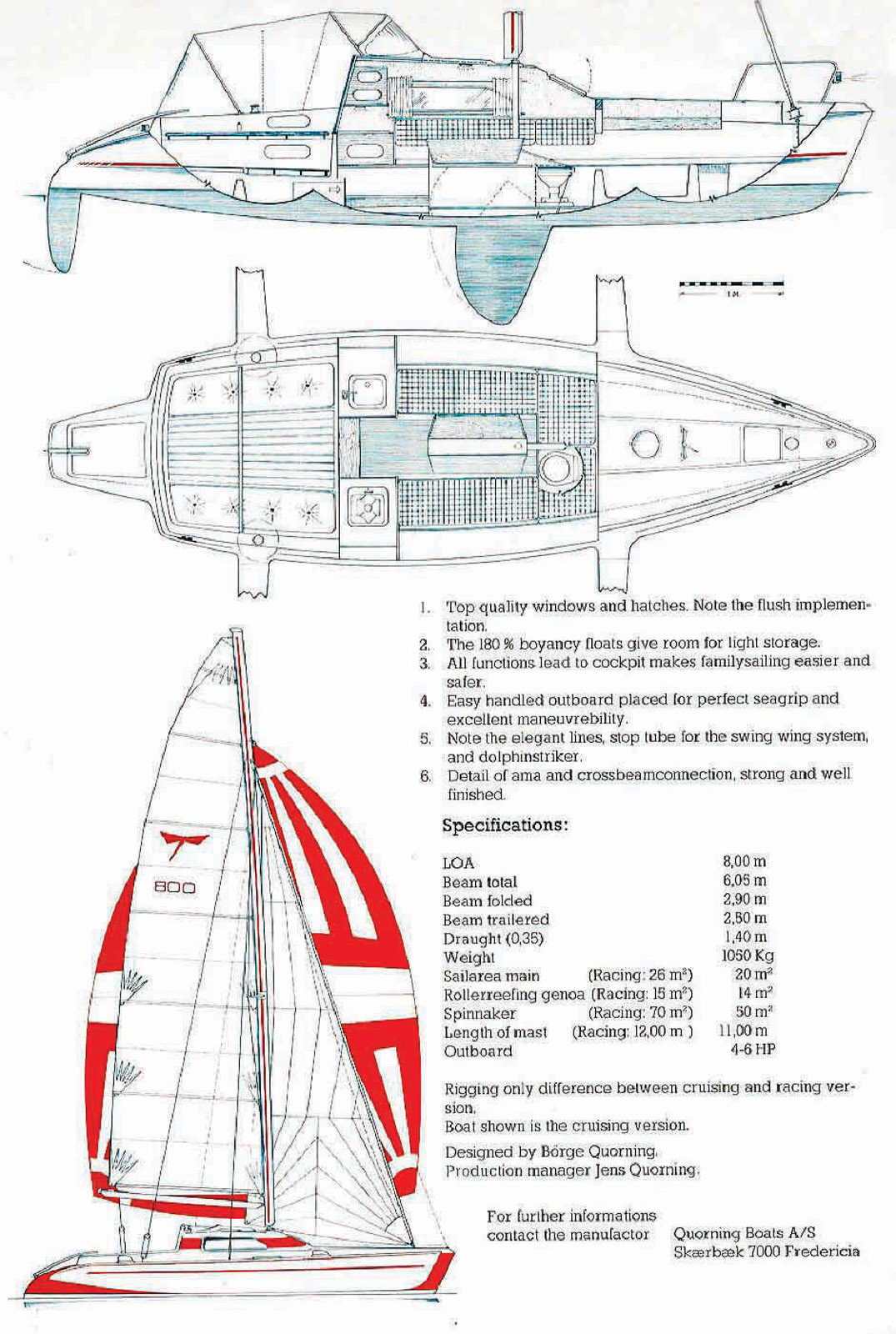
Technical Specifications
Builder: Quorning Boats
Architect: Börge Quorning
Construction: PVC/glass/polyester sandwich
Length: 26’3” (8.00 m)
Beam: 19’10” or 19’10”/9’6” (6.05 or 6.05/2.90 m)
Draft: 12”/4’7” (0.30/1.40 m)
Displacement: 2,315 lbs (1.05 t)
Upwind sail area: 365/440 sq ft (34/41 m²)
Mainsail: 215/280 sq ft (20/26 m²)
Genoa: 150/161 sq ft (14/15 m²)
Motors: 4 to 8 HP outboard
Production: 400 units built from 1985 to 2005
Price: from € 20,000 ex-tax