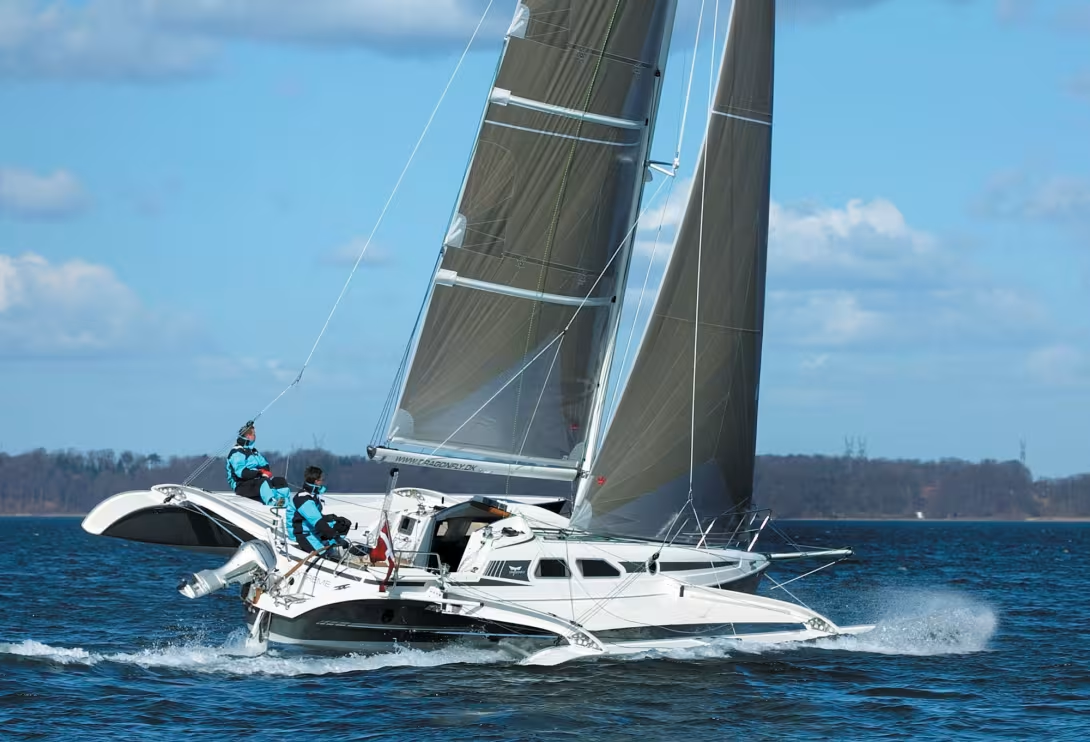
With the beam of a monohull once folded, and performance allowing you to cruise at double figure speeds once unfolded, its qualities are equal to its price: high. 20 years after its launch, the Dragonfly 920 has become very affordable, and is still as much fun to helm. So, why not take advantage!
Infos pratiques
- Le chantier : Dragonfly 920 Touring
- La fiche technique
- Découvrez notre vidéo exclusive
- Financez votre Dragonfly 920
- Assuez votre Dragonfly 920
- Articles autour du Dragonfly 920
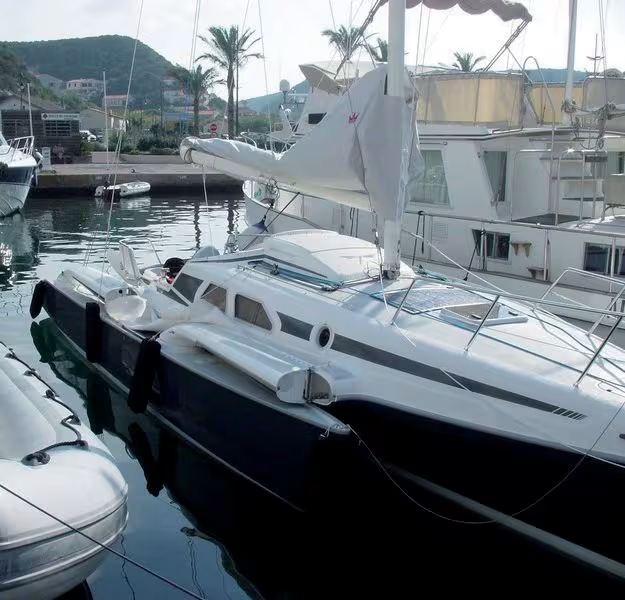
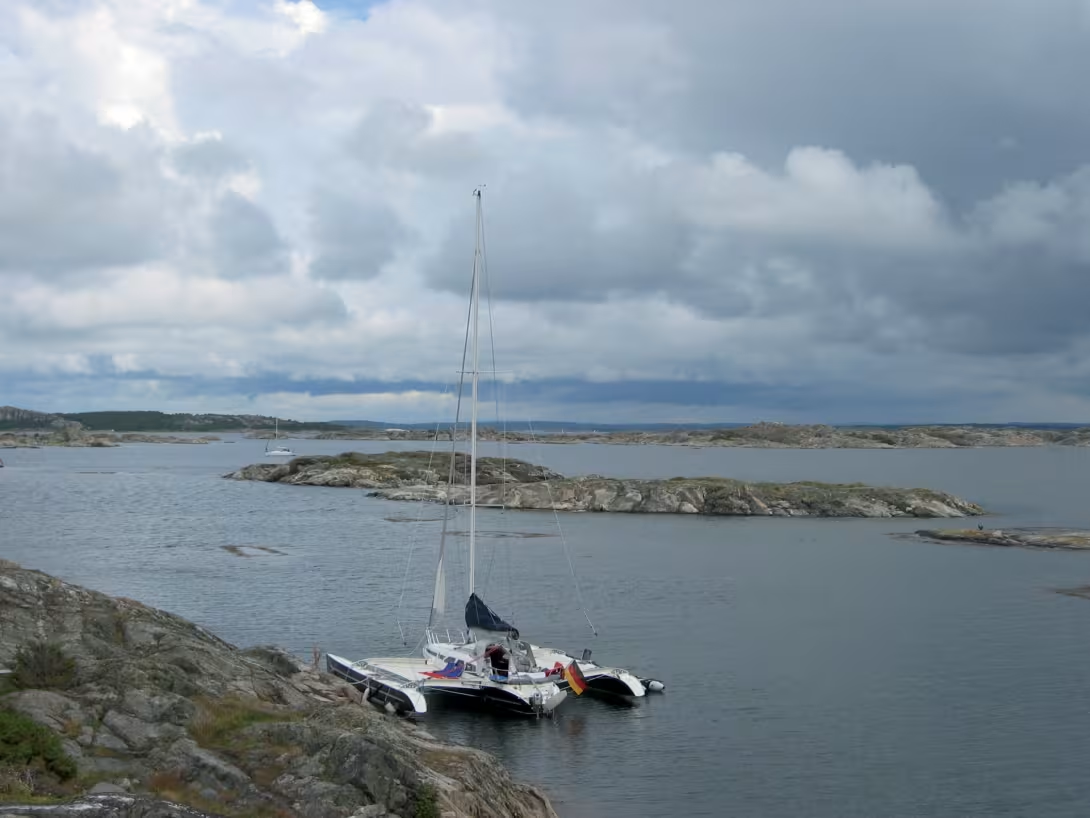
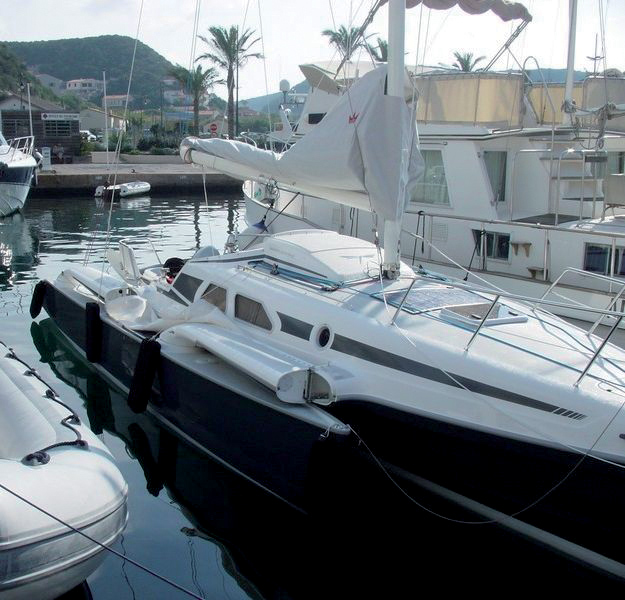
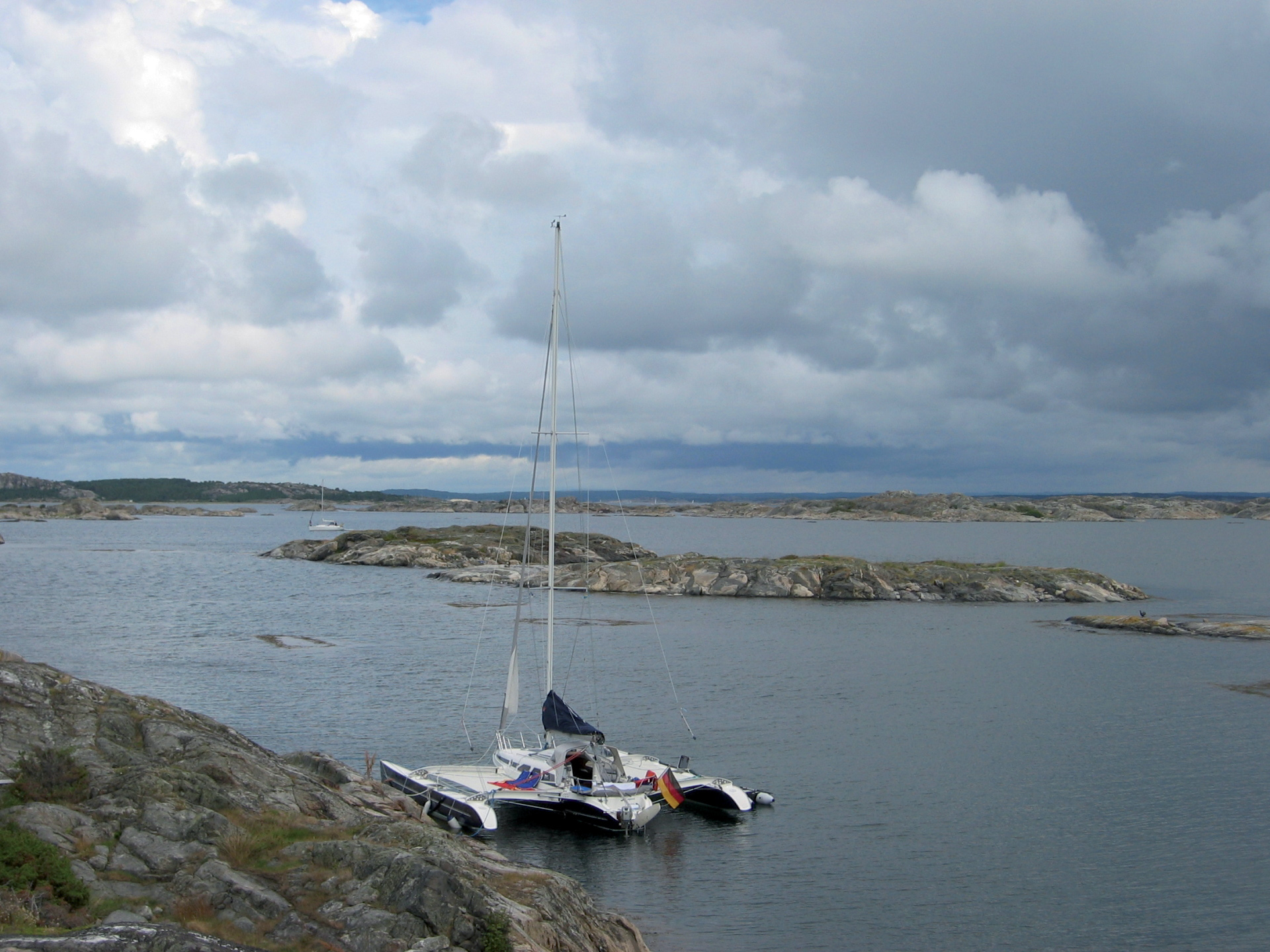
People who dream about multihulls often object to paying the marina berth… It must be admitted that this harbor problem is the main obstacle to acquisition of a multihull, which otherwise offers the most fantastic pleasure, consisting of long planing runs and excitement. To solve the problem, the Danish builder Quorning Boats has been folding the arms of its trimarans since 1989… The 800 first of all, then all the trimarans in its range ever since, with the mechanism called Swingwing, allowing the floats to be pivoted horizontally along the hull by simply using one line, then finishing your approach under engine, to tie up in a berth for a monohull of the same size. In the 90s, the Dragonflies made up a range of fast, exciting cruisers, covering programs from day sailing to ocean cruising. Rid of their major disadvantage – a large beam in the harbor – they were very successful, before being replaced from 2006 onwards by a new generation of trimarans (D25, 28, 32 and 35).
A long career
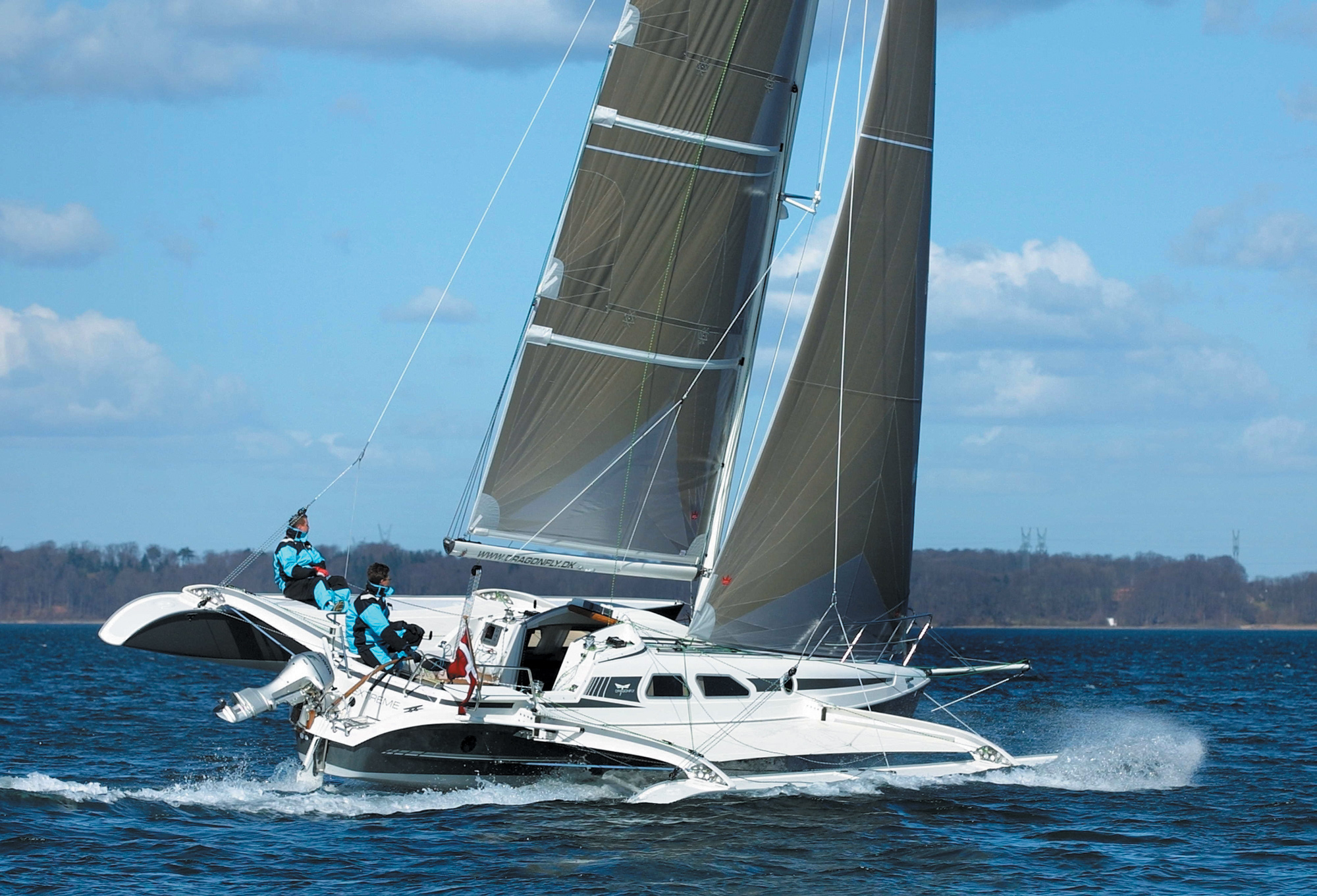
The Dragonfly 920, designed by Børge and Jens Quorning and launched in 1996, has been available in three versions and undergone certain developments throughout its career. 168 examples came out of the Skaerbaeck yard between 1996 and 2008, the first were built in a glass/squared foam/polyester sandwich; the series developed by then using vinylester. The ‘Touring’ version of the early years benefits from finishing we are used to seeing on production boats from experienced major builders, rather than from the small trimaran builders of that period. It was notably one of the first boats to introduce, a year after its launch, a rolled filament carbon mast as standard. The fittings were also selected from the best products available at the time, from Frederiksen and Andersen for the winches. In 1998, the 'Racing’ version was attired with a carbon boom 50 cm longer, and a heavily-roached mainsail, boosting performance. But in 2003, the ‘Extreme' version arrived on the scene, taking the title of 'European Yacht of the Year’ for the multihulls, in 2004. Floats a meter longer and above all more voluminous, raised arms 50 cm longer, increasing the beam by a meter, and a mast 1.5 m taller, rigged with a more generous square-headed mainsail, provided it with the additional horsepower guaranteeing increased speed in light weather, and even better passage through rough seas.
Practical accommodation
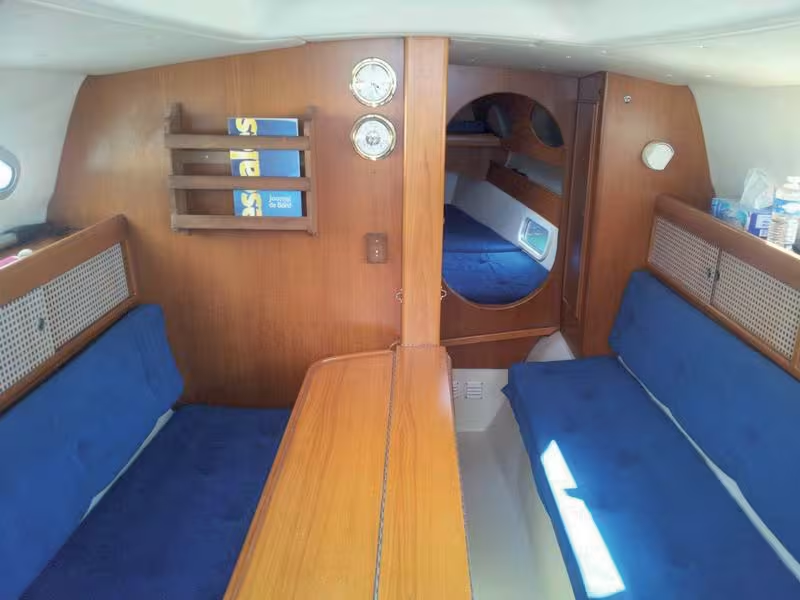
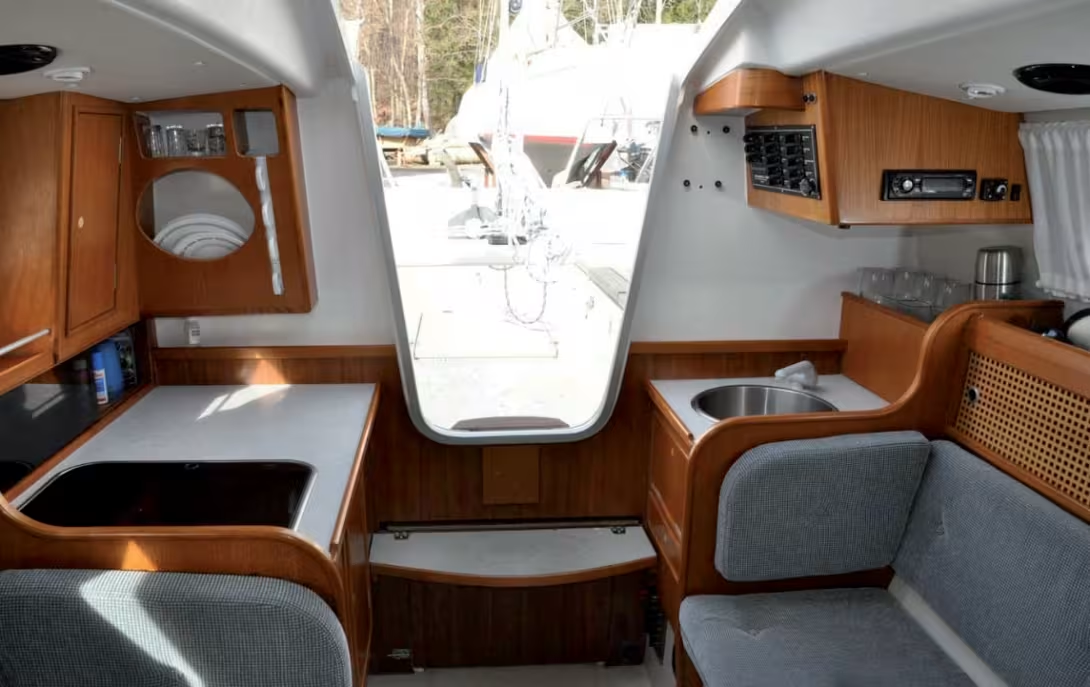
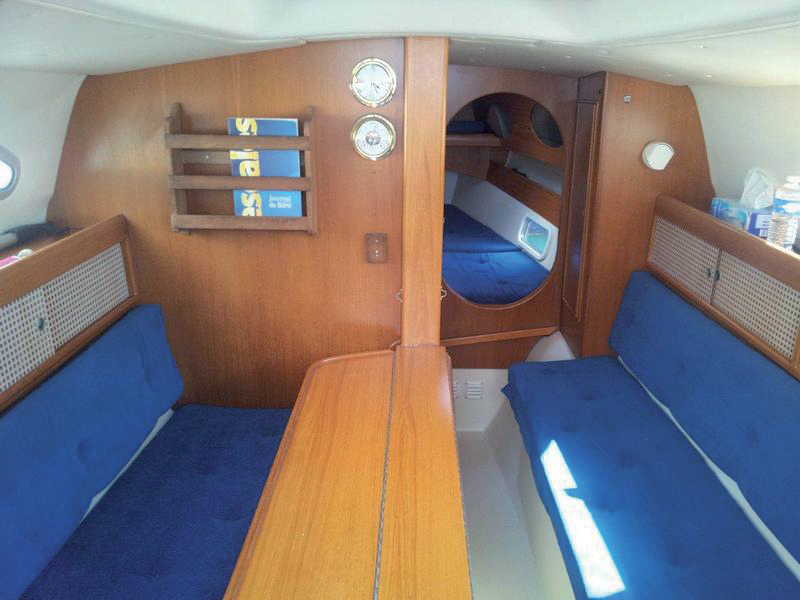
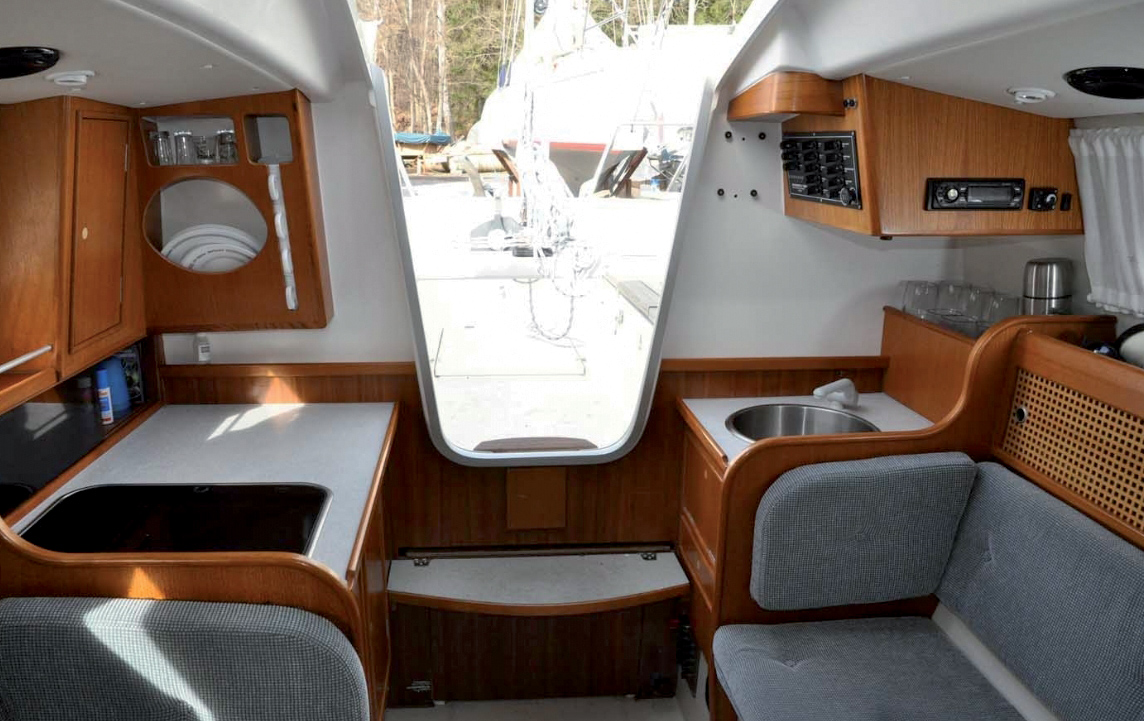
The keen interest in the 920 comes from its accommodation for 4 people and its liveability/performance/comfort ratio. Aboard, we find the standards current in a monohull of the same size, provided with all the essential functions, but slightly smaller: on entering, to starboard, the galley with a sink and two burners, to port, depending on the version, a foul weather gear locker or mini chart table (ideal nowadays for our iPads – the development was well thought-out); the saloon settees can be turned into 70 cm wide berths either side of the centerboard case, which supports the table. Further forward, a closed heads faces a hanging locker, and the forward cabin has a quite wide V-berth for a trimaran of this size, as the forward hull sections are quite voluminous. The headroom of 1.78 m at the entrance, but just 1.54 m further forward may however seem not enough nowadays. But the good ergonomics and the warm, reassuring atmosphere of the teak, which is used in abundance for bulkheads and furniture, as well as the velvet of the seating, faithful to the image we have of the most prestigious builders of the Baltic, contribute to the cozy comfort. Stowage spaces are clever, as are the locker doors in canvas openwork. Another special Scandinavian feature: you can always equip yourself with a cockpit tent, which extends the sprayhood, and thus enjoy an exterior terrace saloon. Everything is well-finished and inspires confidence, with sufficient independence to envisage some nice family cruises.
You mentioned coastal cruising?
When you leave the harbor, unfolding the arms is carried out by winching in a line, then locking the waterstays. The operation takes no effort and two minutes. But from the first few cables, you will have a smile fixed permanently on your face. In ten knots of wind, you can sail at 7 – 8 knots to windward, and more off the wind. With between 15 and 20 knots of wind, you will systematically do over 10 knots, and with over 20 knots, having reduced sail considerably, you can count on a constant 15 knots. In all cases, you will find the radius of your program is considerably enlarged. Its weight, relatively heavy for this type of boat, and its architecture give it a gentle motion and the perfecting of its control lines allows novices (after a few lessons, nevertheless) to easily exploit the potential of this trimaran, which finally proves to be fun for anyone wanting to get into trimarans.
The points to be checked and the precautions to be taken
As the folding system is made up of many articulated elements, subject to numerous manipulations, it is advisable to pay particular attention to the stainless steel pins and the arms’ wire martingales, as well as the Spectra lines of the pendants and the trampoline. All the elements ensuring the locking of the floats and the rigidity of the platform must be meticulously maintained and changed every five years. As beaching is easy and the consequences for a hull in sandwich are frequent, it’s best to tap with a mallet to reveal any possible delamination of the composite and plan for the cost of any necessary repair work. The centerboard and the pivoting rudder deserve the same check. Finally, on certain models, the sails in Black Technora proved to be ultra-fragile, and a careful inspection will avoid any disappointment. The Dragonfly 920 is transportable, but to remain within the towing width limit of 2.5 m, the floats have to be dismantled, and this operation is to be carried out by an experienced professional. Otherwise, you could have some problems refitting them. Calling on a professional transporter can prove to be a wiser choice. Whether chocking the boat ashore or on a trailer, it is essential to use Airex foam, which the hull will crush, in place of wooden blocks or tires, to avoid any delamination.
Price
Dragonfly 920 Touring Extrême
Standard new € 110 k € 159 k
Second-hand € 65 to 80 k € 80 to 95 k
The plusses
Easy pleasure under sail
Quality of finishing and perfecting
Flexibility of use
The minuses
High purchase price
Fastidious maintenance
Transport and chocking tricky
Specifications: Touring/Extrême
|
Hull length |
9.2 m |
|
Waterline length |
8.75 m |
|
Folded length |
10.50/11.10 m |
|
Beam |
6.75/7.80 m |
|
Folded beam |
3.10/3.25 m |
|
Max. draft |
1.55 m |
|
Draft, appendages raised |
0.45 m |
|
Unladen weight (mass empty) |
1800/1850 kg |
|
Fully laden displacement (maximum mass) |
2500 kg |
|
Windward sail area |
55/69 m² |
|
Downwind sail area |
106/119 m² |
|
Mainsail area |
33/44 m² |
|
Genoa area |
22/25 m² |
|
Asymmetric spinnaker area |
73/90 m² |
|
Gennaker area |
40/45 m² |
|
Air draft |
14.60/16.10 m |
|
Number of berths |
4 |
|
Fuel capacity |
20 liters |
|
Fresh water capacity |
60 liters |
|
Max. headroom |
1.78 m |