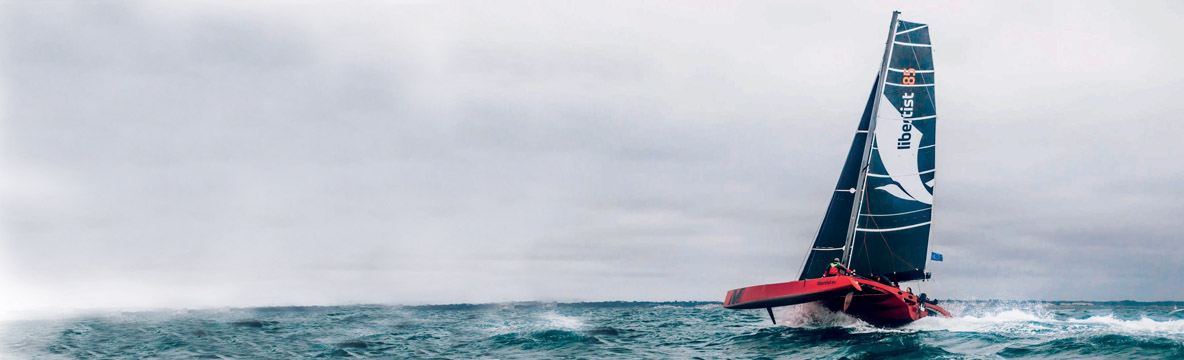
Erik Lerouge is well known for his highly seaworthy, performance multihulls - undeniable qualities that the architect defends thanks to an uncompromising vision. The Libertist 853, for example, was launched in a first version with fixed linking arms - simpler, stiffer, lighter... However, Erik was well aware that customers would end up asking for “the same, but in a folding version”. Well, here is this long-awaited new version!
Infos pratiques
- Le chantier : Libertist 853 - Folding Version
- La fiche technique
-
 Découvrez notre vidéo exclusive
- Financez votre Libertist 853 - Folding Version
- Assuez votre Libertist 853 - Folding Version
- Articles autour du Libertist 853 - Folding Version
Conditions: 8 to 12 knots of wind, slight chop
The problem of the lack of marina slips for multihulls in most of the world’s major yachting regions, and the explosion in prices as soon as the width of a slip starts to get anywhere near its length, logically revives the relevance of the variable-geometry trimaran inventions of pioneers Ian Farrier and Borge Quörning. In the 1980s/1990s, the main objective was to facilitate the transport and wintering of small, economical multihulls - the operation required a good half-day and two strong men to dismantle the floats of an Allegro (1976) or a Speed 770 (1980).
Nowadays, the #1 argument for folding trimarans is first and foremost to be able to access a berth - and at the same price as a monohull! Today, this multihull production sector is relatively prosperous (even if volumes remain low in relation to overall production). Manufacturing and selling folding trimarans within a sustainable economic model remains a complicated challenge, as the technique is costly to implement, and prices bear the brunt as a result.
Folding trimarans past and present
Let’s start with the ones that are no more: the French Bandit did not survive, despite the interest of its creations, nor did the Belgian Trimax, and we miss the superb all-carbon Seaon 96 by Jan Gapinski and Stephan Tornblom. In the early 2000s, Peter Bosgraff’s large Woestenburg 4 (only one built) surprised and amazed, but had no successor.
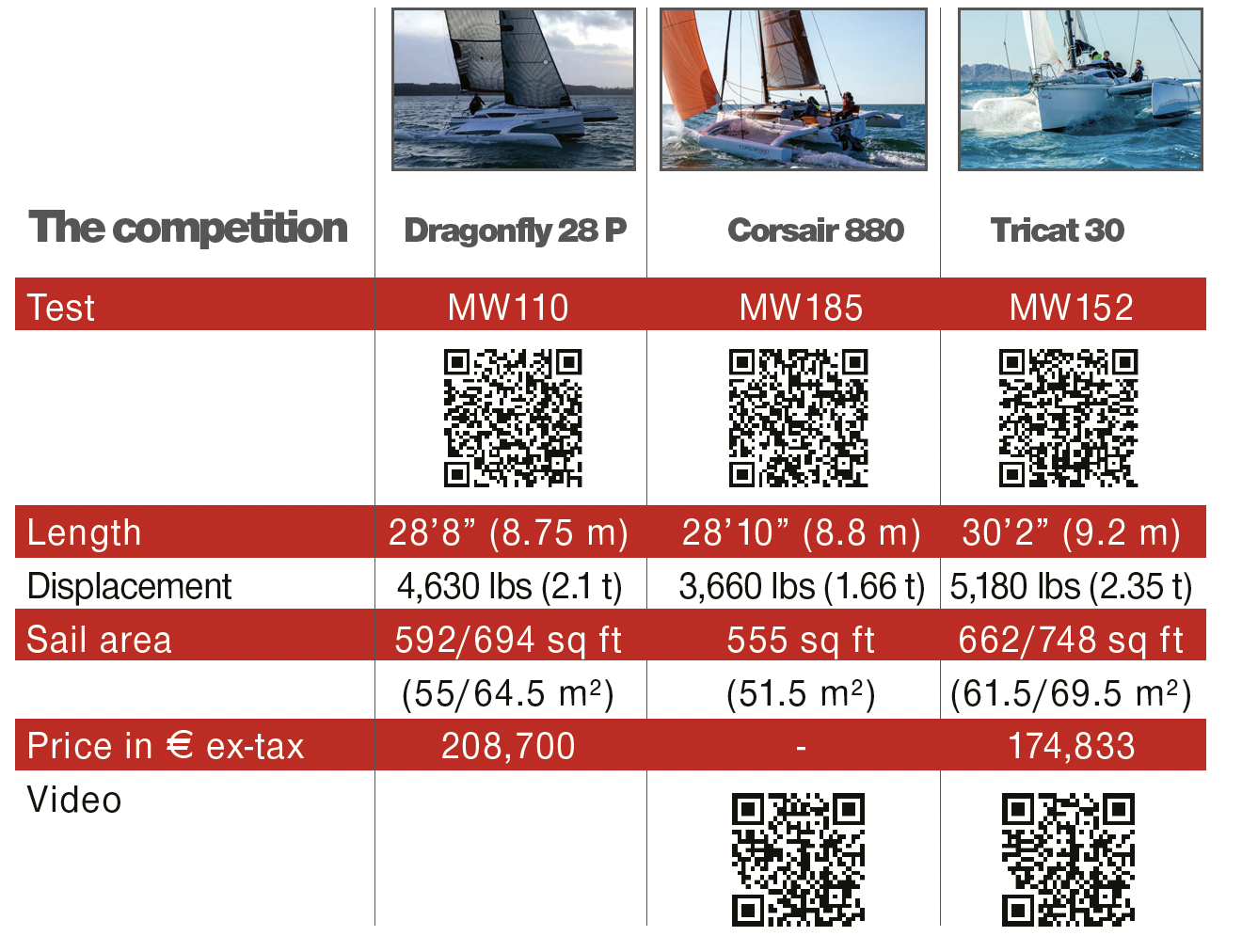
Corsair (Vietnam) and Dragonfly (Denmark) remain the leading names in the folding trimaran concept, with production exported all over the world. French manufacturer Tricat is also doing well, with over 200 units produced. Tricat models range in size from 20 to 30 feet. Astus, which began production in 2005, cleverly exploits the folding-ultra transportable 16 to 24-foot niche. Farrier’s fine single-built creations are now dedicated to high-quality single-built licensed constructions.
The overall relevance of the folding trimaran concept (smaller footprint, shallow draft, transportability, and sporting thrills) has encouraged the emergence of new players. Rapido, with talented designers Morelli- Melvin, has now made a remarkable foray into the very high-end
(40-50 feet), while Libertist made its first appearance in folding mode with the 703 two years ago. The 853 folding version was presented at the International Multihull Show at La Grande Motte in 2023.
Made in Poland
Polish builder Rega, author of the early, fixed-arm Libertist models, enjoys an excellent brand image with naval architects and shipyards alike - for example, the Italian company Vismara entrusted Rega with the construction of several large carbon units, including the superb V100 (designed by Guillaume Verdier). Boat Project has now been entrusted with the construction of the L853. Production remains Polish, as the new manufacturer is based near Gdansk.
The arms, bulkheads, daggerboard, and foils of the folding L853 are made of foam/carbon/epoxy sandwich, while the hulls are made of foam/bi-axial glass/vinylester, as are the rudders. All composites are infused.
The choice of these materials by the architect and Boat Project is logical for this type of sporty multihull and is a notch below the exceptional Seaon 96 we’ve already mentioned and the Seacart 30 (both made in full carbon and even prepreg for the S30) but favors versatility of use.
A striking design!
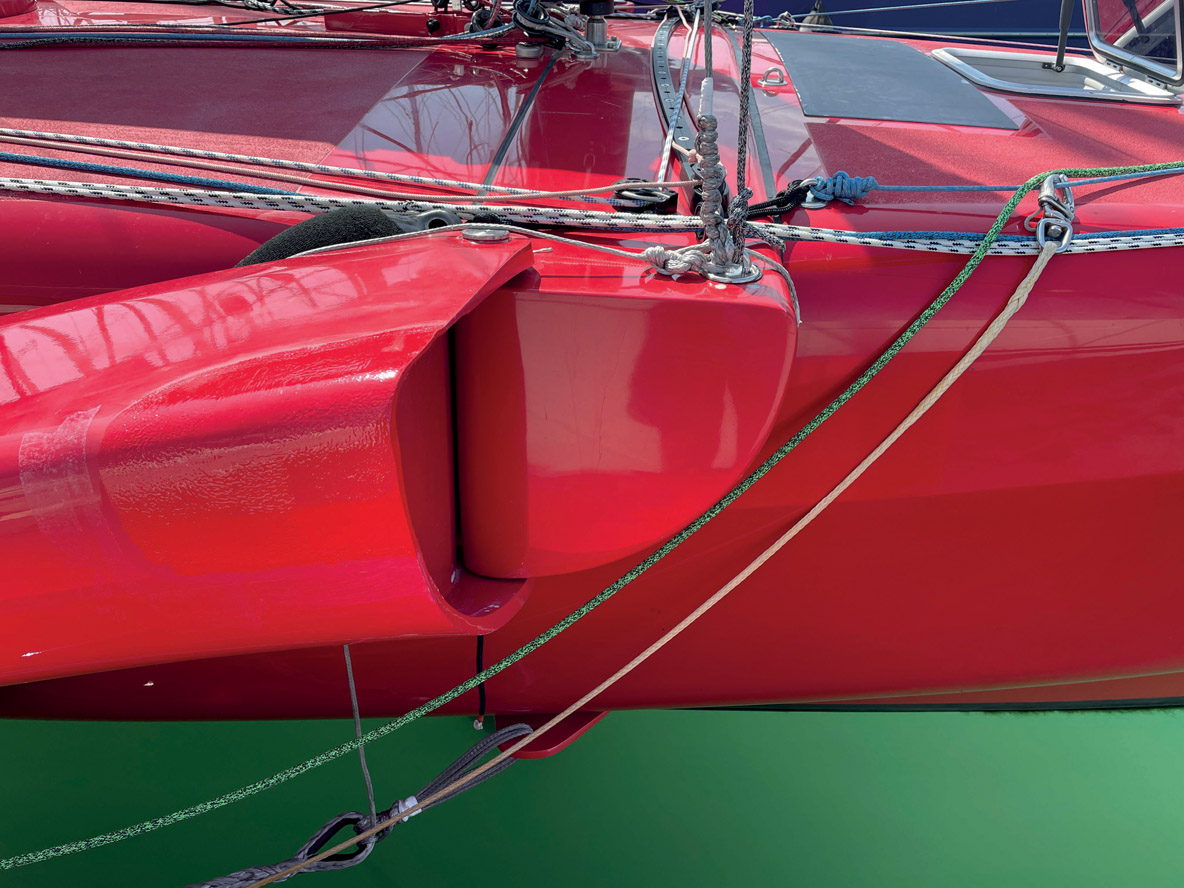
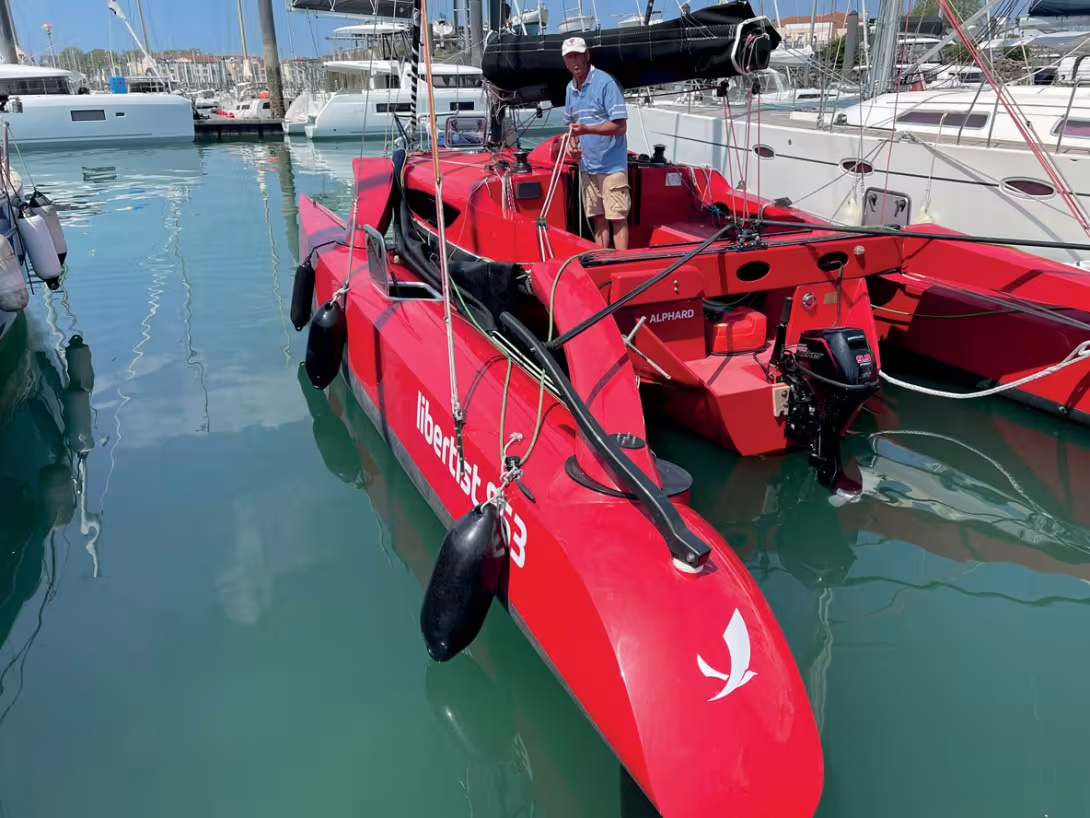
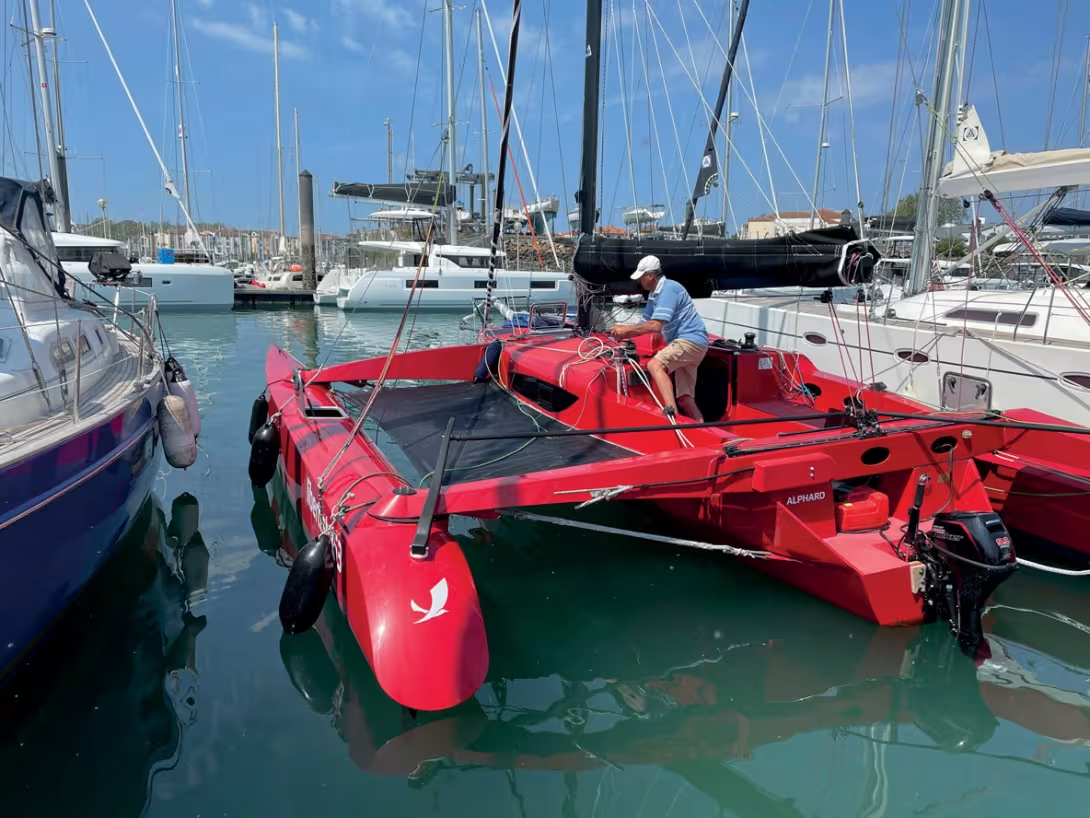
In 2019, we wrote that the 853 with fixed arms was beautiful and that its body-builder shapes provoked immediate seduction. Against all expectations, four years later, the emotion is identical with the folding version, which is quite a feat! Indeed, the folding mechanism reveals the physiology of a trimaran’s attachments, which, on the pontoon, are not always the most graceful. On the Libertist, the anchoring of the cross-arms on the float rotation plates and the composite hinges of the central hull are magnificent, as is the material used (carbon-epoxy) and the skill of the shipyard’s workers allowing these bold shapes and respect for elegant proportions.
The scarlet-red two-component polyurethane paint is beyond reproach - its quality of application leaves no room for defects in appearance because, well, there aren’t any!
A simple, seamanlike interior
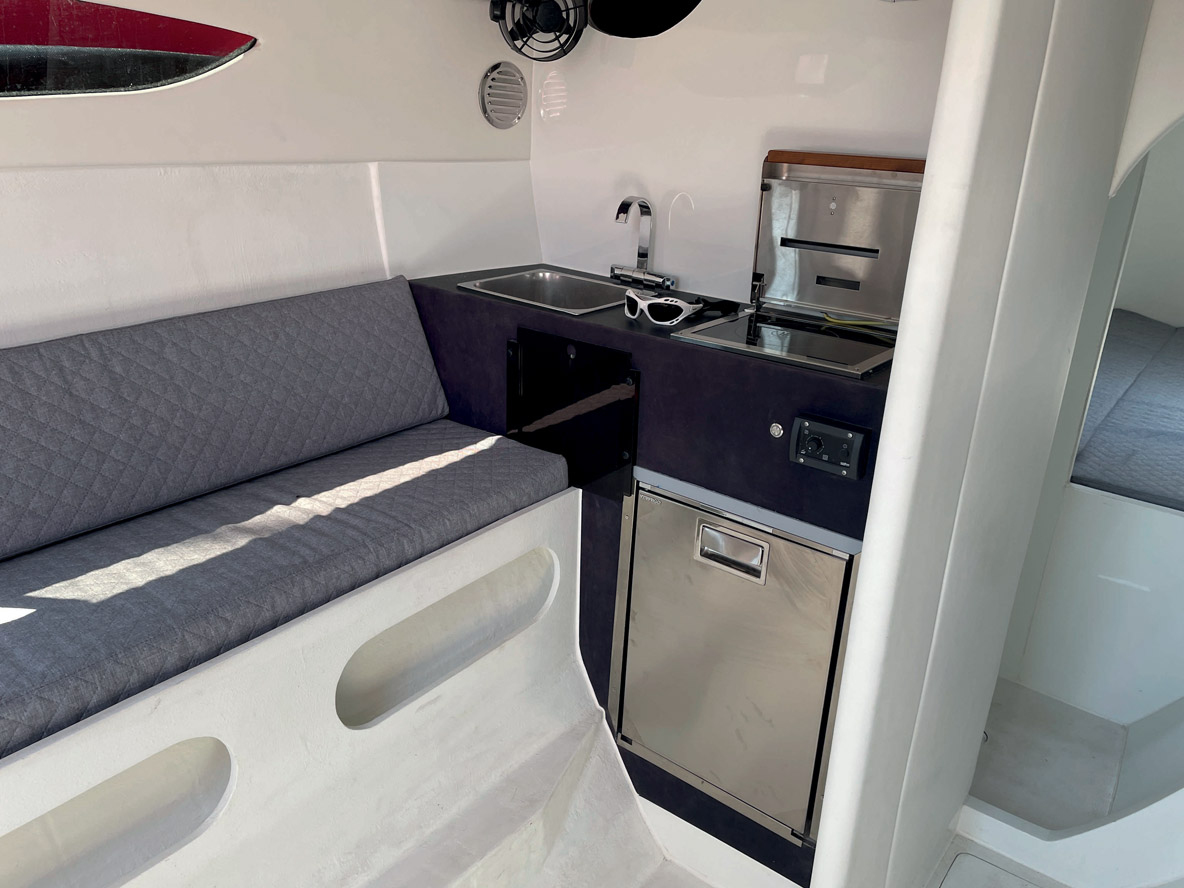
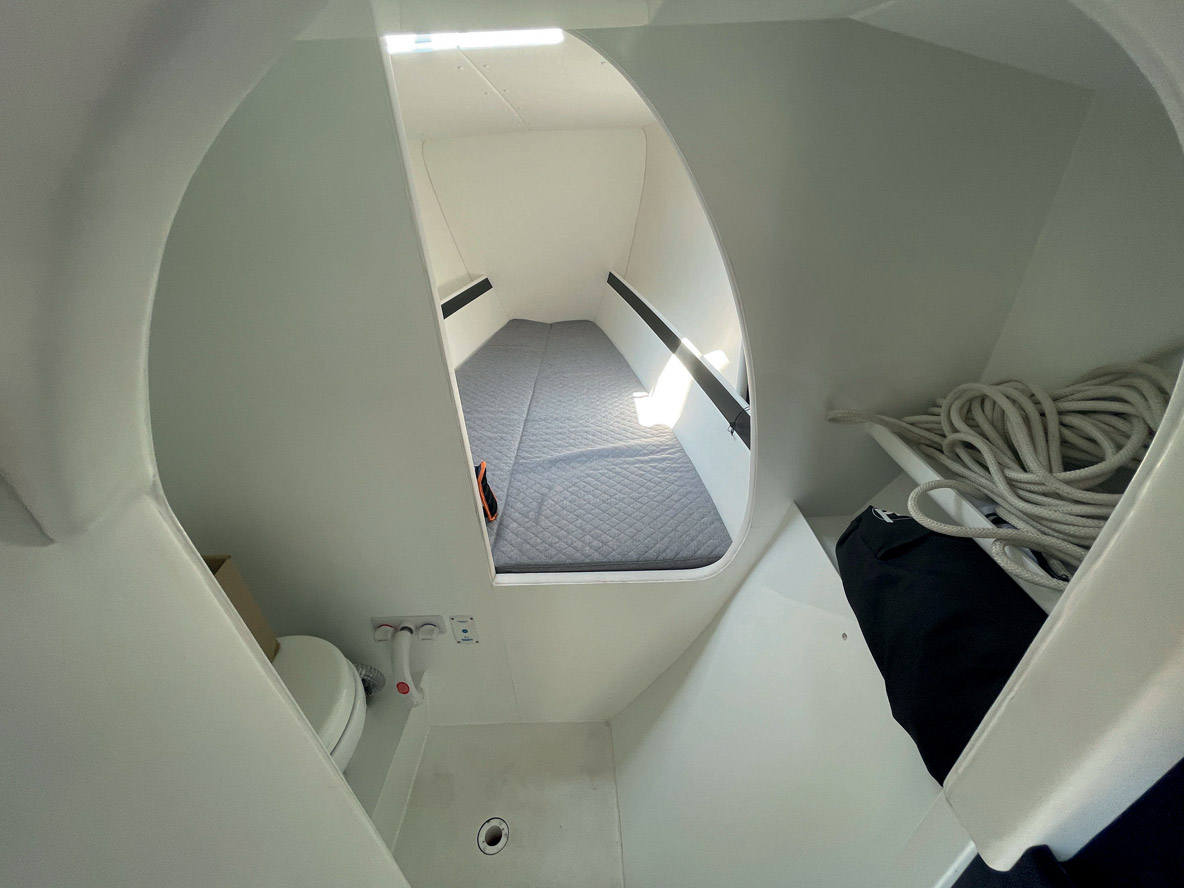
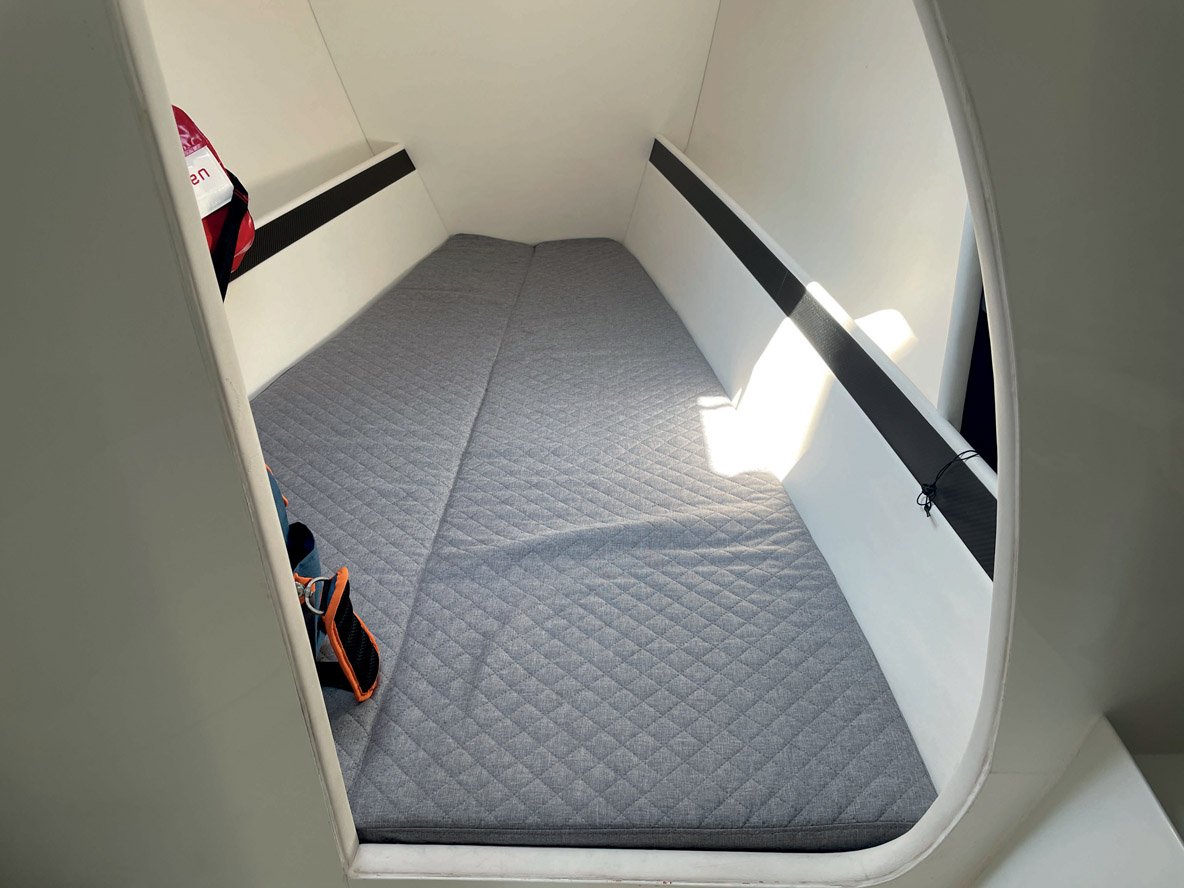
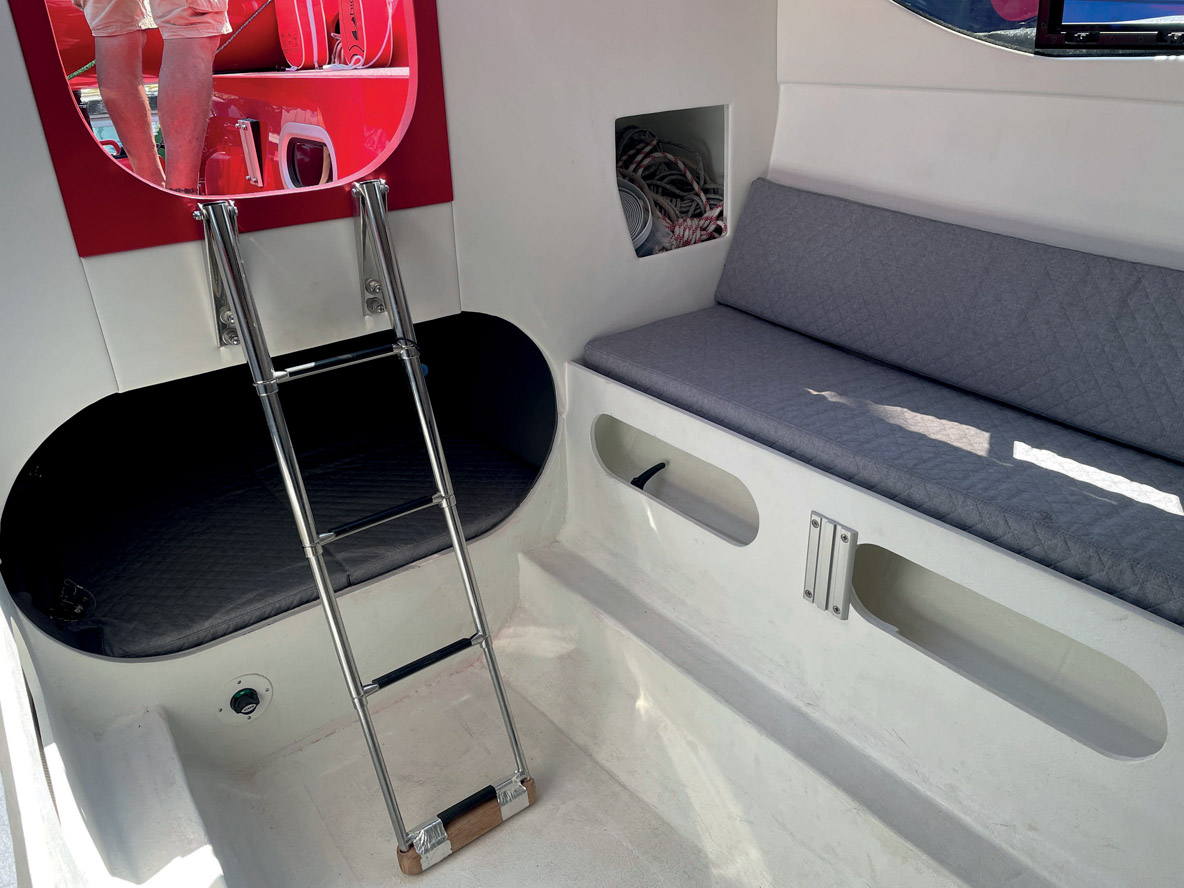
Erik Lerouge’s credo is weight reduction, so the interior of the Libertist is quite spartan. The structure is accessible and visible everywhere - the excellent finish of the composite allowing it to remain on show. On this model, the central table has been removed. The galley is attached to the main bulkhead, and the cook can lean against the daggerboard well. The cabin features basic cruiser fittings: two double berths, a head/shower compartment, and the galley with its two burners, sink and refrigerator. The central floor will be lowered by 2” (5 cm) on future models. The forecabin is comfortable, as is the aft bunk, despite low headroom. Good ventilation is provided by two opening portholes. The tubular companionway ladder will be replaced by ergonomically integrated composite steps designed by the architect.
Libertist’s folding arms: an original construction principle
The Achilles heel of all folding trimarans lies in the considerable forces transmitted by the folding mechanism on the central hull. Torsion, bending, compression and tearing alternate to generate high mechanical stresses. Hinge pins, water-stays (rigging), rotation pivots and structural bulkheads of the central hull are subjected to permanent torture when on a lively passage... In all mechanical systems subjected to severe stress, failure or breakage is not only a matter for the machine itself, but also for the peripherals. A quick inspection of the sensitive points (arm rotation bearings, chainplates, cable sizing, folding pins...) demonstrates the maturity of the designer and the rigor of the builder - the entire inspires real confidence. The major point on which the architect insisted was the continuity of load transfer: the folding half-arms, in addition to their inspired design, also reflect a real awareness of the forces at play - in the open sailing position, they are intimately embedded in a box-arm integral with the deck (fore and aft) which guarantees perfect mechanical evenness, rather like a fixed arm. Viewing the structural box from the inside confirms this point of view.
Unfolding and folding...
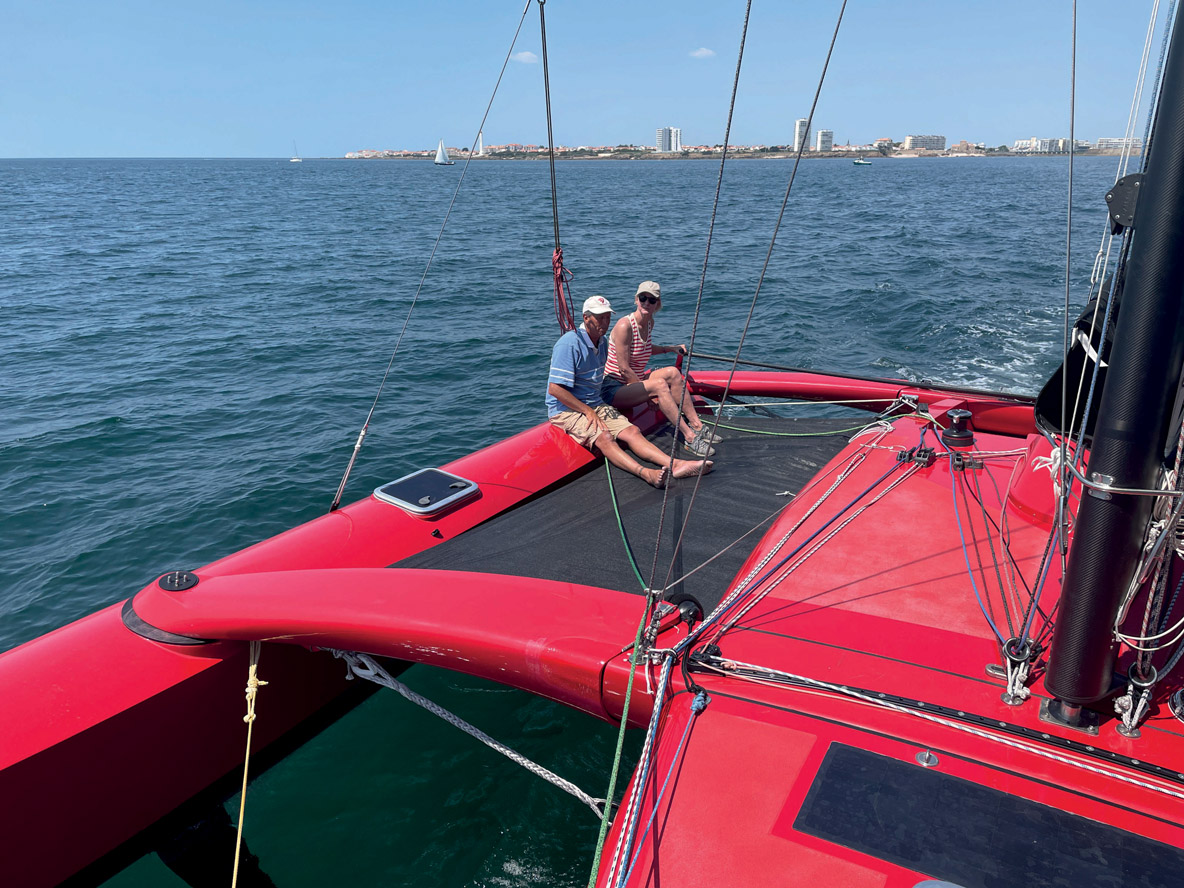
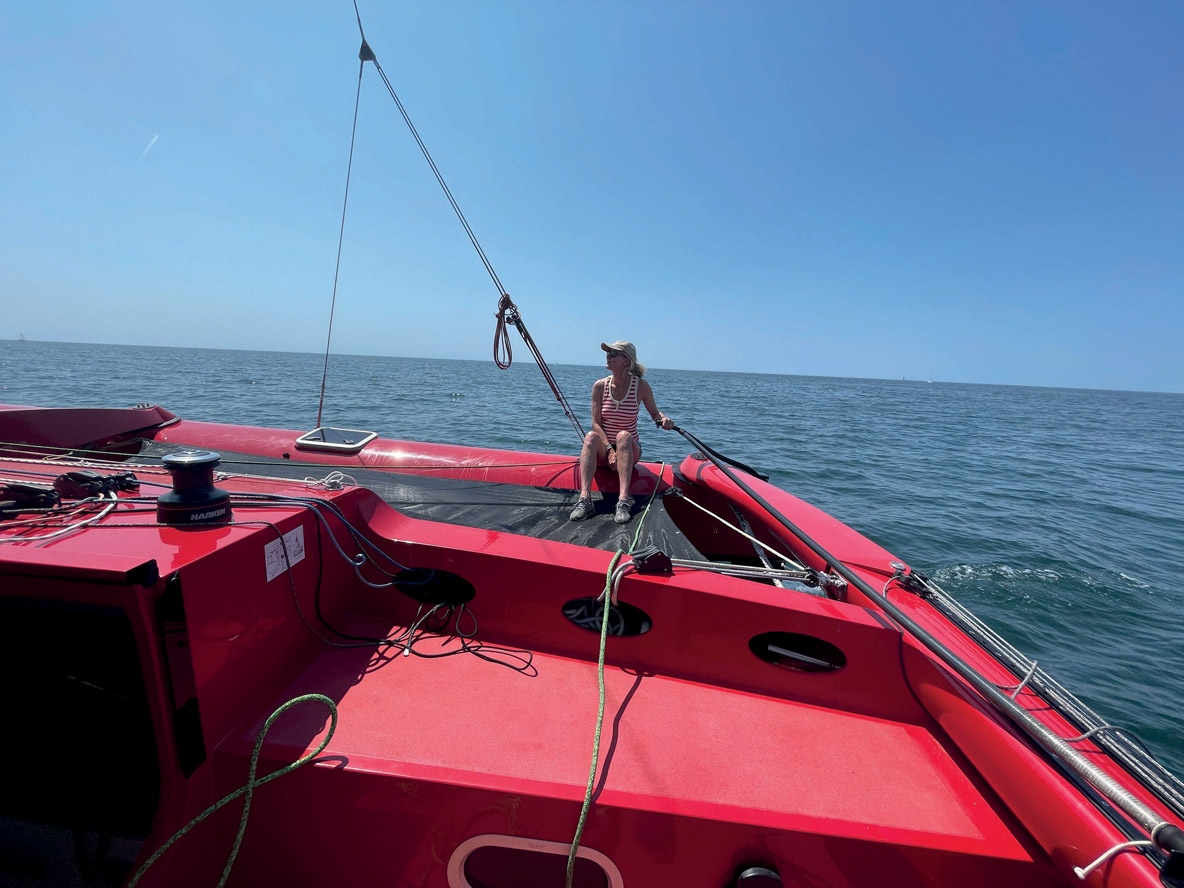
We performed the maneuver several times in port and then as we were coming out of the channel. You can really appreciate the perfect operation of the kinematics and the visual clarity of the system. The choice of specialized Dyneema ropes and adapted low-friction rings softens the opening movement and lightens the suspended masses - remarkable! Optimizing the dimensions of future production trampolines will ensure a perfect fit. The choice of heavy-duty fiber rigging water-stays and turnbuckle-lashings means that the tensions associated with any stretch in the material has to be taken into account in the first trips out. When folding, of course (as with all folding tris) don’t forget to release the bobstays and retainers (and of course, secure them down when unfolding...). I liked the design of the diagonal safety system integrated into the trampoline (trampolines also contribute to structural safety when open). The position of the rudders on the floats (an excellent choice) means you have to connect/disconnect the carbon connecting rods when maneuvering in port with the trimaran folded.
Maneuvering under power
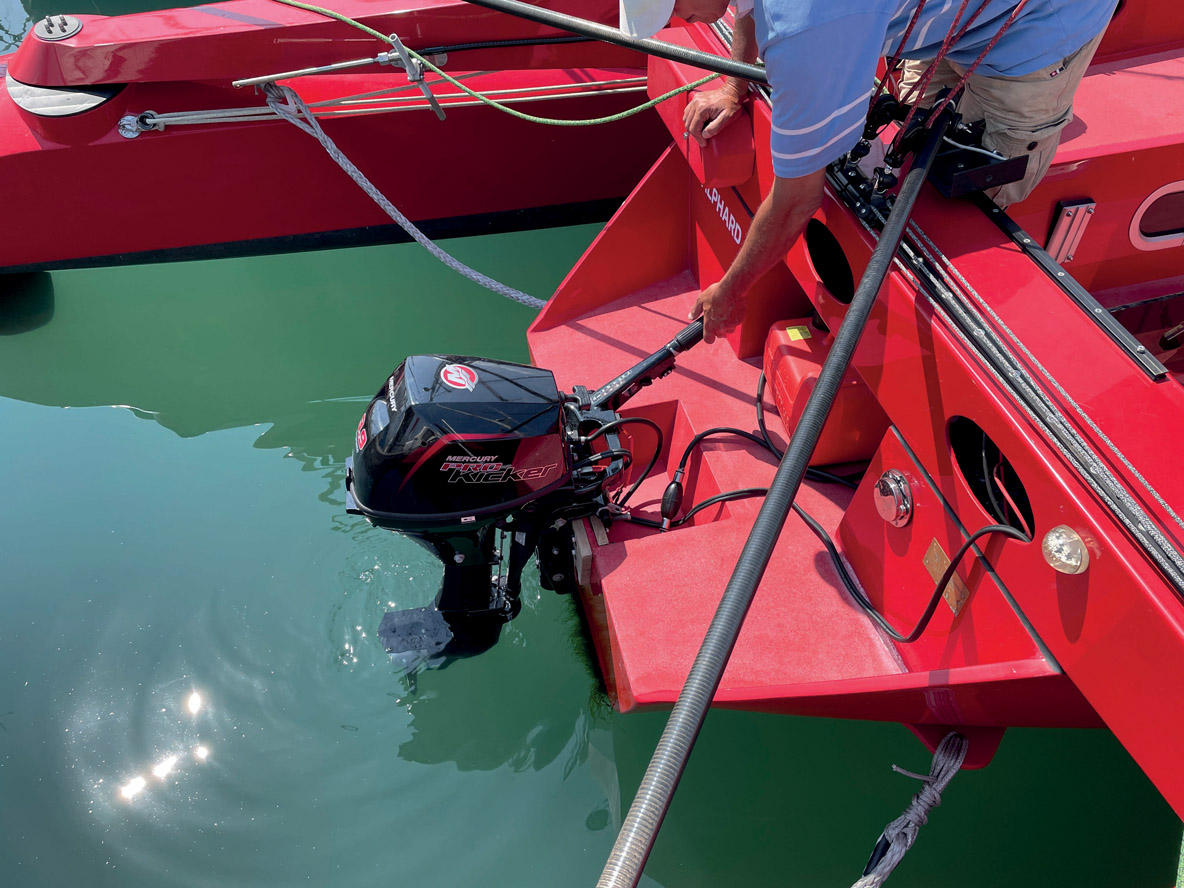
The Libertist (like all folding trimarans) can be maneuvered with both floats folded back, or in a prao configuration. The rudder position does not allow the helm to be coupled to the motor, but a tiller extension for the outboard allows separate adjustment of throttle and outboard orientation, so that’s worth having. The outboard motor featured on our test boat was a 9.9 HP Mercury ProKicker. We appreciated its power, torque and excellent propeller screwing its way through the water, as well as its discretion (very little noise or vibration) and reliability.
Sea trial: promises kept!
Getting out of the berths allocated by “modern” ports is a real matter of skill, especially with recent monohull neighbors having somewhat beamy dimensions... but with well-placed fenders and a good eye, it works! Opening your arms while going along (under power, of course) is possible in calm seas or in a channel.
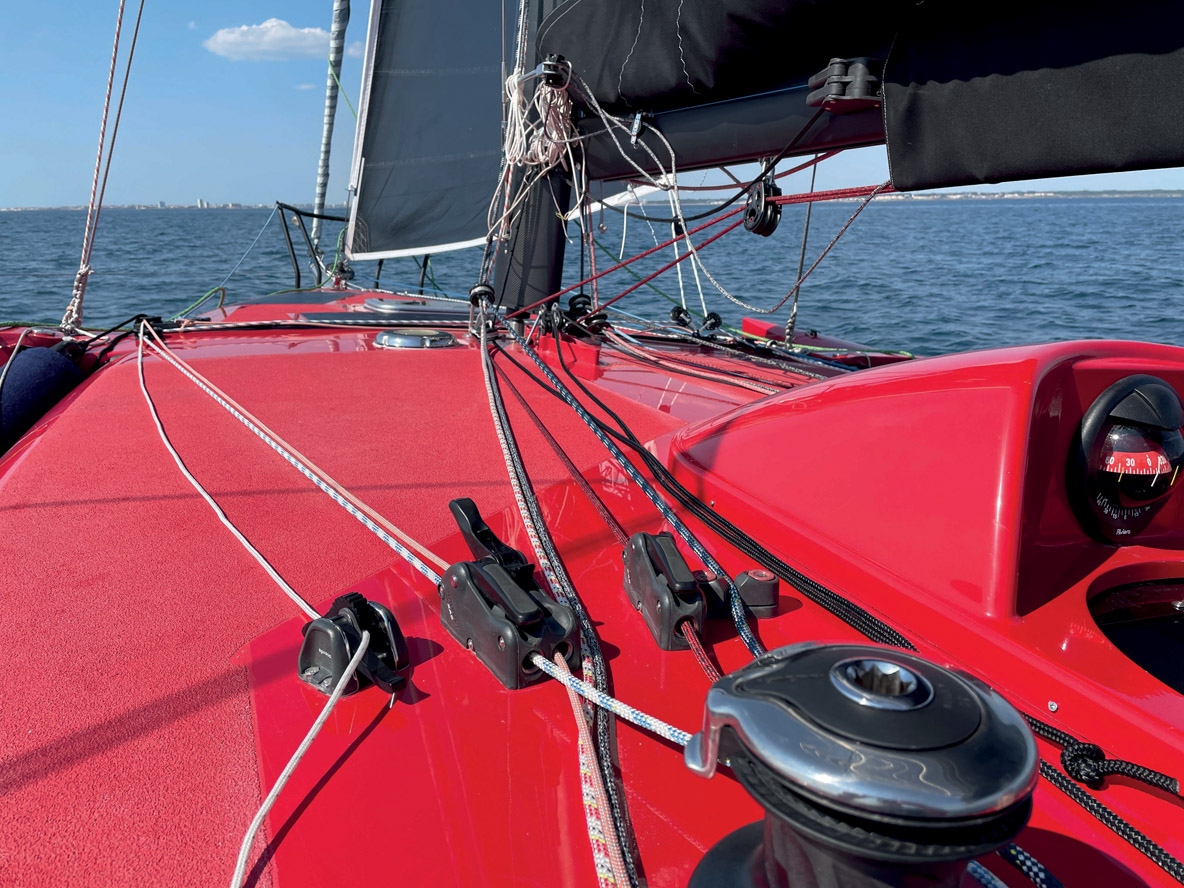
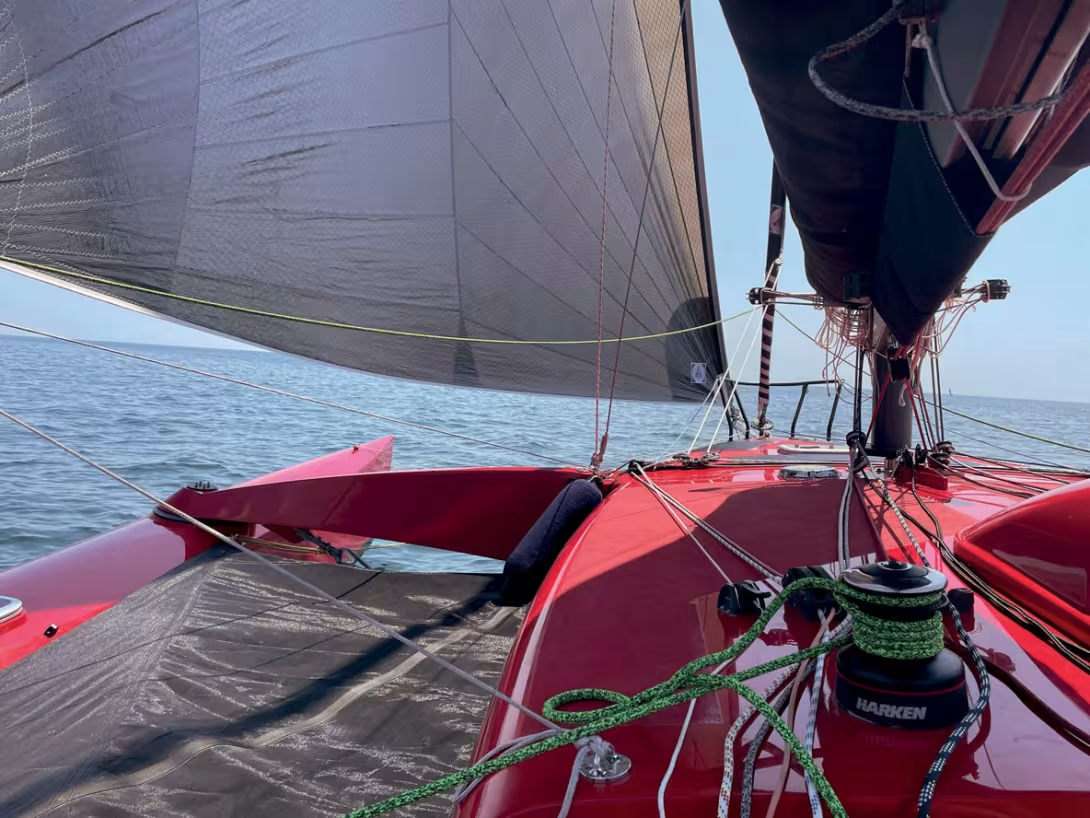
8 knots of wind and a moderate chop: the conditions were perfect for our first sail with our pretty multihull (such an outing would be a disaster with a heavy, lumbering sailboat...). Under full mainsail and gennaker, the machine took off without hesitation and greedily devoured some distance. The feel of the helm would delight any dinghy champion accustomed to racing boats: precision, smoothness and a super-efficient directional effect are the keys to the Libertist’s intense pleasure on all points of sail. We set off in search of the breeze in the oscillations of this northerly wind, which at times reached 10, then 12 knots. The measurements taken indicate a speed equal to, or most of the time greater than, the actual windspeed. The Libertist’s chassis is stiff without any parasitic creaking. The fiber rigging (the cap shrouds are adjusted by means of a purchase on a bridle) and the superb rotating carbon mast made by AG+ form a magnificent and powerful machine (645 square feet/60 m² upwind and over 1,075 sq ft/100 m² downwind for just 3,750 lbs (1,700 kg) with three crew during our test). Thanks - among other things - to the mast spanner directly connected to the boom, the trimaran is responsive and easy to trim. With a little care, the beast shines as it accelerates, and makes its own apparent wind with gusto. The precision of this playful machine also owes much to a fine, deep daggerboard aided by a pair of clever fixed foils. When we tested the fixed-arm version, we pushed the concept to its limits in a mistral wind of over 30 knots, and the spatula effect and vertical thrust coming down the waves at over 22 knots was spectacular. Today, it’s pleasing to note that these appendages work perfectly in medium conditions, without any parasitic drag appearing on the folding version. Talking about accelerations to over 13.5 knots in 12 knots of true wind doesn’t fully express the intense pleasure experienced during this test. Gliding along at sustained speed over a barely wrinkled stretch of water, enjoying the brutal braking effect of bearing away suddenly to check the true wind (who can believe it’s so light when just moments before we were hurtling down a course!) The miracle of genuine multihulls: surfing in light air at good speed when everyone else is tempted to press the engine starter button!
Conclusion
This red three-hulled little rocket ship has a rare seductive potential. Choosing between the fixed-arm or folding version will be a matter of program and mooring constraints. We can unreservedly recommend both. Exceptional silhouette, perfect equipment in the version we tried out, captivating sensations and build quality: what more do you need?
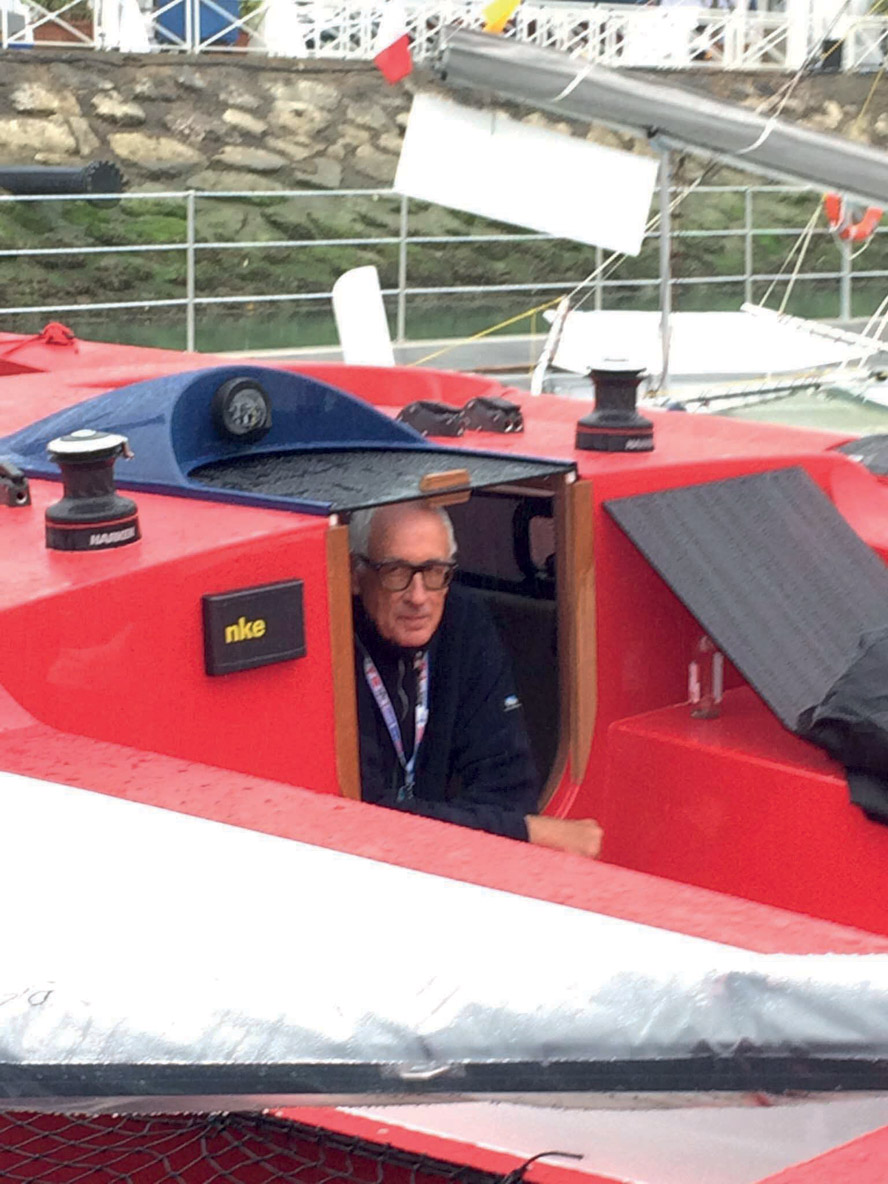
A word from the architect: Erik Lerouge
Intense helming pleasure
Build quality and folding mechanism
Lack of roof cap as standard and tubular companionway
No rubberized coating on the floats
Technical specifications
Architect: Erik Lerouge
Material: epoxy glass foam sandwich (infusion); foils, daggerboard and arms in carbon
Length: 28’ (8.53 m) / 35’7” (10.84 m) when folded
Beam: 22’9” (6.94 m)/ 13’7” (4.15 m)
Width when dismantled on trailer: 8’4” (2.55 m)
Draft: 18”/6’2” (0.45/1.89 m)
Light displacement: 3,085 lbs (1,400 kg)
Max laden displacement: 4,850 lbs (2,200 kg)
Height and surface area of rotating mast: 44’3”/32 sq ft (13.5 m/3 m²)
Mainsail: 430 sq ft (40 m²)
Self-tacking jib: 194 sq ft (18 m²)
Code 0: 441 sq ft (41 m²)
Asymmetrical spinnaker: 840 sq ft (78 m²)
Basic version with fixed arms (vinylester resin, aluminum mast, white gelcoat): €135,000 ex-tax
Elegance layout/performance carbon/epoxy-carbon construction/color of choice: €145,000 ex-tax
Main options ex-tax
44-foot (13.5 m) rotating carbon mast: €15,833
Folding arms option: €15,000
Performance sails pack: €9,000
9.9 HP 4-stroke ultra-long shaft engine, electric starter and trim: €3,292
Sprayhood: €2,083
Carbon spinnaker pole: €500
Comfort pack (refrigerator, electrics, galley, upholstery, WC and bilge pump...): €19,000
NKE electronics pack: €2,333

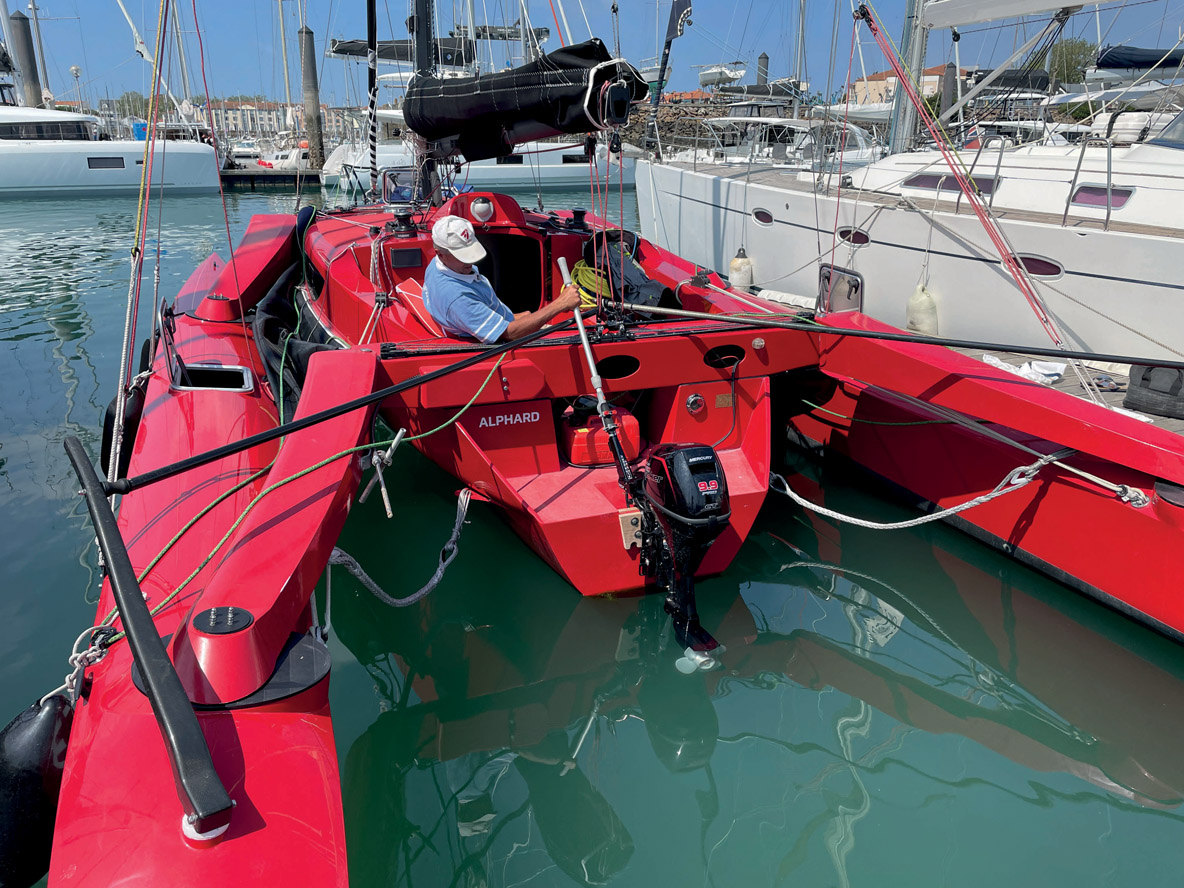
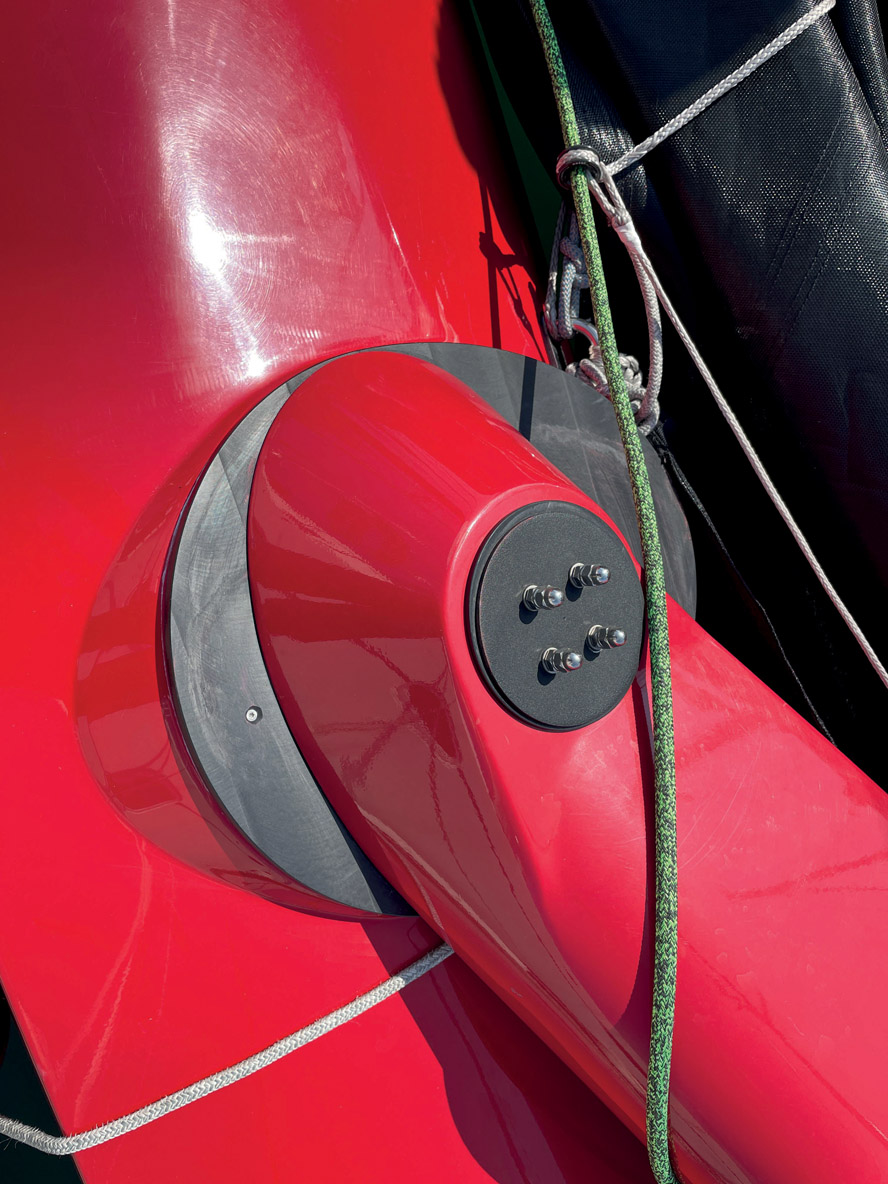
At both bow and stern, the folding half-arms are fitted into a box-arm integral with the deck, guaranteeing excellent mechanical uniformity.