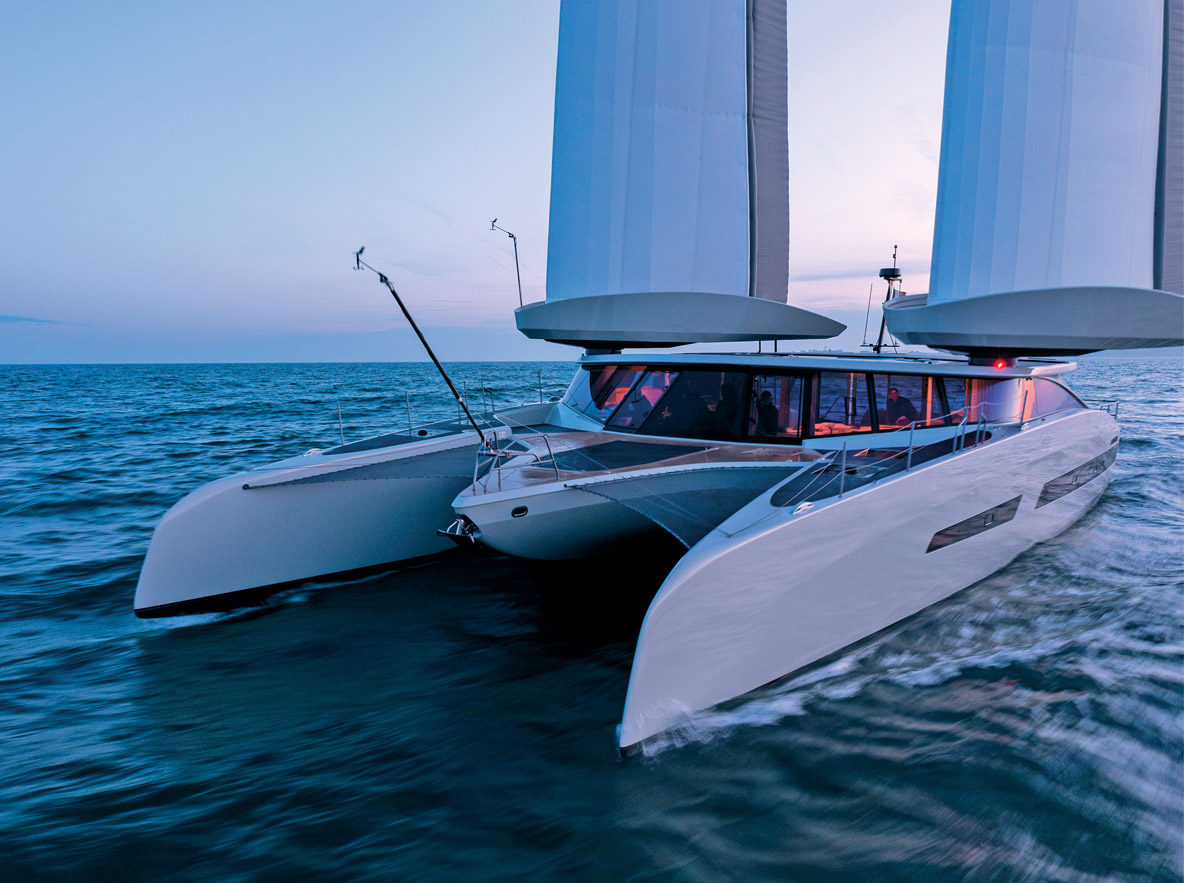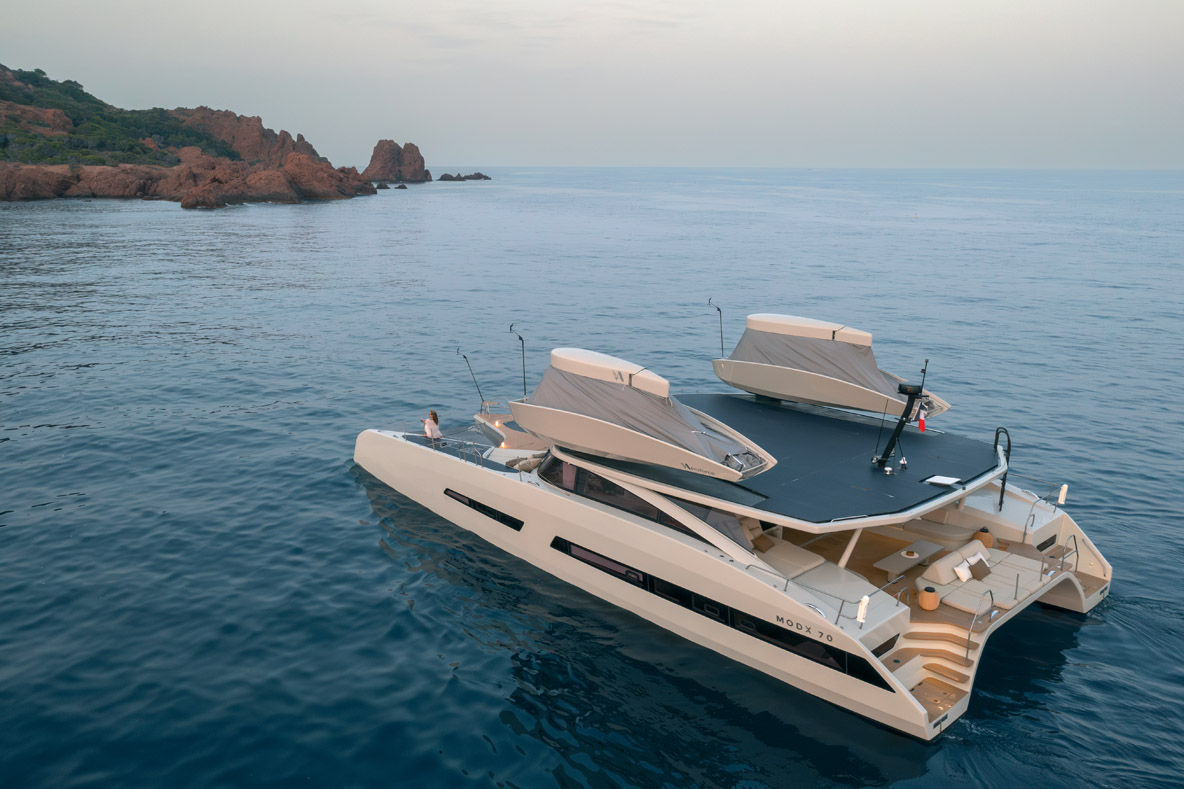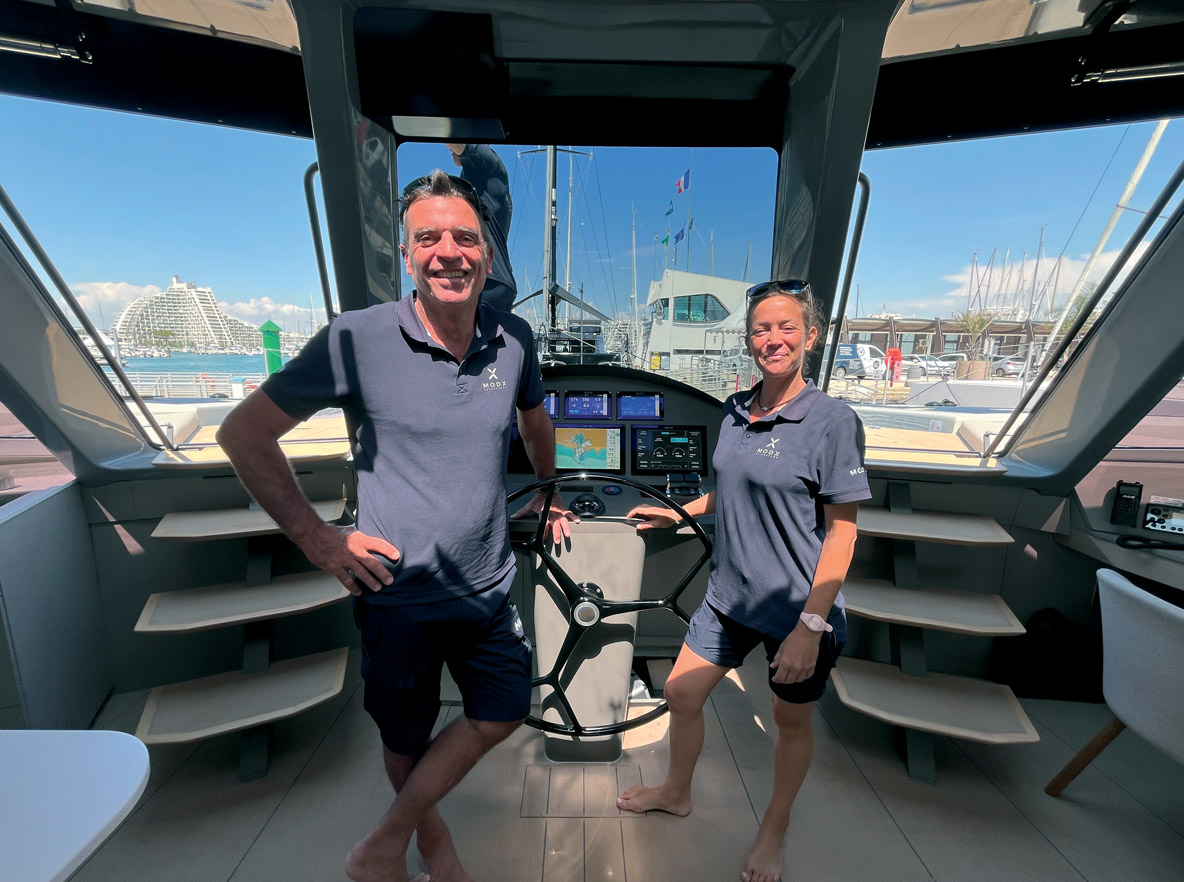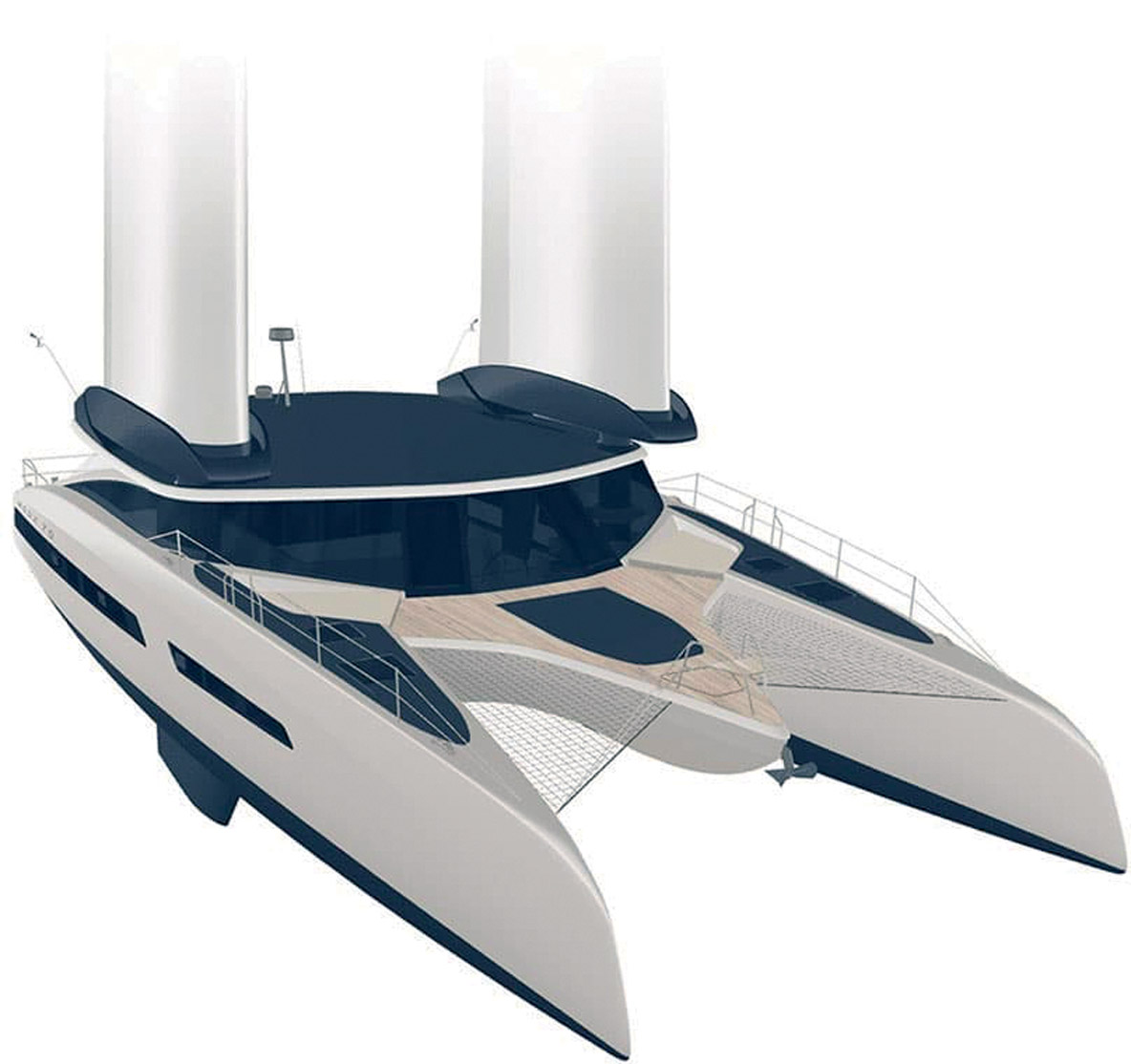
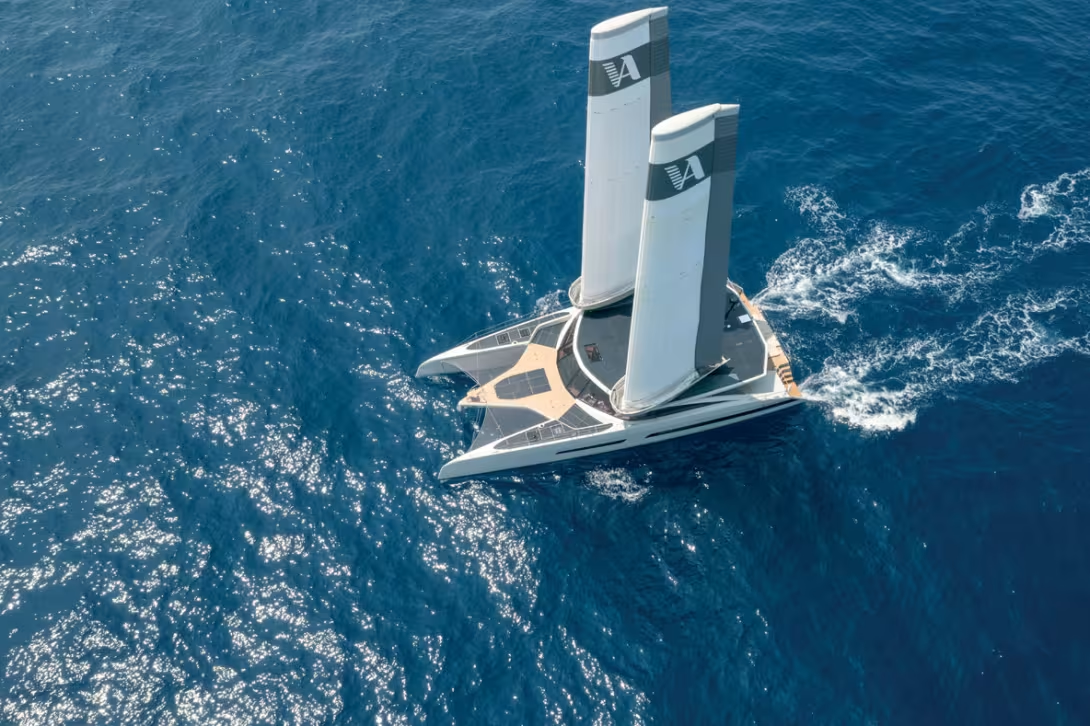
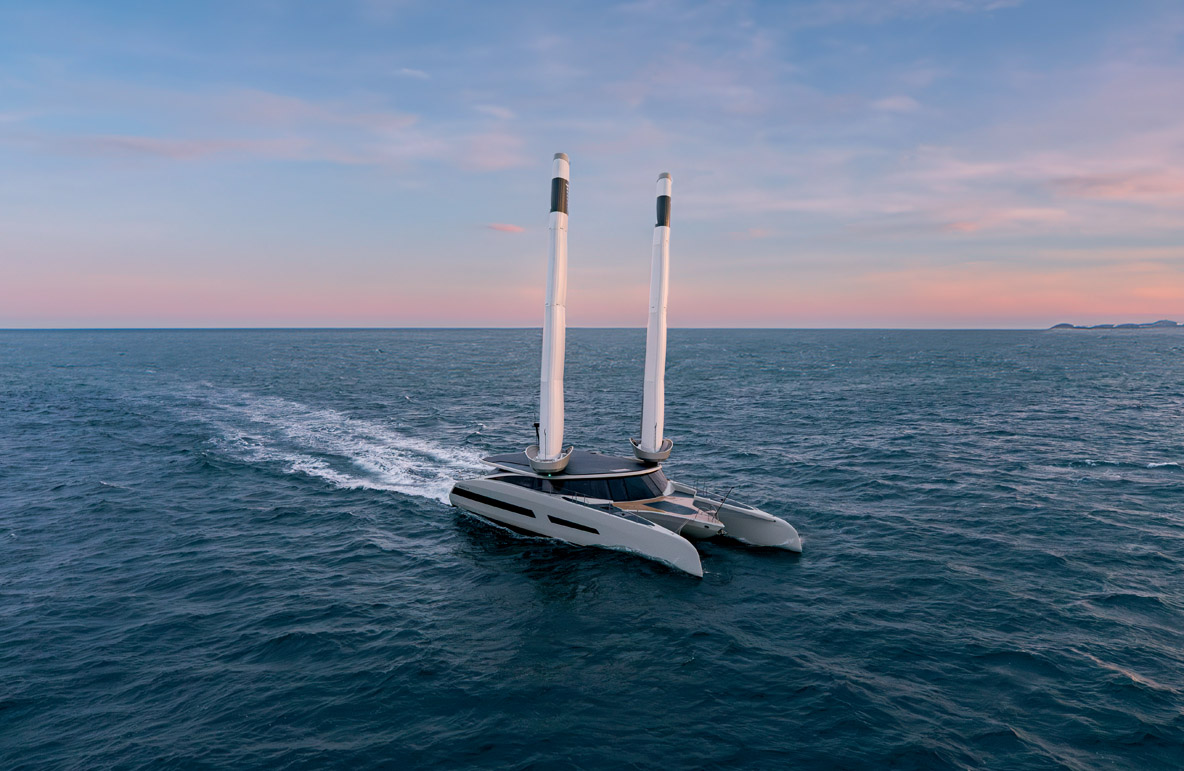
This imposing catamaran, built using 38% bio-based epoxy resin, 40% recycled PET foam—not to mention flax fiber and cork—stands out for its two inflatable wings supported by telescopic carbon masts, and its 100% renewable energy propulsion systems. There are no generators on board. This technological gamble has already paid off, as the revolutionary ModX has completed a trip around Spain without using any fossil fuels.
Infos pratiques
- Le chantier : MODX 70
- La fiche technique
-
 Découvrez notre vidéo exclusive
- Financez votre ModX 70
- Assuez votre ModX 70
- Articles autour du ModX 70
Conditions: 6 to 8 knots of southerly wind, calm sea
The almost-70-foot (21-meter) multihull designed by VPLP, which we have been following for three years, has successfully completed 2,000 nautical miles powered exclusively by wind and electric motors. When drawing up the ModX 70’s technical specification files, the fuel and generator sections were simply removed. As for the sail area, that was replaced by the wing area... For the first time in the history of yachting, there’s now no need to fill up with fuel before heading out to sea – a real revolution!
The ModX 70 is undoubtedly the most innovative production sailboat of at least the last 20 years... Better still, it creates a benchmark in the history of yachting by validating 100% Forever Green propulsion.
A Dream Team of Three Visionaries…
Franck David, the first Olympic windsurfing champion (at the Barcelona Games in 1992), and Marco Simeoni, president of Multi One Attitude, a foundation involved in marine conservation, first launched the MOD70 class in 2008, designing 70-foot one-design trimarans. Then a third man, Jean Guyon, joined them.
At the helm of the Océan Développement shipyard in Lorient, he built the first MOD70s starting in 2010. The trio then worked on the concept of an ultra-comfortable recreational boat that could sail without using any fossil fuel. A team of sailors and engineers from the ORMA circuit joined the project entrusted to VPLP Design. The specifications were drawn up: the boat had to offer excellent performance and a large surface area for solar panels, while being extremely simple to handle, and be suited to small-scale production. The deck area, lightship (and laden) displacement, drag, and sailing and aerodynamic efficiency were the key factors in the project. For the ModX 70, the catamaran platform has therefore been determined by the narrowness of the hulls, but also by the surface area available for solar panels and the option of fitting a central rostrum to house the tender. To top it all off, the habitability of a multiyacht is a big plus... For the rig, the principle of an inflatable wing on a telescopic mast has been adopted, with the implementation (hoisting, reefing, and dropping) and adjustments to be fully automated in the “push-button” style so popular in superyachting. As this specific development is also intended for use in the maritime transport industry, the Aeroforce structure, initiated by Jean Guyon in parallel (see inset), will be responsible for the design, manufacture, and development of this inflatable solution, which also lends itself to use on large commercial vessels. To achieve this feat without compromising safety, the designers decided to launch a sizeable catamaran - initially, the project was based on 50 feet, then 60... before settling on 70. Why such a leap? Because, in order to succeed, the ModX had to be highly efficient under sail (or rather “under wing,” as we’ll see in more detail later), be able to carry a very powerful battery bank, and to maximize the potential surface area of the solar panels.
Generating Electricity Rather than Consuming It
The ModX project set itself the goal of zero emissions while under way, but logically sought to reduce its carbon footprint during construction by using PET/glass foam sandwich hulls and partially bio-based resin (InfuGreen from Sicomin). The construction was carried out by Neel Trimarans in La Rochelle, and the technical aspects and interiors were completed by Océan Développement in Lorient. The architects’ initial weight estimate was 23 tons, though the ModX 70 #1 ultimately weighs 7 tons more than that, but 4 tons could well be saved on future units. This displacement remains well below that of a Lagoon Seventy 7, for example, (at 56 tons) or a Sunreef 70 (70 tons).
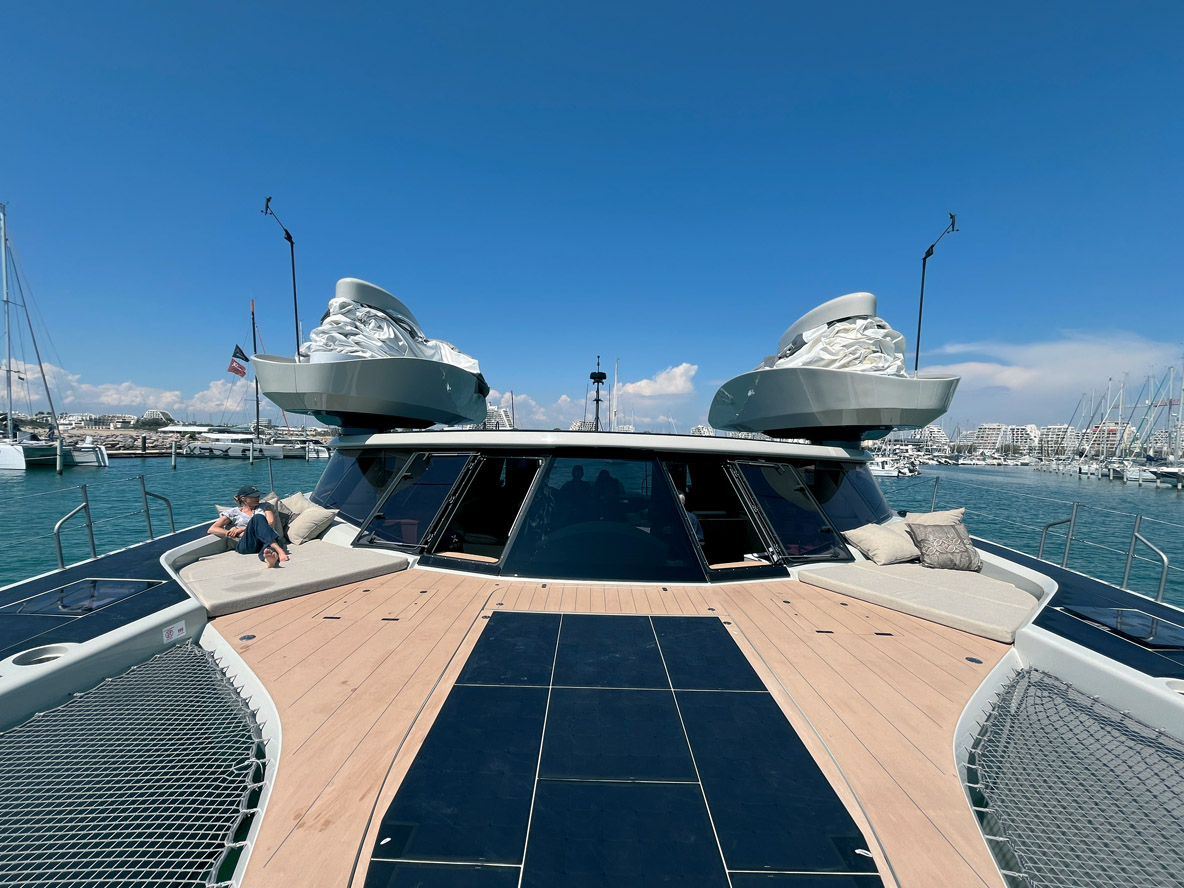
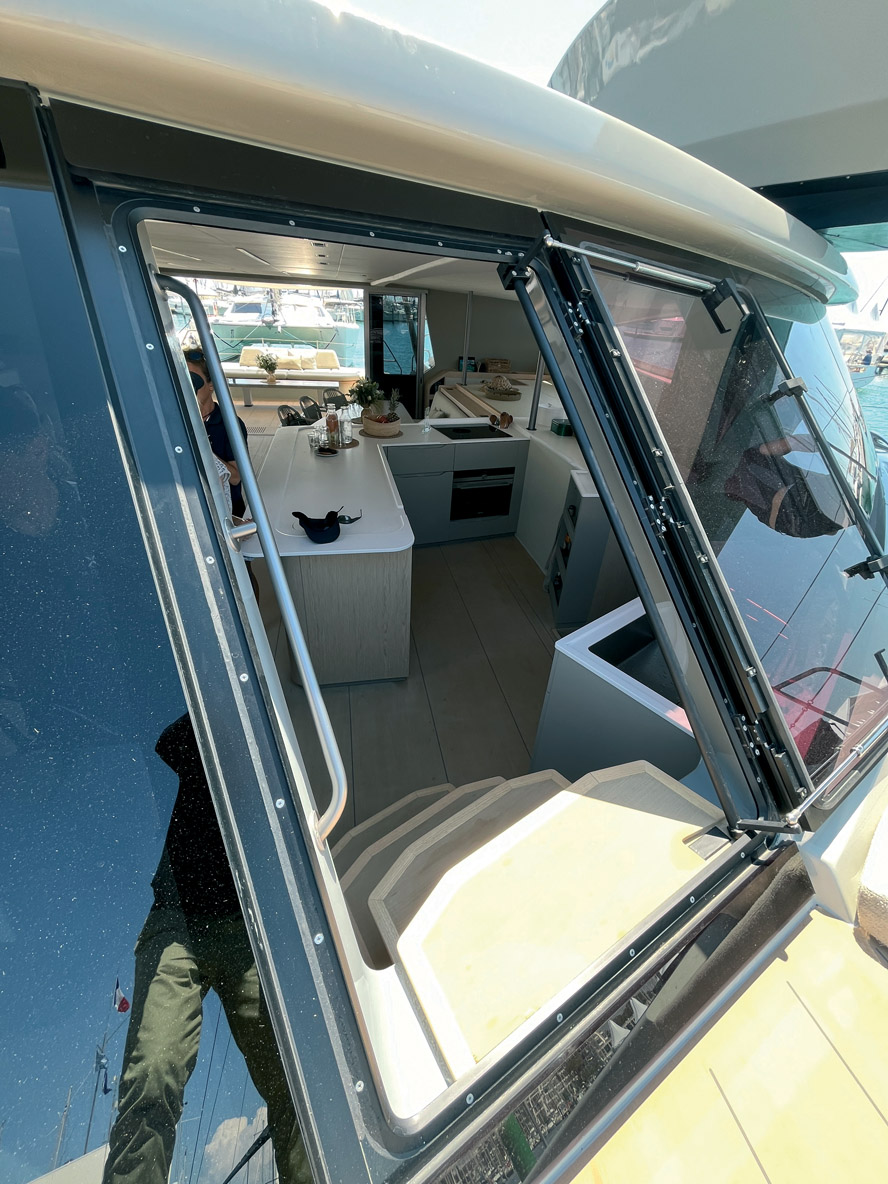
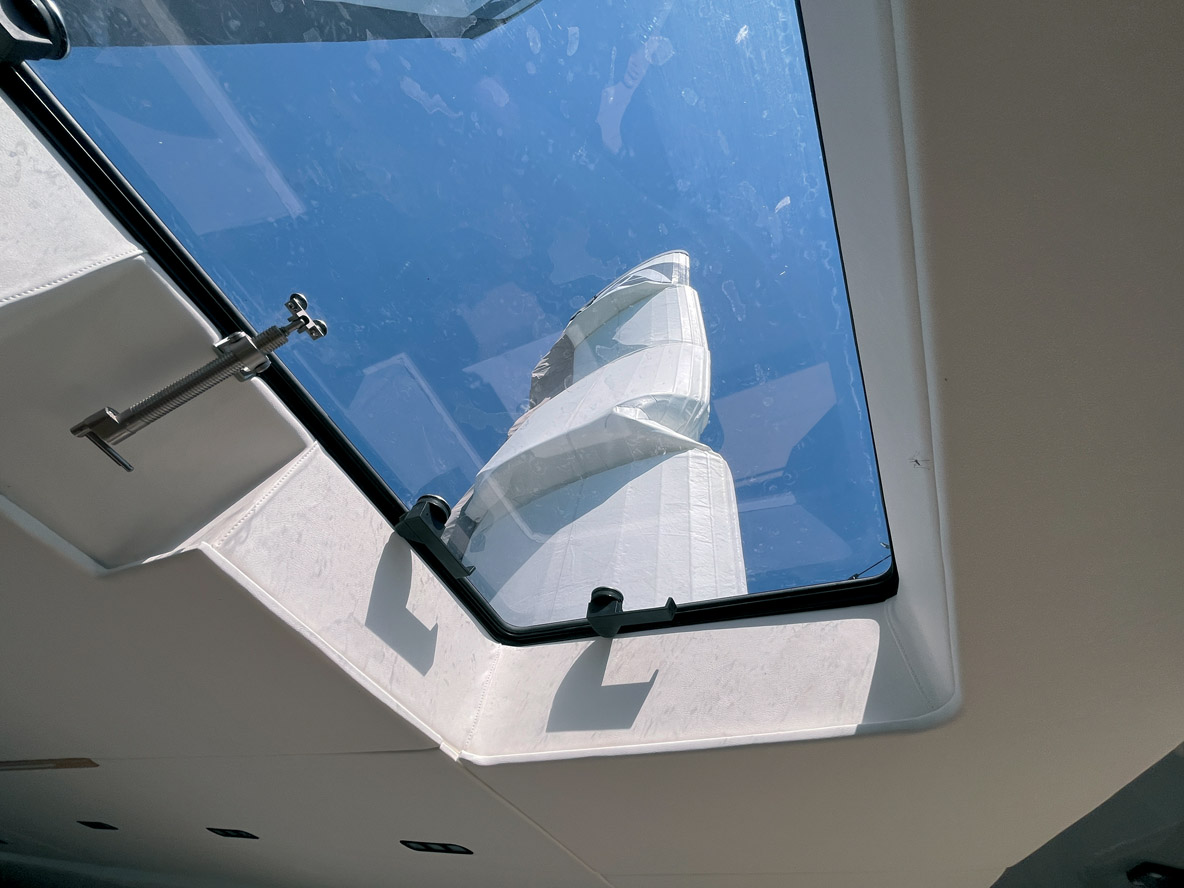
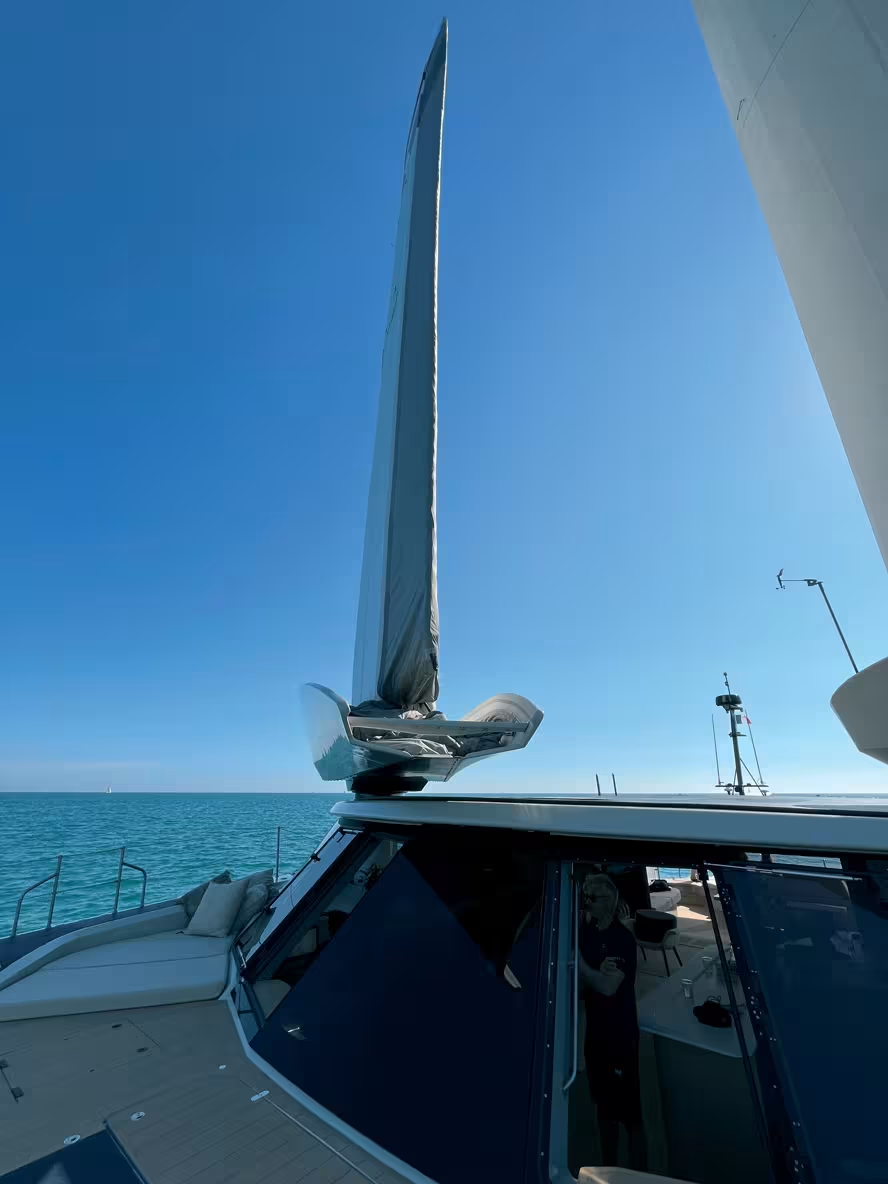
On the nacelle, there are two large, intriguing composite cradles: each stores an inflatable wing attached to a retractable, motorized carbon mast. The design is inspired by the system used on the 289-foot yacht Maltese Falcon, with upper and lower JP3 bearings, allowing 360-degree rotation controlled by a chain on an electric motor. The six 14’9” (4.5 m) carbon sections are hoisted using an electric winch, and the wings, made of Drop Stitch membrane (the same as your paddleboard!), are inflated to 0.1 bar (1.45 psi) by a 2.5-kW compressor. The six carbon wishbone booms that form the wing profile and the envelope membranes rest on a Balestron rig, whose air draft varies between 15 and 75 feet (4.6 to 23 meters). Electric propulsion is provided by two 40-kW SmartGyro motors mounted on shafts. Variable-pitch propellers have been specially developed to optimize hydrogeneration: an angle of 12° to 15° is given depending on the speed. Theoretically, the 250-kWh battery bank distributed in each hull allows for a range of 110 miles at six knots, but performance “under wing” (i.e., not under sail) has been prioritized so as not to rely on the motors for too long. The priority is to generate power, as on-board consumption is estimated at between 30 and 45 kWh per day. However, these energy requirements are optimized by dispensing with air conditioning on the main deck, which is well ventilated by forward portholes.
A Fully Automated Rig
The two wings total 2,690 square feet (250 m2) and allow the ModX to sail at wind speed in virtually all conditions (with an advantage when sailing on points close to the wind). During its trip around Spain, the ModX 70 even reached 21 knots. Each wing is reduced to 800 sq ft (75 m²) in winds of 18-20 knots. As for hydrogeneration, it is effective from 8 to 20 knots.
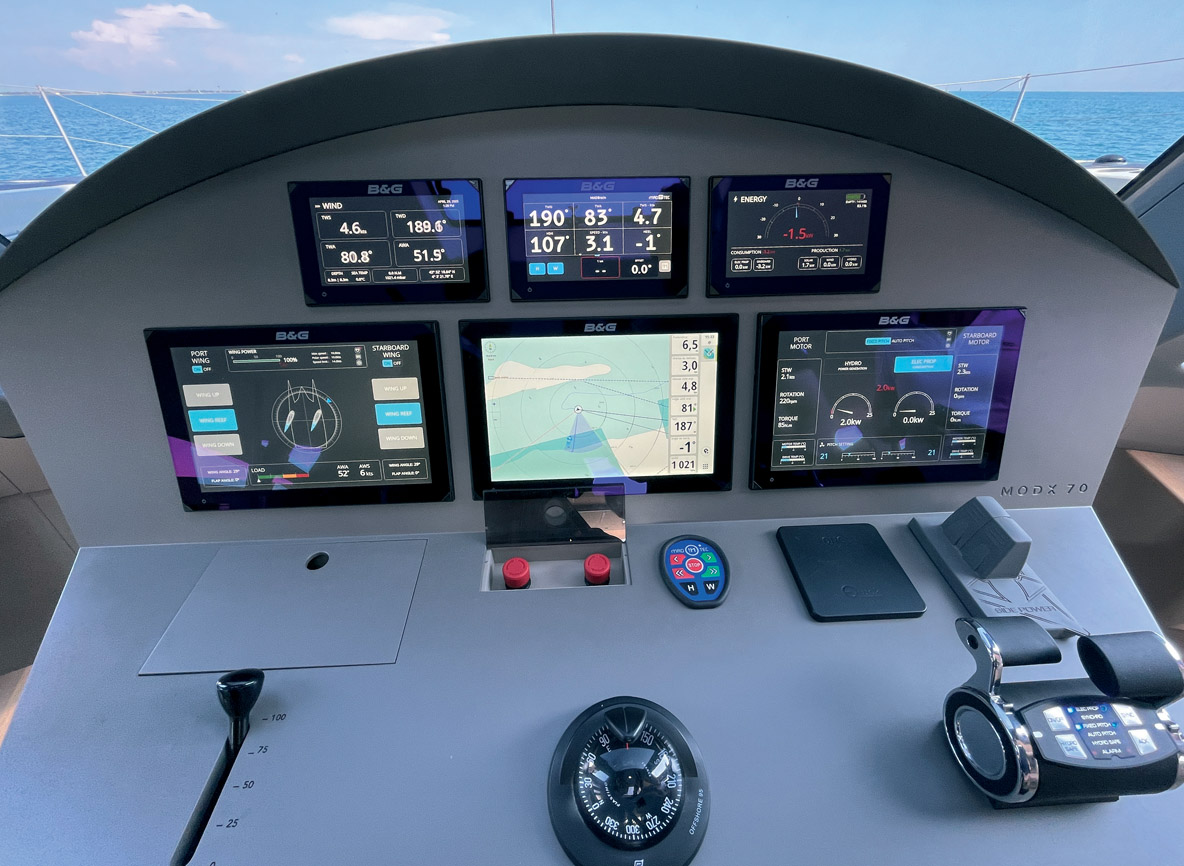
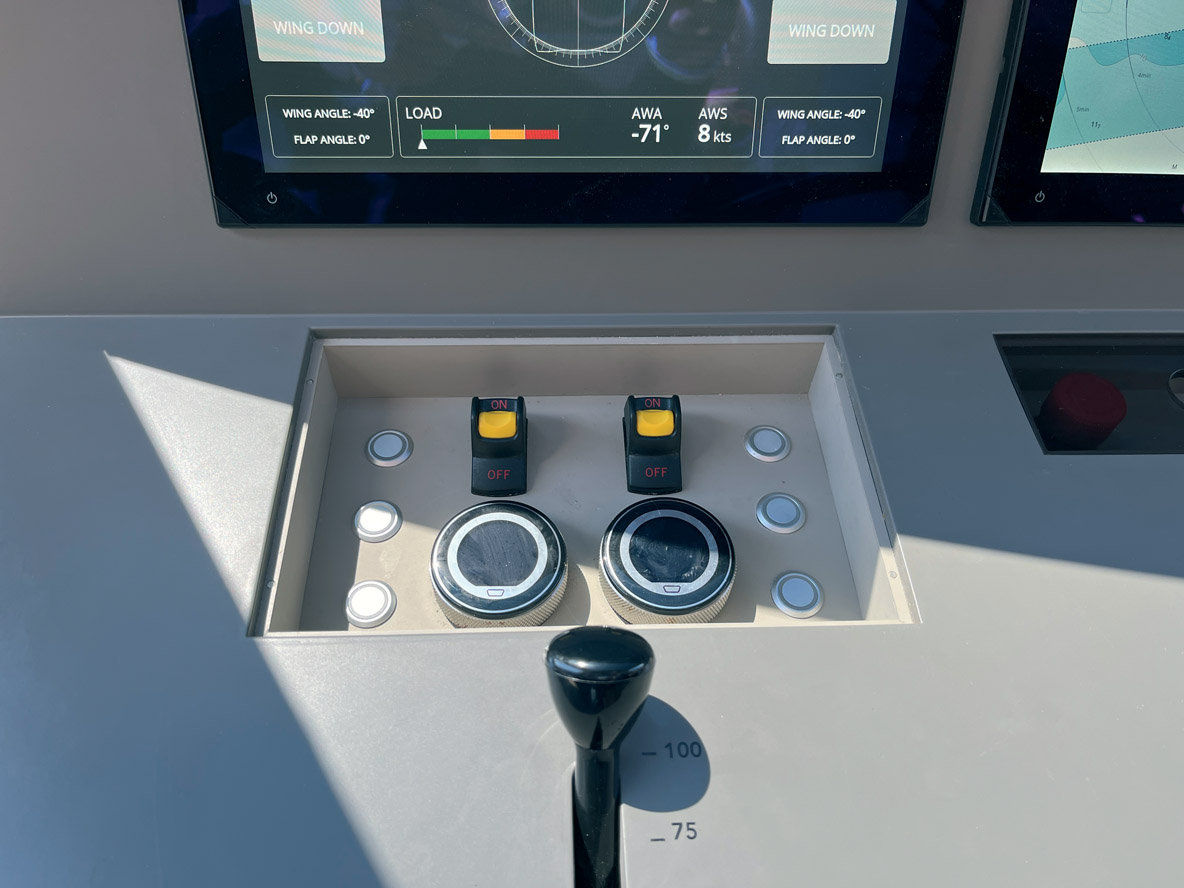
The angle of the wings and the flap automatically adjust to the strength and angle of the wind. Thermal sensors maintain the correct pressure according to temperature variations. Load sensors are ready to feather the wings if necessary.
Jean-Marc Normant, a sailor and engineer who was heavily involved in the ORMA and MOD70 circuits, reminds us of the advances made in the field of “boat wings.” Dennis Conner, with Stars and Stripes in 1988 and then Oracle in 2010, paved the way for rigid wings, which now feature in the specifications of the AC 72 and AC 75, the fastest sailboats in the world. “The adjustable aft section and its controls were the subject of lengthy studies to transfer it to a version that was no longer rigid but inflatable,” he explains. The aft part of the wings are therefore composed of inflatable tubes capable of angling up to 25 degrees. The power of a wing with flap sections is 30% greater than that of a regular sail. More subject to friction than the “fixed” wing, the flaps are covered with a skin reminiscent of Hydranet sailcloth. By adjusting the angle of these flaps, power can be increased or decreased as required. So how are all these parameters controlled? Raphaël Lambot, the captain, is at the controls. He was involved in developing the automation system and worked extensively on the safety and reliability of the system. A computer developed from a performance chart manages all the parameters and transmits the information to the interface on the central console behind the helm. The control screens show the position of the wings. This includes the requested heading, wind strength and direction, rudder angle, and information from numerous sensors, including the Madintec autopilot. The autopilot alone took two years to develop... The wings are adjusted not by pulling on lines, but simply by operating a lever. This lever offers a power level ranging from 0% (neutral position, where the wings are positioned in the wind to stop the boat) to 100%, where the angle of the wings and their flaps is adjusted to provide maximum power. It’s a real control similar to a car’s accelerator or an airplane’s throttle... Don’t worry, the ModX 70 doesn’t take off (yet?); the catamaran is not equipped with foils, but with mini-keels that allow it to take the ground. The main aim is to achieve a consistently high average speed that allows the boat to cover long distances and recharge its batteries as efficiently as possible. At 10 knots, you can count on 3 kWp, and up to 16 kWp at speeds over 15 knots.
A High Standard of Finish
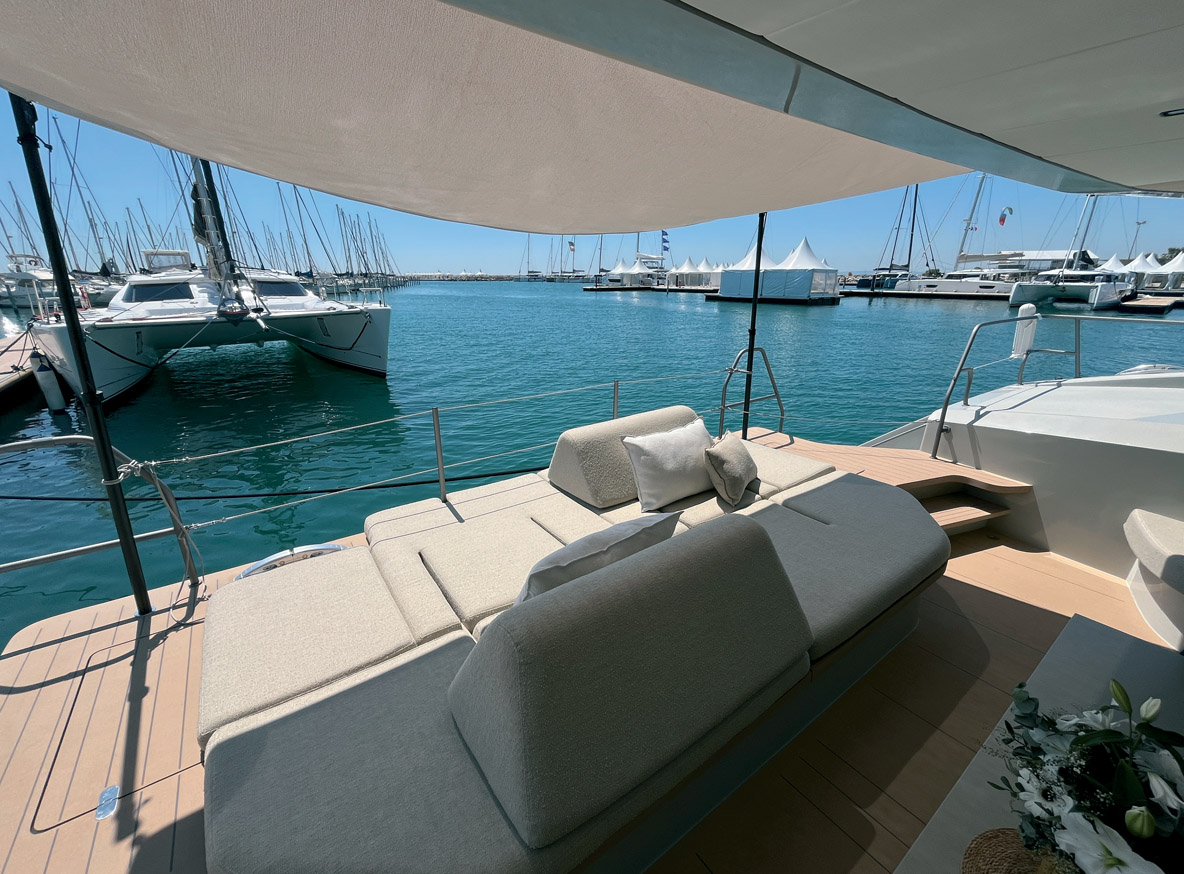
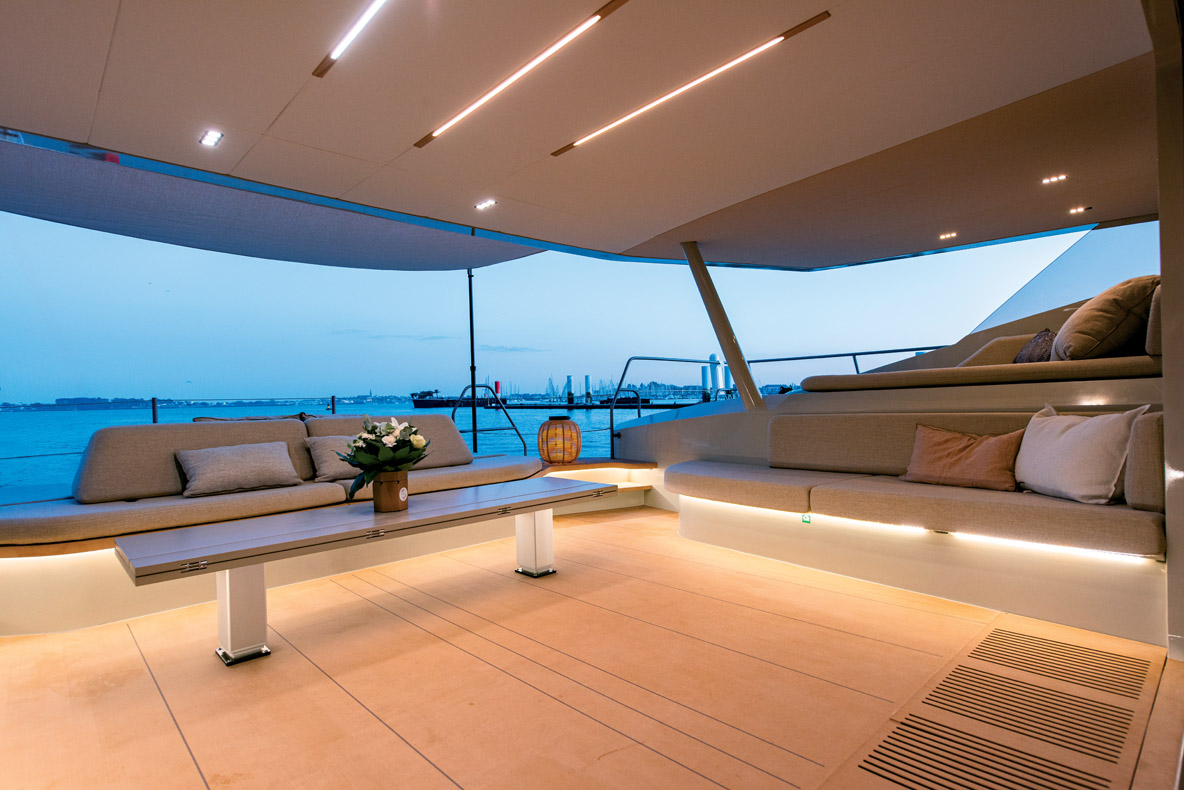
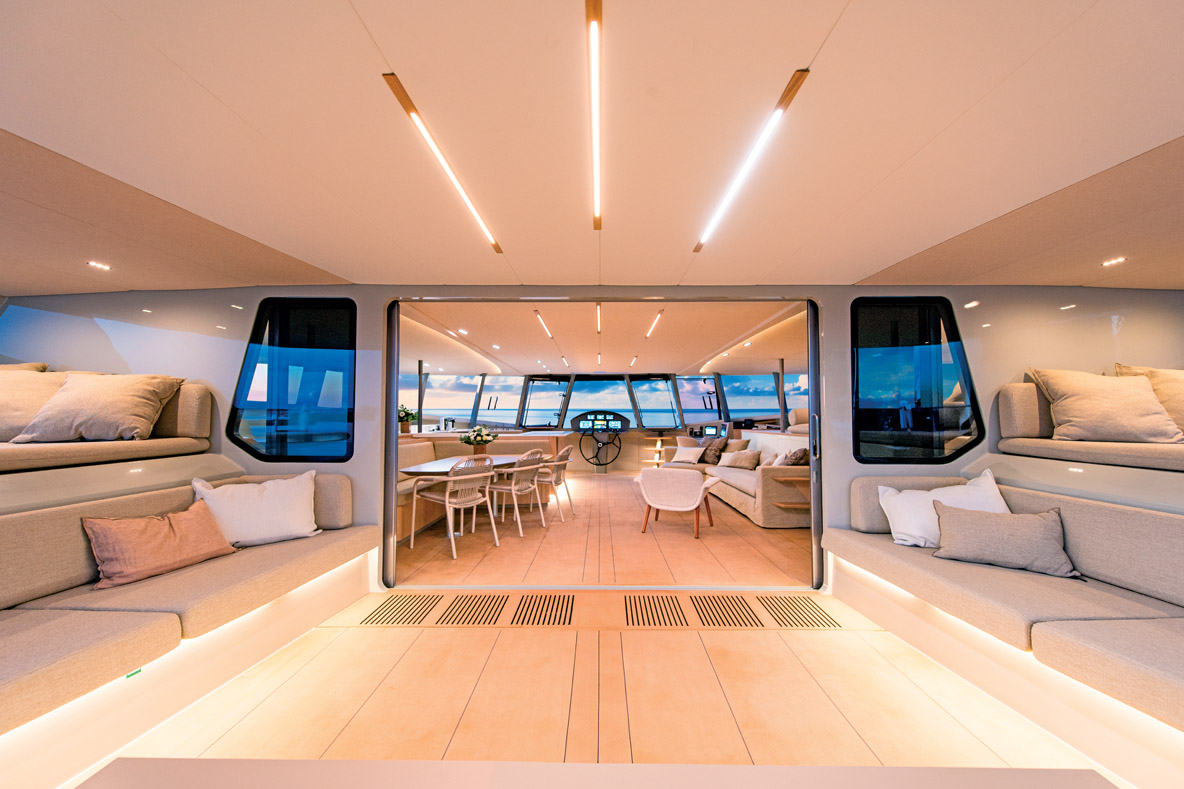
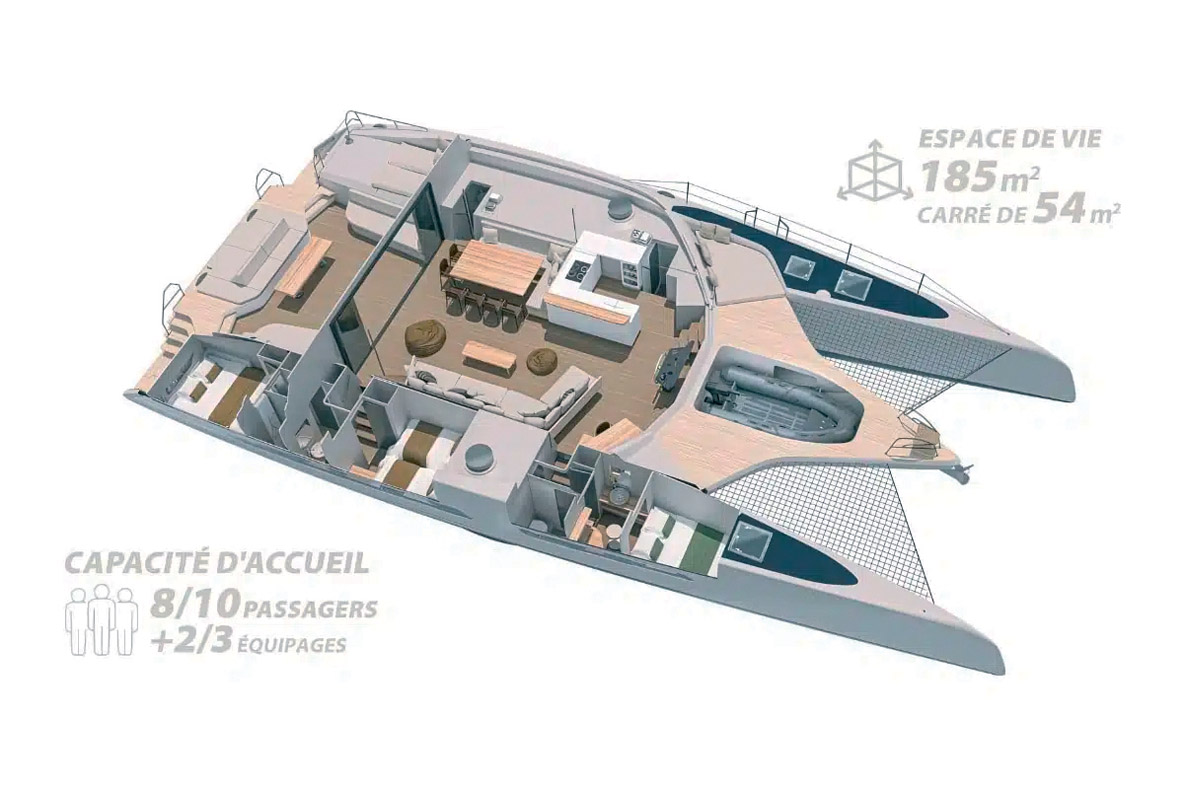
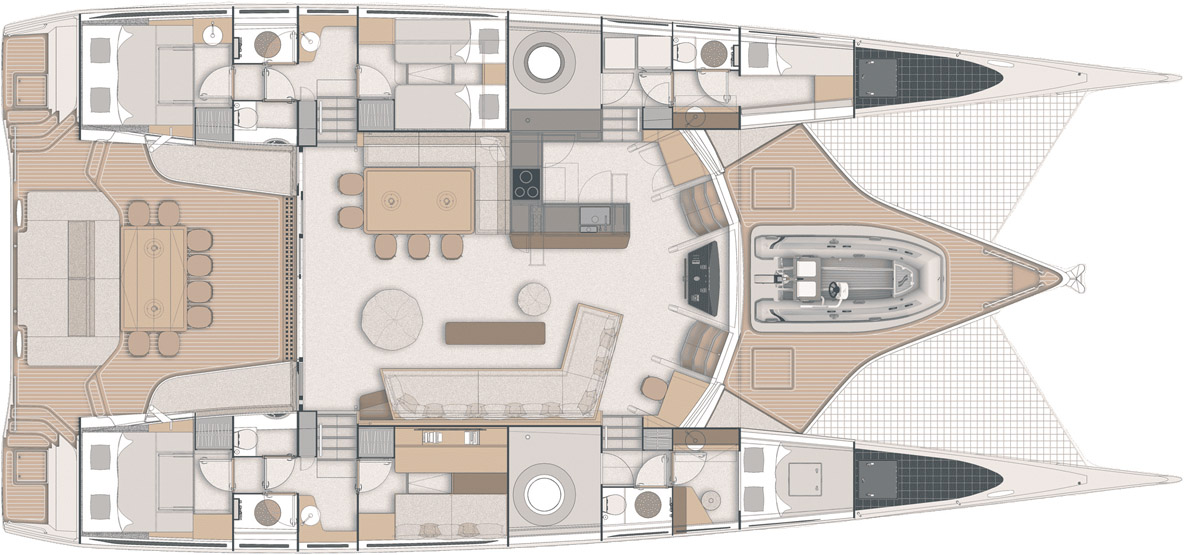
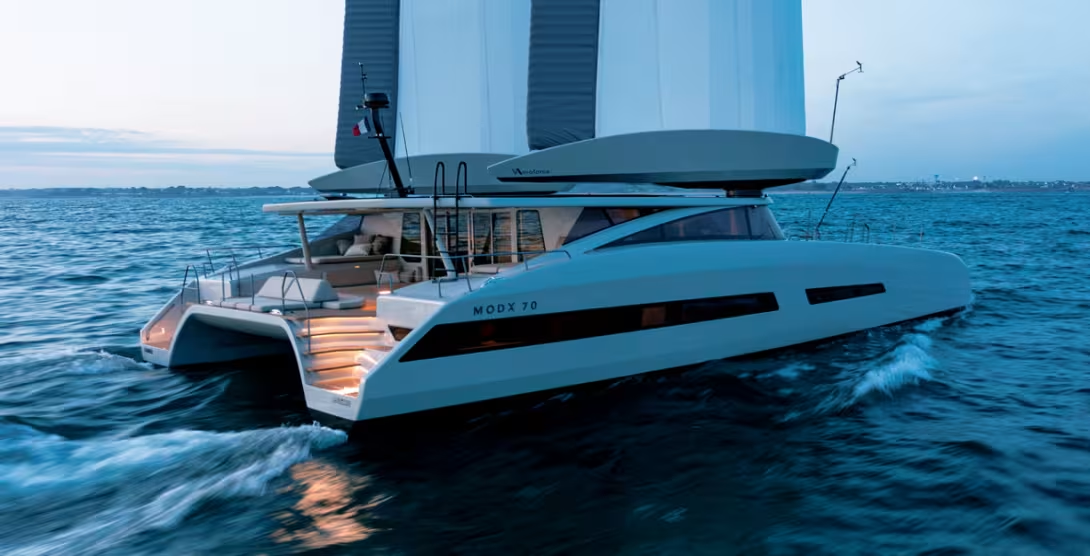
Generally, when sailors from the world of ocean racing enter the world of luxury yachting, there are sometimes a few disappointments. It is indeed a difficult exercise, as the requirements and customs of these worlds are contradictory. None of this is the case aboard the ModX: the overall silhouette is elegant, and the deck offers 2,150 square feet (200 m²) of fully usable space. The absence of a side-deck maximizes the immense living space. The 485-square-foot (45 m²) aft cockpit terrace covered by a sunshade, the sunbathing area, and the lounge area are cleverly laid out. For reasons of weight and to reduce energy consumption, there is no hydraulic platform.
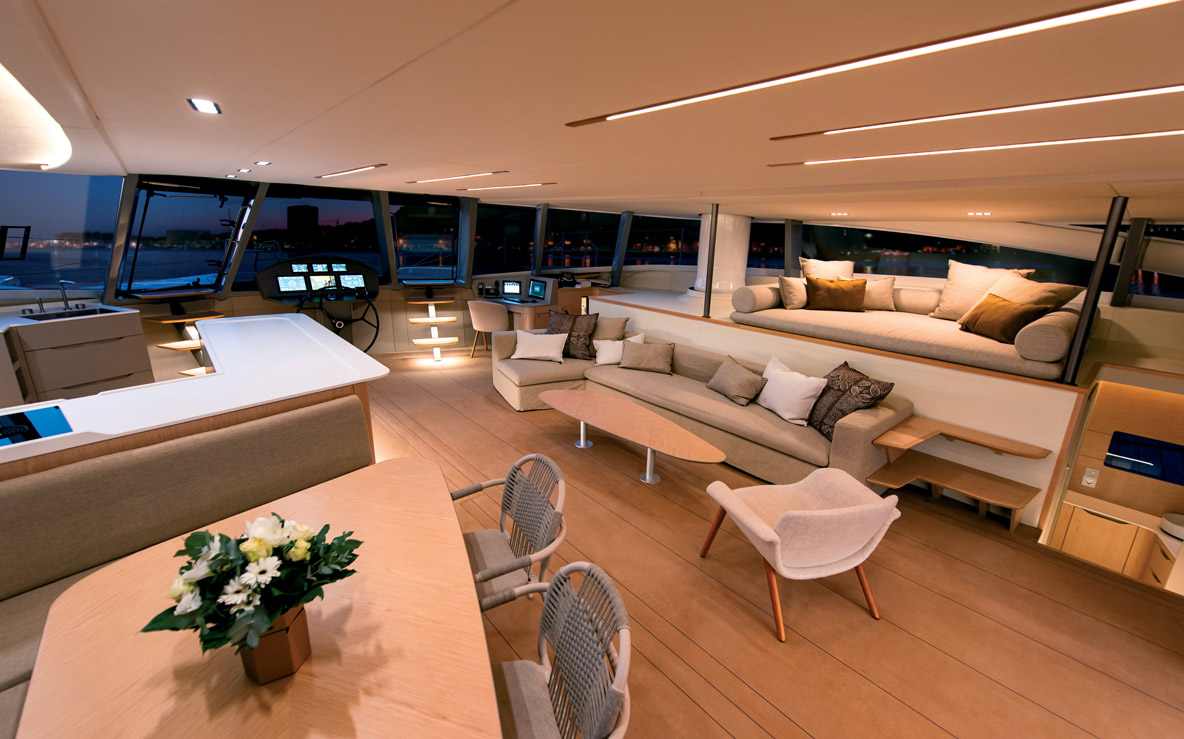
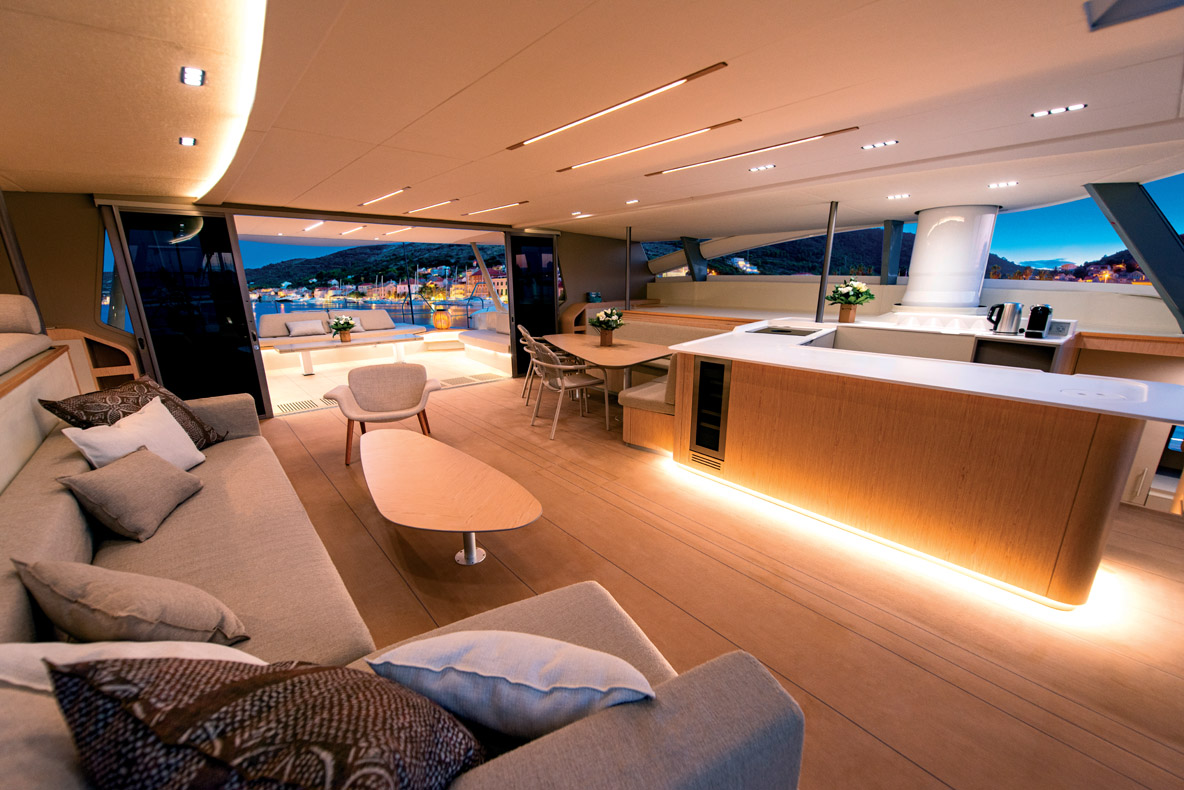
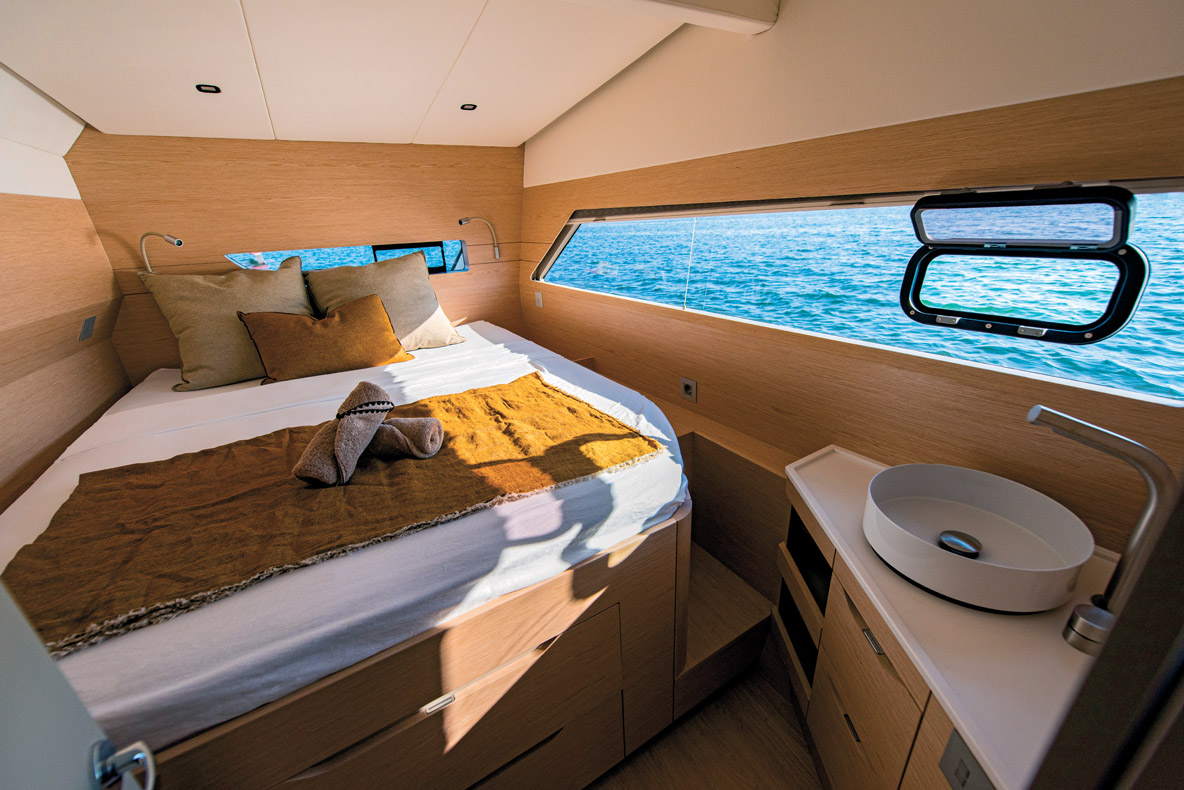
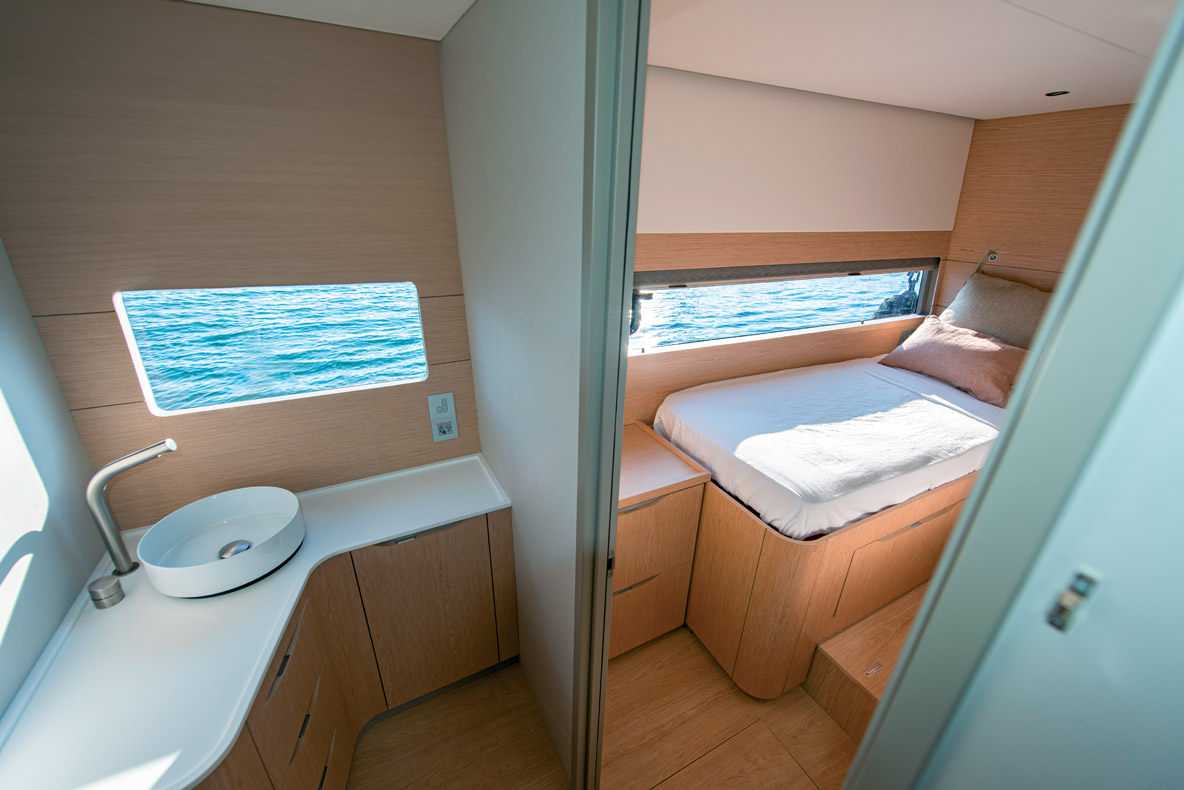
The cockpit opens fully onto the huge saloon, which comprises a dining area, a sofa facing the fully-fitted galley, and even a raised sofa with unobstructed views. The deck is covered with synthetic teak in a very modern design. There are four guest cabins, two of which have berths that can be converted into twin beds. The volumes are comparable to those of a 45-foot mass-produced cruising catamaran, due to the narrowness of the hulls. As for the beds, they don’t have island access, apart from an exterior cutout for the aft ones. However, proper crew quarters for three or four sailors ensures privacy and efficient service. The choice of furniture, made by Nautimob, is very convincing.
Smooth Gybing
On the day of our test, the wind was blowing between 6 and 8 knots, and a minor technical problem prevented us from deploying all the wings – we stayed with one reef with the two 800-square-foot (2 x 75 m2) sails designed for winds of Force 5 to 6. In the neutral position, the Balestron rig is held head-to-wind and it takes eight minutes to inflate the wings. Once the course was set, we activated the lever to provide power. The wings turned and eased themselves if we decided to bear away downwind or trimmed themselves in if we made a more upwind course. Beyond 30 degrees to the wind, a safety device puts the wings in neutral, making it easier to tack. To gybe, simply head further downwind until you’ve gone through the wind: the wings can pivot through 360 degrees and thus reposition themselves in the correct setting on the other tack. The maneuver is smooth, as the profiles are balanced around their axis and a motor brake holds them slightly in place. Despite our handicap of a third less surface area, our speed reached 4.5 at 75° to the wind and 5 knots at 110°. There’s no doubt about it: with its full wing surface area, the ModX is capable of sailing as fast as the wind. But what’s mind blowing is how easy it is to achieve. By using the control lever, you can reduce the speed, which is really impressive. In an emergency, a torque release system can be activated, but you can switch back to manual mode at any time.
Conclusion
This catamaran of the future is far from being an uncomfortable prototype - quite the opposite in fact. the ModX 70, currently owned by Océan Développement, is available for charter throughout the summer in the Mediterranean, before being used for a scientific mission. This program demonstrates that this catamaran is not an experimental prototype with an uncertain future, but rather the multihull of tomorrow... and it’s available today!
Aeroforce Sails An Innovative Solution... and One that’s Ready to Use
Fully automated sailing maneuvers
Very successful design and finish
No island beds in the cabins
Access to the sea could be improved
Technical Specifications
Architect: VPLP Design
Interior design: Océan Développement
Overall length: 66’8” (20.33 m)
Beam: 32’10” (10 m)
Draft: 6’7” (2 m)
Air draft: 15’1”/75’6” (4.6/23 m)
Displacement: approx. 66,000 lbs (30 t)
Sail area: 2 x 1,345 sq ft (2 x 125 m²)
Motors: 2 x 40 kW
Batteries: 250 kWh
Hydrogeneration: 3 kWc at 10 knots
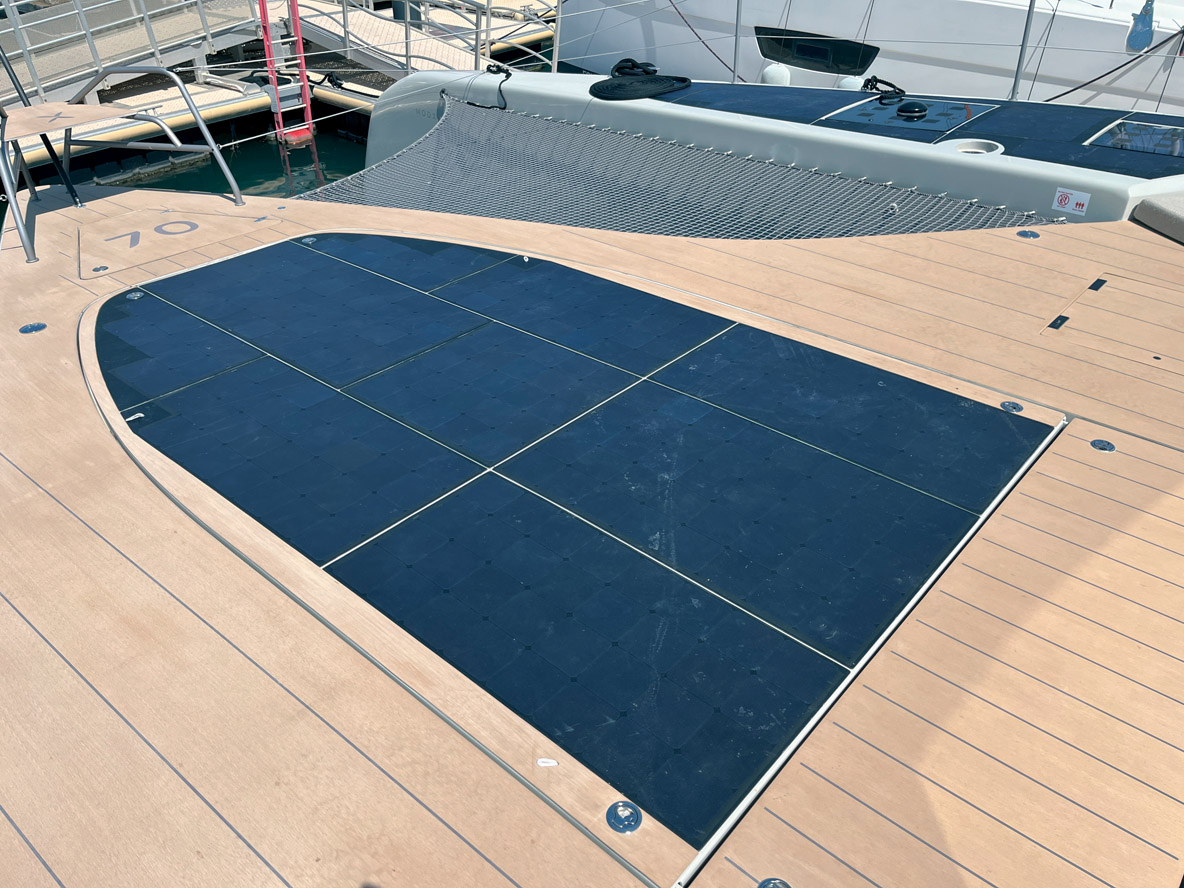
Solar panels: 753 sq ft (70 m²)
Water: 317 US gal (1,200 l)
Berths: 8-10
Crew: 3
Tender: 3.40 m (11’2”) + 10-kW Torqeedo
CE Category: A 12 – B 16 – C/D 35
Price: starting at € 8,000,000 ex-tax