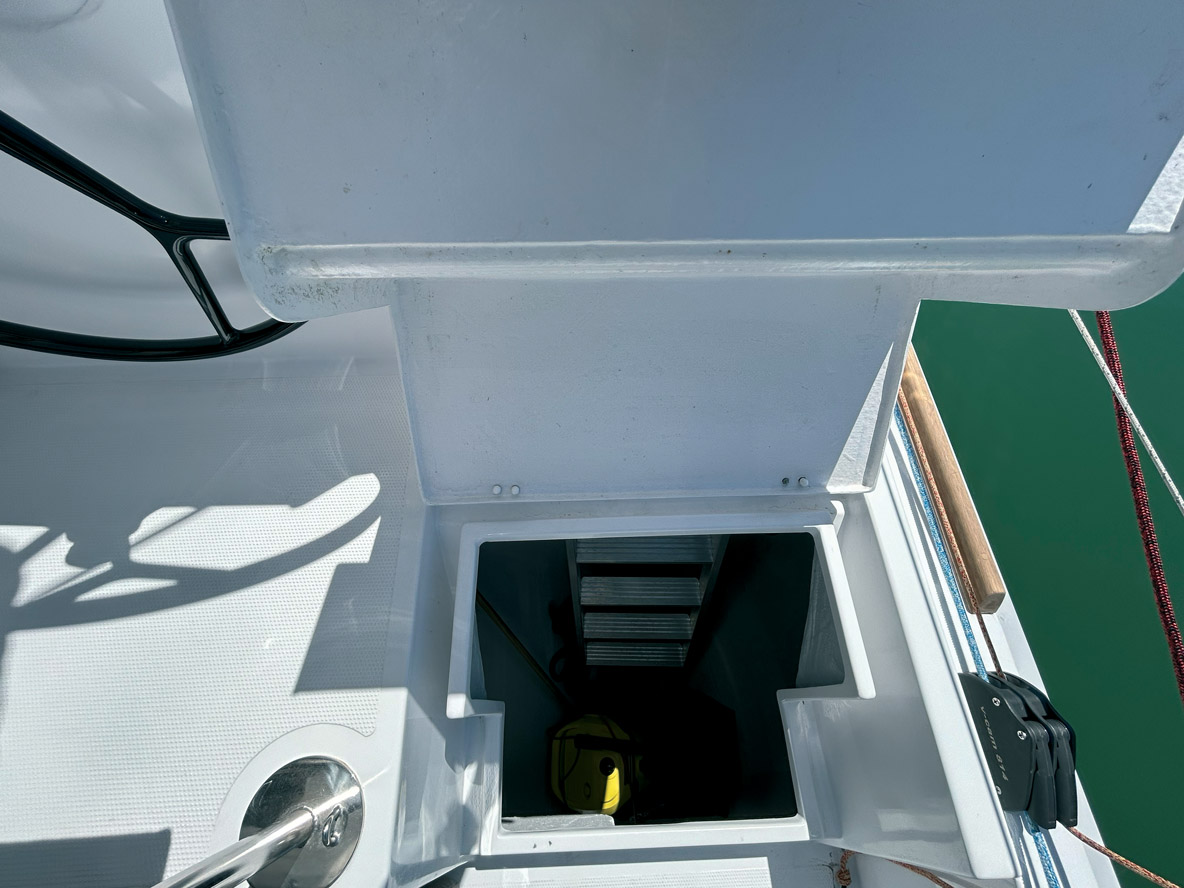
It was with great delight that I accepted an invitation from Jean-Noël Roux, NEEL-TRIMARANS dealer for France’s Occitanie region and owner of the brand-new NEEL 43 Performance, to deliver his multihull from La Grande-Motte to Port Ginesta for the Multihull Fest 2024, of which Multihulls World is a partner! I’m very familiar with the NEEL 43, having sailed one for a week in the Caribbean, and I was already impressed by the trimaran’s performance and user-friendliness. So, I was excited to get the chance to test the Performance version, taking my husband and 7-year-old son along for the occasion. To be honest, young Sam seemed much more enthusiastic than his father, who is an experienced mountaineer but still looking for his sea legs...


Infos pratiques
- Le chantier : NEEL 43 Performance
- La fiche technique
-
 Découvrez notre vidéo exclusive
- Financez votre NEEL 43 Performance
- Assuez votre NEEL 43 Performance
- Articles autour du NEEL 43 Performance
Conditions: 10 to 20 knots of wind, sea state moderate
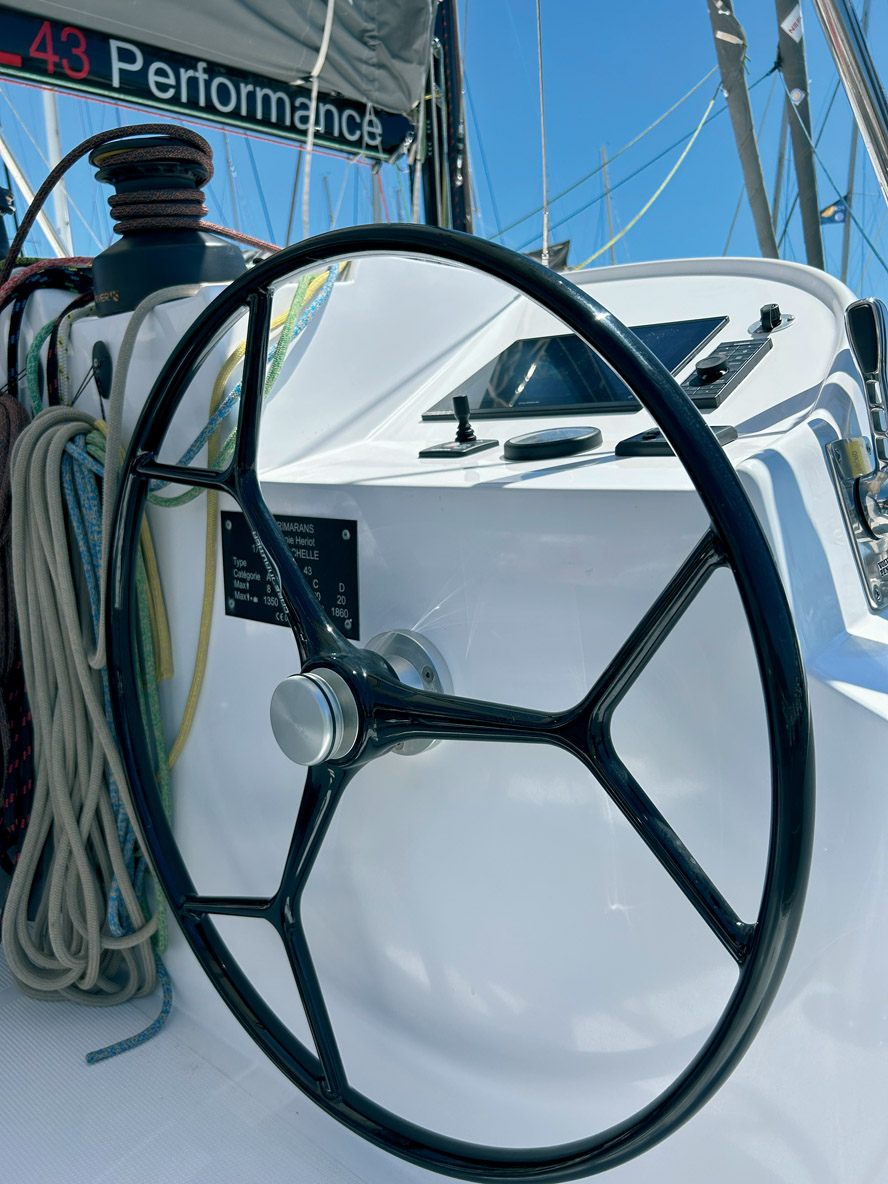
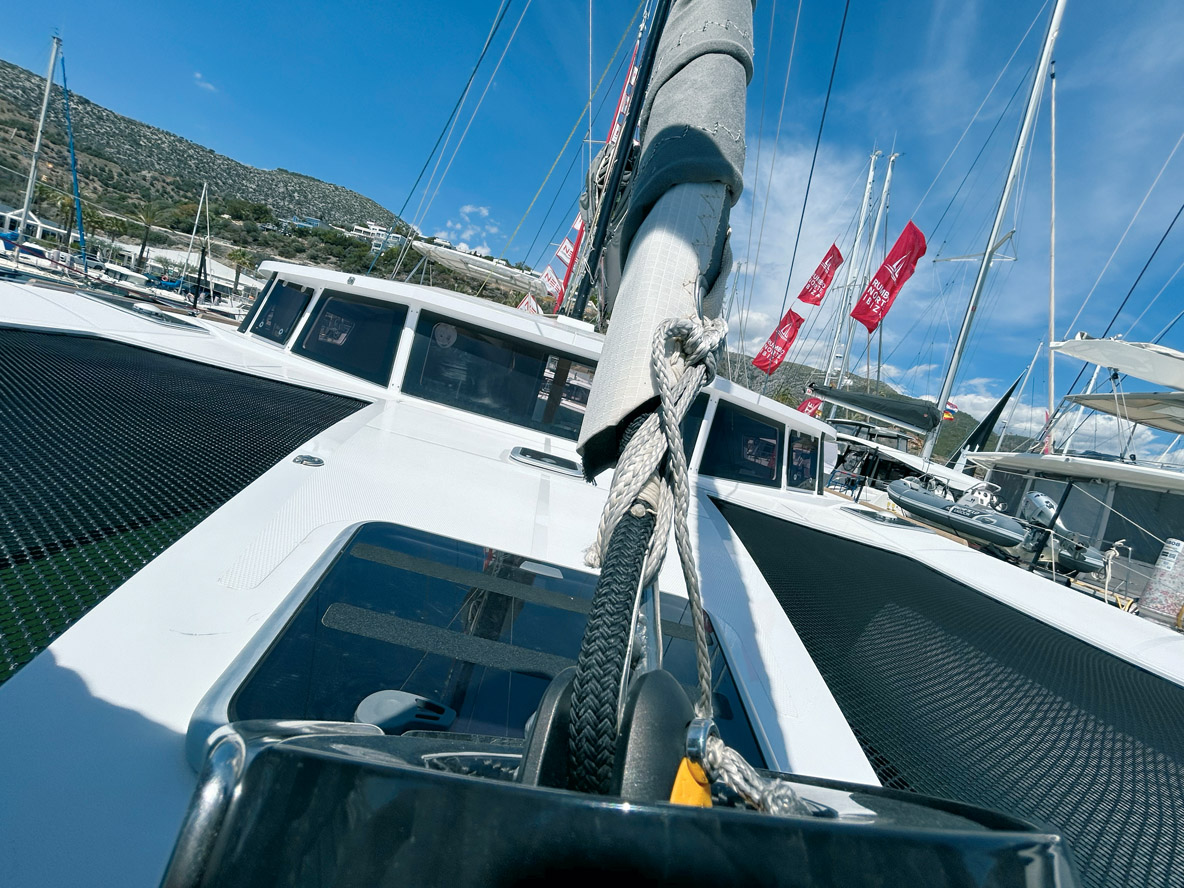
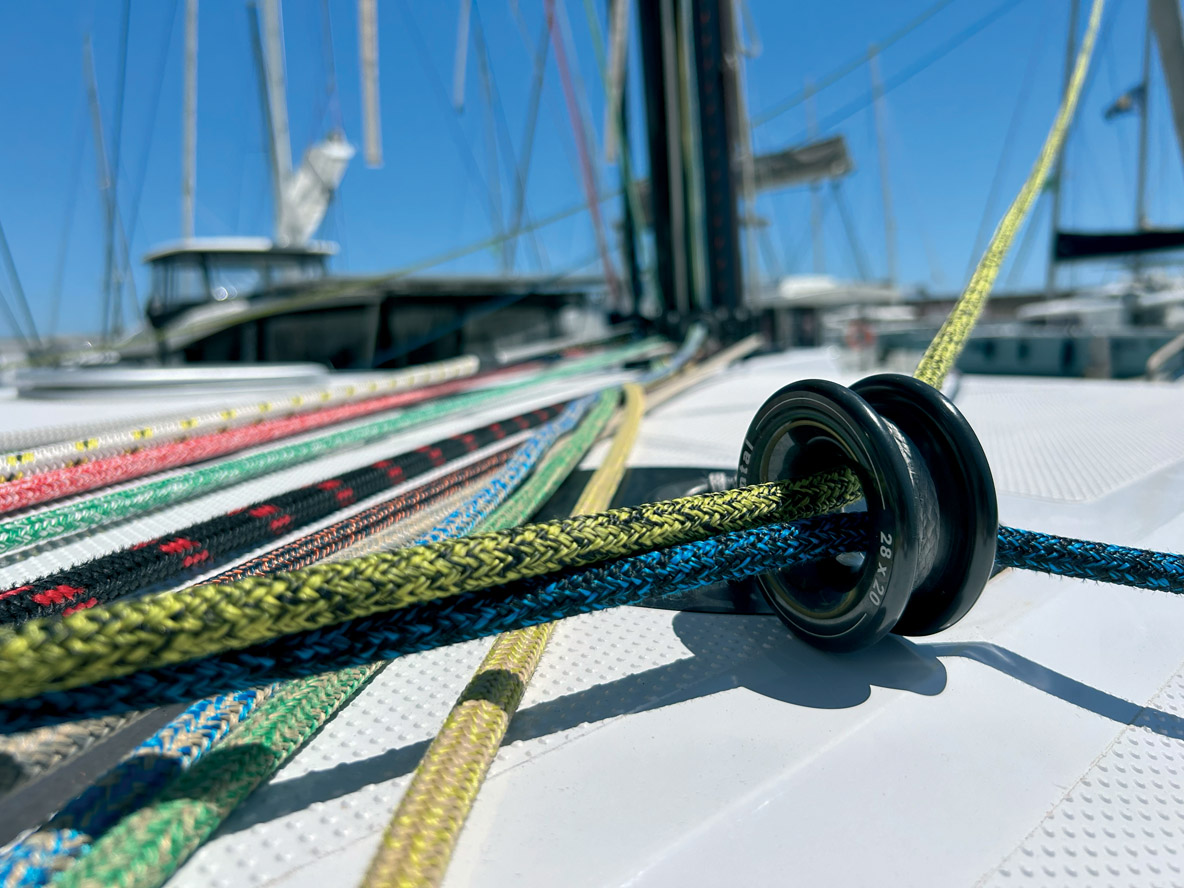
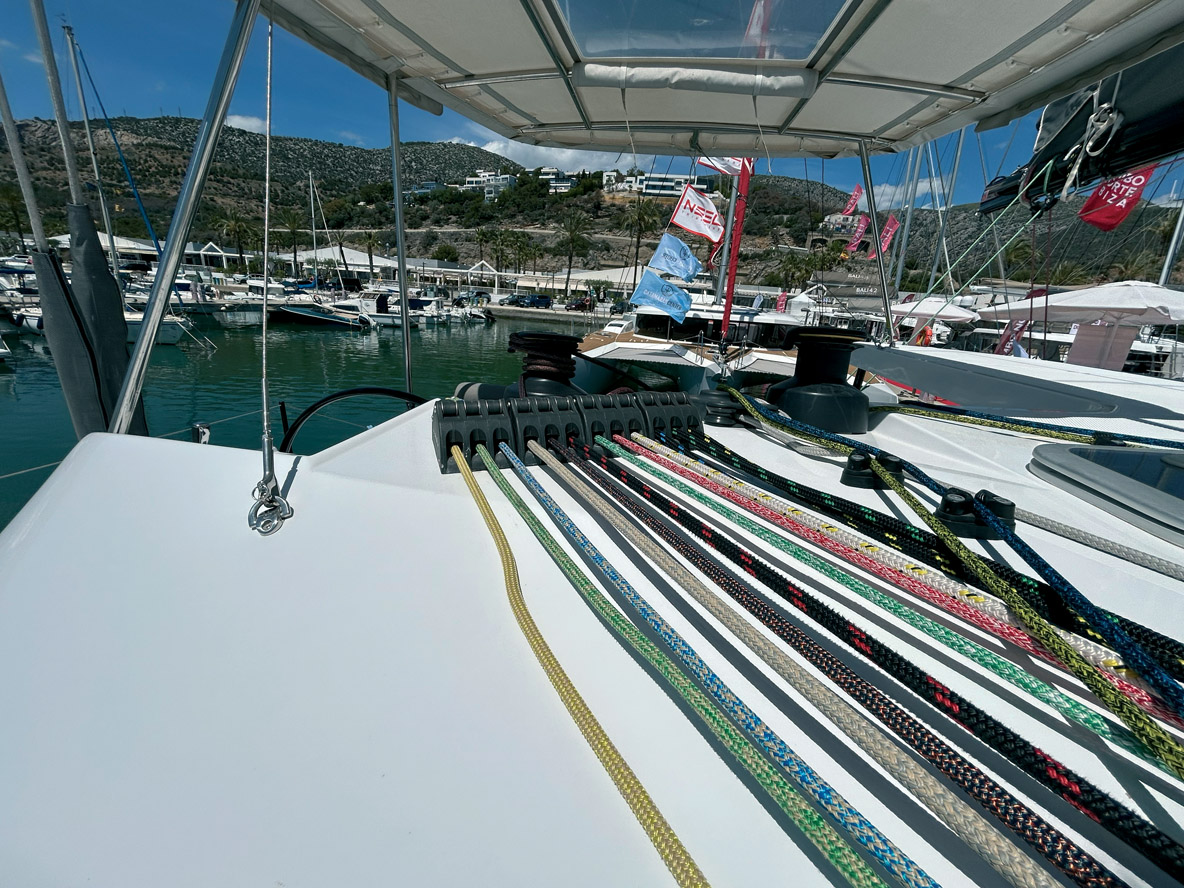
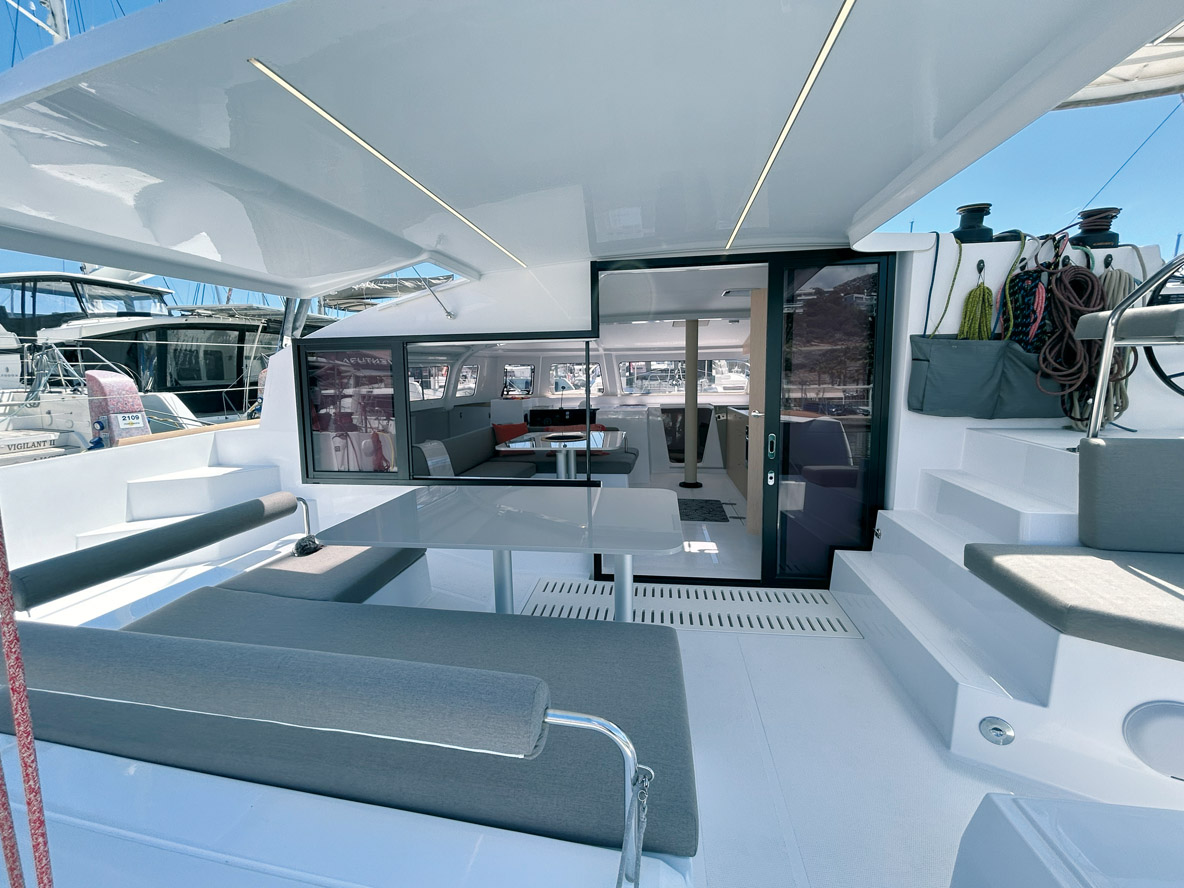
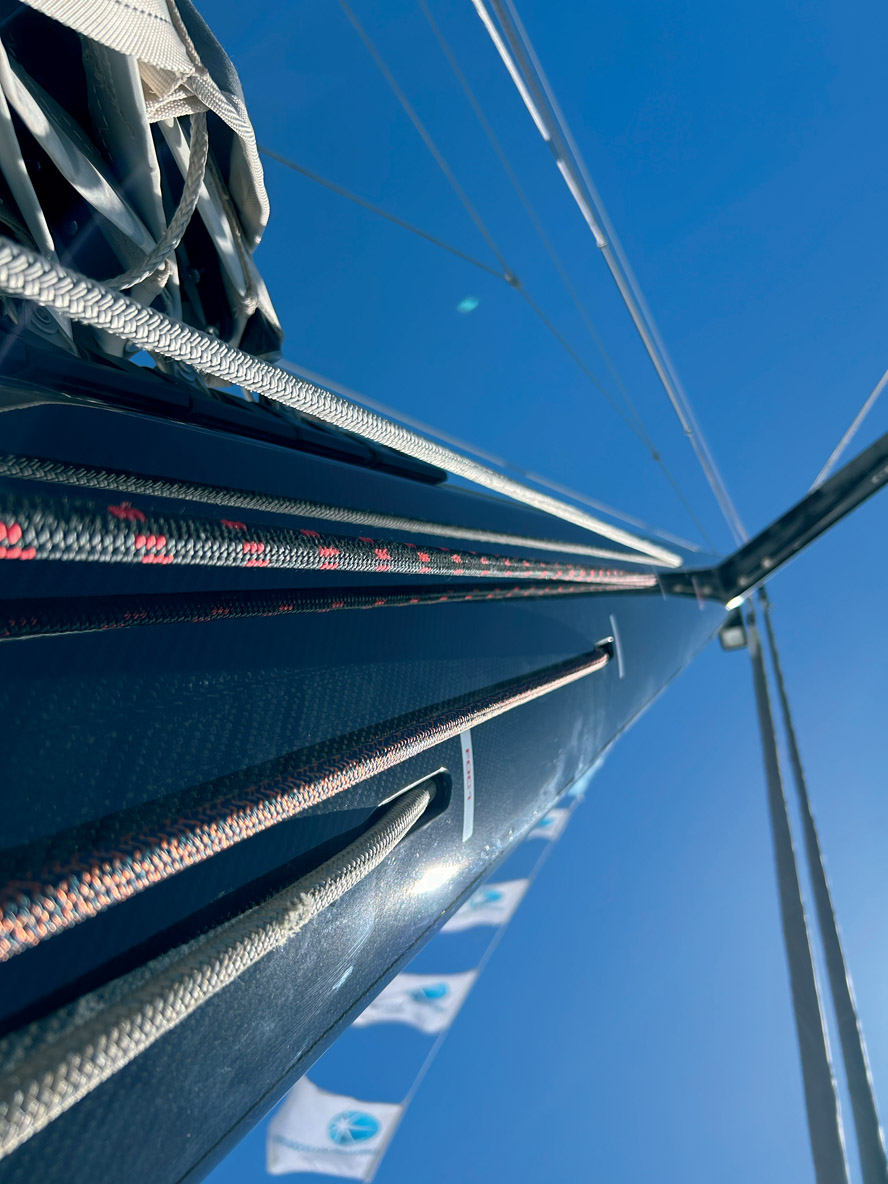
Jean-Noël warned me, “Be careful, it’s not the same boat!” Indeed, even though the Performance is built from the same molds as the standard NEEL 43, a multitude of visible and invisible details make this a completely different multihull: the structural bulkheads and mast in carbon, the fiber rigging and top-of-the-range fittings announced by the shipyard are accompanied by a host of details that make this trimaran a very pretty little toy.
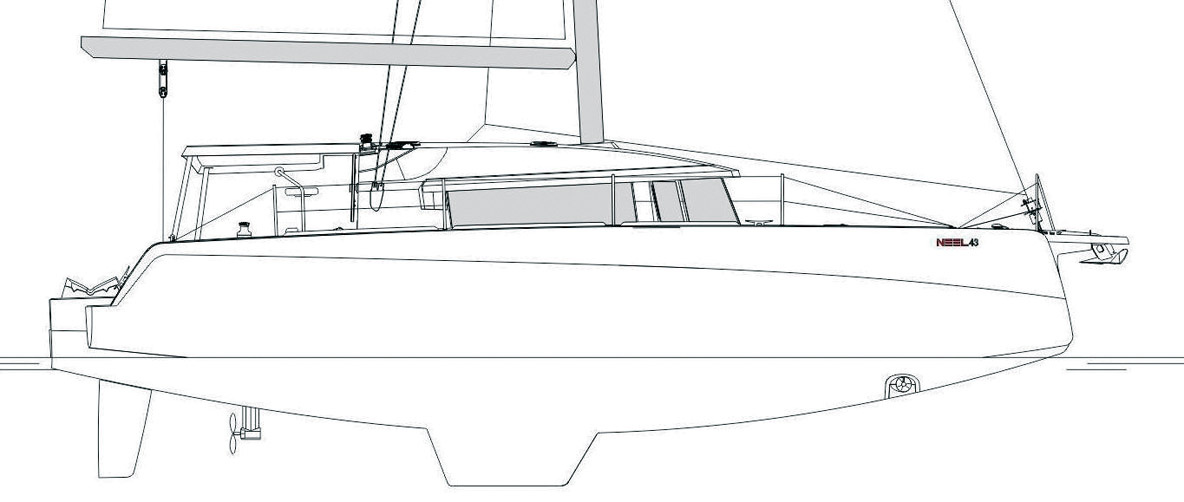
The three of us arrived with luggage and all our gear, eager to get to grips with the Gulf of Lion, but unfortunately the weather had decided otherwise for the time being: southeast winds gusting to 45 knots, torrential rain, and heavy seas... conditions incompatible with family cruising! So, we took the opportunity to discover the trimaran in port while waiting for a weather window to open. First impression: the multihull looks much higher on the water than a “traditional” 43, as Jean-Noël confirms: “The multihull is 500 kg (1,100 lbs) lighter than a NEEL 43 equipped for cruising”.
Understated, uncluttered interior design
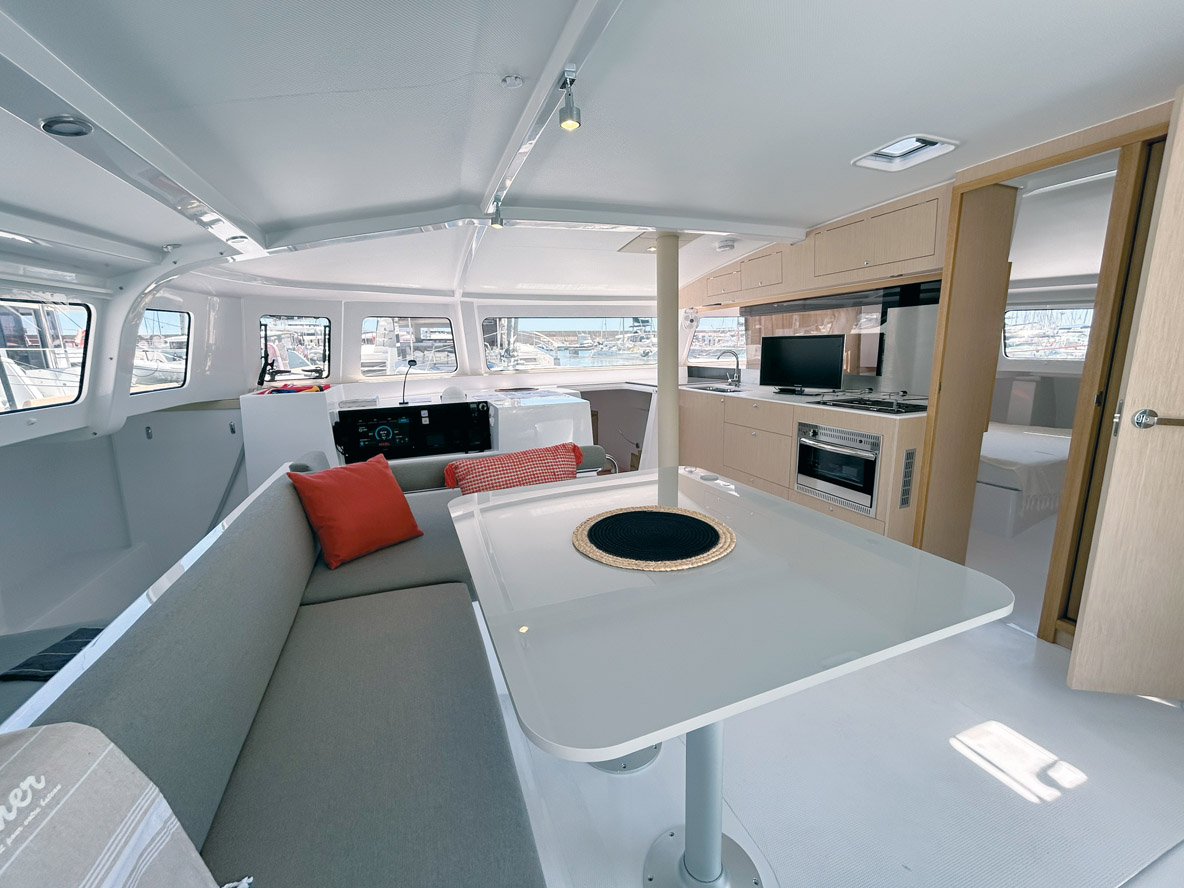
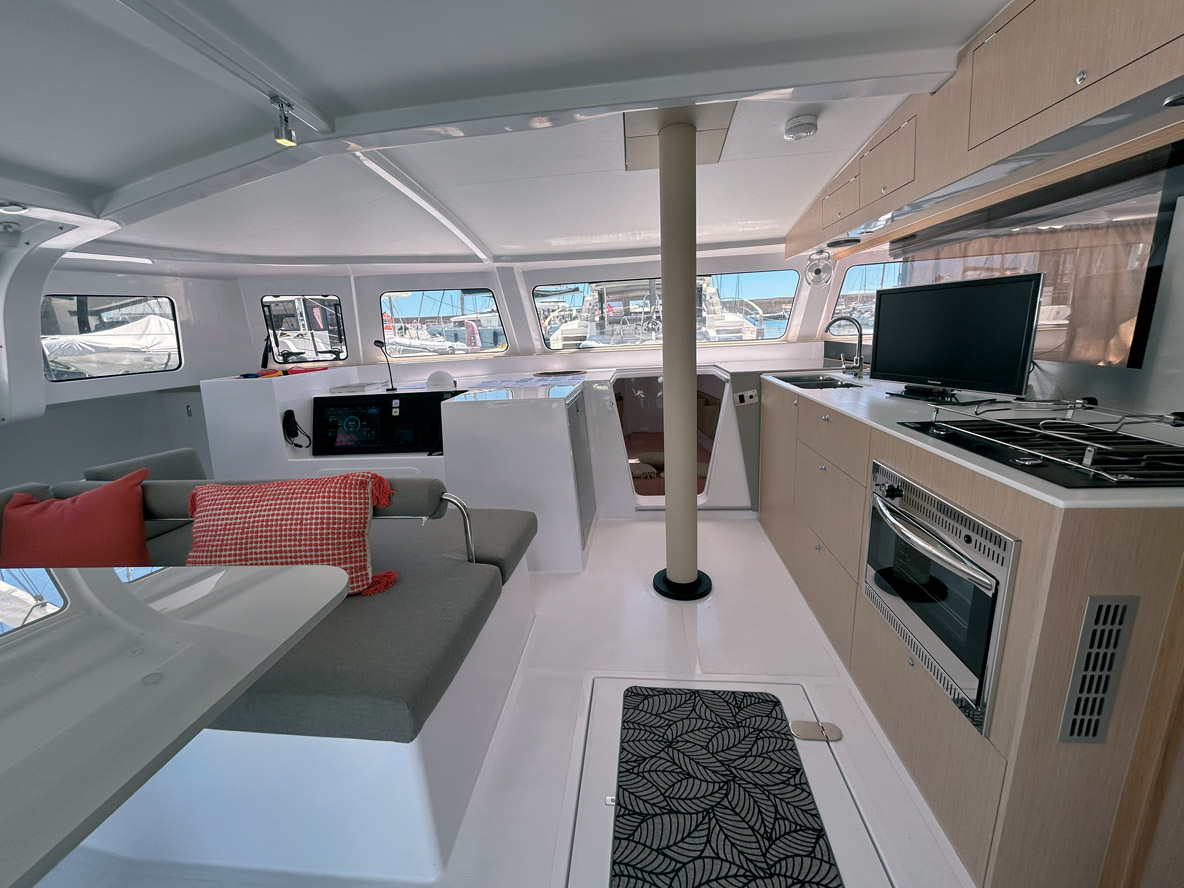
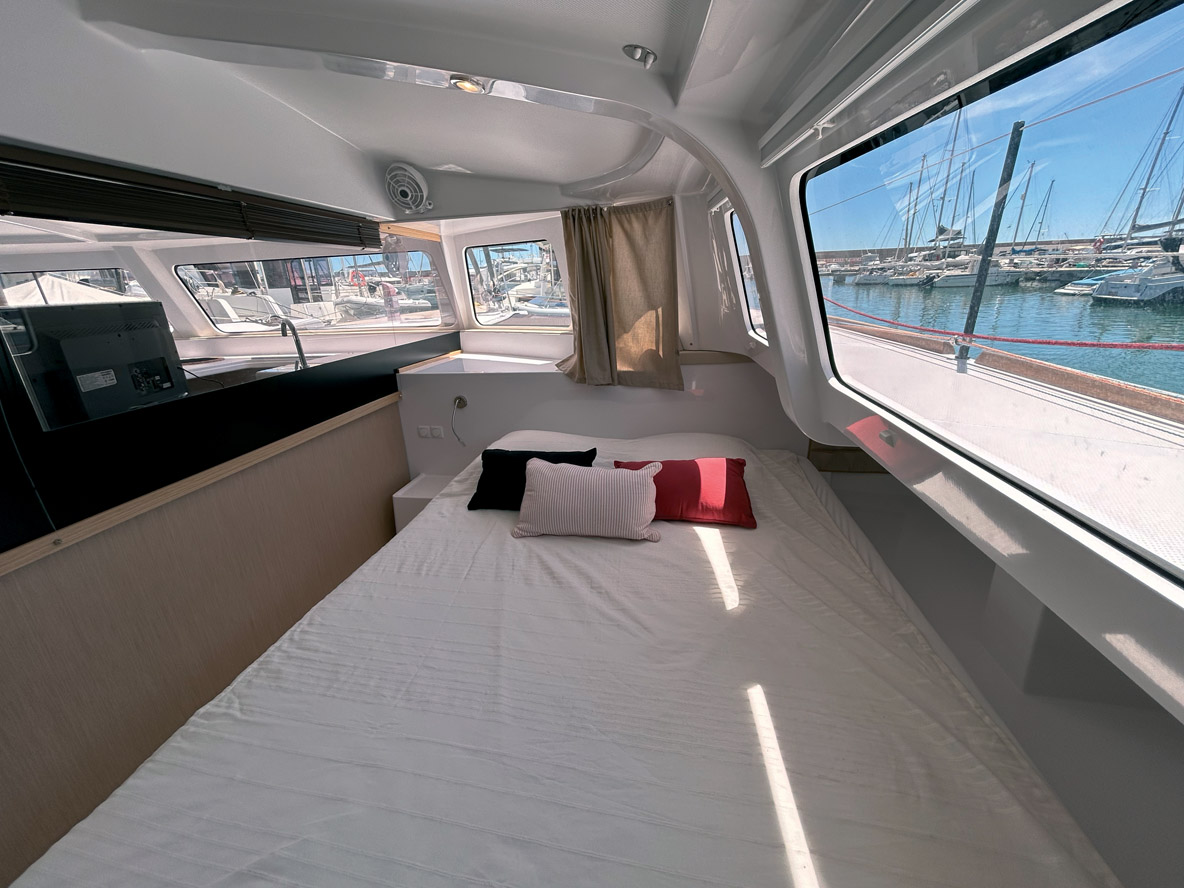
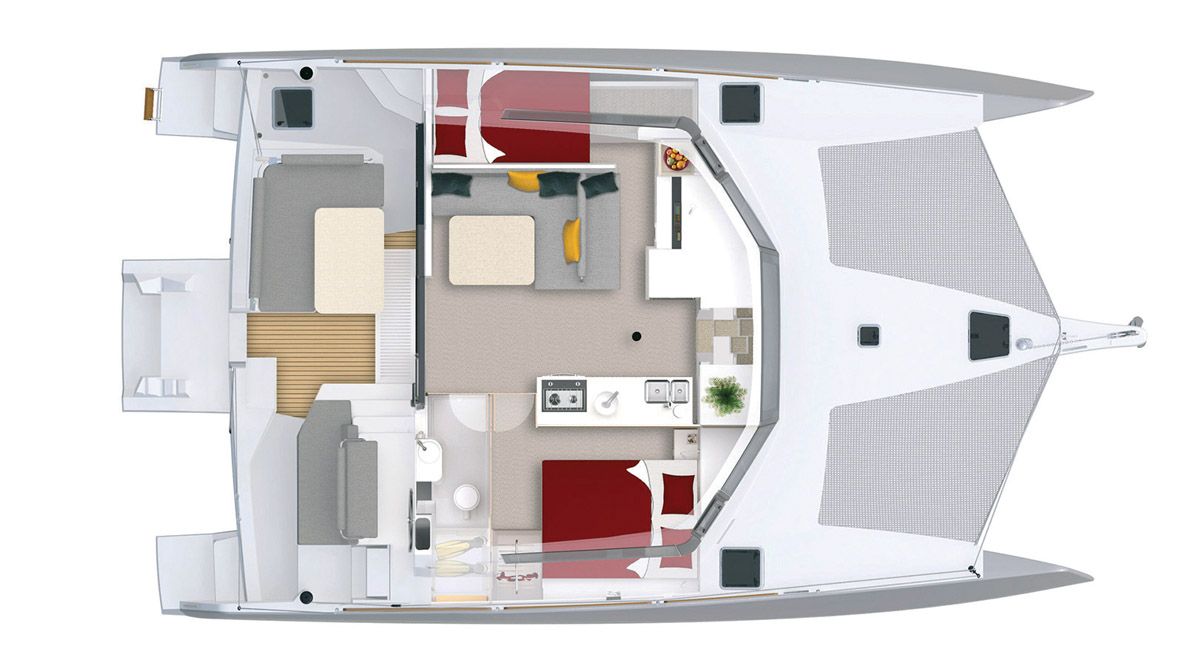
Inside, it came as no surprise to find the standard, understated, uncluttered design of the NEEL 43, which nonetheless offers six berths in three double cabins in very comfortable conditions. The boat’s layout gives it a New York loft feel. Young Sam quickly found his place in the port-side double bunk, which communicates with the saloon. My husband and I moved into the owner’s cabin; he suggested we stay in a hotel “given the weather conditions”, but ultimately agreed that this cabin was very comfortable, and the bed was large (150 x 200 cm / 59 x 79”). For my part, I really appreciated the striking sea view, which is reconciled with the impression of a protective cocoon. It’s a good thing we were all feeling comfortable on board, because we ended up having to have to wait until mid-afternoon the next day before we could finally cast off; a “Cévenol episode” was forecast for the night, and from the saloon we could see the waves crashing over the jetty. An excellent meal at the Japanese restaurant - well known to exhibitors at the International Multihull Show – filled us up and, above all, confirmed that we were right not to put to sea: gusts of wind and rain certainly put the establishment’s veranda to the test!
It was a blustery night, with gusts of wind in excess of 50 knots, and we were having trouble getting to sleep. I took the opportunity to familiarize myself with the Garmin electronics, whose 16-inch screen illuminates the chart table. I found myself a little confused by the complexity of the menus and couldn’t find the information I was looking for at first glance. The shipyard will probably have to work hard to deliver multihulls with electronics already set up for sailors. On the other hand, the entire electrical network is connected via the “empire bus”, enabling you to activate the various circuit breakers from the chart table screen, or even from your phone if you’ve interfaced it via the Garmin app. On a minor note, the Wi-Fi relay must be in the wrong spot, as I lost the connection as soon as I got back in the cabin.
Direct course to Spain
On Sunday morning, a brief lull in the weather led us to hope for an early start, but the state of the sea and the amount of sand accumulated on the trimaran’s deck by the bad weather meant we had to wait a little longer. At lunchtime, the wind finally dropped below 20 knots and the sea seemed to be calming down; I decided to set sail at 3pm and head straight for Port Ginesta... Given the tight timing and the unfavorable weather forecast for the days ahead, the planned stopovers in the charming anchorages along the Costa Brava had already been cancelled – we were off on a real passage. Young Sam’s eagerness to leave was inversely proportional to his father’s morale, which was not very high at the prospect of spending the night at sea in these conditions.
Despite the wind still being strong, and despite our berth being very close to a finger dock behind and a dolphin in front, we managed to extricate ourselves easily thanks to the powerful torque of the motor along with the bow thruster. I took advantage of the outer harbor to get the mainsail up on a still-flat sea. There’s no electric winch in this configuration, but a Karver 4-speed allows you to hoist the sail effortlessly, even if the process can seem a little long when you switch to the stepped gear. If I had to choose, I would have kept the electric winch, which is entirely possible, as confirmed with the shipyard later.
Pleasure at the helm
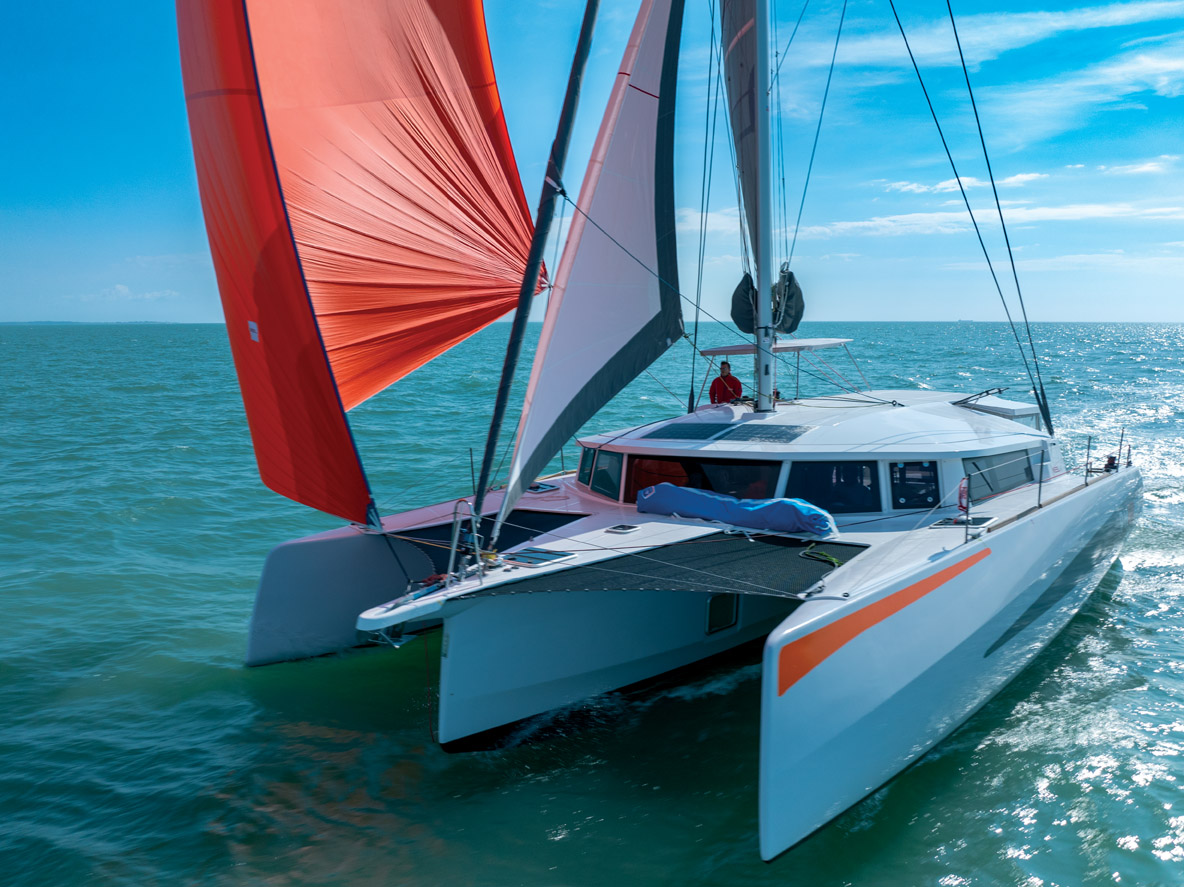
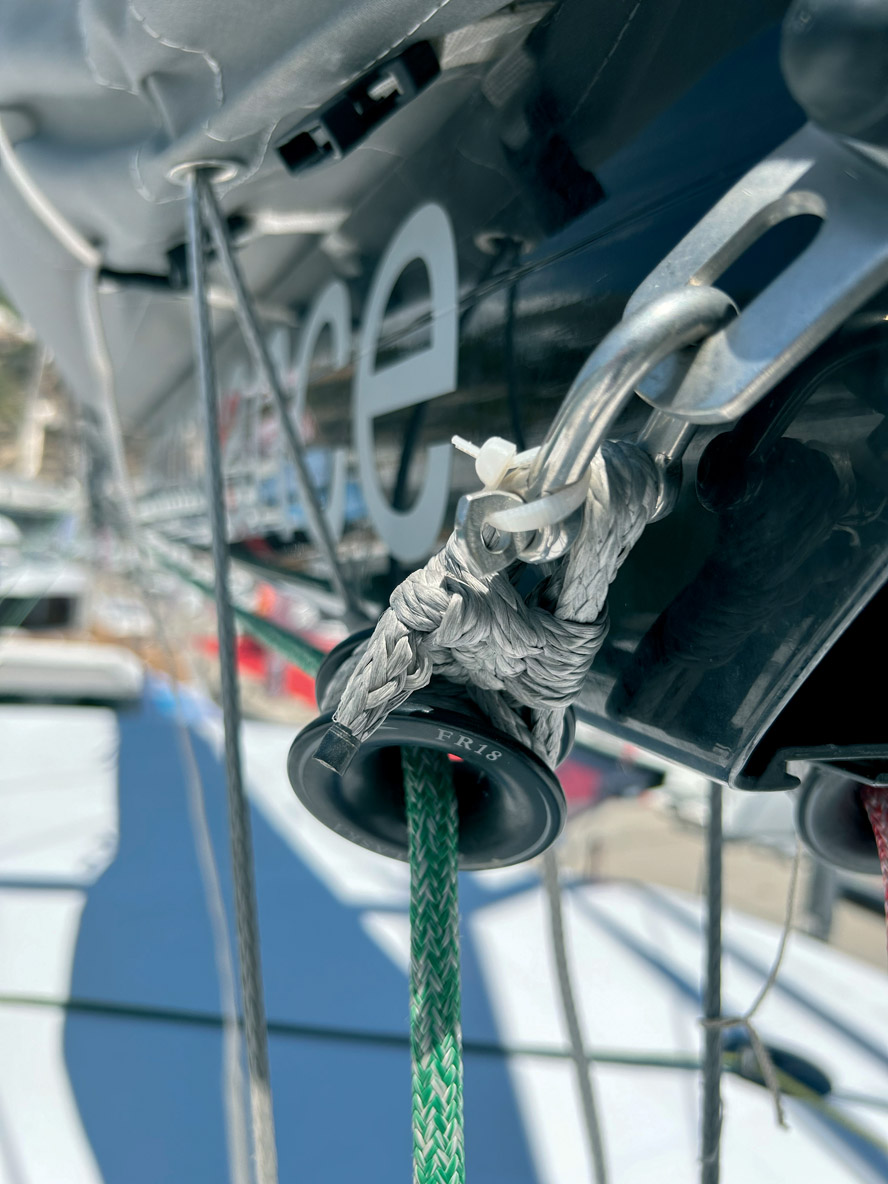
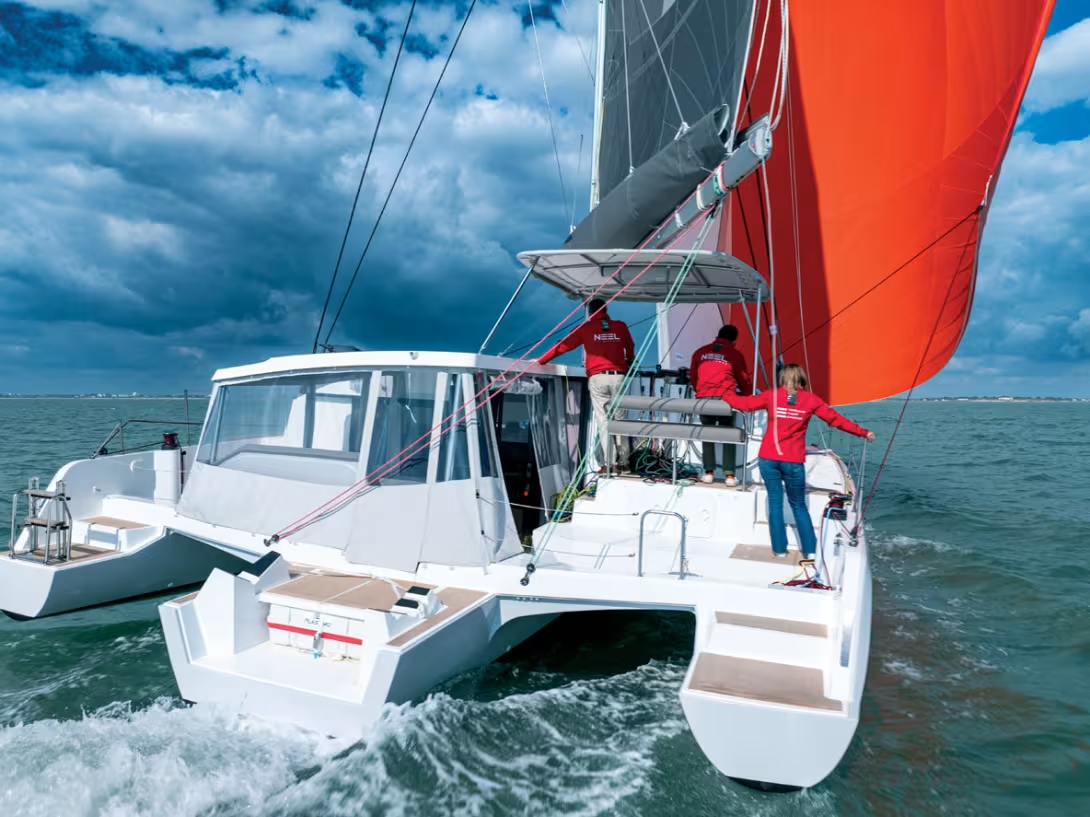
We headed out on port tack in a wind hovering around 15 knots, and I set the trimaran up for an ocean beat at 60° to the true wind. The first pleasant surprise was that, despite the still choppy seas, the little multihull was very fast and quickly settled at over 8 knots. The carbon helm with direct transmission via fiber lines is incredibly responsive, and I was really enjoying steering the trimaran before another squall forced me to engage the autopilot and take refuge at the chart table. By the end of the afternoon, the wind had come round by 25 degrees, and I was able to start playing with the headsail settings: a small Dynema tackle secured to a padeye placed on the edge of the coachroof allows the genoa leech to be opened and tensioned; the performance gain was striking and allowed the NEEL 43 Performance to happily exceed 10 knots despite the big seas. Inside, snug in his bunk, Sam was fast asleep while my husband kept watch at the chart table. I took the opportunity to test the gas stove, fortunately equipped with two potholders. Definitely, the smallest NEEL is very seaworthy!
In the middle of the night, we sailed through a transition zone with the wind dropping below 5 knots and heavy rain: we motored along at 2,000 rpm at a cruising speed close to 8 knots. At around 5 a.m., the wind shifted back to the northeast, freshening to 20 knots, and I was able to bear away to 140 degrees to the true wind, en route to the dreaded Cape Creus - some say the Cape Horn of the Mediterranean. The persistent downpours and choppy seas weren’t motivating the crew to hoist the spinnaker, so we continued under full mainsail and genoa. I was pleasantly surprised by the way the autopilot behaved, allowing the 43 to surf at over 15 knots while I sipped my coffee and contemplated the raging elements. I was beginning to dream of transatlantic sailing on this magnificent trimaran!
Gybing solo... while working!
It was unfortunate, however, that this model wasn’t fitted with radar (it’s an option in the NEEL catalog), because at these speeds and in these conditions, it’s better to be on the lookout - many small Spanish fishing boats aren’t equipped with AIS. What’s more, I love anticipating squalls with the radar, and the new digital technologies make it possible to visualize weather phenomena much better than 20 years ago when I was part of an all-female crew racing around the world.
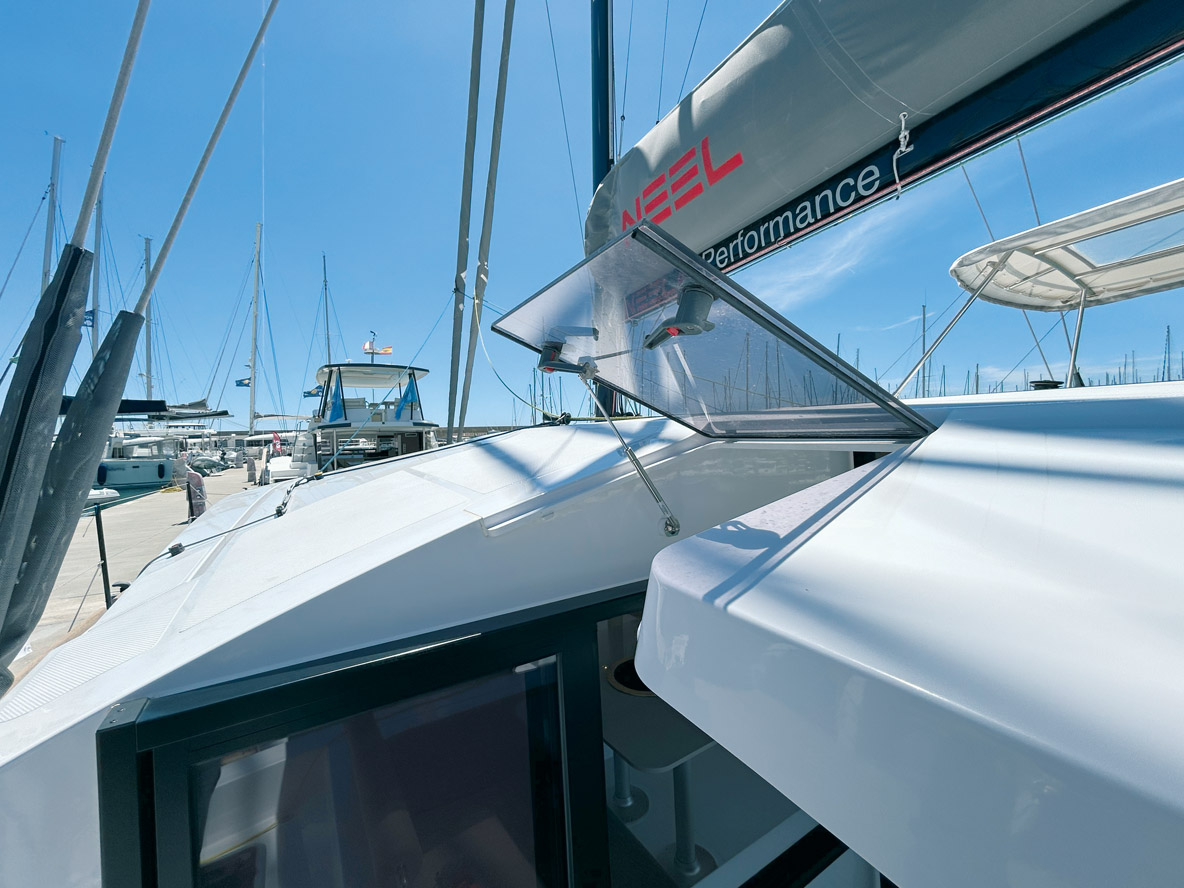
It was a gloomy day off the Spanish coast, but the cozy, bright interior of our little multihull gave us a reassuring feeling of safety and comfort. I rested in my cabin while my two men kept watch. Lying back in the decidedly generous double bunk, I appreciated the 360° visibility which allowed me to check from time to time that all was well. By late morning, we were only twenty miles from Barcelona, and sailing at an average speed of over ten knots. The wind continued to build and I had to gybe to avoid sailing by the lee. My sailors were now asleep, and I was in the middle of a news conference with the phone in one hand, but thanks to the very simple helm station where all the maneuvers are grouped together, I could carry out my gybe without stress: I gybed at 160° to the true wind, eased the genoa enough to bring the clew close to the forestay and tuck the sheet to windward to goosewing it. All I had to do was wait a little while for the boat’s speed to build up again, so as to reduce the apparent wind, and then give two taps on the autopilot control to gybe the mainsail, which I had previously centered. Child’s play - my colleagues on the phone didn’t even realize I was maneuvering solo! We eventually reached Port Ginesta by mid-afternoon, still in the pouring rain, where we were greeted by Pedro, the shipyard’s local dealer.
Conclusion
I have to confess that I’ve never tried a multihull in such adverse weather conditions, particularly without the owner on board. I was pleasantly surprised by the seaworthiness of this trimaran, in seas that were always stronger than the wind. For me, it’s the ideal multihull for a family looking to sail for the long haul! I absolutely want to sail the NEEL 43 on flat seas in 15 knots of wind. This trimaran promises to be a real little rocketship!
Shipyard’s sales manager
A word from Brieuc Maisonneuve
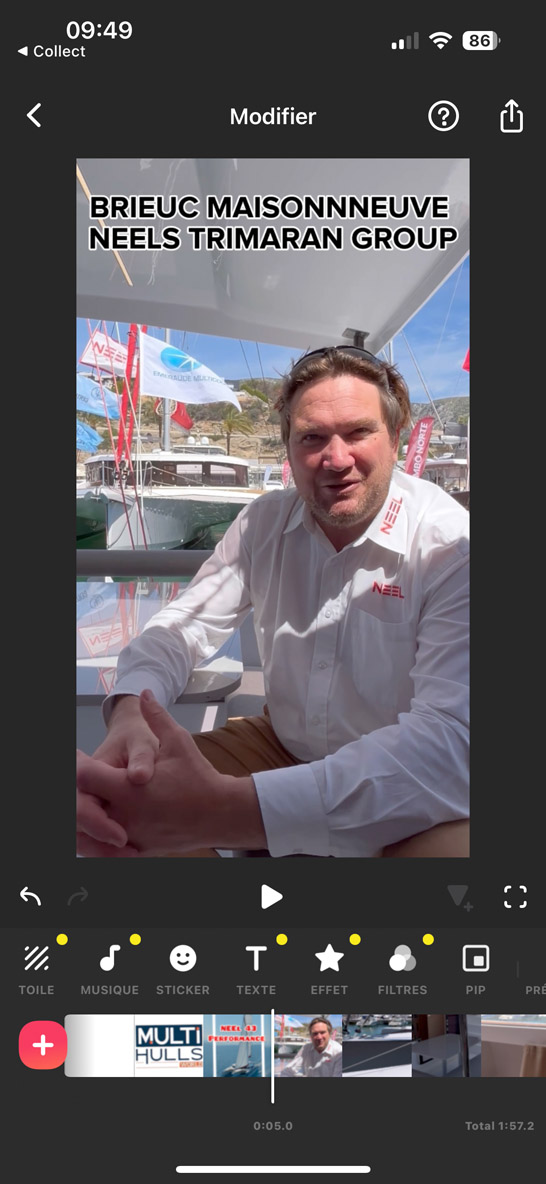
the 43, designed to appeal to customers looking for a
high-performance, comfortable and safe trimaran.
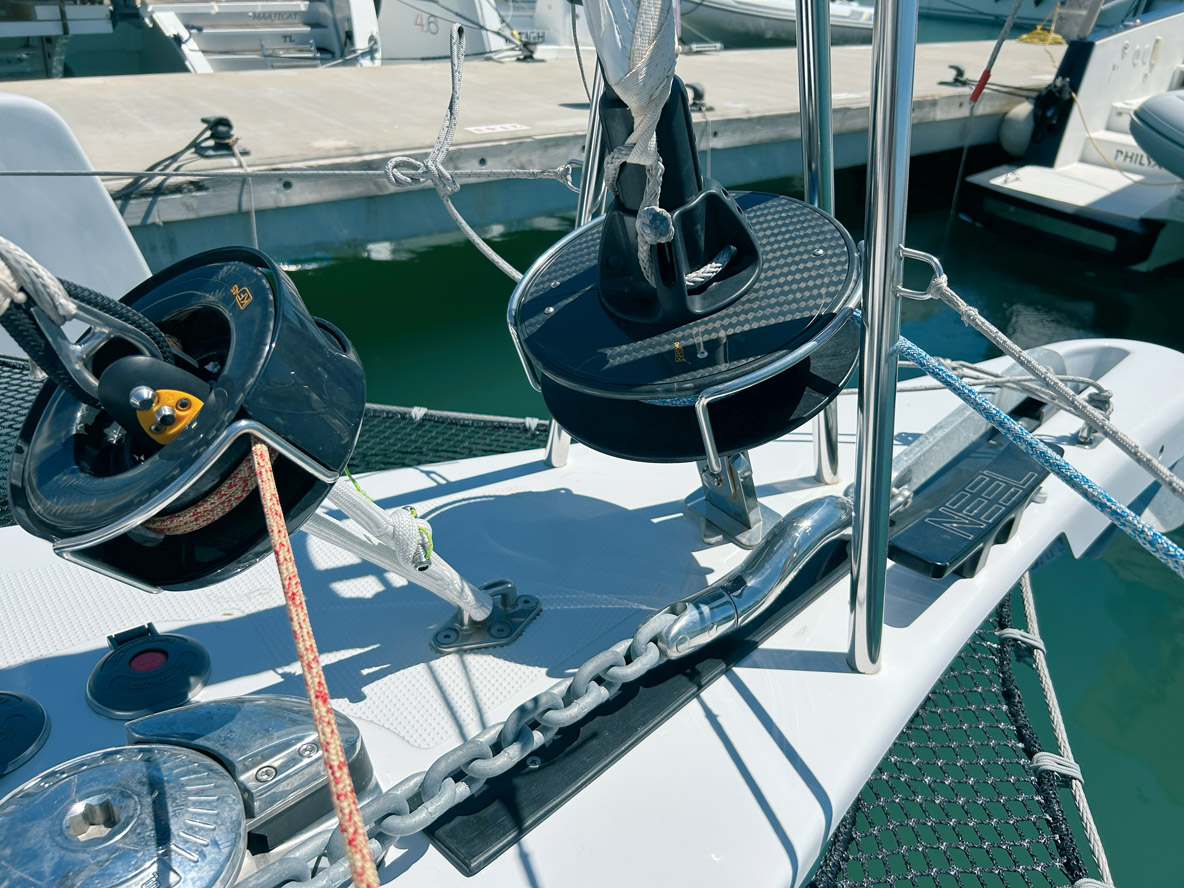
In agreement with the Lombard team, we have replaced the structural glass bulkheads (3 main bulkheads and cap shroud reinforcement) with PVC/carbon bulkheads, saving 200 kg/450 lbs and making the “chassis” even stiffer. Similarly, the carbon mast is fitted with fiber standing rigging, which saves as much weight again as a carbon profile versus an aluminum mast. The stainless-steel mast support strut of the regular 43 is now made of carbon. For aesthetic reasons, the stanchions and deck cleats are black. In terms of fittings, we’ve upped the ante by offering the NEEL 43 with higher-performance winches and furlers.
Emeraude Multicoques
The opinion of Jean-Noël Roux
Adding the Performance Pack transforms this friendly family cruiser into a top-of-the-range multihull
Improved finishes: real progress has been made at the shipyard since the launch of this unit
Lack of non-slip surface on some parts of the coachroof (these areas are reserved for the installation of solar panels, and are quite slippery without it)
Technical specifications
Architects: Marc Lombard Yacht Design Group
Material: Foam/glass quadriaxial/polyester and vinylester sandwich, PVC carbon bulkheads and carbon reinforcements
Length: 42’4” (12.9 m)
Beam: 24’3” (7.4 m)
Draft: 4’11” (1.5 m)
Air draft: 62’4” (19 m)
Light displacement: 18,750 lbs (8.5 t)
Fully-battened mainsail: approx. 630 sq ft (58.6 m²)
Genoa: 467 sq ft (43.4 m²)
Water: 132 US gal (500 l)
Fuel: 79 US gal (300 l)
Engine: 50 HP Volvo
CE Certification by ICNN
Main options
ex-tax:
From €€560,000 in 3-cabin version
Cockpit and stern steps in synthetic teak (Seadeck): € 8,450
Cockpit tent (removable): € 5,565
Helm station bimini: € 3,930
Saloon table convertible to double berth with curtains: € 4,060
6/7 kVA generator: € 17,850
Air conditioning: € 19,320
Heating: € 7,200
Watermaker 12 V, 100 l (26 US gal)/hour: € 15,700
2 x solar panels on front of coachroof total 312 W: € 4,500
Highfield 3.1 m (10’) tender with Honda 6 HP outboard motor: € 7,600
Price of the model we tested: € 616,450 ex-tax