For 10 years now, NEEL have been building their own vision of the cruising multihull, namely a trimaran topped by a large nacelle. The concept developed by Eric Bruneel has been well-received by performance-loving blue water cruisers and is now a permanent fixture in the world of multihulls. The latest model in their sailing range to be launched is the NEEL 43, replacing the 45. We had the opportunity to try one out in La Rochelle, in excellent weather conditions.
Infos pratiques
- Le chantier : Neel 43
- La fiche technique
-
 Découvrez notre vidéo exclusive
- Financez votre NEEL 43
- Assuez votre NEEL 43
- Articles autour du NEEL 43
Test location: La Rochelle, France
Conditions: Wind, ENE 12 to 20 knots, sea state slight
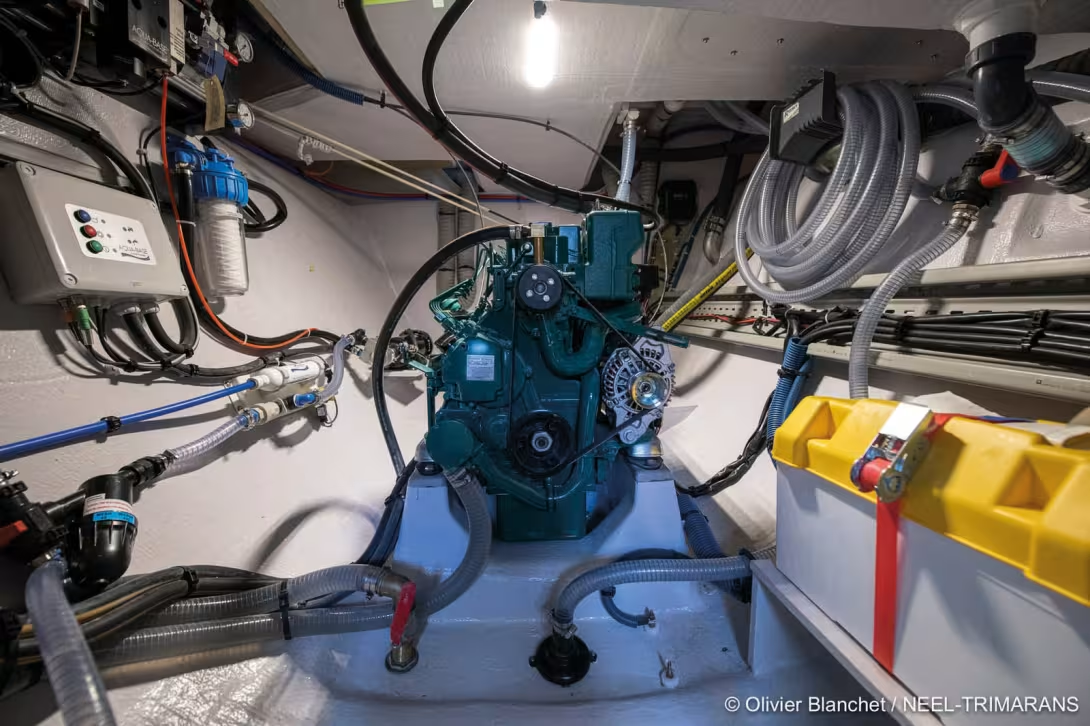
Blue skies and a steady offshore breeze: what more could you ask for on a test sail? Aboard this trimaran, there is only one engine to fire up - a 50 HP Volvo. There’s a bowthruster in the central hull, but this wasn’t required for our maneuver leaving an empty dock. Note that the relatively low dihedral form of the floats means that the 43 does not wobble from one side to the other and will remain flat at anchor. The floats are significantly angled. They are narrow at the waterline, but their volume is increased by very rounded outer topsides. As for the appendages, there’s a monolithic keel below the central hull and a single rudder. Though the hulls and deck are made of traditional and largely reliable materials) foam/glass sandwich with quadriaxial cloth/polyester and vinylester and carbon reinforcements) many non-structural parts in the fittings, such as the counter-molds, are made of a sandwich that integrates a 9 oz (300 gsm) glass/flax cloth and a cork core. At NEEL, the heading is clearly one towards the use of environmentally friendly materials. The 43 displaces just 19,850 lbs (9 tonnes) lightship, 2 to 3 tons less than most of its twin-hulled competitors of the same size.
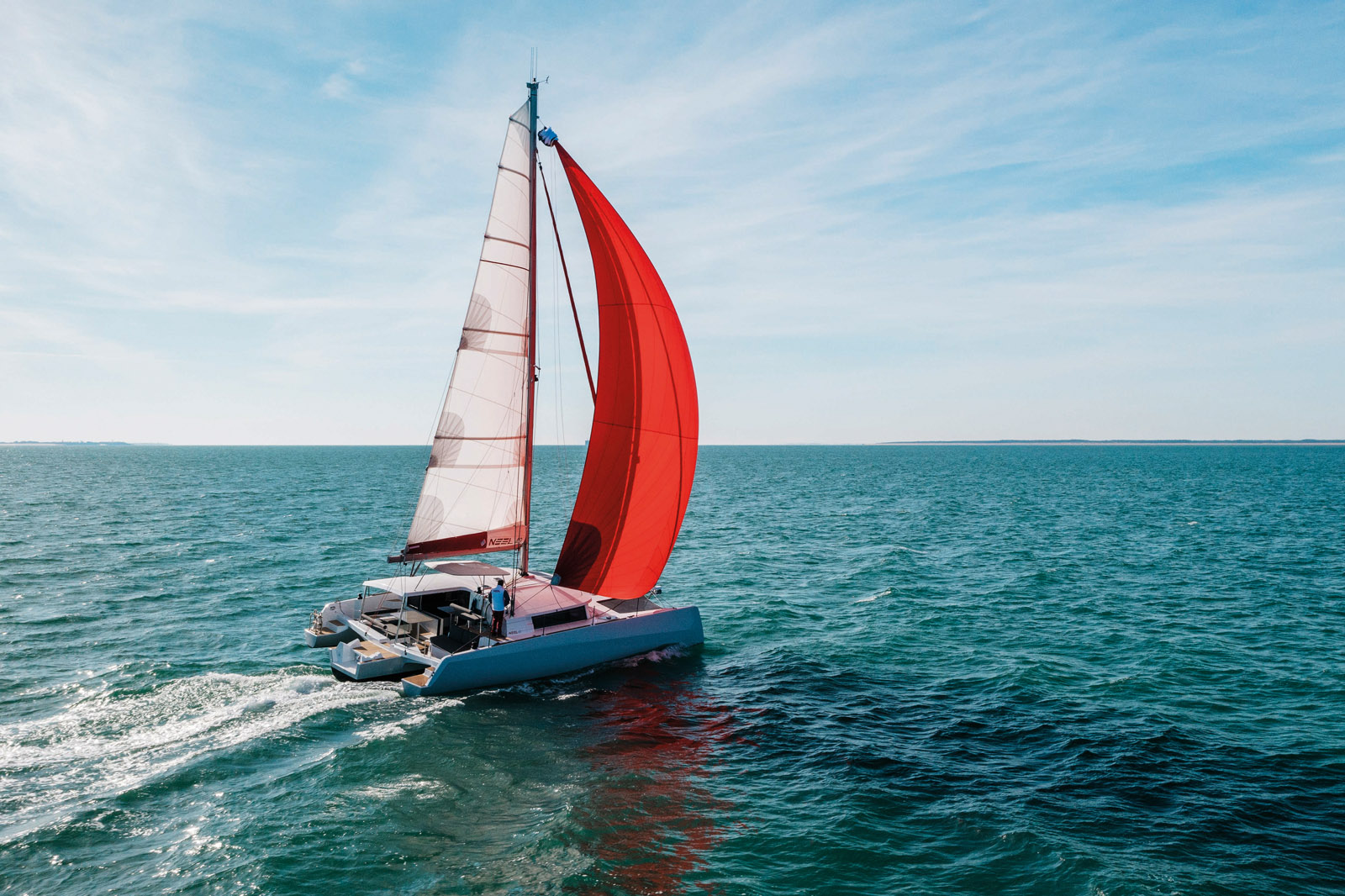
The NEEL 43 is capable of averaging over 10 knots in a Force 4.
An ultra-simple deck plan
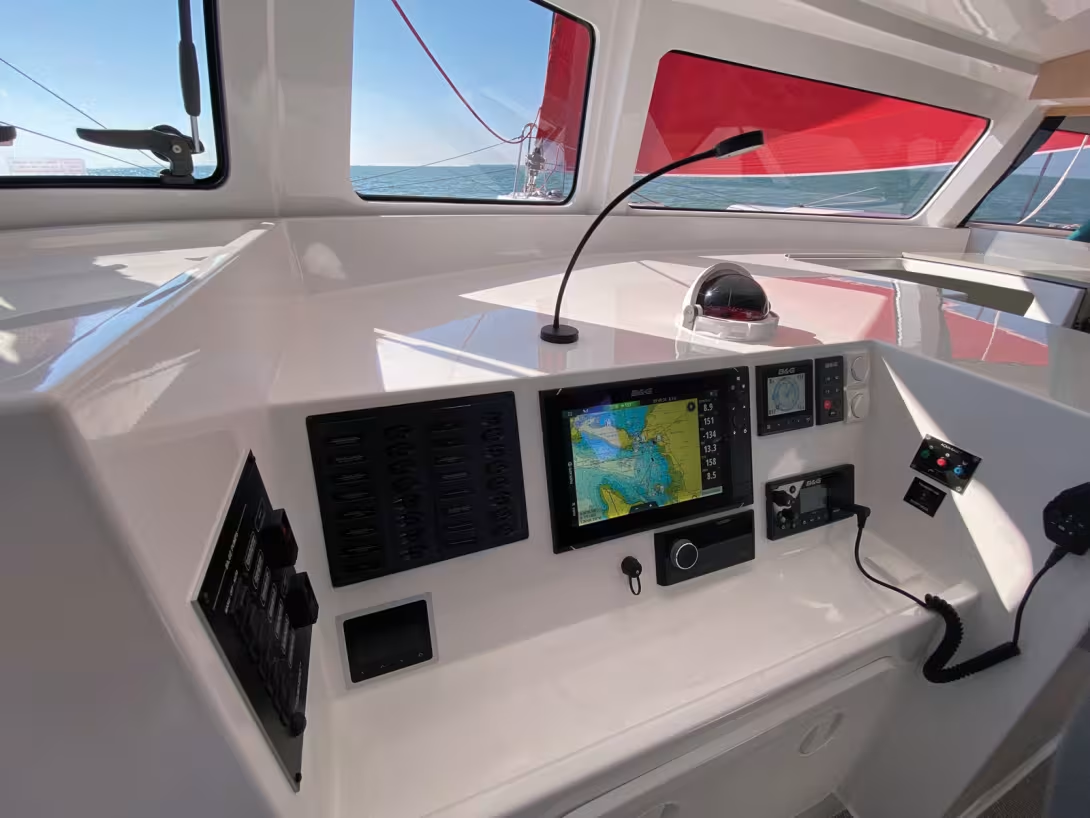
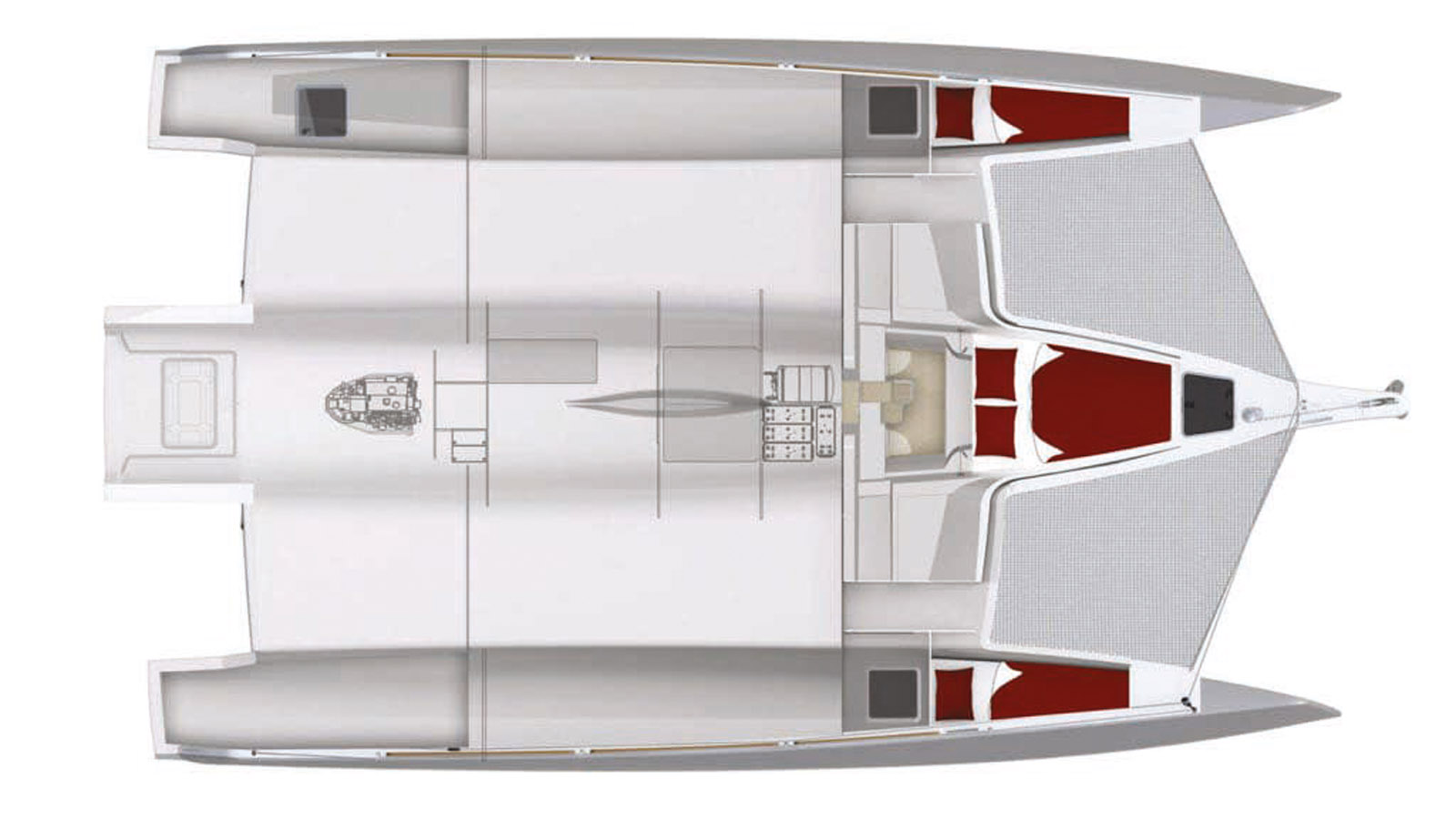
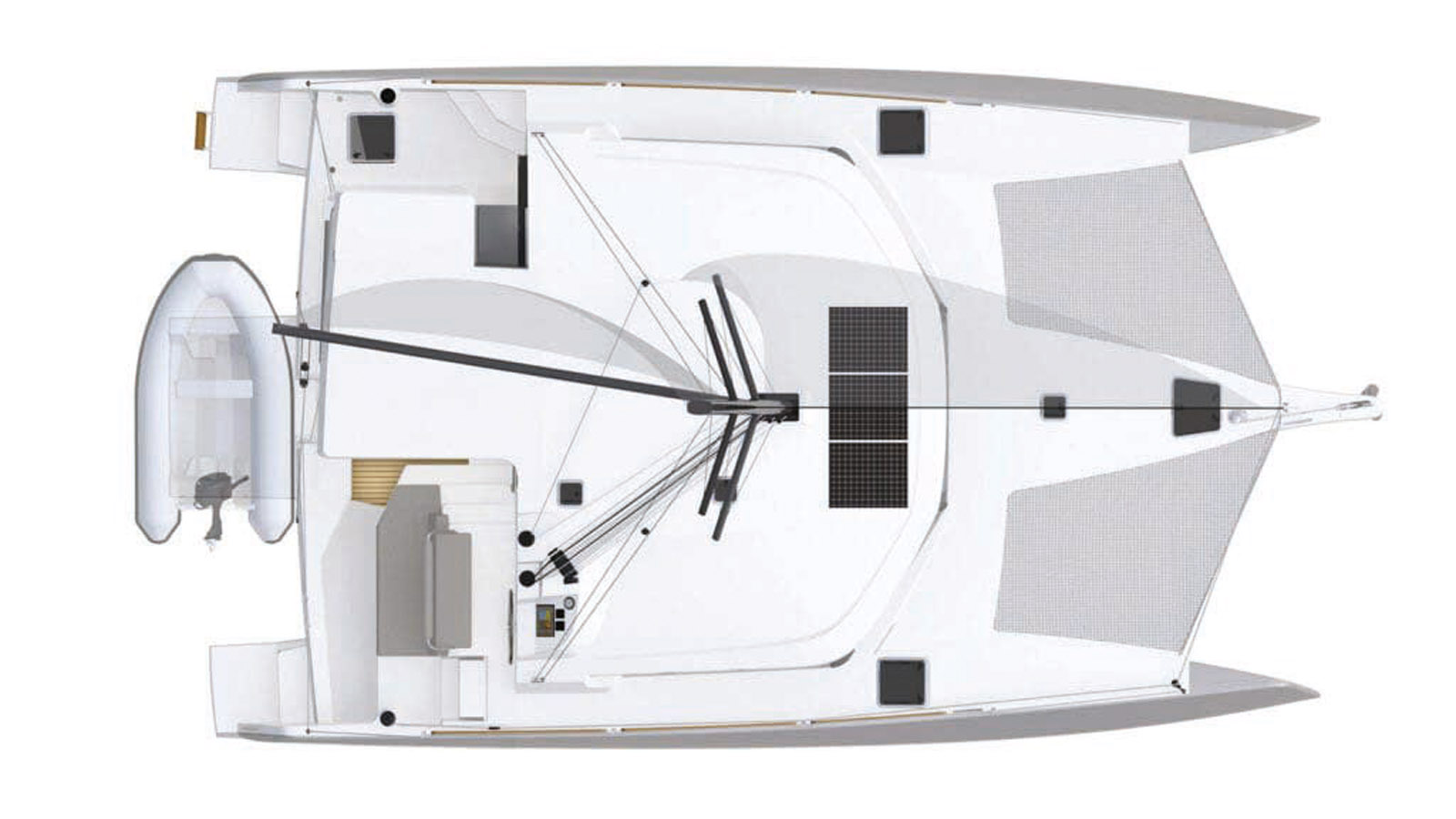
Despite the wide nacelle, the side-decks still measure at least 16 inches (40 cm) in width. With the shrouds secured to the coachroof, and the channel that serves as a handrail, moving around is safe. At the front, the hulls are narrow, but the two trampolines are vast. A sturdy bowsprit extends the central hull, supporting the bow roller and the anchor, but also the tack point for the downwind sails. The cockpit takes advantage of the full width of the platform. The outside table measures 4½ feet by 3 (136 cm by 90) and is accompanied by an L-shaped bench seat that can be completed with additional stools. Aft of the helm station, there’s a large seat measuring 6’7” (2 meters) in length. Multiple accesses - two to the helm station, one to each side-deck, one to each transom - are provided; they are mostly accompanied by one or more steps and/or unexpected slopes, but these don’t cause any problems. A cradle allows the dinghy to be stored on the back of the central hull. The sail maneuvering station merges with the helm station. An impressive battery of clutches sits in conjunction with an electric winch, from where almost all maneuvers are controlled. There is a twin mainsheet system, and the boom seems to pass very close to the helmsman’s bimini but the reinforced lazyjacks are perfectly adjusted. The jib sheets go through a fixed block, are led back to a dedicated winch. A track would allow you to fine-tune the trim and a pair of clutches would avoid having to release the sheet when tacking. The manufacturer defends these “free” genoa sheets as a safety feature in the event of heavy gusts. Our test NEEL 43 featured an asymmetric spinnaker and two additional winches at the back of each float. The genoa furling line had been moved to the starboard winch.
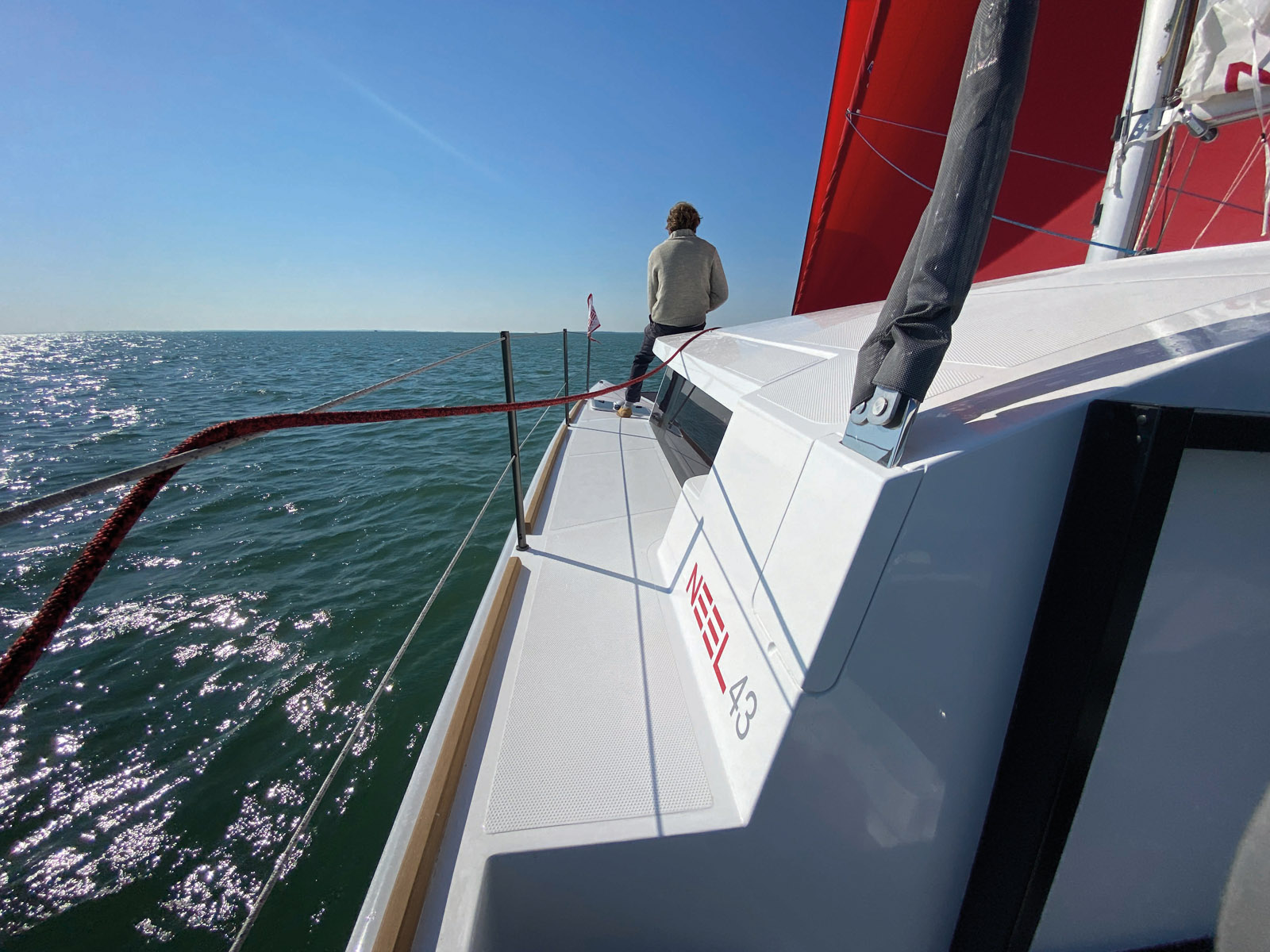
The side-decks, at their narrowest, are 16” (40 cm) wide. The shrouds terminate on the coachroof and the channel that serves as a handrail makes moving around the boat safe.
This boat performs!
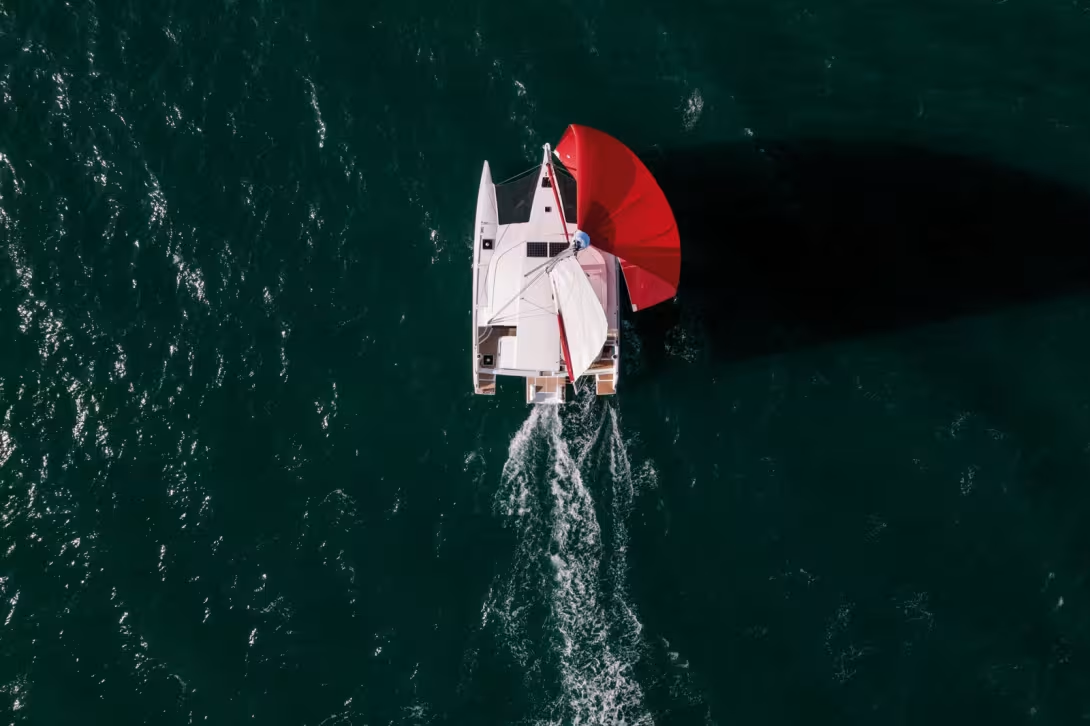
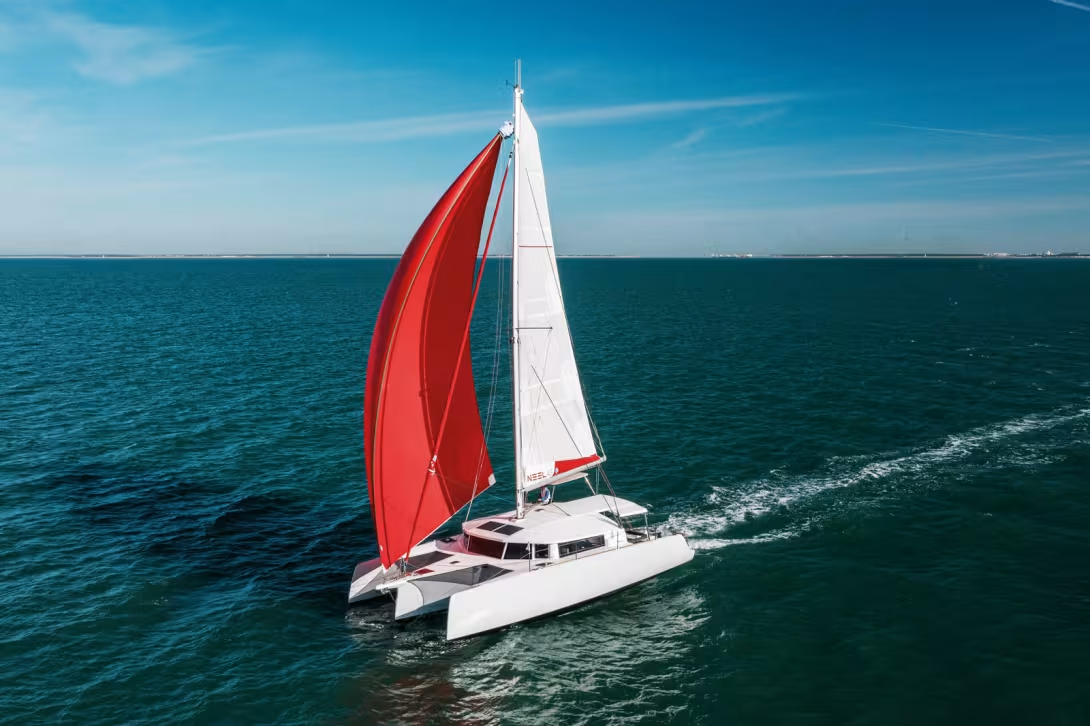
The mainsail was quickly hoisted thanks to the electric winch. We had good sea-room (the whole of the Pertuis d’Antioch channel off La Rochelle) and an east-north-easterly wind, so the asymmetric spinnaker was hoisted in its sock to be released immediately. Inshore, the true wind was already showing 15 knots and the GPS 10: we were off to a good start! The NEEL 43 leans on its leeward float, lefts the windward one and extends two wakes behind. As we gybed, La Rochelle began to disappear in the distance. The red spinnaker was snuffed back into its sock, and the slightly overlapping genoa unfurled in the process. For this return leg to windward, the breeze dropped a little to 12 knots, but our upwind speed (at 50° to the true wind) remained flattering, at 9 to 10 knots. With the help of a gust, I steered to the telltales on the jib by bearing away a little: we effortlessly reached 12 knots. The Performance rig with its carbon mast some 2 feet (60 cm) taller and mainsail with XXL-sized square top should give even more horsepower! The only drawback was that the occasional sea caught the aft beam when the wind was blowing harder, sometimes spraying the rear of the cockpit. A small sheet stretched across the small gaps between each hull would solve this issue.
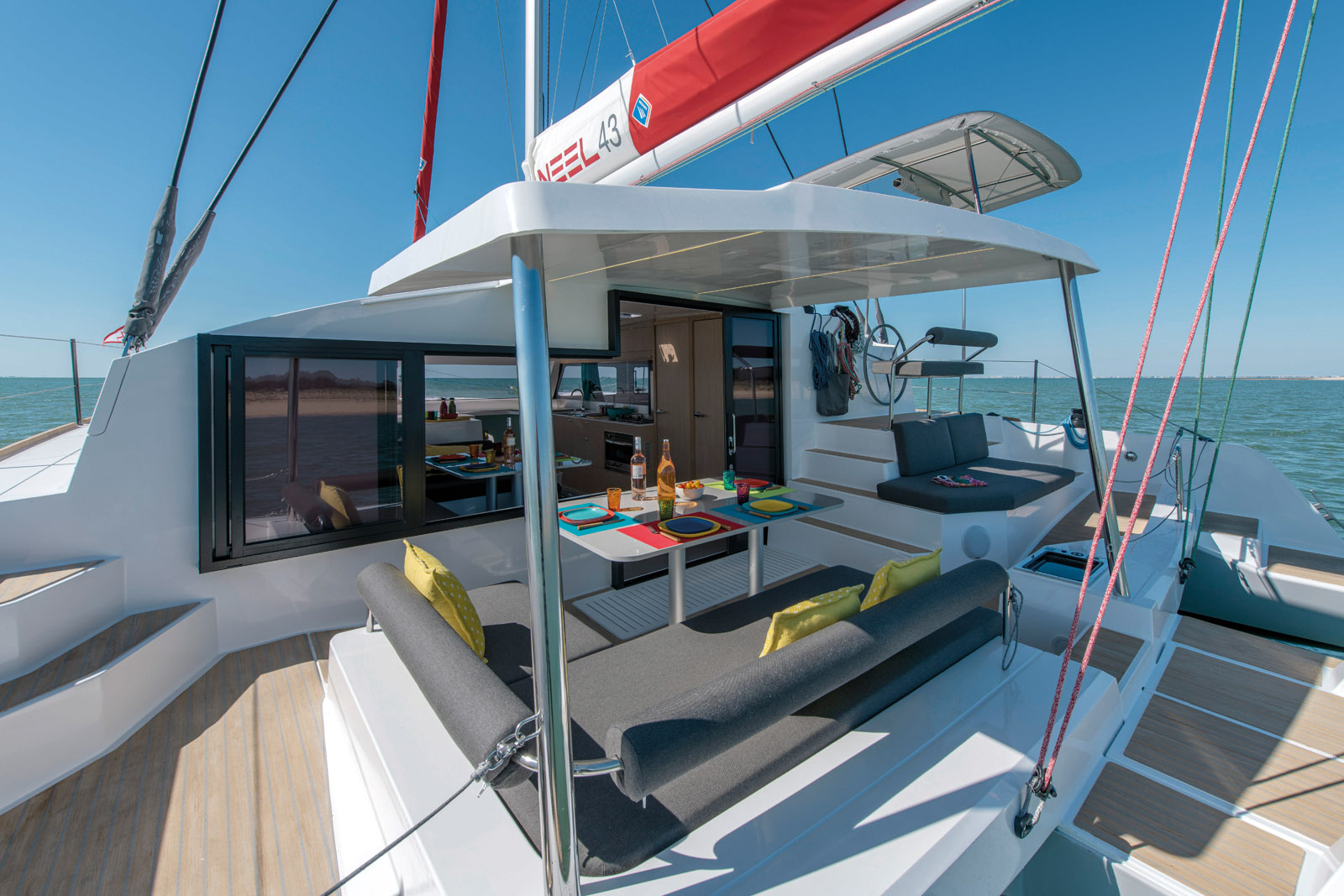
The central part of the cockpit is protected by the rigid bimini.
Newfound pleasure at the helm
Wearing the colors of his shipyard - white and red - Eric Bruneel took obvious delight when handing over the helm - he waited for me to savor the sensations before giving more details about his latest creation. I must admit that the time I spent at the helm was what stood out the most during this test. The wheel is in direct contact with the only rudder, on the central hull. The feeling is both a frankly surprising smoothness of the helm and an irreproachable control of course-keeping. Added to an 8 to 10° heel in a good breeze from close-hauled to a beam reach, the feeling is almost that of a monohull: you don’t want to press “AUTO” on the autopilot control, but rather to sail to telltales on the genoa, to accelerate even more... This means we’re a long way from the somewhat “woolly” helms of many cruising catamarans. Until now, exacting helmsmen who have long raced aboard sharp monohulls such as J-Boats or X-Yachts or similar have had to just forget about this type of sailing – but now it’s the family’s turn to enjoy real cruising, aboard a multihull of course! The NEEL 43 will delight former owners - especially the most demanding - of fine-helmed monohulls. And so no-one misses out, the 4-foot bench seat can comfortably seat three people.
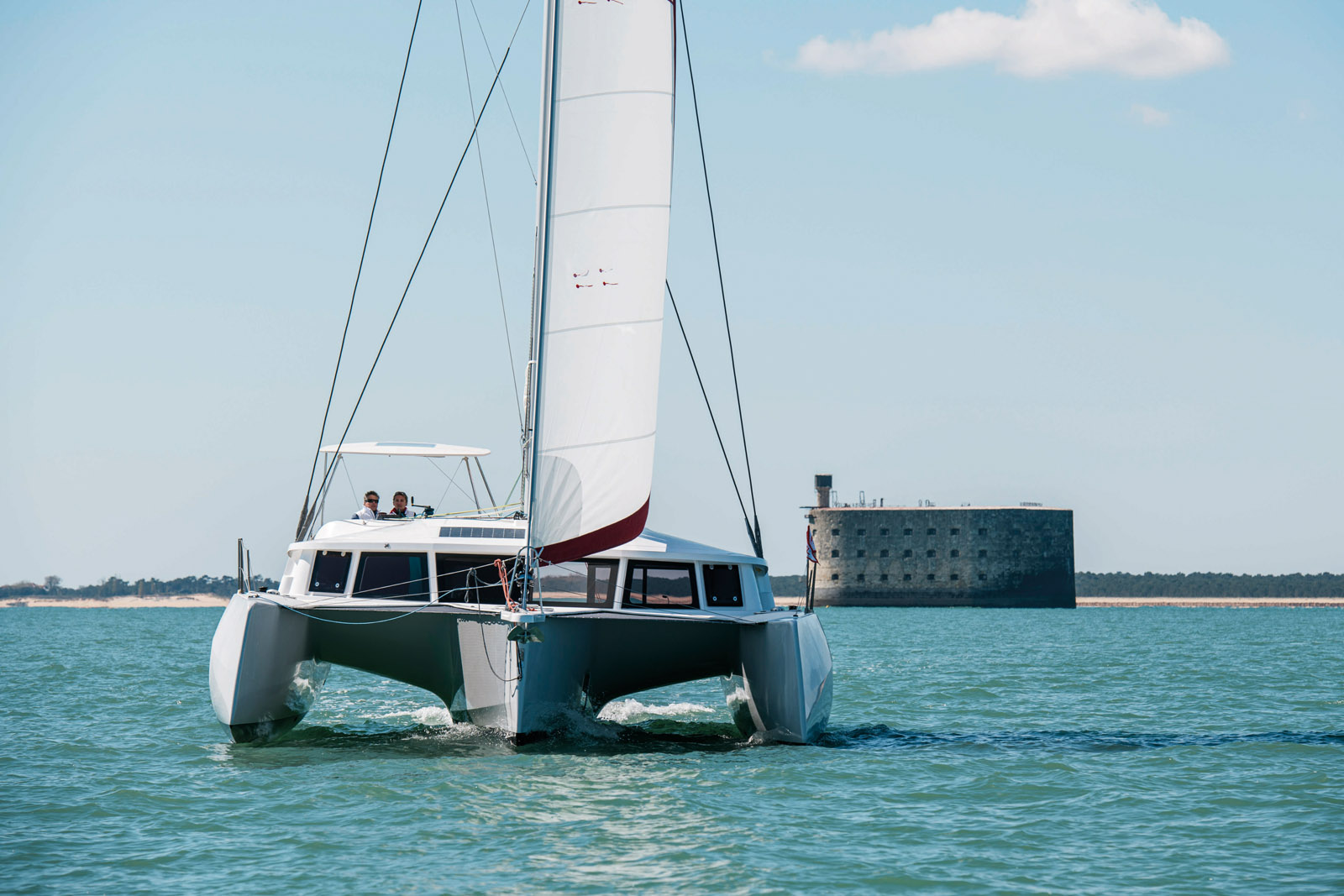
Par bonne brise, le flotteur au vent finit par sortir complètement de l’eau. Celui sous le vent s’enfonce un peu, jusqu’à une gîte maximum de 10°.
XXL-sized nacelle
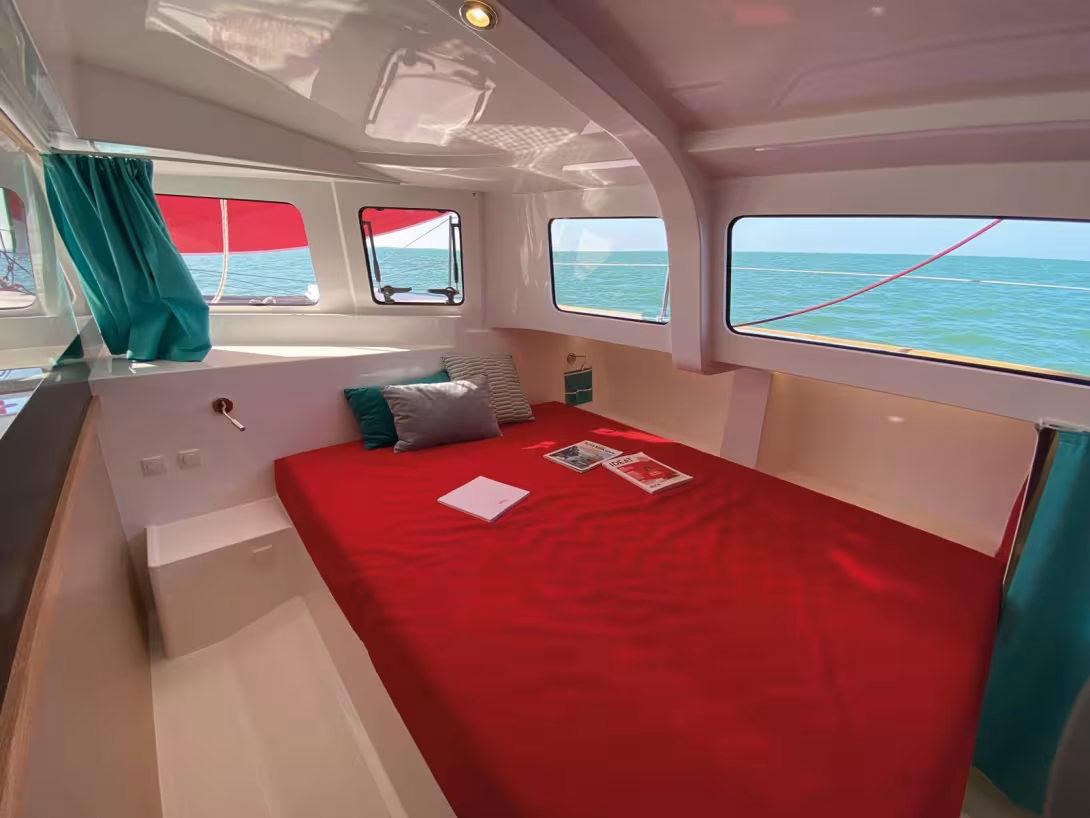
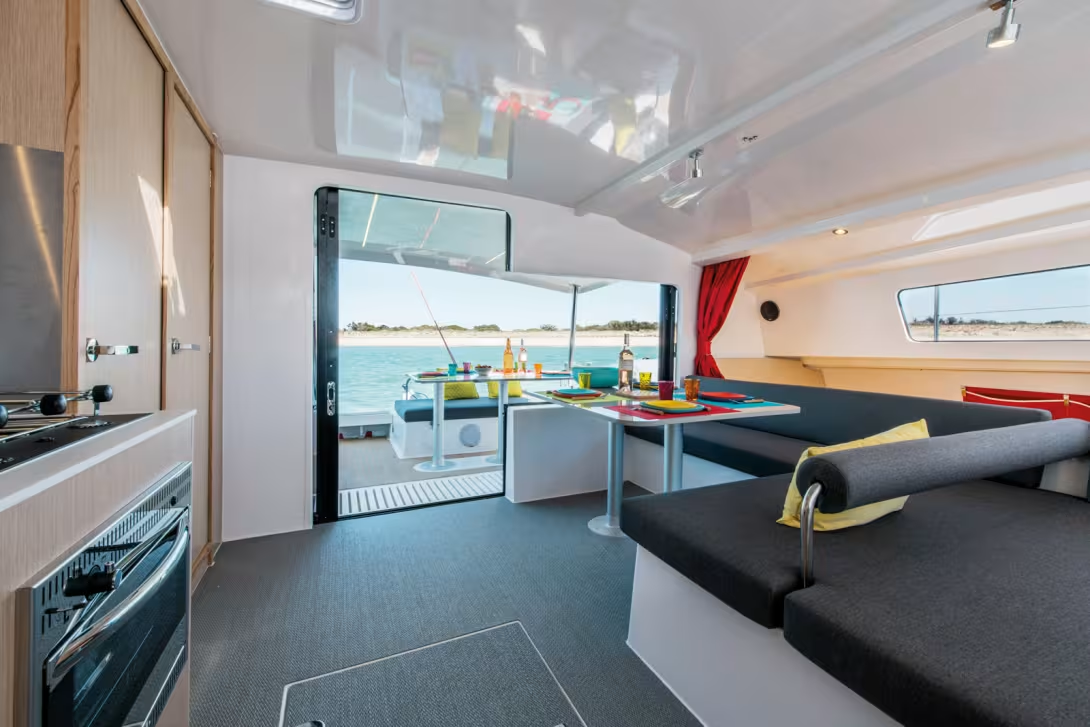
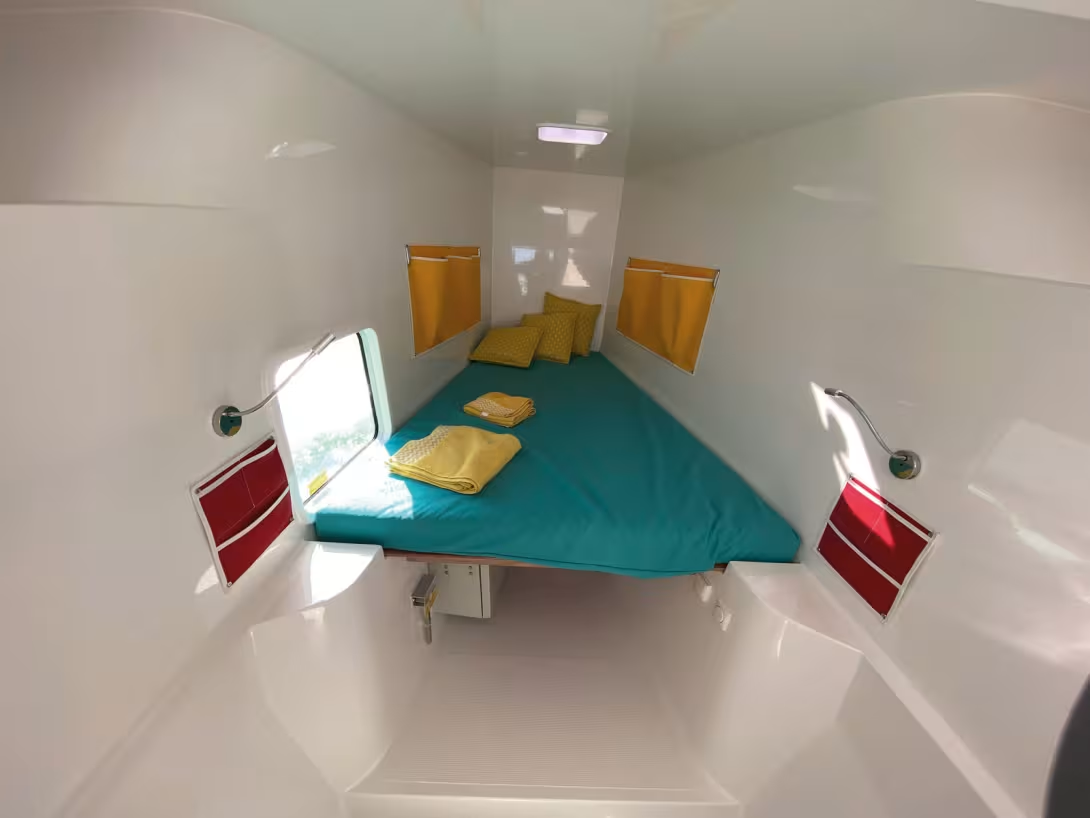
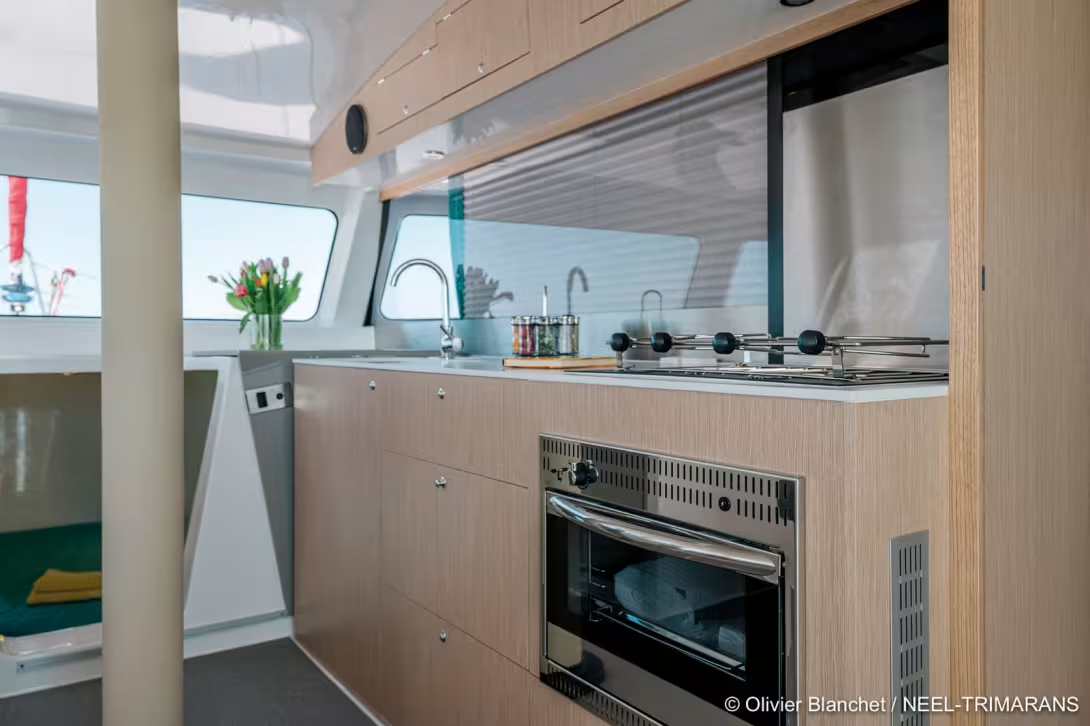
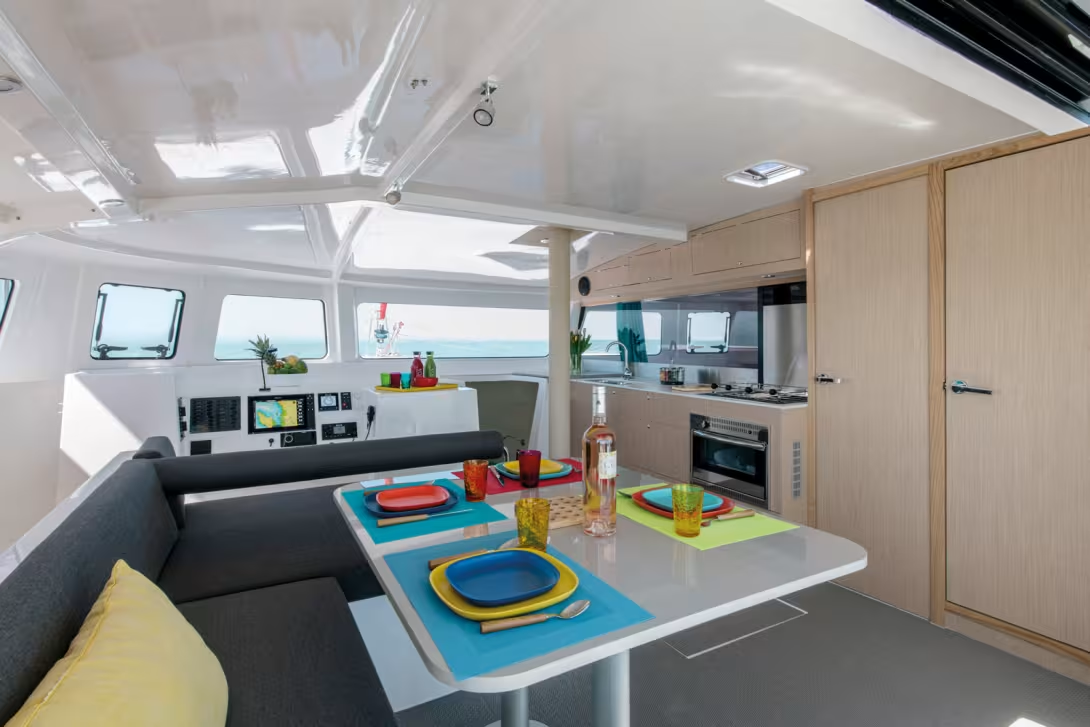
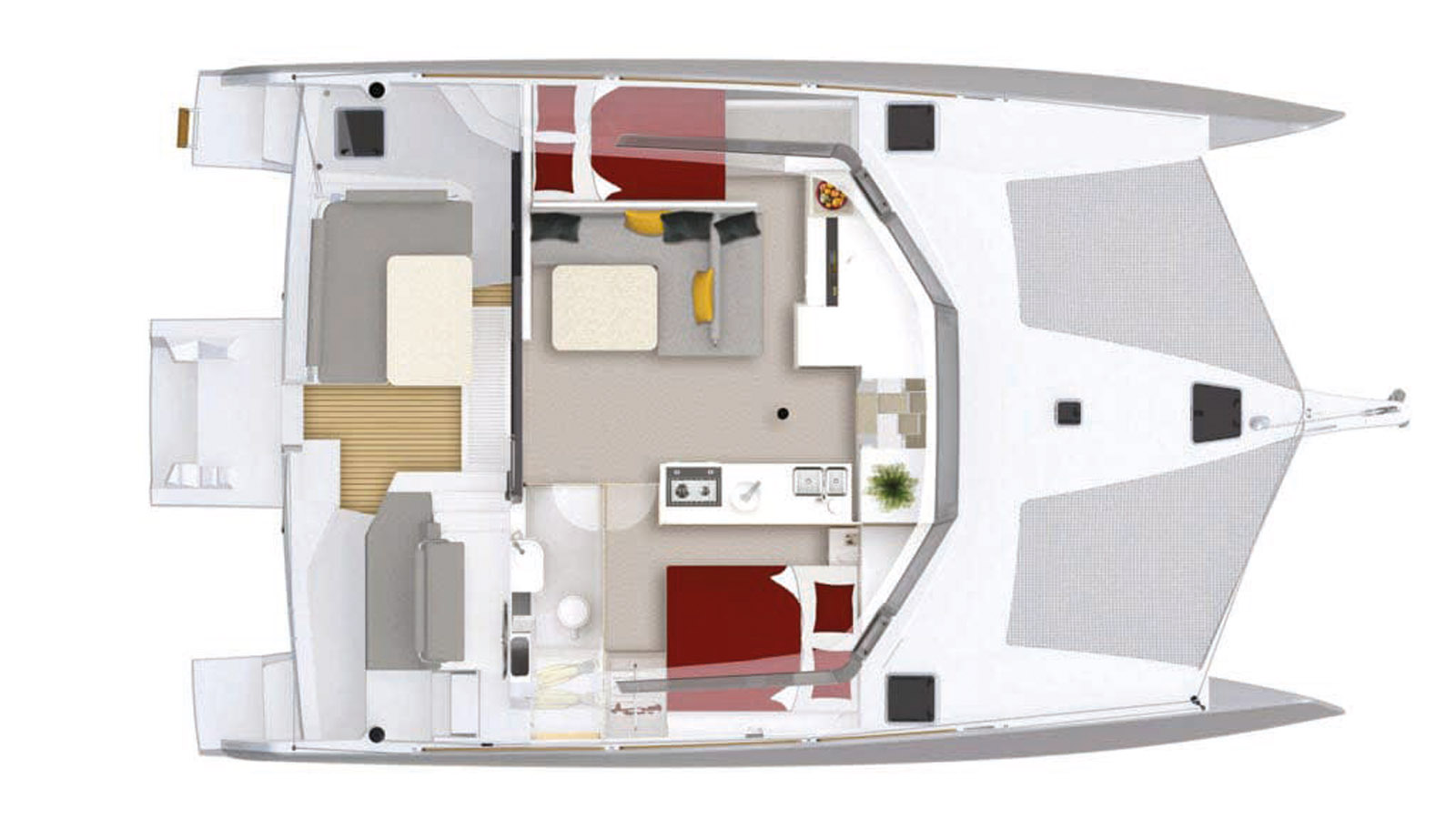
Over the years, the design of the NEEL’s accommodation has evolved. This is particularly obvious on board the 43, where the impression of volume is striking when you enter the saloon – we’ll come back to that later. The manufacturer has of course retained its “Cockloon” concept - a mixture of the terms cockpit and saloon - to erase the boundary between exterior and interior. In fact, the large glass door measuring 6’2” by 3’1” (1.87 m by 0.95) is accompanied by a second sliding side opening measuring 3’1” by 2’4” (95 cm by 70 cm). vThe two tables - the one outside and the 3’7” by 3’ (110 cm by 90 cm) one in the saloon - are very precisely aligned, as are the seats. This gives the impression of being inside and outside at the same time. The headroom inside the saloon is 6’5” (1.97 m). The impression of volume and the panoramic view are ensured by the absence of a bulkhead on port side and the large windows to starboard. Of course, the cabins have less privacy compared to those of a conventional 43-foot catamaran, which are tucked away in each corner. But this is a choice that corresponds to family use or to friends who know each other well. Using the same logic, there is only one toilet/shower compartment. The finish is very simple, a bit in the spirit of the early Fountaine Pajots, but more colorful. This is not surprising when you know that Eric Bruneel spent most of his career with the great French boatbuilder - he even designed models that also bear his name, the Corneels... Except for a few details, such as the slightly loose covering on the mast strut and a few sharp corners, you see the advantages such as good aging and easy maintenance rather than any discomfort. This is just my opinion of course – others may be sensitive to beautiful woodwork, obviously absent here. The relatively compact galley is located on the starboard side, and there’s a forward-facing watch-keeper’s seat. There is plenty of storage space. The owner’s cabin is the only one with a traditional door, which is relatively narrow – 16” (40 cm) - but the bed is large – 6’7” x 4’11” (1.50 m x 2m). The view over the water is striking. To isolate yourself from the saloon, just draw the curtains. Ventilation is provided by an opening hatch. The second “closed-off” cabin is the one in the central hull, the closing being taken care of by a complete cover on sliders. Staggered steps lead to a bed 6’7” (2 m) long, 4’3” (1.30 m) wide at the head and 2’4” (0.70 m) at the feet. An opening hatch is provided. The third cabin, on the port side, is completely open to the saloon. This can be closed off simply with curtains. The 6’7” (2 m) by 4’7” (1.40 m) bed, like a Japanese tatami, will be the ideal place for younger children. Although the NEEL 43 has three double berths, its total capacity can be increased to 10 people, as the manufacturer offers, as an option, to convert the forepeaks of the floats into a single berth and to have a dinette that can be converted into a double berth.
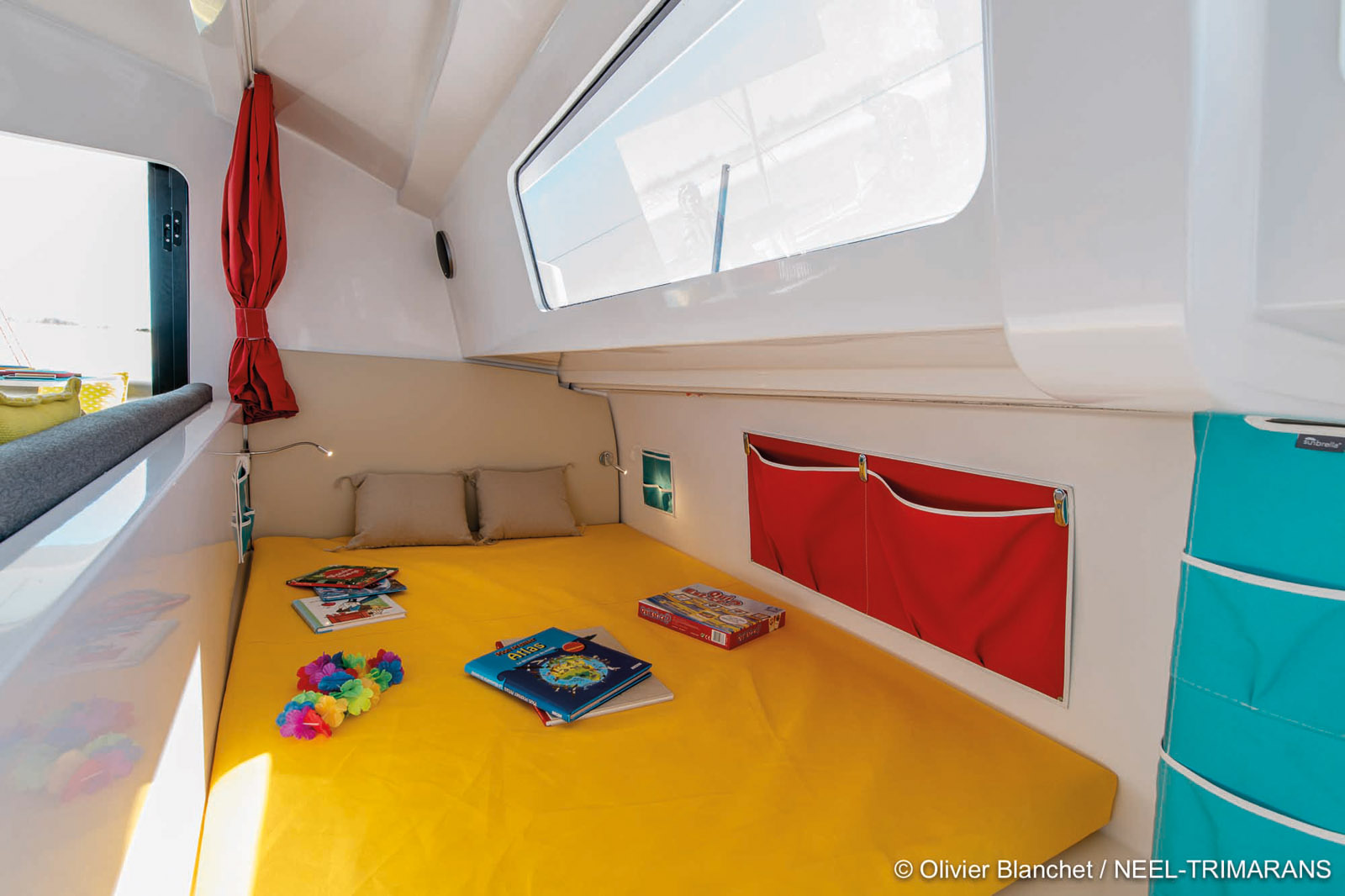
Le couchage bâbord est complètement ouvert sur le carré.
Conclusion
With production planned for 22 units per year and already 30 on order, the NEEL 43 isn’t hiding its ambitions: this model could become the most widely distributed trimaran over 40 feet in the world in a few years... A future best-seller whose destiny would be well deserved if we judge by its potential under sail, its pleasant helm and its comfor
The pluses
+ Excellent performance
+ Incomparable pleasure at the helm
+ Very well positioned starting price
The minuses
- 8 to 10° heel in stronger breezes when sailing from close-hauled to beam reach
- Less privacy in the cabins - compared to a “traditional” catamaran
- Following seas likely to get the back of the cockpit wet
TECHNICAL SPECIFICATIONS
 |
 |
 |
Builder: NEEL Trimarans
Architects: Marc Lombard Yacht Design Group
Material: foam/quadriaxial glass/polyester and vinylester sandwich with carbon reinforcements
Length: 42’4” (12.90 m)
Beam: 24’3” (7.40 m)
Draft: 4’11” (1.50 m)
Air draft: 62’4” (19 m)
Light displacement: 19,850 lbs (9 t)
Fully-battened mainsail: 630 sq ft (58.60 m²)
Genoa: 467 sq ft (43.40 m²)
Water tank: 132 US gal (500 l)
Fuel tank: 79 US gal (300 l)
Engine: 50 HP Volvo
CE ICNN certification
Prices excluding tax: From € 329,800 in 3-cabin version
Premium Pack: € 36,150
Cockpit and aft steps in synthetic teak: € 12,300
Saloon, galley, chart table area in synthetic teak: € 3,400
Cockpit tent (removable): € 6,200
Bimini over the helm station: € 2,225
Convertible saloon table with double bunk and curtains: € 3,850
Fisher Panda 6.8 kVA generator: € 12,000
Air conditioning: € 13,000
Heating: € 9,150
12V 26 US gal (100 L)/h watermaker: € 13,354
2 x solar panels on forward coachroof total 312 W: € 5,650
Electronics pack: € 11,970
Complete performance rig: € 37,980
Asymmetric spinnaker: € 5,900/6,900
Deck hardware for spinnaker + 2 winches: € 2,200
Electric winch in place of the external manual winch: € 2,700
Removable staysail on furler with storage bag: € 4,950
10’ (3.1m) Highfield tender with 6 HP Honda outboard: € 6,450