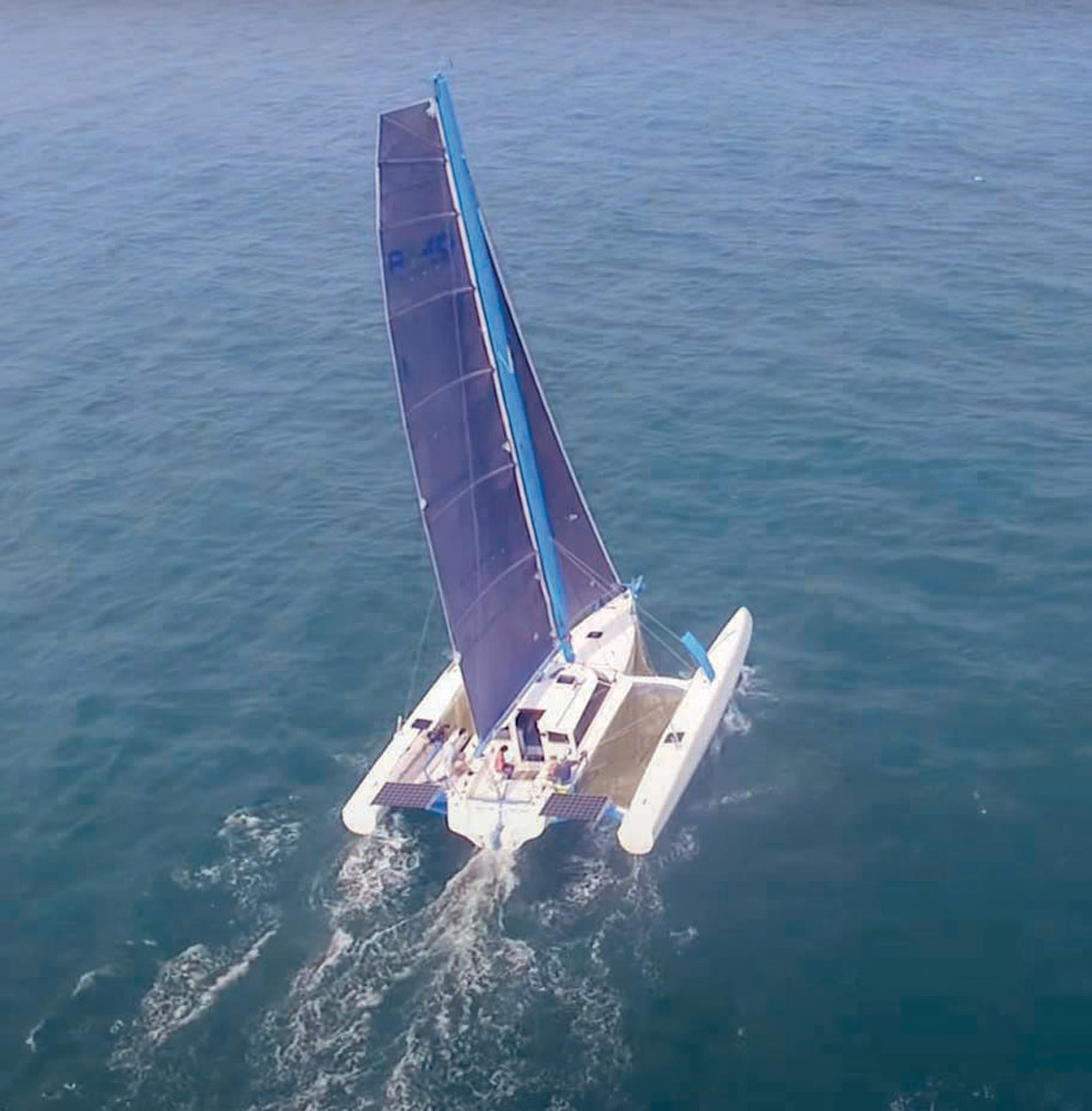
Rapido entered the world of multihulls about ten years ago with the ambition of building high-performance ocean-going trimarans. After the 60 and 50, the shipyard unveiled the 40, a smaller model. This “small” Rapido obviously keeps the DNA of its big siblings and features a folding structure that comes into its own when you’re in the marina.
Infos pratiques
- Le chantier : Rapido 40
- La fiche technique
-
 Découvrez notre vidéo exclusive
- Financez votre Rapido 40
- Assuez votre Rapido 40
- Articles autour du Rapido 40
Conditions: Wind 3 to 6 knots, 6 people on board, calm sea.
Rapido was created in 2014 under the impetus of Paul Koch, an Australian with a long-standing passion for multihulls. Before embarking on the adventure of his new brand, Paul was, from 1986 to 2008, the owner of OSTAC, which manufactured catamarans and trimarans. He was then at the helm of Corsair Marine from 1994 to 2010 before deciding to create Rapido with his own ideas - a logical course for someone who has always been known for his sense of innovation. The brand relies on Triac Composites, the factory in charge of construction, which Paul co-founded with Richard Eyre. The yard is located in southern Vietnam, in Ho Chi Minh City. Drawing on his experience, the founder has always been driven by the desire to create the most efficient trimarans in the category while maintaining a certain simplicity - both in the layout and the boat’s handling.
A design by Morrelli & Melvin
To carry out the project, Rapido called on the Californian design firm Morrelli & Melvin, who are well known in the field of sailing, notably for their work on the America’s Cup racing boats and on a number of multihulls of major brands. The first model to splash was the Rapido 60, an ocean-going trimaran designed to be sailed short-handed, then came the 50 and finally the 40 that we’re looking at today.
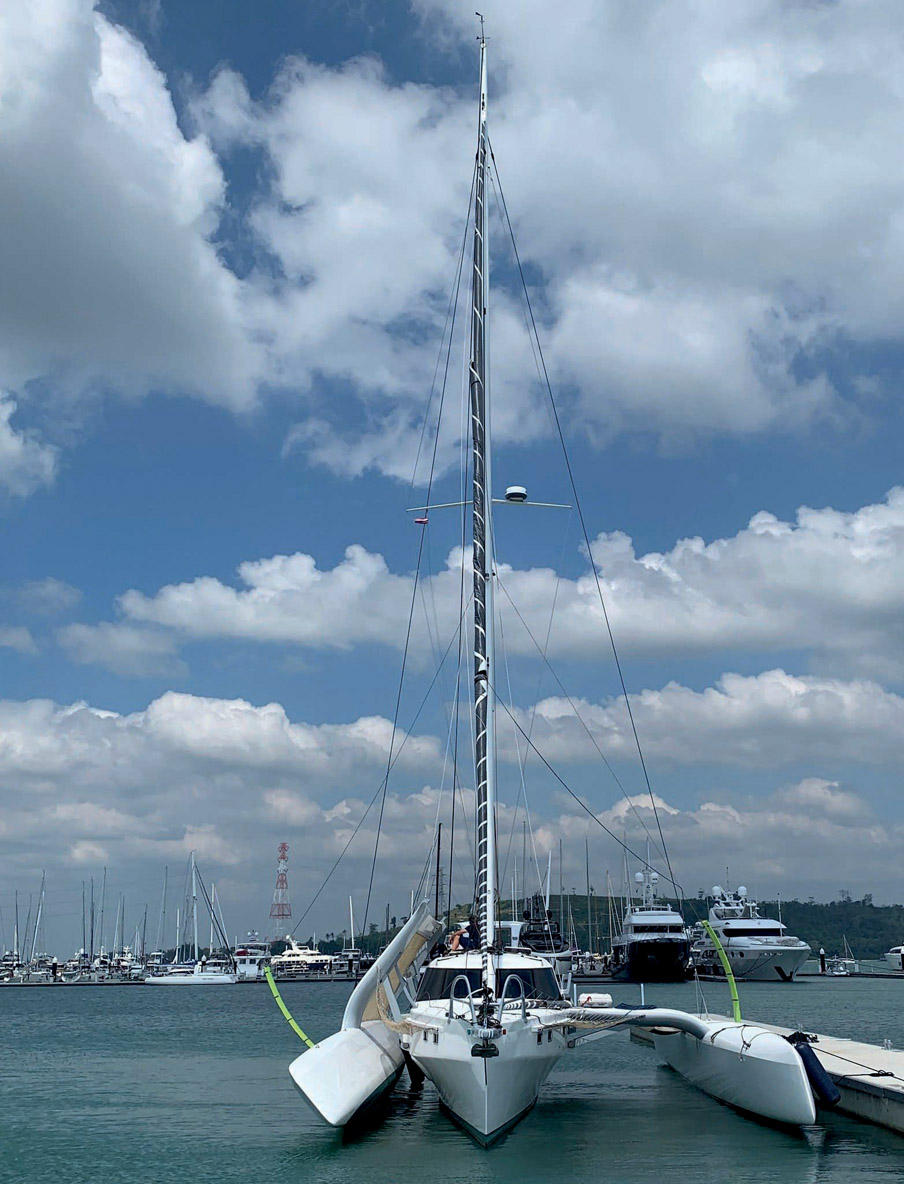
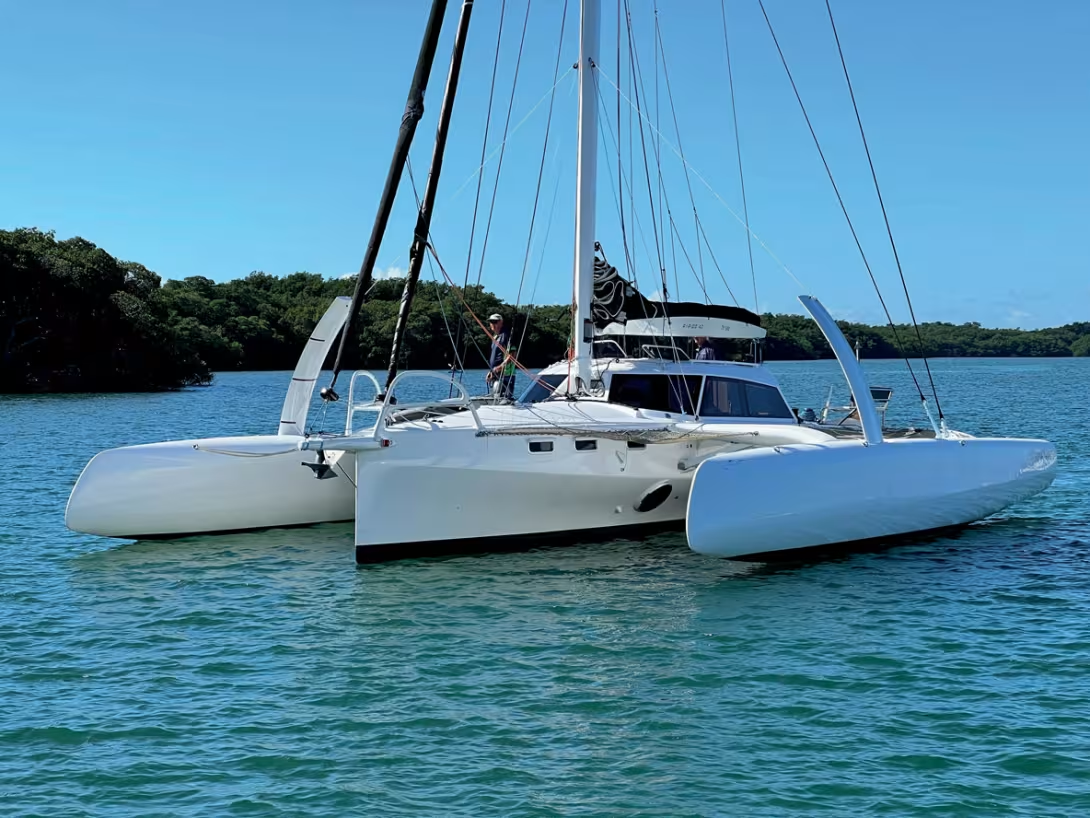
The Rapido 40 is therefore the smallest trimaran in the range, making it an accessible multihull, though it’s not an entry-level boat. Its general architecture is clearly inspired by the manufacturer’s other two models, with two outrigger floats almost the same length as the central hull. This hull is pretty wide at deck level and features a straight bow, unlike the floats which adopt inverted bows. The dihedral is quite apparent, and only the midships sections of the floats are actually touching the water when the trimaran is stationary. This design prevents the trimaran from dragging too much water and therefore contributes to improve performance. Another interesting detail is that the floats are equipped with a kind of crash box on the bow, just in case. To increase the interior space, but also the stability under way, the main hull widens above the waterline, noticeably so aft, while keeping a very narrow underwater hull, decreasing the wetted surface. The two floats are attached to the main hull by strong carbon arms and the whole assembly can be folded to find a slip in the harbor.
The trimaran reduces from 26’2” (7.98 m) in beam to 19’3” (5.80 m). This is still much wider than a monohull of the same length, but it is a good three feet narrower than most 40-foot cata-marans...
The whole boat might make you think of a fragile dragonfly - wrongly so, as we’re aboard a trimaran built entirely in carbon, which saves a lot of weight while ultimately benefiting from unfailing rigidity and solidity.
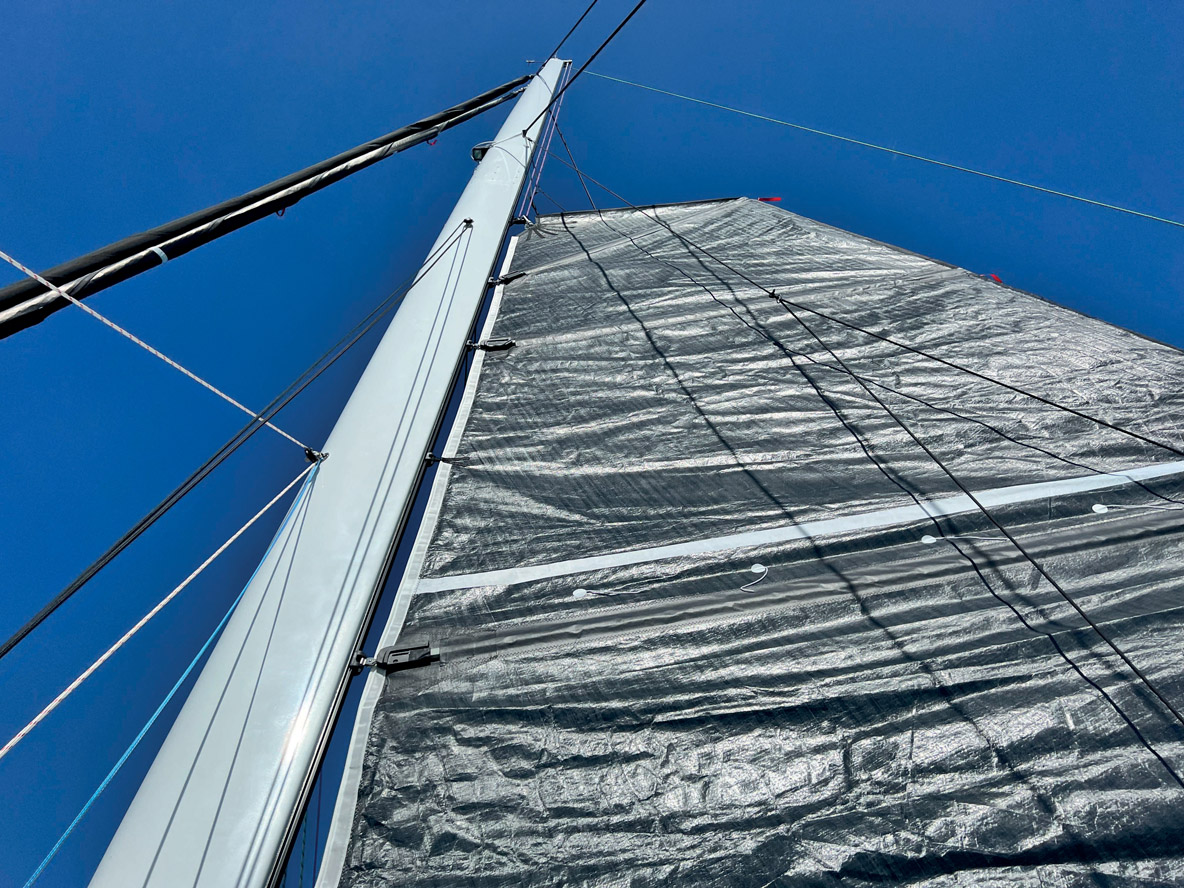
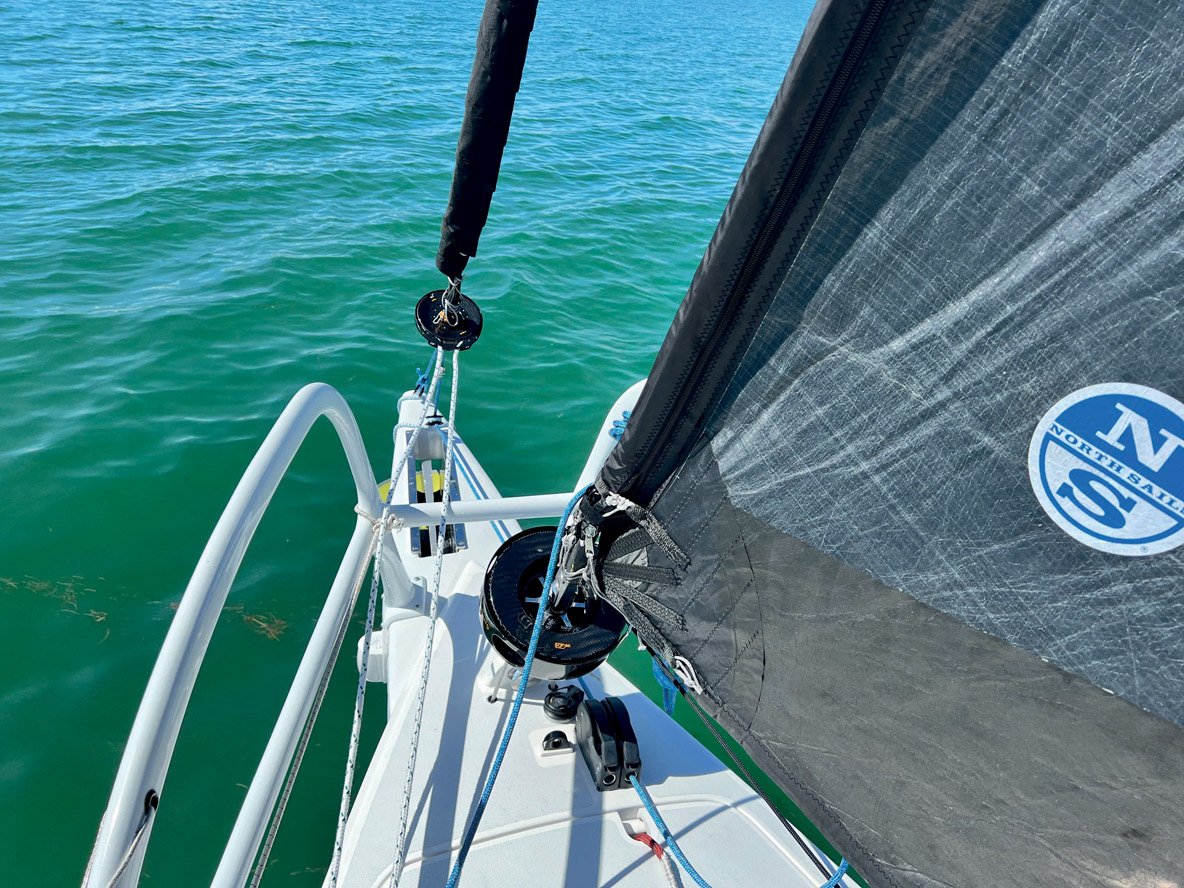
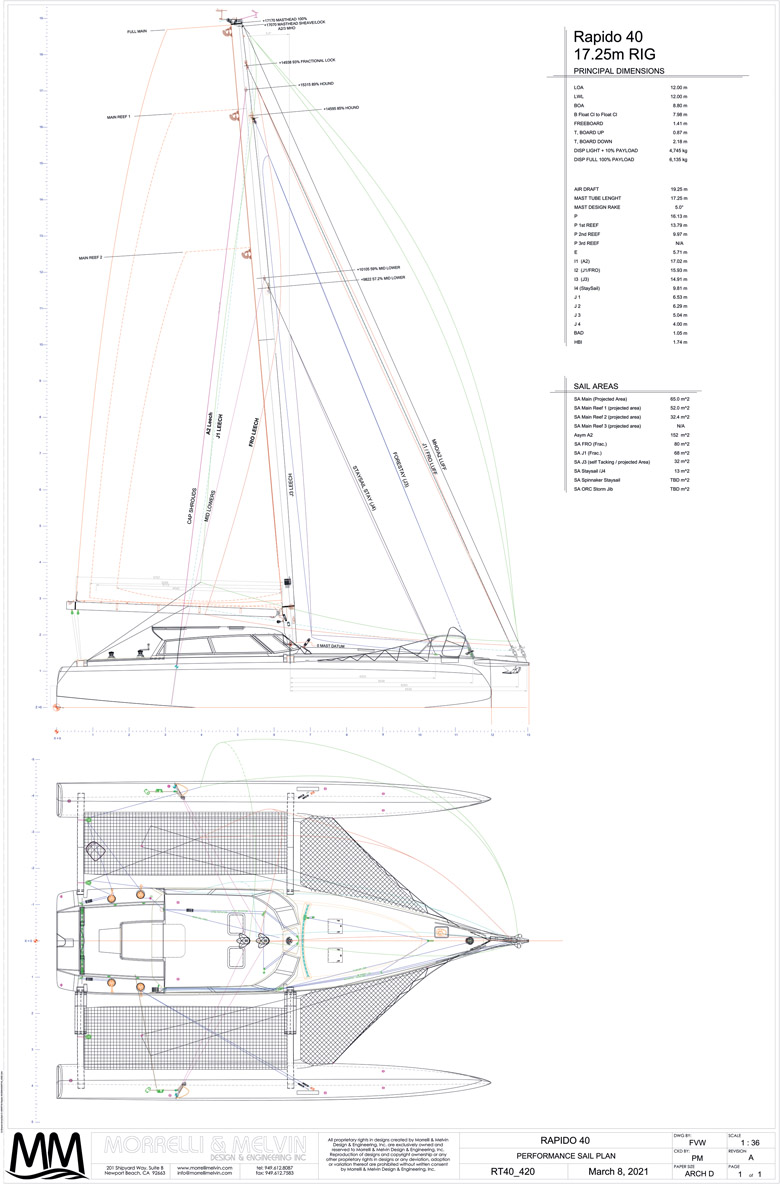
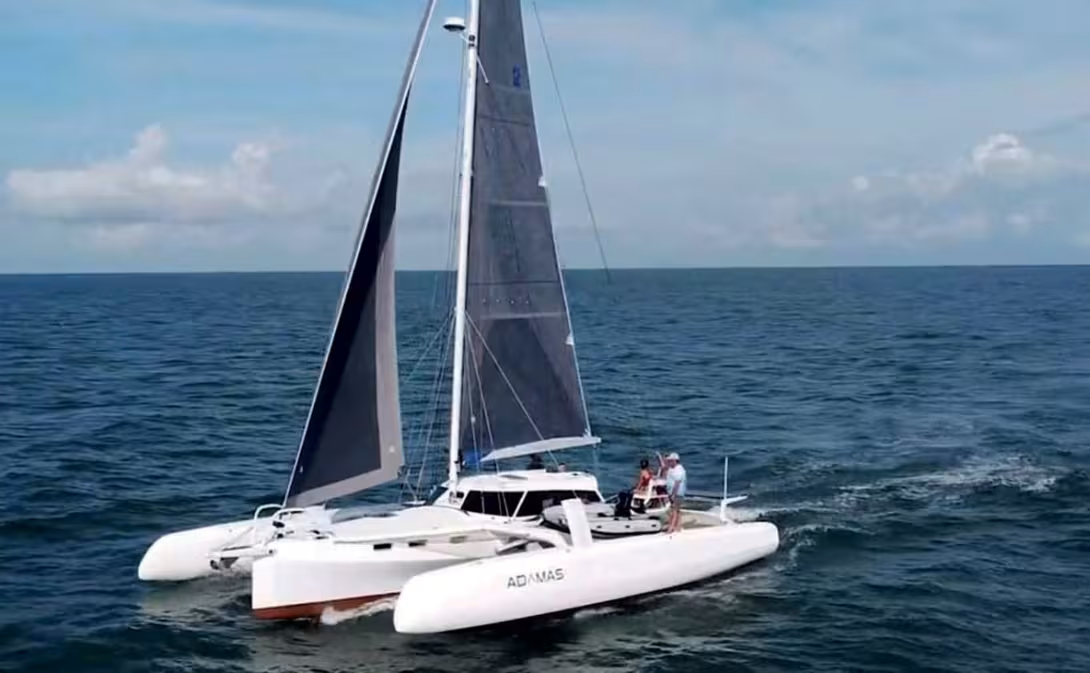
The mast is also quite remarkable. Built in carbon, it is perfectly profiled, widening on its central part. The teardrop section improves the rigidity. The rig rotates, allowing the sail plan of this trimaran to be more efficient on different points of sail. Like the rest of the multihull, the canoe boom is made of carbon and remains an acceptable width so as not to impede moving around when lowering the mainsail. The standing rigging is also made of carbon while the Rapido benefits from two furling headsails and a large bowsprit which integrates the bow roller.
Only the central hull is habitable
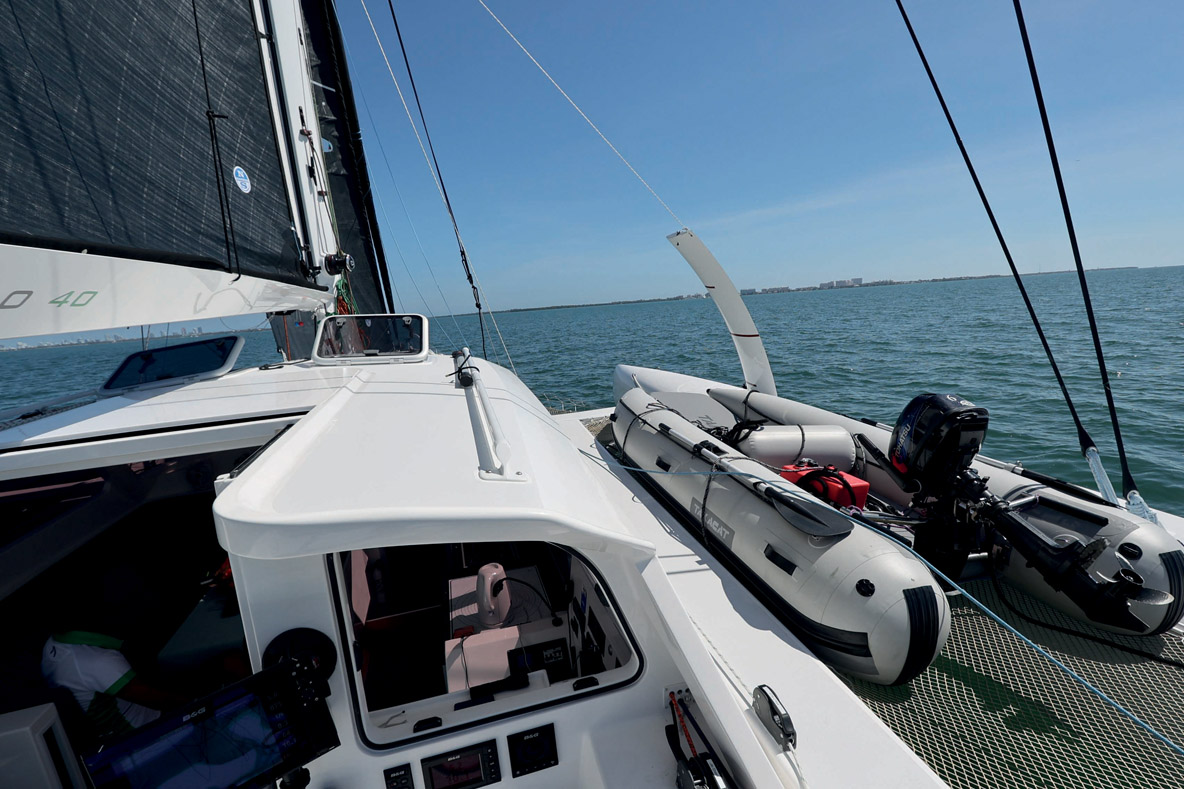
As far as space on board is concerned, the Rapido is a classic trimaran, meaning that the living area is only located in the central hull. In addition to their dynamic role, the floats act as a garage with a good amount of storage space. It would not take much, perhaps a slightly larger opening, to make an additional bed area, but that is not really the goal. Between the outriggers and the central hull, there are simple trampolines that are sturdy and pleasant to sit or lie on.
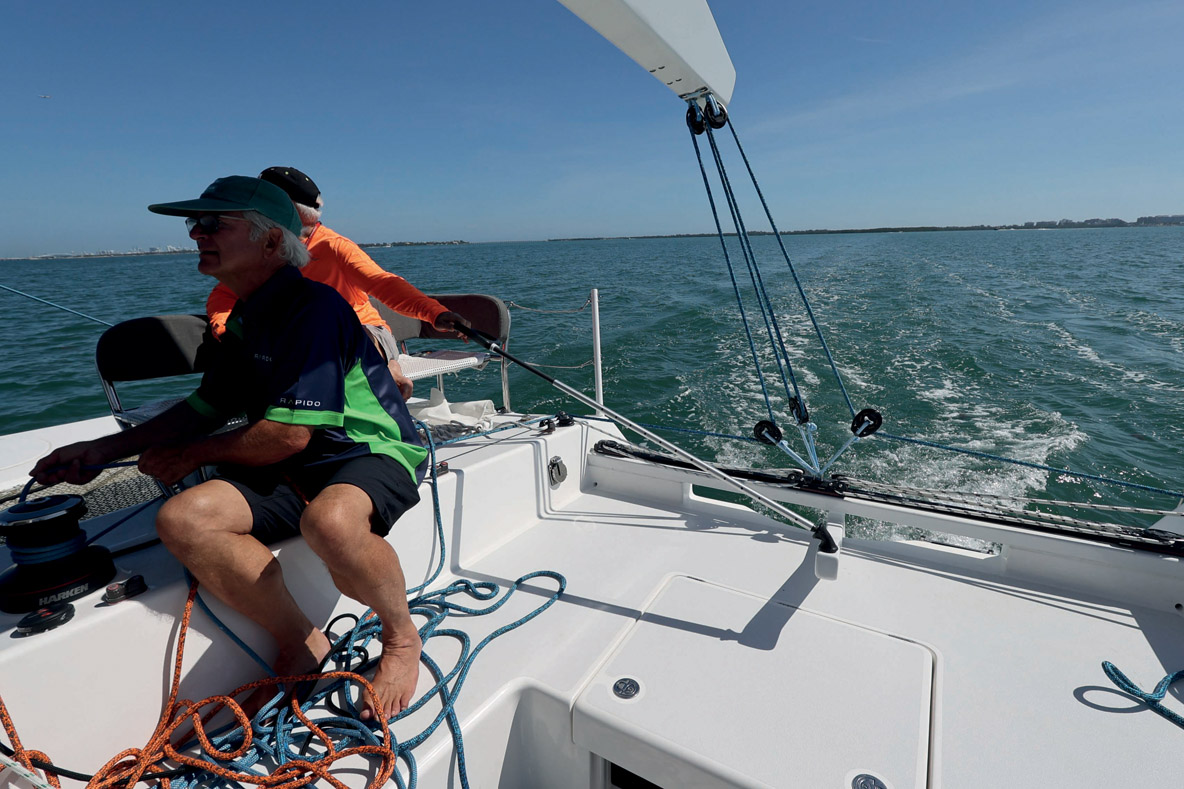
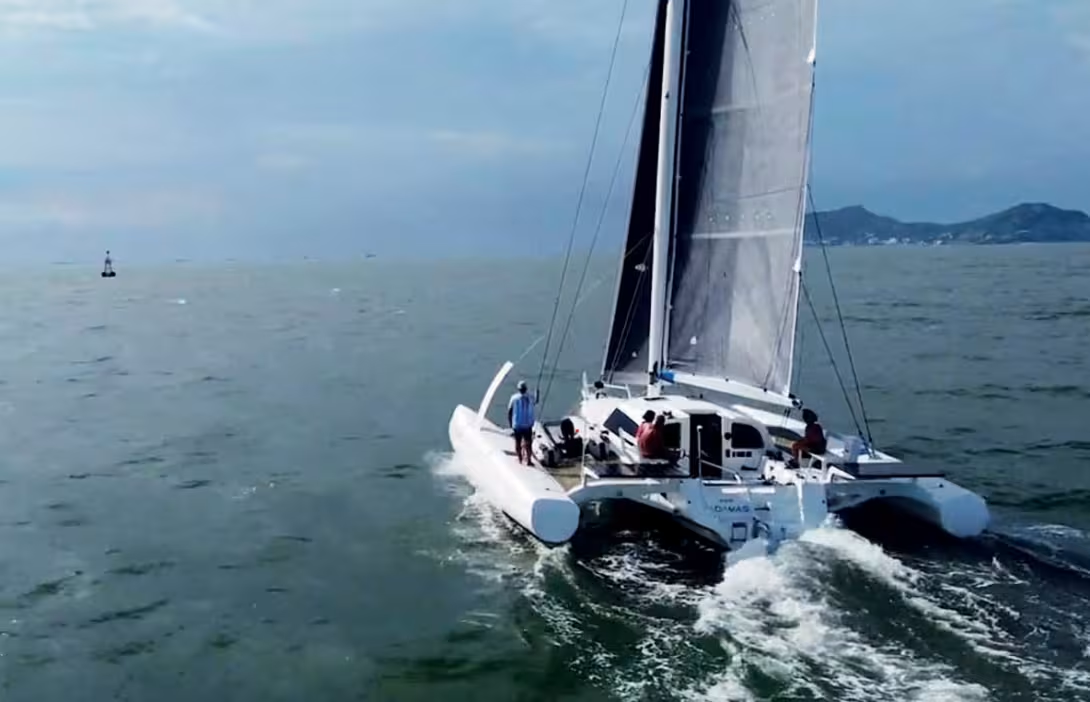
The central hull offers a good-sized cockpit, which means that four or even five or six people can easily fit in without getting in each other’s way and without disturbing sailing maneuvers. To make things easier, the shipyard has installed side benches on the linkage arms to extend the area of the cockpit. Access to the small aft deck with a swim ladder is quite easy and the helm, with its telescopic tiller extension, is the perfect configuration for this multihull. However, it could do with some rope bags, as the area can quickly become crowded. Protected by the small side hatch and cap that extend the cabin roof, the controls for the engine and the windlass are both accessible and out of the way of the traffic flow, which is again a good idea. For sail handling, five winches are available and most of the halyards come back to the cockpit.
The last element of this cockpit, the aft hatch is in fact a second access to the aft cabin, a real plus for everyone’s privacy. In fact, it is also be used to ventilate this cabin or to take advantage of a little light, as this space only has one small porthole. You could even consider making a small removable transparent cover to create a light well.
An all-carbon galley!
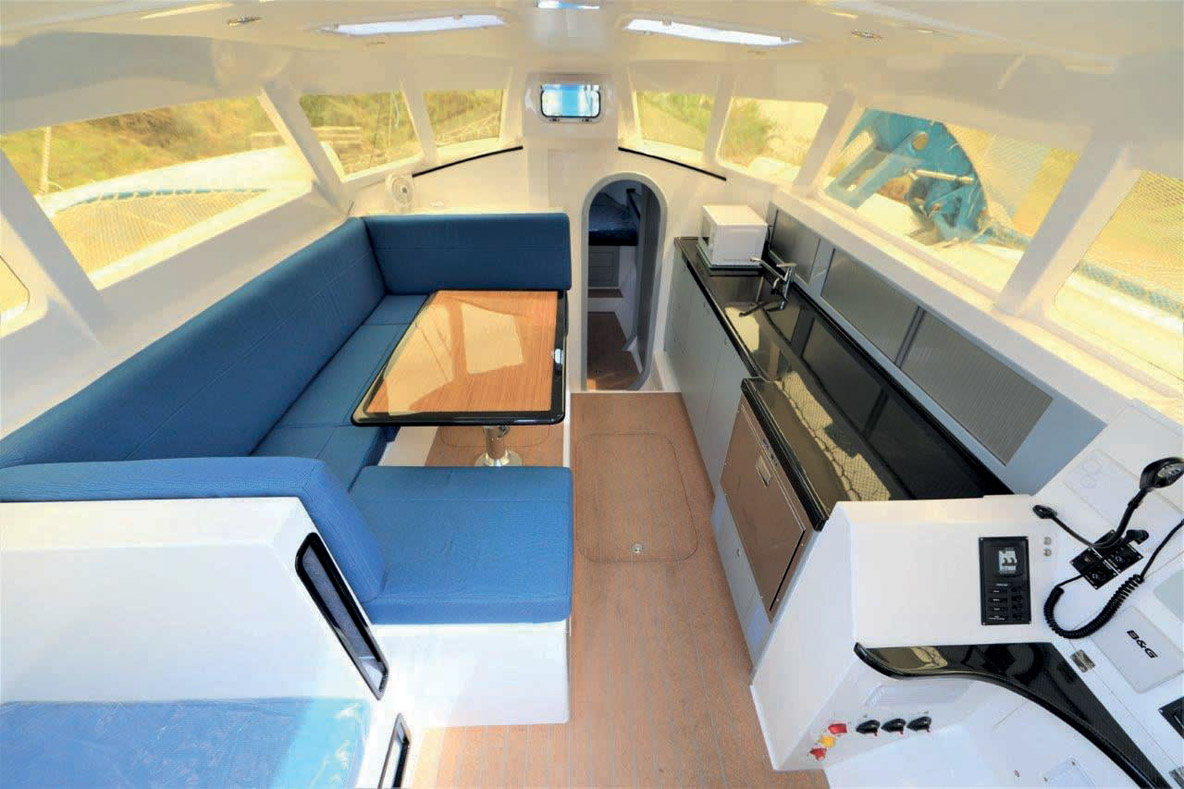
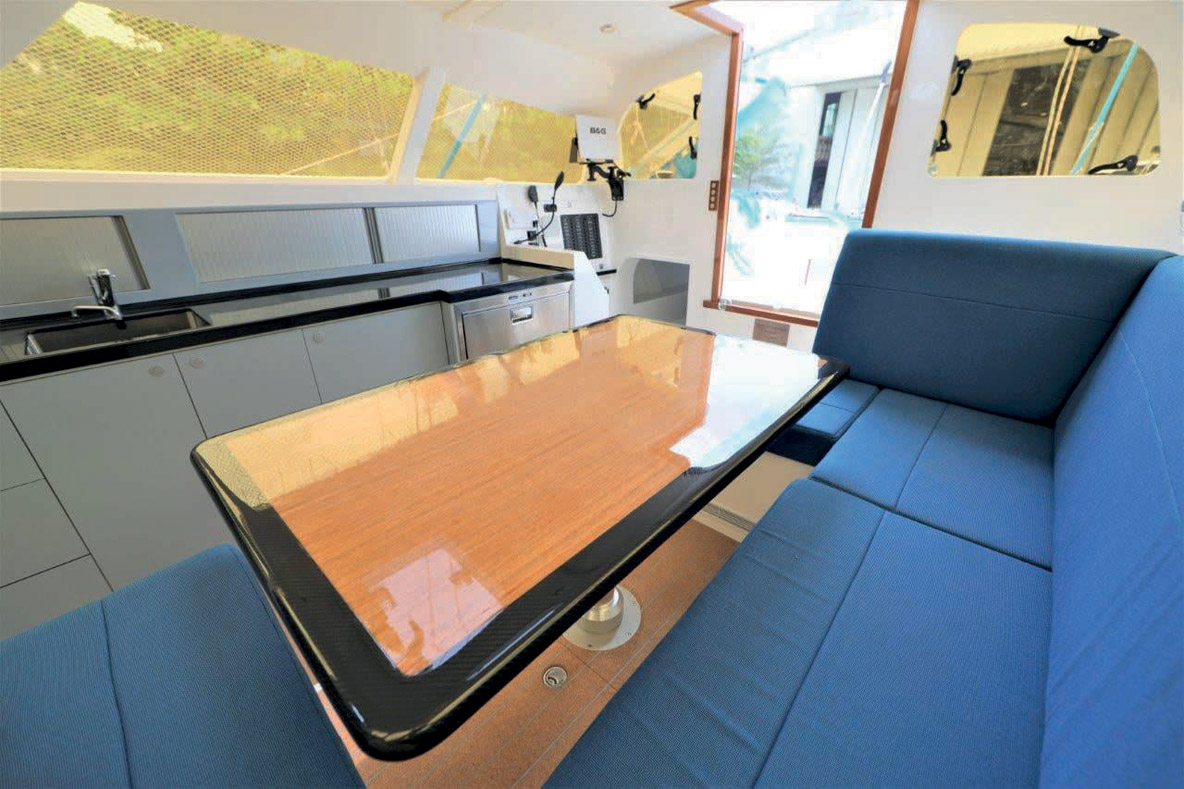
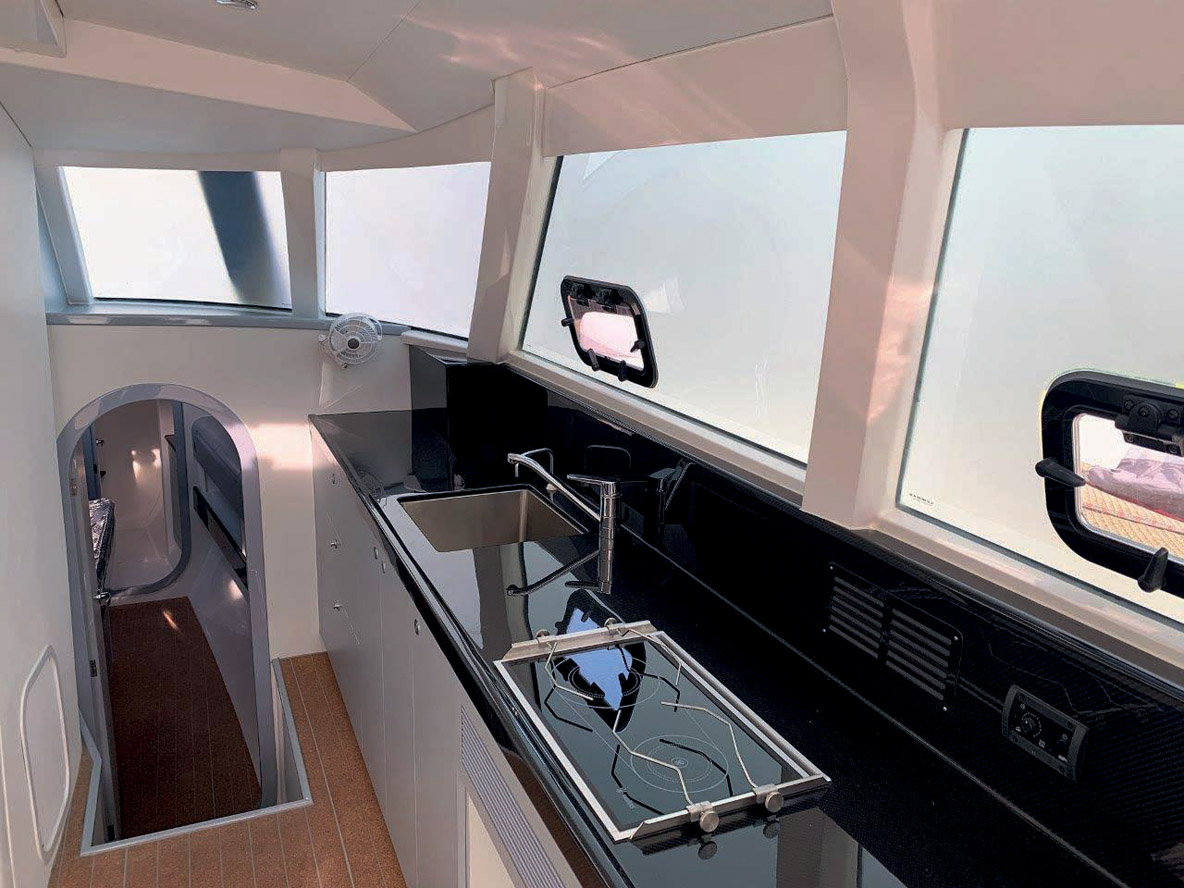
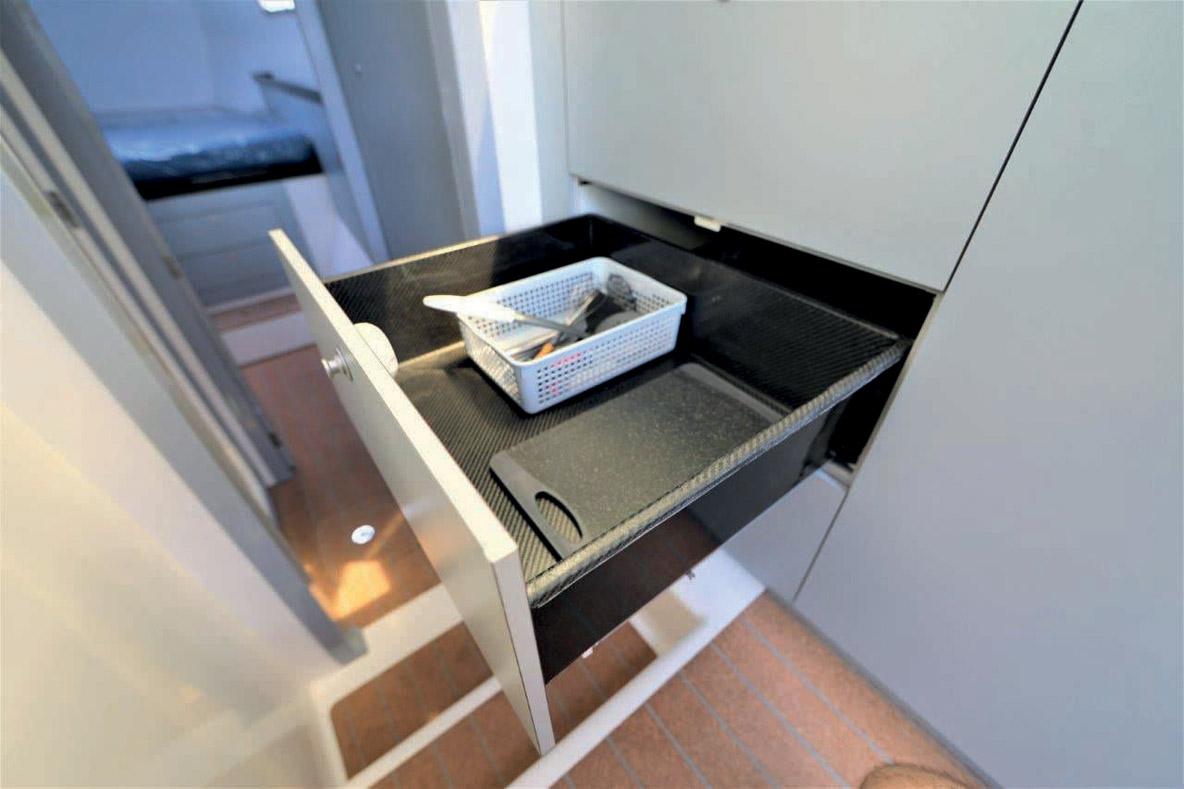
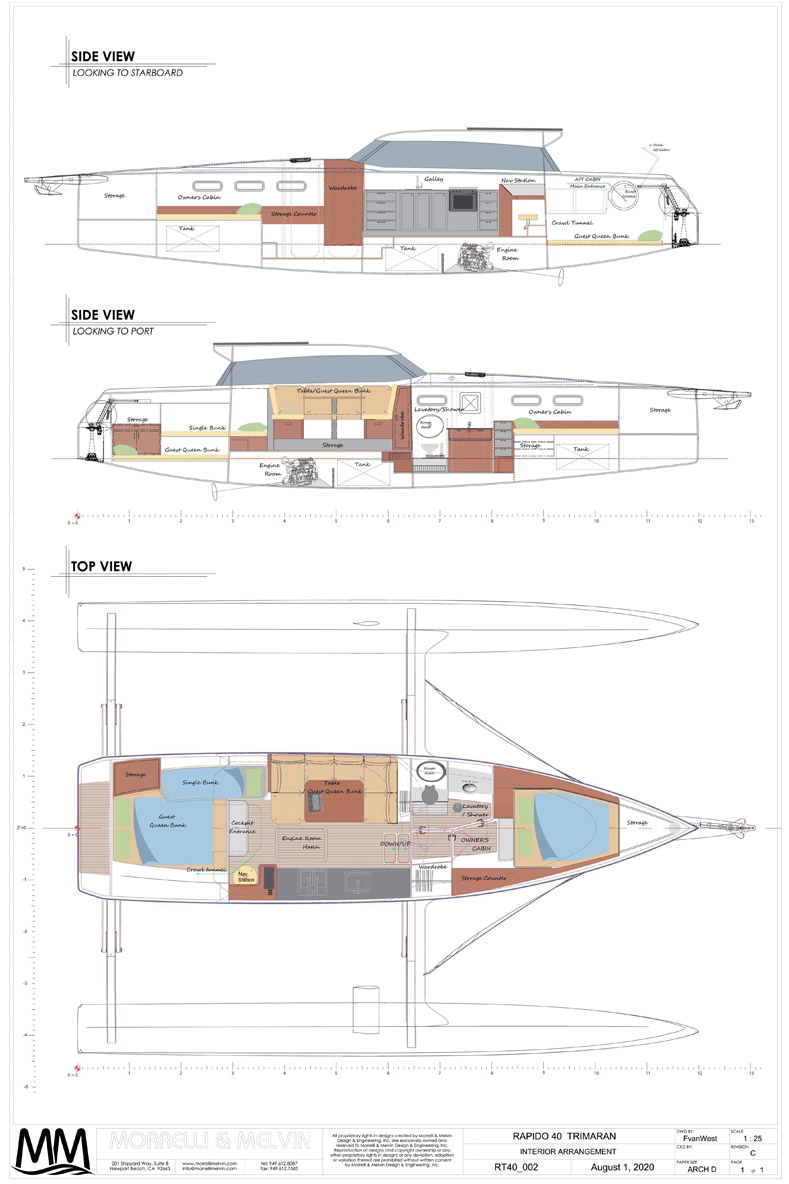
Inside the cabin, the layout is very similar to that of a monohull. With very good headroom of 6’7” (2.01 m), the interior features a large U-shaped saloon around which six crew members can easily sit - and even more by adding stools on the other side of the table. Made of carbon (the factory has mastered this material very well), this table can be lowered to form a double berth. On the starboard side, a long galley includes a hob, a sink, a refrigerator and a number of storage spaces. Here again, the countertop is made of carbon and not only this surface, since it is certainly the first trimaran of a (small) series with the galley drawers made of carbon!
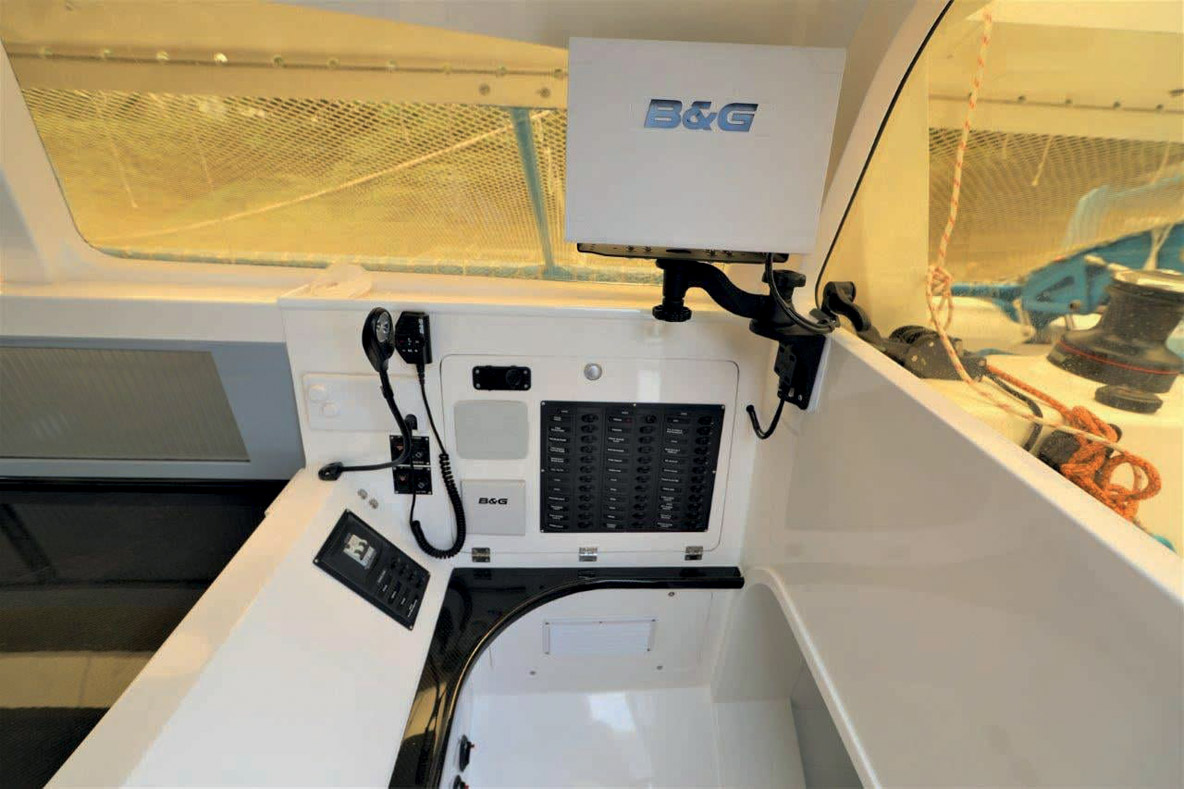
Just to the right of the companionway, there is a navigation station. This is complete but has no chart table. It is also from there that you access the aft cabin from the inside. On the port side, a coffin berth will accommodate an additional crewmember or serve as storage space.
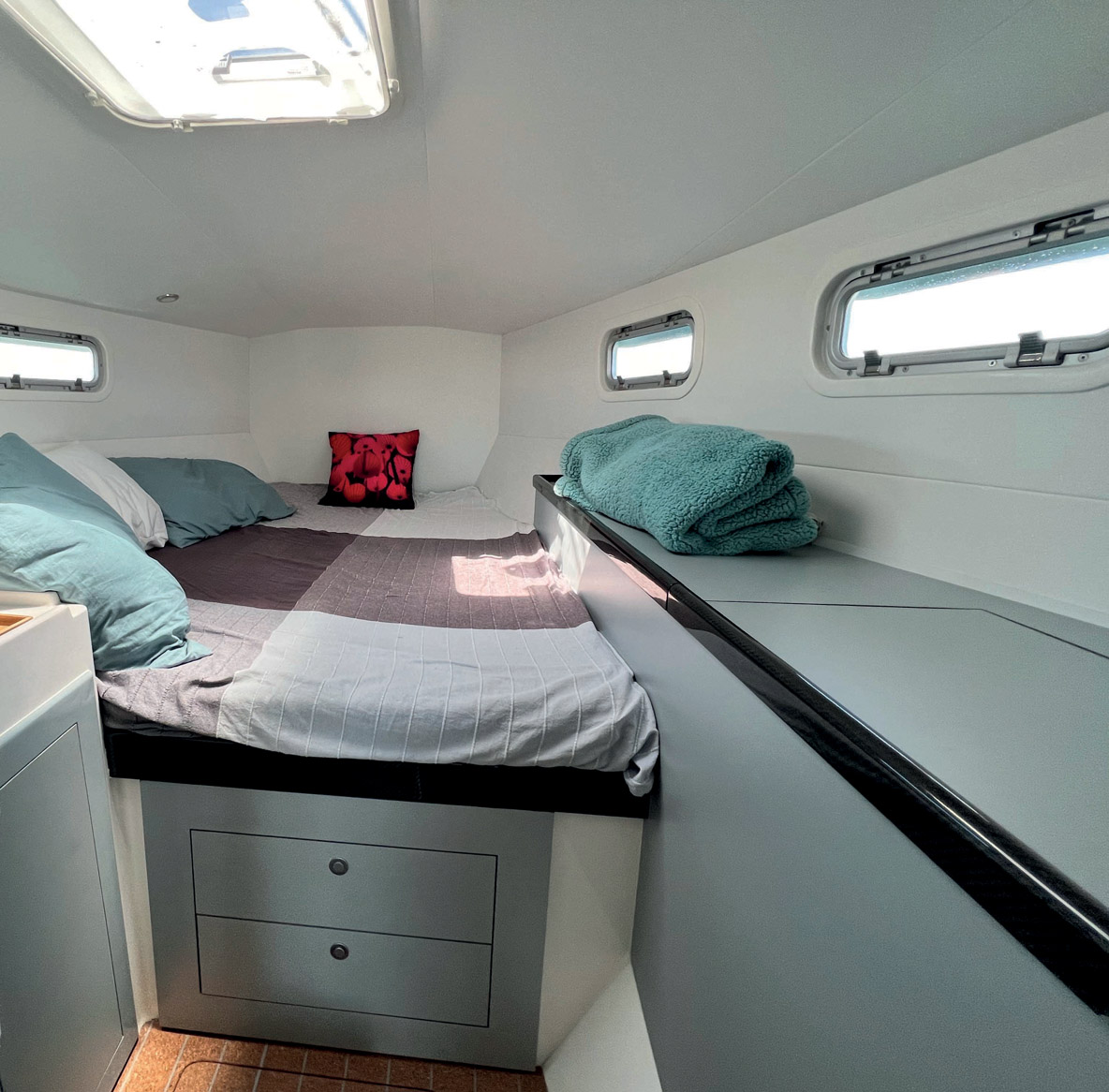
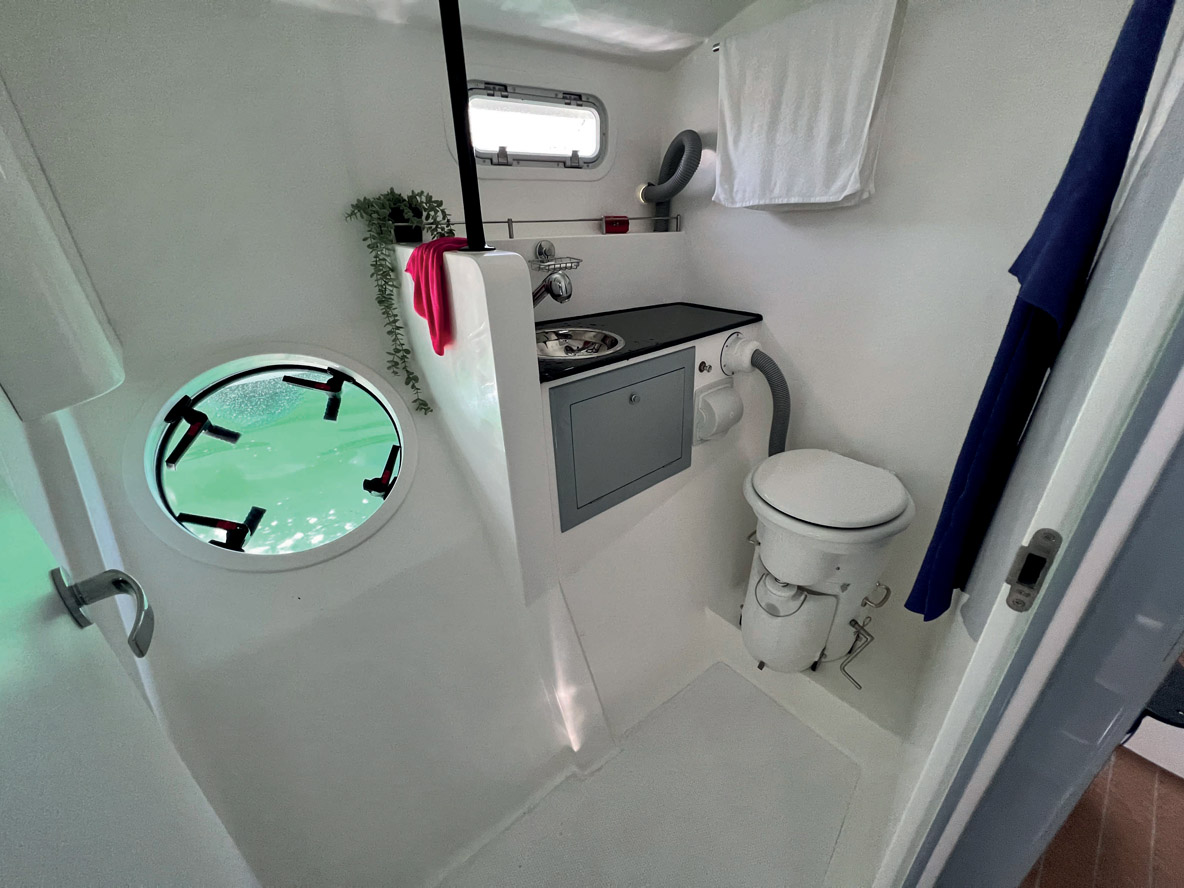
Moving forward, there is a closet to starboard and the head to port. This compartment is quite large and includes the toilet, a sink and enough space for a large shower. It’s a pity that the toilet itself isn’t protected when you shower. On the other hand, there is beautiful light and two opening hatches. The forward cabin features a queen size bed and several storage spaces for personal belongings, starting with the drawers under the bed. A good point also for the natural lighting thanks to the side portholes and the deck hatch.
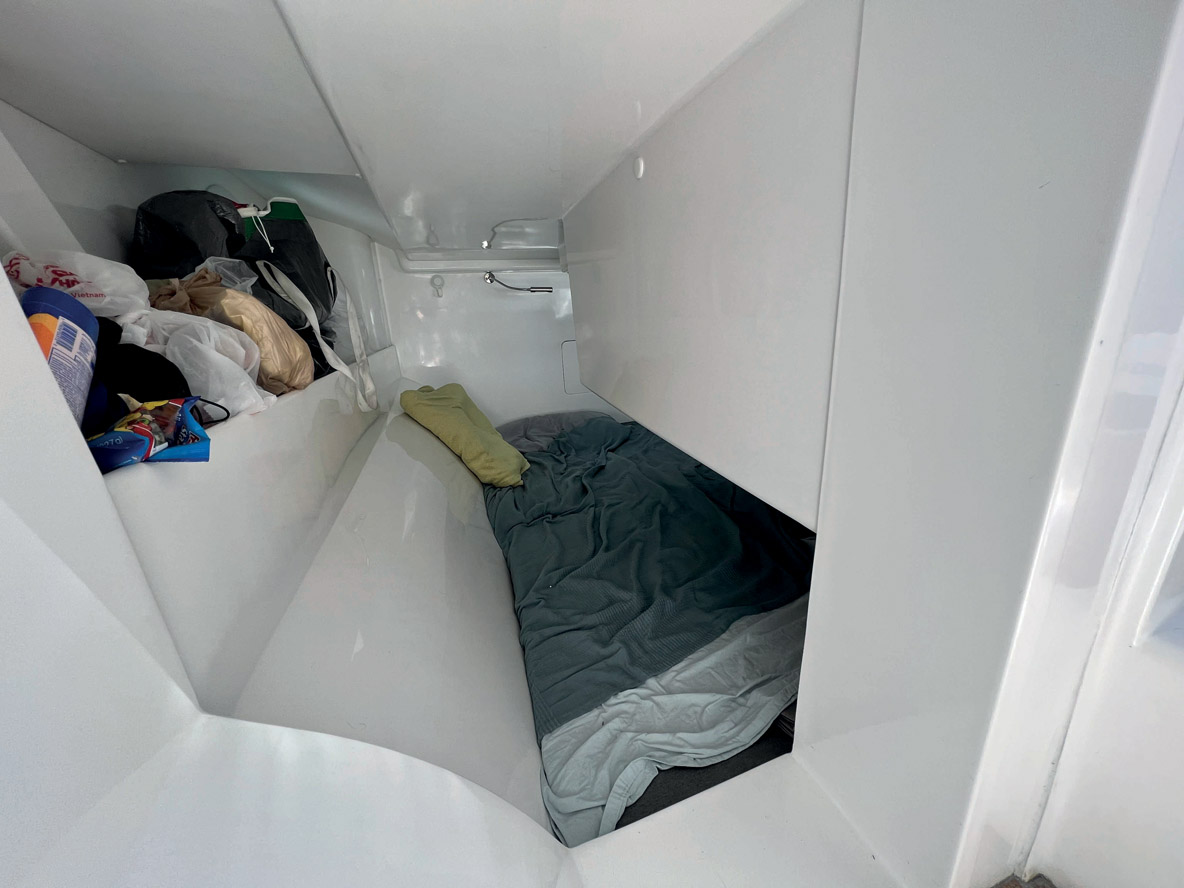
To reach the guest cabin, you have to slip through a mouse hole at the navigation station or access it from the cockpit. In both cases, the process is somewhat acrobatic. Once you are installed, this cabin, with its large double bed, is quite comfortable and has a small side window.
The last night space, the coffin berth on the port side aft can easily accommodate an adult, which means that in total you can sleep 7 people in this trimaran. However, you will have to make concessions in terms of privacy and be satisfied with only one head.
Regarding the build, the Rapido factory (Triac Composites) has obviously done a good job and the finishes are pretty neat. However, the atmosphere remains very simple, and you shouldn’t expect luxurious fabrics, refined woodwork, or fashionable magazine-like decor. The Rapido 40 was really designed to sail and to sail fast, not to host a social event. What’s more, it allows a certain degree of customization, so it’s up to the owner to personalize their trimaran when ordering.
A performing trimaran
Designed for performance, this trimaran has put all the odds on its side. Very light in weight, thanks to its carbon construction, it also has well thought-out hull plans that don’t drag water. The carbon standing rigging adds to the rigidity while the ease of maneuvering allows you to tack very quickly. In addition, the rotating mast allows the boat to remain very efficient at wind angles where other multihulls slow down due to a disturbed laminar flow. As for the daggerboards, Rapido decided to install them on the outrigger floats, which frees up space inside. Called C Foils, these daggerboards have a curved profile. Once the daggerboard is in the down position, it will practically act as a foil to lift the trimaran and reduce the wetted surface. The downside is that you’ve got to raise or lower one of the daggerboards (172 lbs/ 78 kg each) depending on the tack. In real terms, when tacking, you have to let go of the daggerboard control and push the leeward daggerboard down while you raise the windward daggerboard. In reality, once you get the hang of it, the operation is quick and easy.
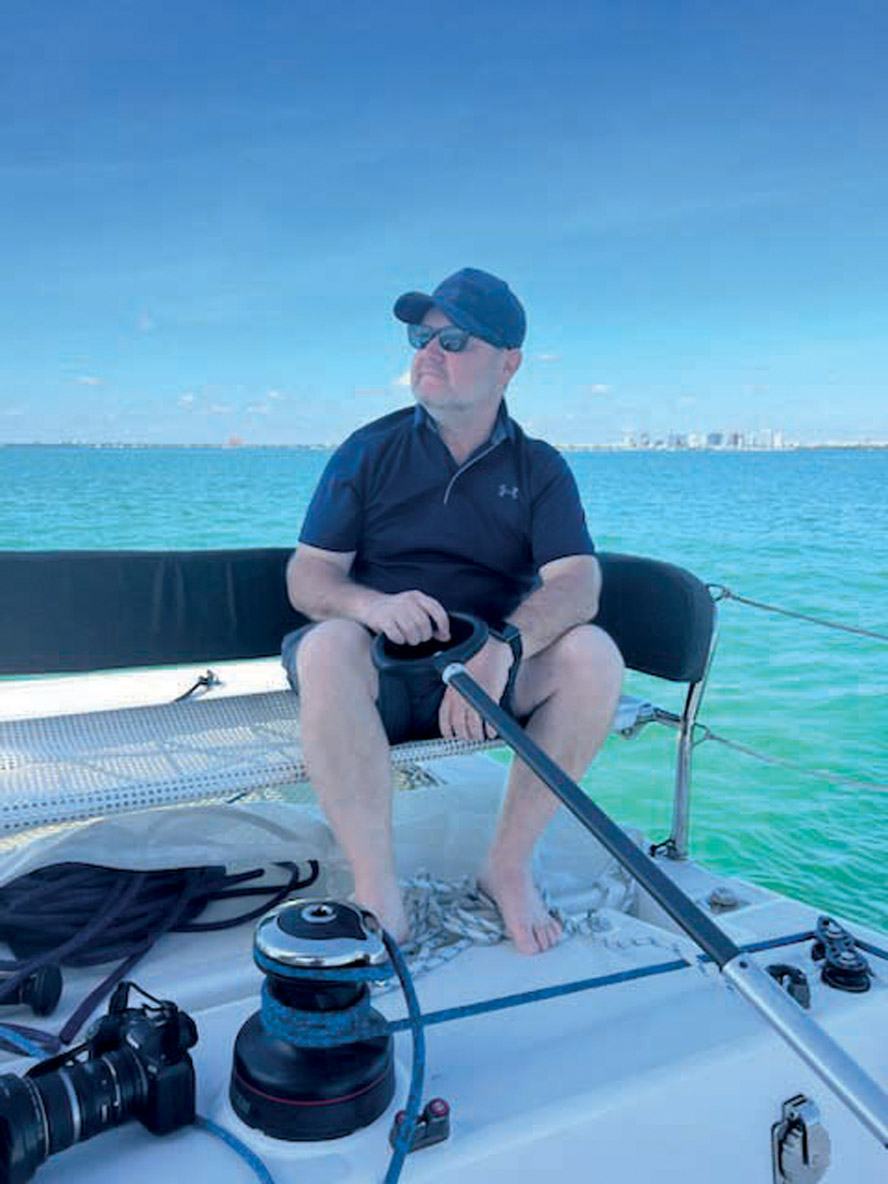
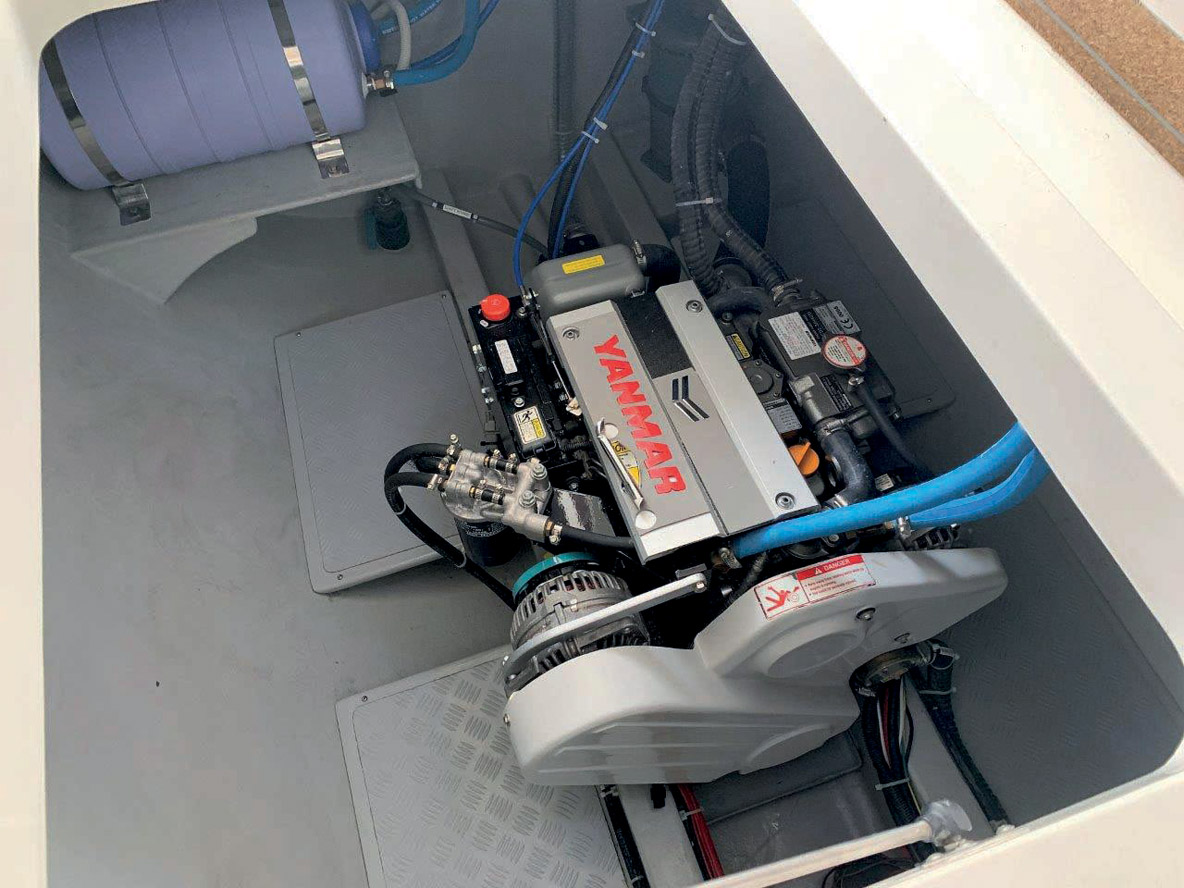
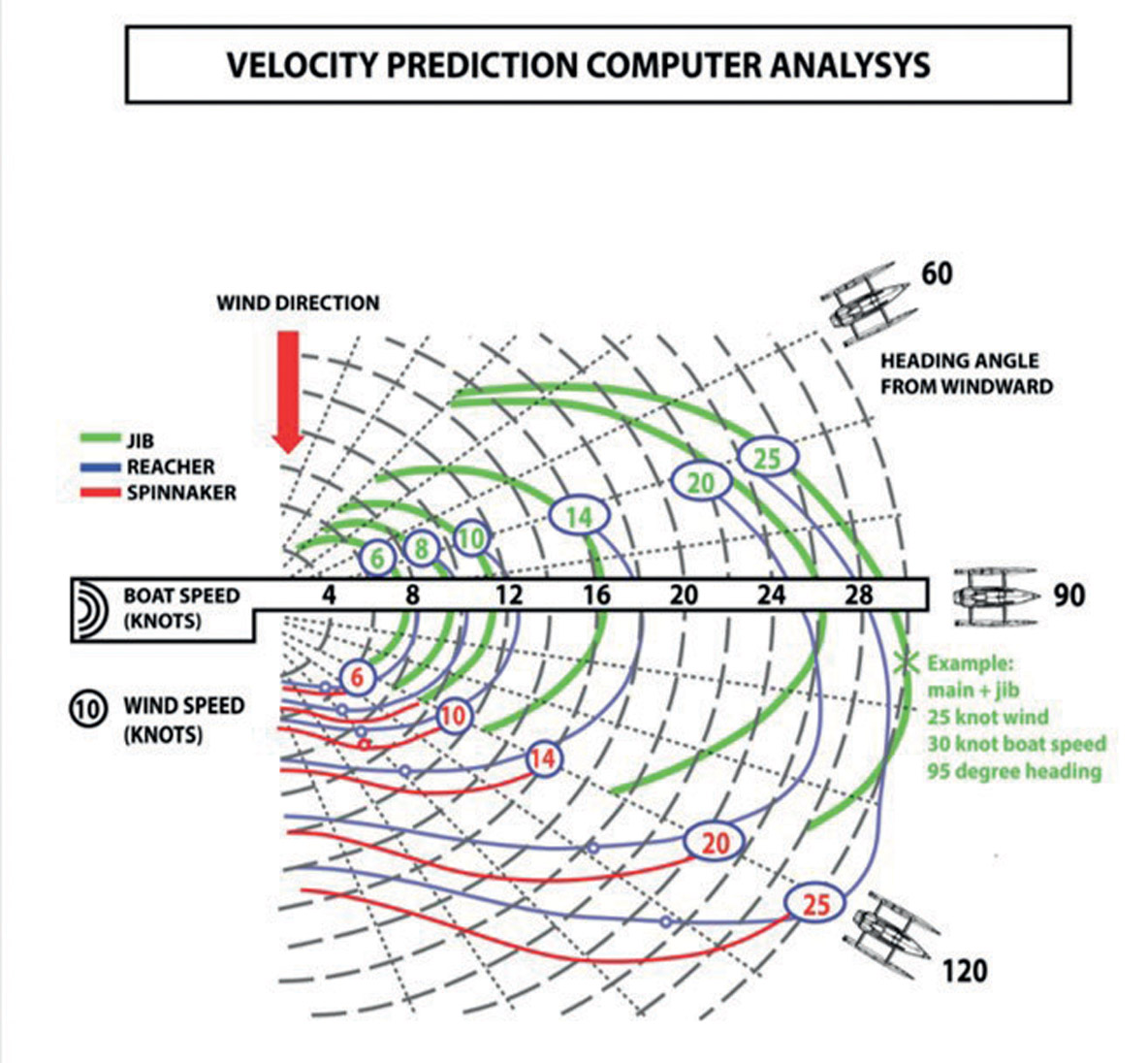
To put this theory into practice, we took the helm of the Rapido in Key Biscayne Bay, off Miami, Florida. The 30 HP Yanmar isn’t very noisy and is more than enough to get out of the marina. The lack of wind on the day of our test left us with little hope for performance, but it’s always interesting to judge for yourself. With its elegant and airy silhouette, the trimaran glides on the calm water of the bay. Head to wind, we hoisted the mainsail, and the trimaran immediately took off. We started with the jib and immediately feel the acceleration like on a dinghy or a sport catamaran. A bit of trimming later and without effort, we were sailing between 5 and 6 knots with 4 to 5 knots of wind and with an angle of 60°, which is more than correct. The changes of tack and gybes follow each other with disconcerting ease. Everything is done from the cockpit and almost single-handed. With the sails well-trimmed, we also appreciated the comfort and stability of the Rapido, a real pleasure. Paul and Bob smiled, and we decided to hoist the code zero, also on furler. With still 5 knots of wind, the Rapido quickly reached 7 knots, a rather fast speed in light airs. As the morning progressed, the weather did us a favor as the wind strengthened a bit, to around 10 knots. Not enough to break records, but it allowed us to go up to 12.5 knots at 120°. What a fast multihull! This performance is all the more interesting as it is not at the expense of comfort on board and the trimaran remains very smooth at the helm. Another eye-catching detail: the rotating mast does its job, orienting itself perfectly to optimize each tack. Comfortably installed on the side benches, you can take advantage of the breeze to cool off. In the calm of the bay, the Rapido flew over the water like a seabird, and we certainly appreciate, as if it weren’t already obvious, where the name of the brand comes from... We wouldn’t be hoisting the spinnaker on the day, as there wasn’t enough searoom, but our 12-13 knots were far from representative of the true potential of this trimaran. Our test sail was carried out with a set of Performance sails, not Racing. In good wind conditions (25 knots), with racing sails and a sharp crew, the shipyard announces an estimated speed between 25 and 30 knots – check out the polars. You’d be hard pushed to find a faster boat in this category!
Conclusion
This trimaran is a bit of a novelty and hides its game pretty well. Its lightness suggests that it will perform well, but the result exceeds expectations. In fact, the Rapido 40 is like a racecar that’s been approved for road use, and the best part is that it’s very easy to handle. The other area where it hides its game well is that of space inside. It’s hard to imagine, looking at it from the pontoon, that it can accommodate 7 people for the night while keeping a functional galley and a large bathroom. Finally, we mustn’t forget its foldable aspect, which is very practical when it comes to finding a place in the marina. In short, a multihull full of surprises, that’s very fun to helm and comfortable to live aboard – there’s plenty here to tempt you...
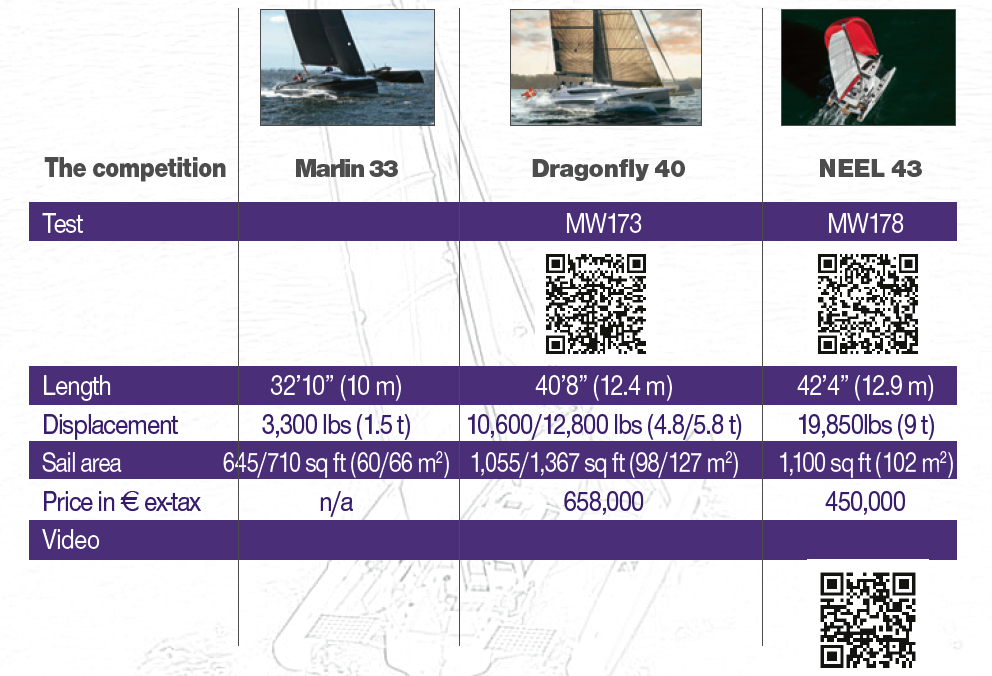
Foldable arms
Space onboard
Basic finish
Lack of rope bags
TECHNICAL DESCRIPTION
Designer/architect: Morelli & Mevin
Overall length: 39’6” (12.03 m)
Overall width: 28’10” (8.8 m)
Folded width: 19’3” (5.8 m)
Draft daggerboard up: 2’10” (0.87 m)
Draft daggerboard down: 7’2” (2.18 m)
Air draft: 63’2” (19.25 m)
Light displacement: 11,474 lbs (5,200 kg)
Mainsail: 700 sq ft (65 m²)
Mast area: 75 sq ft (7 m²)
Jib: 344 sq ft (32 m²)
Code 0: 1,216 sq ft (113 m²)
Asymmetrical spinnaker: 1,700 sq ft (158 m²)
Berths: 7
Fuel tank: n/a
Water tank: n/a
Engine: 30 HP Yanmar
CE Certification: A
Price: € 595,000 ex-tax