
American ports and marinas, like those in Western Europe are struggling to accommodate large catamarans. How will they react to an 18x12m trimaran platform? The question may seem incidental, but still made me think! But why start a review of a multihull as attractive as this one with an off-the-cuff comment? Nobody said that the Rapido was reasonable!
Infos pratiques
- Le chantier : Rapido 60 Ocean Cruiser
- La fiche technique
-
 Découvrez notre vidéo exclusive
- Financez votre Rapido 60
- Assuez votre Rapido 60
- Articles autour du Rapido 60
Trimarans: easy victims for dock fees
A large part of the world's yachting fleet is grouped around an infinitesimally small percentage of the coast (and not always the most attractive bits!). There remains, however, a variety of smart solutions in wonderful and less crowded sailing areas (estuaries, lagoons, large lakes, interior gulfs, drying areas ...). Countless shoal-draft areas would also be able to accommodate this type of boat (the Rapido has an integral daggerboard), which would help to avoid the sometimes grotesque regulations and outrageous charges for moorings. This bleak comment made, let's get to the main course: I invite you aboard one of the most exciting liveaboard multihulls ever produced. Hold onto your hat… and your sunglasses! Welcome aboard the Rapido 60.
How are ambitious projects born?
Richard Eyre (an English-speaking Canadian sailor passionate about trimarans) and Paul Koch (formerly of Corsair Marine) are the protagonists of the Rapido story whose genesis is explained through a deep and ancient immersion in the world of trimaran building and an ultimate will to achieve. Paul is the industrialist of the pair. He bought Corsair from John Walton in 1994 and had a multihull construction yard (Ostac) in Australia where he was already working with Ian Farrier (the naval architect behind the Corsair and Farrier). In 2006, Paul relocated the Chula Vista (California) factory to Vietnam and took with him several American technical managers. The design and manufacture of the Corsair then followed, without Ian Farrier. In 2010, the Australian Seawind took control of the brand. The Rapido project was ready to be launched.
A committed team of naval architects
The Rapido would evolve from the designs of Gino Morelli and Pete Melvin. The two friends have been at the origin of some mythical multihulls (Stars and Stripes, Playsation, the AC72 Oracle, Formula 40s...) and some catamarans with a high reputation (The first generation Gunboats, the HH 66 and 55); but no Orma trimarans or Ultimes! The Californians have just struck it big by offering wealthy enthusiasts and connoisseurs a multihull for Antigone (the beautiful, who wanted everything and wanted it immediately!). A breathtaking synthesis at the crossroads of the exceptional experience of the Anglo-French school (Nigel Irens-VPLP, Marc Lombard) and the American influence of Dick Newick. He showed with the "fast is fun" philosophy that sliding across the water was the apogee of sailing and then proved in the 80s that its cruising trimarans, originally designed purely for pleasure of speed with a family, could also win races.
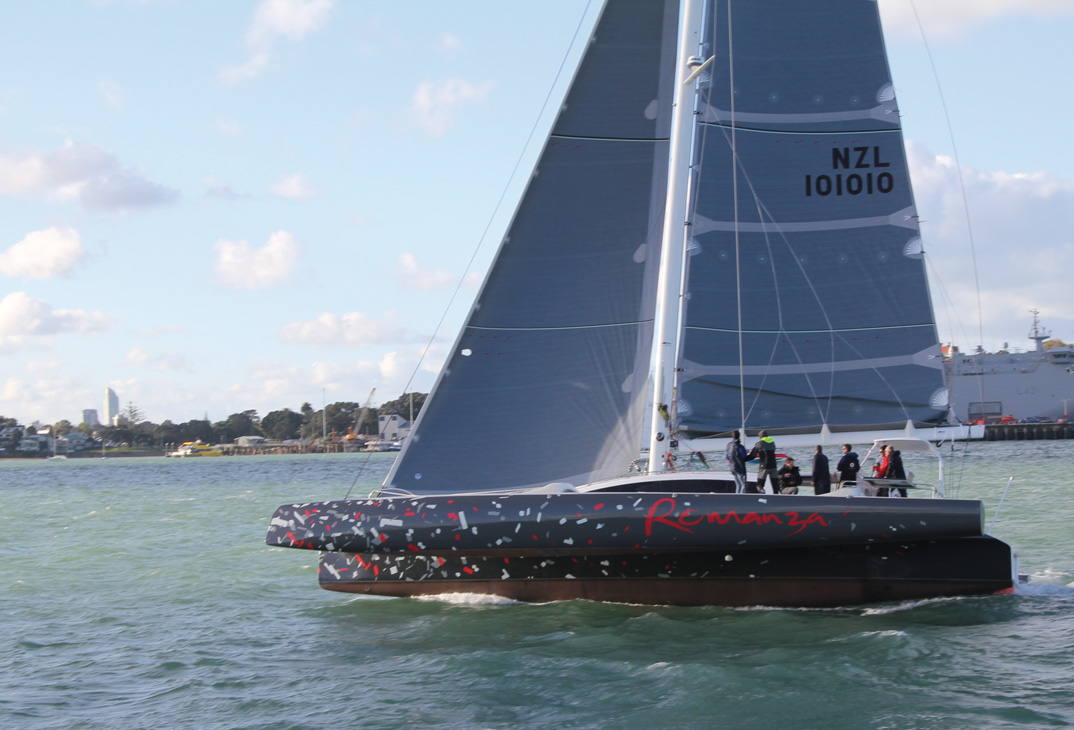
A very comfortable and very fast trimaran: A figment of the imagination?
Newick’s trimarans were magnificent machines, but in the under 45' bracket, they offered all the comfort of a classic Bugatti! Jim Brown, Arthur Piver and Paul Weychan intelligently reconciled the qualities of wood composite and the deck area of a trimaran (with the resources available at the time!). However, the catamaran platform wins in production cruising boats while racing takes trimarans and transforms them with accelerated genetic mutations. This was the fantastic transformation that led to the Ormas, today's Ultims and their supernatural performance. Some attractive attempts made their appearance in the 90s, but remained as “one offs” (Paul Lucas' Waarship 52 or Philippe Briand's Exception 52). I remember particularly the Exception 52 Straw in the Tail on which I sailed several thousand miles: it was beautiful, very livable, solid and fast... like a racing monohull of the late 80s (11-16 knots); disappointing for a tri! Marsaudon Composites joined the adventure with their talents, by manufacturing for a veteran enthusiast the Paradox 60 (an Irens-Cabaret design on Fujifilm's molds); this is (alas) an exception, maybe too close to racing? Neel have revived the trimaran platform by optimizing the living space with the good performance of a cruising multihull; we’ve just been waiting for the magic formula that would combine sporty silhouette, comfortable furnishings and explosive performances!
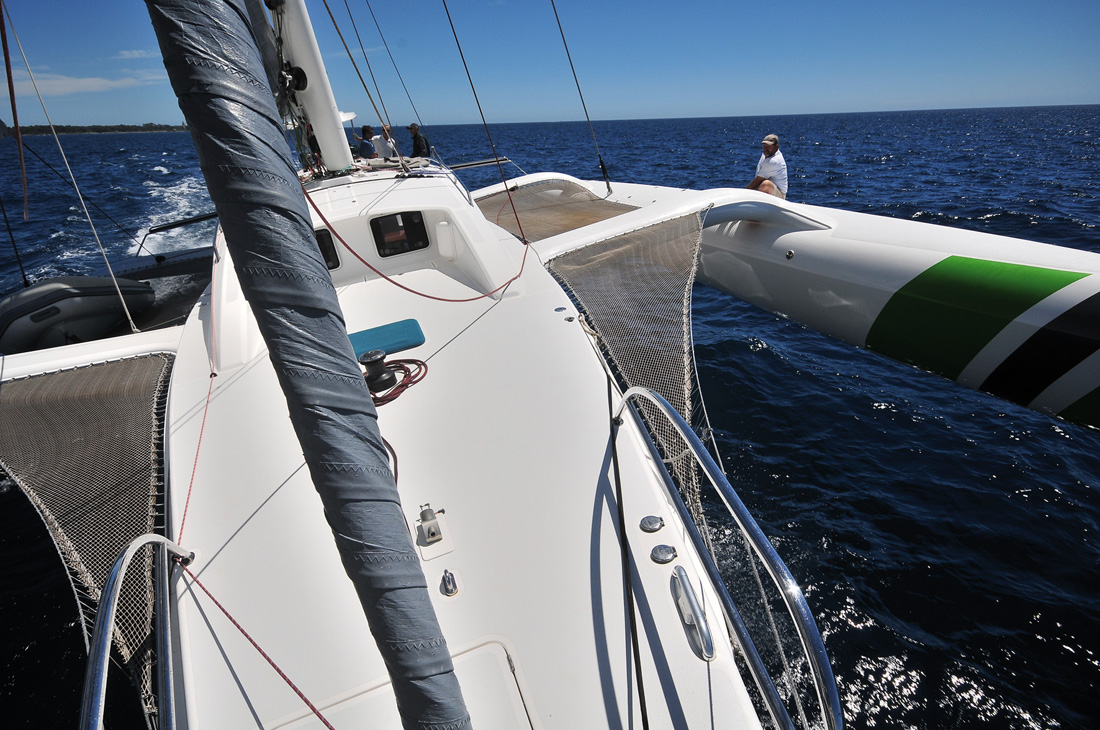
Architecture and construction
The Rapido team strives to avoid any half-measures! The Morelli-Melvin team, Making a reappearence in terms of cruising multihulls have just delivered back to back several exceptional boats (the HH66, the TF10 foiling trimaran and the Rapido 60). The Rapido is built in Vietnam by a team that has the experience of manufacturing hundreds of folding trimarans (Paul Koch and James Sganzerla). They themselves say they wanted to build a "bullet-proof" trimaran. The hulls and decks are made using female-infusion molds to optimize the resin-fiber ratio by using epoxy or vinylester with Divinycell foam (thermoformed on 3D jigs). All the structural elements are made of carbon which is pre-impregnated and post-cured in an autoclave (an expensive and high-end technique which can keep it cool before polymerization so the cloth is perfectly impregnated in the factory). The arms are manufactured by multilayer application of unidirectional black fiber, then embedded in tapered recesses which constitutes one of the best of the existing mechanical solutions, since it allows disassembly (transport-storage) while ensuring an extremely resistant connection (a system adopted by some Formula 40s in particular). Structural bulkheads (watertight) and the related chainplates are made in one piece, using the same technique, as are the rudders and daggerboard (the boat is delivered with a spare rudder blade).
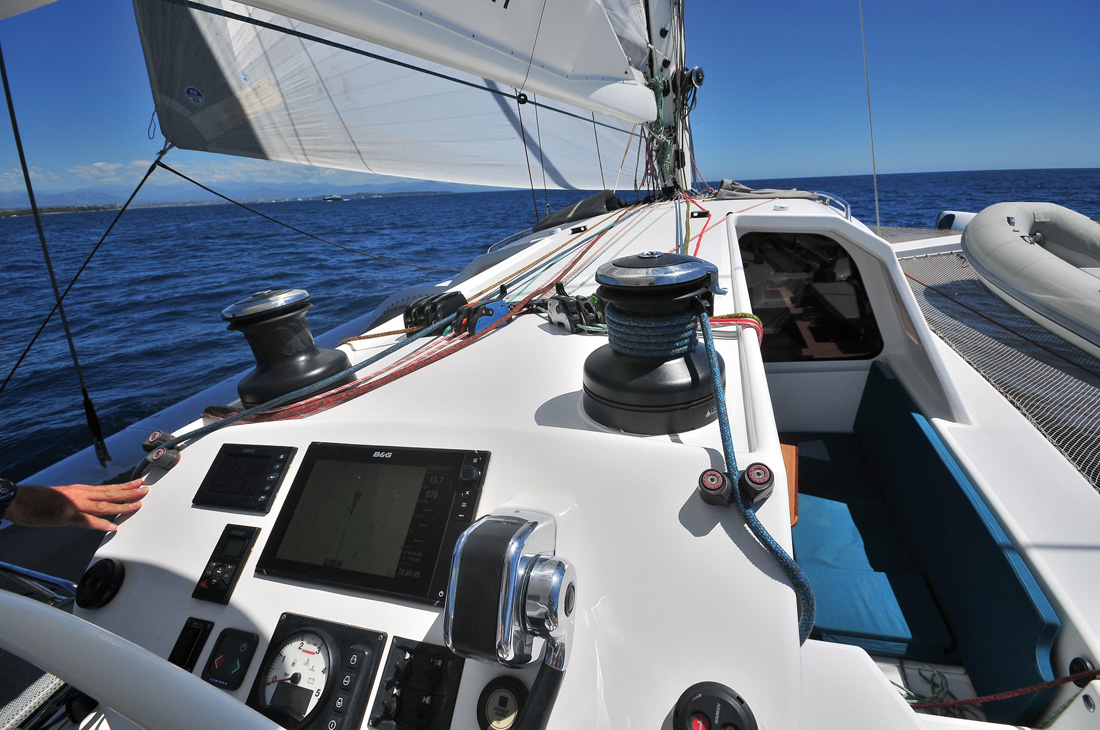
A revolutionary deck layout!
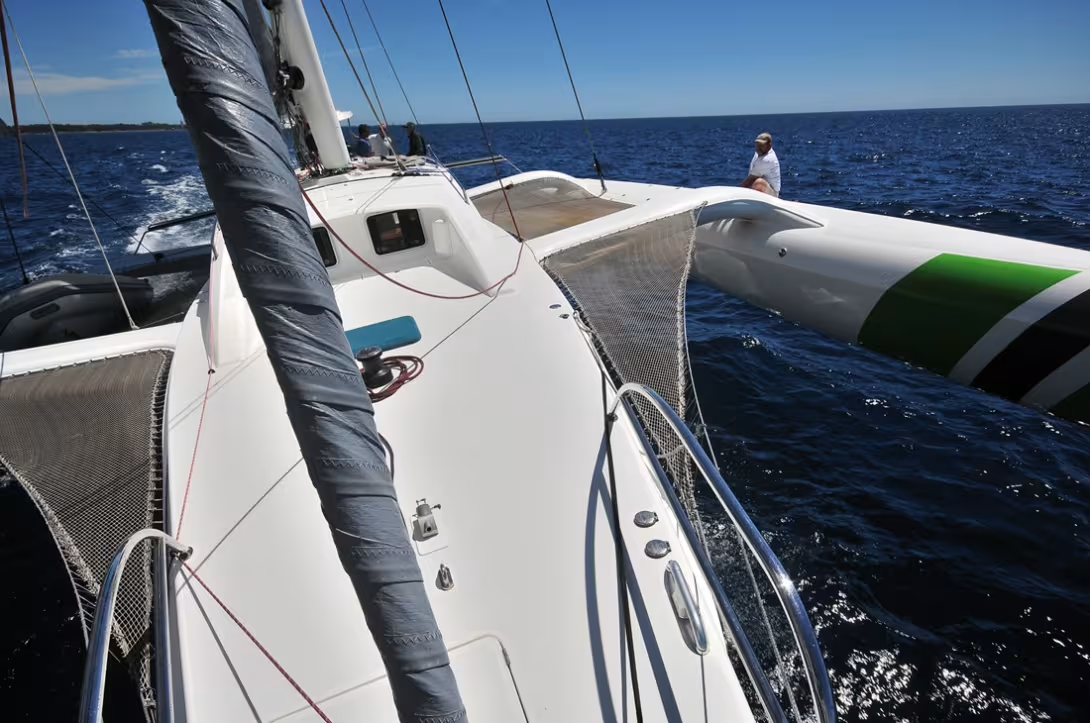
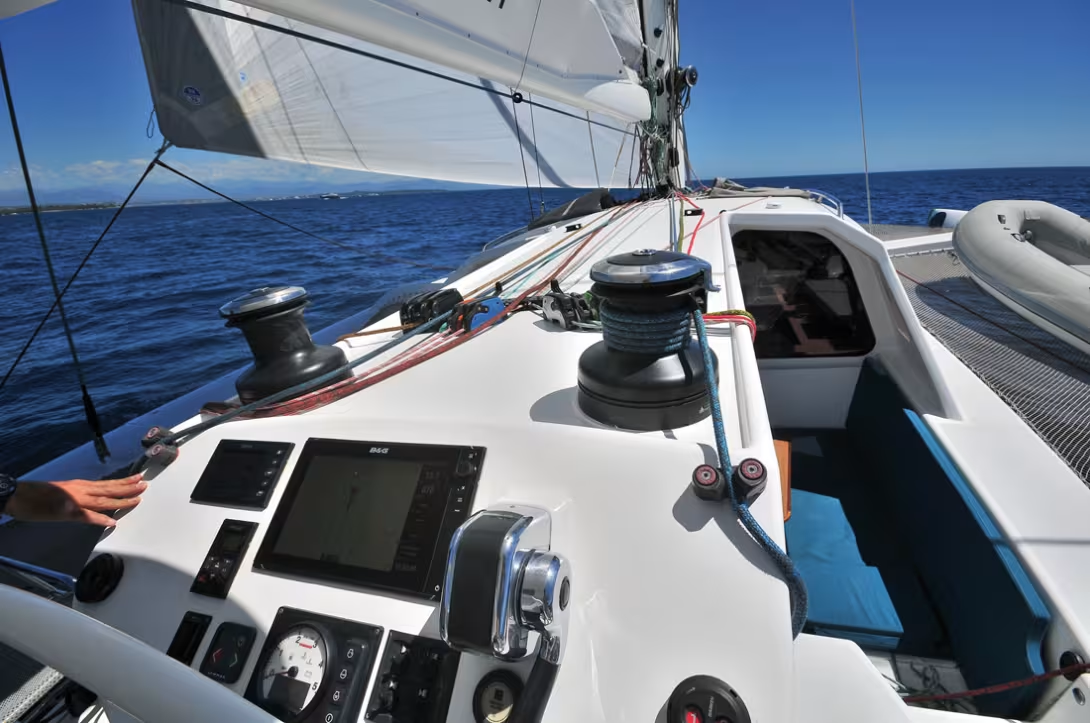
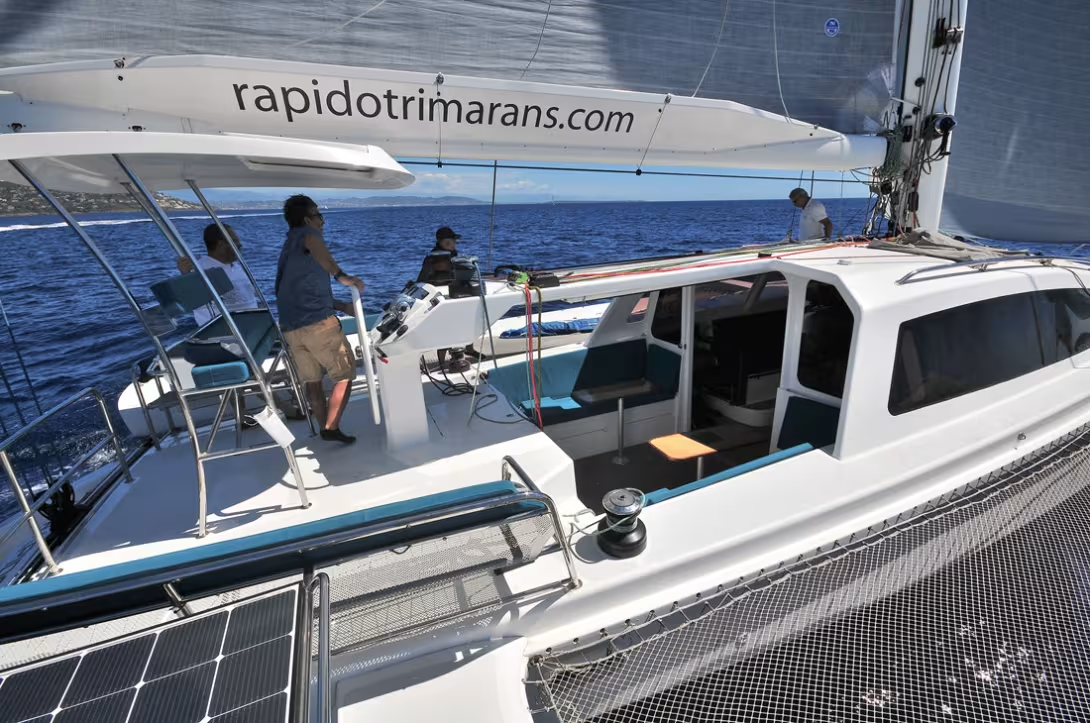
The outline of the Rapido is very seductive. The quality of its construction is meant to be a standard-setter, but it is when you go on board that the trimaran reveals its creative originality! Crossing from the dock or the dinghy onto the beautiful sugarscoop (which conceals the lifting rudder and rigid linkage) is very easy, and then the ergonomics of this boat hit you and accompany you everywhere. The intelligence of this globally innovative design is remarkable. The elevated cockpit offers panoramic visibility. The helm station, the double seat and the sail handling console are all designed for clear, safe and sporty use. The small composite bimini on a tubular steel frame has been improved for forthcoming models and is now all carbon composite. The 3-place side seats offer an incomparable viewpoint and increase safety at the helm station: a great success! The arches which support the solar panels (630W! Probably 25-30Ah of real load!) also contribute to the reassuring ergonomics by avoiding the possibility of falling over, aft at the arms. The trampolines, which are attached to the arms via the system used in the racing world (laminated, so no holes or screws), fall perfectly under the foot without any difference in level, making the passage forward ultra-comfortable and giving easy access to the hulls, especially as their decks are broad and flat in the central sections. The foredeck, having side trampolines is exceptional for a trimaran, making it a perfect sunbathing area and an enviable observation point. Access to the coachroof, the gooseneck, the boom and the mastfoot is also remarkable. Sail handling is grouped together on the central console which protects the cockpit, a clear solution and giving clear maneuvering. It's faultless!
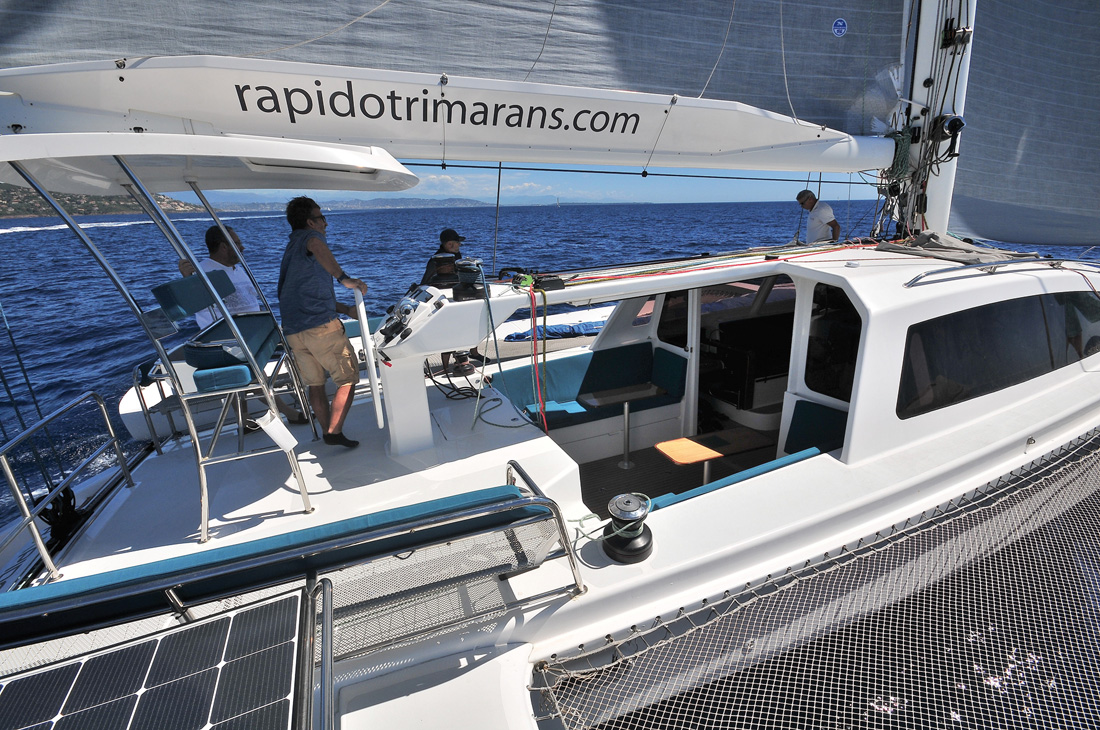
A speed machine with an ultra-comfortable layout
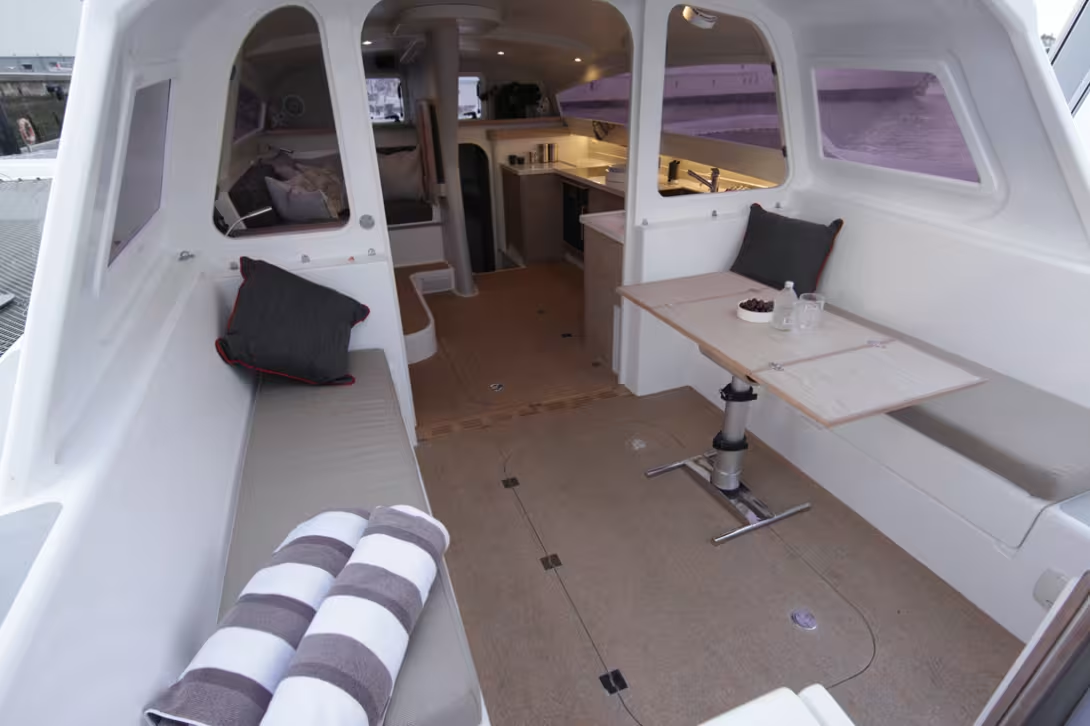
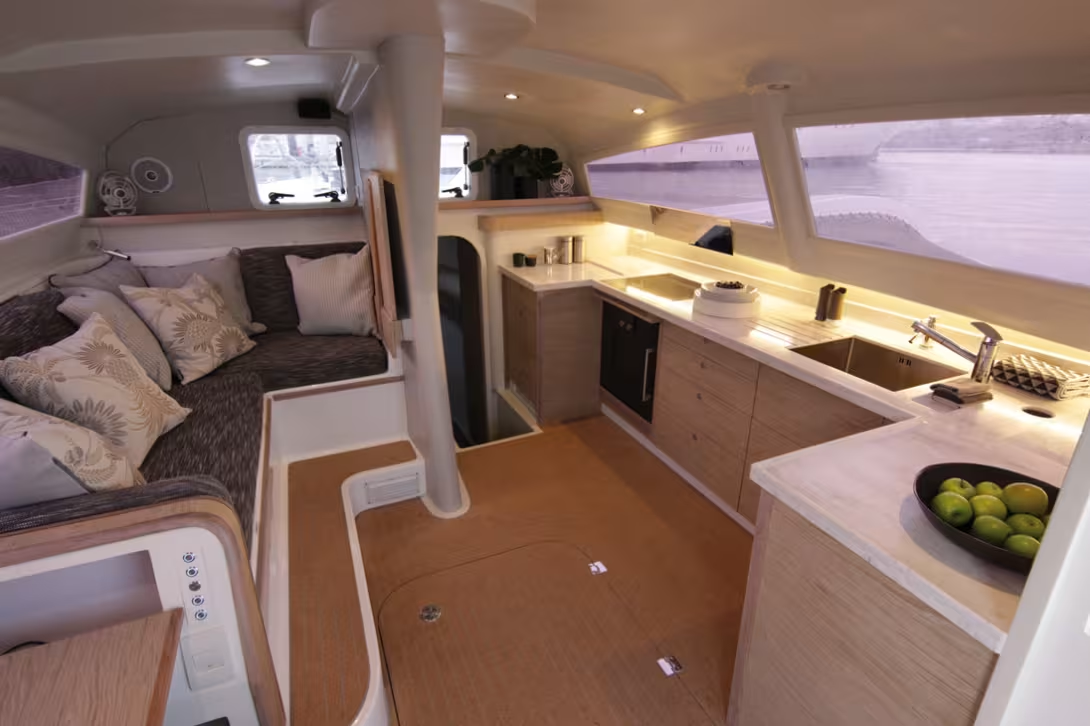
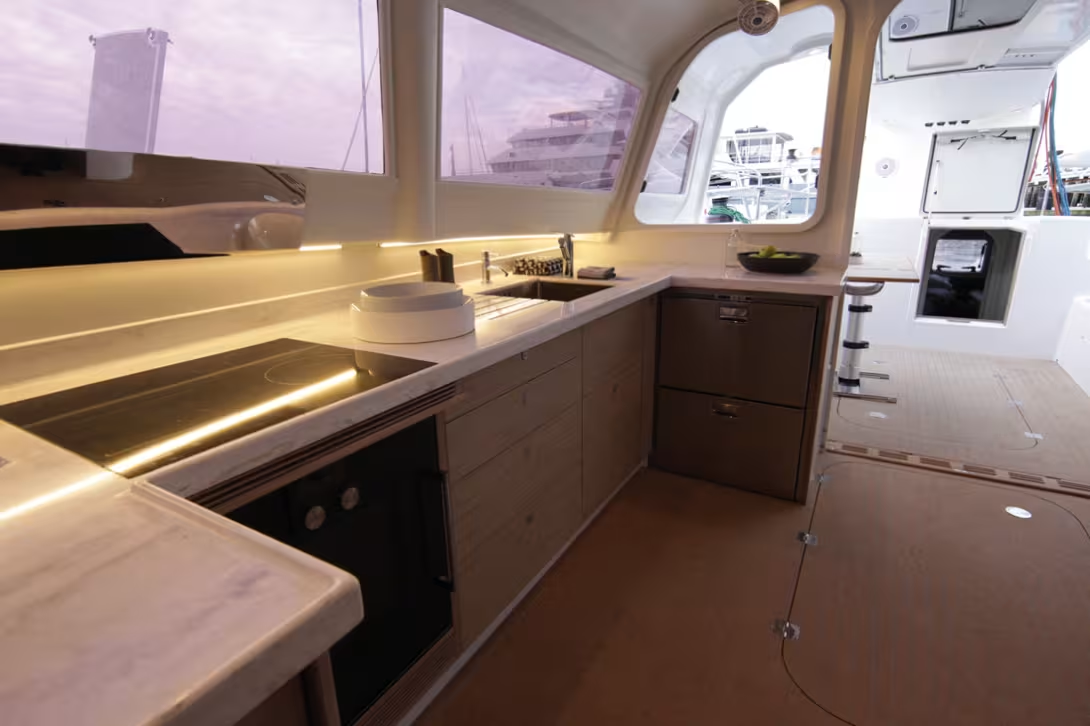
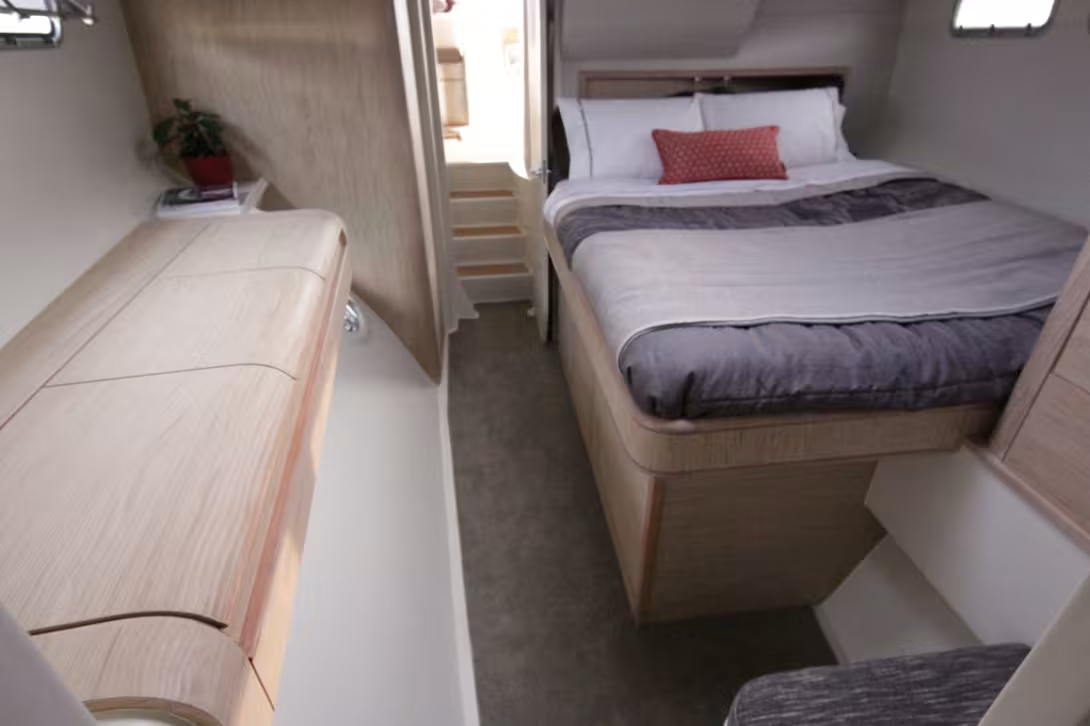
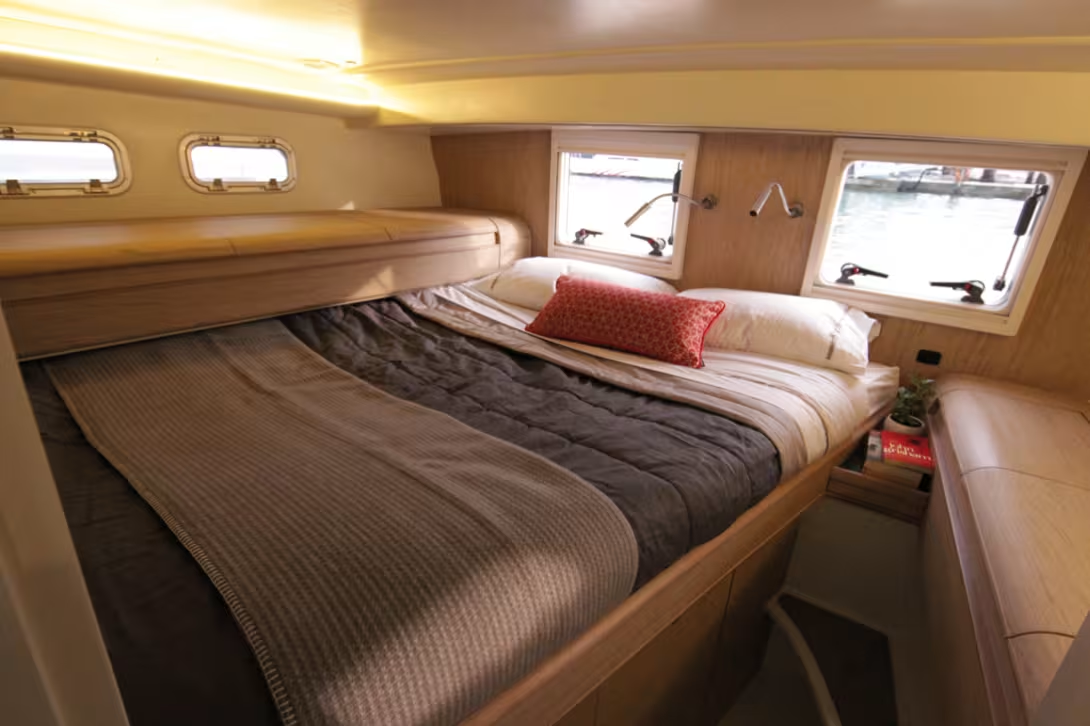
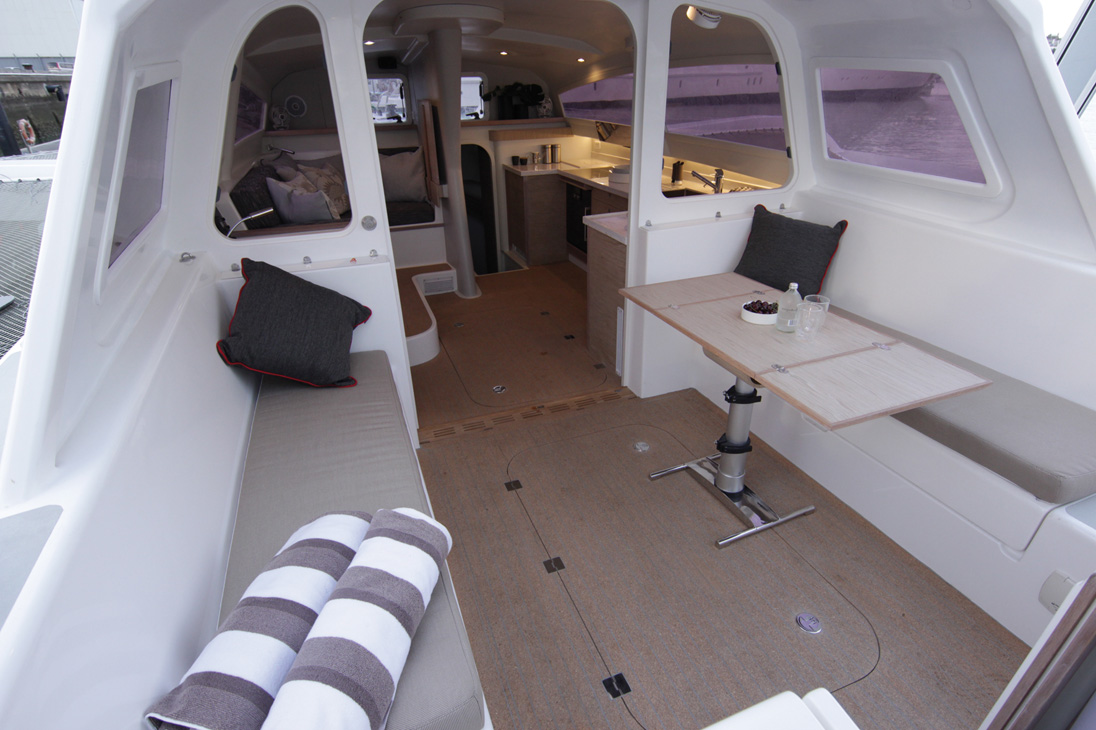
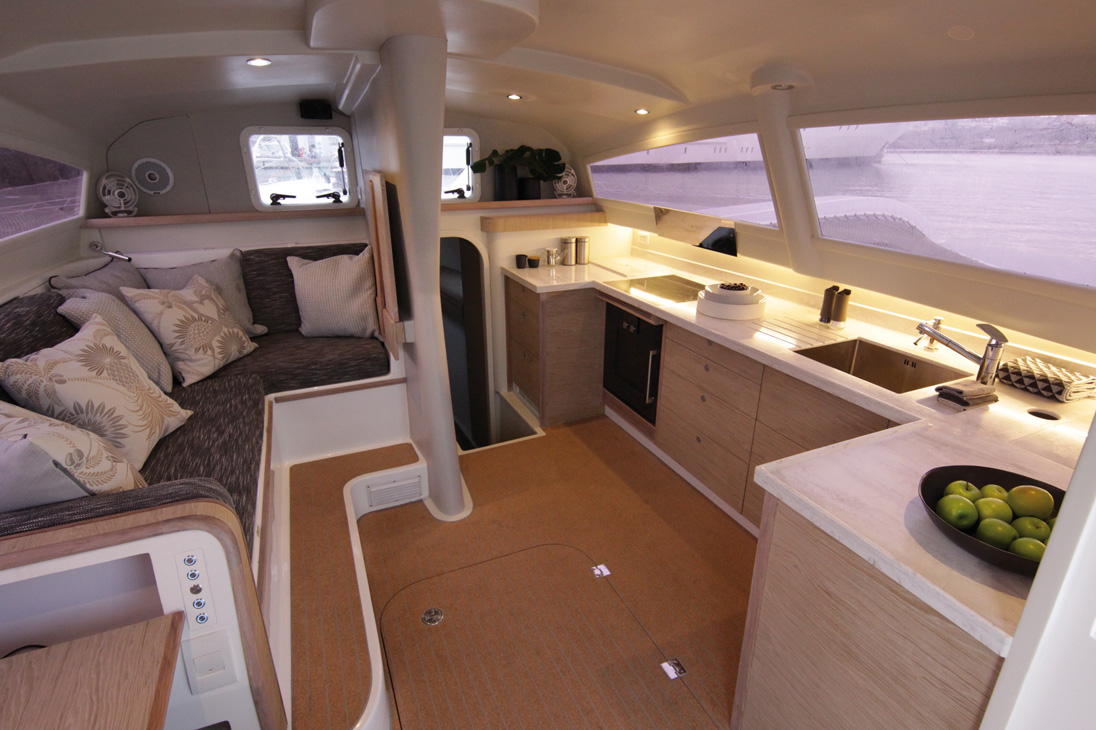
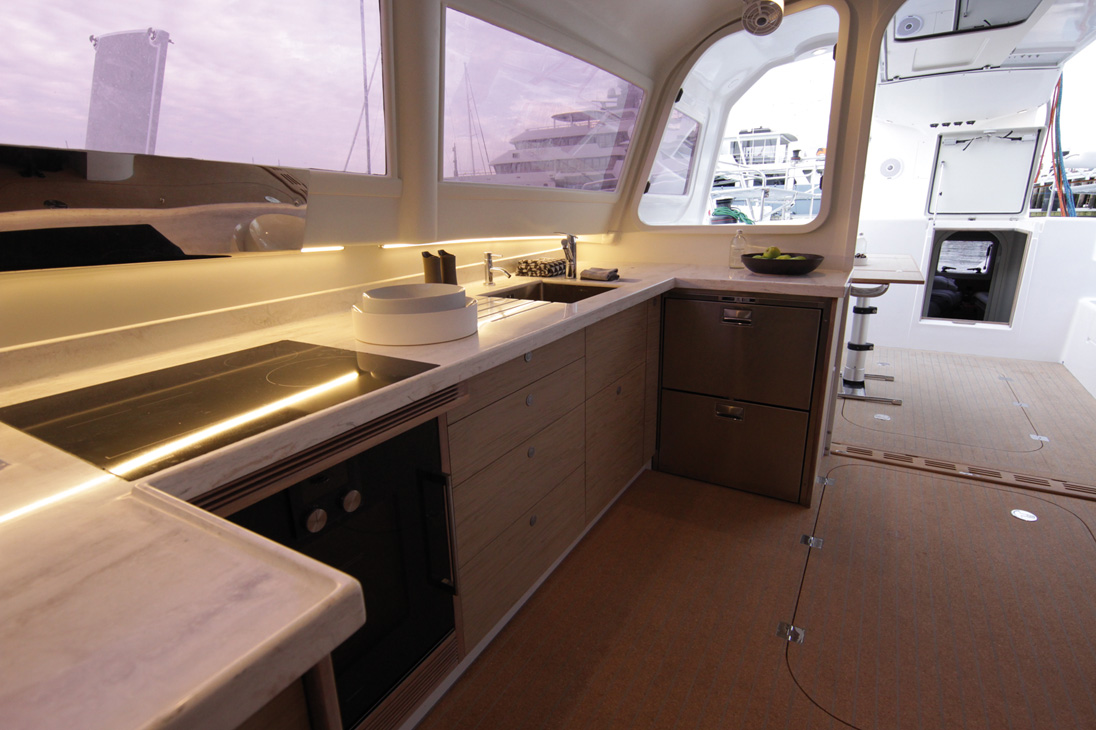
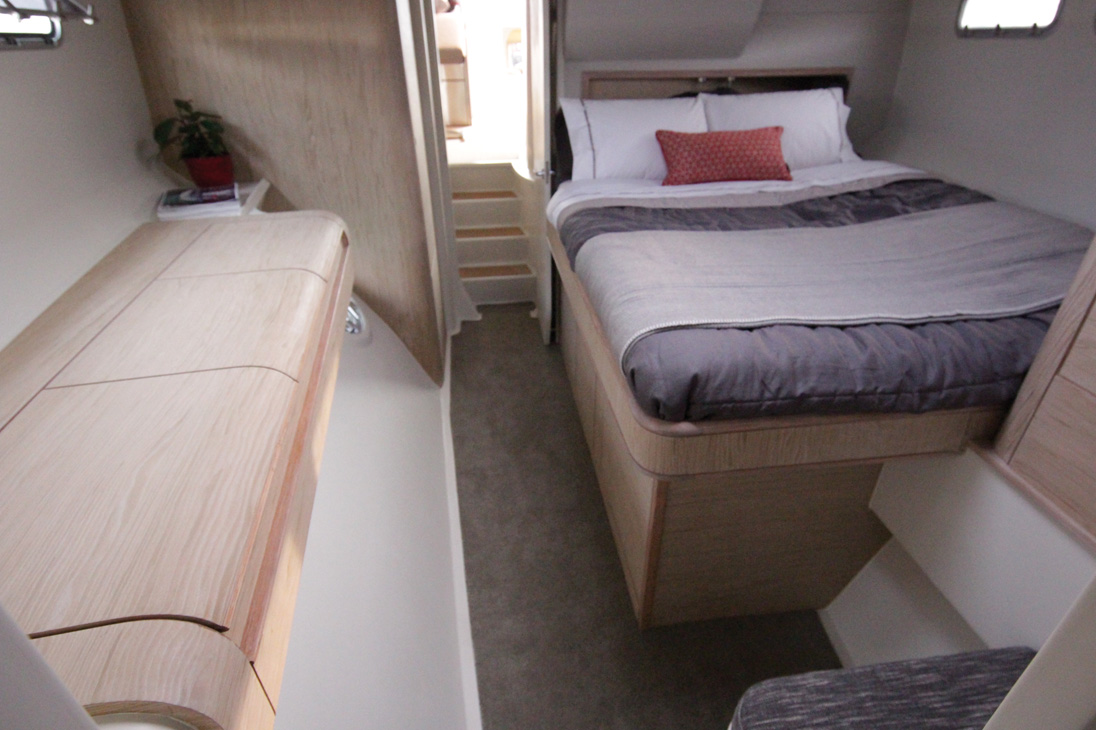
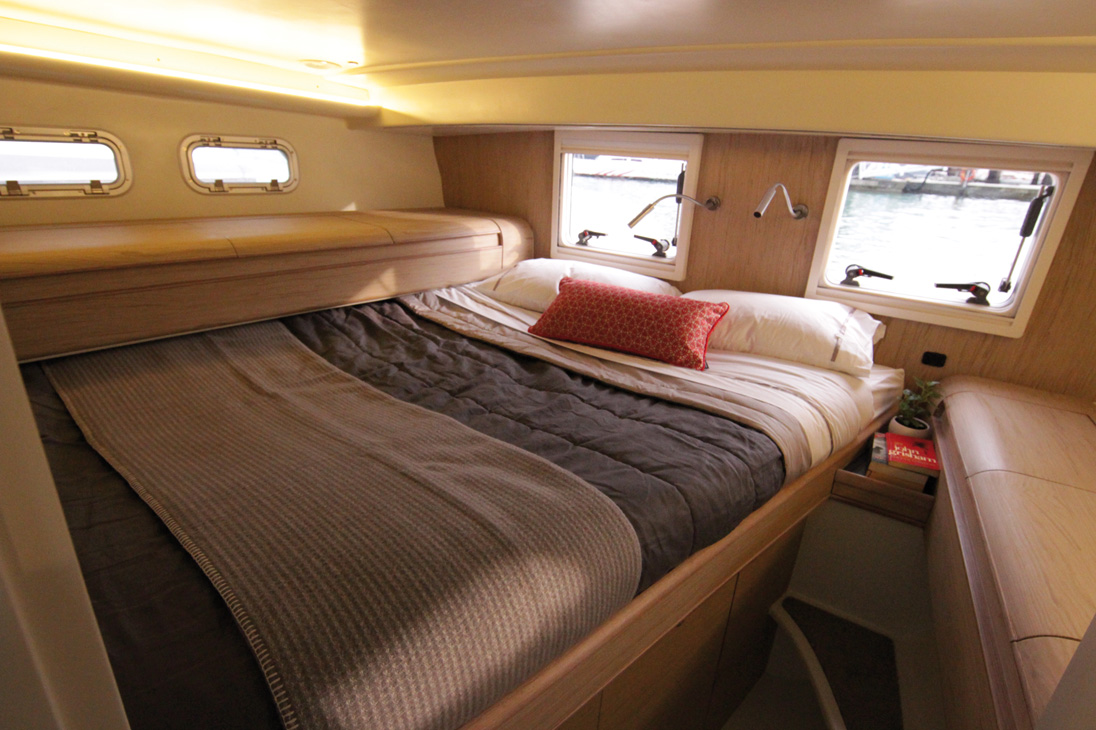
The central cockpit is vast, 6-8 people can sit here at sundowner time, but it is also very comfortable and perfectly suited to high speeds; a sort of aerodynamic cocoon at the center of the action with an astonishing panoramic view. The (carbon) bulkhead with the connecting door is articulated and is housed in the raised position under the bimini! Smart slots are used to store removable glass panels (on each side of the door). Moving forward, we enter the flush-decked saloon which accommodates a smaller, 4-person dining area (4 + 2 guests with stools); the chart table and the electrical panel are on the port side, while the starboard side is dedicated to a proper, large, L-shaped galley equipped with all the usual equipment found on catamarans (large storage units, refrigerator drawers, oven, stovetop, sink and generous countertops). A success! Further forward, the spacious double cabin with a desk, a very accessible large bed and a bathroom (with separate toilet), all perfectly arranged is a surprise. The atmosphere is sumptuous, "very classy" even. The functional design of the furniture is elegant, the mix of noble woods in sandwich veneer and metallic lacquer evokes the refined interior of a neoclassical sports car: superb! No counter mold, no grading, the quality of the composite is apparent everywhere. At the aft of the cockpit is a private "lodge" with views of the wake (large panel opening on the sugarscoop) and independent bathroom. The care given to the finish is obvious, the marriage of the magnificent composite and decorative elements testifies to a very precise taste and the attention shown to the ergonomics is evident throughout (small curved access step to the bed, for example).
Relevant technical features
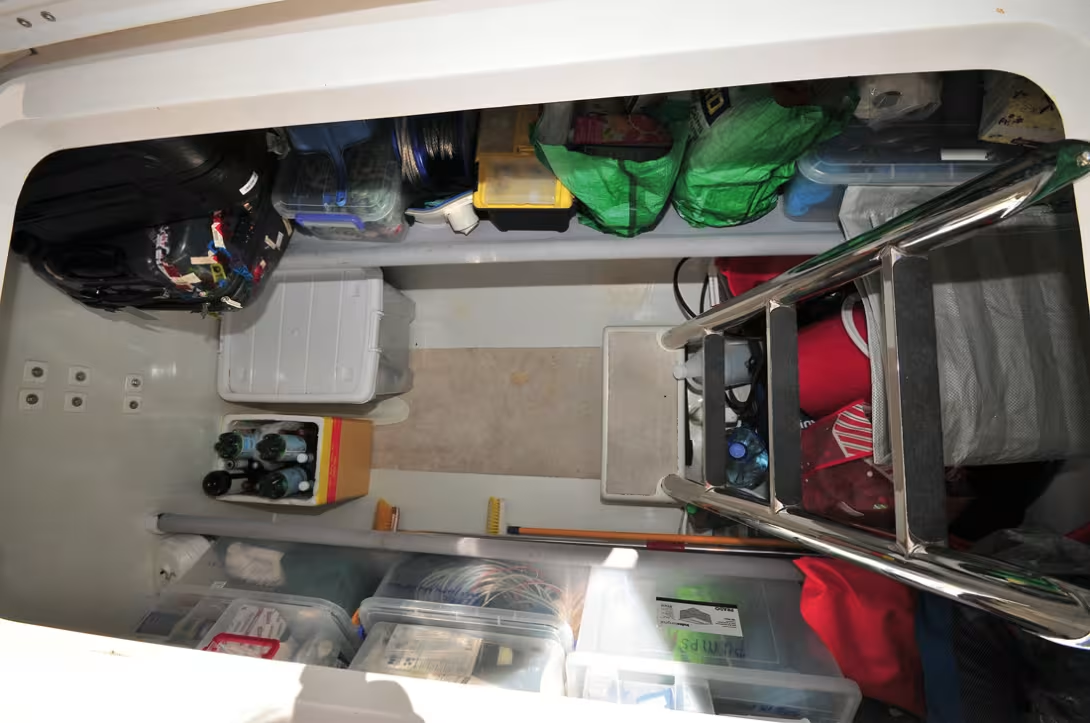
The battery bank consists of two large 2x180Ah Mastervolt lithium ion units, and the layout (under the dining area seat) is impeccable. A 110A alternator comes to the rescue if needed, but the two large solar panels should greatly contribute to the autonomy. The engine is an example to follow: the perfect composite finish highlights the care taken in the technical implementation. The small composite shelves, the footboards, the readability and the general accessibility are exemplary. The technical locker behind the engine (accessed from the cockpit) is a small masterpiece of ingenuity: it is furiously practical for stowage, and is also a waterproof liferaft locker with an external access hatch!
An exciting cruising machine
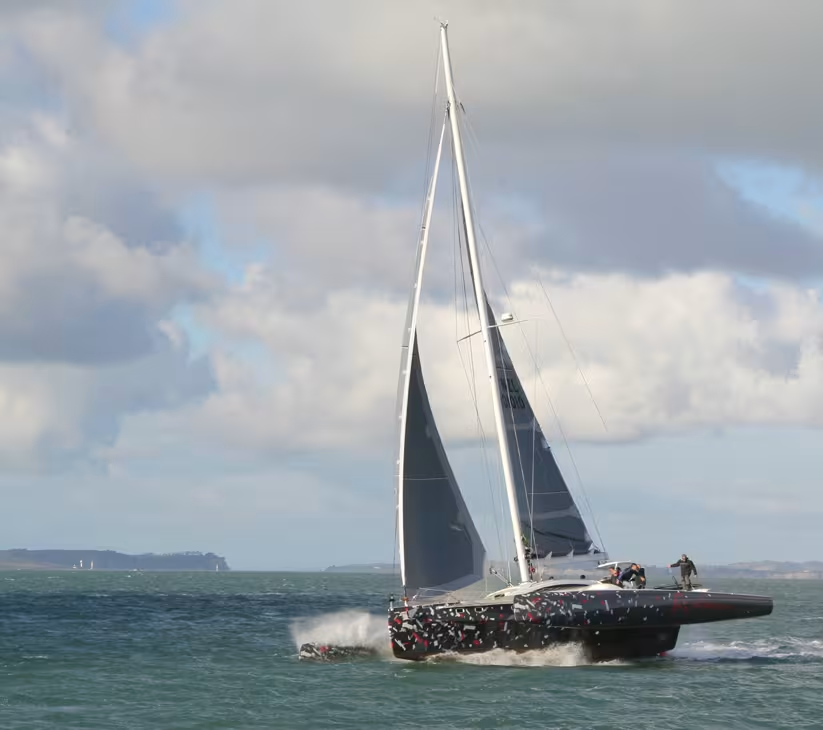
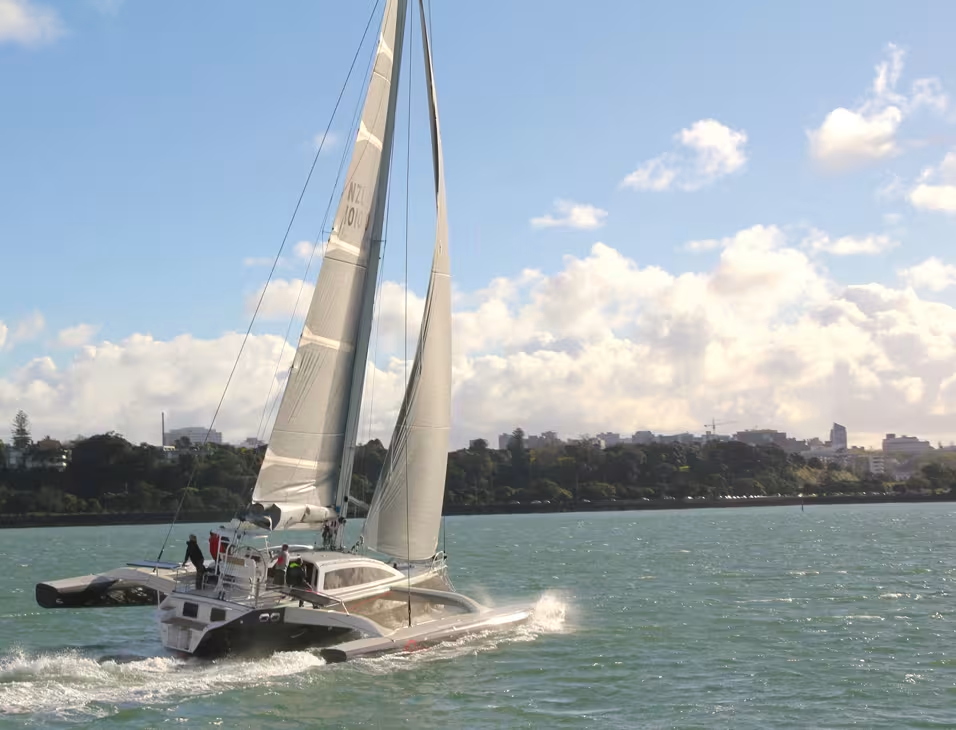
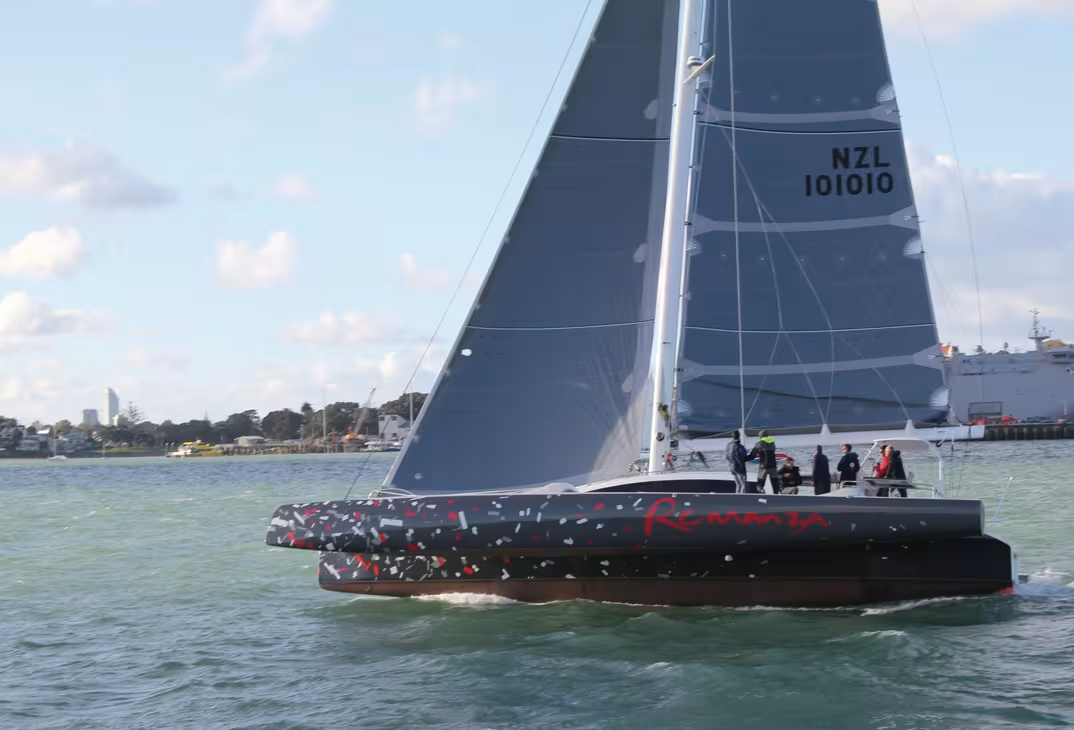
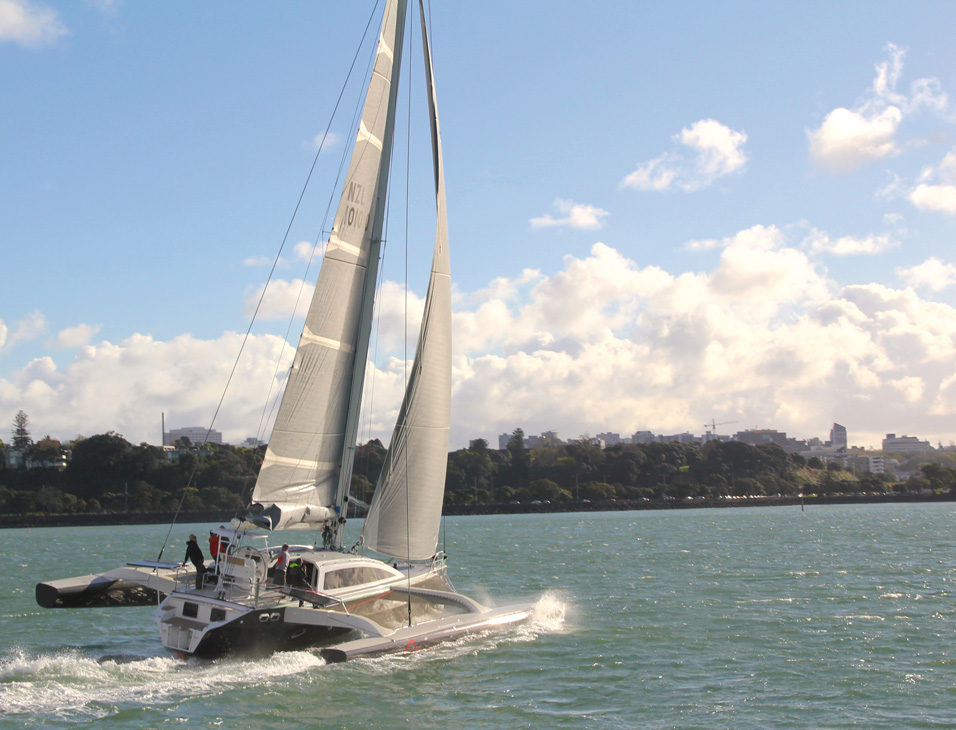
It isn’t easy to make a 50’ comfortable, performance catamaran around 10t in weight: the most efficient 60 'catamarans run around 13t, the Rapido claims a maximum weight of 11t and our test boat weighed 10.5t (with bikes, full-on cruising gear and generous supplies). To this difference is added an almost larger surface area than the big cats (255m² for the Rapido as opposed to 238 for the Banyuls 60 for example). But does this theoretical advantage translate onto the water? The answer is a resounding yes! We sailed on the morning of a beautiful day in June in the Baie de Cannes. "Just a perfect day" for the beach... which can turn into a nightmare for a boat test, as the breeze is too light! The 53hp Yanmar engine with in-line shaft transmission and three-blade folding propeller is perfect and will be sufficient even in strong winds (tested on our return). The reinforced power (standard) is valuable for maneuvering in a crosswind (the retractable Lewmar gave way to a Jet Thruster turbine on Romanza, hull no. 2, to the full satisfaction of the crew). On deck, the mainsail was hoisted and immediately with the superb Southern Spars rotating mast oriented, the boat lived up to its name! It set off like a horse! Inside, the feeling is that of a sedate train that disguises its fast pace (before we had even hoisted any sail, and with the breeze gusting to 8 knots!). We unfurled the self-tacking solent, and the machine asserted its character in a few boatlengths: the lifting rudder provided with a small inverted T-shaped foil and the rigid mechanical linkage give the helmsman real driving sensations. Sails aligned, we headed upwind to free us from the bay at Mandelieu. In southerly winds it is always difficult to get clear of this body of water, but the Rapido seemed to enjoy the game and pointed like a hunting dog. Comparing the speed predictions provided by MM (Morelli & Melvin) and the Navionics display, I am amazed to see that we are slipping beyond the speed of the wind in this light breeze. 2 miles further on, we switch to port tack in a freshening southerly air. In a short time we are already well clear of the shoreline and start playing with the apparent wind. The true didn’t reach 10 knots, and our speed oscillated between 9 and 11.4 knots! The sea was flat, no whitecaps on the small waves and the wake is a superb track - that’s the magic of sailing on multihulls! We tack to take advantage of the fresher wind that is expected to rise some more: starboard tack, at 100 degrees off the true wind, the North 3DL reacher (like the main) propels us to more than 15 knots in a true wind that does not exceed 12-13 knots and the distance slips by in a surprising way. All of the other sailboats seemed to be stuck in a sticky sea while we surfed consistently with peaks at 16 knots. The vertical thrust of the very large hull is totally reassuring, the fine-entry bows and the warhead-like front allow a delicate passage through the waves. The feeling of power blends with a real sense of security. The rigidity of the platform, the smoothness of the water in the central hull, the precision of the helm and the rigor of the sail plan and the rigging help to create this splendid result. Slipping along in these conditions of light to medium airs is a rather addictive experience. Well offshore, we gybed to stay in a vein of wind that appeared to be rushing into the bay, and once settled on the other tack, and concentrating on the helm, the speeds began to get interesting. The breeze became more sustained (around 13-15 knots and the log began showing between 14 and 16 knots, picking up in the small wavelets. The needle smoothly crossed 18 knots, and the machine began to be really responsive to the variations of the breeze and felt like it knew no limiting hullspeed. I caught a beautiful wave that ruffled the sea (around 18 knots probably!) and the Rapido sent us up to the 20 knot mark, which is where multihulls are on their own! Crossing the bay of Mandelieu at this pace, with a smile on our faces, the Rapido offered us a nice sample of its possibilities!
Conclusion
Beyond the pleasure felt, the exciting silhouette and the amazing interior comfort, an observation struck me having reread the Navionics display: the regularity of the high speeds and the absence of any slowing down which often drops the average speed! This trimaran is capable of breathtaking and steady performance under medium or even light conditions; in the breeze and a bigger sea, the security of this tri with its voluminous hulls will allow amazing days without necessarily calling on all the available power (under 1 or 2 reefs and the solent, the machine will be storming along while remaining very comfortable and safe). The Rapido offers rare sensations in livability - for day sailing as much as offshore cruising, and it can claim pride of place among the fastest and most seductive multihulls ever to exist. Its maximum speed? In excess of 30 knots!
Pluses
- A very pretty boat
- Remarkable build quality and equipment
- Rare feeling of enjoyment and performance
Minuses
-Price and lack of dock spaces
- Maintenance budget of a big multihull
- Technical skill level required
THE ESSENTIALS
- A magical multihull capable of bringing you the same performance as a much more radical racing boat
- Pushed to the limits, the performance is phenomenal, but for a family crew it remains amazing for such a level of comfort
TECHNICAL SPECIFICATIONS
Naval Architects: Gino Morelli et Pete Melvin
Builder: Rapido trimarans
Construction: composite carbon epoxy/vinylester foam in infusion (arms and appendages in pre-preg, post-cured carbon)
Length: 18.1m
Beam: 11.70m
Lightship displacement (CE): 10t
Maximum displacement: 11t
Mainsail area: 125m²
Self-tacking solent: 71m²
Staysail: 21m²
Reacher: 130m²
Gennaker: 197m²
Winches: 4 primary electric winches (sizes 70 and 60)
Mast height: 25.3m Southern Spars rotating carbon
Sails: North 3Di, 3 Karver furlers, aramide fiber rigging, EC6 fiber diamond stays
Motor: Yanmar 53hp, transmission via propshaft with 3-bladed Flexofold folding propeller
Diesel: 450l
Water: 450l
Holding tank: 2x60l
Batteries: Lithium/ion 2x180A
Price: US$ 1,818,350
Options: 2 x 315 W solar panels
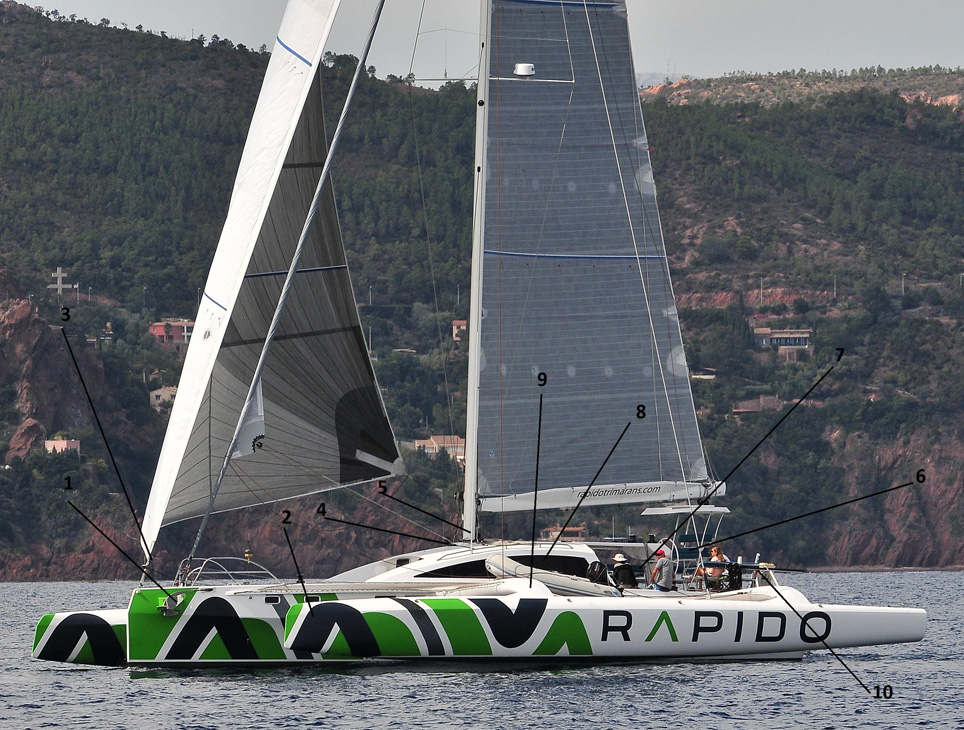
1: On most fast trimarans (often derived from the racing world) an anchoring station is absent or neglected, the Rapido has not forgotten this important element of cruising
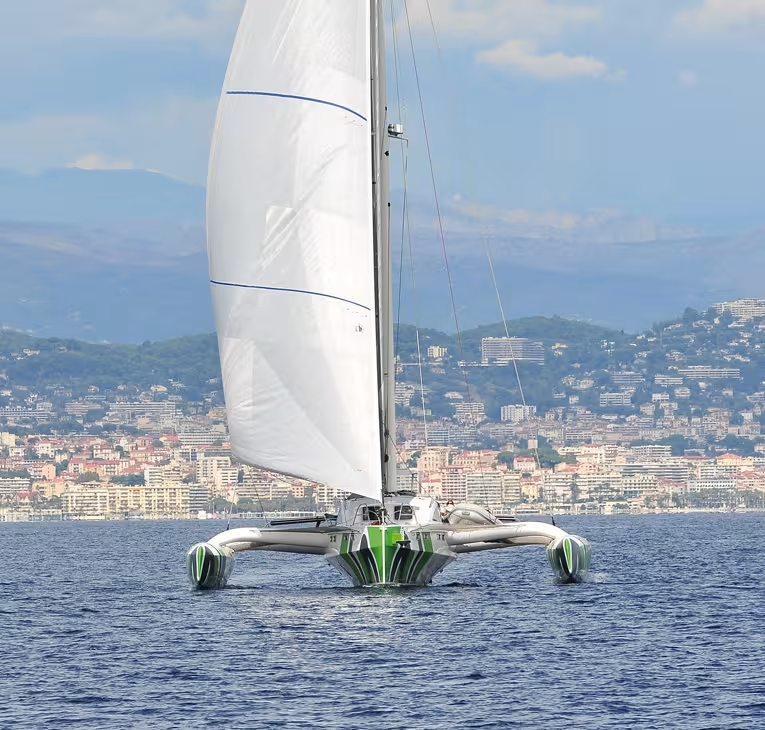
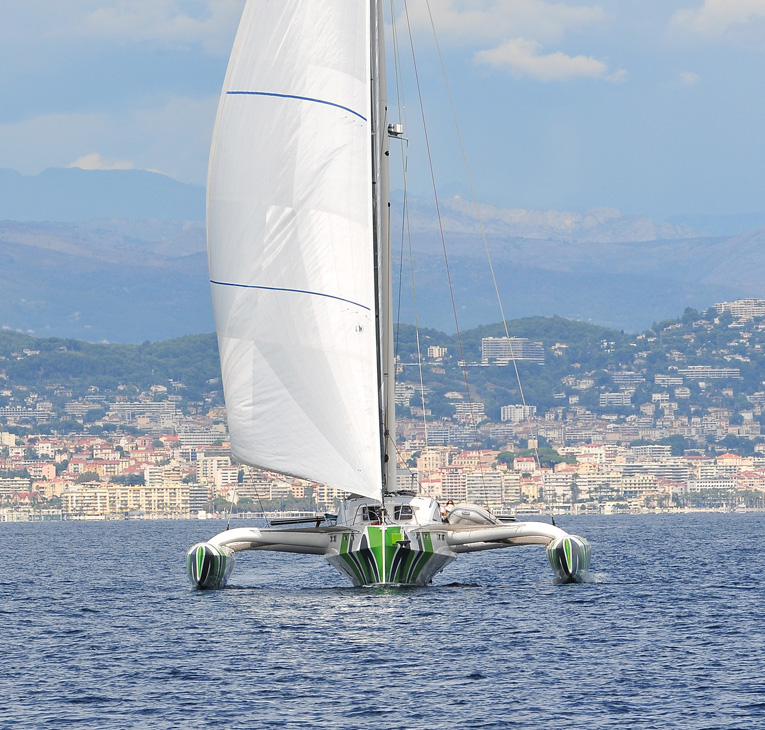
2: The hulls offer a very large volume, but the fine-entry bows are progressive to avoid a permanent spray. Note the curvature of the deck to quickly release the bow from the water and the dynamic dihedral angle which is evident even with little wind
3: The Rapido is a performance trimaran, but knows how to stay consistent with cruising use. Note the gennaker tack on the bow and the absence of a bowsprit
4: The self-tacking solent also contributes to ease of use
5: The Southern Spars mast is rotating. Note also the superb carbon-winged boom
6: The helm station is super smart! The steering wheel is ideally placed and there is room for 2 on the wide watchkeeper’s bench. Simple and comfortable seats are installed all around so you can enjoy the exceptional view and the lines all return to a console with electric winches in front of the helmsman!
7: Another choice area: the cockpit! Comfortable, spacious, connected on one level with the deck saloon, it allows for dinner, lunch, rest during the watch and even for inviting friends from the anchorage for sundowners
8: Surprise! The deck saloon offers the amazing volume of a catamaran galley and an alluring panoramic view. The cabins are beautiful!
9: The pre-preg carbon cross beams are elegant and very modern
10: The installation of high-power solar panels is intelligent, with the access to the sugarscoop concealing the rudder lifting system (recessed). This trimaran is like a centerboard dinghy!

Designer’s comment by Pete Melvin
It is one of my all-time favorite designs and would be what I would buy if in the market for a cruising yacht. It has a very special combination of comfortable and spacious accommodations, excellent performance, is easy to handle, and has a very nice feel while sailing. Due mainly to its light weight (10-11 tonnes full displacement), the boat performs very well and attains much higher performance than any similar sized high performance cruising catamaran. Even the lightest high performance cruising cats in this size range typically displace 18-20 tonnes.
The initial concept was developed by Paul Koch and Richard Eyre from Rapido, and ourselves at M&M. We had recently developed a similar size and concept custom trimaran for another client so immediately understood the benefit of the layout Paul and Richard proposed. The main difference between the Rapido and other trimarans in this size range is that we have a raised salon and cockpit on the same level, providing excellent space and visibility compared to conventional trimaran concepts, which typically are similar to monohulls where you step down into the hull from the cockpit and have limited space and outside visibility once inside the boat. We wanted the feel of a modern cruising cat with large open spaces and excellent visibilty. There are several other major benefits of this layout, including the ability to locate all the heavy machinery and tankage below the main salon, thereby centralizing weight, reducing complexity, and opening up the ends of the boat for human accommodations. There is also a lot of useful storage space available with this layout. The engine room is large and easy to work in. Weight, cost, and complexity are reduced compared to a catamaran due to having only one engine, rudder, and daggerboard. This design concept is in a different design space than monohulls, catamarans, or more conventional trimarans. It has a unique blend of overall size, cost, performance, and interior space, so direct comparisons are difficult to make. Compared to a similar length high performance cruising catamaran (like HH or Gunboat), it has less interior space, less complexity and weight, lower cost, and higher performance. Compared to a similar length medium tech catamaran like Outremer, it has less interior space, much less weight, similar cost, and much higher performance. It has similar interior space to 50' high performance cruising catamaran, less weight, similar cost, and much higher performance.
