
The life of a multihull tester involves many enjoyable encounters with some very diverse craft, and a lot of amazing discoveries and some exceptional moments, cruising or on racing machines! This was the case with the TF10. Its modest size conceals an airborne bundle of nerves with explosive performance, but it’s definitely within the capabilities of knowledgeable amateurs! It opens a whole new world to enthusiasts: that of multihull flight, without needing to have a professional crew on board, nor a complex logistical team to accompany them. Are you ready for take-off?
Infos pratiques
- Le chantier : TF10
- La fiche technique
-
 Découvrez notre vidéo exclusive
- Financez votre TF10 foiling trimaran
- Assuez votre TF10 foiling trimaran
- Articles autour du TF10 foiling trimaran
THE EARLY STAGES OF THE TF10 PROJECT
The three previous America's Cups have created a fantastic (and very elitist!) development of flying boats: we saw the delirious AC90s from the edition of Valencia 2010 lifting out of the water; the amazing show of San Francisco 2013 revealing the exceptional power of the AC72s and their crew of tightrope walkers achieving awesome speeds (and their danger too, notably with the Artemis accident that cost the life of Andrew Simpson), yet it was the "small" AC50s of Bermuda 2017 which turned the tables with their spectacular evolution and off-the-scale performance (27 knots upwind, 45 downwind for 15m cats!). Alas, we have been accustomed to sublime incongruity with the America’s Cup since its creation. The latest thing is the prohibition of the electro-hydraulic assistance of foils (yet we are talking ultra-high-tech machines!) This leads to 4 crewmembers out of 6 needing to constantly work to produce hydraulic pressure, while creative solutions existed that would have made a fascinating eco-technical match within a sporting contest! The format has been abandoned and that's a shame. A mess in fact! The sensory shock generated by these visionary machines burst the screens of the cozy lounge of the New York Yacht Club, where a handful of members decided that the world of flying should not be confined to this small group of muscle-men (who will soon be changing their mounts anyway: the next America’s Cup Challenge being held on 75’ monohulls!). The 10m foiling trimaran is born!
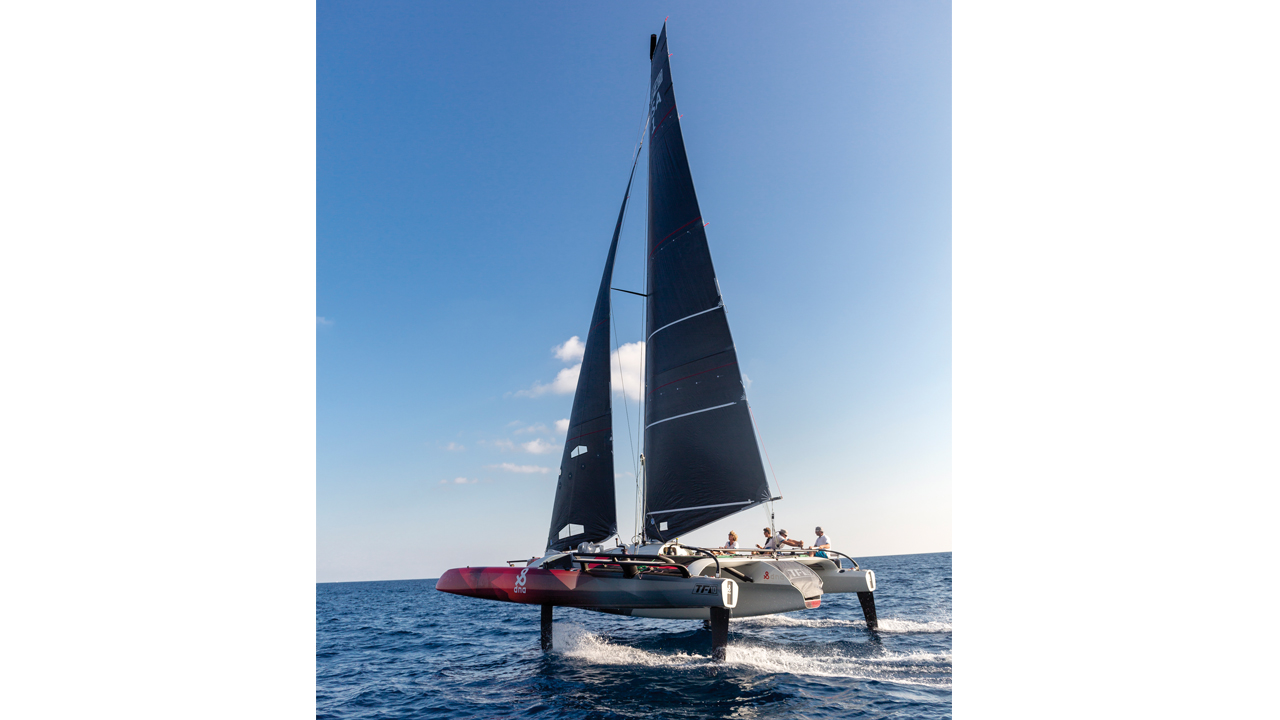
NEW KNIGHTS AROUND THE ROUND TABLE
In 2015 a team of five headed up by Malcolm Gefter was joined by Andrew MacPherson (co-creator of the GC32), all racing enthusiasts and fans of confrontation on the water, and all in search of the promise of new sensations on flying multihulls. Their specifications seem almost reasonable considering the history of their club (a sign of the times?). In fact, their philosophy is simple: they want to sail their boat and not entrust it to an elite crew for them to enjoy instead... clever!
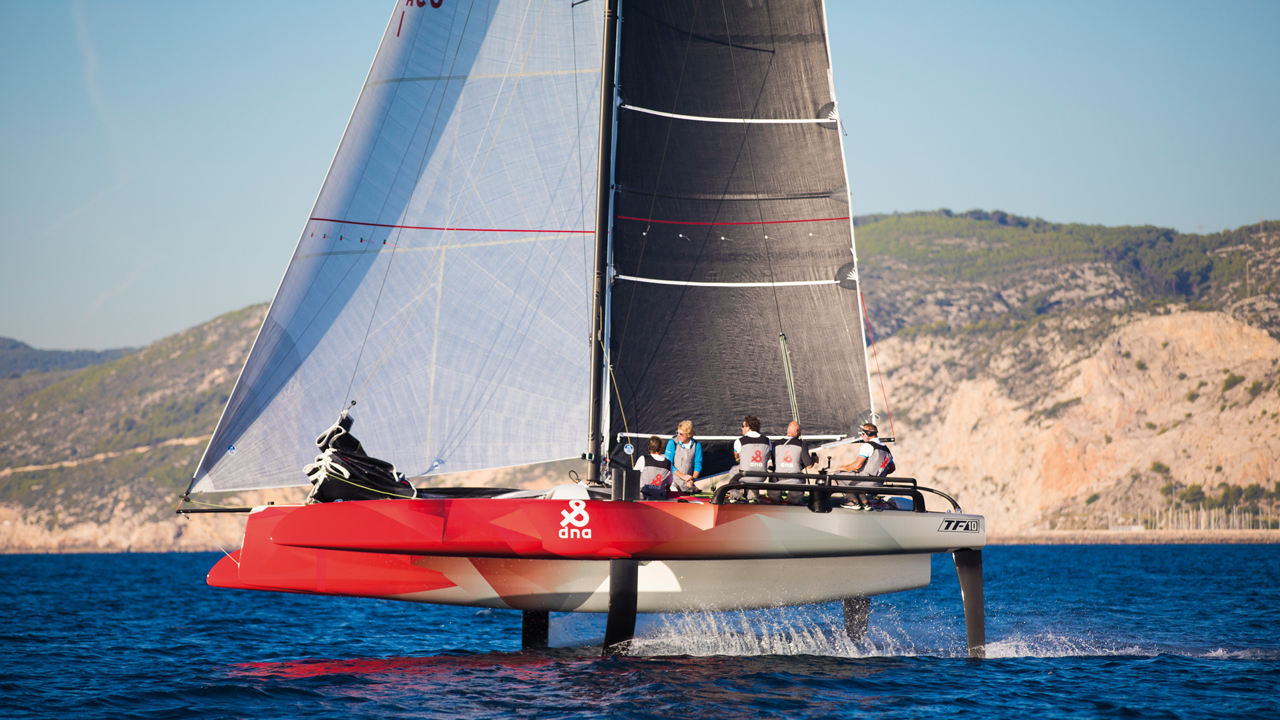
HOW TO MAKE FLIGHT ON A MULTIHULL ACCESSIBLE?
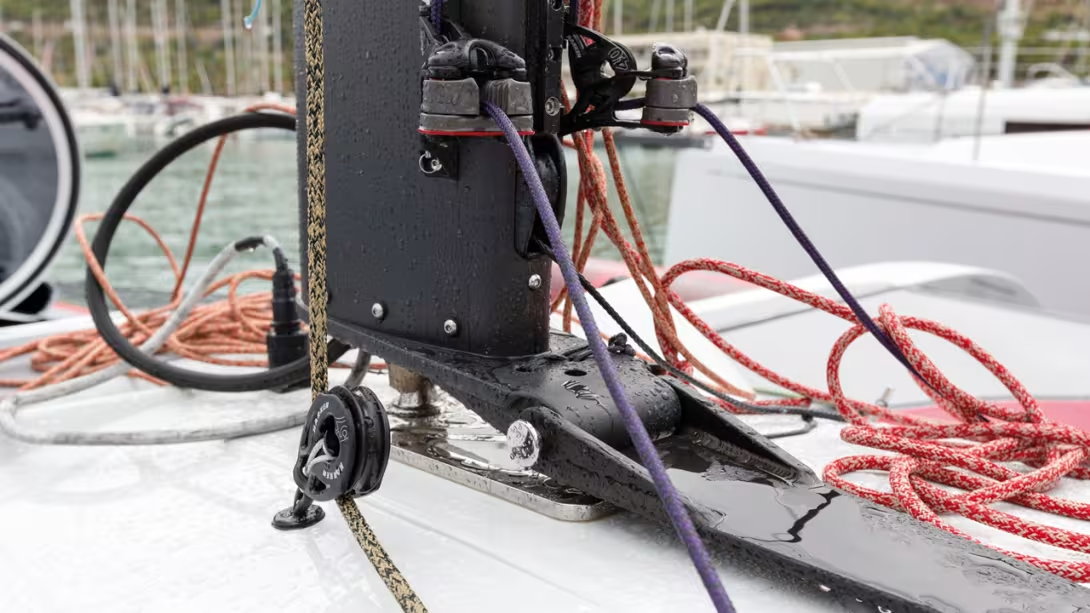
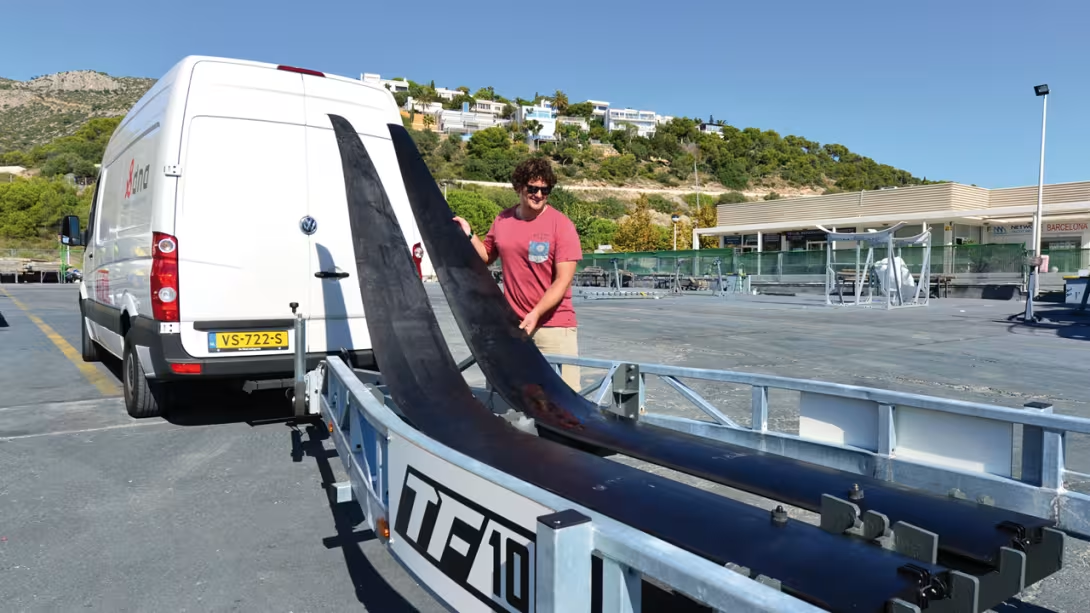
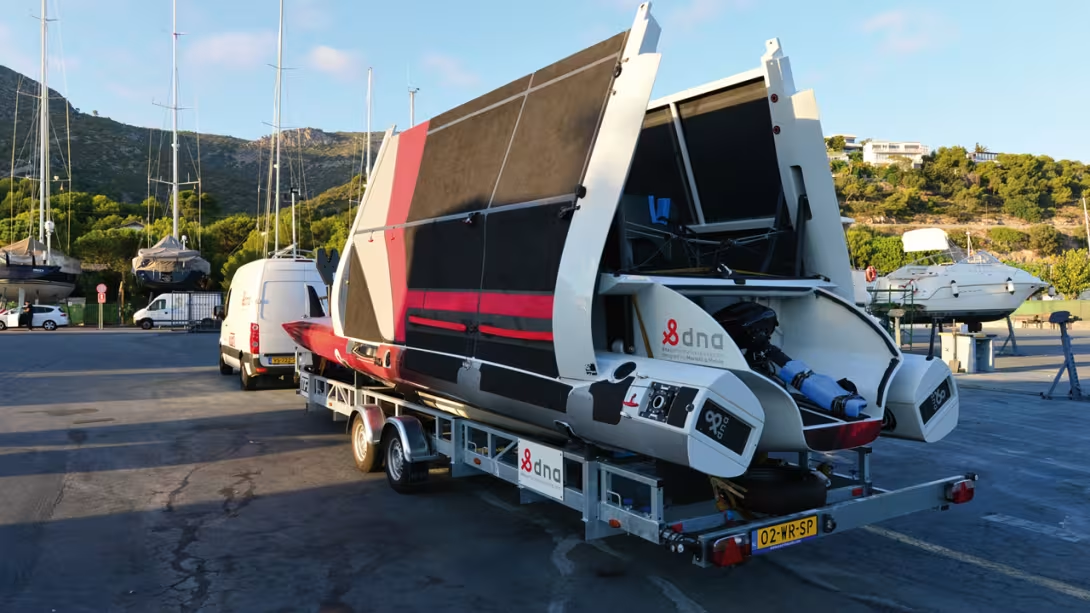
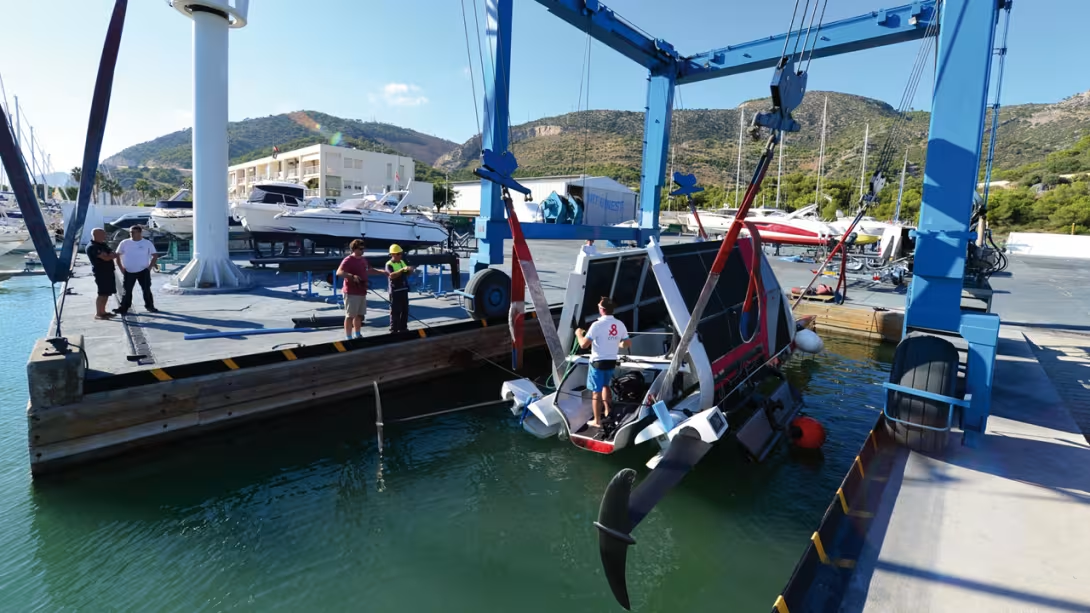
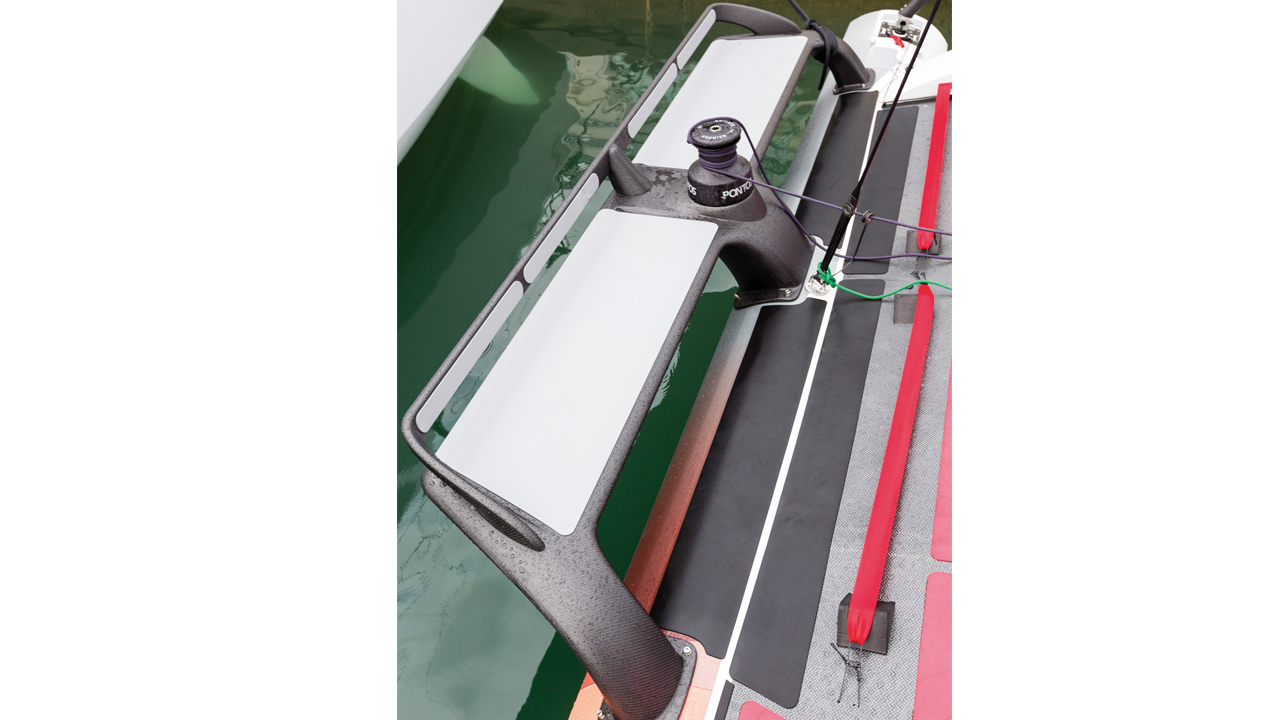
The founders of the TF10 Association started with a blank canvas. Guided by solid practical sense and great experience, they immediately turned to a trimaran platform for the safety that this geometry brings. In their minds, there was no question of blowing rudders and foils at 30 knots along the beach and having to return to the port under tow by a rescue boat. The machine must therefore be solid, seamanlike, have an engine and be able to get home in complete autonomy if the weather is bad. The choice of a balance of sailing on 4 permanent points (the 2 foils and the 2 rudders remain lowered constantly) associated with more multipurpose and tolerant Z-profile foils, more so than the L-shape, and adjustable on 2 axes (and not 3, not cantilever as on the AC prototypes or some new Ultims) makes it possible to obtain a stable and maneuverable multihull without the exhausting lowering and raising of appendages. The TF10 can also behave (Rakes to 0) like any Archimedean folding trimaran, should the sea state require it. The rake of the 4 appendages is adjusted by hydraulic cylinders connected to a small pump powered by a lithium battery. Awesome! The safety and comfort of the crew were also issues that were really taken into account; these machines are fast and wild, so we must think about ergonomics if we don’t want to depend on an accompanying rescue boat! The large central cockpit is a particularly relevant sail handling area that a catamaran configuration does not allow for. There remained the thorny issue of trampolines, always very uncomfortable and slippery (especially the fine spectra meshes under maximum tension required for these boats: I remember those of the AC50, which were like sheet metal!)! Flexible carbon plates covered with an elegant high-grip neoprene solved this key point successfully while contributing positively to the stiffness of the folding kinematics. The carbon fiber side seats (wings) were an integral part of the design brief to allow for pleasant and safe sailing without the presence of a quick tender for recovering a man overboard! These allow for comfortable helming and unhindered access to adjust the sails for a crew of 4 people. Before hurtling out onto a wild blue sea, the boat has got to be brought to the water in the best conditions. It must be transported and then stored on the hard or in the water! The concept of a folding trimaran designed to go on the road solves a large part of the problem: the possibility to install the foils from above exonerates the presence of a crane and make it is possible to launch on a boat ramp! They really have an answer for everything, those NYYC guys! The design group went to the Morelli-Melvin team of naval architects, in charge of working out this complex equation. After validation of the initial studies, a competition of builders was organized in the spirit of a perfect one-design, and it was the Dutch shipyard DNA that won the challenge.
EVER HEARD OF THE DNA SHIPYARD?
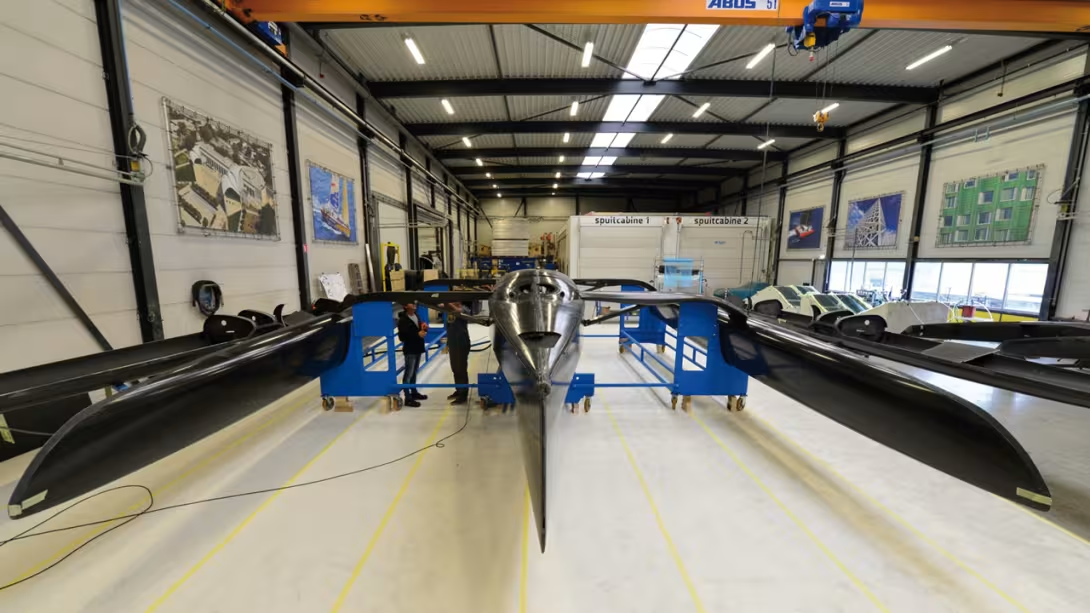
Situated 35 minutes from Amsterdam, alongside a canal, which facilitates the launching of boats or for loading them onto a ship, is a beautiful modern factory of 4,500 m². This "artist's studio" adorned with large photos depicting the in-house creations is bright, perfectly insulated and is clinically clean. It houses all the essential tools for the new "artists" of prepreg carbon (600 m³ post-curing oven, 25 x 4m vacuum table, professional 3D printers, waterjet cutting...). DNA is part of a small band of world excellence and the 35 creators join the prestigious teams of Multiplast (FR), CDK (FR), Cookson (NZ), Composites Projects (NZ), MacConaghy (USA-AUS) , Marström (SW) and a few others in the world's pantheon of black fiber multihull construction. Their philosophy: foilers and sculpting carbon! Their production: the exceptional Class A, the fantastic 42’ G4 and 46’ F4 cruising, flying catamarans, the new TF10 and some one-off productions.
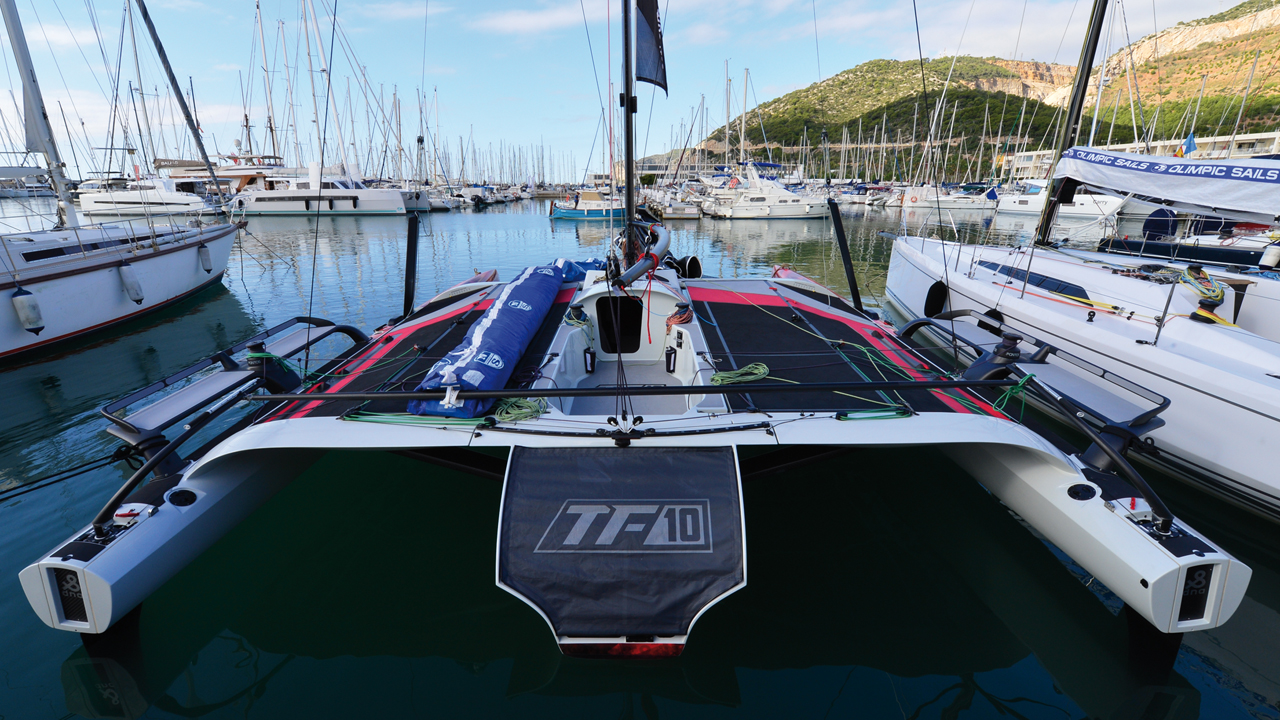
DISCOVERING THE TF10
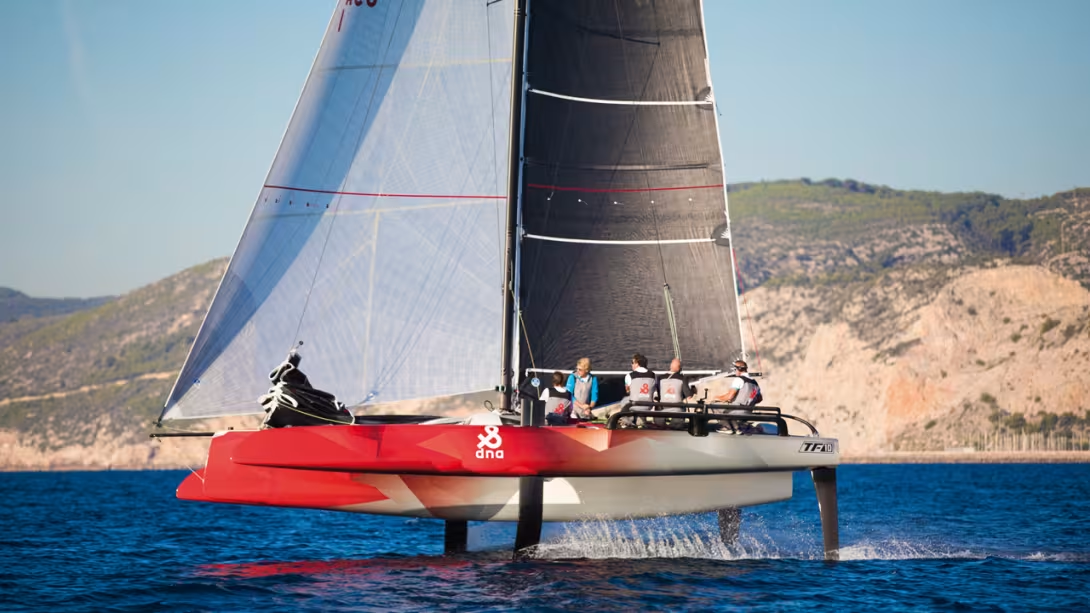
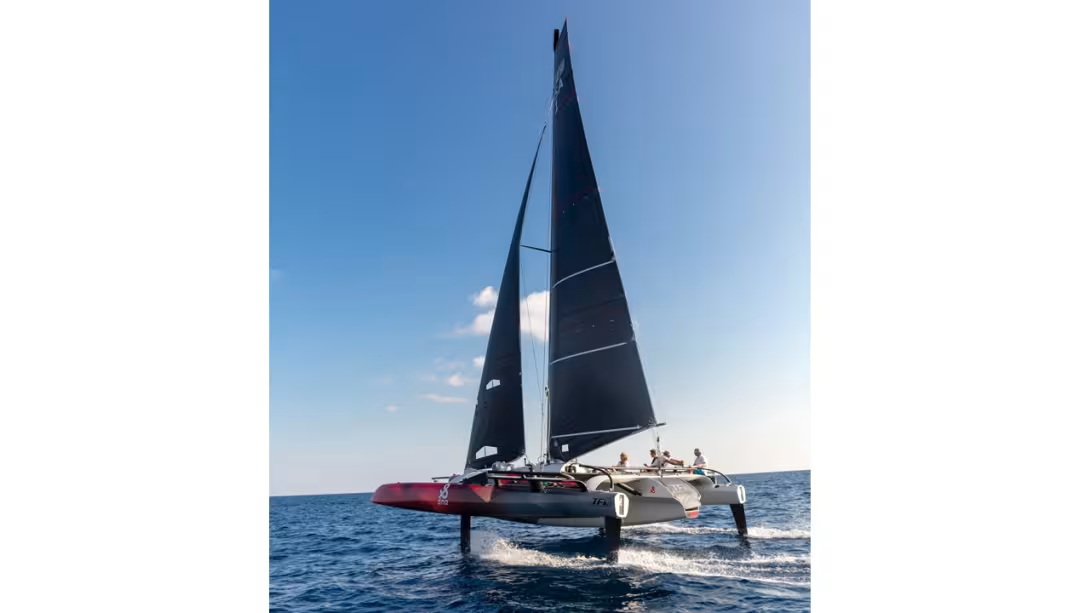
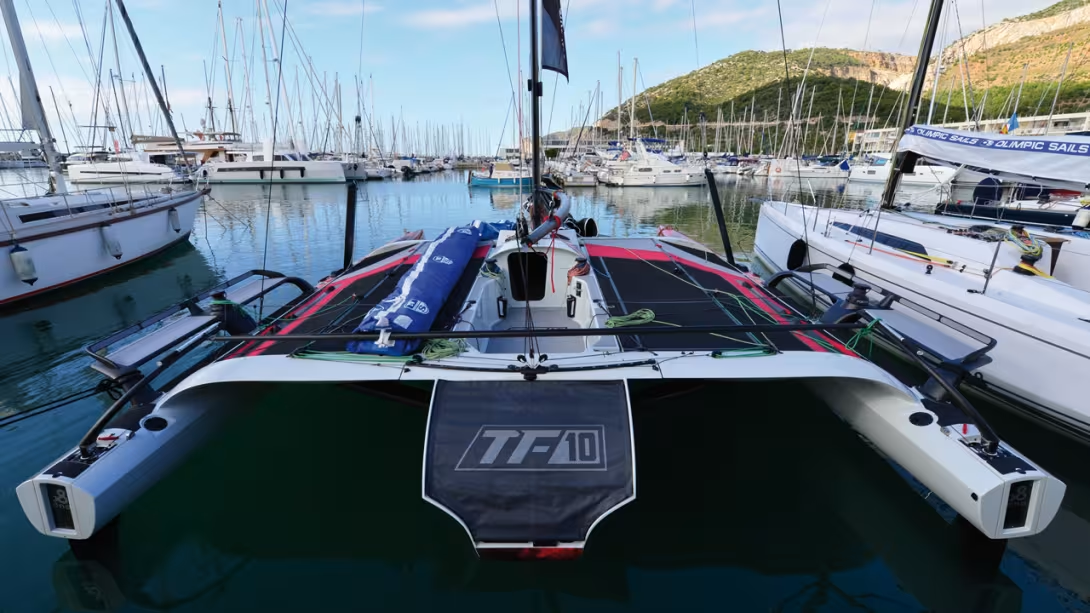
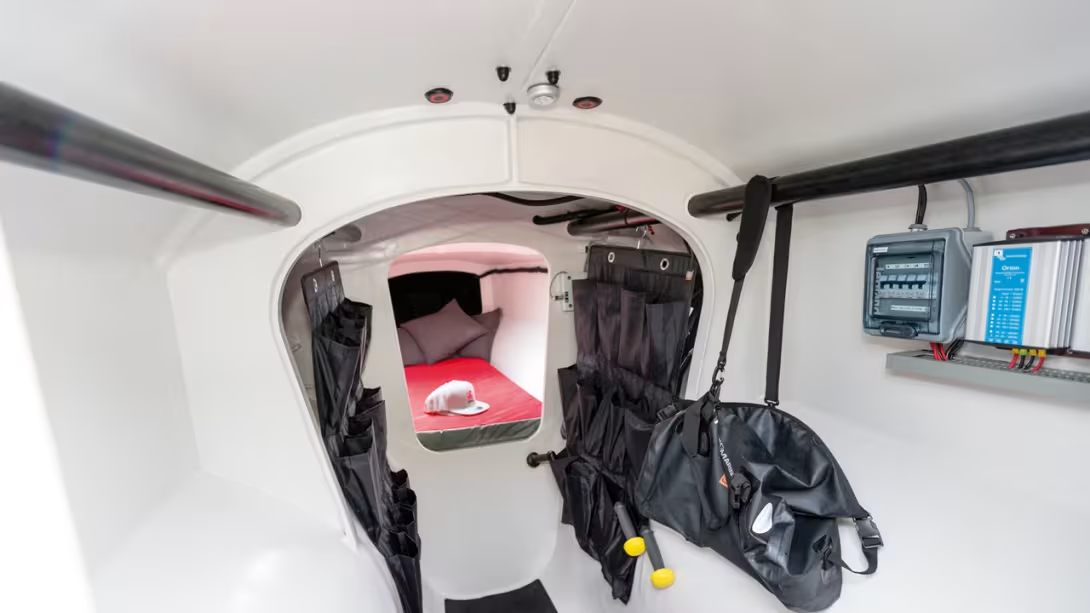
Arriving at Port Ginesta (at Sitges, 30km south of Barcelona, Spain), I discovered a seductively elegant racing machine, around which a well-honed team was beavering away (they had been performing tests for two weeks). The perceptible quality of the composite is masterful and the general presentation is worthy of a GT automotive prototype. This little flying machine is extraordinarily sexy. The manufacturing quality is obvious: micrometric machining, carbon assemblies and outstanding finishes... all in all, a work of art! The center sections of the deep U-shaped hull provide the volume needed for multi-purpose use and significantly flatten out aft, with the super-fine entry bows and moderate rock allowing the boat to perform well in Archimedean mode while generating little drag, enabling it to take off quickly. The floats are in line with the current trend of this type of high-performance boat: inverted bows, ultra-fine entry bows and flattened sections from the forward arm fixings. The Farrier-inspired folding system (around a vertical axis) is entrusted to carbon water stays (the strut between arm and float) with streamlined aerodynamics. Access on board via the sugarscoop is easy, the large central cockpit is really comfortable and allows access on board to less experienced people. The interior is almost worthy of a sporty cruising model and offers two single berths and practical storage.
CONCERTO AND SYMPHONY
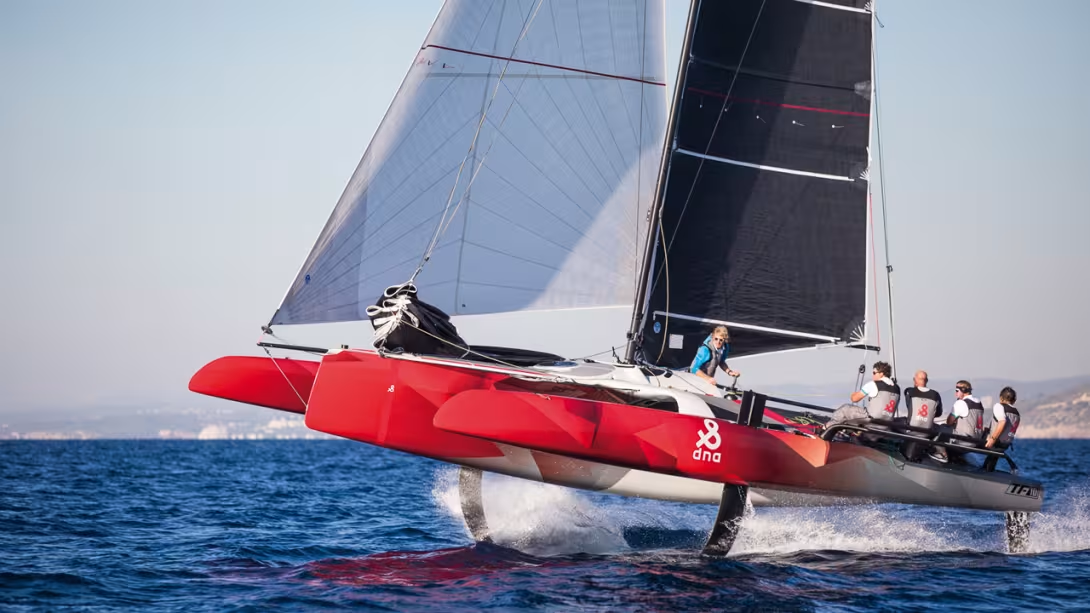
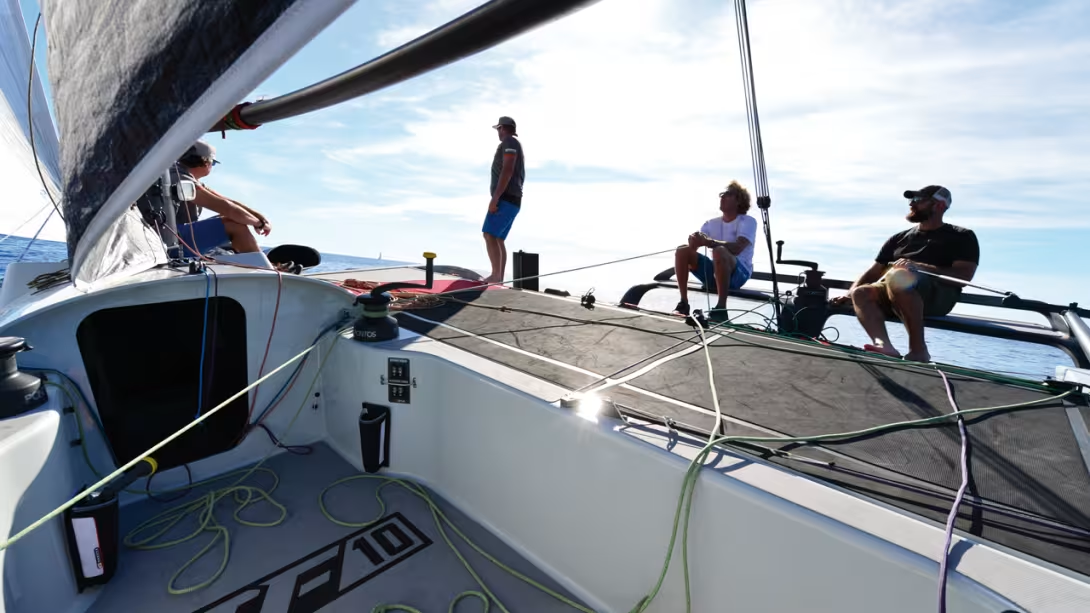
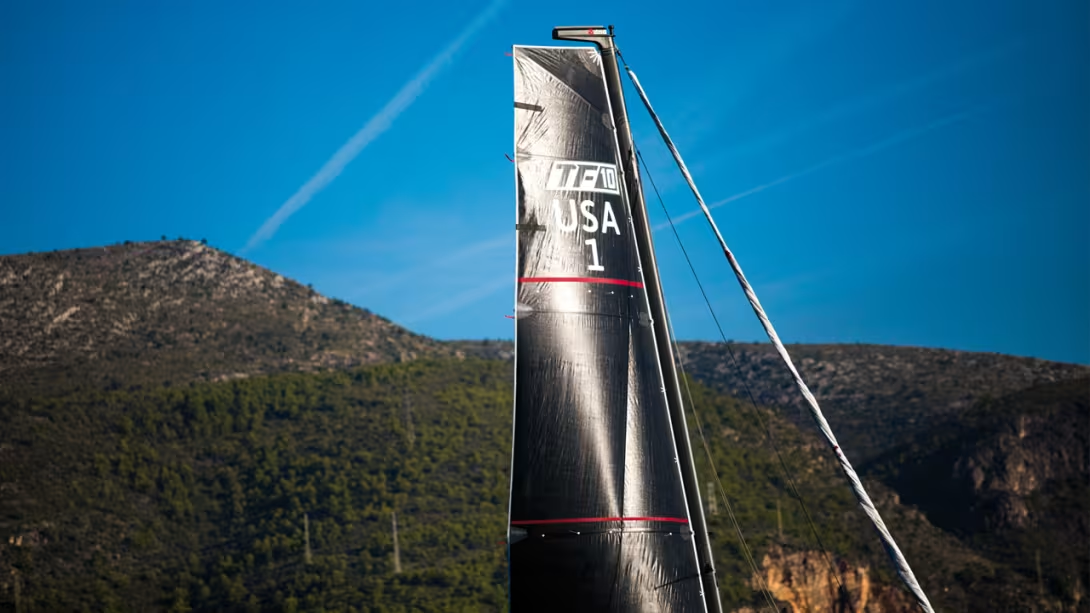
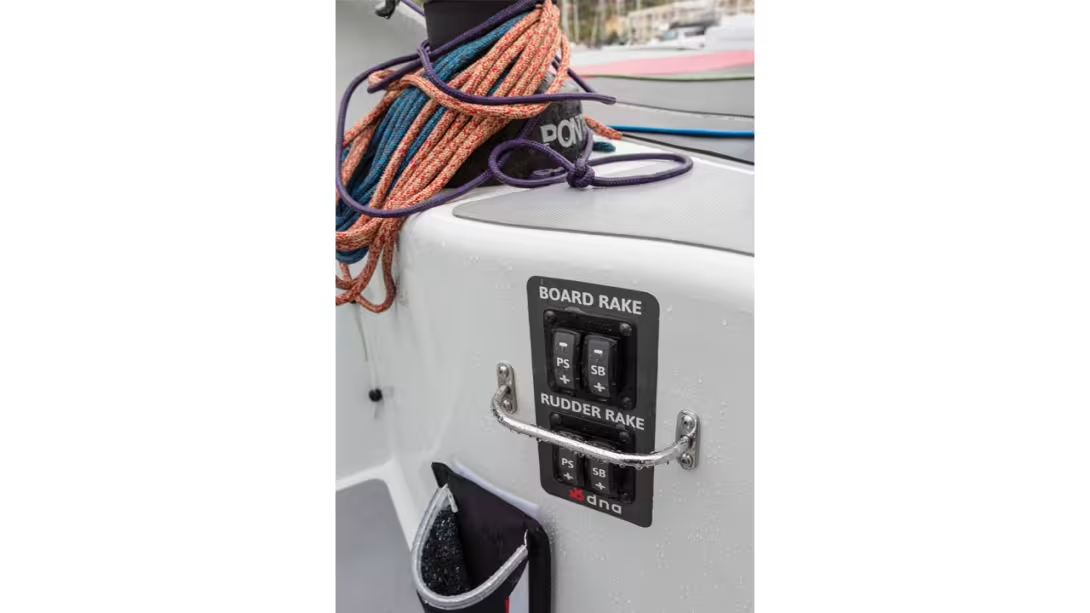
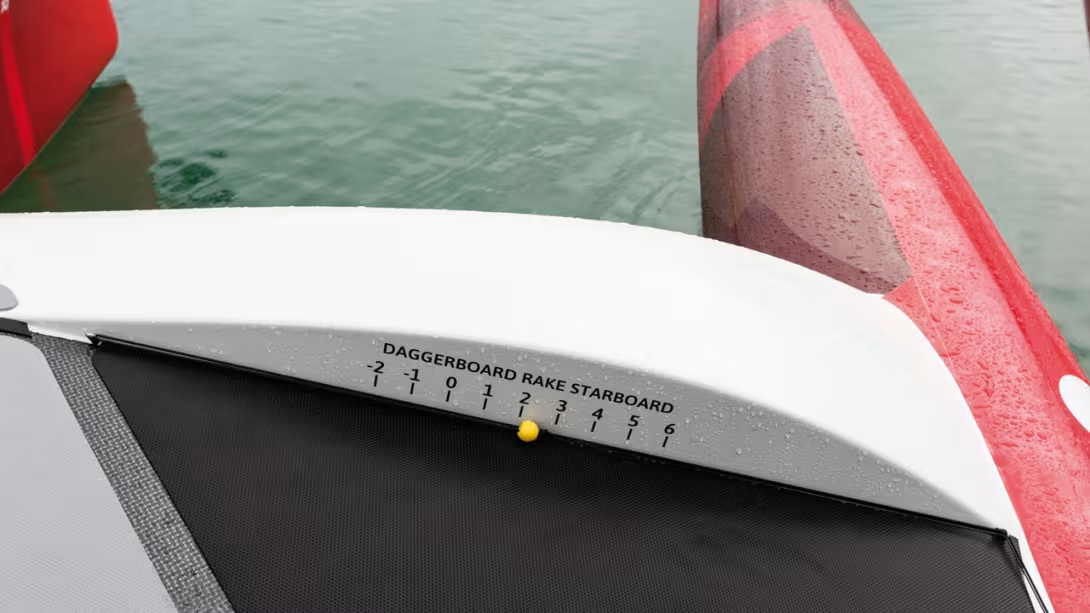
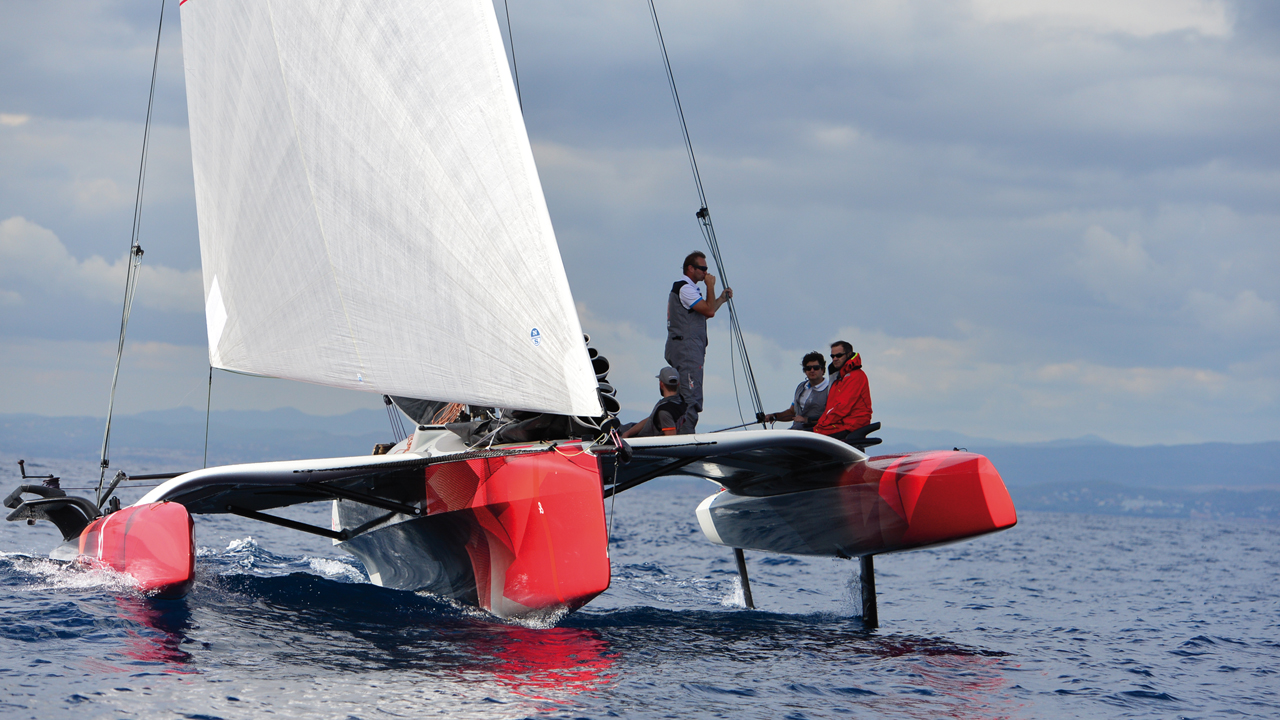
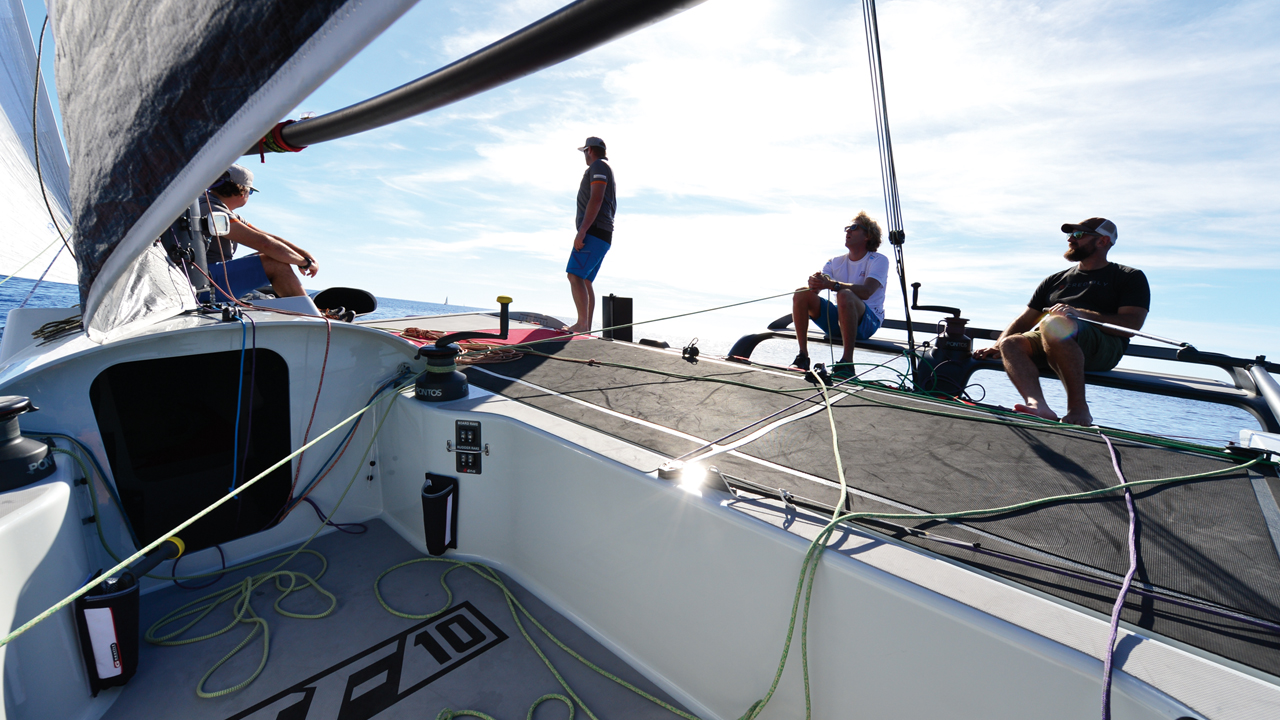
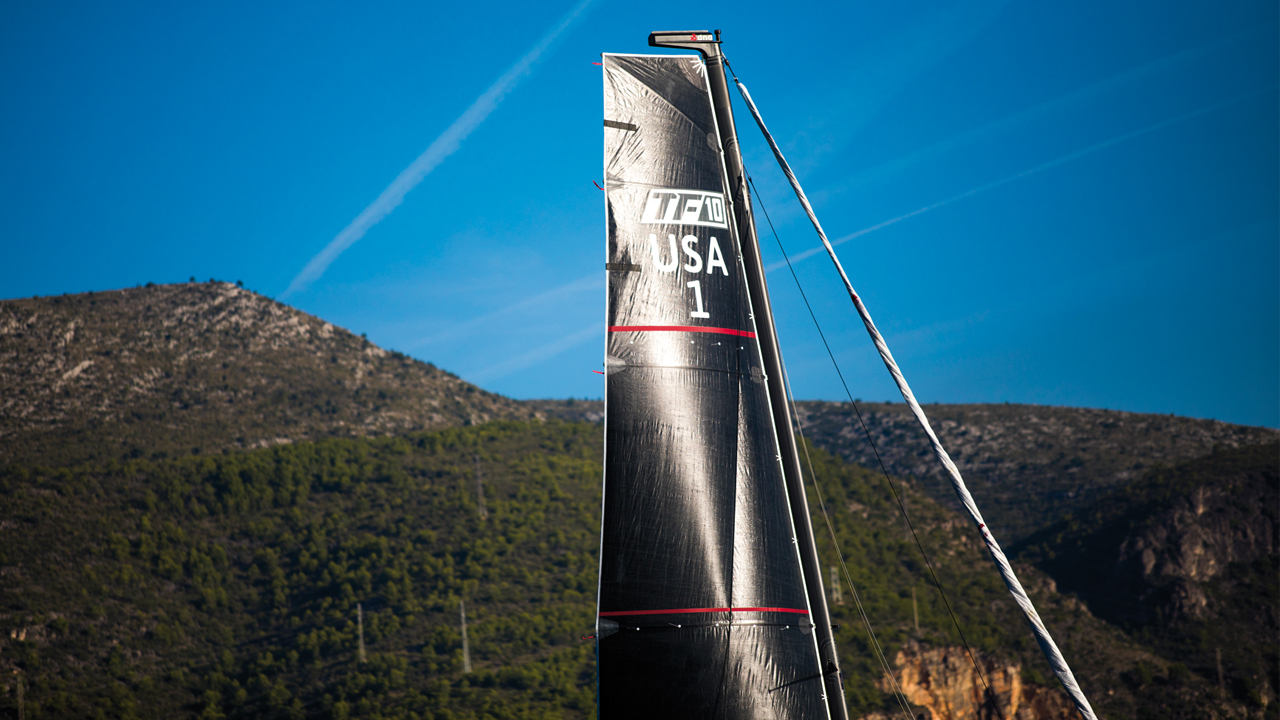
I am struck by the pretty "street art" decoration of the Ferrari-red hulls of our test boat. The idea of customizing it will bring out your creative side (easy with a sticker transfer)! The goal is not to remain discreet; a little showing off never hurt anyone! The recent passage of a strong Mediterranean depression had stirred up the sea, but following the downpour, a splendid Catalan day opened up before us. The small 6 hp 4-stroke outboard engine is enough to pull the boat off the dock and maneuver, and it retracts completely into the sugarscoop via a sliding bracket on rails, and a tight mesh hides it from view when under sail. Hoisting the North 3DI black mainsail (equipped with carbon battens and 2 deep reefs) is carried out in big steps, made easy by the Antal slides. The rotating Southern Spars carbon mast is superb and the semi-wishbone boom beautiful and clever. The self-tacking reefless Solent 3DI is immediately hoisted and we started out under the first gusts of an NW breeze which was forecast to hit 8-18 knots. First observation: moving around on board this flying trimaran is easy, with the grip underfoot reassuring, and everything has been done for optimal ergonomic comfort. The trampoline coating (neoprene skin) is extremely pleasant for the feet, knees and hands. It does not hurt, which is a huge highlight! The availability of hydraulic energy for adjusting the appendages and the autonomy generated by the lithium battery allow 2 days of full sailing with the required rake settings (fore and aft tilt of the foils and rudders)! The maneuver is carried out from the cockpit via 2 large buttons, up and down, for the foils and 2 others for the rudders. Visual reminders (red balls for rudders and yellow for foils) slide on a thin Dyneema line along graduated marks on the arms: perfectly analogue markers! Using minimum positive rake so as not to generate too much drag, we leave the bay and immediately start enjoying this racy, powerful and lightweight multihull. We need to keep on top of where the crew are positioned in these light airs so as not to push the windward hull down and trip us up. The wind increases (no sorry, the trimaran accelerates ...) and in the initial breeze (8-9 knots under gennaker), the boat lightens and climbs gracefully on its foils. It's pretty stealthy, but as we continue to accelerate, the flight stabilizes for a few seconds. It's my turn to play now! The position of the helm is remarkable, the accessibility of the sail trimming maneuvers is excellent and the deck layout shows a clarity of an impeccable sharpness. The ideal curvature of the carbon tillers, the beautiful articulated rudders, the admirable linkages (ball joints) with the large transverse inter-rudder link, the small telescopic tiller extension and the comfort of the bench seat make for a super ergonomic cockpit. The Pontos mainsheet winch (4 speeds including a super-fast haul) is close at hand. I find my bearings at the helm in the first gusts over 12 knots, luffing to generate apparent wind. The machine accelerates honestly, and we have to bear away quickly while anticipating yet keeping enough power not to let the central hull settle. A subtle game, and a very addictive one! The wind picks up again on the open sea and there’s a bit of a chop picked up by a breeze of about fifteen knots: we keep the code 0 up and the first big accelerations are triggered. The reactions of the platform are lively, but reassuring. Good co-ordination between helmsman, trimmer, grinder (for the headsail) is essential for playing to the permanent transitions of the wind, the speed and the sea state. Changing position, I find myself being grinder, in the central hull and also able to take video and photos... not so simple! The acceleration is now gusty, the short and choppy sea doesn’t favor stable flight of very long duration, and the landings are sometimes violent, but these acrobatics remain reassuring thanks to the geometry of the trimaran. The noise of the appendages is furious, and the wet atmosphere, saturated with spray, felt under foot is magic. It’s all accelerations, braking, changes of course to stay in the vein of wind. The perception of the water from our ocean balcony is truculent, the pleasure, maximum. The intensity of this ride is comparable to an off-piste downhill powder run on a steep slope! A multihull at this level is art! We have been down the slope for more than an hour between 15 and 23 knots (with 15-18 knots of true) when the wind seems to weaken, I quickly take the helm to take advantage of going upwind, but it doesn’t last. We need to adjust the appendages for the changing conditions: choppy, close hauled in an irregular wind! At the helm I discover another palette of sensations: one of an intermediate zone where the boat still benefits from its foiling agility yet is not in constant elevation. The feel of the platform is extremely pleasant and, while the wind runs out of steam, almost flying, moving on the waves at 10 knots in a dying wind provides intense pleasure. There is so much to discover with this atypical boat!
Conclusion
This machine offers sensations which are really out of the ordinary! It requires good coordination between teammates to draw out its quintessential features, but allows a family or a crew of friends to familiarize themselves with the world of flight, in safety. This exceptional instrument is capable of even more amazing performance, and it is probably one of the most exciting reasonably sized wind-powered machines in the world. The dismasting of the prototype (under heavy loads in extensive tests) led the shipyard and the architects to reinforce the module, and the new Southern Spars mast will be of a wider dimension. Software now makes it possible to automatically select the best appendage settings according to the conditions and to find those settings immediately without fumbling around for them, which further simplifies the use of this machine.
Technical specifications
Naval Architects: Gino Morelli and Pete Melvin
Builder: DNA Holland
Hull construction: Nomex PrePreg carbon sandwich
Appendage construction: Prepreg post-cured carbon
Length: 10.94m
Beam: 9.97m
Folded beam: 2.50m
Draft: 2.55m/0.40m
Weight: 1,200kg (Max displacement 1,800kg)
Mainsail area: 53m²
Jib: 25m²
Spinnaker: 71m²
Mast: 16.1m high modulus carbon by Southern Spars
Crew: 4
Price of the TF10 in racing version with 3 North 3DI sails: € 515,000 ex-tax
EC-approved road trailer: € 26,500 ex-tax

A word from the architect, by Pete Melvin
The TF10 was born to satisfy an inquiry from a group of experienced yachtsmen from the New York Yacht Club. Their design brief stipulated a modern foiling multihull that could be sailed well by non-professional sailors. Morrelli & Melvin presented a concept of a trimaran that would meet their brief, plus be capable of being raced in coastal offshore races, and easily stored and trailered. Following the completion of the conceptual design, a competitive bid process was initiated to select a builder. Holland Composites was awarded the build contract. The team of the owners, Morrelli and Melvin, and Holland Composites then further developed the design to it's final configuration. There are numerous innovations that have been developed and incorporated into the design, including:
* First production foiling trimaran
* First foiling trimaran utilizing a four-point foil system
* Windward elevator provides down force for increased righting moment and improved performance
* Pushbutton electronic control of all four foils
* Decksweeper mainsail providing improved aerodynamic efficiency
* Solid laminate trampoline provides more secure footing for sailors, stiffens platform, and makes folding the beams much faster and easier than a trimaran with a soft trampoline
* Advanced beam folding system with carbon fiber beams and struts is lighter, structurally more efficient, more aerodynamic, and more aesthetcally pleasing than previous trimaran folding systems
* Hull shapes have been designed to compliment foiling, rather than being conventional shapes retrofitted to a foiling configuration
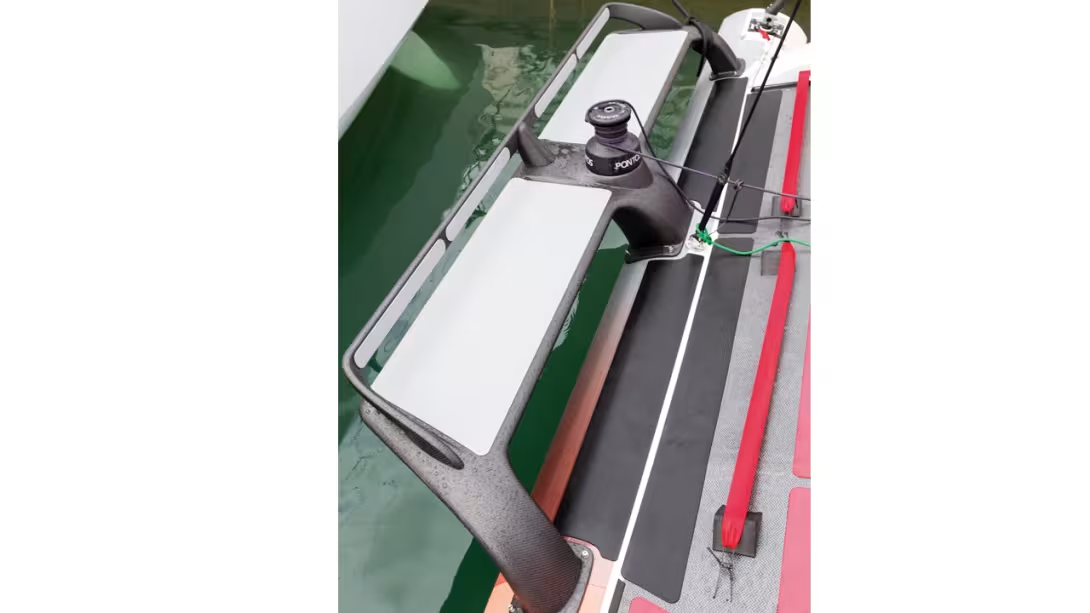
* Bench seat on floats for greatly improved comfort and safety compared with conventional trimarans or catamarans
* Able to be folded to 2.5m beam for ease of transport via trailer, ease of hoist launching, and minimal storage footprint
* Flotation bag at top of the mast to prevent inversion in case of a capsize, leading to less damage and easier recovery. Hull #1 has been sailing since August and is performing very close to our VPP estimates, and foiling as intended. The team have learned a great deal about how the boat performs and behaves on the water, and these experiences have given us a fresh set of real-world data, enabling further development of the concept. Several areas of the boat have been updated, including the foils and sails, leading to improvements that have resulted in performance exceeding our original expectations.Hulls #2 and beyond will benefit from these improvements as well, maintaining the entire fleet as a strict one design.
THE ESSENTIALS
THE MAGIC OF FLYING ON A MULTIHULL
A STRICT ONE-DESIGN
PLUSES
- Exceptional build worthy of a professional offshore racing boat
- Extraordinary sensations
- Intelligent specifications
MINUSES
- Experienced crew required
- Overall cost of use, including trailer and towing vehicle and logistics (even simplified)
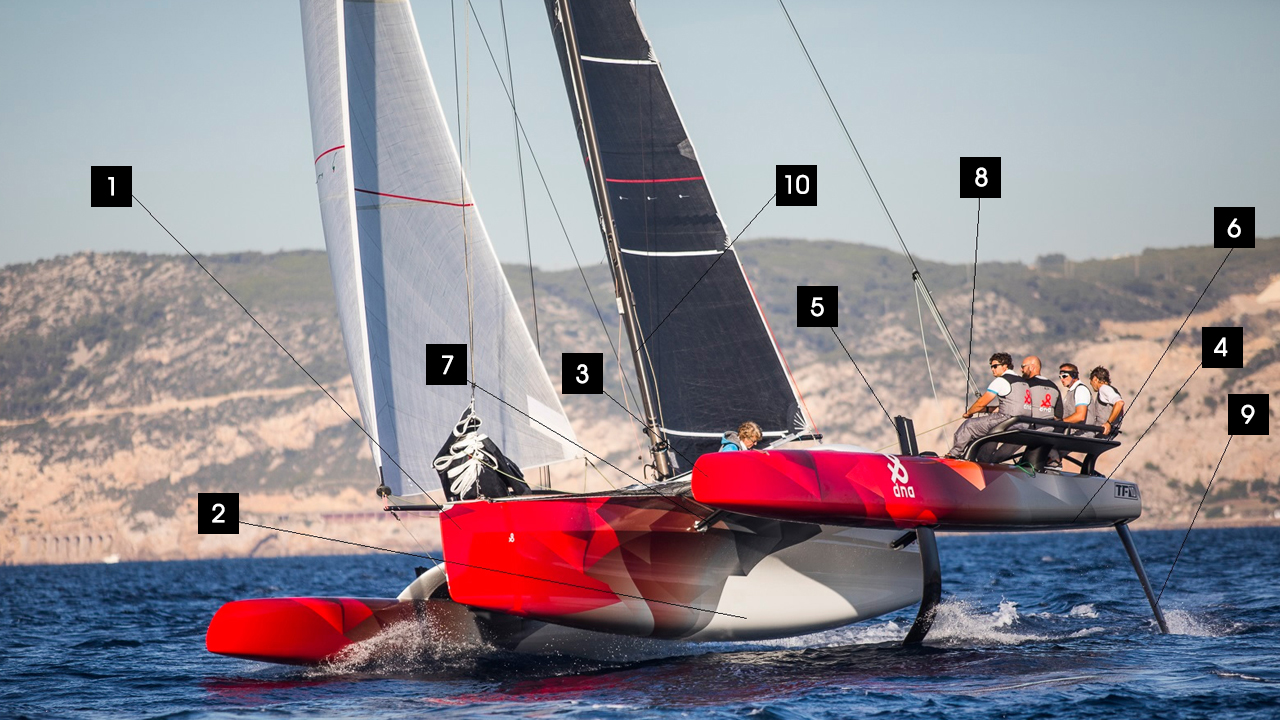
1: A central hull sculpted for speed that allows for housing the folded floats for legal road transport! An architectural achievement.
2: The hull rock is quite pronounced: it allows for supporting core sections with super fine-entry bows and a wide arch while limiting the wetted surface to take off early and immerse the minimum amount of hull in intermediate conditions
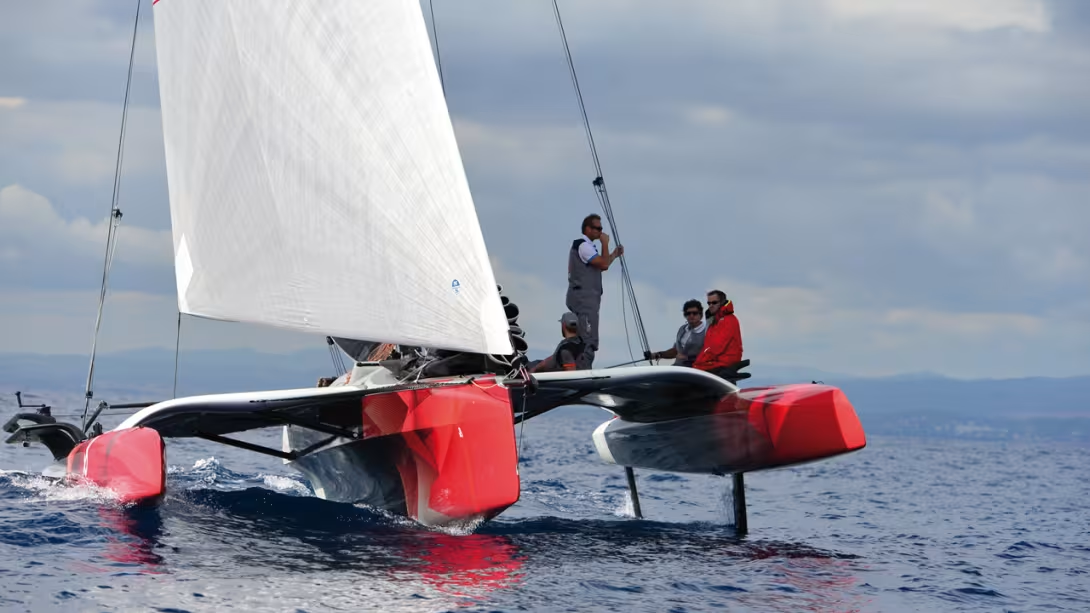
3: The floats are beautiful and very effective. They dampen very well any "planting" of the boat through their finesse and the roundness of the deck
4: The sections flatten quickly to generate the best possible lift and promote takeoff
5: The magnificent Z-foils are the like the work of a goldsmith. They can be inserted into the wells from above, which means you don’t need a crane for launching. A boat ramp is enough!
6: The helmsman, the mainsail and headsail trimmers are perfectly comfortable on the beautiful ergonomic carbon benches. The 4th person is in the central hull for grinding and adjusting the appendages (Here, a 5th person is in place)
7: Observe the elegance of the linkage (water stays) between hull and floats!
8: The headsail trimmer is there to dump sail in gusts, and then haul back in with the help of the grinder, in the central hull. Interventions are almost continuous at high speeds
9: The 2 prepreg carbon rudders are vacuum laminated in milled aluminum molds, their fineness and their stiffness are a key element for flight (with the foils of course!). They are equipped with flaps at the extremity and coupled, like the foils, to hydraulic cylinders for rake adjustment
10: The Southern Spars mast rotates, the boom is a very smart half-wishbone, and the mainsail foot produces an aerodynamic effect over the short coachroof.
LES CONCURRENTS
Bateau Longueur SV au près Poids Prix HT
Whisper 5,40 m 15 m2 80 kg 25 000 €
Flying Phantom Elite 5,52 m 23,5 m2 165 kg 40 100 €
GC32’ 9,75 m 83,5 m2 975 kg NC
