
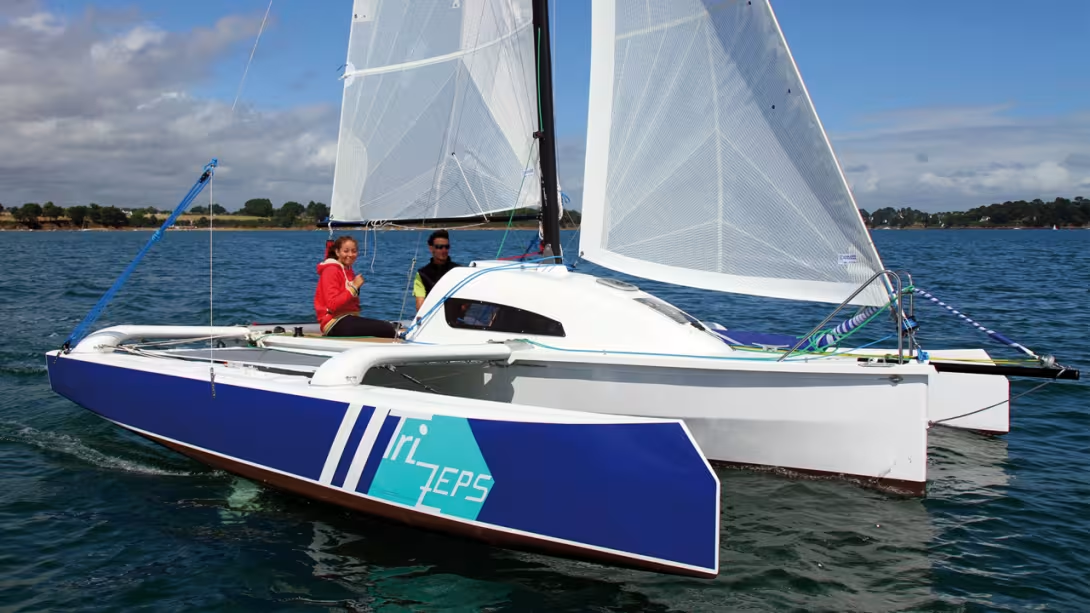
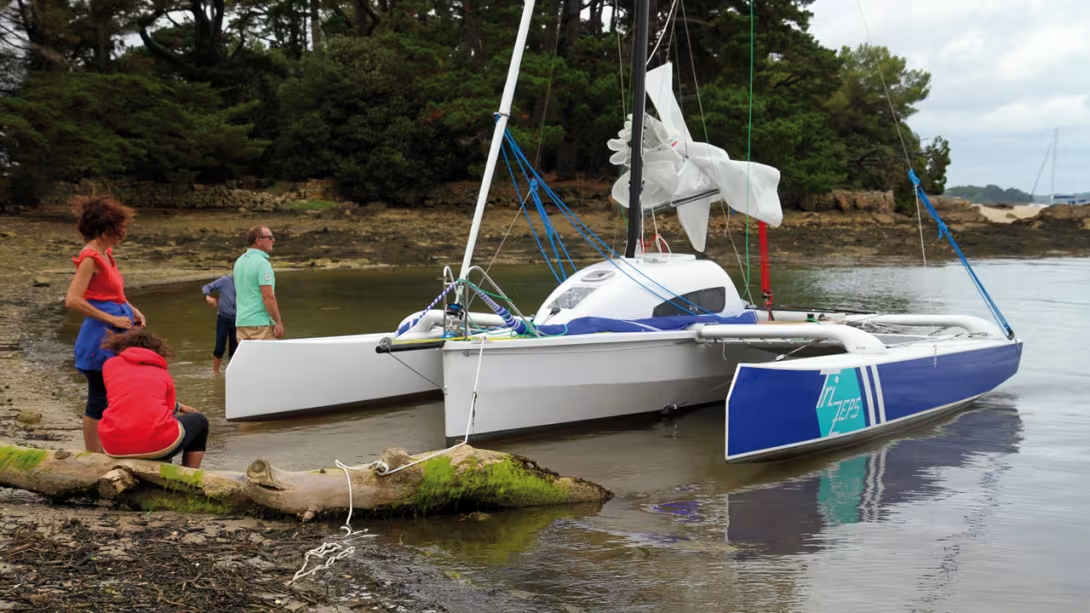
The smallest of the Tricats emulates its elders, with composite arms that fold backwards ... but it retains the central hull of the Access 6. Combine this with a sports rig and you have quite a cocktail for a pocket tri!
Infos pratiques
- Le chantier : Tricat 20
- La fiche technique
- Découvrez notre vidéo exclusive
- Financez votre Tricat 20
- Assuez votre Tricat 20
- Articles autour du Tricat 20
The program for this small trimaran is, of course, similar to that of Access 6, which still remains in the catalog. It’s about producing a family multihull which is easy to sail, to assemble and to transport. But performance takes over: gone are the simple telescopic aluminum tubes, skegs and loose-footed mainsail. The Tricat 20, built using infusion in a glass / PVC sandwich, is the worthy little brother to the 25 and the 30. Despite its small size, it can accommodate two adults. A sheep with five, no, three legs?
The in-house architect Jack Michal has favored very long and voluminous hulls. This is the secret of power, and therefore performance. The shape of the bow - the upper part is decidedly inversed - gives this trimaran an athletic look. Two carbon daggerboards replace the fixed skegs on the Access. The central hull, meanwhile, remains narrow at the waterline thanks to a chine that runs virtually all the way from bow to transom.
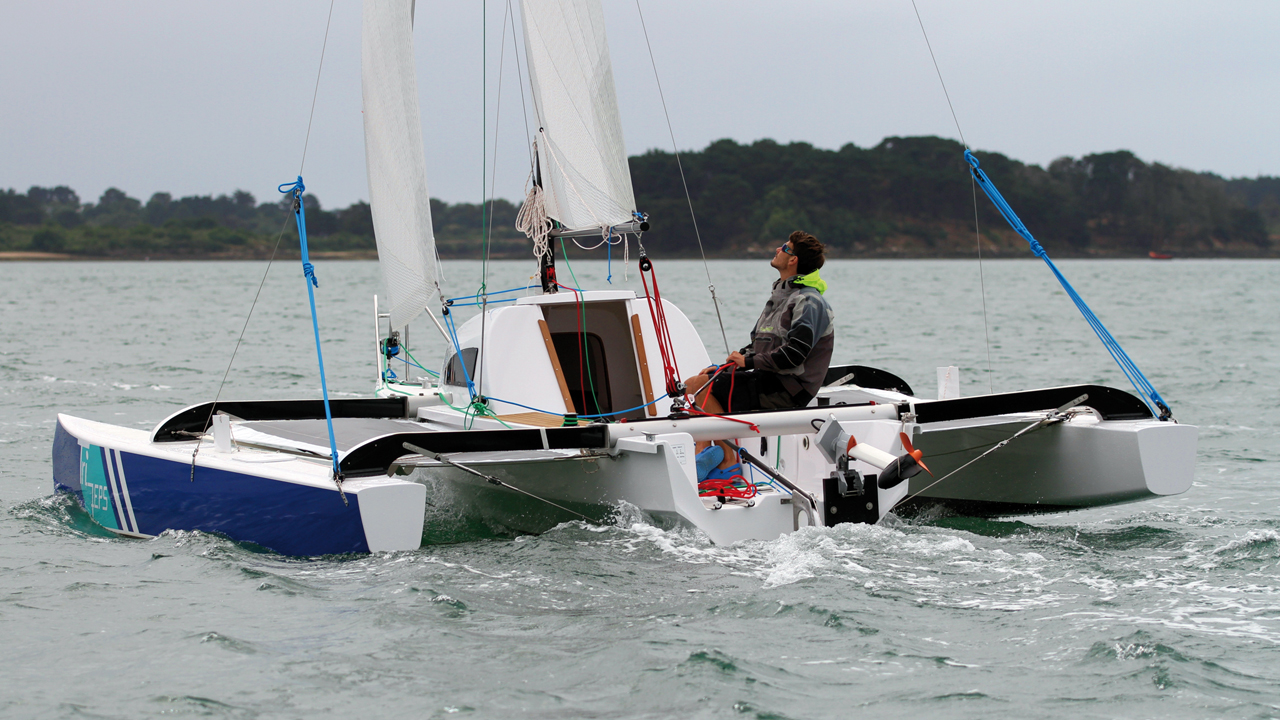
Impressive speed potential
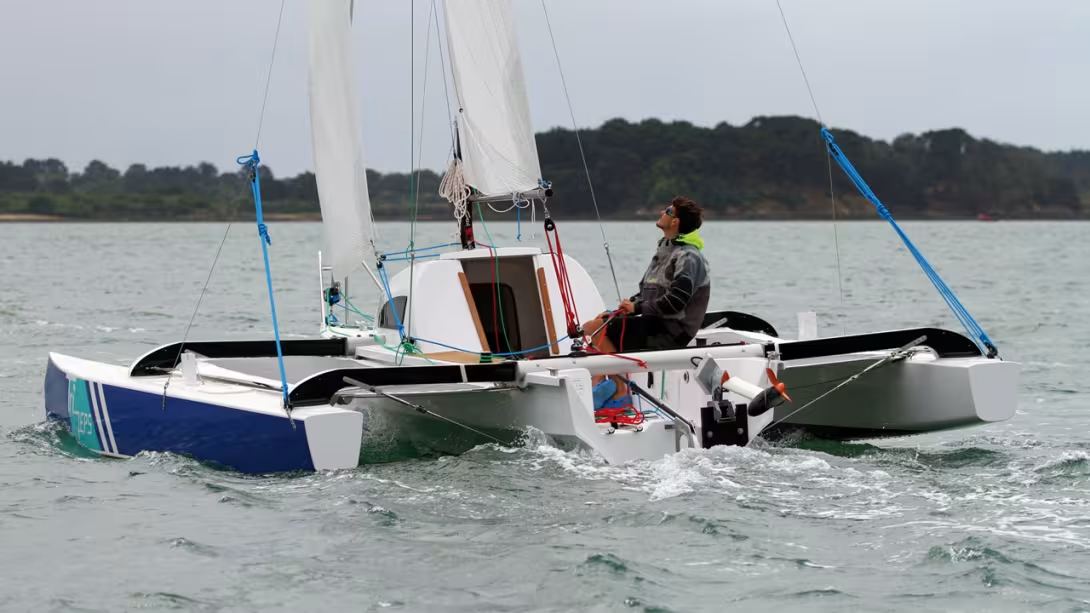
The freestanding rig features a single set of spreaders. A pair of lower shrouds secures to the central hull, so as to hold the mast in place during folding operations of the floats. An operation that takes no more than two minutes per side. The two capshrouds attach to the floats and a tackle ensures the tension. The square-topped mainsail is quickly hoisted, the jib unfurled... and off you charge. Just 10 knots of wind is needed to really get it going, to hear the intoxicating sound of high-speed appendages. Because peaks over 15 knots are commonplace. With the bowsprit extended and gennaker unfurled, the turbo kicks in and we’re slipping through the water even faster. But the helm remains unflustered, always light. A beginner could take control without any risk, as the Tricat 20 is both safe and responsive. In fact, that’s what we did during our test: a 13-year-old teenager helmed the Tricat for long some tacks, handling all the maneuvers: the 20 turns on the spot without need to back the jib, and gybes around a relatively tight radius despite the helm angle being limited by the sides of the open transom. A real dream machine! In a chop, the movements are a little jerky, which is to be expected: it’s faster and lighter, and the three hulls are forced to meet the waves together. But the narrow hulls don’t slam. And the arms, higher than the tubes on the Access, stay above the sea. As for the motor, our test boat was equipped with a small electric outboard. A sensible choice for a boat that is away under sail in the slightest breeze.
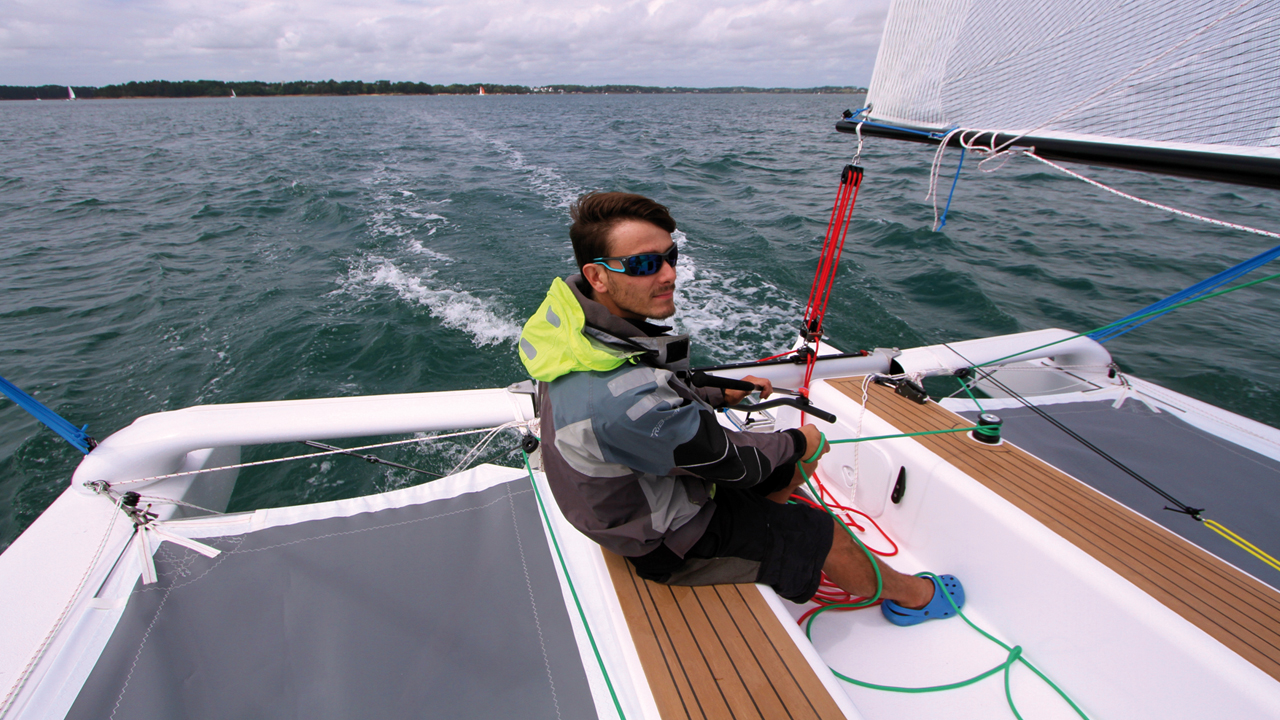
Large cockpit, large trampolines, but teeny side-decks
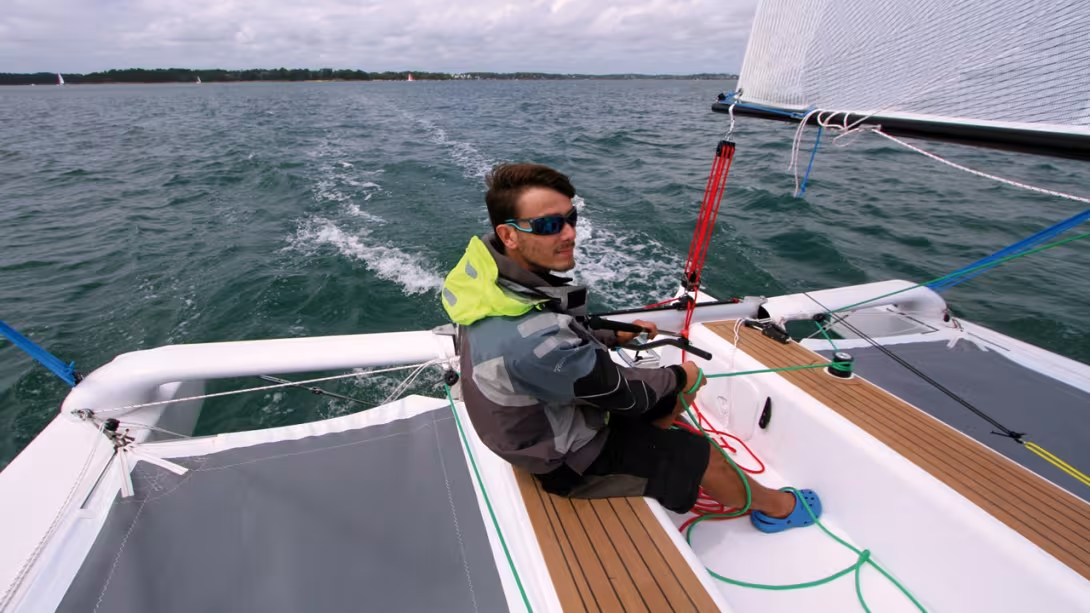
Thanks to the marked chine, the cockpit enjoys a remarkable width for a trimaran of this size. It’s also long enough to seat the whole crew on the same side. The children can even chill out on the trampolines. A nice surprise, even at high speed is that the Tricat 20 does not get that wet. Any spray that does come aboard is generally stopped by the coachroof, which is large enough to serve as protection. As for sail trimming, everything is simple and effective: on each tack, the jibsheets are on a purchase. The mainsheet traveler on the aft beam supports a powerful sheeting system. The gennaker sheets are led to winches - a size 6, just a little bit too light for a good breeze. All other sail handling maneuvers remain at the foot of the mast, directly accessible from the companionway. Aft of the mast, the moving around is easy and safe thanks to the trampolines. On the other hand, getting to the foredeck is a bit more perilous: the coachroof is quite high, as previously mentioned... and the sidedecks are tiny. There are no handrails or toerails. But in theory, apart from anchoring, you shouldn’t need to do anything at the bow.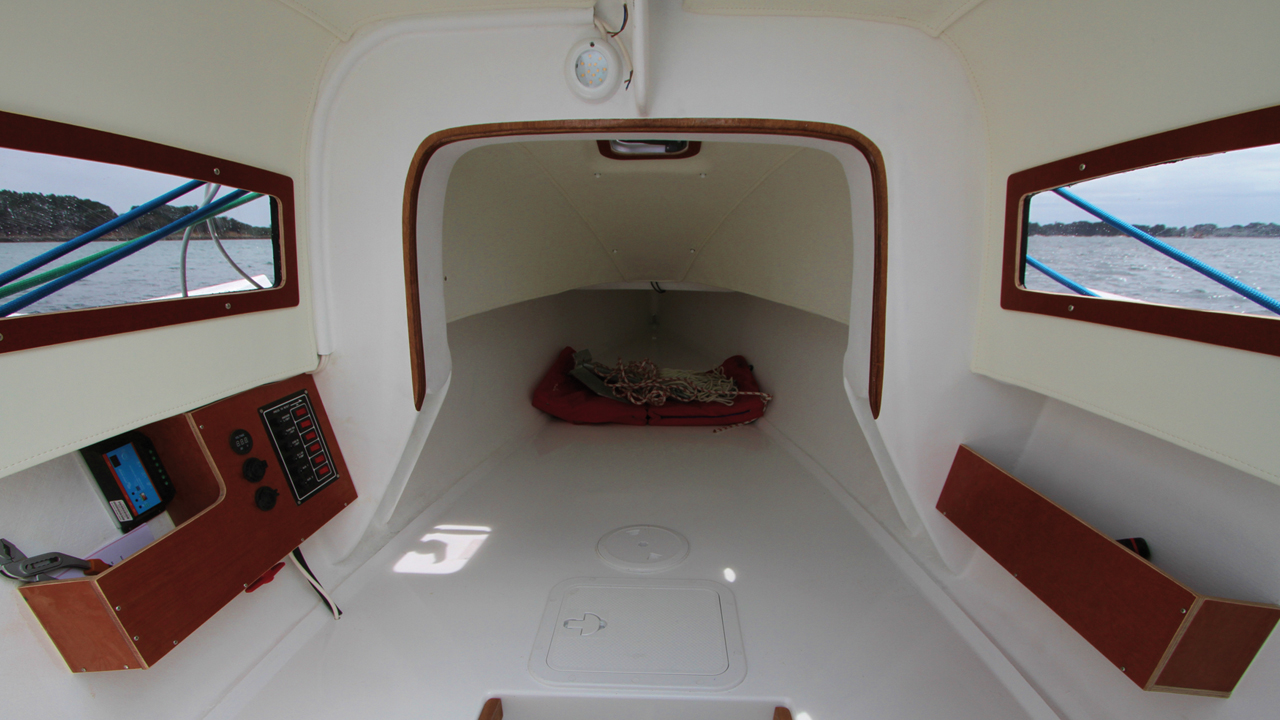
Basic comfort for stopovers
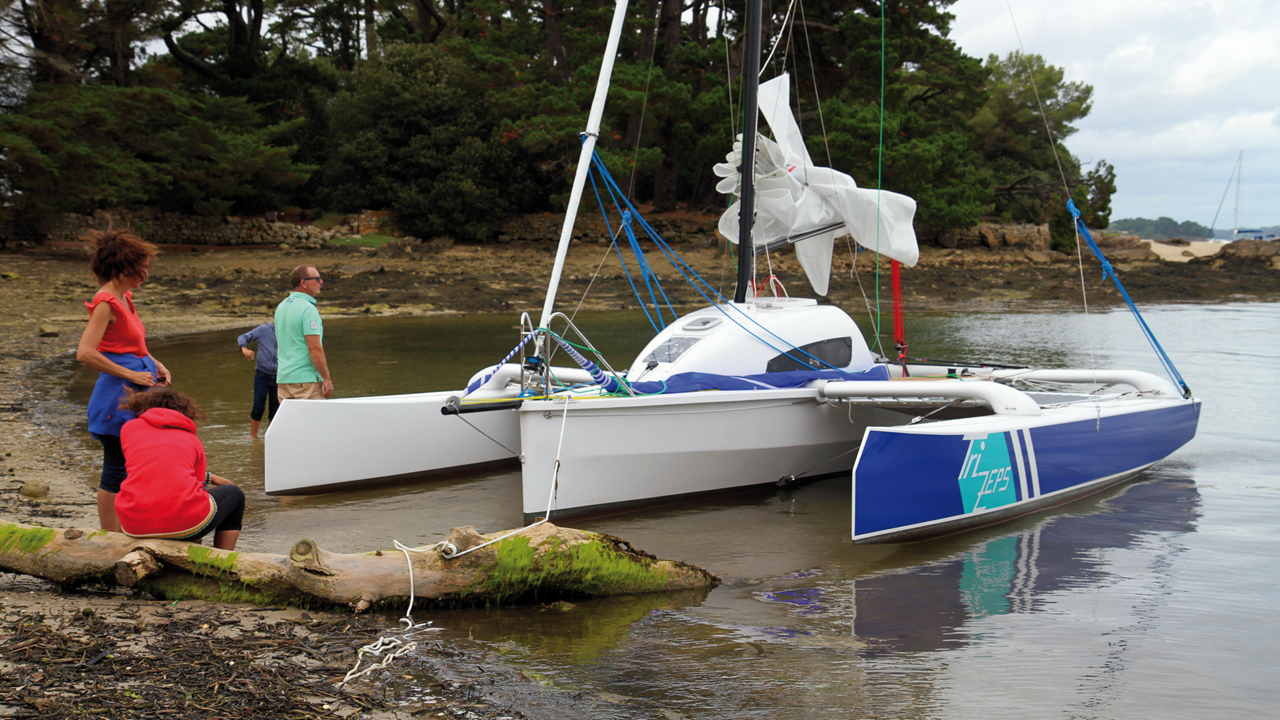
For stopping over somewhere, there’s no anchor locker. Light ground tackle can be stowed either beneath the companionway or in the aft locker. But because the Tricat has such light displacement, there’s not much load, allowing you to use tricks like taking a long warp ashore and tying to a tree... Fenders and warps stow easily in the lateral lockers in the cockpit. For tying alongside, the yard has fitted a cleat and two fairleads at the bow, and two cleats aft (option). The cockpit is open very low to the water. Children could slip under the aft link arm, grown-ups will have to step over it. The small swiveling swim ladder is well located. But it's still optional...
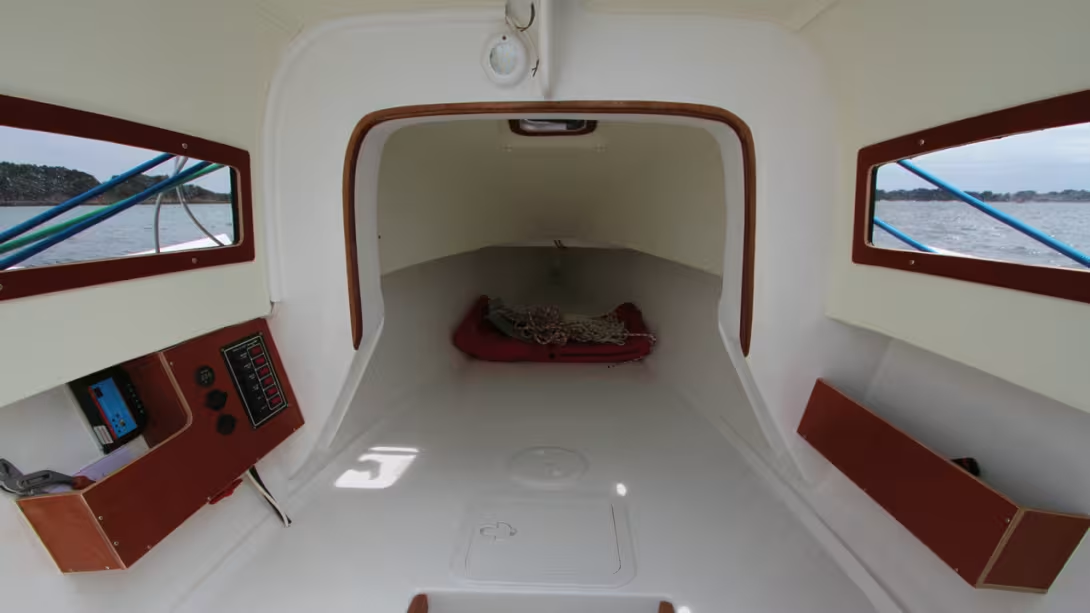
The little cabin will be home to just two people. The impression of volume is no longer hampered by the vertical bulkhead of the chain locker on board the Access 6, directly in line with the mast. The headroom is 1.43 m, a rather generous figure for this size of boat. The table and seat cushions in the mini-saloon transform into a double berth. The two side benches, 1.30 m long, are suitable for two young children. As an option, the yard offers a stove. Spartan comfort, but nevertheless sufficient to consider a coastal cruise with overnight stops in good weather. Or there’s always the possibility to put up a tent or two on the trampolines.
Conclusion
Our pocket trimaran, transformed by having larger floats, daggerboards and a more powerful sail plan, puts the spotlight on the family cruising program in small multihulls which are not really big enough to be habitable like the good old Magnum 21 - which remains the sacred yardstick for the class. The Tricat 20 is an excellent boat for casual day sailing, but also for coastal raids... and why not some racing?
Pluses:
Easy folding trimaran
Excellent performance
Reasonable accommodation for trimaran of only 6 meters
Minuses:
Significantly more expensive than the obvious competitor, the Astus 20.5
Under-sized winches
Narrow side-decks
The competition:
Astus 20.5 5.95 m €25,900 inc. tax
Pulse 600 6.00 m price N/A
Technical specifications:
Overall length 5.99 m
Hull length 5.99 m
Waterline length 5.95 m
Beam 2.40/4.50 m
Draft 0.30 /1.20 m
Weight 580 kg
Upwind sail area 24.50 m²
Mainsail 16.50 m²
Jib 8 m²
Gennaker 16 m²
Spi 28 m²
Motor 3.5 hp
Naval Architects Jack Michal and Antoine Houdet
CE Category C5 / D6
Builder Tricat
Year launched 2018
Price as standard: €36,900 inc. tax
Principal options:
Sport version with longer carbon mast, Mylar sails, 8-purchase sheet: €9,780 inc. tax
Cruising pack: €6,200 inc. tax
Gennaker on furler: €1,890 inc. tax
Bowsprit and spinnaker deck hardware: €680 inc. tax
Braked road trailer: €3,850 inc. tax
3.5hp 4 stroke long shaft outboard: €990 inc. tax