
Astréa 42 Smart Electric: “ First in the range ”
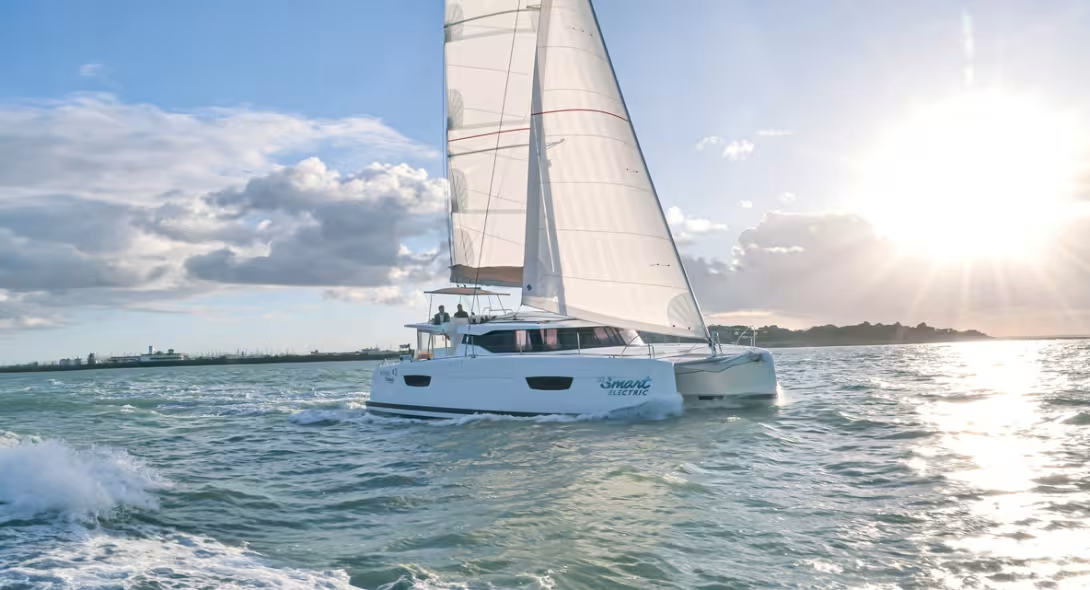
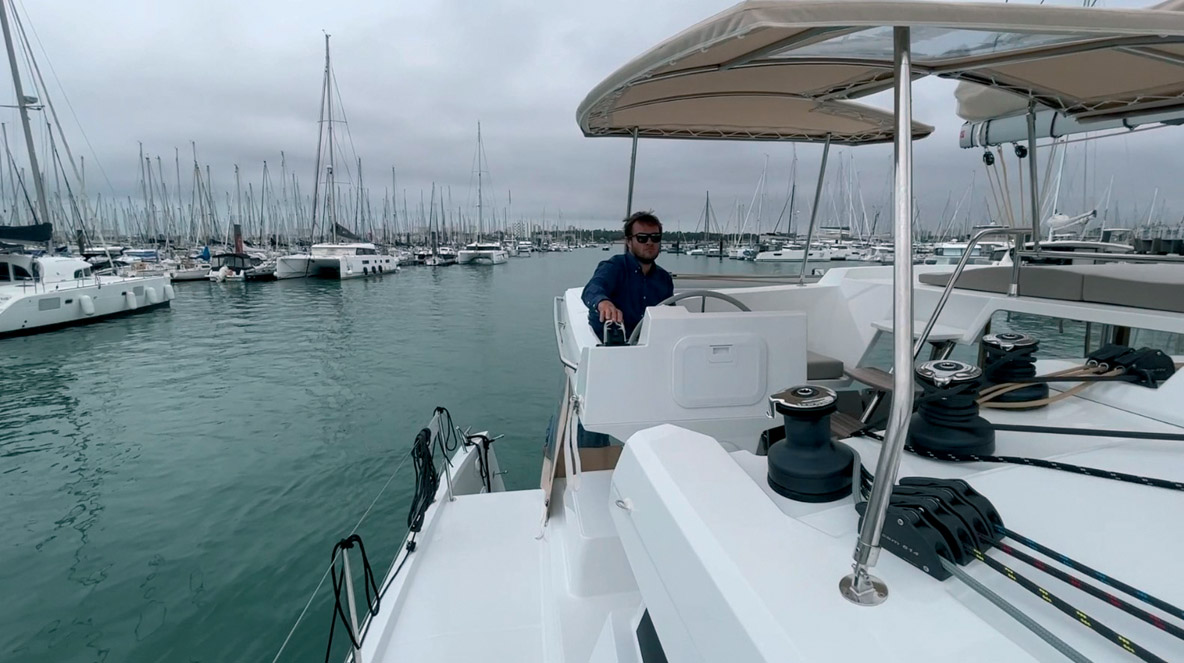
The contrast between the atmosphere at the La Rochelle Boat Show - between the hustle and bustle of the crowds on sunny days and announcements on the public address system - and the virtual silence found less than 15 boatlengths from our booth is striking... It’s exactly the sort of observation that makes Mathieu Fountaine, the yard’s deputy director, smile from ear to ear. With a simple press of his fingers, he pushes a little more on the levers to accelerate a little more. You can feel a few slight vibrations in the hulls - but you really have to pay attention. Nothing to do with the pervasive purr of a pair of 30 or 50 HP internal combustion engines (these are the power ratings of the diesel motors offered by the manufacturer).
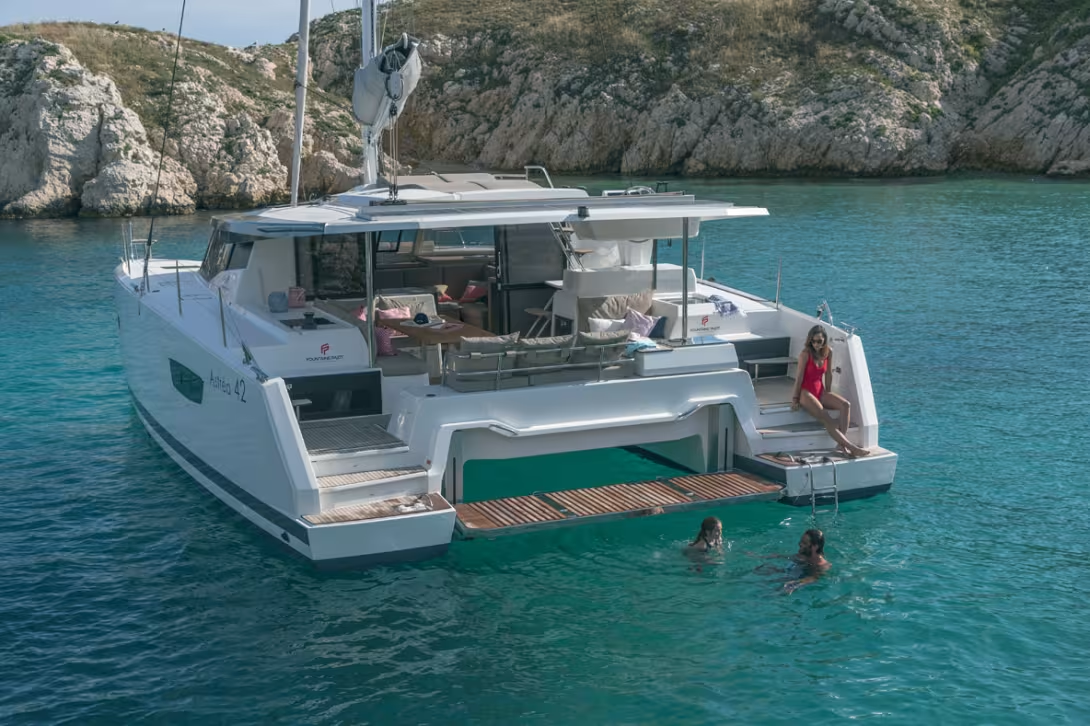
After the Aura 51 Smart Electric, presented in 2022, the Astréa 42 joins the forever green fleet, accompanied by the Elba 45. Some will be surprised not to find the Tanna 47 among them: this model proved to be incompatible with ‘electrification’ after the fact, because there was insufficient space forward to accommodate a powerful generator - and yes, for the time being, we can’t do without this safety feature. In any case, we can see that it’s not necessarily that simple to offer a mass-produced electric catamaran when it wasn’t envisaged at the time of the boat’s initial design.
A configuration close to that of the Aura 51
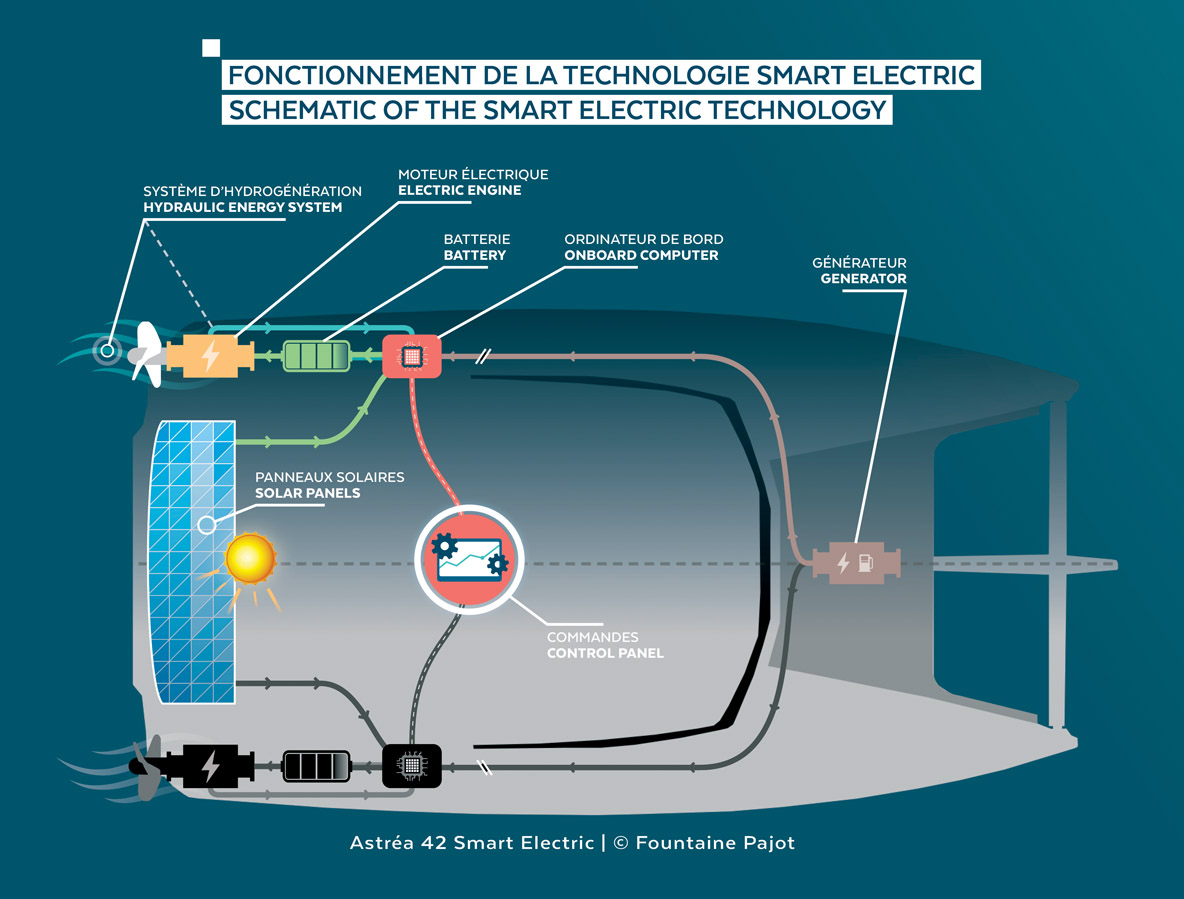
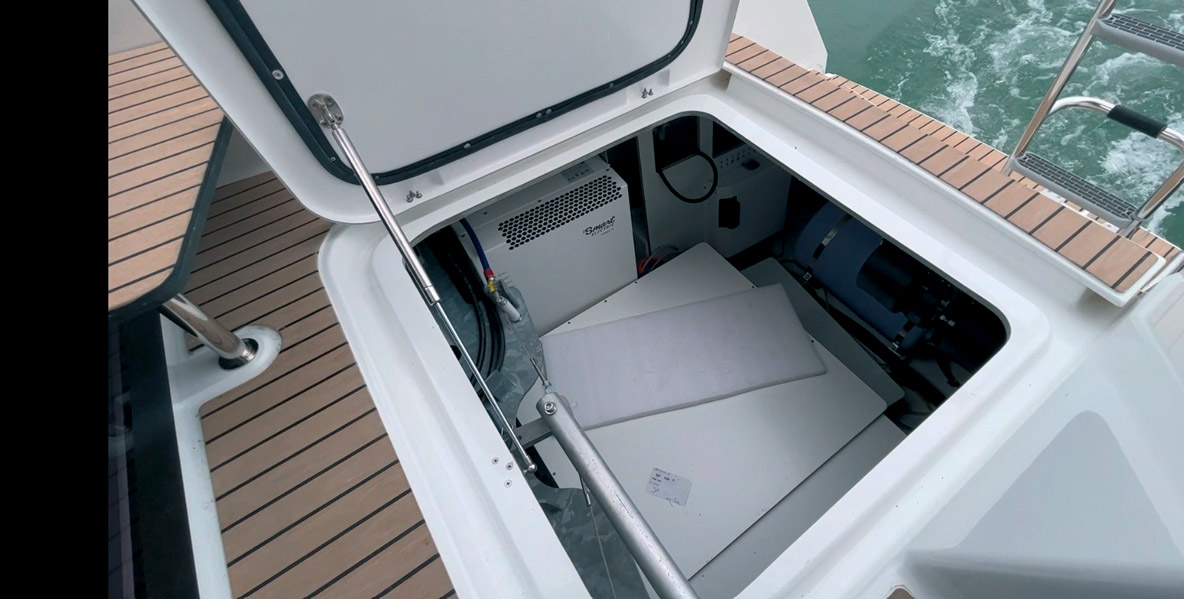
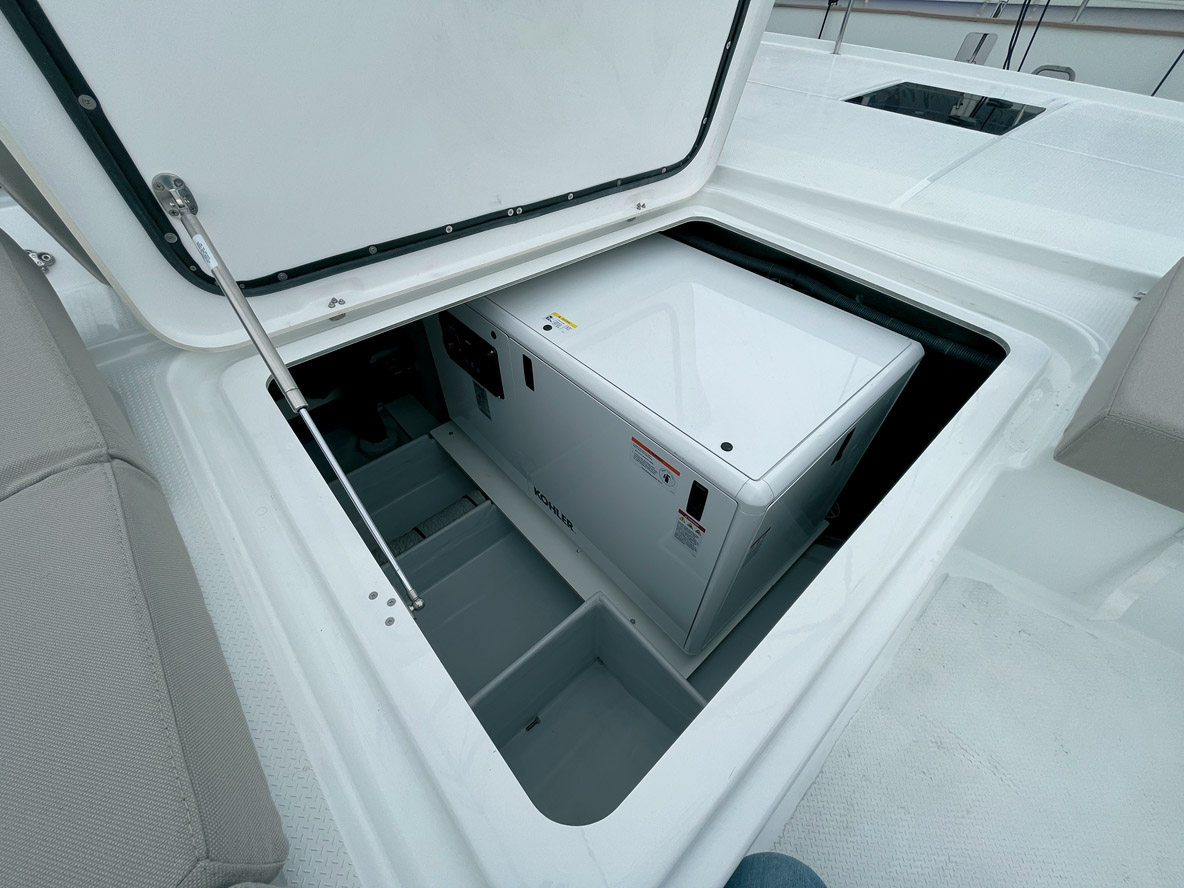
EIn technical terms, the yard has basically picked up on the same installation as the Aura 51, using the same engine power (2 x 25 kW). For Fountaine Pajot, this is already the second generation with underwater pods. For the lithium-iron-phosphate propulsion batteries, you can opt for 2 x 21 or 27 kWh. We have the first option. On the coachroof, we can rely on 1.2 kWp of solar panels. As for the generator supplied, it can produce 16 kW (compared with 9 kW on board the standard Astréa 42). This generator has two functions: to charge the propulsion batteries and to power the motors. For charging, the generator is automatically controlled: it starts when the propulsion batteries fall below 20% charge and then stops when the batteries are fully charged. The generator can be started manually if required. It will also start when the propulsion system is switched to hybrid mode and supply power to the motors, with any excess energy being used to charge the batteries. It is also possible for the generator to power the motors directly, bypassing the batteries: the aim is for the Astréa 42 to be able to make 5 knots in the worst-case scenario - that is, for a long time and in big seas and strong winds. A difficult sailing context that is particularly unfavorable to all-electric mode.
An important point to note: the generator, when running, is much quieter than the two ‘traditional’ internal combustion engines.
Innovative energy management
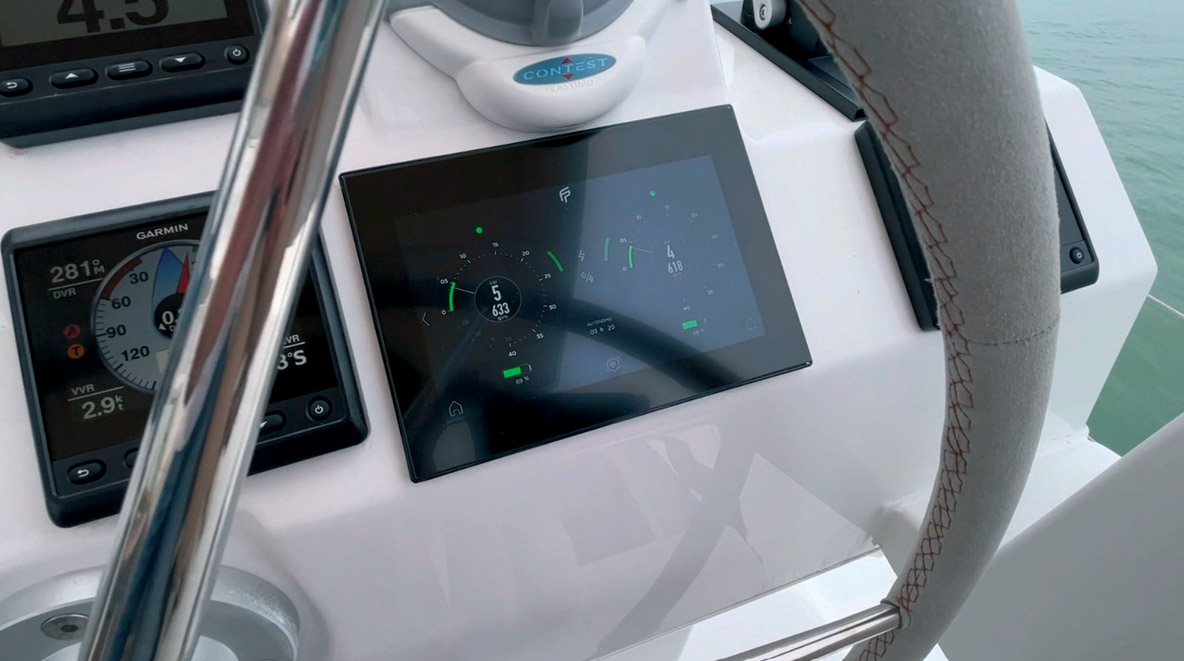
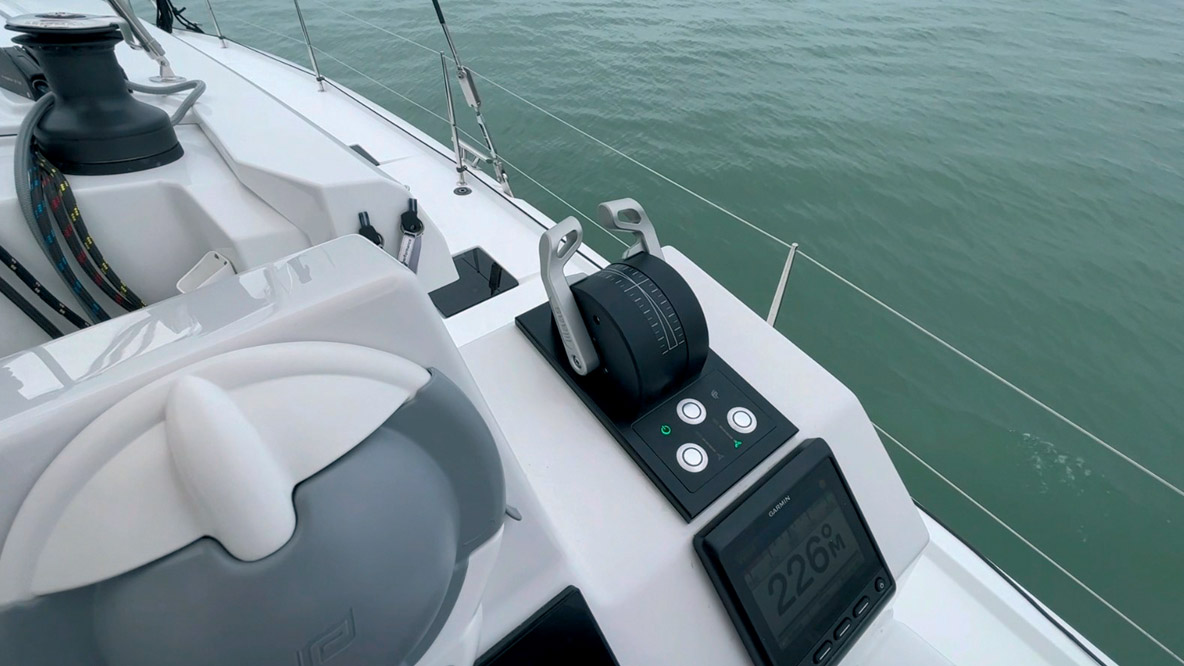
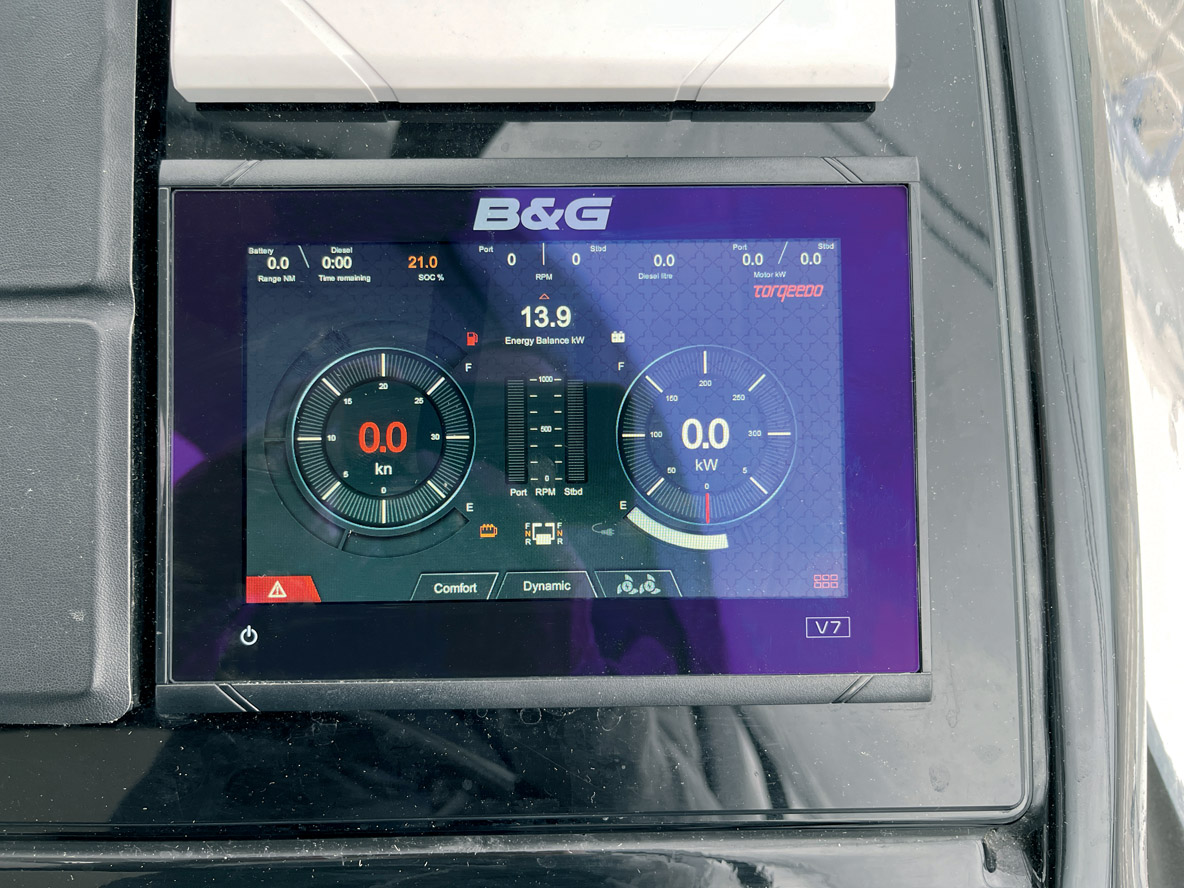
At the helm console, you’ll also find the Aura 51 Smart Electric’s particularly intuitive interface, which allows you to control all the elements of the system: the dedicated screen shows the charge from the solar panels, the consumption of the various bits of equipment on board, and, of course, the motors - not forgetting the hydrogeneration when under sail. Each engine can recover up to 2 kW.
Sailing aboard this Smart Electric favors another new form of hybrid sail/electric boating: you gain 1.5 knots leaving a trickle of power to boost the apparent wind so that later, when the breeze is well established, you can regain precious kWh. It’s an unprecedented way of managing energy... and saving it if you want to limit the use of the generator.
Electrification is well underway at Fountaine Pajot: there are already six Aura 51 Smart Electrics sailing, two Astréa 42s and one Elba 45. If we add the three Dufour monohulls (the brand was bought by FP in 2018), that makes a dozen boats. It’s interesting to note that charter companies are among the buyers and that many potential customers come from Australia. The downside? Sailing electrically is more expensive - the extra cost is €130,000 (excluding tax) on a budget of €513,000 ex-tax VAT for this Astréa 42, a hike of 25%. The aim of the manufacturer, which is the first to offer an electric standard on its mass-production models, is to convince other shipyards to share technologies and/or pool purchases in order to reduce the cost of the electric option.
Proven technology
Intuitive, user-friendly interface
Substantial extra cost compared with internal combustion version
Lagoon SEVENTY 7: “More plugged in than ever!”
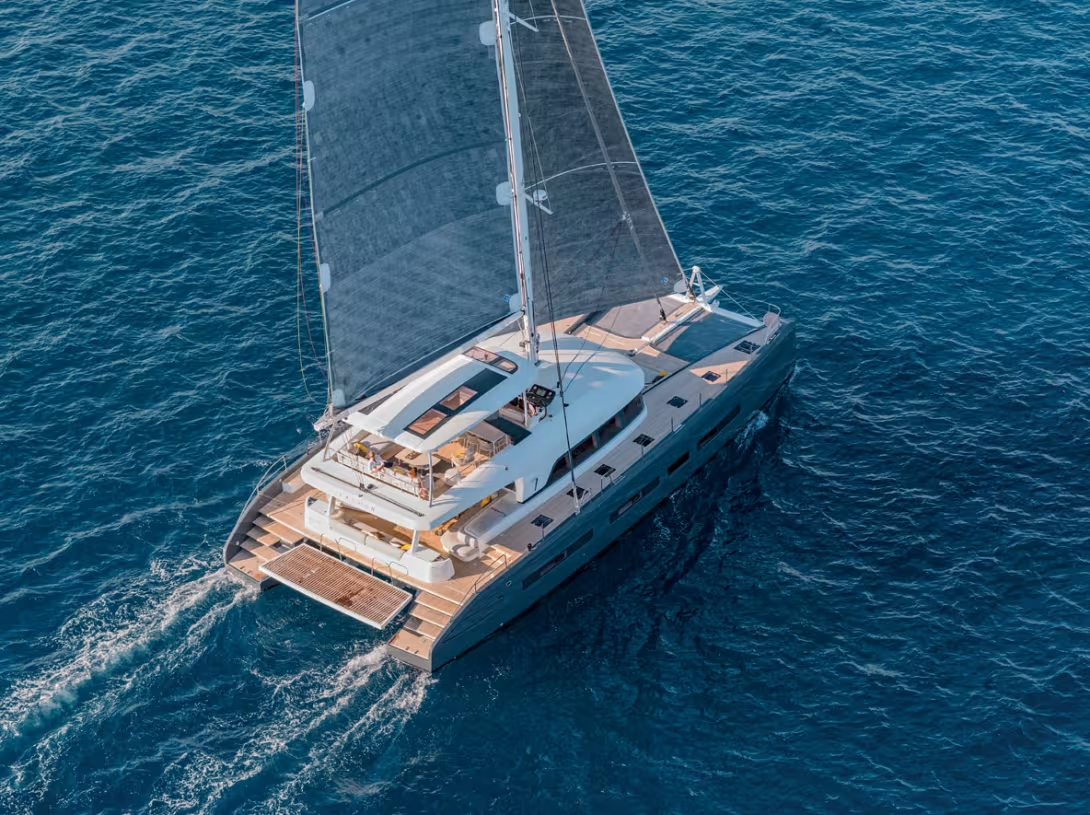
Marc Renwick worked for Lagoon for a long time before creating Yacht Solutions, a service provider linked to the manufacturer some 10 years ago. He has seen plenty of atypical clients... but the request to electrify a catamaran of over 77 feet two months before its launch date is without doubt the most disconcerting he has dealt with. Although the Canadian owner, who is very involved in tech, had chosen Yacht Solutions to equip his catamaran entirely - from the safety equipment to the interior decor, not forgetting the now unavoidable ‘water toys’ - his final request came as something of a surprise. Marc nevertheless took on this technological challenge, which was bound to add to the budget significantly and require a lot of time.
They didn’t know it was impossible, so they did it!
Before saying yes, Yacht Solutions cautiously suggested that a serious feasibility study be carried out first, and that the budget be evaluated. After all, switching from internal combustion to electric power is not simply a matter of switching two standard propulsion units. “You have to rethink the whole concept: how I generate my electricity, how I store it and how I use it. We’re changing everything, and we’ve never done that before!” warned Marc Renwick. The pre-study involved defining what needed to be done, assessing how it would be done, how long it would take and “roughly” how much it would cost. By chance and happy coincidence, two former CNB employees, Antoine Abat and Julien Lucas, have just set up Bordeaux Yacht System (BYS), a company specializing in custom systems integration. It’s a huge challenge for the young company, but they know the catamaran built by the shipyard they’ve just left inside out; what’s more, they’ve already signed a partnership with electric motor manufacturer Torqeedo, the brand that the end client had shortlisted. The team mastered not only the propulsion, but also the electrical side of the catamaran. What’s more, it had the contacts within the Lagoon design office to bring this extremely complex project to a successful conclusion.
As fortune favors the bold, the planets were aligning for the two players now united around this project. Since 2019, Yacht Solutions has had an official agreement with the Port Autonome de Bordeaux giving it access to space on the quays of the wet dock, just opposite the CNB shipyard. Only the Garonne River and the City of Wine separate the two. The logistics were therefore in place, and this was no mean feat, as the catamaran was to be put up on the hard for a full year to complete the operation. We had to work on a finished multihull, from which the existing engines and generators were to be removed. The structural modifications could then be carried out to integrate the batteries and fit them on board with the new motors and generators, before finally having the boat re-certified by the ICNN.
2 motors, 2 generators and 4 batteries
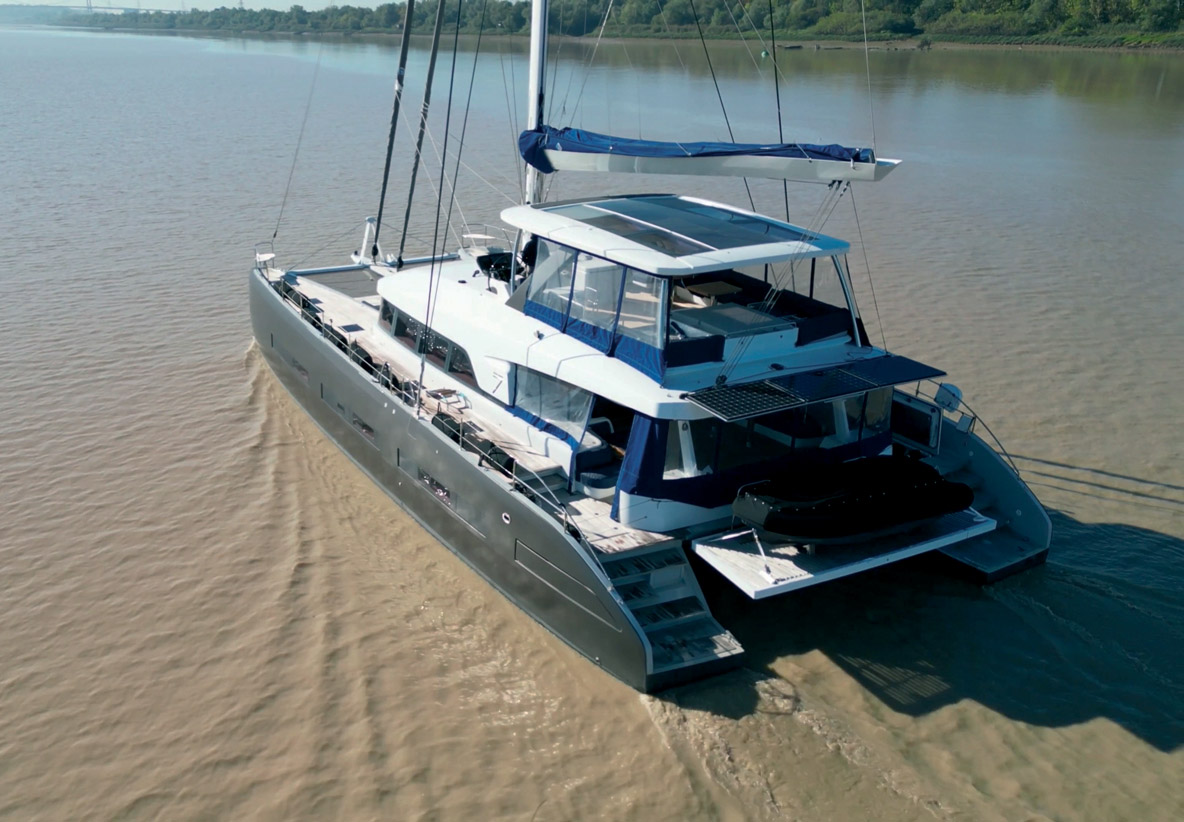
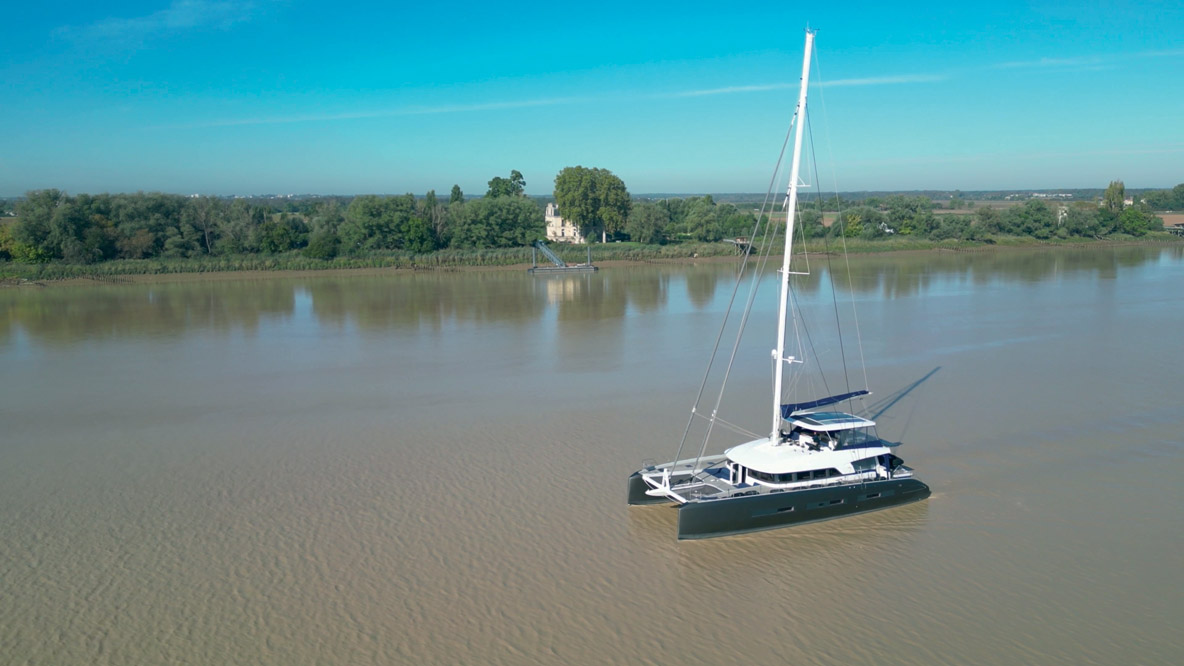
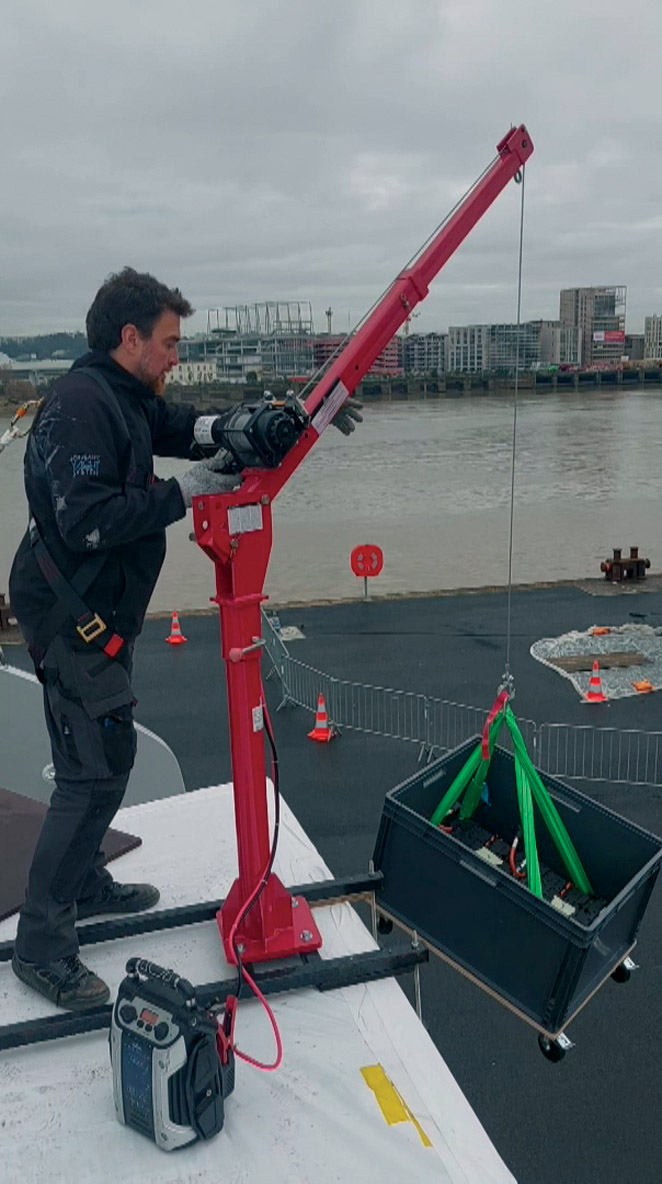
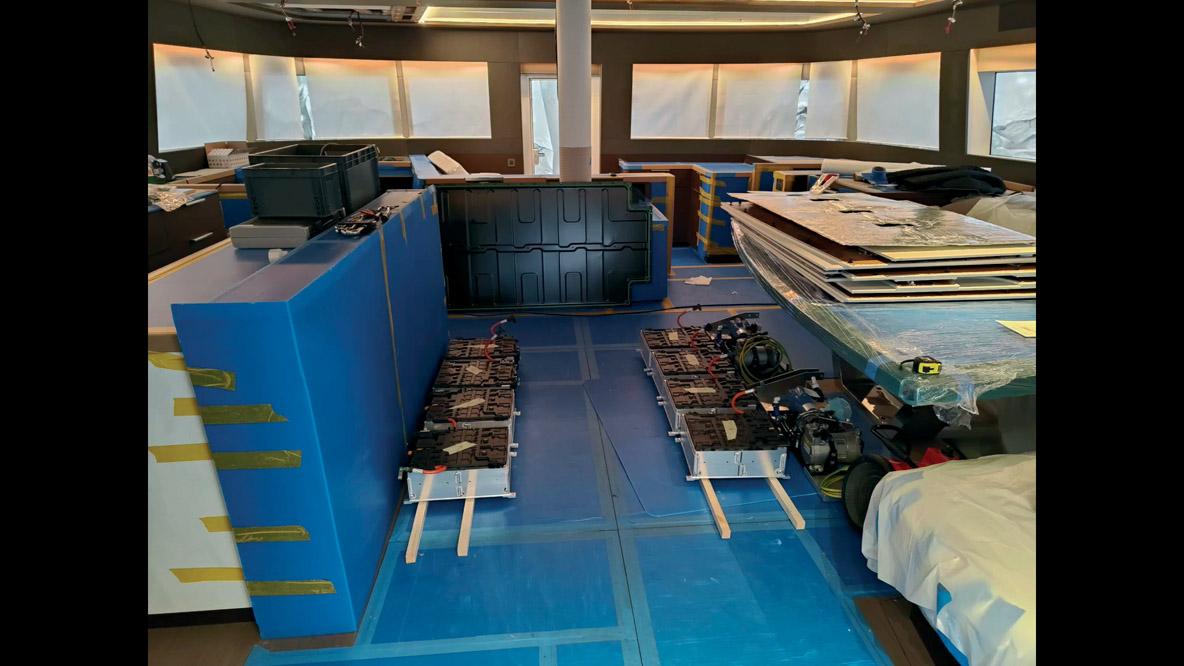
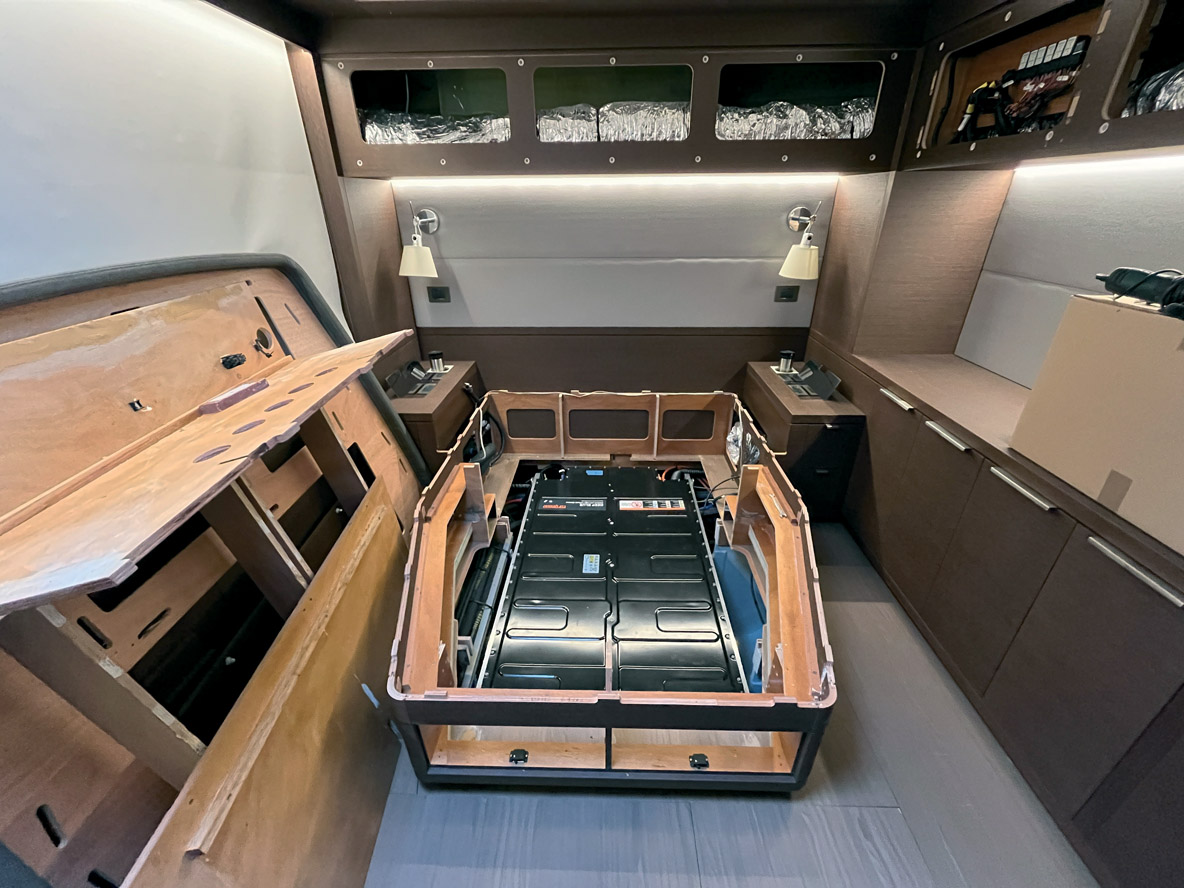
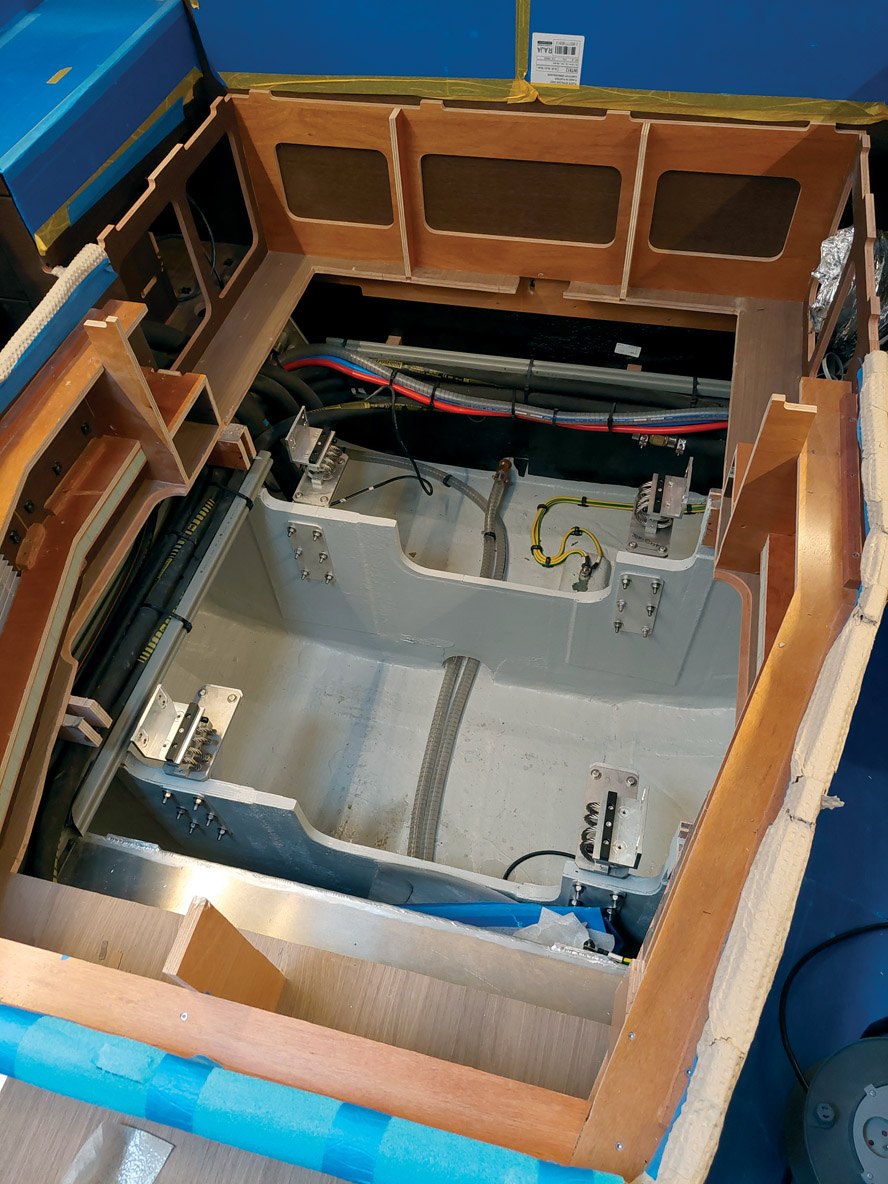
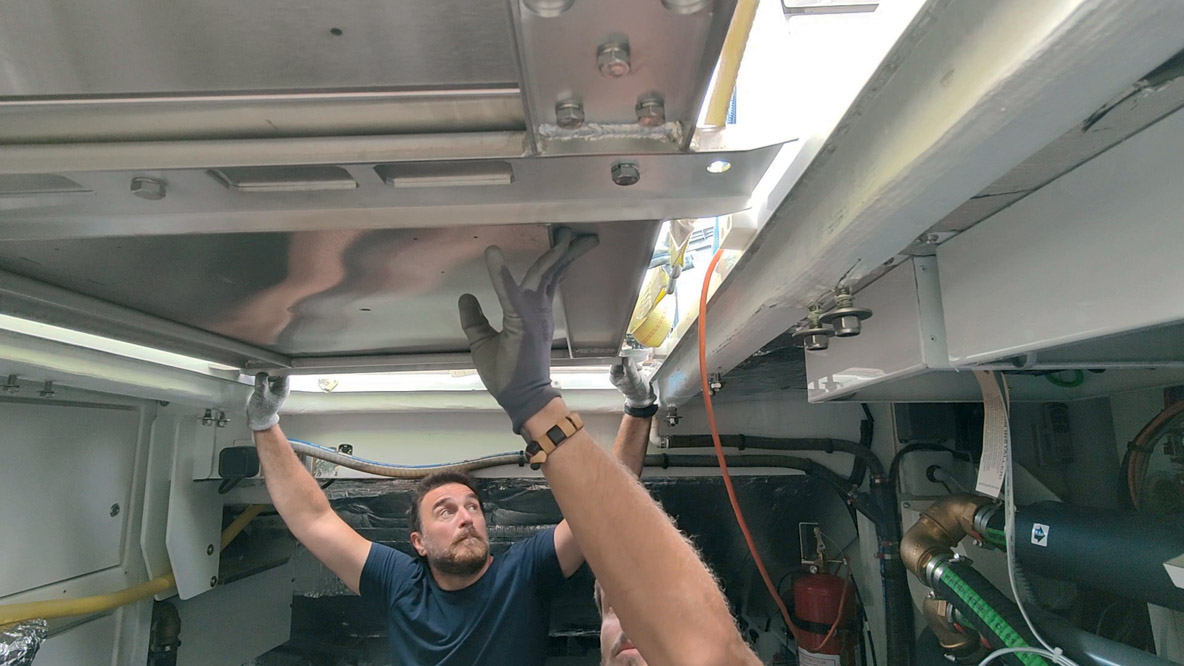
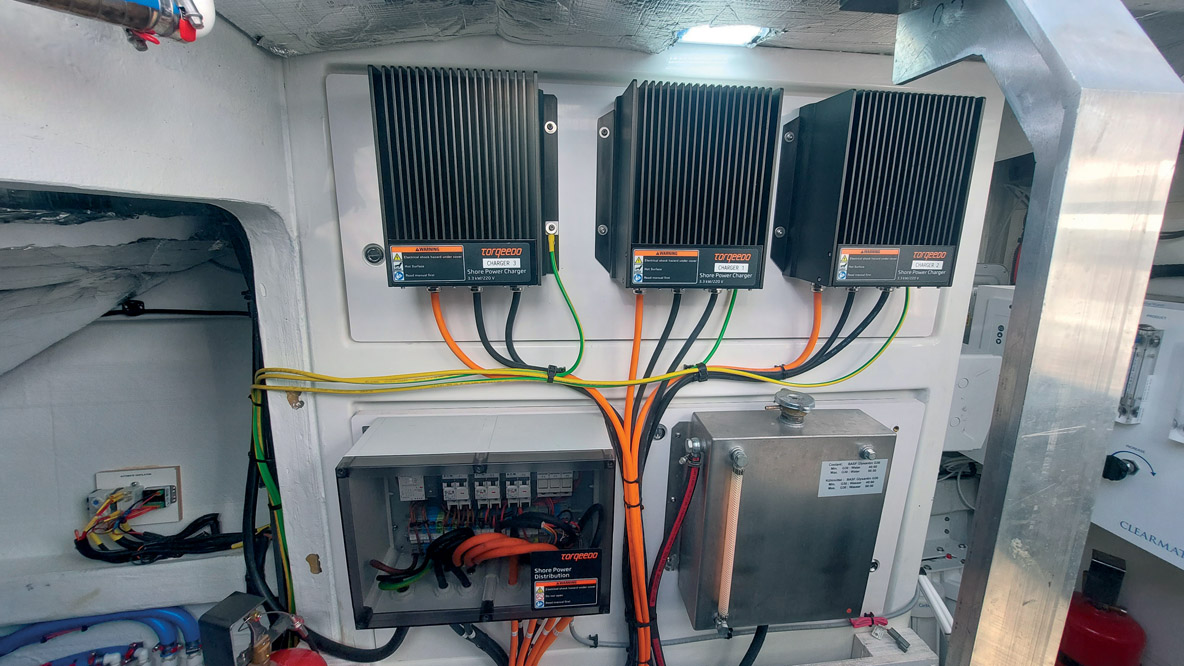
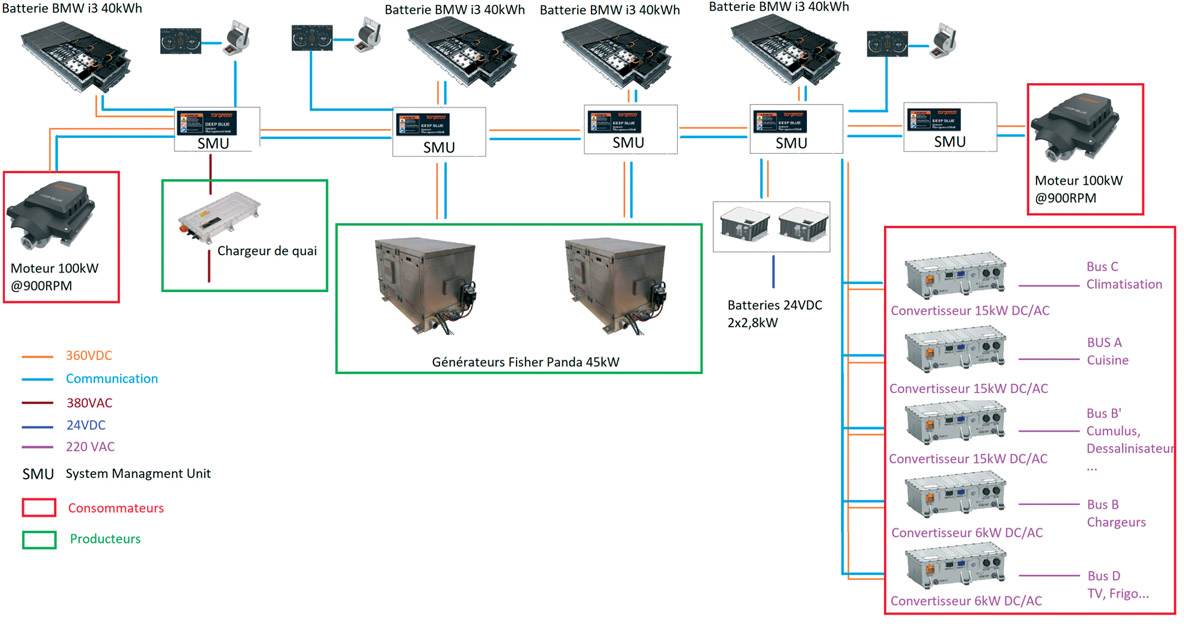
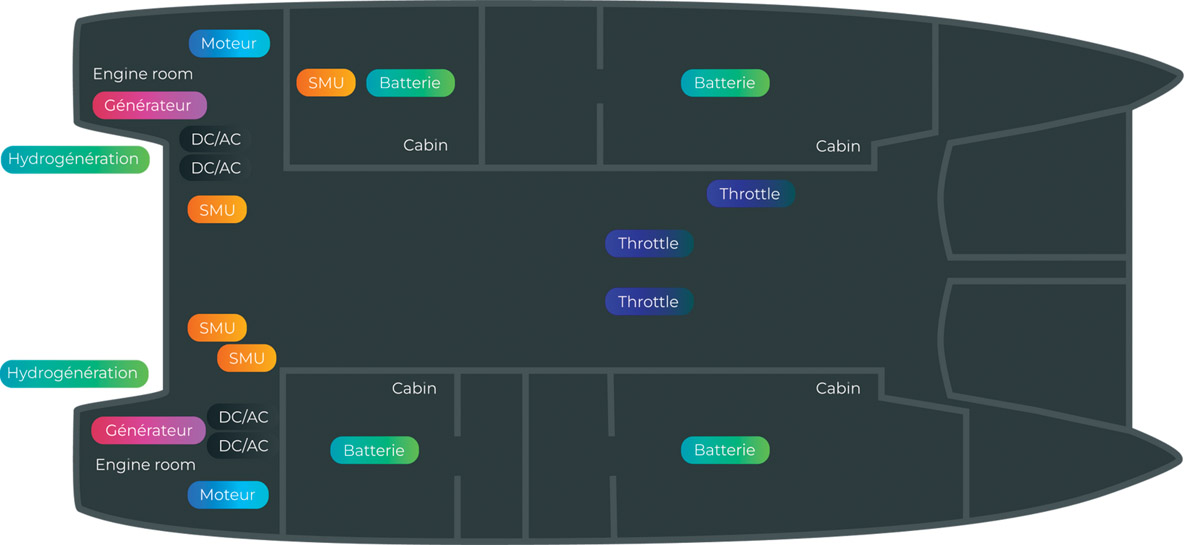
In Lorient, Brittany, moored alongside the pontoon which usually welcomes flying Ultims trimarans, it was impossible to distinguish this electrified Lagoon SEVENTY 7 from the internal combustion version tested in Multihulls World N°151. Of course, if you pay close attention, there is the additional arch covered with solar panels, bringing the total power available to 4.7 kWp, but we were to learn later that in reality they power the original 24V system (VHF and bilge pumps in particular, so essential for safety) and have no connection with the electrification of the motors. The major modifications are invisible, as they are located within the hulls - and in the engine compartments, of course. Taking advantage of this technical stop on the big Lagoon, we got an unobstructed view of the four 40-kWh BMW i3 batteries on board. Whereas in the original version the battery bank is in the nacelle, here they are down in the bilges, which has enabled the center of gravity to be lowered. While they’re easily accessible beneath the floorboards at the front, those further aft require the berths to be removed for access. A few minor structural modifications were necessary. The frames that had to be opened were subsequently reinforced according to the specifications from the design office. Given the dimensions and the 350 kg (770 lbs) of each battery, to avoid having to break everything to get them in, they were opened up by Torqeedo. The components were dismantled, then reinstalled once the body had been fitted. The battery was then resealed by the supplier, as it’s waterproof and comes with a 9-year warranty. It is mounted on engine mounts to absorb shocks, and if there is a thermal runaway with the release of gases, a vent evacuates them to the outside. In normal operation, their temperature reaches 25 to 30°C (77 to 86°F). In the event of high temperatures and heavy use, to keep everything under control, they are cooled by small air-conditioning units, also from BMW. One of the major challenges in integrating the batteries was their distance from the motors. While there was no problem for those located in the aft cabins, the positioning of those further forward was determined by the length of the power cables supplied by BMW: 10 m (33’) long and not a centimeter longer. Mission accomplished on this boat, which is almost 24 meters (80 feet) long and 11 meters (37 feet) wide - there’s even a 20 cm (8”) margin. In fact, there are no connectors or interruptions in the entire circuit supplied and installed by Torqeedo (motors, batteries, chargers, inverters, associated cooling systems, etc.) Everything is watertight and very well made, both on the power and data circuits. Limiting the number of people involved had been identified as a key to the success of the project. Only the generators were not supplied by Torqeedo but were developed for them, and in cooperation with them, by Fischer Panda. Imposing, they are nevertheless in the same place as in the original configuration, i.e. far aft. Their adapted platform is extremely rigid, so that the flexible engine mounts fulfil their function perfectly - i.e. to reduce noise and vibration as much as possible. With a power output of 45 kW each, they produce 350 V DC (battery voltage), which is then converted to 220 V or 24 V depending on the application.
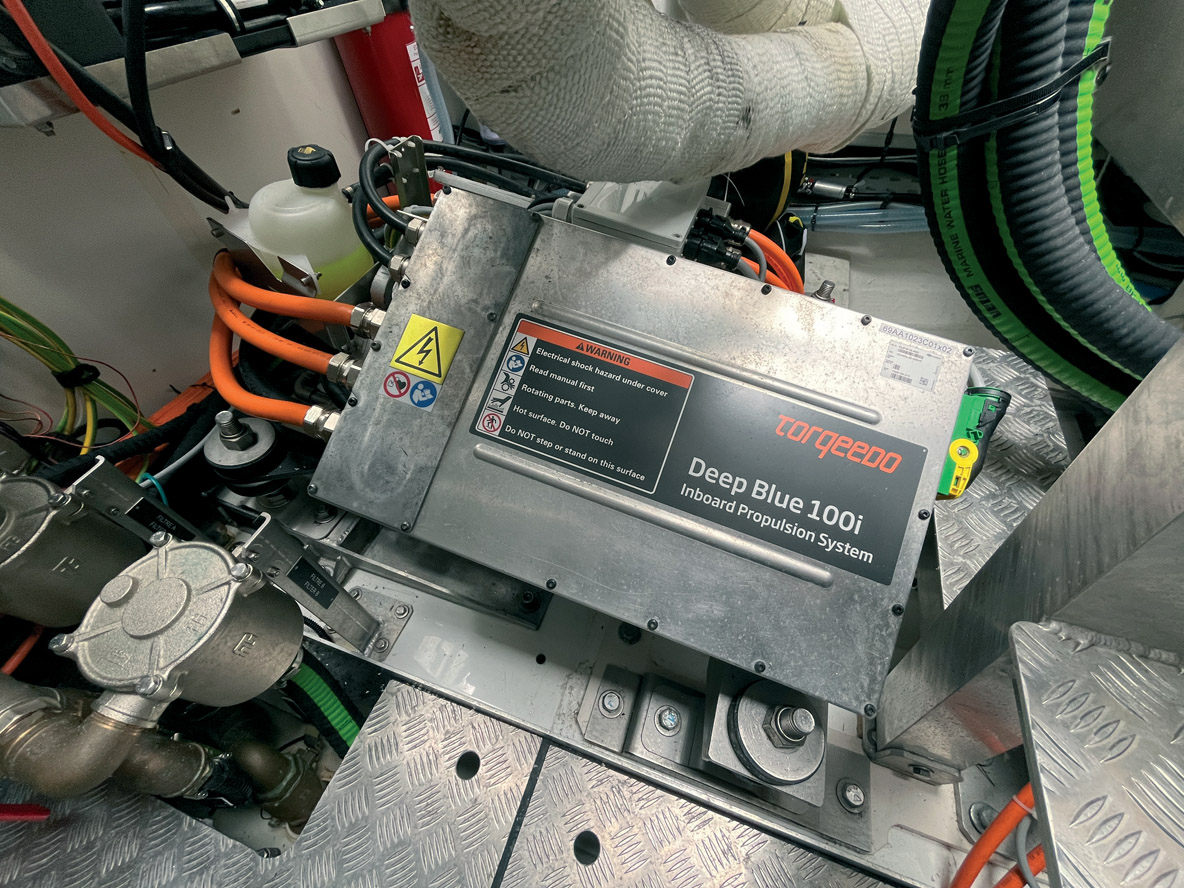
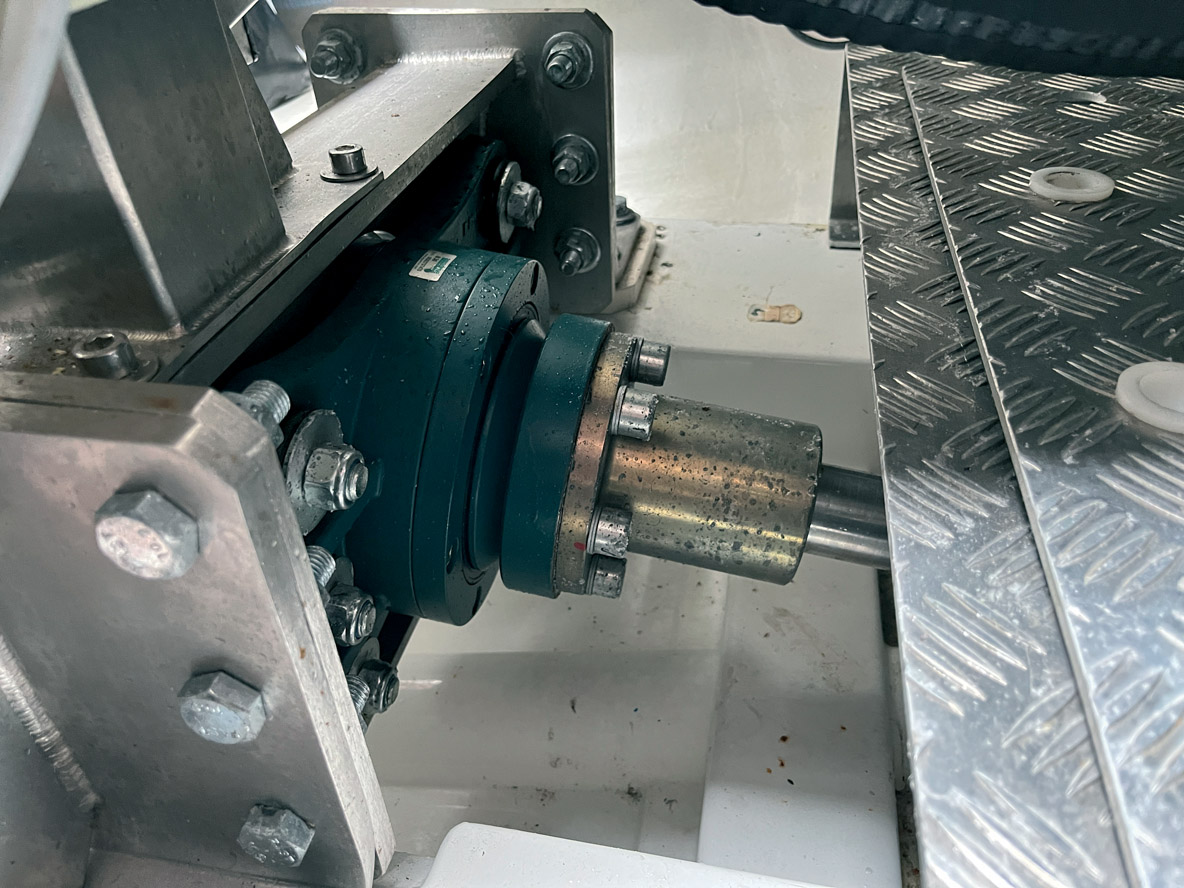
As for what’s in the engine compartments themselves, there has been a marked change, with Deep Blue 100i 900 rpm motors replacing the Nanni N5 230hp initially chosen as an option, not forgetting the imposing generators behind. The analogy between combustion and electric power is never obvious. In this case, we’ve gone from 2 x 230 hp internal combustion engines (i.e. 2 x 170 kW) to 2 x 100 kW electric. But in reality, more than power, it’s torque that is the value that needs to be compared. Maximum torque is higher on the Torqeedo, at 1,060 Nm, compared with 700 Nm at the crankshaft of the Nanni. But interestingly, the propeller manufacturer recommends... not changing the propellers. What’s more, the famous electric torque is available immediately, directly, without a gearbox. On the other hand, although the propeller usually transmits its thrust to the combustion engine, which in turn transmits it to the catamaran, the electric motor is not capable of taking up this effort. A mechanical stop, in this case an Aquadrive, is used to transmit the thrust from the propeller to the hulls. The motor is located upstream, behind a universal joint that resolves any alignment issues, making mechanical maintenance much lighter. In agreement with the Owner, the mechanical components have all been chosen with reliability and durability in mind. For example, instead of checking and realigning the shaft and the engine every year, the Aquadrive has a 15-year service life. The same goes for the stuffing box seal, which ensures a watertight seal between the hull and propeller shaft, where BYS has switched to a professional model that only needs checking every six years.
The last visible change is, of course, the engine controls. Three stations have been installed: one at the chart table and two on the flybridge. It’s from the flybridge that you start the motors by turning a key as if you were turning the ignition on a car, except that there’s no sound to let you know that an engine is running. You have to look at the interface on the screen integrated into the helm station to understand what’s going on. Despite its small size, it contains a lot of information: the charge level of the batteries, the power used by each of the two motors, and the total number of kWh taken by the propulsion system. As on a land vehicle, the table shows the distance that can still be covered, depending on speed and the state of charge of the batteries. The management software has been developed to adapt perfectly to the configuration of the multihull as we discovered it, with its highly representative graphic interfaces. For safety, when the batteries reach the 15% threshold, all the comfort functions are automatically switched off. All possible modes of use are accessible and configurable. In “Comfort” mode, you can adjust the high and low battery levels where the generators start up and then shut down automatically. The “Night” mode, meanwhile, prevents the generators from starting up between selected times. A 4G server allows Torqeedo to access all the system’s data remotely. With a Starlink antenna on board, as has almost become the norm, remote monitoring and even servicing should be a formality.
A year of work
The customer gave its agreement in December 2021. Once the orders had been placed, amid a supply chain crisis, dismantling began in June 2022. As planned, just over a year later, the installation was completed, and in September 2023 the testing phase could begin. First on the Garonne River, then after an initial wintering period, out on the open sea, with up to 25 knots of wind and three-meter (10-foot) waves. The results lived up to expectations, and even exceeded them. The first of the expected benefits, of course, was silence. We’re all familiar with the exhilarating sensation at the start of a cruise when, once the sails are up, you switch off the engines. You get the same ‘wow’ effect with electrics when you engage forward gear and the catamaran takes off from the quayside, with no sound other than the waves lapping on the hull and the wind in the rigging. Even with the engine compartments open, you can’t hear a thing! The generators (max. 2,800 rpm) are so silent that we couldn’t believe they were actually running. Even in the aft cabins, which are the closest to the technical elements, the wind in the rigging or the air conditioning ventilation made more noise. We also rediscovered on this occasion that a propeller produces a slight cavitation noise. But at 8.5 knots, and with video evidence to back it up, we’re talking to each other in the engine room like we’re whispering in the doctor’s waiting room! With the generator running, we can still talk to each other normally, without raising our voices. And we were able to confirm this in situ.
Speed, fuel consumption, range: it’s all a question of compromise
In line with the owner’s wishes, the battery bank had been sized to provide 5 hours of 100% electric range with “reasonable” on-board consumption. By this we mean without air conditioning, for example. Air conditioning is a major consumer of electricity, and on its own would result in a loss of an hour’s range. It should be noted that the four batteries charge and discharge evenly, all at the same time. Again, in line with the customer’s wishes, this imposing battery bank is not only used for propulsion. In “Silent Mode”, it means you can spend a night or even a whole day at anchor in comfort, without having to start a generator. There’s just one caveat: it’s important to behave appropriately, i.e. not to run everything at the same time. After all, there are 66 kW of consumers on board: air conditioning, Jacuzzi, home cinema, oven, washing machine, wine cellar... To assist the crew in managing all this, a control screen showing the instantaneous consumption at each of the circuit breakers, item by item, has been developed. The electrical tree structure has also been reviewed to optimize usage. For example, in “Navigation” mode, the entire galley is switched off, including the 220V inverter. Only the refrigerator has been left out, because it has to be able to run 24 hours a day, of course. Range under power, with generators running, is estimated at 1,260 miles at a speed of between 8 and 9 knots. For a long passage such as this, the 90 kW produced are fed almost entirely back into the propulsion system, directly, without passing through the batteries. But the most interesting ways of using the boat will undoubtedly be hybrid - sailing as much as possible, using the engine a little in light airs or upwind, and possibly using the generators so as not to be deprived of any comfort. The prospect of self-sufficiency can then be counted in weeks. One of the major benefits of electrification is the possibility of hydro-generating, i.e. under sail, producing electricity from the rotation of the propellers created by the boat’s speed. Although the maximum output is yet to be validated by measurements in real-life conditions, Torqeedo is announcing an output of up to 5 kW. Even so, in this preliminary phase, no propeller has yet been designed or manufactured specifically for this dual use of propulsion and hydrogen generation. Their estimate therefore seems fairly conservative, especially as they have measured up to 8 kW on an identical motor installed on a monohull. What’s more, on this heavy and powerful catamaran, the loss of speed is much less noticeable than on a light sailboat - around half a knot. Finally, the two original shore power sockets (one 64A and one 100A) have been retained. If the dock is suitably equipped, plugging in can relieve the system of large consumers such as the air conditioning. It can also be used to charge the batteries more quickly. At 64A, it would take 12 hours to fully recharge the four batteries, i.e. from 0% to 100% charge, although in practice there are safety devices that prevent the batteries from being completely discharged. With the generators, two hours is enough to restore full capacity.
Weight, price, outlook... can I have the bill, please!
While the extra couple of tons added to the total may seem significant in absolute terms, everything is relative on a multiyacht that is claimed to weigh 57 t in lightship condition and almost 70 t laden. What’s more, with its new drivetrain, the catamaran reaches speeds of 10.5 knots, the same as with an internal combustion engine. This value corresponds to the hull speed. It should also be noted in passing that the extra weight includes a Zodiac eJet 450 tender weighing 870kg (1,920 lbs). This is a dinghy fitted with a BMW i3 battery identical to those on the Lagoon. The dinghy can therefore be recharged using the catamaran’s batteries or generators. But the tender’s battery can also be used as a back-up battery for the catamaran. So we’re really going all electric! In terms of budget, the cost of this retrofit installation is inevitably much higher than that of the original equipment. Although the exact figure has not been revealed, we understand that it is in the region of a million euros. That’s both expensive and proportionately reasonable for a unit initially estimated at €6 million. On a smaller catamaran, BYS estimates that this could represent up to 40% of the standard price. It should be pointed out that the choices made were all dictated by the need for maximum safety, whatever the cost, with, for example, 5 hours of autonomy where another Owner might have been content with 2 hours. The meteoric evolution of batteries also means that those chosen two years ago aren’t obsolete, but not far off it... Instead of LiNMC (lithium nickel manganese cobalt) batteries, we now prefer lithium iron phosphate (LFP), which offers an energy density that doubles storage capacity in a smaller package.
With solar panels and hydro-generation, we’re already very close to autonomy when under sail. Perhaps soon, with solar sails for example, we’ll be able to produce more than we consume in comfort, which could mean we can sail in and out of port electrically, without ever starting the generators. In “Full Electric” mode, we can already temporarily prevent the generators from starting up, which could be useful in certain restricted areas such as nature reserves. But let’s not fight the wrong battle: equipment is the essence of war. There will always be limits to energy production and storage, but by adopting a slightly more sober, less “terrestrial” lifestyle, the equation can change radically.
Hydro-generation
Self sufficiency
Associated comfort
Reliability still to be proven
Weight
Why go electric? We’ll tell you everything!
And technological advances are (still) expected in all the areas mentioned above.
In the meantime, let’s return to the Astréa 42. With its largest battery bank of 2 x 27 kW, our catamaran can only run in 100% electric mode for one hour at full throttle, but for 4 hours at 5 knots - at this speed, only 30% of the maximum power is used. The energy used corresponds to around 4.2 US gallons (16 liters) of diesel.
We can put these figures into perspective with those of the car industry. Take, for example, the new Tesla Model Y Long Range: based on the Propulsion model, this vehicle has a single 202-kW motor and a 90-kWh battery. This car consumes (optimally) 14.9 kWh/100 km. It requires just 7% of the available power, giving it a theoretical range of 600 km (372 mi). 30 liters (7.9 US gal) of gasoline would have done the job. We’d almost be disappointed... if we forgot that it’s possible for an electric vehicle to recover 10 to 30% of its energy during deceleration and braking. Even better: the Tesla can recover almost 5 kWh if it drives down a 25 km (15 mi) mountain road at 10% - that’ll give thirty “free” kilometers (18 mi) on the flat. The same applies to an electric multihull embarking on an ocean crossing with good tradewinds featuring in the forecast. The recharging offered by hydro-generation and solar panels will mean that she won’t need to call on her generator to recharge the batteries, which will easily cover the onboard electrical needs. Zero carbon emissions for 3,000 miles – now that’s forever green!
